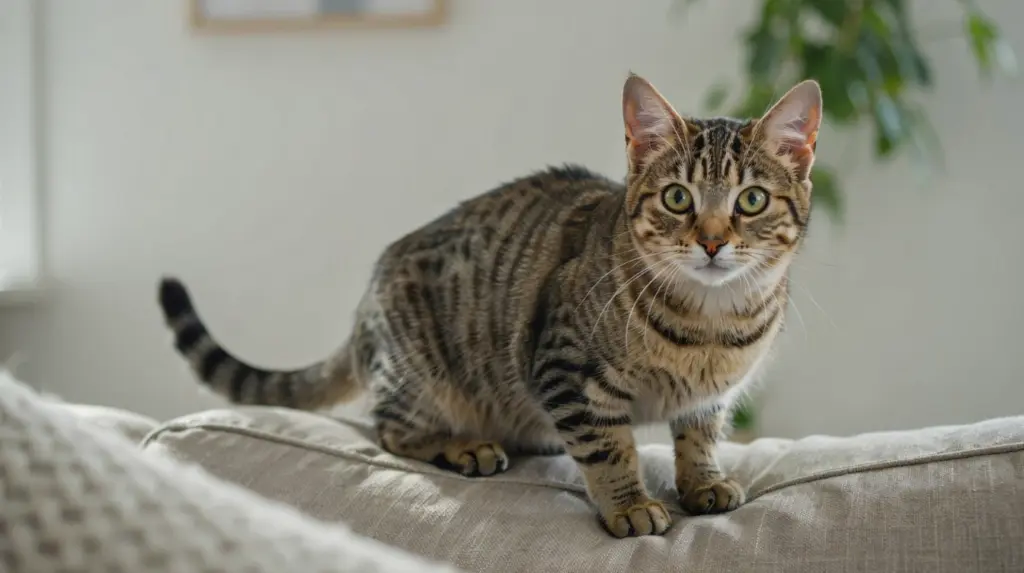
That tiny flick at the end of your cat’s tail can make you pause mid-cuddle. Are they playful, annoyed, or trying to tell you that something hurts?
I know how unsettling it can feel when a habit looks different. Cat tail twitching is often a normal response to play, excitement, petting, stress, urine marking, or sleep.
Still, I take it more seriously when it appears with pain, skin rippling, self-biting, weakness, or a sudden behavior change.
As a veterinarian, I do not judge a tail movement on its own. I look at its speed, position, timing, and the cat’s ears, eyes, posture, activity, and habits. Those clues can help you respond calmly and know when to call your veterinarian.
What a Twitching Tail Actually Means
Before matching a tail movement to a mood, look at what your cat is doing and what is happening around them. A flick during play can mean something very different from the same movement during petting.
Small tail movements may be deliberate signals, reactions to touch, or muscle movements. Their meaning depends on the tail’s position, speed, and the rest of your cat’s body language.
Heightened attention can accompany play, excitement, fear, frustration, or discomfort. Aroused cats can become sensitive even to gentle petting.
Read the tail alongside your cat’s ears, eyes, posture, activity, and surroundings. That full-body view will make the common patterns below easier to understand.
Common Reasons for Cat Tail Twitching
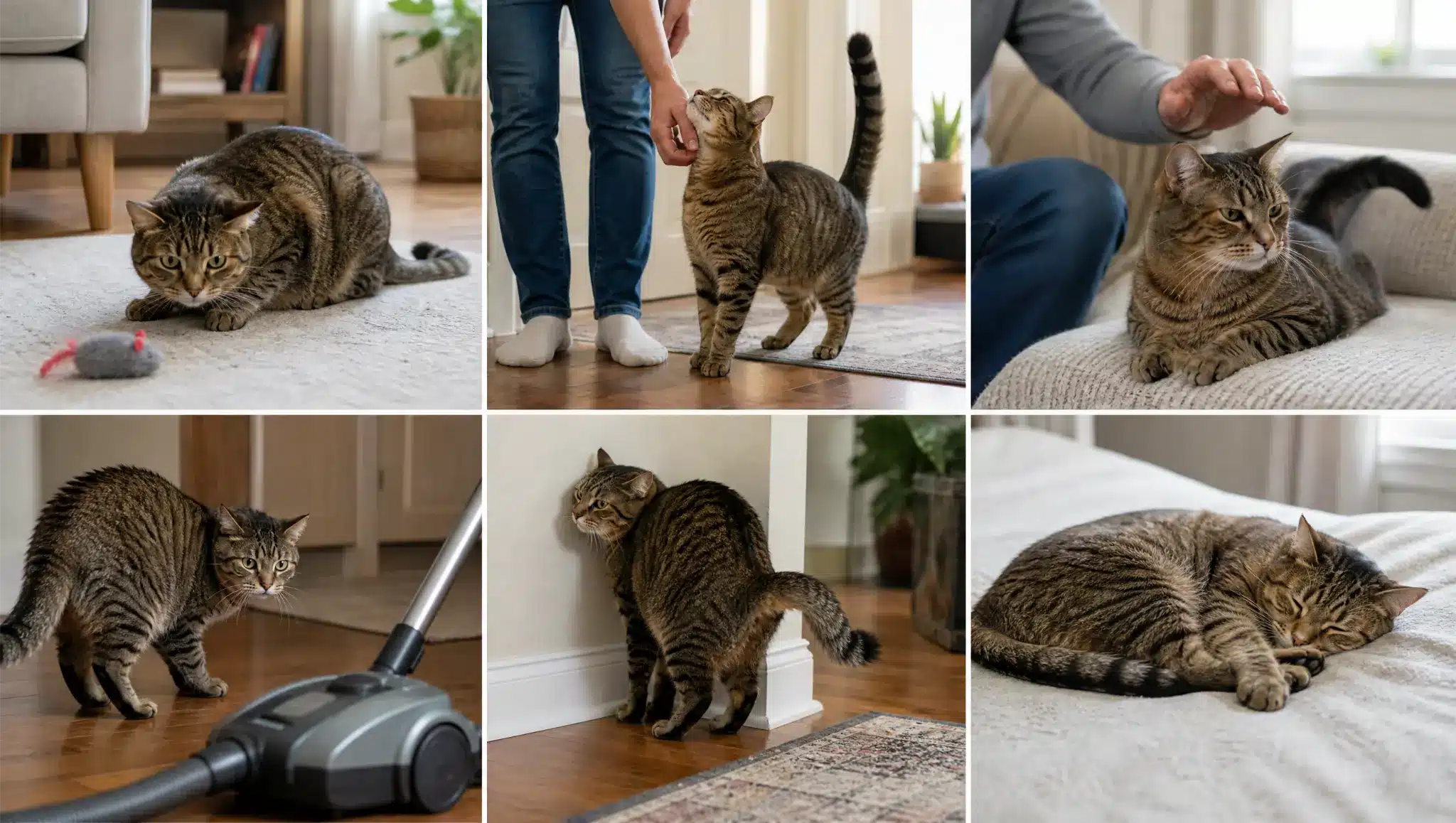
Most tail movements fit a few familiar patterns. Looking at posture and context can help you separate playful focus from irritation, fear, or a possible health concern.
1. Hunting Mode and Play
A slow tail-tip twitch often appears when a cat is focused on a toy, bird, insect, or other moving target.
Watch for a low crouch, fixed stare, and still body while only the tail tip moves. This usually signals focused play or stalking rather than distress. If your cat remains loose-bodied and engaged, you usually don’t need to interrupt the fun.
2. Excitement or Happy Anticipation
An upright tail that quivers when you enter the room, open a treat bag, or pick up a favorite toy can accompany excitement and a friendly greeting.
Context matters, though. If your cat backs toward a vertical surface and releases urine, the same movement is part of spraying. The setting and the presence of urine separate a happy greeting from marking behavior.
3. Overstimulation During Petting
Petting can become uncomfortable even when a cat initially asks for attention. A sharper flick, head turn, tense posture, skin movement, or sudden pause may be a request to stop.
Pause at the first warning sign and let your cat decide if they want to return. Repeated sensitivity in one location may point to pain or a skin problem rather than ordinary overstimulation. The dedicated petting section below explains how to respond and when to contact your veterinarian.
4. Stress or Feeling Threatened
A low, tucked, or puffed tail can accompany fear or stress, especially when your cat also has flattened ears, wide pupils, or a tense crouch.
Loud noises, unfamiliar visitors, household changes, and conflict with another animal may trigger these signals. Give your cat space and access to a quiet hiding place. Do not touch, corner, or punish a frightened cat. Let them approach again when they feel safe.
5. Marking Territory
Cats may quiver their tails while backing toward a wall, doorframe, or piece of furniture. This posture commonly occurs during urine spraying.
Spraying is more common in intact cats, but neutered cats can do it too. Household changes, outdoor cats, unfamiliar objects, and tension between pets can contribute, and marking often overlaps with broader signs of feline stress worth watching for too.
If an adult cat suddenly begins spraying, schedule a veterinary examination. Physical discomfort and urinary problems can also contribute to changes in elimination behavior.
6. Movement During Sleep
Brief tail, paw, whisker, or ear movements can occur while a cat sleeps. Occasional movement is usually not concerning when your cat wakes easily and behaves normally afterward.
Do not wake or restrain your cat unless safety requires it. Contact a veterinarian if an episode includes stiffening, repeated whole-body jerking, drooling, loss of awareness, or unusual behavior after waking. Sleep movements are usually harmless, but whole-body or seizure-like episodes need a professional assessment.
Twitching vs. Other Tail Movements
Twitching is only one of several tail movements cats make. Speed can offer a clue, but posture and context provide the clearer answer.
| Movement | What It Looks Like | Possible Meaning |
|---|---|---|
| Tip twitch | Only the last inch or two moves | Focused attention, stalking, or play |
| Slow swish | Tail moves from side to side at a relaxed pace | Focus, play, uncertainty, or mild irritation |
| Fast flick | Quick, sharp side-to-side movement | Rising discomfort or overstimulation |
| Thrashing | Whole tail moves forcefully | High arousal, fear, frustration, or anger |
| Quivering | Upright tail vibrates or quivers near a surface | Friendly greeting or urine marking, depending on context |
| Puffed tail | Tail appears enlarged as the fur stands up | Fear, surprise, or defensive arousal |
Speed helps, but it is not enough on its own. A fast, forceful movement with flattened ears or a tense body calls for space. A slower movement still needs to be read alongside posture and context. When signals conflict, pause the interaction and let your cat choose what happens next.
When Tail Twitching Signals a Health Problem
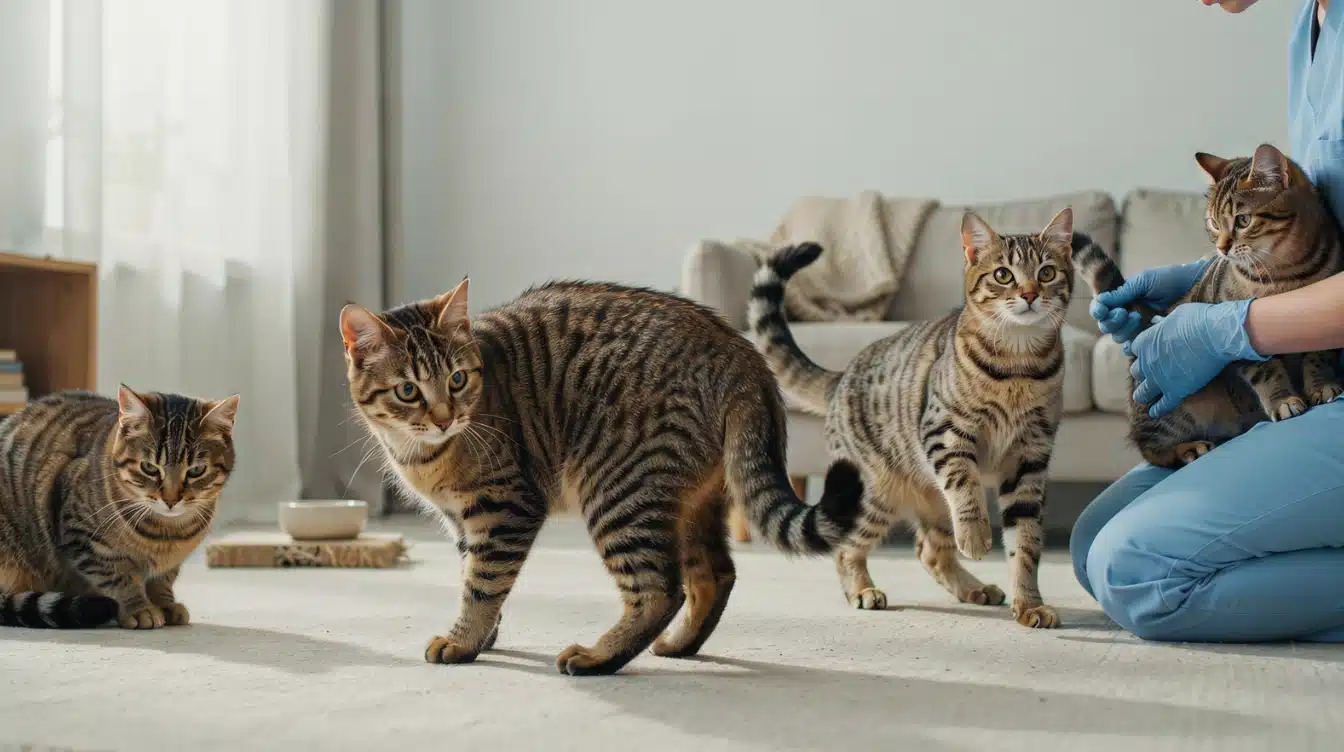
Most tail movements are part of normal feline communication. Concern rises when twitching is new, frequent, painful, or paired with other physical or behavioral changes.
Watch for:
- Rippling or twitching skin along the lower back
- Sudden pain or aggression when the back or tail is touched
- Repeated tail chasing, biting, or self-injury
- Dilated pupils, drooling, or unusual vocalization during an episode
- Limping, weakness, hiding, or reduced appetite
- A limp tail or inability to raise it normally
- Trouble urinating or defecating
- Whole-body shaking, stiffening, or loss of awareness
Skin rippling, sudden sensitivity near the lower back, dilated pupils, tail chasing, and self-biting can occur with feline hyperesthesia syndrome. These signs are not diagnostic on their own, and pain, parasites, allergies, skin disease, spinal problems, and other causes must be ruled out first before a diagnosis is reached.
Contact your veterinarian promptly if the signs are new, recurring, or causing self-injury. Seek emergency care after significant trauma or when twitching occurs with a seizure, collapse, breathing trouble, inability to urinate, or sudden loss of limb use. Cornell University College of Veterinary Medicine lists these among its emergency situations.
If it is safe, record a short video without touching or restraining your cat. The timing, duration, and surrounding behavior may help your veterinarian assess the episode.
Tail Twitching While You’re Petting Your Cat
A tail flick during petting does not necessarily mean your cat is angry. It often means the interaction is becoming uncomfortable or your cat wants a break.
Stop touching your cat and let them decide whether to return. Do not scold, hold, or follow them. Respecting an early warning can prevent the interaction from escalating to a swat or bite.
Repeated sensitivity in one location deserves closer attention. Cats may show pain through subtle changes such as hiding, eating less, limping, avoiding touch, or acting unusually aggressive, and running through a full checklist of pain indicators can help you spot patterns you might otherwise miss.
Discuss flinching, skin changes, a hunched posture, or reluctance to be touched in the same spot with your veterinarian. In an everyday petting interaction, pause at the first flick and give your cat control over what happens next.
What to Do Based on What You See
Once you match the movement with your cat’s posture and surroundings, choosing a safe response becomes easier. The goal isn’t to decode every flick perfectly, but to notice when your cat needs play, space, or veterinary care.
| If You See This | What to Do |
| Tip twitch during relaxed play | Continue if your cat remains loose-bodied and engaged |
| Sharp flick while petting | Stop petting and let your cat decide if they want to return |
| Thrashing with flattened ears | Step back and reduce the trigger when possible |
| Quivering with an upright tail | Check the setting for greeting behavior or urine spraying |
| Twitching with skin rippling or pain | Contact your veterinarian |
| Brief movement during sleep | Leave your cat undisturbed and monitor |
| Twitching after trauma or with weakness | Seek prompt veterinary care |
| Seizure-like movement or inability to urinate | Seek emergency veterinary care |
If the movement and surrounding body language don’t match, pause the interaction and give your cat space. New, persistent, or painful behavior calls for veterinary advice.
Wrapping Up
Cat tail twitching is usually a normal response to play, excitement, focused attention, or too much petting. The clearest answer comes from reading the whole cat, including the ears, eyes, posture, setting, and speed of the movement.
Calm tip flicks during play need no intervention, while forceful thrashing means it is time to give your cat space. New twitching paired with pain, skin rippling, self-biting, weakness, appetite loss, or other sudden behavior changes deserves veterinary advice.
Learning these patterns makes feline body language easier to read without dismissing a possible health concern. If the movement is new, frequent, or paired with warning signs, record a short video and contact your veterinarian today.
Frequently Asked Questions
Do Kittens Twitch Their Tails More Than Adult Cats?
Kittens may twitch their tails during stalking and play, but reliable veterinary evidence does not show that they do it more often than adult cats. Judge the movement by the kitten’s posture, setting, and other signs instead of age alone.
Can a Cat’s Tail Twitch Because They Are Cold?
Cold is not a well-established direct cause of isolated tail twitching. A cold cat may seek warmth, curl tightly, or shiver. If shaking continues after warming or comes with weakness or lethargy, contact your veterinarian.
Can Tail Twitching Be Caused by Aging in Cats?
Age itself does not directly cause tail twitching. However, arthritis, pain, skin disease, or nerve problems become more relevant when an older cat develops a new movement. Arrange an examination if it persists or accompanies other changes.