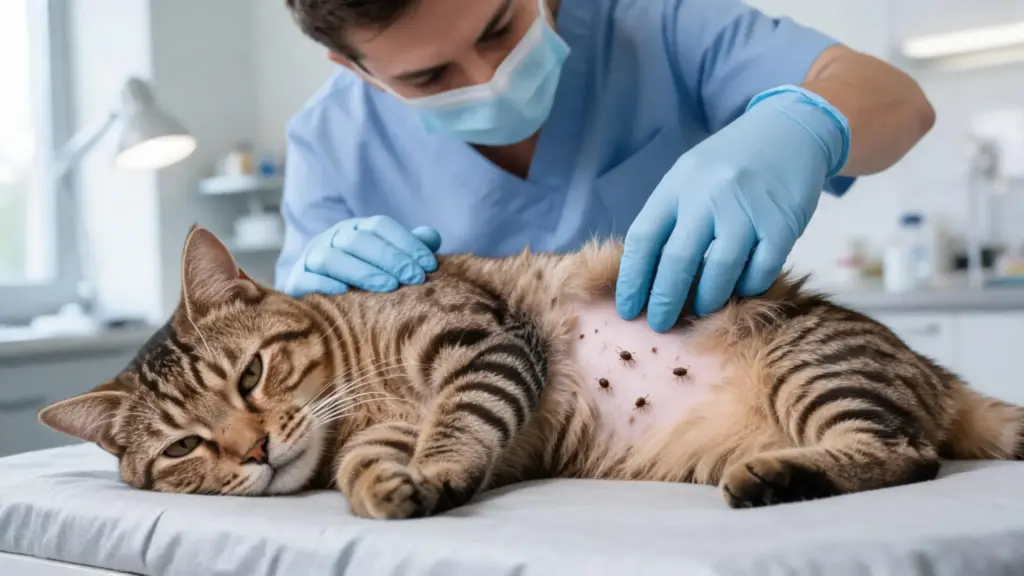



A pot-bellied kitten. A pale, rice-sized fleck near the tail. A thread-like strand in the litter box. These are the three images that usually send a cat owner searching for what cat worms look like, and the picture in their head rarely matches what they actually find.
In fifteen years of practice, owners have brought in a sample jar and second-guessed what is sitting right in front of them, and I never blame them for it.
Worms come in more shapes, sizes, and hiding spots than most photos online suggest, and knowing which is which changes how urgently you act.
Below, you will find what each worm actually looks like, where it tends to hide on a cat’s body, and how to tell if your kitten has worms before a mild case turns into a bigger setback.
Why This Question Matters More than You Think
Worms are not just a hygiene concern. Left untreated, they can affect digestion, energy, and, especially in kittens, healthy growth. Many owners delay a vet visit because they aren’t sure what they saw was a parasite rather than something harmless in the litter.
A rescued kitten named Biscuit is the case I still think about. Her foster owner almost tossed a strange pale fleck from the litter box before deciding to save it in a bag for her next vet visit.
That single decision meant Biscuit started treatment before any symptoms showed up at all. That uncertainty is the real challenge with worms.
Cats are experts at hiding discomfort, so learning to recognize the visual signs early is often the only early warning an owner gets.
How to Tell if Your Kitten Has Worms
Kittens face a higher risk of worm infections than adult cats because certain parasites can pass from the mother before the litter is even weaned. During early kitten visits, these are the three signs I always ask new owners about:
- A rounded, swollen stomach: a heavy worm burden takes up space in the digestive tract, which can cause bloating and visible discomfort after meals.
- Slow growth or unexpected weight loss: worms compete with your kitten for nutrients. I regularly see kittens who eat normally but stay noticeably smaller than their littermates.
- Digestive upset or visible worms: diarrhea, vomiting, or inconsistent stool patterns are common, and some owners do spot worms directly in vomit or stool, which is usually what prompts the appointment.
Catching these signs early is key to telling whether your kitten has worms before the infection can affect development. If appetite, stool, weight, or energy change even slightly, a timely check gives you answers instead of guesswork.
How Worms Develop Inside a Cat
A worm’s life cycle explains why the same parasite can show up looking different depending on when you catch it. Roundworms and hookworms begin as eggs that hatch into larvae, which migrate through tissue before settling as adults in the small intestine.
Tapeworms take a different route entirely. A cat swallows an infected flea while grooming; the flea’s tapeworm larva matures inside the intestine, and the adult worm sheds small egg-filled segments that pass near the tail or in stool.
Whipworms stay buried in the intestinal lining and rarely surface where you can see them. Understanding these cycles also explains why a single dose of dewormer is not always enough.
Eggs or larvae that survive the first treatment can mature afterward, which is why vets schedule a follow-up dose two to three weeks later rather than treating it as a one-time fix.
What Do Cat Worms Actually Look Like
Once you suspect an infection, the next step is learning to recognize what you are actually looking at. Each parasite has a distinct shape, size, and hiding spot, and describing these differences accurately to your vet can speed up diagnosis.
1. Roundworms: The Ones that Look Like Spaghetti

Roundworms are among the most common parasites in kittens and young cats, and owners can often recognize them easily. They are long, thin, pale worms that resemble strands of cooked spaghetti and may appear coiled or several inches long.
They are usually found in stool or vomit, especially in kittens with heavier infections; seeing them after a vomiting episode can be alarming but is common.
2. Tapeworms: Small Segments that Resemble Rice
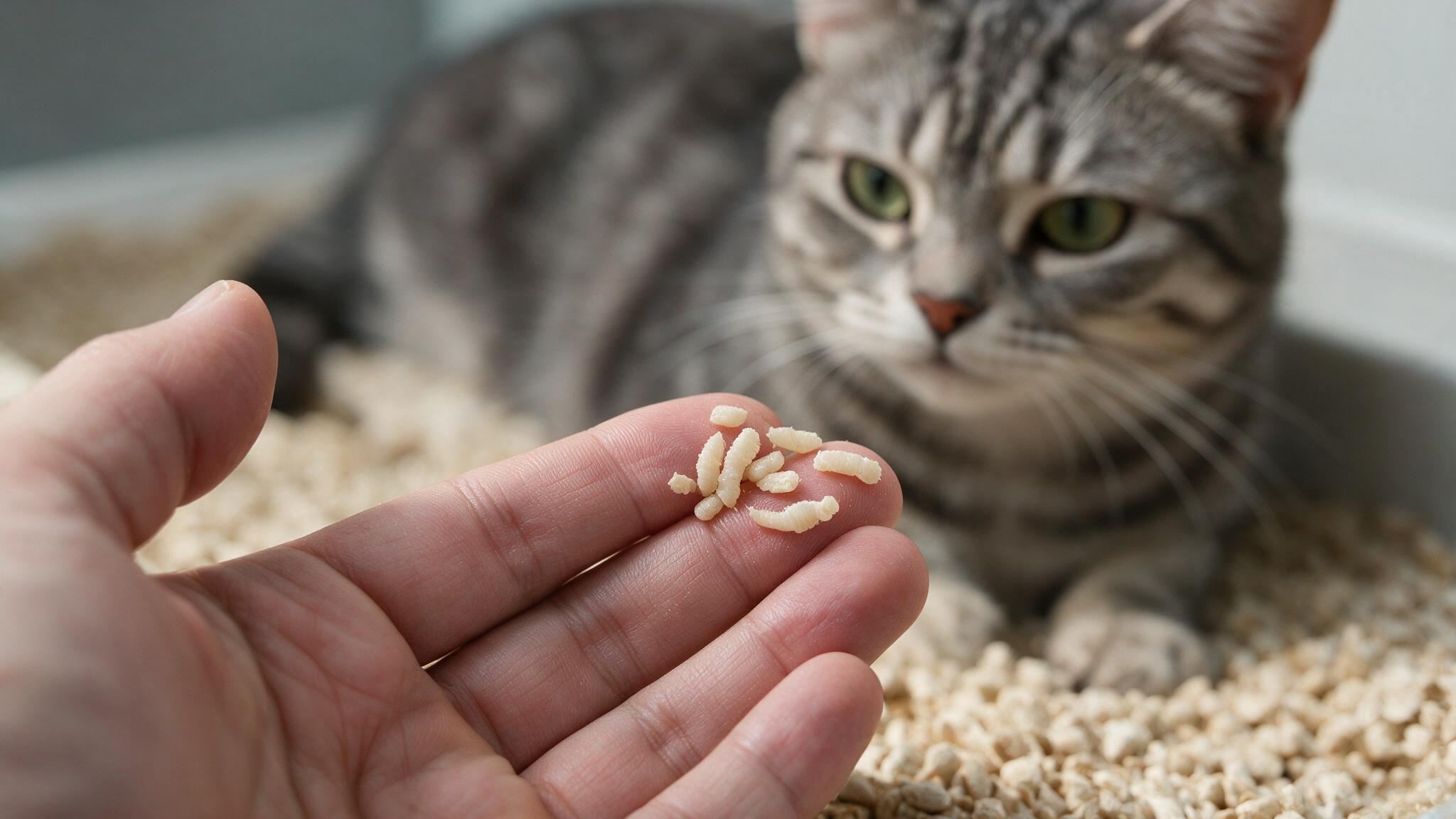
Tapeworms look very different from roundworms. Instead of one long worm, they shed small segments that pass separately. These pieces resemble grains of rice or sesame seeds and may move briefly when fresh before drying into yellowish or beige flakes.
You may find them around the tail base, in bedding, or near the anus rather than in the litter box. Fleas are the most common source of tapeworm infection, so recent flea exposure matters.
3. Hookworms: Tiny Worms That Feed on the Intestinal Lining
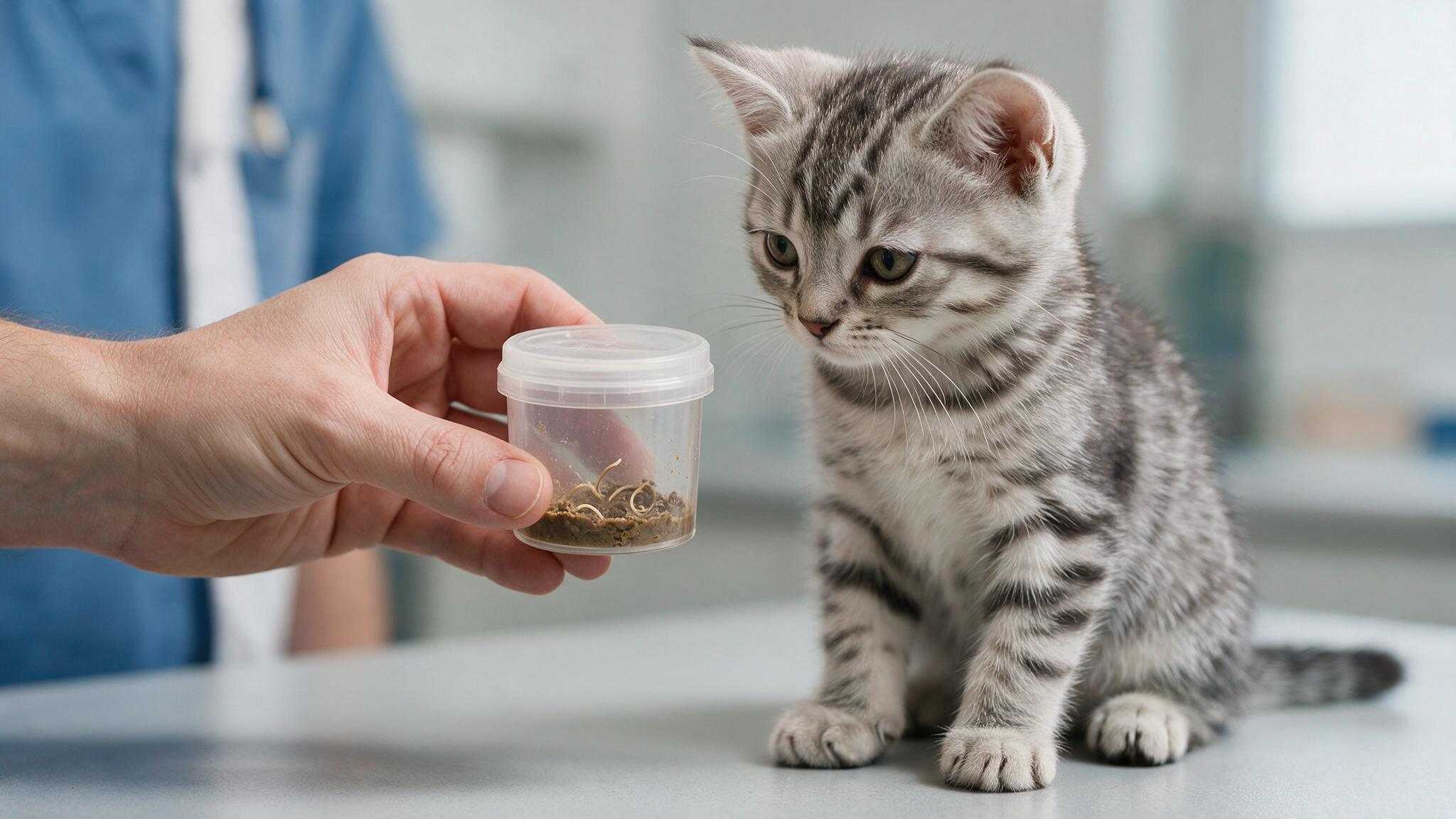
Hookworms are thread-thin parasites that attach to the intestinal wall and feed on blood, making heavier infections especially dangerous for kittens.
They are rarely visible because both worms and their eggs are microscopic. A fecal exam at the vet remains the only reliable way to confirm infection. Instead of looking for worms, watch for signs like dark, tarry stool, pale gums, or unexplained weight loss.
4. Whipworms: Thin, Thread-Like Worms That Rarely Show Up
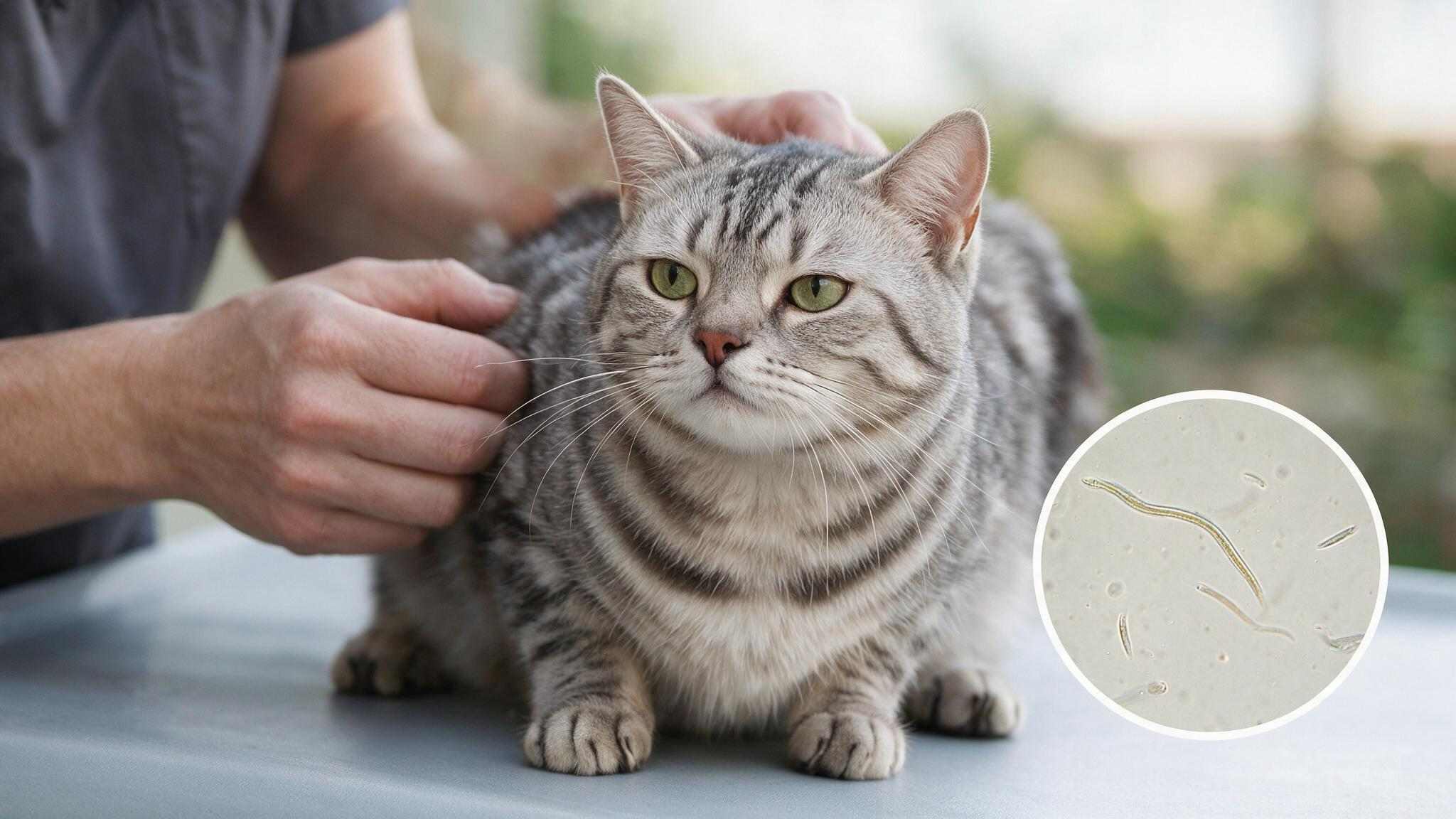
Whipworms are less common in cats than in dogs but can still occur, especially in cats exposed to contaminated outdoor soil. They live in the lower intestine and cecum, burrowing into the lining, which makes them difficult to detect.
These tiny, thread-like worms are not visible in stool and require a fecal float test for identification. Diarrhea, weight loss, or low energy without visible worms can still suggest infection, so testing is more reliable than appearance alone.
Cat Worm Types at a Glance
Use this table as a quick reference before your vet visit. It does not replace a fecal test, but it can help you describe what you found more precisely.
Worm | Appearance | Where you’ll find it | How cats get it | Zoonotic risk |
|---|---|---|---|---|
Roundworm | Long, pale, spaghetti-like, often coiled | Stool, vomit | Nursing from an infected mother, ingesting contaminated soil or prey | Yes, low risk with basic hygiene |
Tapeworm | Small, rice- or sesame seed-sized segments | Around the tail, in bedding | Swallowing an infected flea while grooming | Rare, mainly in young children |
Hookworm | Thread-thin, microscopic, rarely visible | Not visible; confirmed by fecal exam | Skin contact with contaminated soil, nursing | Yes, can cause skin irritation in people |
Whipworm | Thin, thread-like, buried in the gut lining | Not visible; confirmed by fecal float | Ingesting contaminated soil | Not typically zoonotic in cats |
Between long spaghetti like strands, rice sized segments, and parasites too small to see at all, appearance only tells part of the story, which is exactly why a fecal exam still matters more than a visual check. What Other Cat Owners Have Said Online
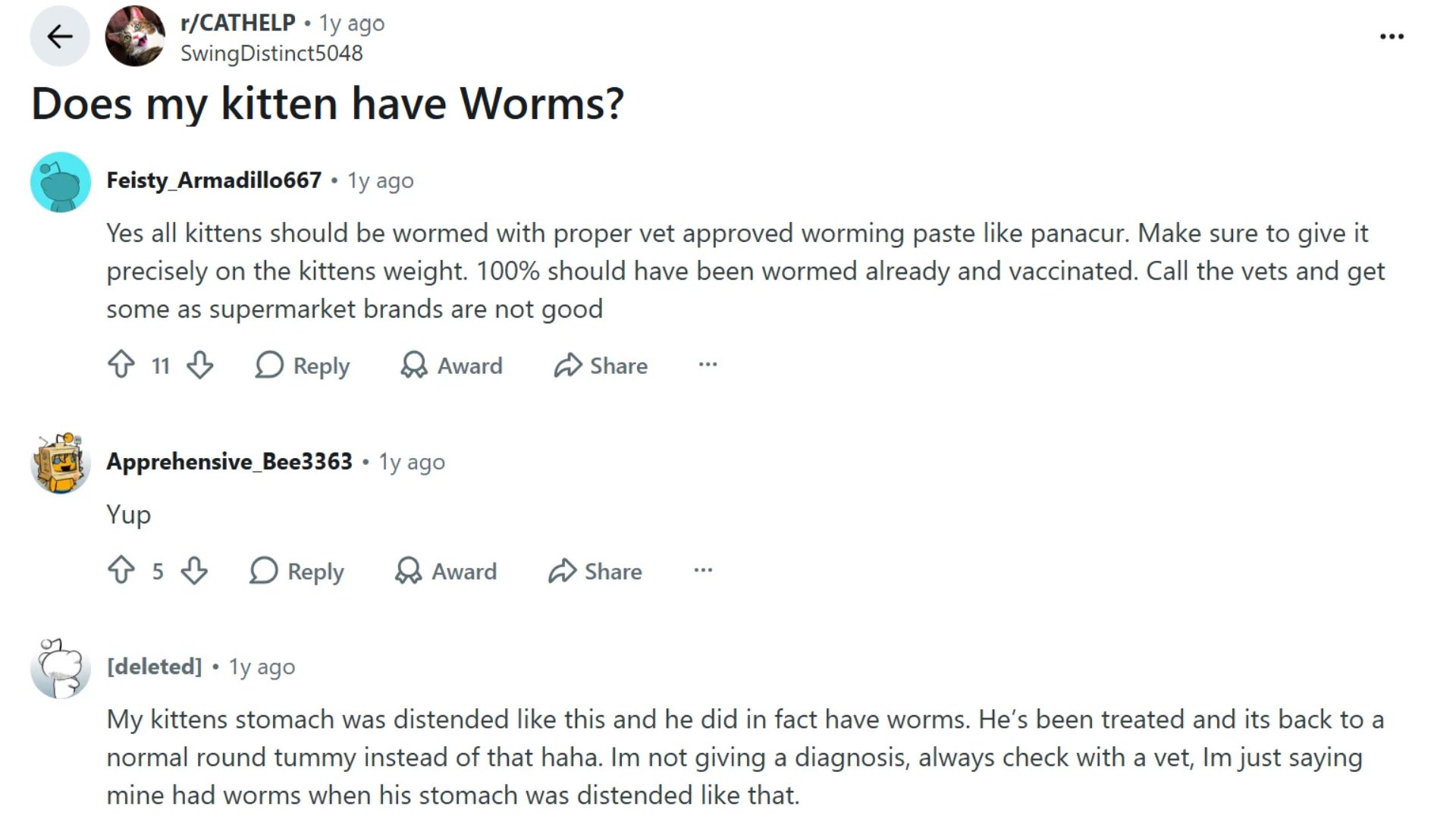
Many cat owners on Reddit describe noticing similar signs before learning their kittens had worms. In one discussion about kitten worms, owners commonly mentioned starting with a stool sample for a vet check, since visible signs alone can be confusing.
Others shared that their kittens had a swollen or rounded belly before treatment, which later returned to normal after deworming. Some owners also recommended using vet-approved deworming products and avoiding guessing based only on appearance.
These experiences show a common pattern: owners often notice changes first, but confirmation through a veterinary exam or fecal testing helps identify the actual cause. Online experiences can offer perspective, but they should not replace professional diagnosis.
Can Your Cat Have Worms without You Ever Seeing Them?
Yes, and this happens more often than many owners expect. This is one of the biggest misunderstandings I encounter in practice. Some parasites stay hidden, making routine checks and subtle behavior changes important parts of protecting your cat’s health.
- Invisible Infections Are Common: Worm eggs are microscopic, and many infections, especially hookworms and whipworms, rarely produce anything visible in stool or fur.
- Subtle Changes May Be the Only Clues: Some cats carry worm infections without obvious signs, showing only mild changes like a dull coat, slight weight changes, or reduced energy.
- Routine Testing Matters: Regular fecal testing during veterinary checkups helps identify hidden infections before they become more serious. The American Animal Hospital Association also recognizes routine preventive care as important rather than waiting for visible symptoms.
- Why Appearance Alone Is Not Enough: Relying only on what you can see may let a worm infection develop unnoticed and delay necessary treatment.
Worm infections are not always easy to spot, which is why regular veterinary care matters. Fecal testing and preventive checkups can catch hidden problems early, helping your cat stay healthier before visible symptoms appear.
How Vets Actually Diagnose Worms
Owners are often surprised that diagnosis rarely starts with hunting for a worm. In my clinic, the first step is almost always a small stool sample and a fecal flotation test, where the sample is mixed with a special solution that makes parasite eggs float to the surface for viewing under a microscope
For tapeworms specifically, a visual check around the tail is often enough, since their segments do not always show up on a standard fecal float.
If a cat has been vomiting worms directly, a vet may skip straight to treatment for that species while still running a full panel to check for others hiding underneath.
A single negative test does not always rule out infection, since some parasites shed eggs on and off rather than constantly. That is part of why kittens, in particular, often get tested more than once during their first several months.
When Worms Become a Veterinary Emergency
Most worm infections cause discomfort rather than immediate danger, but a few signs mean same-day care rather than a routine appointment slot.
- Pale or white gums: often a sign of blood loss from a heavy hookworm burden.
- No appetite for more than a day: combined with lethargy, this can signal a more serious problem than worms alone.
- Repeated vomiting with visible worms: raises real risk of dehydration and, in severe cases, intestinal blockage.
- A firm, distended abdomen that seems to worsen quickly: can point to a tangle of worms causing a partial blockage.
More than one kitten has come through my door with exactly that kind of blockage, and in nearly every case the owner had noticed a swollen belly days earlier and assumed it would resolve on its own. If you see any of the signs above, do not wait for the next open slot.
Are Cat Worms Contagious to Humans?
Not every worm carries the same risk to people. Roundworms and hookworms are the two with real zoonotic potential, since their larvae can occasionally infect humans through accidental ingestion or skin contact with contaminated soil.
Tapeworm transmission to humans is possible but rare and almost always involves a person swallowing an infected flea directly, which is uncommon outside of small children.
Whipworms found in cats are not considered a meaningful risk to people. Children and anyone with a weakened immune system carry a somewhat higher risk overall, which is why the Companion Animal Parasite Council recommends routine fecal testing as a standard part of preventive care, not just something to do after symptoms appear.
A few simple habits lower the risk further:
- Wash your hands after cleaning the litter box.
- Scoop daily rather than every few days.
- Keep sandboxes and garden beds covered when not in use.
- Stick to a routine fecal testing schedule so infections get caught early.
How I Recommend Preventing Worms Going Forward
Prevention is the part of this conversation I care about most, since it is far easier than treating a serious infection later.
- Stay on a parasite prevention schedule: follow your vet’s routine rather than treating it as optional.
- Keep flea prevention consistent: fleas are the direct source of tapeworm infection, so this step does double duty.
- Clean litter areas often: regular scooping reduces exposure to parasite eggs in contaminated litter.
- Limit outdoor hunting and roaming: reducing contact with infected prey or soil directly lowers exposure.
- Book routine fecal checks: I typically recommend yearly testing for adult cats, as the AAHA highlights, with more frequent checks for kittens while their immune systems are still developing.
A strong prevention routine gives your cat better protection against recurring parasite problems. Staying consistent with veterinary care, hygiene, and monitoring helps you identify concerns early and support your cat’s long-term health.
Final Thoughts
Recognizing what do cat worms look like, whether it is a coiled roundworm, a dried tapeworm segment, or nothing visible at all in the case of hookworms and whipworms, gives you a real head start on treatment.
Just as important is how to tell if your kitten has worms through slower cues like stalled growth, appetite changes, or shifts in energy, since those often appear before anything visual does.
A fecal test still confirms what a visual check cannot, so if something feels off, book that test rather than waiting it out. Feel free to share what you noticed in the comments below, since it often helps other owners spot the same thing sooner.
Frequently Asked Questions
Can Adult Cats Lose Weight from Worms Too, Not Just Kittens?
Yes. Adult cats can lose weight from a heavy or long-standing worm burden, though it usually develops more slowly than in kittens and is easier to miss since adults are checked less closely day to day.
Do Deworming Medications Cause Side Effects in Kittens?
Mild, short-term signs like temporary lethargy or a slightly upset stomach are possible after treatment, though most kittens tolerate deworming well. Contact your vet if vomiting or diarrhea continues for more than a day.
How Soon Will I Notice Results After Treatment?
Many owners see dead or expelled worms in the stool within a day or two of the first dose, though a follow-up treatment a few weeks later is often needed to fully clear the infection.
Can Cats in The Same Household Reinfect Each Other After Treatment?
Yes. If one cat tests positive, it is worth checking or treating other cats in the home too, especially if they share a litter box, since reinfection between housemates is common.
Can indoor-only cats get worms?
Yes, though the risk is lower than for outdoor cats. Fleas brought in on clothing or another pet, contaminated soil on shoes, and exposure to a household mouse or insect can all introduce worms even to a cat that never goes outside, which is why routine testing still applies.