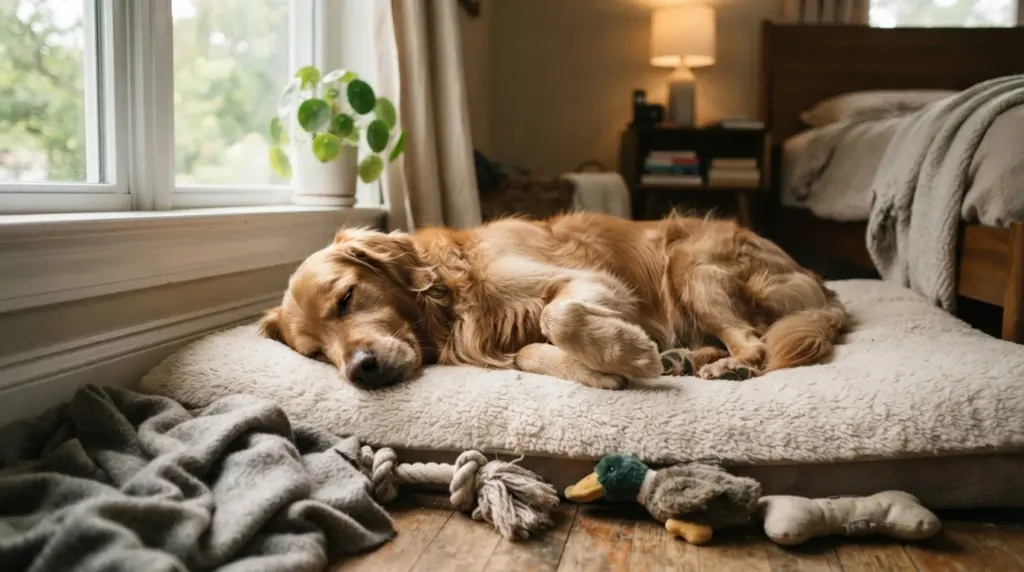
Have you ever watched your dog twitch, move their paws, or make soft sounds while sleeping?
It’s one of the most common questions dog owners ask: what do dogs dream about? I’ve seen my own dog quietly “run” in her sleep, move her ears, and make tiny noises, and those moments always make me curious about what could be happening in her mind.
Dogs spend a lot of time sleeping, and some of their sleep behaviors can look surprisingly similar to ours.
Today I will help you look into the signs of dog dreams, what research says about their sleep, whether dogs can have nightmares, and when unusual sleeping patterns may need veterinary attention.
What Do Dogs Dream About
Most vets agree that dogs dream about their everyday life, and research backs that up. Dogs enter REM (rapid eye movement) sleep, the same stage tied to dreaming in humans. The brain stays active while the body stays mostly relaxed, aside from small twitches.
No one can know exactly what a dog sees in a dream, but experts believe dogs replayfamiliar memories, like chasing a ball, walking a familiar route, playing with family, meeting other dogs, or following an interesting scent.
This pattern shows up across breeds and ages, though the frequency of dreaming varies.
This is also why many dogs twitch their paws, wag their tails, move their eyes under closed lids, or make soft barks while asleep. These small movements are the clearest sign a dream is happening.
Signs Your Dog is Dreaming
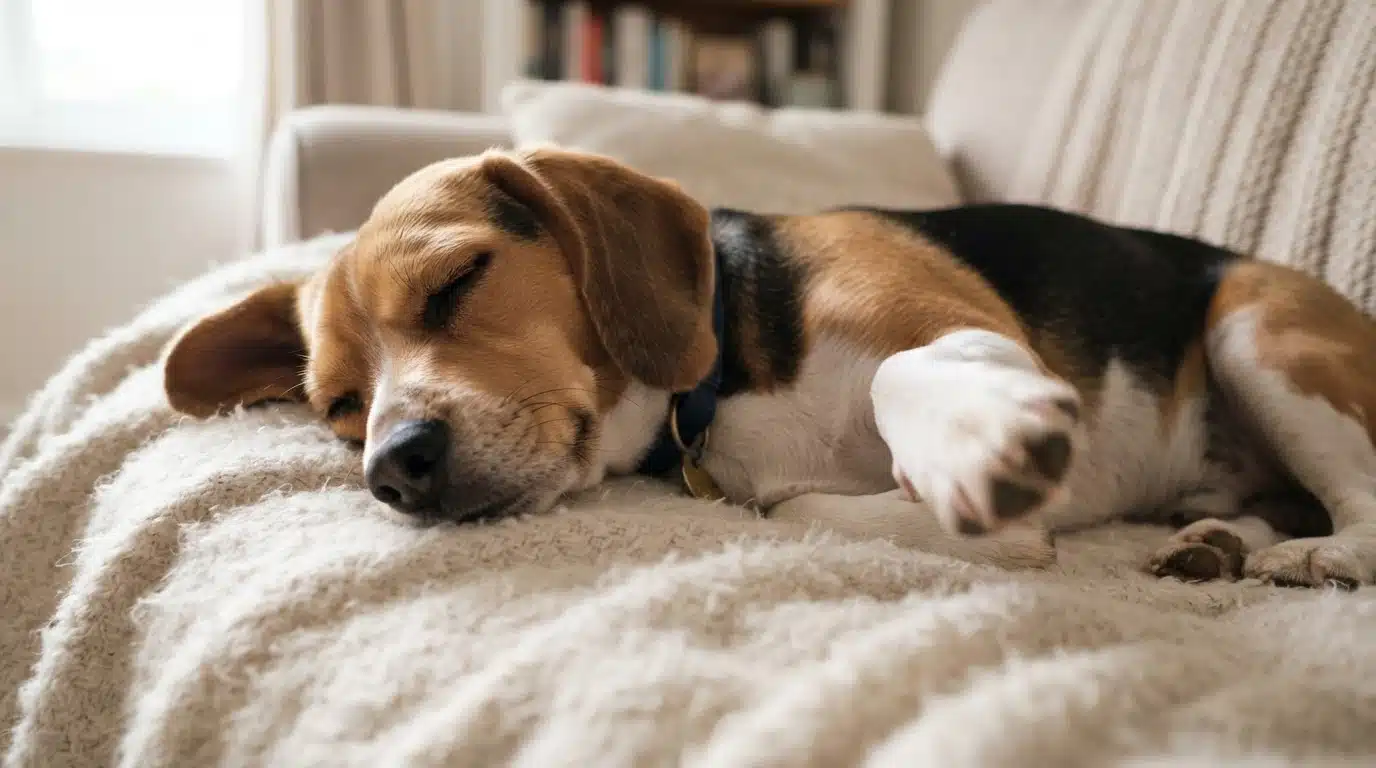
A dreaming dog usually shows small, harmless movements. These signs are easy to spot once you know what to look for. Most of these moments last only a few seconds and pass without your dog ever fully waking up, so there is rarely any reason to step in or interrupt them.
- Legs: Twitching or kicking like they’re running
- Sounds: Soft barks, whimpers, or growls
- Eyes: Moving under closed eyelids
- Face: Twitching nose or flicking ears
Once you’ve watched a few of these moments, they start to feel routine, which makes it much easier to notice if something ever looks off.
| When Movement Means Trouble: Stiff limbs, violent shaking, or trouble waking up are not typical signs of dreaming. These behaviors may need a vet’s attention. If you notice these along with confusion after waking, note when it happens so your vet can understand the pattern. |
Does a Dog’s Breed Affect Their Dreams?
Dogs of all breeds can dream, but their sleep patterns can vary with size, age, activity level, and daily experiences. Breed alone does not decide what a dog dreams about, but physical traits and lifestyle can influence how often dreams appear.
Different dogs spend different amounts of time sleeping, which can affect how frequently they enter REM sleep. A playful dog may replay moments from training or outdoor activities, while a calmer dog may have quieter dream patterns.
- Small dogs often enter dream cycles more frequently, but their dreams may happen in shorter periods.
- Large dogs usually dream less often, but their dream periods may last longer.
- Active dogs: may replay walks, games, training sessions, and daily activities.
- Puppies tend to dream more because their brains are developing and learning constantly.
- Senior dogs may spend more time sleeping, which gives them more opportunities to enter REM sleep.
A dog’s daily life appears to shape dream activity more than its breed does. Regular routines, experiences, and emotions all contribute to what happens during sleep. Sleep patterns can also change as dogs grow older, so understanding senior dog care needs can help owners support their pets through different life stages.
The Science Behind Dog Dreams
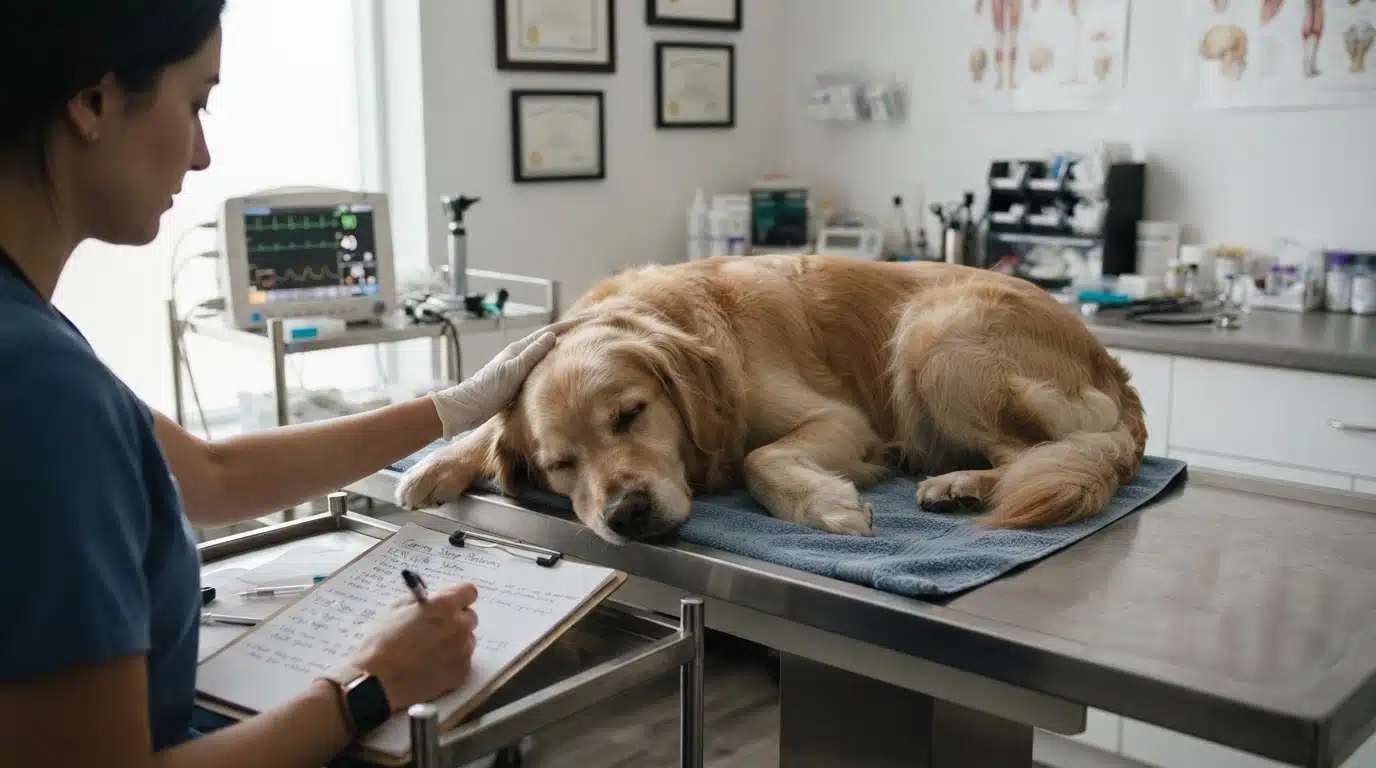
Dogs move through light sleep, deep sleep, and REM sleep, the same stages found in humans. Most dreaming occurs during REM sleep, when the brain processes daily memories and emotions.
This cycle can repeat several times each night, giving a dog more than one dream. Puppies and senior dogs sleep more, so they may get more chances to dream.
This isn’t just based on behavior, either. A study published in the National Institutes of Health’s PubMed Central database found that dogs with more disrupted or negative daytime experiences showed longer REM sleep at night, the same stage associated with dreaming.
Other NIH-hosted sleep recordings have measured this brain activity directly in dogs, confirming REM cycles similar to what’s seen in humans.
This kind of clinical data is why vets are confident saying dogs dream, even though a dog can’t describe what it saw.
Caution: Avoid waking a sleeping dog suddenly, especially during intense movements, as they may react before fully recognizing their surroundings.
Do Dogs Have Nightmares Too
Dogs can have nightmares, although no one can know exactly what they experience while sleeping. Their dreams may include memories, emotions, or stressful moments from their daily life. A difficult experience, fear, or a sudden change in routine may affect some dogs’ sleep patterns.
Most nightmares are occasional and pass quickly. A single restless night usually is not a reason for concern. The signs below can help separate normal dream activity from moments that may need more attention.
| Sign During Sleep | What It May Look Like |
|---|---|
| Whimpering | Soft cries, repeated whining, or small sounds during sleep |
| Growling | Low growls or unusual noises while the dog remains asleep |
| Breathing changes | Faster breathing or a change from their usual sleep pattern |
| Sudden waking | Startled waking, confusion, or looking unsettled afterward |
| Body movement | Twitching, paw movements, or restless sleeping during a dream |
Avoid waking a dog suddenly during an intense dream, as they may react before fully understanding what is happening. Let them wake naturally and speak calmly once they are alert.
If nightmares occur often or your dog shows unusual behavior upon waking, a veterinarian can help identify possible causes.
| Should You Wake a Dreaming Dog? It’s best not to. A startled dog may snap or bite before realizing what’s happening. Let them wake on their own, or call their name gently from a distance. Instead, wait a moment, speak in a calm, low voice, and let your dog settle back into sleep once it realizes it is safe again. |
What Pet Owners Are Saying

A Reddit thread in r/DogAdvice on this topic includes many owners’ experiences with dogs twitching, moving their paws, and making sounds while asleep.
Many users describe dream running, in which dogs move their legs as if chasing something, accompanied by soft barks and subtle facial movements during sleep.
Some owners mention that these behaviors appear more often after active days, long walks, or exciting play sessions.
Others report that their dogs seem calm upon waking, suggesting these moments are typically part of normal sleep patterns. These personal stories do not replace scientific research, but they show how closely daily observations can align with what experts observe during REM sleep studies.
Tips for Better Dog Sleep
A comfortable sleep routine can help dogs rest peacefully and settle into regular sleep patterns. A healthy routine also includes meeting your dog’s daily needs, such as proper exercise, nail care, and other practicesthat support overall wellbeing. Simple daily habits can support better rest and calmer nights. Here’s what you can do:
- Provide a clean sleeping area away from loud sounds and household activity.
- Keep daily exercise consistent with walks, playtime, and age-appropriate activities.
- Follow regular feeding and bedtime schedules to create predictable sleep patterns.
- Reduce nighttime disturbances by keeping your dog’s sleeping space calm and comfortable.
A steady bedtime routine can help dogs settle into REM sleep more easily, allowing natural dream cycles to happen throughout the night.
Vet Note: Changes in sleep habits, frequent distress during sleep, or unusual behavior upon waking should be evaluated by a veterinarian.
The Quick Takeaway
So, what do dogs dream about? Most likely, their everyday world: walks, play, family, and familiar smells.
Twitching, soft barking, and paw movements are usually just healthy REM sleep, not something to worry about.
Nightmares can happen too, especially after stress, but they’re rarely serious on their own. Watch for stiff limbs, trouble waking, or repeated distress, and check in with a vet if you notice any of these.
Otherwise, let your dog dream in peace. Try the sleep tips above, and share your own dog’s sleep habits in the comments.
Frequently Asked Questions
Do Dogs Dream In Color Or Black And White?
Dogs likely dream using the limited color range they see while awake. Since dogs mainly see shades of blue and yellow, their dreams may not look like the full-color world humans experience.
Can Dogs Have Lucid Dreams Like People Do?
There is no scientific evidence that dogs experience lucid dreams or control their dreams. Their dreams are believed to involve memories, emotions, and experiences rather than conscious awareness.
Do Dogs Dream About Their Owners?
Yes, dogs may dream about their owners and other familiar people. Since dreams are linked to daily memories, a dog that spends lots of time with you may replay those moments while sleeping.
Can Medication Affect How Much A Dog Dreams?
Yes, some medications may influence a dog’s sleep patterns. Certain sedatives or anxiety medications can affect REM sleep, which may change how often or deeply a dog dreams.
Do Dogs Dream The Same Amount Every Night?
No, a dog’s dream time can vary from night to night. Factors like age, activity level, stress, and daily experiences can affect how much time a dog spends in REM sleep.