A dog’s nails do more than protect the toes. They affect how the paw meets the floor, how the legs carry weight, and how easy each step feels.
When nails get too long, they can press into the paw, change walking posture, or make simple movements feel sore.
That is why dog nail care should be part of a normal grooming routine, not something saved for when nails look bad.
In this blog, you will learn how to check nail length, choose between trimming and grinding, and use the right tools without making the process stressful.
It will also cover safe habits, black nails, overgrown nails, quick cuts, and small maintenance tips that help keep paws healthy between full grooming sessions.
Why Nail Care Matters for Dogs?
Long nails can affect more than a dog’s look. They can change how the paws touch the floor and make each step feel uneven.
When nails grow too long, they may push the toes backward or spread them in an odd way. This can place extra pressure on the legs and joints, especially during walks or play.
Long nails can also press into the paw pad, which may cause pain, swelling, or small wounds if ignored.
Overgrown nails are more likely to crack, split, or break because they catch on floors, rugs, and outdoor surfaces. A broken nail can bleed and become sore fast.
Regular nail care helps prevent these problems. It keeps the paws in a better position and helps dogs walk, stand, and move with more comfort.
How to Know When Your Dog’s Nails are Too Long?
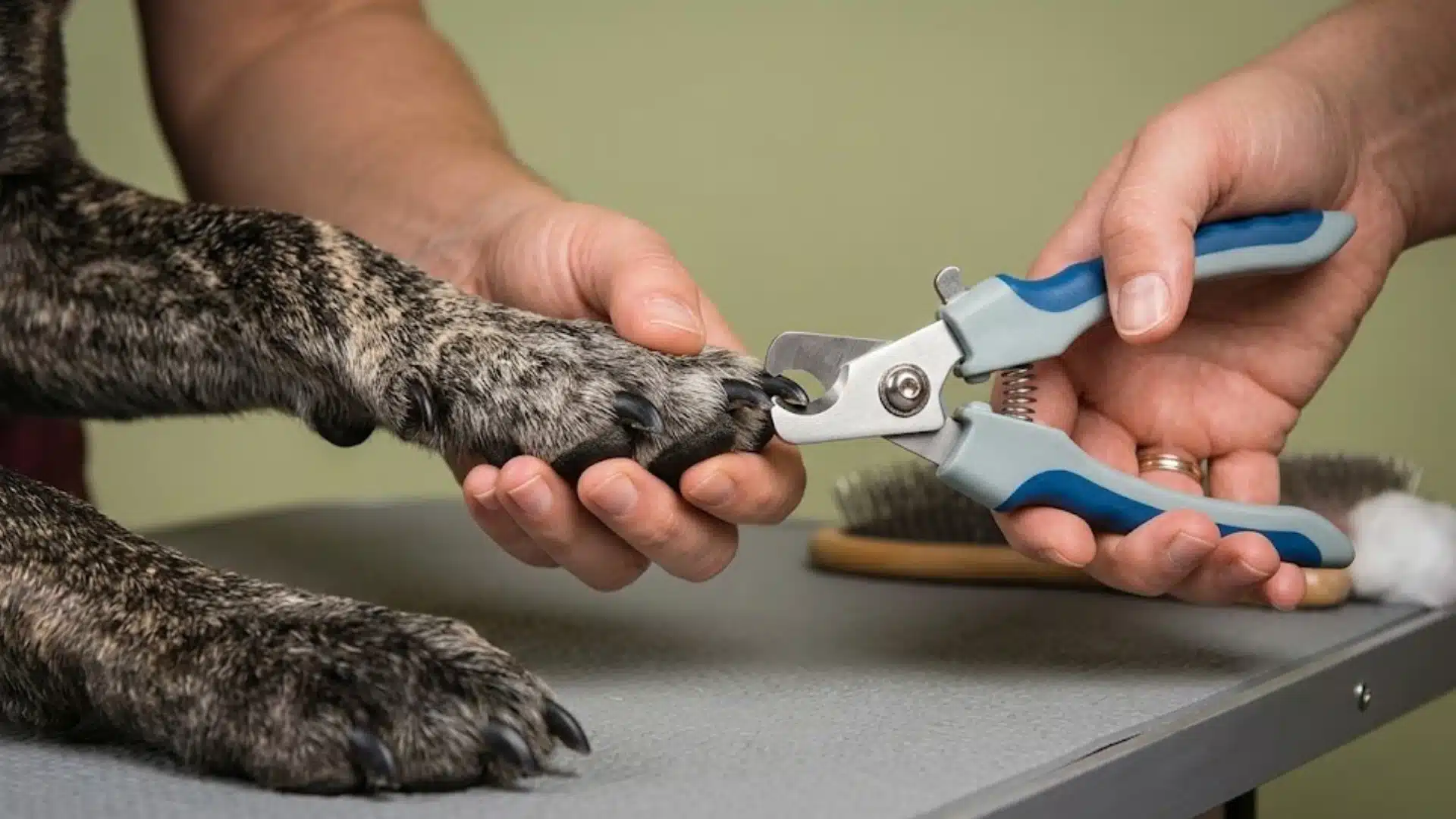
Nails do not have to look badly overgrown before they start causing trouble. Small signs can show that the nails need attention, especially when the dog is standing, walking, or resting after play.
- Nails touch the floor while the dog stands still
- A clicking sound comes from the nails on hard floors
- Nail tips start to curve toward the paw pad
- The dog avoids walks, slows down, or acts tender
- The paw position looks uneven or spread out
These signs often mean the nails are putting pressure where they should not. When nails stay too long, the toes may sit at an odd angle, and walking can feel less natural.
Checking the nails once a week makes it easier to catch these changes early and trim them before they become painful.
Best Tools for Safe Dog Nail Trimming
These items make trimming safer, easier, and calmer by helping with clean cuts, smoother edges, better control, and quick backup if bleeding happens.
| Item | Best Use | Why it Helps |
|---|---|---|
| Scissor-style clippers | Medium and large dogs | These work well on thicker nails and give a firm, steady cut. They are helpful when the nail needs to be cleaned and shortened. |
| Guillotine-style clippers | Small dogs with thinner nails | These can be easy to handle, but the nail must sit in the right place before cutting. |
| Nail grinder | Thick nails and slow shaping | A grinder smooths rough edges and shortens nails little by little. It is useful when the clippers feel too sudden. |
| Styptic powder | Small bleeding accidents | This helps stop bleeding if the quick is nicked during trimming. Keep it nearby before starting. |
| Treats and good lighting | Calm handling and clear checks | Treats help the dog stay relaxed, while good lighting makes the nail easier to see. |
If you already have a grooming setup at home, you may want to look at our guide to types of dog brushes and how to use them. Keeping the full kit sharp and clean makes every grooming task go faster.
How to Trim Dog Nails Safely?
Safe trimming starts with calm handling, small cuts, and close checks. Rushing can make the dog tense and raise the chance of cutting too deeply.
Step 1: Get the Dog Comfortable
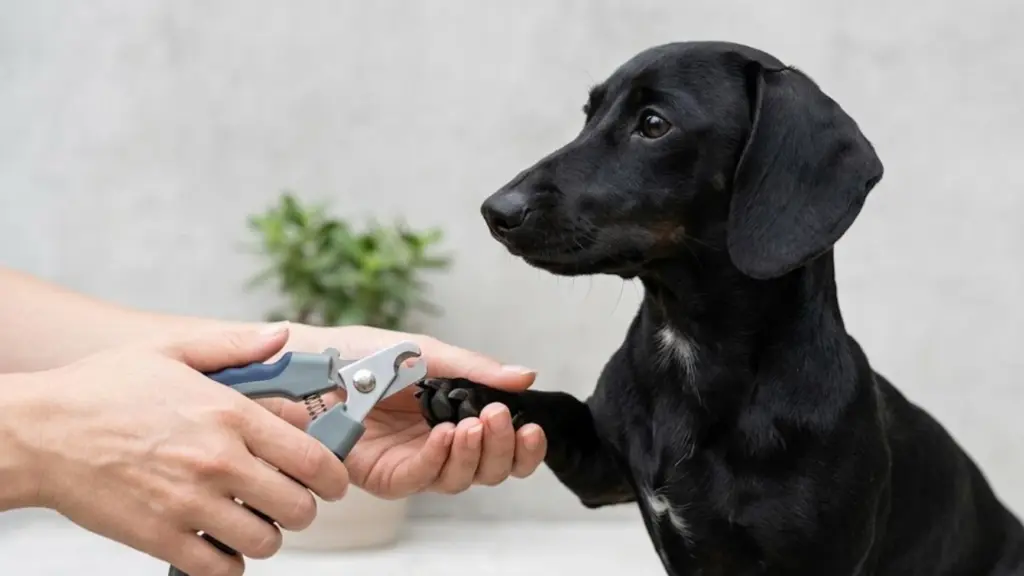
Before any cutting starts, the dog should feel safe around the clipper. Let the dog sniff it and hear it close a few times without touching the nail.
This helps the tool feel less strange. Gently handle the paws during calm moments so the touch does not feel sudden.
Press each toe lightly to bring the nail forward and reward calm behavior. Keep the first few sessions short. Even one or two nails can be enough if the dog stays relaxed.
Step 2: Find the Nail Tip
The nail tip is the part that can be trimmed safely. On light nails, the clear or pale end is easier to see, while the pink quick sits deeper inside.
Dark nails need more care because the quick is harder to spot. Trim only a tiny amount from the end instead of making one large cut.
Look at the nail after each small trim before going further. This lowers the risk of pain and bleeding, especially with dogs that have thick or black nails.
Step 3: Trim Small Bits at a Time
Small cuts give better control and make the process safer. Clip tiny pieces from the end of the nail, then check the cut surface before going further.
Stop before reaching the quick, which is the sensitive part with blood vessels and nerves. On dark nails, a darker center may start to show as the cut gets closer.
That is a sign to stop. Move slowly across each nail, keep the paw steady, and pause when the dog needs a break.
Step 4: Smooth the Edges
Freshly trimmed nails can leave sharp or rough edges. A nail grinder or a simple nail file can smooth those spots after clipping.
This helps stop the nail from catching on rugs, bedding, clothes, or soft flooring. It can also make the nail feel more natural when the dog walks.
Grinding should be done in short touches so the nail does not heat up. Hold the paw steady, keep fur away from the tool, and stop once the nail edge feels smooth.
Trimming Black Nails: What to Watch for
Black nails are the part of dog nail care that makes most owners nervous, and for good reason. You can’t see the quick, so there’s no clear line to stop at.
The safest method is to trim in very small increments and watch the cut surface. After each clip, look at the cross-section of the nail:
- A white or chalky center means you’re still in the safe outer shell.
- A gray or slightly darker center means you’re getting close to the quick.
- A dark, moist-looking center means stop immediately, the quick is right there.
Good lighting is essential here. If you can’t see the cut surface clearly, you’re guessing.
For dogs with very dark, thick nails, a groomer or vet can handle the first trim and show you where to stop on future sessions.
Trimming vs Grinding: Which Method is Better?
Both methods can work well, but the better choice depends on nail thickness, dog comfort, and how much control the handler needs.
| Point | Trimming | Grinding |
|---|---|---|
| Speed | Faster and better for quick nail shortening | Slower because the nail is filed down little by little |
| Finish | May leave sharp or uneven edges after cutting | Gives a smoother edge and helps stop nails from catching |
| Best For | Dogs with normal nails that allow quick handling | Dogs with thick nails or nails that need slow shaping |
| Dog Comfort | Some dogs prefer it because it is quiet and quick | Some dogs prefer it because there is no sudden clip |
| Main Concern | Cutting too much at once can reach the quick | Holding the grinder too long can warm the nail |
| Best Use | Good for trimming length fast | Good for smoothing and careful shortening |
| Combined Use | Can remove extra length first | Can finish the nail after clipping |
| Final Choice | Works best when the dog is calm with the clippers | Works best when the dog accepts sound and vibration |
How Often Should You Trim Dog Nails?
Most dogs need a nail trim every 3 to 4 weeks. If the nails touch the floor when the dog is standing still, they are already overdue.
Dogs that walk frequently on pavement or firm paths may wear their nails down naturally and need less frequent trims, while dogs that mostly walk on grass or carpet will need trims on the shorter end of that schedule.
Puppies and senior dogs often need more frequent checks. Puppy nails grow fast and feel sharper than adult nails, even at short lengths.
For senior dogs, slower activity means less natural wear, and nails can reach problem lengths faster than owners expect.
Simple Dog Nail Maintenance Tips
Small habits can keep nails healthier between trims and make each grooming session easier, calmer, and safer for the dog.
- Check nails weekly: Look at the length, shape, and tips of the nails once a week. This helps catch overgrowth, cracks, or rough edges early.
- Keep paw fur trimmed if needed: Long fur around the paws can hide the nails and make trimming harder. Keeping it neat helps with clear checks.
- Walk on safe surfaces: Regular walks on safe paths can help wear nails down naturally. Avoid rough ground that may crack or scrape the nails.
- Watch dewclaws closely: Dewclaws do not touch the ground much, so they can grow faster and curl into the skin if ignored.
- Keep tools clean and sharp: Clean tools help avoid dirt buildup, and sharp clippers make cleaner cuts without crushing the nail.
- Make nail care part of a routine: A steady routine helps the dog get used to paw handling, trimming, grinding, and rewards over time.
Nail care pairs well with other quick paw checks. While you have your dog’s foot in hand, it takes seconds to glance between the toes for debris or irritation. Cleaning your dog’s ears is another quick grooming task that fits naturally into the same routine session.
Dog Nail Trimming Mistakes Every Owner Should Know
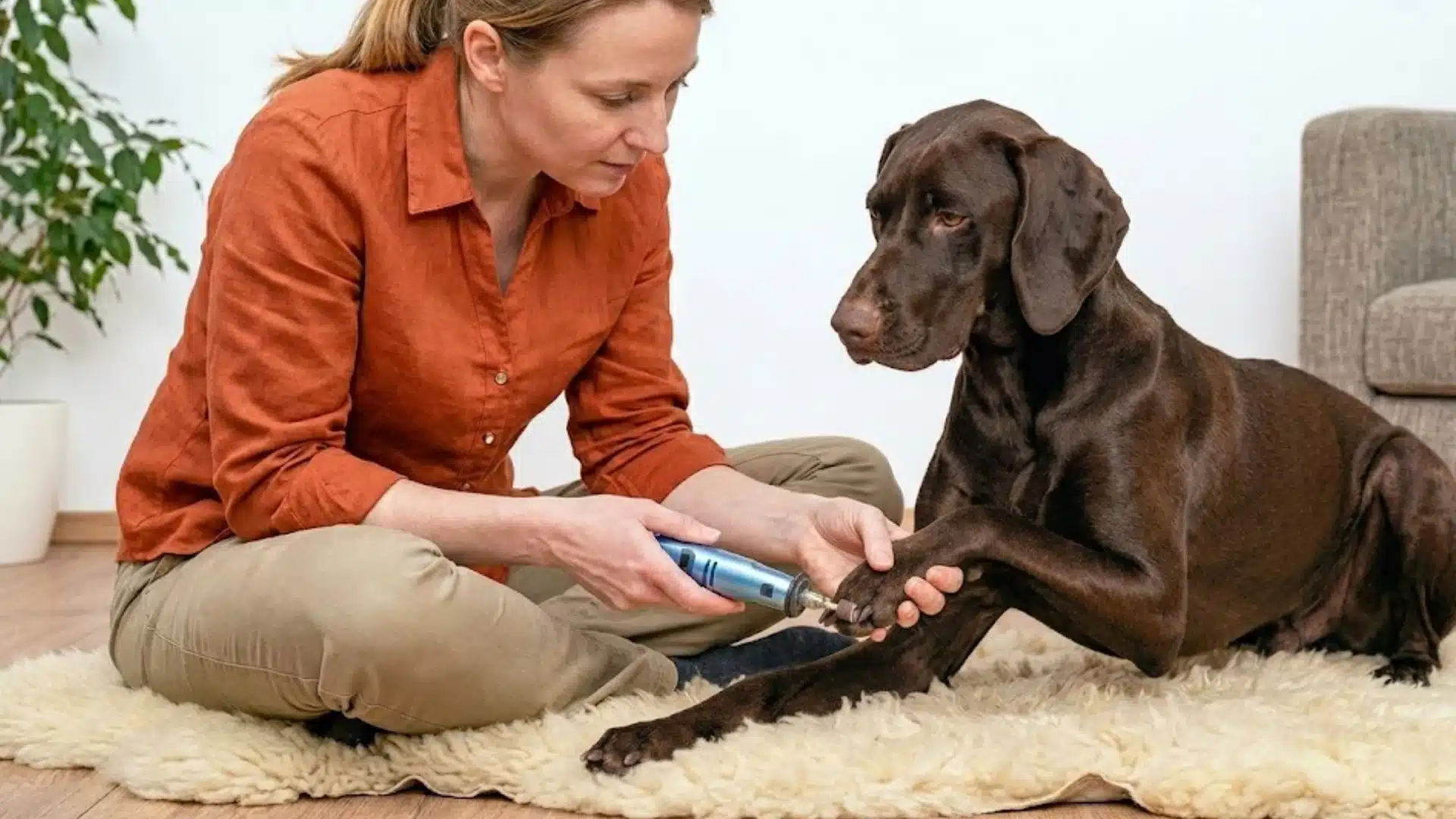
Small mistakes during nail care can make dogs nervous, cause pain, or turn a simple trim into a stressful grooming session.
- Cutting too much at once: Large cuts can reach the quick and cause pain or bleeding. Small trims give better control and keep the process safer.
- Ignoring dewclaws: Dewclaws do not wear down like other nails. If left unchecked, they can curl, grow into the skin, or snag on fabric.
- Using dull clippers: Dull clippers can crush the nail instead of cutting it cleanly. This may feel uncomfortable and leave rough, split edges.
- Grinding for too long: A grinder can heat the nail if held in one spot. Use short touches and pause often to avoid discomfort.
- Holding the paw too tightly: A tight grip can make the dog pull away or panic. Hold the paw gently but firmly enough to stay steady.
- Waiting until nails are badly overgrown: Overgrown nails are harder to trim and may need slow shortening over time. Regular checks make care much easier.
When to Visit a Vet or Groomer?
Some nail problems need more than a careful trim at home.
A vet or groomer will check nails that are curled into the paw, especially if the tip is touching or pressing into the pad.
This can cause pain, swelling, and skin damage. A cracked or bleeding nail also needs attention because it may become sore or infected.
If the dog limps, pulls the paw away, whines, or avoids walking, pain may already be present. Swelling around the nail bed can point to injury, irritation, or infection.
Help is also wise when a dog becomes highly stressed during nail care and cannot stay calm. If the quick is hard to find, especially on dark nails, a groomer or vet can trim the nails more safely.
Conclusion
Trimming, grinding, and regular checks all work together to keep a dog’s nails at a safe length.
Clippers help remove extra length faster, while a grinder can smooth rough edges and make thick nails easier to shape.
Weekly checks, clean tools, close attention to dewclaws, and calm handling can stop small nail issues from turning into painful ones.
I would rather see small, steady care than a long wait that makes trimming harder for the dog. Good dog nail care is not about doing everything perfectly in one session.
It is about building a routine that feels safe, simple, and easier each time. You can start slow, reward calm behavior, and get help when nails look sore, cracked, curled, or hard to trim.
What nail care challenge does your dog struggle with most? Share it in the comments below.
Frequently Asked Questions
Can Dogs Naturally File Their Nails While Playing Outside?
Yes, some dogs may wear their nails down through regular outdoor activity, but it depends on the surface. Grass and soft soil do not file nails much. Firmer paths can help more, but they should still be safe and not too rough. Even active dogs still need nail checks because some nails may grow faster than others.
Should Puppies Have Their Nails Checked Early?
Yes, puppies should get used to paw handling early. Their nails can feel sharp, even when they are small. Early checks also help them stay calmer during grooming as they grow. The goal is not to rush into full trims, but to make paw touch, tools, and rewards feel normal.
Can Diet Affect a Dog’s Nails?
Diet can affect nail strength, just like it can affect skin and coat health. Weak, brittle, or easily cracked nails may sometimes be linked to poor nutrition, age, or health issues. If the nails keep breaking even with regular care, a vet can check for deeper causes.