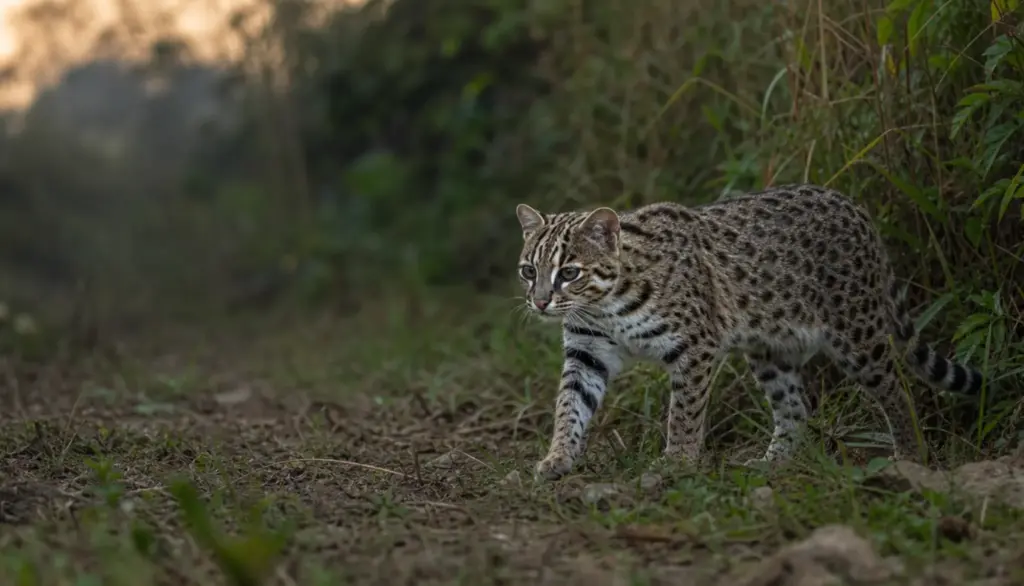
At dusk, a spotted cat crossing a field can look like a house pet until it slips into cover without a sound. That brief sighting often leaves one question: what animal was it?
The leopard cat is a house-cat-sized hunter native to Asia, but its common name now encompasses two closely related species, as currently classified.
Knowing that distinction makes maps, scientific labels, and conservation reports easier to understand.
The sections ahead cover classification, identifying features, distribution, natural history, human-wildlife contact, research methods, and protection concerns.
Each part focuses on a separate question, from telling similar-looking cats apart to understanding how this animal survives across varied parts of Asia.
Why Leopard Cats Have Different Scientific Names
The common name “leopard cat” does not always identify a single scientific species. Modern classification separates mainland animals from those native to the Sunda region.
The mainland leopard cat is classified as Prionailurus bengalensis, while the Sunda leopard cat is classified as Prionailurus javanensis. Both belong to the family Felidae and the genus Prionailurus.
Mainland adults typically weigh 3 to 7 kilograms, though body size varies across regions. The Asian leopard cat is another common name for these spotted felines.
Genetic evidence published by the American Genetic Association supports a clear division between the mainland and Sunda groups. This classification change explains why scientific names, country lists, maps, and subspecies records may differ between references.
Checking the scientific name helps confirm which animal the information describes.
How to Identify a Leopard Cat
This cat looks like a miniature leopard, but the resemblance is mainly in its coat. Facial markings and body proportions provide stronger identification clues.
| Feature | What to Look For |
|---|---|
| Coat color | Grey-brown, tawny, yellowish brown, or reddish brown |
| Body markings | Dark spots covering the torso and limbs |
| Facial markings | Black lines running from the forehead toward the neck |
| White areas | Commonly found around the eyes and muzzle |
| Ears | Rounded, often with pale markings on the back |
| Tail | Dark bands near the end |
| Northern forms | Generally have thicker, paler coats |
| Tropical forms | Often have darker, shorter coats |
| Sex differences | Males and females look similar, though males may be heavier |
| Bengal comparison | Bengals are domestic cats with Asian leopard cat ancestry |
| Leopard cub comparison | Older cubs have heavier limbs, broader paws, wider heads, and clearer rosettes |
Very young leopard cubs may not be heavier, so size alone is not dependable. Identification should rely on several matching traits rather than one feature.
Coat color alone is not a reliable way to identify a wild cat. Several big black cat breeds have sleek, solid-colored coats that can look unusual without being wild animals.
Where Mainland and Sunda Leopard Cats Live
Leopard cat records extend from Afghanistan and Pakistan to Southeast Asian islands and the Russian Far East. Current species boundaries determine which locations belong to the mainland or Sunda species.
- Mainland leopard cats: Found throughout the Indian subcontinent, mainland Southeast Asia, China, Korea, and the Russian Far East
- Island populations: Occur in Taiwan and on several Japanese islands
- Sunda leopard cats: Found in parts of Malaysia, Indonesia, and the Philippines
Their habitats also vary by region. Forested areas include tropical rainforests, temperate woodlands, secondary forests, and forest borders. They may also occupy scrublands, grasslands, wetlands, plantations, agricultural edges, and high-elevation areas in the Himalayas.
Research published by the American Society of Mammalogists recorded higher densities in two disturbed forest reserves than at a sustainably managed site. However, this finding reflects a single landscape and does not mean that forest removal benefits the species.
Food availability, shelter, and protective vegetation influence local presence. Conditions within a region matter more than the country name alone.
Leopard Cat Behavior and Natural History
Nighttime activity shapes how leopard cats communicate, hunt, rest, and care for their young. Each behavior helps them use environments that differ in climate, cover, and prey.
1. Activity and Communication
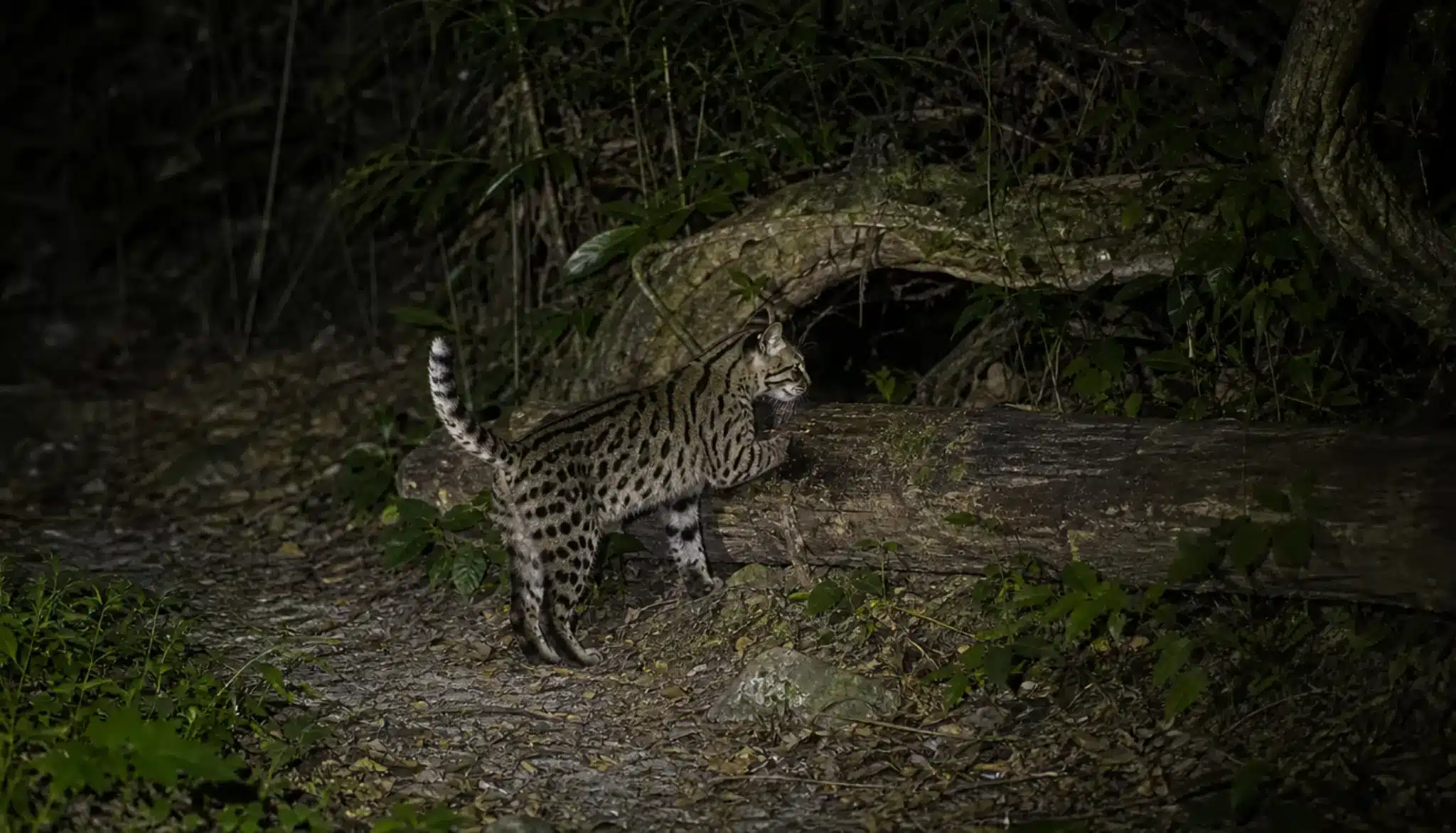
Adults usually travel alone, with male home ranges sometimes overlapping those of several females. They communicate through urine, feces, and other scent cues. Daytime shelters may include hollow trees, dense plants, rock crevices, and burrows.
They become most active from dusk through the night, when cooler temperatures and reduced human activity make hunting easier.
Vocalizations are uncommon outside the breeding season, so scent marking remains the primary means by which adults establish territory and avoid unnecessary conflict.
2. Food and Hunting
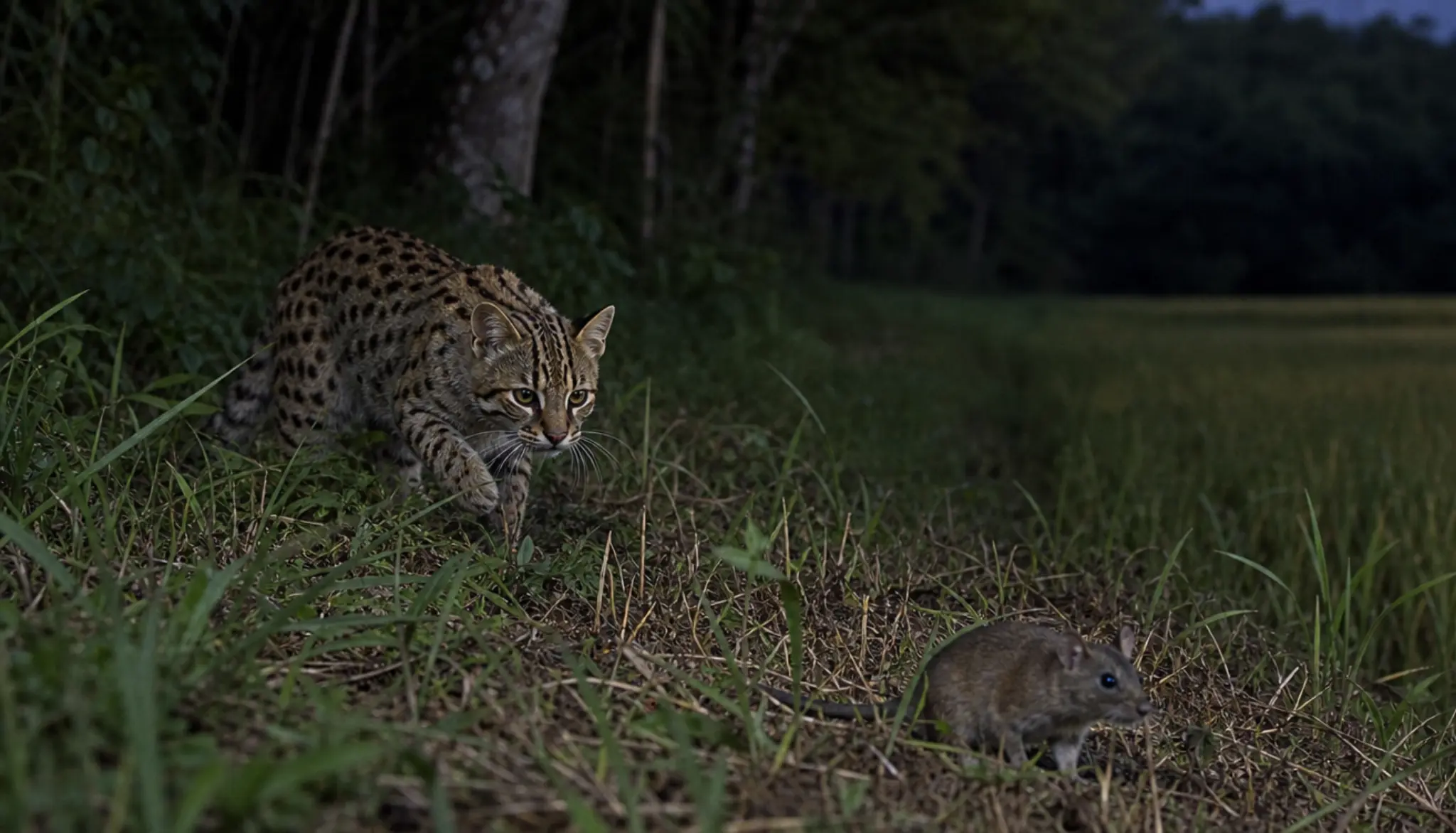
Rodents dominate many recorded diets, while birds, reptiles, amphibians, insects, fish, and other small vertebrates are taken when available. A diet analysis published by the American Society of Mammalogists found that food selection changed with local prey availability.
They usually hunt by moving quietly through vegetation before making a quick, short-distance attack.
This flexible feeding behavior allows leopard cats to survive across forests, wetlands, farmland, and other habitats where prey species differ throughout the year.
3. Breeding and Kittens
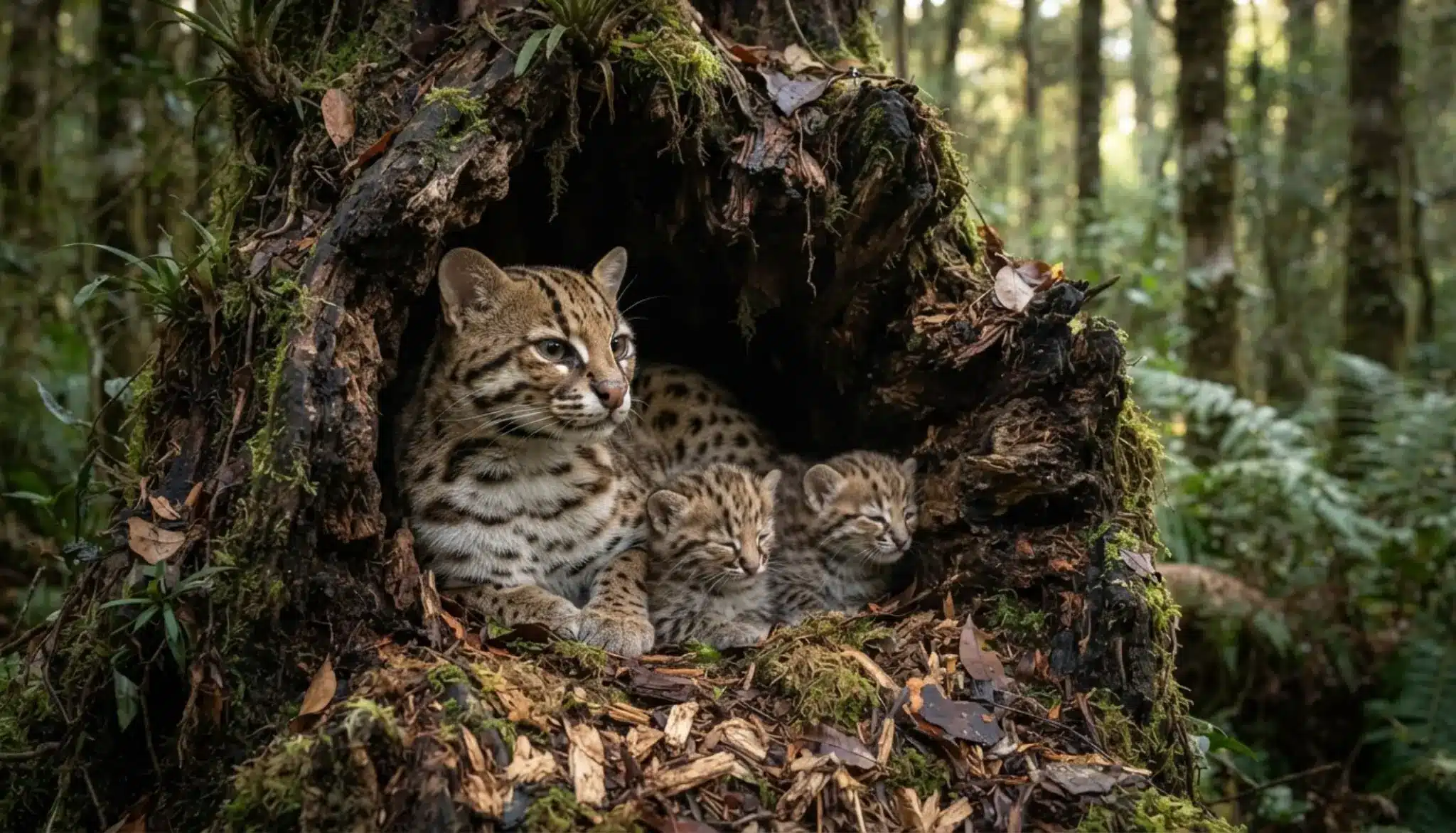
Breeding may occur throughout the year in warm climates, while northern groups often mate seasonally.
Pregnancy lasts about 65 to 72 days. Litters contain one to four kittens, commonly two or three, and the young open their eyes after roughly ten days. Sexual maturity is reached near 18 months.
The mother raises the kittens on her own, keeping them hidden until they are strong enough to explore nearby areas. As they grow, they gradually learn hunting skills before becoming independent.
4. Movement Through the Habitat
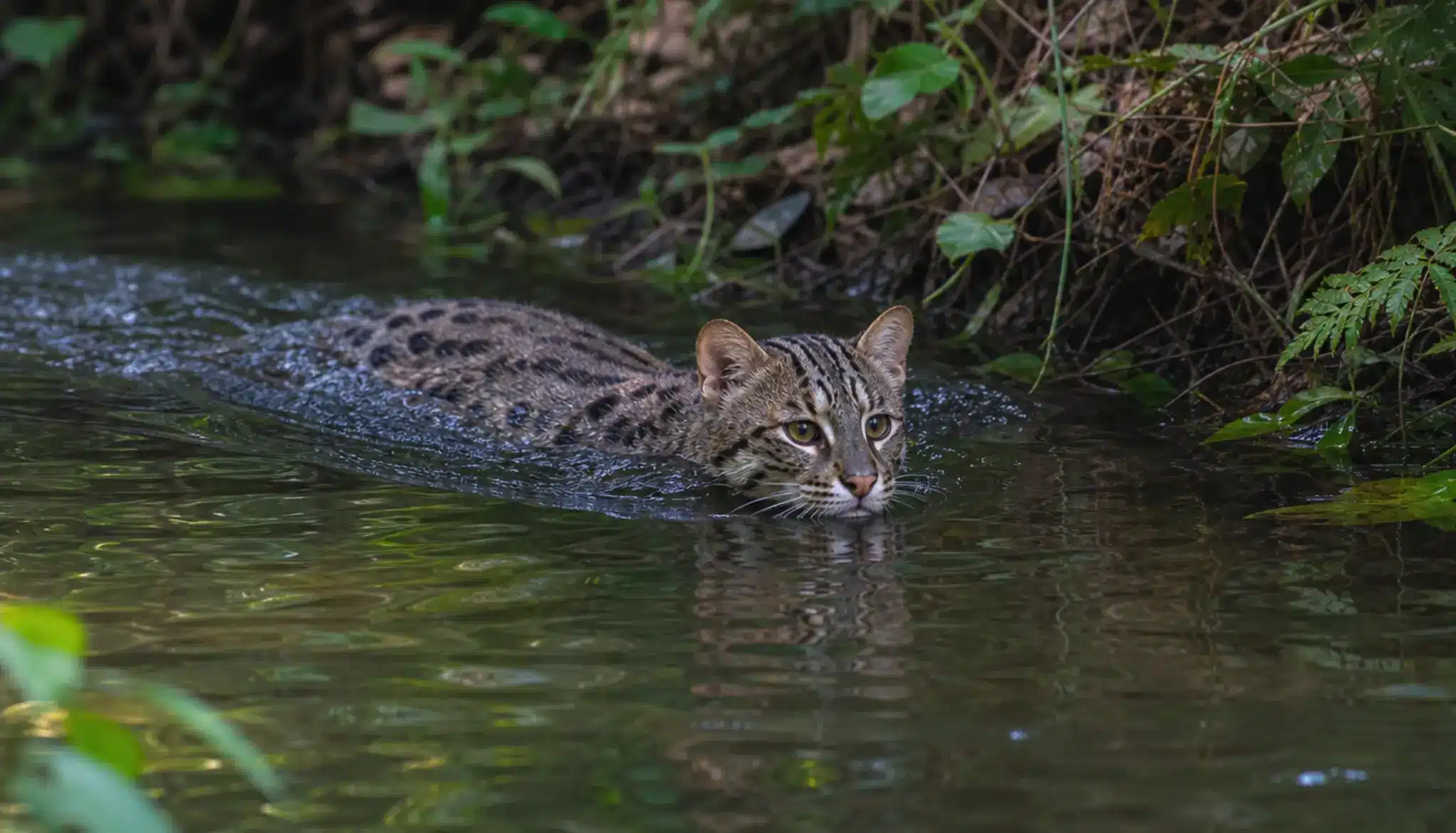
Leopard cats climb well and can swim across waterways. These abilities help them cross wet terrain, reach feeding areas, and move between separated patches of vegetation.
They also travel confidently through dense undergrowth and use fallen logs, stream banks, and natural cover to move with little exposure. Their adaptable movement helps them occupy a wide range of landscapes across Asia.
How Researchers Track Leopard Cat Populations
Reliable population estimates depend on evidence collected across long periods. Each research method records a different part of the animal’s activity or location.
Motion-triggered cameras record coat patterns, activity times, and the use of roads or trails. Clear markings can help separate individuals when photographs show matching sides and angles. Scat provides DNA and dietary evidence, while tracks, roadkill reports, and verified community records add location data.
Population estimates require more than counting photographs. Spatial capture-recapture models account for repeated records of the same animal and the position of each camera.
A Journal of Mammalogy study, published by the American Society of Mammalogists, used 16,736 camera days across 2,075 square kilometers. Researchers recorded 65 detections and identified 43 individual leopard cats, showing the fieldwork required to estimate density across a large area.
Each method answers a different question, and none is sufficient everywhere. Combining records yields a more reliable account of local numbers and land use.
When Leopard Cats and People Cross Paths
Agricultural land can bring leopard cats close to poultry, buildings, and people. Each situation requires a response that avoids direct handling or unnecessary removal.
| Situation | Possible Concern | Suitable Response |
|---|---|---|
| Entering poultry areas | Chickens and small livestock may be attacked | Use secure, enclosed poultry housing |
| Being kept in captivity | Hiding, scent-marking, stress, biting, and enclosure damage | Do not keep a wild individual as a pet |
| Entering a building | The animal may panic when cornered | Move people and pets away and contact wildlife authorities |
| Becoming trapped | Handling may injure the animal or the rescuer | Keep a safe distance and wait for trained assistance |
Research from the Smithsonian Institution connected captive housing conditions with changes in behavior and stress hormones. Giving the animal space and reducing direct contact can lower risk during an unexpected encounter.
Secure poultry housing can limit livestock losses without removing a native predator. Keeping a safe distance also protects residents, pets, and the animal.
Threats and Protection Across Their Asian Range
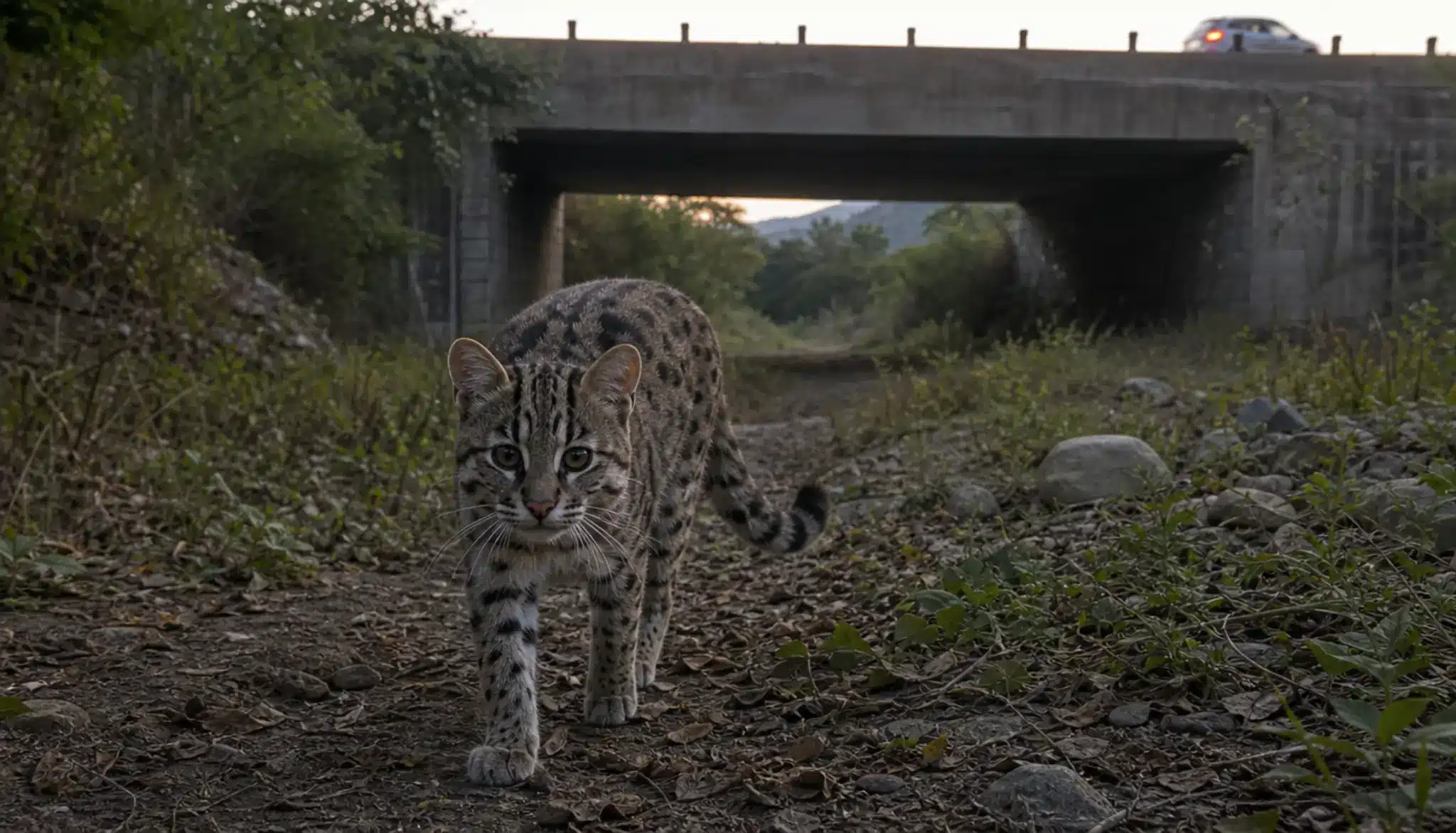
The mainland leopard cat is listed as Least Concern in the IUCN Red List assessment. However, its total number and overall trend remain uncertain, and isolated groups may face greater pressure.
The main threats facing leopard cats include:
- Habitat conversion and loss of connected vegetation
- Hunting and capture for the wildlife trade
- Vehicle strikes near roads and settlements
- Retaliatory killing after poultry or livestock losses
- Dog attacks in some island regions
- Disease transmission from domestic cats in certain local groups
Measures that can help protect leopard cats include:
- Retaining connected forest and vegetation corridors
- Enforcing restrictions on hunting and wildlife trade
- Creating safer crossing areas along busy roads
- Monitoring isolated and poorly studied groups
- Supporting nonlethal conflict-response programs
- Focusing research on locations with few recent records
The Least Concern label applies to the assessed species as a whole. It does not confirm that every local group is stable or free from serious threats.
The Last Word on the Leopard Cat
Seeing a leopard cat near a field or forest edge should be treated as a wildlife encounter, not an invitation to approach.
The most useful response is simple: keep people and pets back, avoid feeding or cornering the animal, and call local wildlife authorities if it is injured or trapped.
Accurate identification also matters because mainland and Sunda records are not interchangeable, particularly in conservation reporting. Researchers still lack dependable numbers for many regional groups, so verified sightings and protected movement routes remain valuable.
Share reliable information, support local habitat programs, and encourage nonlethal responses around farms.
These steps offer practical support without assuming that a wide geographic distribution means every local group is secure.
Frequently Asked Questions
Do They Migrate Between Seasons?
Regular long-distance seasonal migration has not been documented. Individuals may adjust their movements as prey, water, snow, farming activity, or breeding conditions change, but they generally continue using a familiar home area rather than traveling across entire regions.
Why Do Their Eyes Shine at Night?
Like many cats, they have a reflective layer behind the retina called the tapetum lucidum. It sends light through the retina again, improving vision in dim conditions and causing the eyeshine seen in nighttime photographs.
Do Males Help Raise Kittens?
Females provide the main parental care and shelter kittens in protected dens. Males have occasionally been reported assisting, but the extent of paternal care remains uncertain because family behavior is difficult to observe consistently under natural conditions.
Do They Make Sounds Like House Cats?
Captive observations report meows, growls, and hisses, but the free-living vocal repertoire is not well documented. A call heard after dark cannot confirm the species because several domestic and native cats produce similar sounds nearby.