

The first Vizsla I spent time with wasn’t a photo on a breeder’s site; she was a foster at the shelter where I’ve volunteered for years, and within a week I understood why her owners gave her up.
She wasn’t a bad dog. She was built to work all day at someone’s side, and she sat home alone for nine hours. That gap between how the Vizsla dog breed looks and what it needs is the story.
Bred in Hungary to hunt beside one person, it carries that history into living rooms as shadowing, boredom, and real distress when left alone. A Vizsla’s temperament determines if it thrives in your home, and breeders, vets, and trainers taught me the rest.
What is a Vizsla Dog Breed?
A Vizsla is a formally recognized breed, not just a nickname for “friendly hunting dog.” It was developed in Hungary to point and retrieve game while staying close to a single hunter. That close-working history is why the breed bonds so hard to one household today.
The Vizsla is fully recognized by the American Kennel Club as a sporting breed, with an official standard covering size, coat, structure, and temperament.
When I’ve asked breeders why the Vizsla gets described as “velcro” more than almost any other sporting breed, the answer is always some version of the same thing: this dog was never meant to range far from its handler in the field, so it doesn’t range far from you at home either.
Note: Before committing to a puppy, ask for the parents’ health-screening results, expected adult size, and registration details, and check the seller against USDA’s public licensing records. Those records tell you far more than the wording in a listing or advertisement.
Vizsla Appearance and Temperament
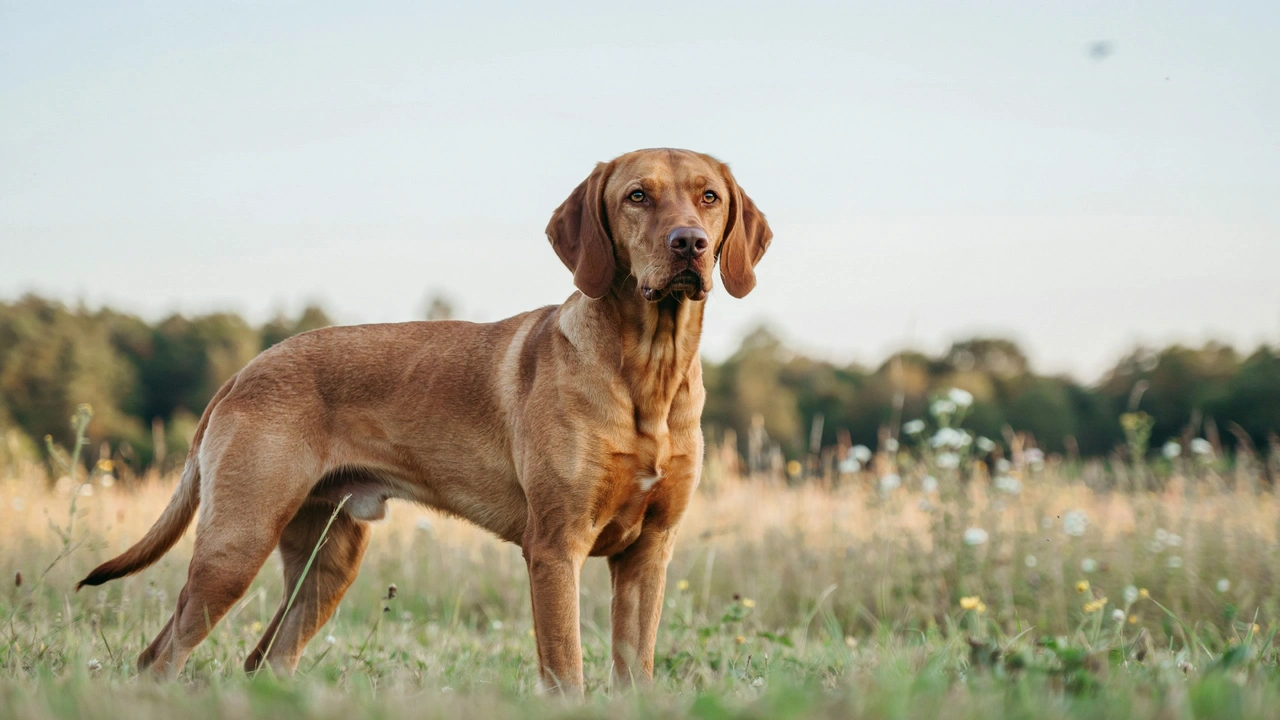
A Vizsla’s coat, build, and behavior all trace back to its working background as a pointer and retriever. The sections below break down what that background looks like day to day.
1. Size and Build
The Vizsla is a medium-sized, lightly built but muscular dog, built to cover ground all day rather than for bulk or power.
- Height: Males 22 to 24 inches; females 21 to 23 inches
- Weight: Typically around 44 to 60 pounds
- Lifespan: 12 to 14 years on average
For comparison, larger sporting breeds like the Weimaraner run noticeably heavier-boned and taller. A breeder can estimate a puppy’s likely adult size from the parents and growth pattern, but no responsible seller should promise one exact adult weight.
2. Coat and Physical Features
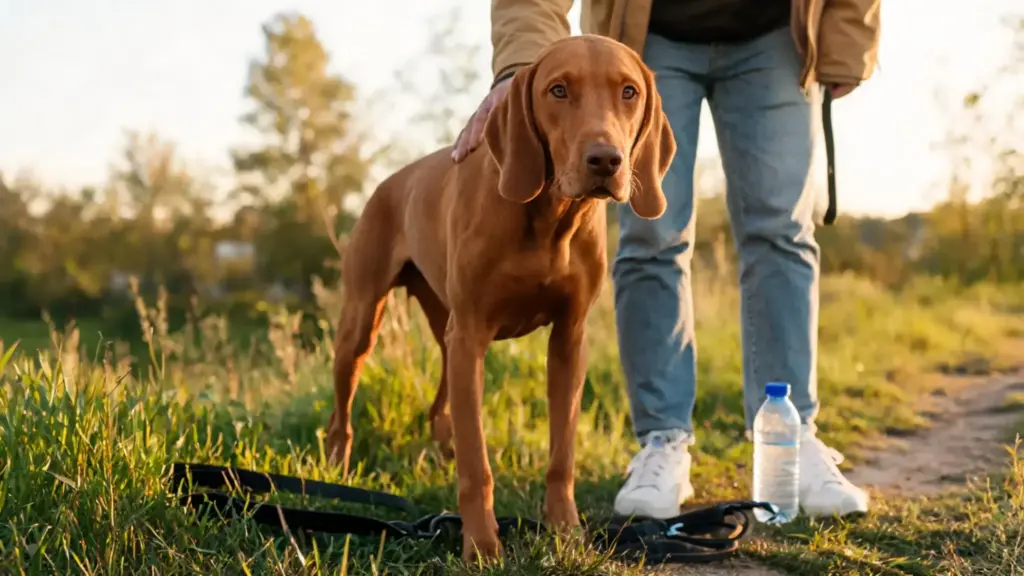
The Vizsla has a short, smooth coat with no undercoat, which keeps grooming simple, and picking the right brush is really the only tool this coat needs. Its build includes long, soft ears, almond-shaped eyes, and a lean, athletic frame.
- Solid golden-rust or russet color
- No undercoat; grooming stays minimal
- Light, even shedding year-round
I live in Vermont, and every Vizsla owner I know up here says the same thing come November: that thin coat is not built for our winters. Mine reaches for a coat before a walk once the temperature drops, and I’d tell any owner in a cold climate to budget for one.
3. Temperament and Social Behavior
The Vizsla is intelligent and deeply people-focused, often nicknamed the “Velcro dog” for how closely it shadows its owner.
A trainer I interviewed for this piece put it well: the Vizsla will follow you from room to room just to keep you in sight, not out of insecurity, but because staying close is what the breed was built to do. Common temperament traits include:
- Affectionate and people-focused
- Sensitive to tone and handling
- Prone to real difficulty settling or being left alone
Without enough activity or structured routine, some Vizslas may develop restlessness or destructive chewing, and short, reward-based training works better than harsh corrections for this sensitive breed.
Vizsla Puppies: What New Owners Should Expect
The foster I mentioned earlier came to us at eight months old, already showing the anxious pacing that shows up when this window gets missed. It’s why I push this section harder than most breed guides do.
Socialization matters most between 8 and 16 weeks; introduce new people, sounds, surfaces, and calm dogs during this window. A Vizsla that misses it can grow up more anxious or reactive than the breed typically is.
Puppy exercise needs careful limits. Avoid repetitive high-impact activity, forced running, jumping from heights, and long hikes until growth plates close, usually around 12–18 months depending on the individual dog. Short, varied play sessions are safer than one long outing.
Teething brings heavy chewing, usually from 3 to 6 months, and soothing early teething struggles takes more than a handful of chew toys.
Vizsla puppies chew harder and longer than many breeds because of their energy level, so durable chew toys and consistent redirection matter more here than with a lower-drive breed.
Vizsla Care Requirements: Exercise, Grooming, Feeding, and Training
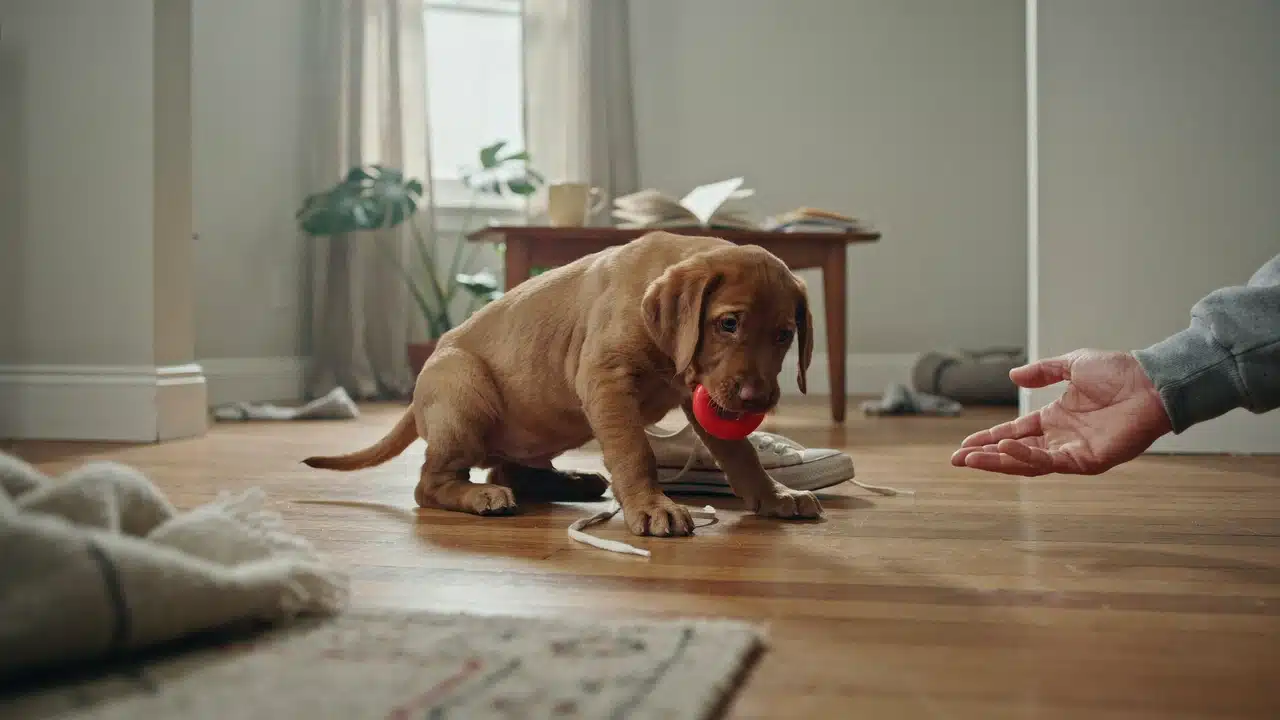
Daily care for a Vizsla depends on the dog’s age, health, and energy level, but most Vizslas require substantial daily activity, minimal grooming, and consistent training regardless of size.
Exercise and Mental Activity: Aim for 60–90 minutes of real daily activity, walks, hiking, retrieving, swimming, structured play, plus mental outlets like scent work, puzzle feeders, and short training sessions; rotating in brain-teasing toys for dogs keeps that mental workout varied.
Coat and Grooming: Brush weekly, bathe only as needed, and avoid over-bathing since it dries out the short coat. Check nails, teeth, ears, and skin regularly.
Feeding and Nutrition: Feed twice daily on a lean, active-breed formula to curb bloat risk; keep puppies on large-breed formula and check ribs by feel, not sight.
Training and Socialization: Practice recall, loose-leash walking, waiting calmly at doors, and settling indoors. Introduce new people, animals, and environments gradually, in short sessions rather than long drills.
Alone-Time Management: Vizslas bond strongly with their people, so introduce alone time gradually, never assume the dog will be fine unsupervised on day one. Watch for pacing, vocalizing, or destructive behavior as early warning signs.
Note: A Vizsla’s manageable coat can make it look like a low-effort dog, but it still needs daily attention and a reliable routine. Consider the complete care commitment before deciding whether this breed suits your household.
Vizsla Health and Lifespan
Health risks in Vizslas are generally breed-linked rather than universal, so parent test results matter more than the breed’s overall reputation.
The Vizsla Club of America recommends hip, thyroid, eye, and cardiac testing for breeding dogs. Orthopedic issues like hip dysplasia, thyroid conditions such as hypothyroidism, eye problems including progressive retinal atrophy, and epilepsy in a subset of lines are the conditions worth knowing about ahead of time.
Published lifespan estimates commonly fall around 12–14 years. Genetics, body condition, preventive care, activity level, and access to veterinary attention all affect this differently for each dog.
Every veterinarian I’ve interviewed on breed-specific health says the same thing: ask to see the parents’ actual screening results, not just a statement that they were “vet checked.” Registration confirms identity and ancestry.
It does not replace health testing, and I’ve watched too many families learn that the hard way after bringing a puppy home.
Vizsla vs. Weimaraner: What is the Difference
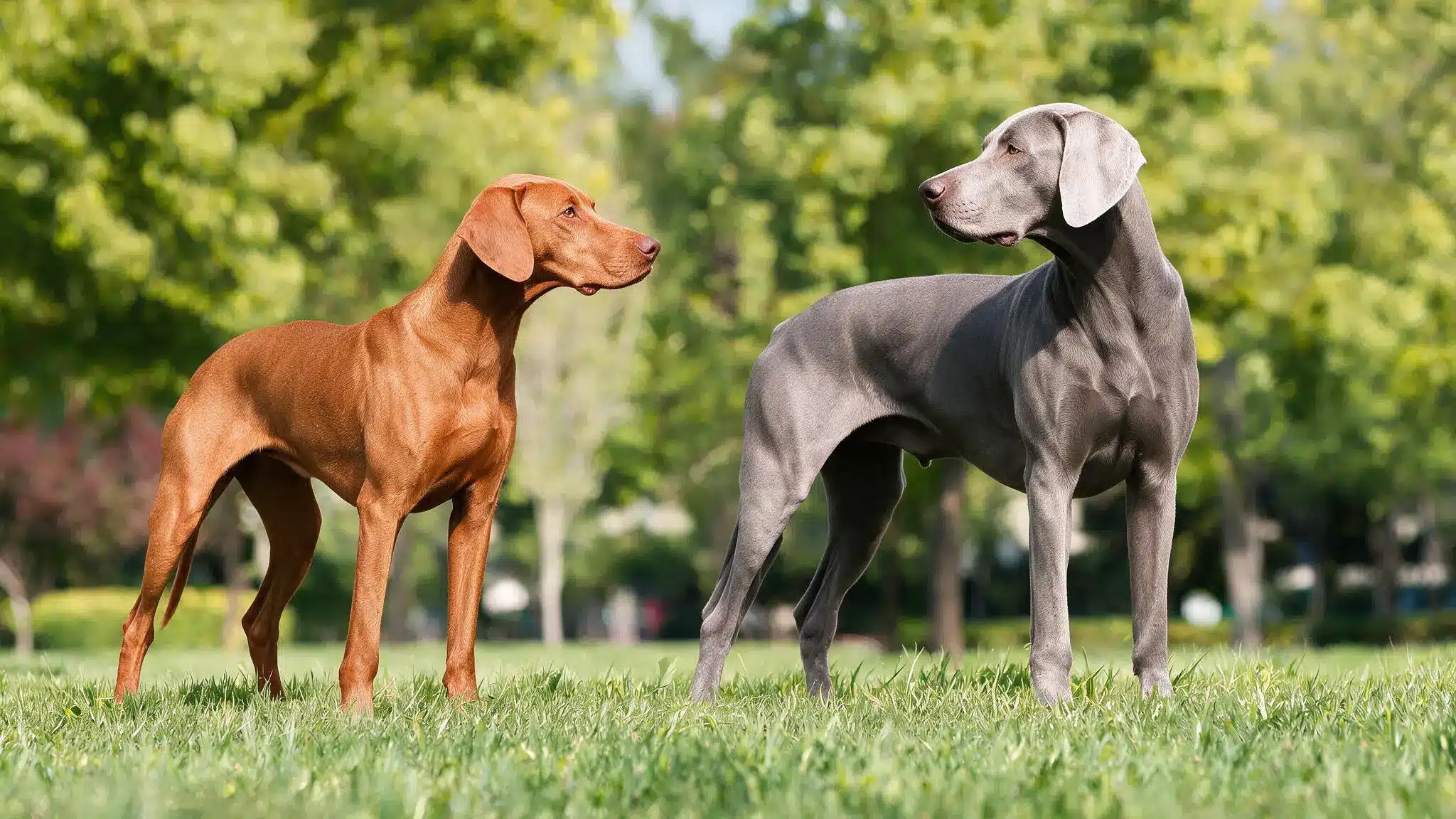
The Vizsla and Weimaraner share a sleek, short-coated sporting-dog look, but they are separate breeds developed for different working styles and temperaments.
Consider their size, coat, temperament, and grooming needs before choosing between them. The table shows the practical differences most likely to affect daily ownership.
Feature | Vizsla | Weimaraner |
|---|---|---|
Height | 21 to 24 inches | Larger, heavier-boned |
Coat | Golden-rust, no undercoat | Distinctive silver-gray, not rust |
Original purpose | Pointing and retrieving, close-working companion | Sporting and tracking breed |
Temperament | Leans harder into constant closeness | Often more independent and stubborn |
Activity level | High, needs daily structured exercise | High, needs daily structured exercise |
U.S. recognition | Fully AKC recognized | Fully AKC recognized |
I’ve fostered both breeds at different points, and the difference shows up fast at the front door: the Weimaraner checks out the yard on its own terms, while the Vizsla checks in with me every few minutes. Choose based on temperament and routine, not looks.
Real Owner Experiences with Vizslas
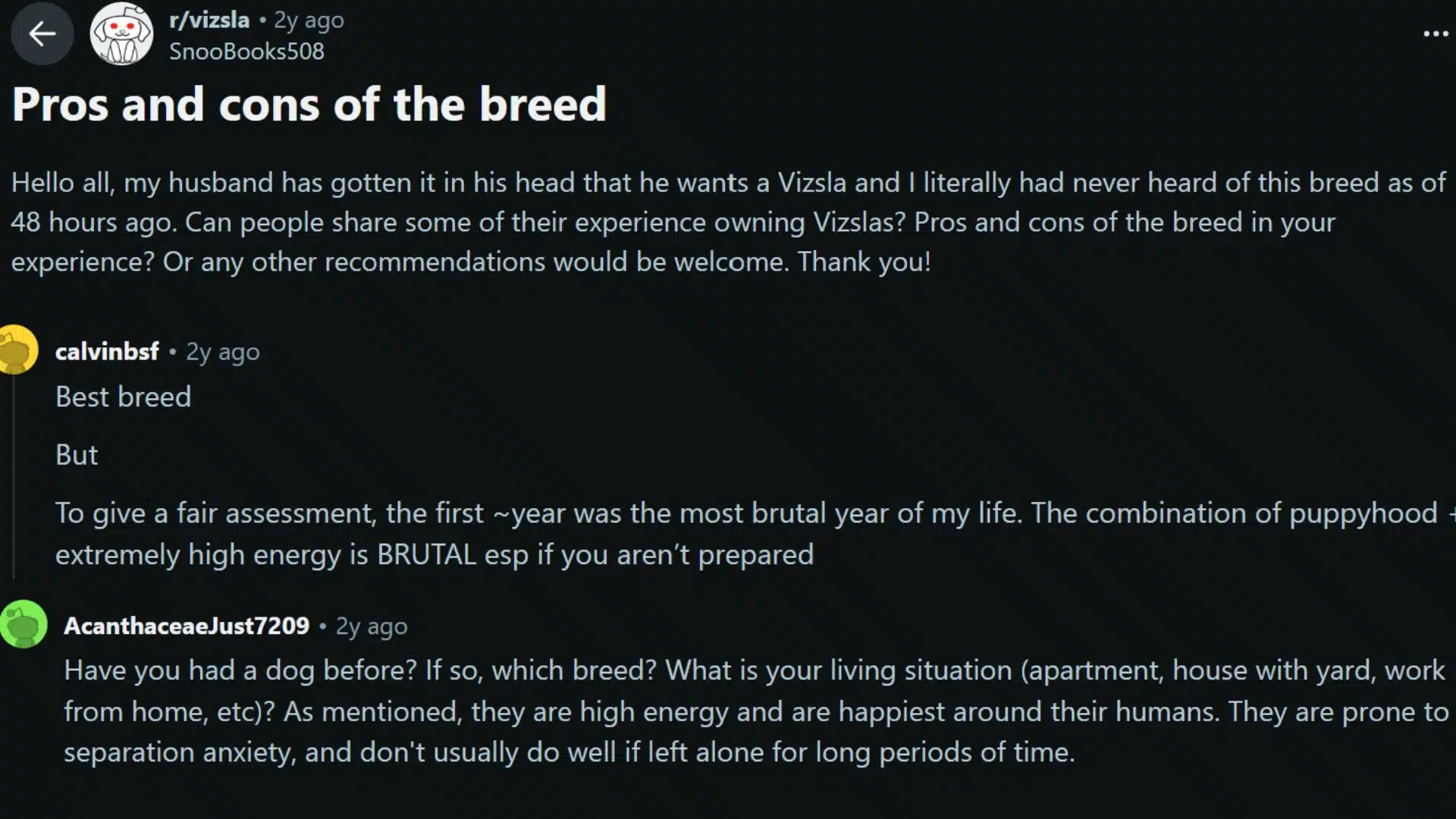
Owner discussions show what daily life may feel like, but can’t predict how every dog behaves. Temperament and routine still shape the individual dog.
In a Reddit thread on r/vizsla, one new owner asked for honest pros and cons before her husband committed to the breed.
One reply called the Vizsla the best breed they’ve owned, but described the first year as the most brutal of their life, driven by normal puppyhood plus extremely high energy.
Another pushed back with practical questions: have you owned a dog before? What’s your living situation? Do you work from home? Vizslas are happiest around their people and prone to separation anxiety. These are personal accounts, not breed-wide proof, but worth asking yourself first.
Is a Vizsla Right for You?
A Vizsla may fit your home, but its coat and size should not make the decision for you; the Vizsla dog breed’s actual energy level, attachment needs, and training demands matter far more.
This breed may suit you if you can:
- Provide substantial daily activity and short, consistent training sessions
- Offer near-constant companionship and be home for most of the day
- Commit to patient, gradual independence training, since Vizslas often struggle with being left alone
Think twice if your schedule leaves a dog alone for long workdays, you prefer a low-energy or independent companion, or you want minimal daily involvement.
Ask a breeder or rescue about the individual dog rather than assuming every Vizsla behaves identically; choosing by daily needs gives you a better chance of finding a dog that still fits your household once the appeal of its appearance wears off.
Final Thoughts
I think about that foster, and how different her first year could have looked with the right information up front. A Vizsla is more than its golden coat and calm eyes; it’s a working dog built for full days at a hunter’s side, and that wiring runs the show at home.
Choosing the Vizsla dog breed means daily exercise, close companionship, gradual alone-time training, and health screening you verify yourself.
Vizsla care isn’t complicated, but it’s constant; skip it, and boredom turns into chewed furniture fast. Get the routine right, and you get one of the most devoted companions in the sporting group.
Weighing a Vizsla against your schedule? Drop a comment below; I’m happy to help.
Frequently Asked Questions
Can a Vizsla Live with Cats?
A Vizsla can live safely with cats after careful introductions, but its prey drive varies by individual. Supervise early interactions, provide escape spaces for the cat, and do not assume every Vizsla will be comfortable around smaller animals.
Does a Vizsla Need a Fenced Yard?
A secure fence is strongly recommended because a Vizsla can be quick, alert, and willing to chase. Check for gaps and digging points, and keep the Vizsla on a leash in unfenced areas, even with reliable recall training.
Can a Vizsla Compete in Dog Sports?
A Vizsla can participate in activities such as agility, obedience, field trials, and scent work when eligible under the organizer’s rules. Choose activities that match the Vizsla’s age, health, confidence, and physical condition.
Can a Vizsla Live in a Warm Climate?
A Vizsla can live in warmer climates with proper management, but its short coat and high activity level require extra care during hot weather. Exercise the Vizsla during cooler hours, provide plenty of water and shade, and stop activity if it shows signs of overheating, such as heavy panting or weakness.