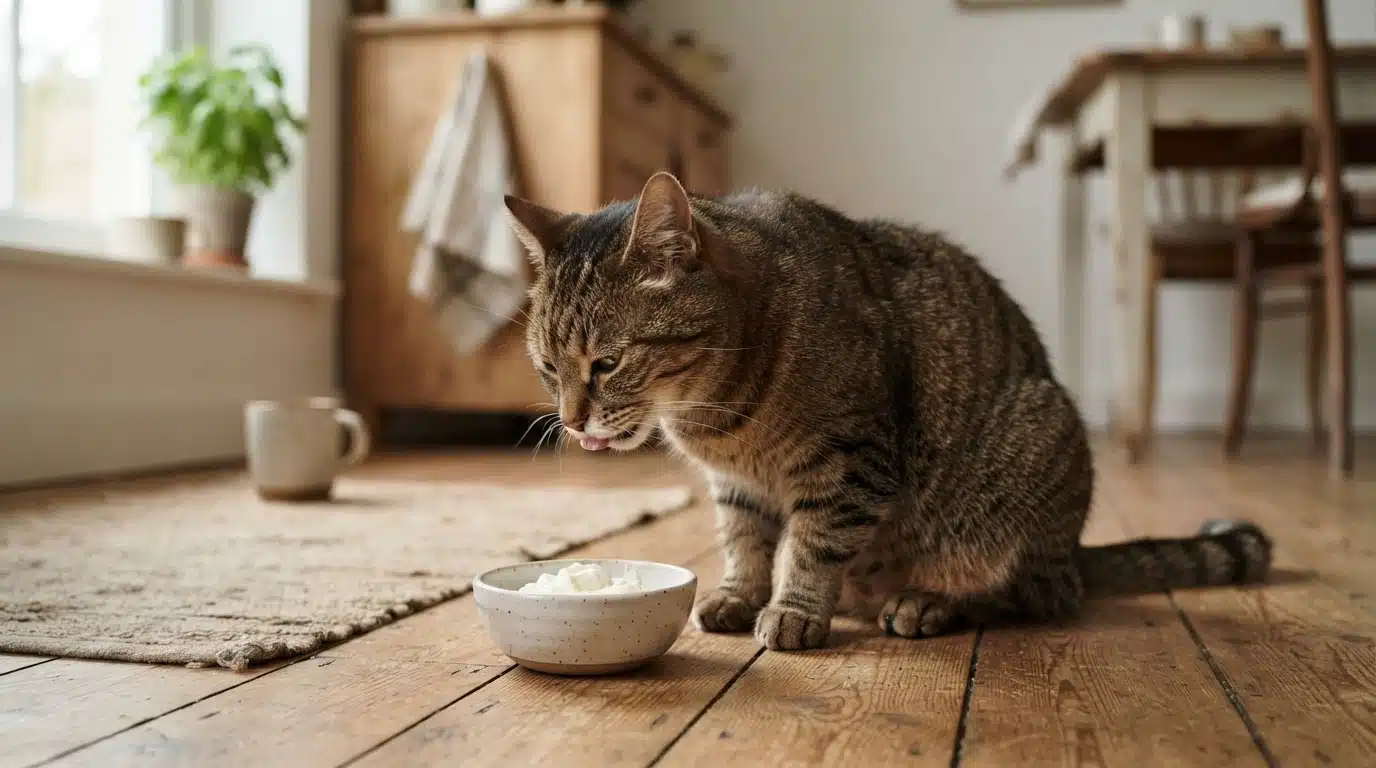


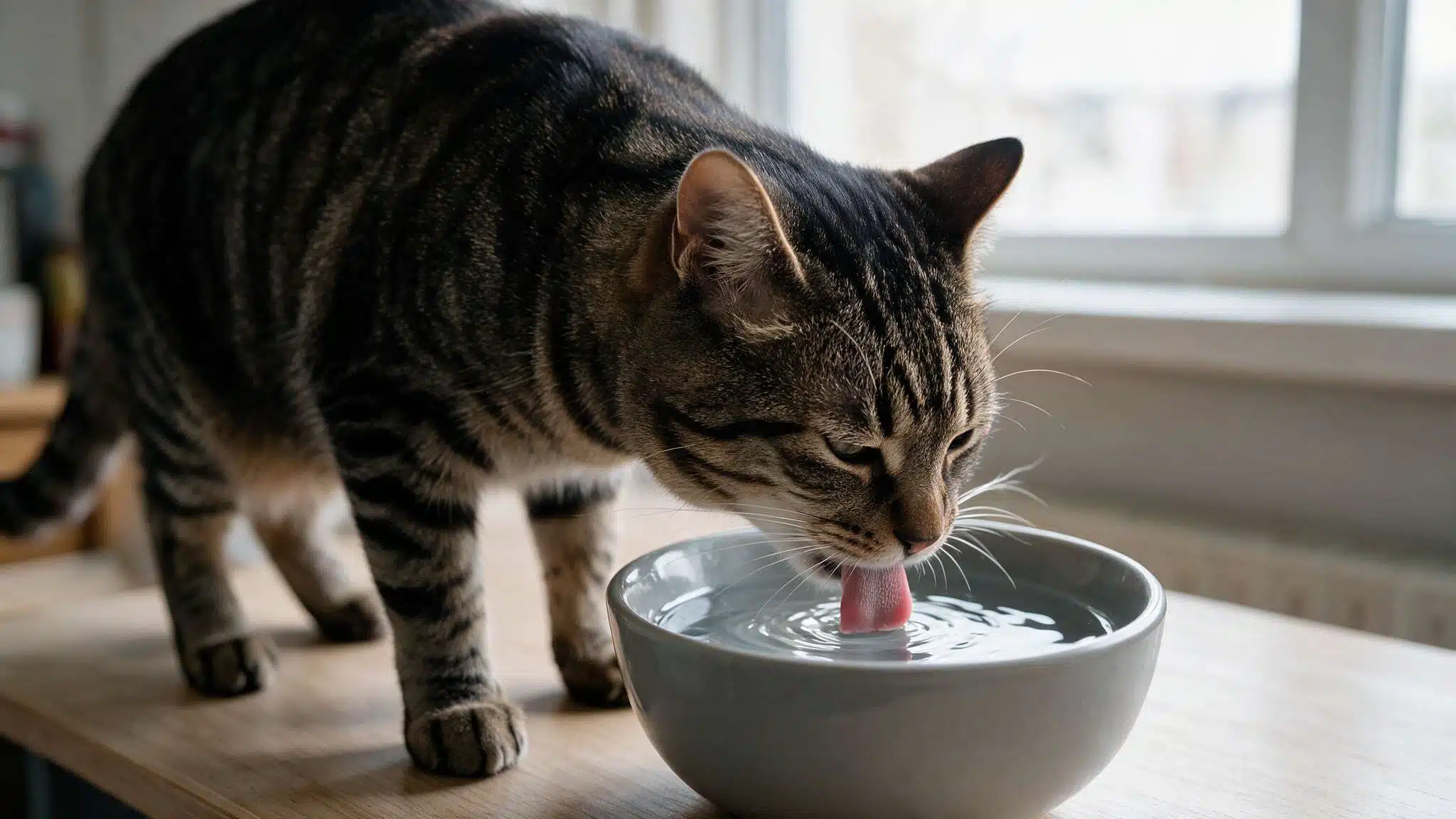
I know how unsettling it feels when your cat’s water bowl empties faster than usual.
You may also notice larger litter clumps, more trips to the sink, or subtle changes in appetite and energy. In my veterinary work, I treat increased thirst as a meaningful clue, not an isolated habit.
A cat drinking a lot of water may be responding to dry food, warm weather, or extra activity, but persistent thirst can signal kidney disease, diabetes, hyperthyroidism, or another medical condition.
Keep fresh water available and watch for changes in weight, urination, grooming, and behavior. If the increase continues without a clear reason, contact your veterinarian for an examination.
When Extra Drinking Deserves Your Attention
A few extra visits to the bowl do not always mean something is wrong. The important clue is a clear, sustained change from your cat’s usual drinking and urination habits.
Veterinarians call excessive thirst polydipsia. It often occurs with polyuria, which means increased urine production. When the body loses more water through urine, thirst rises to replace it. You may notice larger litter clumps, more frequent box visits, or a bowl that needs refilling sooner.
Food affects what you see. Wet food contains far more moisture than dry food, so a cat moved from wet meals to kibble may drink more from a bowl. Warm weather, energetic play, vomiting, diarrhea, and certain medicines can also raise intake.
No single home measurement diagnoses excessive thirst. Body size, food moisture, activity, and health all affect daily needs. A meaningful shift from your cat’s normal pattern is often more useful than counting bowl visits alone.
If the change has no simple explanation, keeps returning, or lasts beyond a day or two, call your veterinarian. A cat can seem comfortable while an early health problem develops, which is part of why many common feline illnesses start with such small, easy-to-miss changes.
Warning Signs That Need Veterinary Care
Increased thirst becomes more concerning when it arrives with changes in weight, appetite, energy, or urination. These combinations can help you judge how quickly your cat needs care, since working out the underlying cause of increased thirst and urination usually requires ruling out several conditions at once.
What you notice | What to do |
|---|---|
More drinking after a switch to dry food, with normal behavior | Measure intake and watch closely |
Unexplained thirst that persists or returns | Arrange a veterinary appointment promptly |
Weight loss, vomiting, appetite changes, weakness, or much more urine | Contact your veterinarian as soon as possible |
Repeated straining, crying, or little to no urine | Seek emergency veterinary care immediately |
Collapse, severe weakness, seizures, or trouble breathing | Go to an emergency veterinary hospital |
Urinary straining with little or no urine is different from ordinary thirst. Veterinary emergency guidance identifies urethral obstruction as an emergency requiring immediate treatment. Male cats face a higher risk of obstruction because their urethra is longer and narrower.
Do not wait for obvious distress if your cat is losing weight, eating less, vomiting, hiding, grooming poorly, or producing much larger urine clumps. Normal play and affection do not rule out early illness.
Why Is My Cat Drinking a Lot of Water?
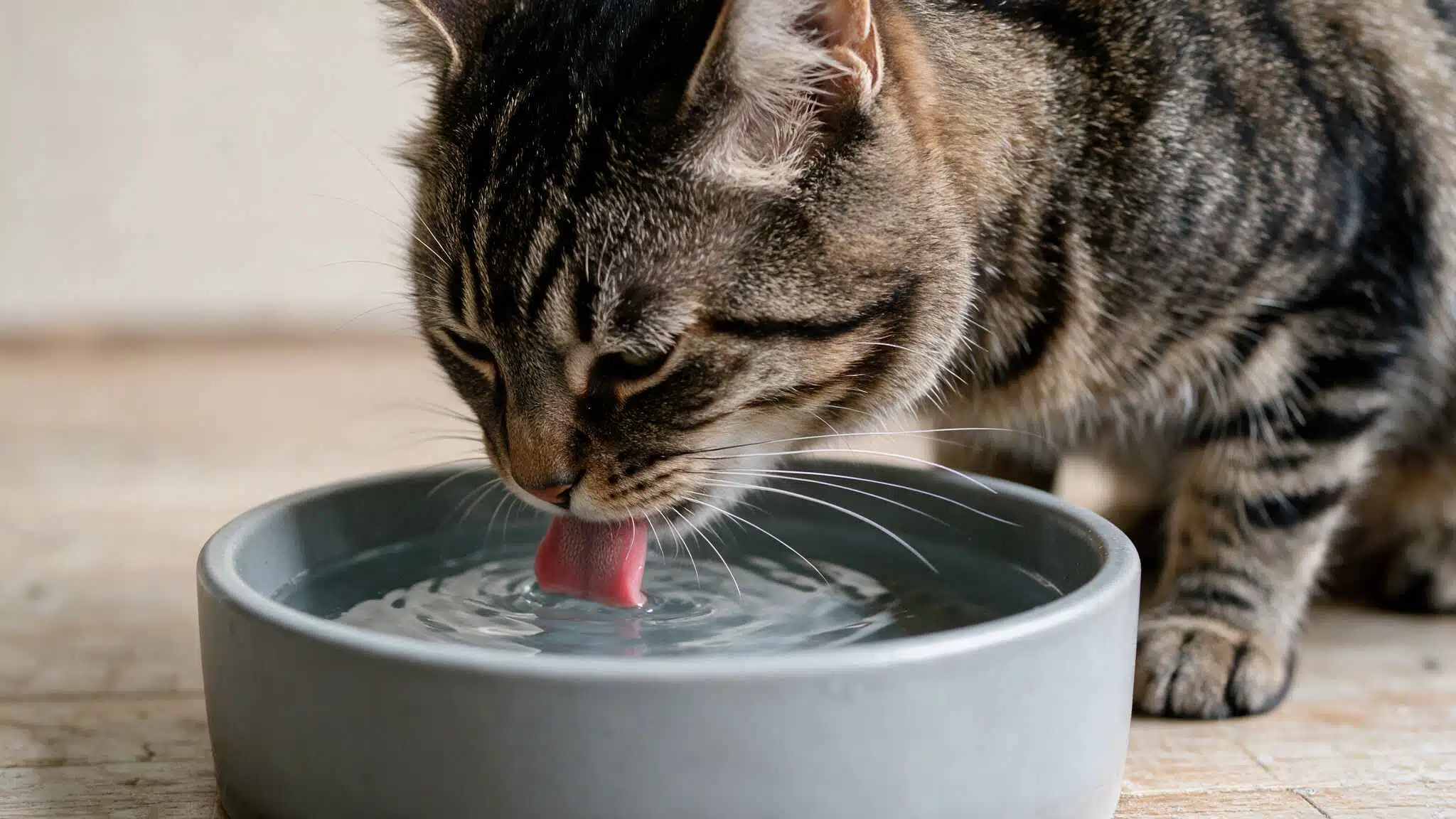
Several conditions can cause the same outward change. Age and accompanying signs offer clues, but blood and urine tests are needed to identify the cause.
1. Chronic Kidney Disease
Healthy kidneys concentrate urine and conserve water. With chronic kidney disease, the kidneys may produce more dilute urine. The cat then drinks more to replace that loss.
Early kidney disease may cause no obvious outward signs. As it progresses, weight loss, poor appetite, vomiting, low energy, dehydration, and an unkempt coat may appear, which is why reliable methods for catching feline kidney disease early remain an active area of veterinary research.
Veterinary sources report that chronic kidney disease is common in older cats and that greater thirst and urine volume can appear as concentrating ability declines.
2. Diabetes Mellitus
Diabetes prevents the body from using glucose normally. When excess glucose enters the urine, it pulls water with it. This increases urine production and makes the cat thirstier.
Common companion signs include weight loss despite a normal or larger appetite. Some cats become weak or walk with their rear hocks closer to the floor, and reviewing the fuller list of diabetes symptoms in cats can help you describe what you’re noticing more precisely to your vet.
Diagnosis relies on persistently elevated blood and urine glucose because stress can temporarily raise a cat’s blood glucose.
3. Hyperthyroidism
Hyperthyroidism occurs when an enlarged thyroid gland produces too much thyroid hormone. It mainly affects middle-aged and older cats and can increase both thirst and urination.
Weight loss with a strong appetite is a frequent clue. Restlessness, vomiting, diarrhea, vocal behavior, a fast heart rate, and a greasy or untidy coat may also occur, and a closer look at hyperthyroidism symptoms in cats covers how these signs tend to develop over time. A blood chemistry panel and thyroid hormone testing commonly form part of the assessment.
4. Other Possible Causes
Liver disease, high blood calcium, kidney infection, fever, and other metabolic problems may increase thirst. Corticosteroids, diuretics, and some other medicines can change drinking or urination too. Never stop a prescribed medicine without speaking with the prescribing veterinarian.
The shared signs make self-diagnosis unreliable. A symptom log can help your veterinarian, but it cannot tell kidney disease, diabetes, and thyroid disease apart.
Drinking More but Acting Normal
Seeing your cat eat, play, and curl up in the usual spot is reassuring. It does not fully exclude an early health problem, especially when thirst and urine output have clearly changed.
Cats often show subtle signs at first. Kidney disease may reduce urine concentration before appetite or energy changes, and research tracking what owners actually notice before a diagnosis found that changes in drinking and urination were often the earliest clue.
Diabetes can occur while a cat still eats eagerly. A cat with hyperthyroidism may appear lively or even unusually active while losing weight.
Book a routine appointment if increased drinking persists without a clear reason. While waiting, watch body weight, appetite, vomiting, stool, grooming, activity, and litter-box output. Seek faster care if any of those areas worsen.
How to Track Your Cat’s Drinking at Home
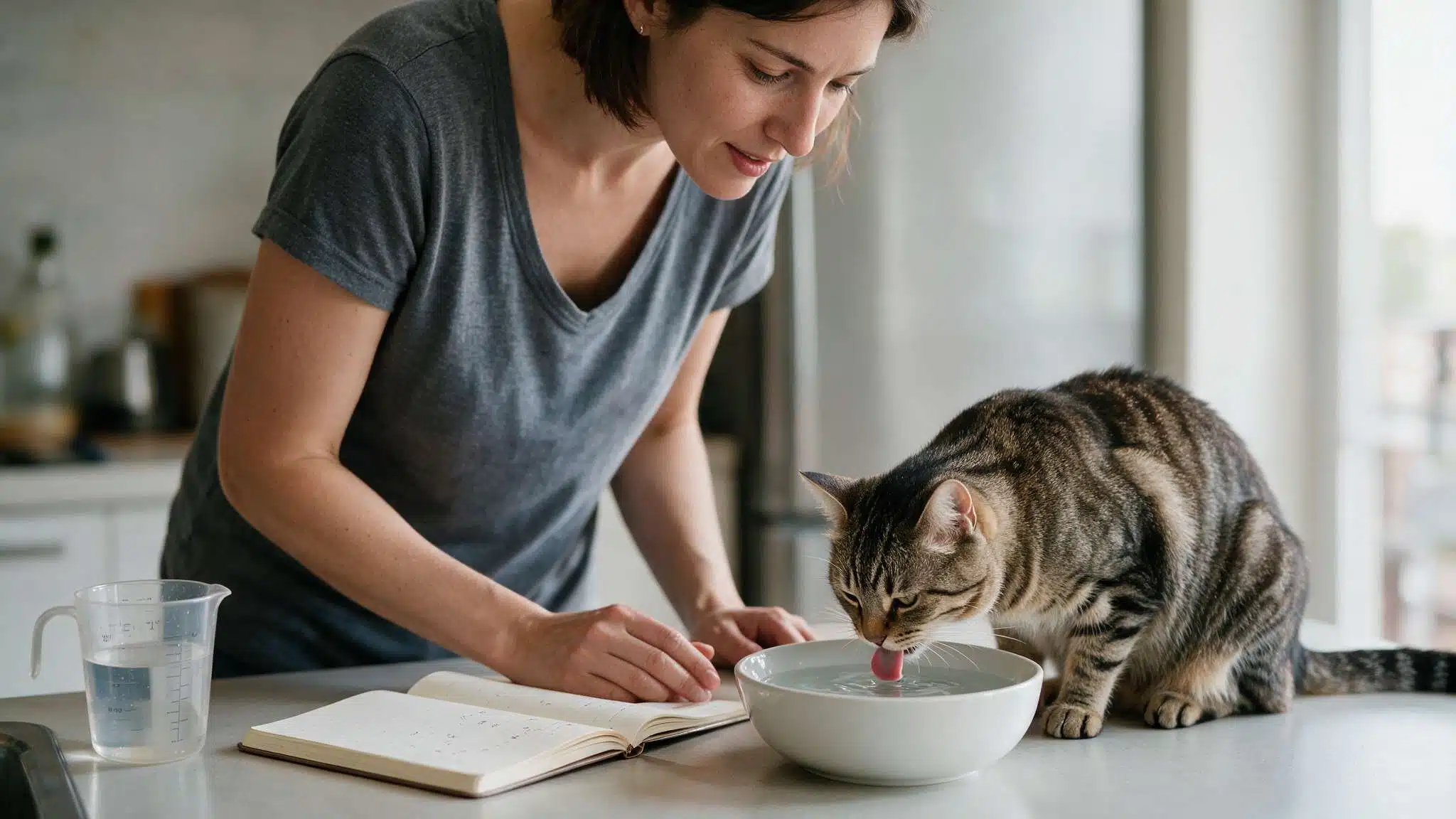
A short record gives your veterinarian more useful information than a rough memory. Measure only when it can be done safely and without limiting access to water.
- Fill one bowl with a measured amount of water.
- Record every refill during the next 24 hours.
- Measure what remains and account for obvious spills.
- Repeat for two or three days if your cat remains stable.
- Record wet food, dry food, appetite, and litter-clump changes.
- Bring the notes and your cat’s medication list to the appointment.
In a multi-cat home, separate bowls or short periods in different rooms may help identify who is drinking, as long as separation does not cause distress. A camera near the water station can also show which cat visits most often.
Never withhold water to obtain a cleaner measurement or reduce urination. Cats with increased fluid loss need free access to fresh water.
Keep your cat’s food and routine consistent unless your veterinarian advises a change. Do not give human medicines, electrolyte products, or supplements without veterinary approval.
What the Veterinarian May Check
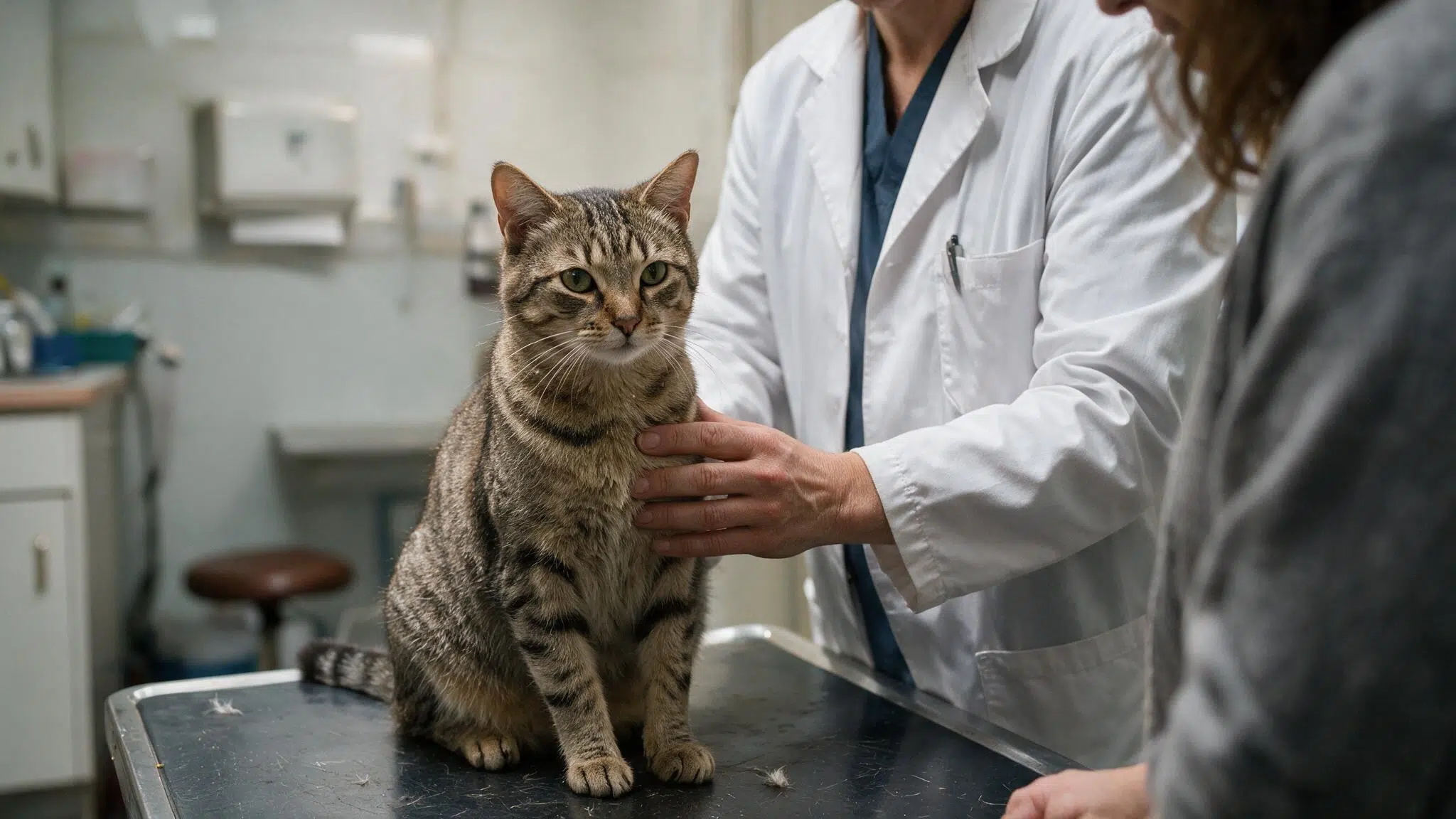
Several conditions can cause similar changes in thirst and urination. Your veterinarian will use your observations, a physical examination, and diagnostic tests to identify the likely cause.
- When the increased drinking began and how it has changed
- Food type, appetite, weight, medications, and vomiting history
- Urine volume and litter-box behavior
- Hydration, body condition, heart rate, thyroid area, kidneys, bladder, mouth, and blood pressure
- Complete blood count and blood chemistry
- Blood glucose and thyroid hormone levels
- Urinalysis to assess concentration, glucose, ketones, protein, blood, crystals, and bacteria
- Urine culture if an infection is suspected
- X-rays or ultrasound when stones or structural problems are possible
Test results must be interpreted together because hydration and muscle mass can affect certain kidney values. Repeat testing may sometimes be necessary.
Final Verdict
I always encourage pet parents to trust the small changes they notice at home. You know how often your cat visits the bowl, what the litter box usually looks like, and when daily habits seem different.
A cat drinking a lot of water may have a harmless reason, but ongoing thirst deserves attention because kidney disease, diabetes, and hyperthyroidism can begin with subtle signs.
Keep water freely available, record changes in appetite, weight, urination, and behavior, and avoid giving unapproved medicines or supplements.
If the increased drinking continues or appears with vomiting, weakness, weight loss, or appetite changes, call your veterinarian today. Seek emergency care immediately if your cat strains but produces little or no urine.
Frequently Asked Questions
Can Stress Change a Cat’s Drinking Habits?
Stress can change when and where a cat drinks, especially after moving, travel, visitors, or household conflict. However, don’t blame a sustained increase on stress without a veterinary assessment, since illness can occur at the same time.
Why Does My Cat Prefer the Faucet to a Bowl?
Some cats prefer cool, moving water or dislike a bowl’s material, depth, smell, or location. Offer a wide ceramic or stainless-steel bowl away from food and litter, and clean it daily to remove odors and residue.
Can Salty Human Food Make a Cat Thirstier?
Salty human foods can temporarily increase thirst and may contain ingredients that are unsafe for cats. Avoid offering seasoned leftovers, processed meats, or salty snacks, and contact a veterinarian if unusual drinking continues after the food is gone.
Can a Fountain Change How Often My Cat Drinks?
Fountains may increase drinking frequency because some cats prefer circulating water. Check the reservoir at the same time each day, account for evaporation and spills, and clean the pump regularly so buildup does not affect taste or flow.