

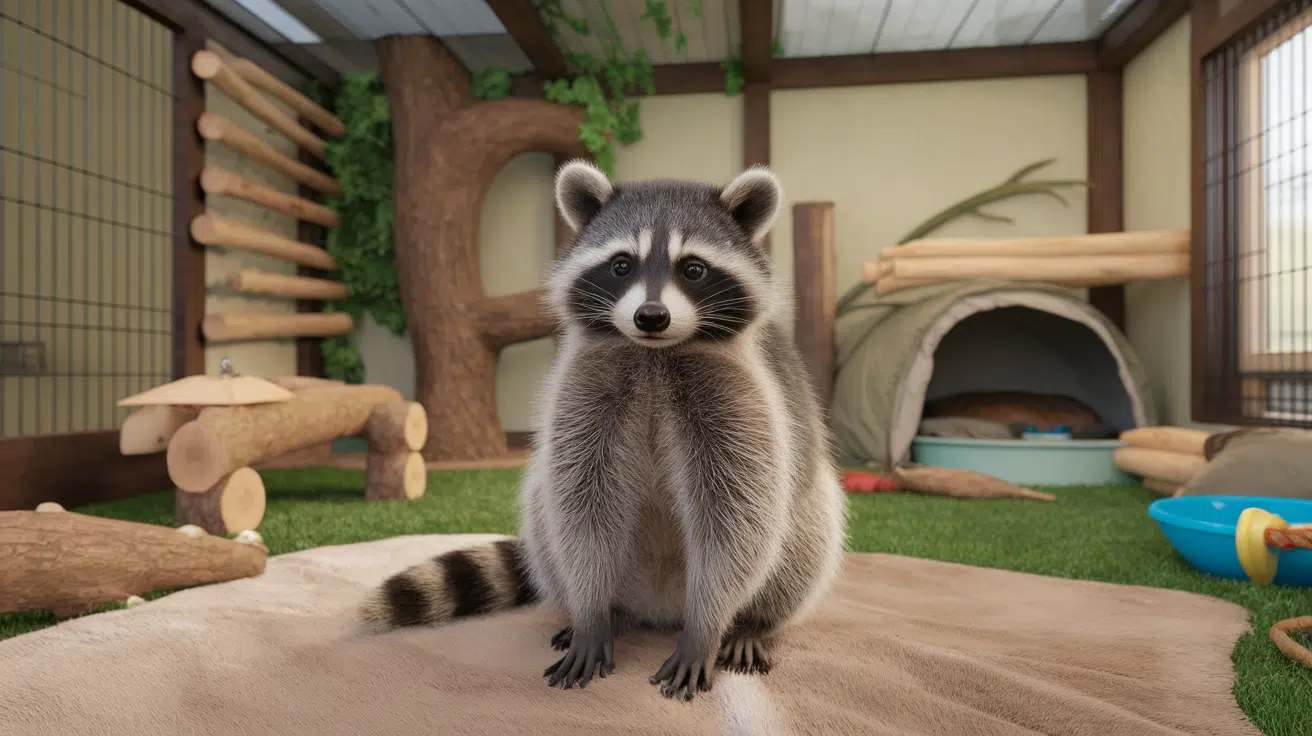
A raccoon opening cupboards or dipping food into water can look sweet in a short video. As a veterinarian, I understand why an intelligent young animal may seem like an appealing companion.
Still, I would not recommend a pet raccoon for most households. Raccoons remain wild animals even when raised around people, and their care involves concerns rarely shown online. They can bite, damage property, escape secure spaces, and expose people or other animals to infection through saliva or feces.
Before considering ownership, I urge you to confirm state and local possession rules, veterinary access, secure housing, diet, sanitation, nighttime activity, and lifelong care. A calm young raccoon can become far harder to manage as it matures.
| Important: This information is educational and does not replace advice from wildlife authorities, public-health officials, or a veterinarian experienced with raccoons. |
What Are Pet Raccoons?
The term “pet raccoon” refers to a raccoon kept as a companion animal, but it does not mean the species has been domesticated. Taking a raccoon from the wild may be illegal, even where limited possession of captive-bred raccoons is allowed.
A raccoon raised around people may accept handling, follow familiar caregivers, or learn household routines. Familiarity does not remove its natural urge to climb, dig, bite, open containers, guard resources, and search for escape routes.
Keeping one also requires secure housing, suitable food, daily activity, sanitation, and access to a veterinarian who can legally provide care, a list of demands that echoes what another wild rodent actually needs once the novelty wears off.
Possession rules vary by state and may depend on permits, the animal’s source, and local restrictions. These demands make raccoon ownership far different from caring for a domesticated dog or cat.
Is a Pet Raccoon Suitable for Home Life?
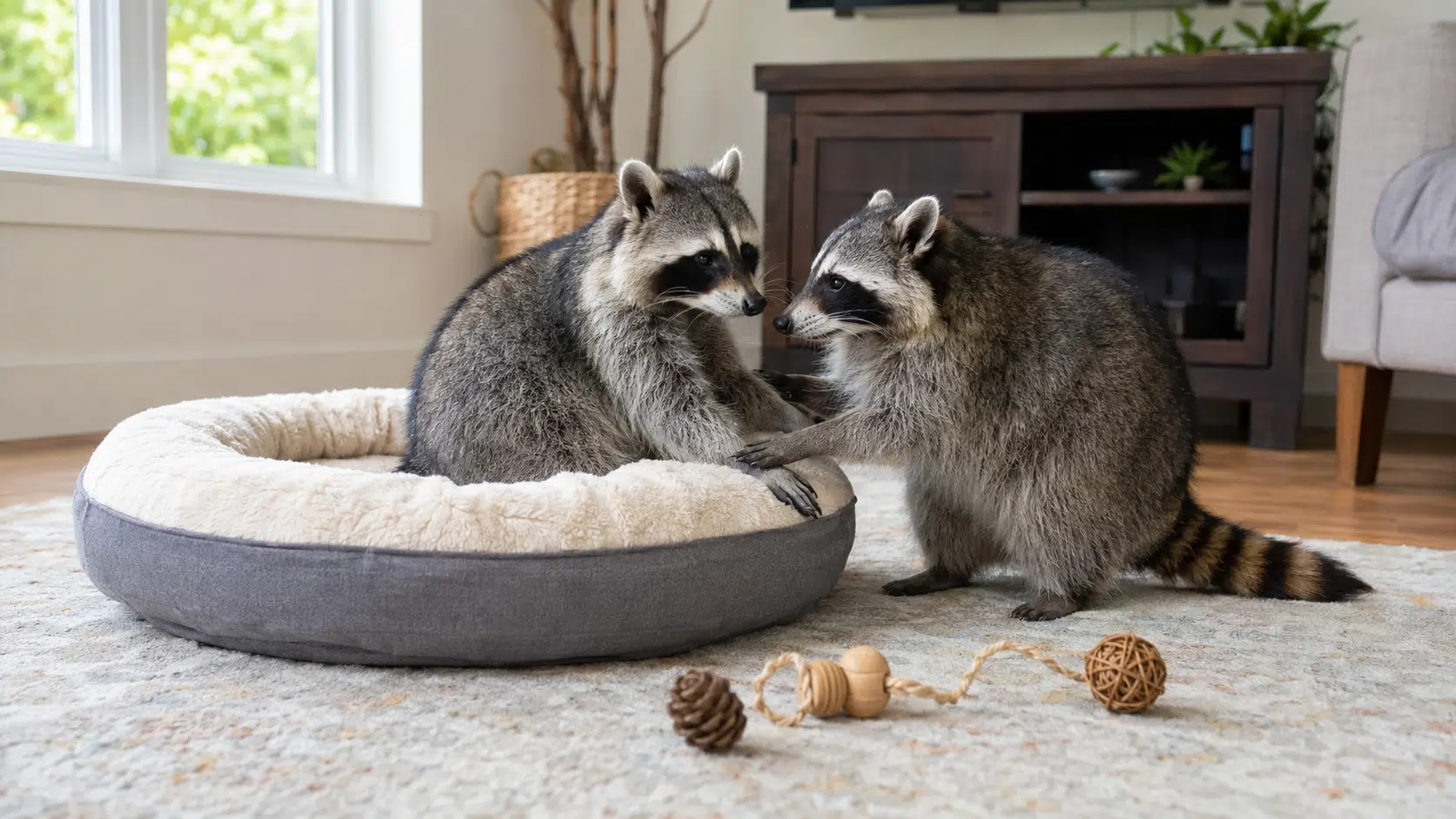
Raccoons can learn routines and become comfortable around familiar people. That familiarity should not be mistaken for domestication or predictable behavior, a distinction that also applies to other small wild animals people find appealing despite their untamed instincts.
Their natural habits can create serious problems inside a home, particularly after the animal matures.
1. They Are Wild, Not Domesticated
Raccoons have not been selectively bred for predictable companionship. A hand-raised animal may accept handling but still respond defensively when frightened, frustrated, restrained, or separated from food.
Kansas State University cautions that raccoons living near people remain wild animals and should not be captured or treated as pets.
2. Their Curiosity Can Damage a Home
Raccoons use their paws to grasp food, manipulate objects, climb, and enter poorly secured spaces. These abilities become hazardous around cupboards, medications, cleaning products, appliances, electrical cords, windows, and food packaging.
A Connecticut wildlife fact sheet explains that raccoons have dexterous five-digit paws and are mainly active at night, dawn, and dusk. Inside a home, those traits can lead to damaged objects, disturbed sleep, and repeated escape attempts.
3. Bites and Scratches Are a Real Risk
A frightened, territorial, frustrated, or overstimulated raccoon can injure a person or another animal. Familiarity does not remove its strength, teeth, claws, or defensive reactions.
After a bite, scratch, or possible saliva exposure, wash the area immediately with soap and water for 15 minutes. The Centers for Disease Control and Prevention advises seeking an urgent rabies risk assessment from a healthcare or public-health professional.
4. Their Schedule Can Clash With Yours
Raccoons are mainly active at night and around dawn or dusk, although healthy animals may sometimes appear during the day. Keeping one awake during daylight hours does not permanently replace its natural activity pattern, a scheduling challenge shared by other nocturnal animals kept as pets.
Secure nighttime housing remains necessary because unsupervised climbing, chewing, opening, and foraging can result in injury, property damage, or escape.
5. Rehoming Can Be Extremely Difficult
Ordinary animal shelters usually serve domesticated pets, while wildlife rehabilitators care for eligible injured or orphaned wildlife with release as the goal. They are not general placement services for unwanted privately kept raccoons.
The Pennsylvania Game Commission warns that human contact can make it difficult or impossible for wildlife to readjust to the wild. Releasing an unwanted raccoon without agency approval is not a responsible backup plan.
Raccoons may seem playful and affectionate, but their behavior, strength, activity pattern, health risks, and limited placement options make them unsuitable for most households.
What Does Daily Care Really Require?
Keeping a raccoon safely requires planning for housing, veterinary care, food, activity, sanitation, expenses, and emergencies. Confirm every requirement before paying for or transporting an animal.
- Housing: Provide a large, escape-resistant enclosure with room to climb, forage, hide, and rest. Secure windows, cupboards, wiring, appliances, medications, and toxic products. A transport crate is not permanent housing.
- Veterinary care: Find a veterinarian who is legally permitted and willing to treat raccoons. Confirm access to examinations, parasite testing, anesthesia, emergency treatment, bite reporting, and advice following possible rabies exposure.
- Diet: Arrange a feeding plan with a veterinarian experienced in raccoon care. Do not assume table scraps, dog food, or unrestricted fruit will provide complete long-term nutrition.
- Activity and supervision: Provide secure climbing structures, foraging tasks, hidden food, and safe objects that can be handled. Check equipment for loose parts, sharp edges, and materials that could be swallowed.
- Waste management: Remove feces promptly while using suitable protection and keeping children and pets away. The Centers for Disease Control and Prevention explains that most chemicals do not kill raccoon roundworm eggs. Follow its surface-specific cleaning instructions or contact animal control for help.
- Cost and backup care: Account for enclosure construction, repairs, food, permits, sanitation supplies, veterinary visits, emergency treatment, insurance limits, and qualified care during travel. Confirm who can legally handle the raccoon during illness or evacuation.
These needs require secure space, daily time, professional support, and a lawful backup plan. If any part cannot be provided consistently, ownership is not suitable.
Health and Safety Risks to Consider
Not every raccoon carries every infection, but appearance alone cannot confirm that an animal is healthy. Possible exposure matters because bites, scratches, saliva, feces, and parasites can affect people or other animals.
Consider both the likelihood of contact and the possible severity of the outcome.
| Risk | What Is Known | Practical Response |
|---|---|---|
| Rabies | Raccoons are among the wild animals commonly associated with rabies in the United States. Appearance and behavior cannot rule out infection. | Prevent saliva exposure and report bites, scratches, or saliva contact promptly to healthcare and public-health professionals. |
| Raccoon roundworm | Microscopic eggs passed in feces can infect people and animals. Human infection is rare but may cause serious eye, organ, or neurological damage. | Prevent fecal contact, remove waste promptly, wear suitable protection, and follow official cleaning instructions. |
| Other parasites and infections | Fleas, ticks, intestinal parasites, and other infectious agents may affect the raccoon, people, or household animals. | Arrange veterinary screening, parasite control, hygiene measures, and separation when advised. |
| Injury | Teeth and claws can cause punctures, tears, and secondary infection. | Avoid rough or unnecessary handling and obtain medical advice after a significant injury. |
| Household exposure | Children, visitors, and other animals may approach without recognizing defensive behavior or contaminated areas. | Restrict access, maintain physical separation, and do not treat supervision as a complete safeguard. |
Supervision alone cannot eliminate these risks. Confirm sanitation procedures, veterinary access, bite-response rules, and the possible consequences for the raccoon before considering possession.
Rabies cannot be ruled out simply by watching an animal. The Centers for Disease Control and Prevention states that animal rabies testing requires euthanasia and examination of brain tissue. A bite may therefore have serious consequences for both the person and the raccoon.
| Health disclaimer: This section does not diagnose infection or determine rabies exposure. After a bite, scratch, or contact with saliva or feces, contact a healthcare professional or local health department promptly. |
What to Do if You Find a Baby Raccoon
A baby raccoon found alone is not automatically orphaned. Its mother may be nearby or may return after searching for food, so removing the animal can do more harm than leaving it undisturbed.
Do not feed, handle, transport, or bring the raccoon indoors unless a wildlife authority gives instructions. Keep children and pets away, observe from a safe distance, and contact a licensed wildlife rehabilitator or state wildlife agency if the animal appears injured or the mother is confirmed dead.
A rehabilitator can determine whether intervention is necessary and explain the lawful next step. Finding a young raccoon does not make private possession legal.
How to Check Laws for Pet Raccoons
Do not rely on a breeder, seller, social-media claim, or general state-by-state chart. Confirm every requirement directly with the responsible agencies before paying for or transporting an animal.
Use this checklist:
- Contact your state wildlife agency. Ask specifically about private possession of Procyon lotor, not merely rules for “exotic pets.”
- Confirm the permitted source. Ask whether the animal must be captive-bred and whether breeder licensing, identification, health certificates, or purchase records are required.
- Check county and city rules. Contact animal control, zoning officials, and the local health department because local restrictions may be stricter than state rules.
- Confirm permit timing. Some approvals may be required before purchase, transportation, enclosure construction, or possession.
- Verify veterinary access. Get written confirmation that a clinic can legally treat the raccoon and provide emergency care.
- Ask about bite procedures. The health department can explain local reporting, confinement, testing, and human post-exposure procedures.
- Check private restrictions. A landlord, homeowners association, or insurer may prohibit wildlife even when government rules permit possession.
Save agency emails, permit conditions, source records, veterinary confirmation, and insurance decisions. Do not purchase, transport, or accept a raccoon until every applicable authority has given clear written approval.
Legal disclaimer: Wildlife laws and permit requirements can change and may differ by state, county, and city. Confirm current rules directly with the responsible agencies before purchase, transport, or possession |
Final Take
After considering the behavioral, legal, and health concerns, I would not recommend a pet raccoon for most families. Legal permission does not make ownership safe, predictable, or practical. Raccoons remain wild animals with demanding housing, sanitation, feeding, supervision, and veterinary needs.
Their teeth, claws, nighttime activity, escape ability, and possible exposure to rabies or roundworm create risks that affection cannot remove. Rehoming may be difficult, and releasing a human-habituated animal is not a safe fallback.
My advice is to appreciate raccoons from a respectful distance. Before paying a seller or moving an animal, contact your state wildlife agency, local health department, insurer, and an experienced veterinarian. Stop unless every requirement is confirmed in writing.
Frequently Asked Questions
Can One Be Reliably Litter-Trained?
Some raccoons may use a chosen toilet area, but dependable litter habits are not guaranteed. Successful use also does not remove roundworm exposure, contamination, odor, marking, or the need to clean feces using proper protective measures.
Is Walking One on a Leash Safe?
Accepting a harness does not make a public outing safe or lawful. A raccoon may escape, bite, encounter dogs, or frighten strangers. Local wildlife rules may also prohibit public handling or transportation outside an approved enclosure.
Can One Live Safely With Dogs or Cats?
Safe compatibility cannot be assumed, even after calm introductions. Food guarding, chasing, defensive reactions, size differences, parasites, and unsupervised contact can injure either animal. Ask a qualified veterinarian about separation, vaccination, and disease-control requirements.