

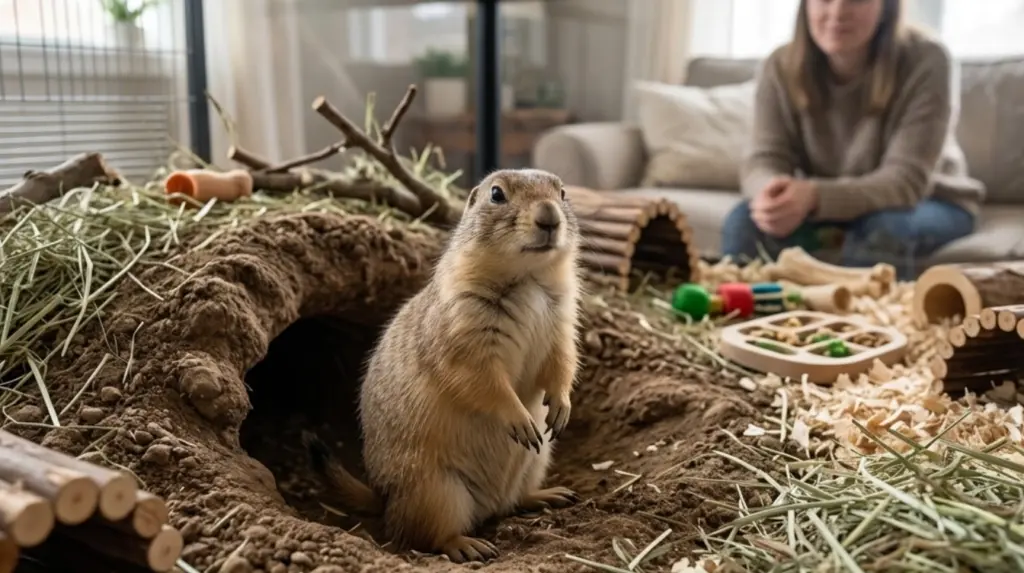
There’s something undeniably charming about a prairie dog. That upright little “sentry” pose, the chattering calls, the way they seem to greet the world with total confidence – it’s easy to see why people fall for them online and start wondering if one could live in their house too.
But here’s what I tell pet parents who come to me with this exact question: a prairie dog is not a bigger hamster or a furrier guinea pig. It’s a wild animal with a wild animal’s instincts, even when it’s been raised by hand from birth.
Loving the idea of a prairie dog and being ready for the reality of one are two very different things, and I’d rather walk you through that honestly now than have you learn it the hard way six months in.
Let’s talk about what living with a prairie dog actually looks like, the good, the demanding, and the parts most people don’t find out until it’s too late.
Is a Prairie Dog Pet Right for You?
Prairie dogs can become affectionate with familiar caregivers, but that does not make them suitable for every household. The black-tailed prairie dog is the species most often kept in captivity.
These animals are generally poor choices for first-time exotic-pet owners, families with young children, or anyone expecting a quiet pet that spends most of its time inside an enclosure. They can bite deeply, chew household materials, dig persistently, and react defensively when frightened or restrained.
A suitable owner must be comfortable handling a strong, unpredictable rodent and maintaining firm safety rules. Frequent travel, long periods away from home, limited indoor space, or a lack of a nearby exotic-animal veterinarian may make ownership impractical.
Anyone drawn to a simpler alternative might want to browse some genuinely low-maintenance pet options before committing.
VCA Animal Hospitals notes that prairie dogs require considerable personal attention and may not be appropriate family pets, particularly around small children. If those demands conflict with your household, choose a domesticated pet with more manageable care needs.
Prairie Dog Pros and Cons
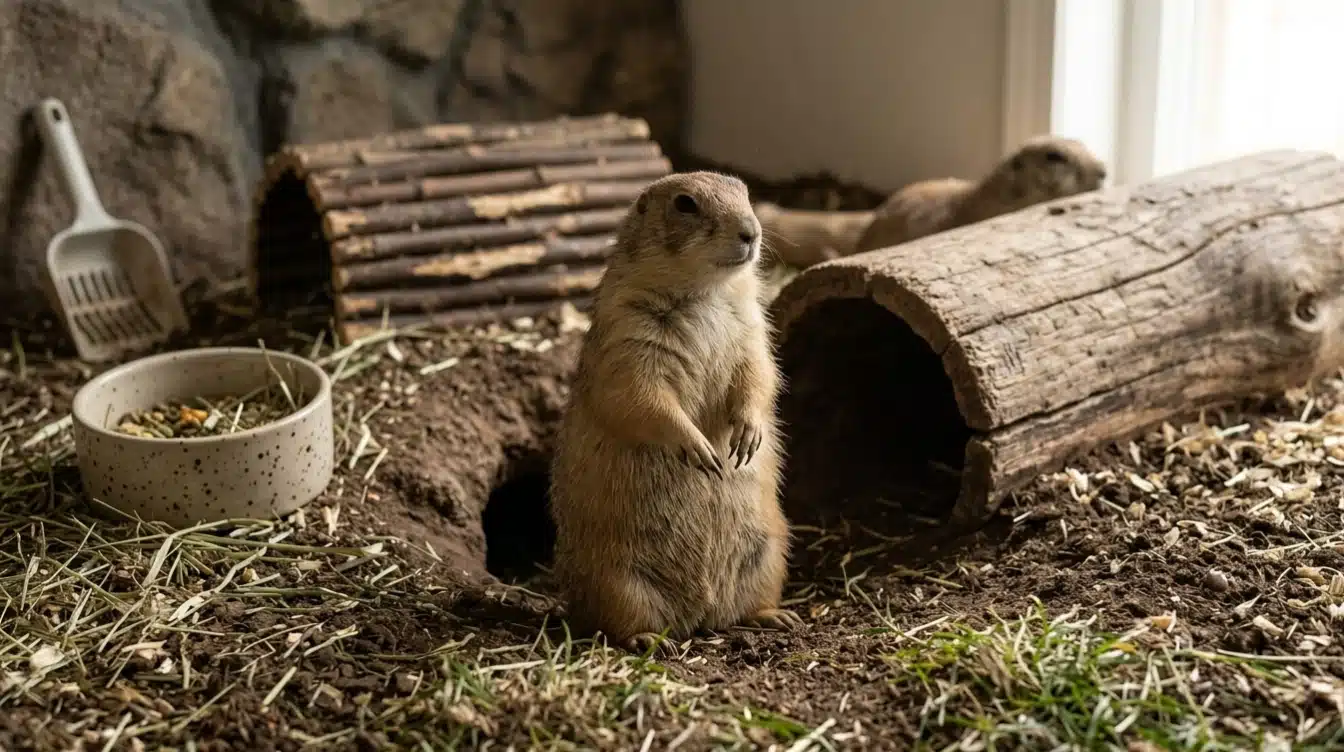
Prairie dogs can form close social bonds and remain active during much of the day. Those appealing qualities come with legal, behavioral, housing, and veterinary responsibilities that may be difficult for many households to manage.
Potential benefits:
- They may form a close bond with familiar caregivers.
- Their daytime activity can make interaction easier.
- They display varied calls, social behavior, and digging habits.
- Their lifespan may reach approximately eight to ten years with suitable care.
Potential drawbacks:
- They can deliver deep, painful bites.
- They require frequent social contact and supervised activity.
- Secure, chew-resistant housing may take substantial space.
- Specialized veterinary care may be difficult to find.
- Ownership and transportation may be restricted.
- Food, bedding, housing, repairs, and medical care can be costly.
- Their social and reproductive behavior may change with age or season.
These considerations should be compared with your schedule, household members, available space, budget, and access to veterinary care. Reading through some general pet care guidance beforehand can help set realistic expectations for cost and time.
Is It Legal to Own a Prairie Dog Pet?
Prairie dog ownership laws differ across the United States. Approval at one level does not confirm that ownership, purchase, transport, or housing is permitted everywhere else.
The federal domestic restrictions introduced after the 2003 mpox outbreak were removed in 2008. State and local agencies can still restrict possession, sale, importation, or transportation.
Before paying a seller or arranging transport:
- Contact your state wildlife or agriculture agency.
- Check county and city animal ordinances.
- Review your lease, homeowners association rules, and zoning terms.
- Ask the destination state about import requirements.
- Confirm whether a permit or veterinary health certificate is required.
- Request written confirmation when an agency provides approval.
The U.S. Department of Agriculture explains that ordinary interstate pet requirements are set by the receiving state or territory. Recheck the rules immediately before purchase or travel because regulations can change.
Prairie Dog Temperament and Social Needs
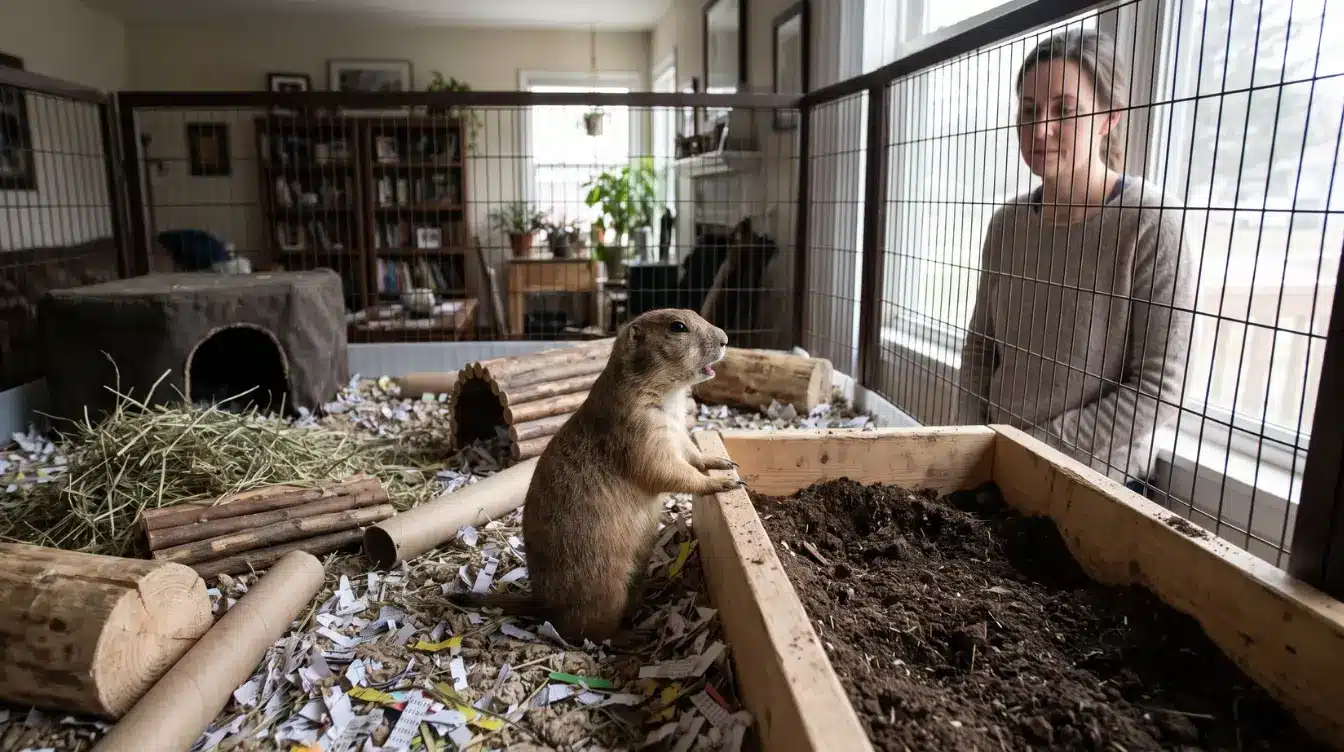
Prairie dogs are alert, vocal, social rodents with strong digging and chewing instincts. Early handling may affect how comfortable an individual becomes around people, but it cannot remove natural defensive behavior.
They use sharp calls when alarmed or excited and may nip when startled, restrained, frightened, or overstimulated. Even an animal that regularly seeks attention can deliver a deep bite.
Prairie dogs also require frequent social contact. If you cannot provide substantial daily interaction, ask an experienced veterinarian whether a compatible companion is appropriate.
Sex, reproductive status, health, and individual compatibility should be considered before unfamiliar animals are housed together. Owners weighing a calmer alternative sometimes compare bunnies to see whether they make good pets.
Contact with children, cats, and dogs requires particular caution. Never leave a prairie dog unsupervised with a child or another animal, and do not allow it to roam freely through an unsecured home.
Some prairie dogs become less active during cooler periods. Sudden inactivity, appetite loss, weight changes, breathing difficulties, or unusual behavior should still be discussed with a veterinarian rather than automatically attributed to the season.
Prairie Dog Care Essentials
Prairie dog care centers on food, housing, social contact, safe activity, and preventive veterinary attention. Products intended for rabbits, guinea pigs, dogs, or cats are not automatically suitable for this species.
- Diet: Provide grass hay as the dietary base, with limited pellets and vegetables recommended by an experienced veterinarian. The MSD Veterinary Manual lists grass hay, suitable pellets, and limited vegetables as appropriate components.
- Housing: Use the largest practical secure enclosure with chew-resistant materials, good ventilation, hiding areas, exercise space, and enough safe bedding for digging.
- Social contact: Provide frequent interaction and supervised activity in a fully secured area. Block access to electrical cords, furniture gaps, toxic plants, and materials that could be swallowed.
- Routine monitoring: Check appetite, droppings, weight, teeth, nails, coat, breathing, and behavior regularly. A change from the animal’s normal pattern may be an early sign of illness.
- Veterinary care: Arrange an examination soon after acquisition and at least annually. Older animals or those with medical problems may need more frequent checks.
Confirm the diet, bedding, cleaning method, enclosure design, and emergency plan with the veterinarian who will treat the animal.
What Prairie Dog Owners Say

A Reddit discussion about prairie dogs as pets shows that owners’ experiences often depend on the time and effort they give the animal.
One owner shared that their prairie dog became very affectionate after years of consistent handling, but early biting was part of the adjustment period. They also mentioned that prairie dogs need a large enclosure, regular interaction, and patience from their owners.
The discussion highlights a common theme among keepers: these animals can form strong bonds and enjoy human attention, but they are not low-maintenance pets. Proper research, space, and daily care play a major role in the experience.
Prairie Dog Health Concerns and Human Safety
Prairie dogs can develop dental disease, obesity, respiratory illness, heart disease, parasites, skin infections, and other medical problems. Because they may hide early signs of illness, changes in eating, weight, droppings, breathing, or behavior deserve prompt attention.
| Health Concern | What to Watch For |
|---|---|
| Dental disease | Facial swelling, drooling, broken teeth, reduced eating, or weight loss |
| Obesity | Increasing body weight, reduced movement, or excess pellets and treats |
| Respiratory illness | Nasal discharge, coughing, noisy breathing, or breathing difficulty |
| Parasites | Scratching, skin irritation, hair loss, or visible fleas or ticks |
| Digestive illness | Appetite loss, diarrhea, reduced droppings, or a swollen abdomen |
| Emergency signs | Collapse, seizures, labored breathing, severe weakness, or major injury |
Prairie dogs can be affected by flea-borne plague. Pet prairie dogs were also involved in the documented 2003 mpox outbreak after exposure to infected imported rodents.
Obtain the animal through a lawful, traceable source and request all available health and origin records. Prevent contact with wild rodents and ask your veterinarian about parasite control, hygiene, and quarantine when another animal enters the home.
Wash your hands after handling the animal, its waste, bedding, food dishes, or enclosure. Wash any bite immediately with soap and water, then contact a medical professional or local health department for advice.
Use the exotic veterinarian directory to begin locating a suitable clinic, but confirm directly that the veterinarian currently treats prairie dogs.
Is a Prairie Dog Right for Your Home?
Interest in an unusual animal is not enough to make ownership workable. Your home must support the animal’s legal, social, behavioral, nutritional, and medical needs for its full lifespan.
| Household Factor | Better Fit | Higher-Risk Situation |
|---|---|---|
| Legal status | Written confirmation that ownership is permitted | Rules have not been checked |
| Daily schedule | Regular time for contact and supervised activity | Long workdays or frequent travel |
| Household members | Informed adults prepared for bite risk | Young children or unsafe handling |
| Other animals | Separation from potential predators | Free contact with cats or dogs |
| Space | Dedicated room for secure housing | No safe enclosure area |
| Veterinary access | Confirmed prairie dog veterinarian | No suitable clinic nearby |
| Budget | Funds for housing and emergency treatment | No reserve for specialized care |
| Travel planning | Qualified sitter or clinic confirmed | No dependable care arrangement |
Prairie dogs are generally poor choices for people seeking a first, simple, or low-maintenance pet. Consider one only when every high-risk condition has been resolved before acquisition.
How to Prepare Before Bringing One Home
Preparation should be completed before you contact a seller or pay a deposit. Written confirmation is safer than relying on verbal promises about legality, health, or adult behavior.
- Confirm state, county, city, housing, and transportation rules.
- Find a veterinarian who currently treats prairie dogs.
- Ask the veterinarian to review your proposed diet and enclosure.
- Build and test the enclosure for chewing, digging, and escape risks.
- Identify a lawful, traceable rescue or seller.
- Request origin, health, veterinary, and transaction records.
- Arrange an initial veterinary appointment.
- Prepare a secure area for supervised activity.
- Find a qualified caregiver for travel or emergencies.
- Set aside funds for routine and urgent veterinary care.
Do not bring the animal home until its housing, food, veterinary care, and legal status have been confirmed.
Final Thoughts
A prairie dog pet is not a simple substitute for a hamster or guinea pig. It needs secure housing, room to dig, a high-fiber diet, regular social contact, and care from an experienced exotic animal veterinarian.
Biting, chewing, legal restrictions, travel limits, and a lifespan that may reach eight to ten years also affect the decision.
Homes with young children, predatory pets, long periods without supervision, or no nearby specialist may not be suitable.
Confirm every state and local rule before paying a deposit, then discuss diet, housing, health screening, and emergency care with the veterinarian you plan to use. Complete those checks before deciding to bring one home.
Frequently Asked Questions
Do Prairie Dogs Get Fleas or Ticks as Pets?
Yes. Indoor prairie dogs can acquire fleas, ticks, or other parasites. Ask an exotic-animal veterinarian to identify the parasite and recommend treatment, as products intended for dogs or cats may be unsafe without veterinary advice.
Can You Board a Prairie Dog While Traveling?
Boarding options vary by location. Contact exotic animal veterinarians and qualified pet sitters before adoption, confirm they accept prairie dogs, and provide written instructions covering feeding, handling, cleaning, medication, escape prevention, and emergency care.
What Is the Difference Between a Prairie Dog and a Groundhog?
Groundhogs are much larger and usually live alone, while prairie dogs live in social colonies. Groundhogs undergo true hibernation. Prairie dog activity varies according to species, season, temperature, housing, health, and captive conditions.