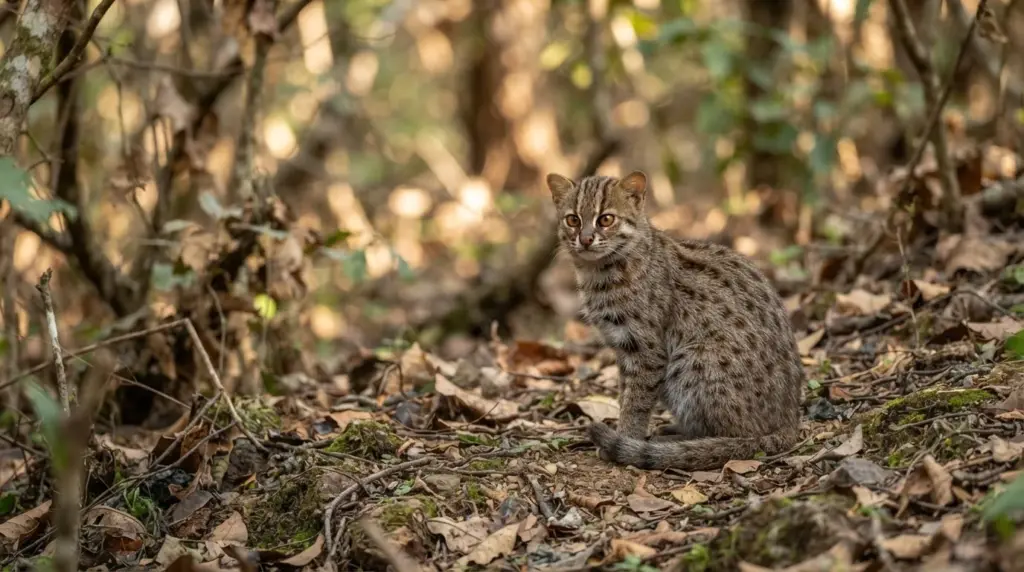
A wild cat small enough to sit in your palm still hunts like a full-grown predator.
The rusty-spotted cat holds the title of smallest wild cat on Earth, and that single fact has made it one of the most talked-about small animals online, from wildlife pages to Reddit threads.
Despite carrying only a few pounds, it survives on stealth, sharp night vision, and a coat built for hiding in dense cover.
Below, you will learn about its size, appearance, habitat, and behavior; its continued appearances on “world’s smallest” lists; its nicknames; and recent sightings that keep this rare feline in the spotlight.
What is a Rusty Spotted Cat?
The rusty-spotted cat (Prionailurus rubiginosus) belongs to the family Felidae, the same group that includes all cat species, wild and domestic.
It is native to India, Sri Lanka, and Nepal, with two recognized subspecies: one across India, another limited to Sri Lanka.
Its small size and rust-toned coat are what set it apart from every other cat on the list, and that single trait drives most of the interest around it.
The species is also on record with the U.S. Fish & Wildlife Service’s species database, a federal government source, though its entry there is a taxonomic listing rather than a statement on the “smallest cat” title.
Is the Rusty-Spotted Cat the Smallest Wild Cat?
According to the Felidae Conservation Fund’s comparison of the two species, the rusty spotted cat wins the title by weight. In contrast, the black-footed cat holds the edge in body length, which is why both names come up whenever this record is discussed.
Most wildlife sources cite the rusty-spotted cat as the lightest wild cat species alive, with its closest rival being the African black-footed cat.
| Feature | Rusty Spotted Cat | Black-Footed Cat |
|---|---|---|
| Weight | 2–4 pounds | 2.5–5.5 pounds |
| Body length | 13–20 inches | 14–20 inches |
| Region | South Asia | Southern Africa |
That small frame isn’t a weakness. It’s a build suited for squeezing through dense brush, climbing thin branches, and moving unnoticed.
Appearance, Habitat, and Behavior
Beyond its size record, three things define this cat day to day: how it looks, where it lives, and how it survives after dark. Each of these traits works together, shaping a small predator built almost entirely around going unnoticed.
1. Coat Pattern and Appearance
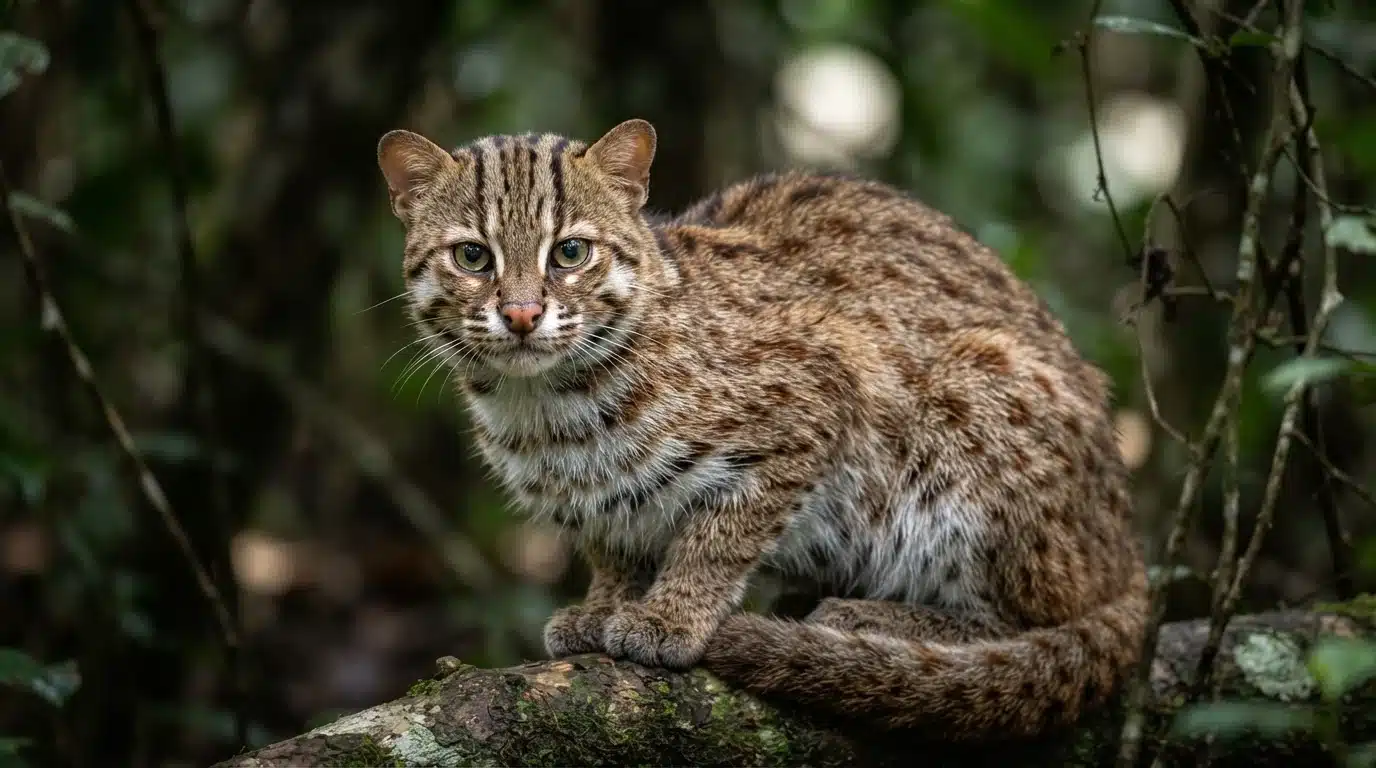
The name comes directly from its coat, which follows a clear pattern:
- Base fur: short, soft, mostly brownish-gray
- Markings: rust-colored spots, running in solid streaks near the head and shoulders, then breaking into rounder spots across the body and legs
- Underside: white belly and inner legs with darker markings
- Face: four dark lines stretching from each eye toward the back of the head
These markings aren’t just for looks. The pattern breaks up its outline against dry leaves and scrubland, making it harder for both prey and larger predators to spot.
2. Habitat and Range
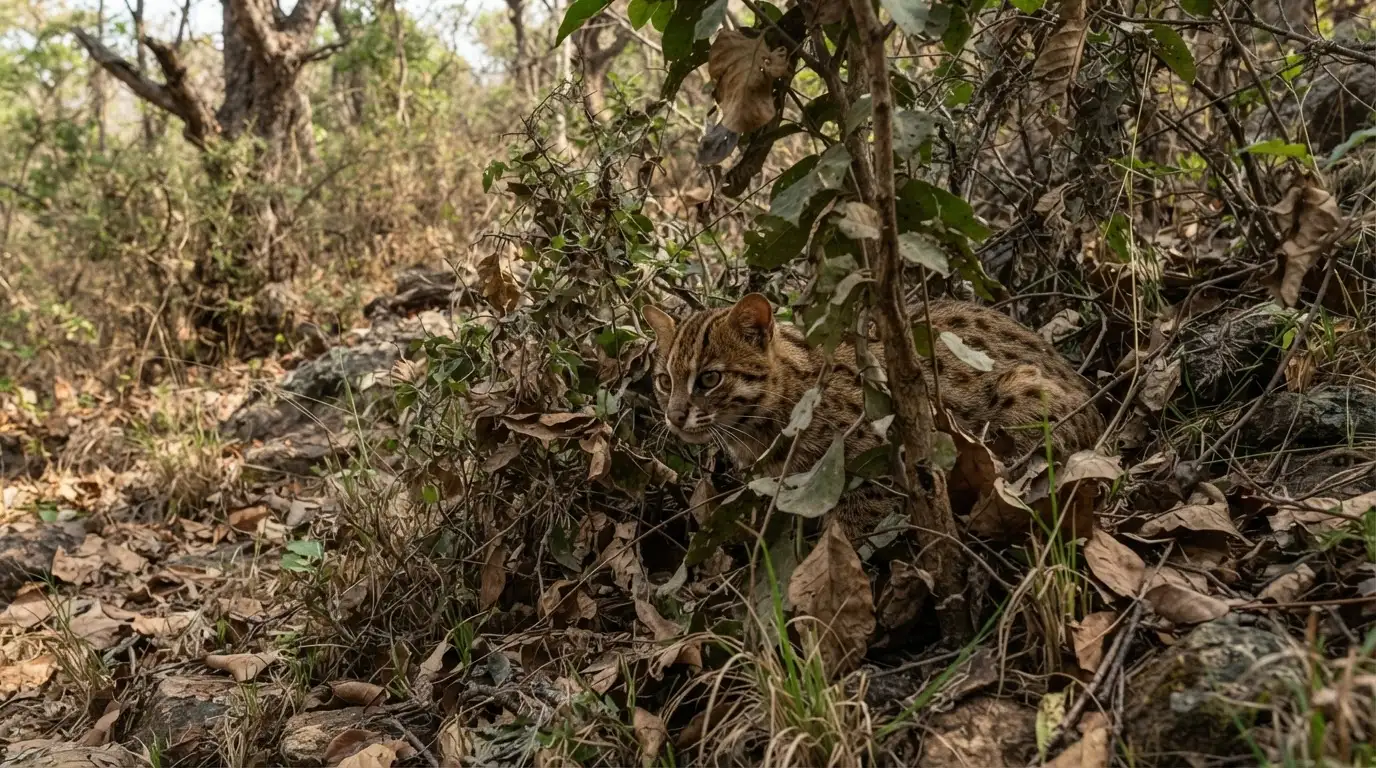
Habitat shapes almost everything about this cat’s daily routine, from where it dens to how easily it stays out of sight. Its preferred habitats include:
- Dry, deciduous forests with dense cover
- Open grasslands near the tree line
- Scrub and rocky terrain
- Degraded forest patches close to farmland
In Sri Lanka, sightings often come from higher-altitude forests. In the Terai belt of India and Nepal, the cat tends to favor drier, scrub-covered land.
A notable 2026 update documented a breeding pair in the Aravalli landscape near Delhi-NCR, showing that this shy species can still hold on in areas shaped by human activity. Day to day, it’s mostly active after dark, naturally shy and quiet, and a skilled climber that moves easily through tight spaces.
3. Diet and Hunting
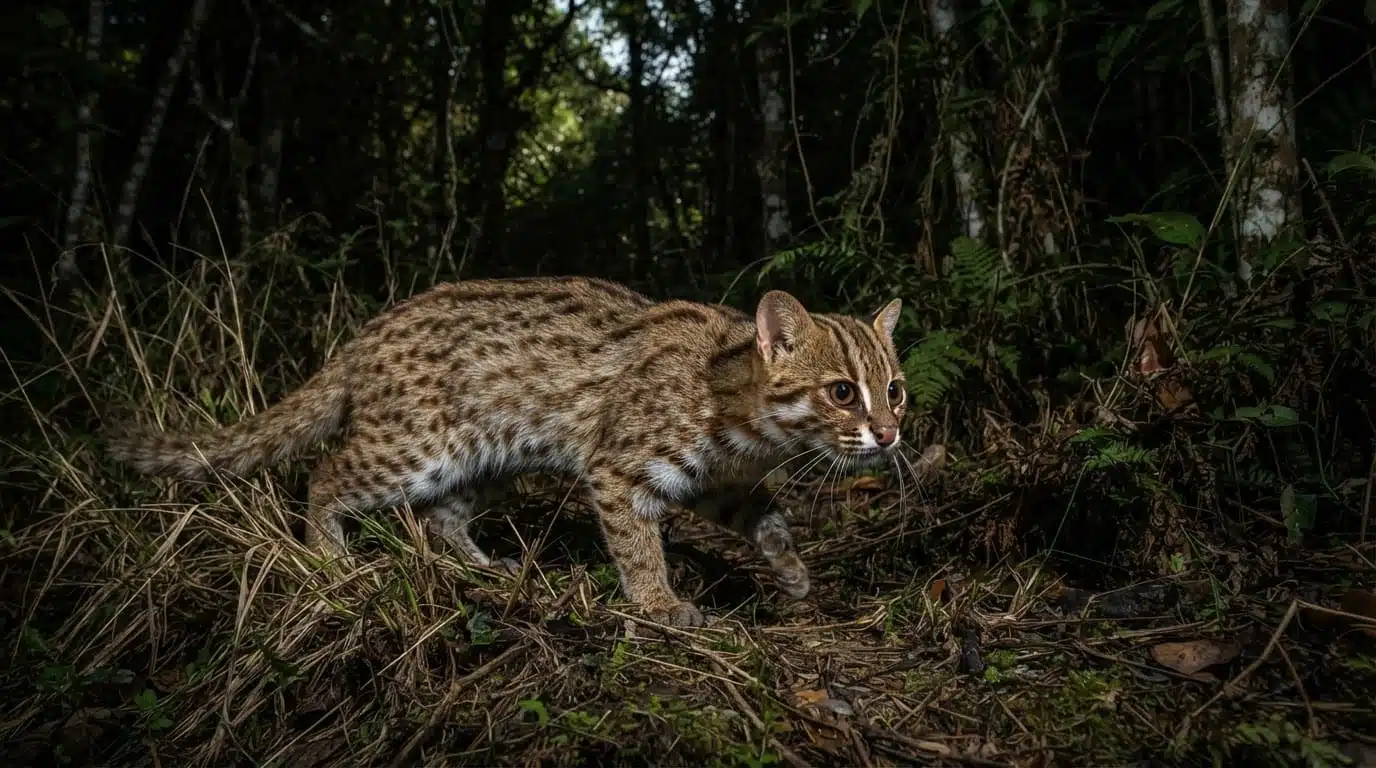
Habitat shapes almost everything about this cat’s daily routine, from where it dens to how easily it stays out of sight. Its preferred habitats include:
- Rodents are its most common food source
- Ground-feeding birds
- Frogs and lizards
- Insects, when nothing larger is available
It hunts mostly at night, using strong low-light vision to spot prey. Size doesn’t slow it down; its light frame lets it move quietly and react quickly, which matters more than raw strength when the prey is this small and fast. That combination of stealth and speed is what makes it an effective hunter despite its size.
Why the Rusty-Spotted Cat is So Popular
Beyond the record itself, a few things keep this cat resurfacing in wildlife pages and comment sections:
- Kitten comparison: looks tame, surprises people once they learn it’s fully wild
- Nickname: often called the “hummingbird of cats” for its size and quick movements
- Record debate: its comparison with the black-footed cat keeps the topic active online
- Exam relevance in India: its status occasionally appears in competitive-exam study material
- Rarity: uncommon sightings mean each new photo or video circulates widely
These reflect public interest, not scientific claims about the species itself, and they’re worth reading with that distinction in mind rather than as verified biological facts.
How Reddit Reacts to This Cat
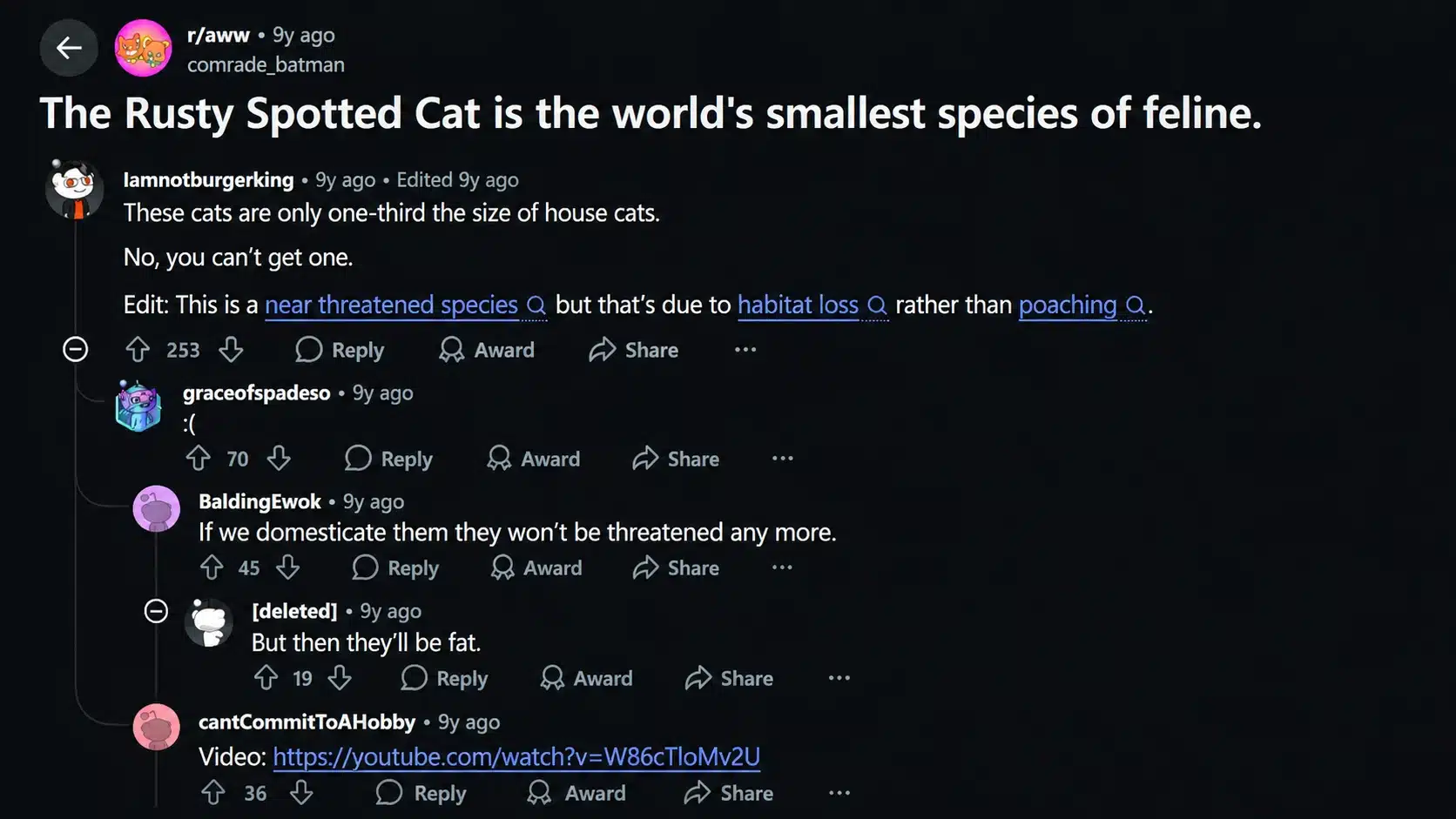
A well-known thread on Reddit introduced many casual animal fans to the species, and it reflects a pattern seen across most rusty-spotted cat posts on the platform.
Commenters are often surprised by its size, since it’s easy to mistake photos of a kitten for those of a wild cat, and many focus on the contrast between its gentle look and its predatory instincts.
Threads comparing it with the black-footed cat regularly turn into debates over which measurement should decide the smallest-cat title. Because sightings are uncommon, people frequently ask for the original photo or article source behind a post.
These discussions add to the species’ online visibility, though the numbers and facts presented earlier in this post come from wildlife research sources rather than social threads.
How It Compares to Other Cats
Its size invites comparison, both with the cat curled up at home and with other small wild species people search for in the same breath.
| Cat | Region | How It Compares |
|---|---|---|
| Domestic house cat | Human homes worldwide | Larger, socialized, and eats prepared food instead of live prey |
| Black-footed cat | Southern Africa | Closest rival for the smallest wild cat title |
| Leopard cat | South and Southeast Asia | Similar spotted coat, slightly larger |
| Pallas’s cat | Central Asia | Round face and thick fur |
| Sand cat | Desert regions | Oversized ears, sand-colored fur |
Seeing where the rusty spotted cat fits among these gives a clearer picture of how varied small cats, wild and domestic, can be. Many of the domestic breeds people know best sit at the more familiar end of that same range.
Can a Rusty Spotted Cat Be a Pet?
Its small size and kitten-like face lead many people to search for one as a pet. In practice, this isn’t possible or legal:
- Wild behavior: keeps full predatory instincts, does not adapt to home life
- Legal protection: listed under CITES Appendix I, which restricts trade across its entire range
- Habitat needs: depends on natural terrain to hunt, move, and stay healthy
- Conservation priority: groups focus on keeping the species wild over individual ownership
Any listing claiming to sell one should be treated as unreliable or illegal. Owners drawn to a wild look usually turn to domesticated exotic breeds, which are legal to keep and suited to home life.
Caution: Listings offering a rusty spotted cat for sale are almost always scams or illegal wildlife trade, even if a seller claims it’s captive-bred or legal. Buying, keeping, or transporting one without authorization can carry legal penalties and puts a protected species at risk. Report suspicious listings to local wildlife authorities instead of engaging with the seller.
For anyone who still wants to see one, legal viewing options exist: accredited zoos in its native range, wildlife sanctuaries running conservation programs, and documentary footage where in-person viewing isn’t possible. Checking directly with a zoo or sanctuary before visiting is the best way to confirm whether one is currently on view.
Conservation Status of the Rusty-Spotted Cat
Rare sightings, nighttime habits, and natural camouflage make this species hard to study, so exact population numbers remain unknown.
What pressure it faces comes from shrinking wild spaces, less forest to den in, more roads cutting through its range, and occasional conflict with farmers when it goes after poultry.
Conservation groups across its range have responded by providing safer housing for livestock, replanting forests, and raising awareness in high-risk areas.
Even so, the species is best described as holding on rather than fully secure.
Final Scratch
The rusty spotted cat shows that size does not limit survival skills. At only a few pounds, this tiny predator can still hunt, climb, and adapt to its natural surroundings with impressive instincts.
The rusty-spotted cat remains one of the smallest wild cats, known for its rare sightings, rust-colored coat, and unique place among wild felines.
Protecting its habitat is important because forest loss can affect many small species that depend on these environments.
Learning about this remarkable cat highlights why wildlife protection matters for creatures of every size. Its story also reflects the importance of preserving habitats for future wildlife. Share your thoughts in the comment section and tell us why you find this small wild cat interesting.
Frequently Asked Questions
How Long Do Rusty Spotted Cats Live?
Lifespan in the wild isn’t well documented since sightings are so rare. Still, individuals kept in captivity have been recorded living for around 12 to 18 years, considerably longer than most small wild cat species.
Is the Rusty Spotted Cat Considered Endangered?
It’s classified as Near Threatened by the IUCN, a status it was downgraded to from a higher-risk category after recent sightings expanded its known range across India, Sri Lanka, and Nepal.
Are Rusty Spotted Cats Dangerous to Humans?
No. They actively avoid people and pose no real threat to humans. However, occasional conflict arises when they prey on domestic poultry near farms, sometimes leading to retaliatory killings by frustrated farmers.
Do Rusty Spotted Cats Live Alone or in Groups?
They’re solitary animals by nature. Individuals mark and maintain their own territory using scent rather than living, denning, or hunting in family units or social groups, coming together only briefly to mate.
Why Is It Nicknamed the “Hummingbird of Cats”?
The name refers to its small size and quick, energetic movements rather than any actual relation to hummingbirds or their behavior. However, both are known for being fast, tiny, and easy to overlook.