

We’ve all been there, staring at our cat’s wide-set eyes or watching them wobble across the living room, and typing some version of “does my cat have Down syndrome?” into Google at 11 p.m.
If that’s what brought you here, take a breath. You’re not overreacting, and you’re definitely not alone.
Here’s the honest answer: no, cats can’t have Down syndrome. That condition is caused by an extra copy of human chromosome 21, and cats simply don’t have that same genetic setup.
But here’s the part that actually matters to you as a pet parent: the traits people associate with “Down syndrome cats” are real, and they usually point to something else worth understanding. Let’s walk through it together.
What is Down Syndrome?
Down syndrome, or trisomy 21, happens when a person is born with an extra copy of chromosome 21.
That extra genetic material shapes how the body and brain develop before birth, and it can bring certain shared physical features, developmental differences, lower muscle tone, and a higher chance of some health conditions, though every person’s experience with it looks a little different.
Because this condition is tied specifically to human chromosome 21, it just doesn’t exist in cats, dogs, or any other animal.
Their chromosomes are arranged completely differently. So when your cat looks a little unusual, something else is behind it, and figuring out what that “something else” is is where we can actually help your cat.
Can Cats Have Down Syndrome?
The short answer is no, because they do not have the same chromosome arrangement that causes this condition in humans.
Several health issues can create similar traits in cats. These may involve the brain, nervous system, development before birth, or inherited genetic changes.
| Aspect | Human Down Syndrome | Similar Signs in Cats |
|---|---|---|
| Main cause | Extra copy of chromosome 21 | Other genetic, neurological, or developmental causes |
| Genetic structure | Human chromosome pattern | Feline chromosome pattern |
| Diagnosis | Medical and genetic assessment | Veterinary examination and health tests |
| Common concerns | Developmental and physical differences | Movement issues, facial differences, or behavior changes |
A cat with different features should be assessed based on its health, behavior, and daily abilities rather than appearance alone.
Why Do Some Cats Look Like They Have Down Syndrome?
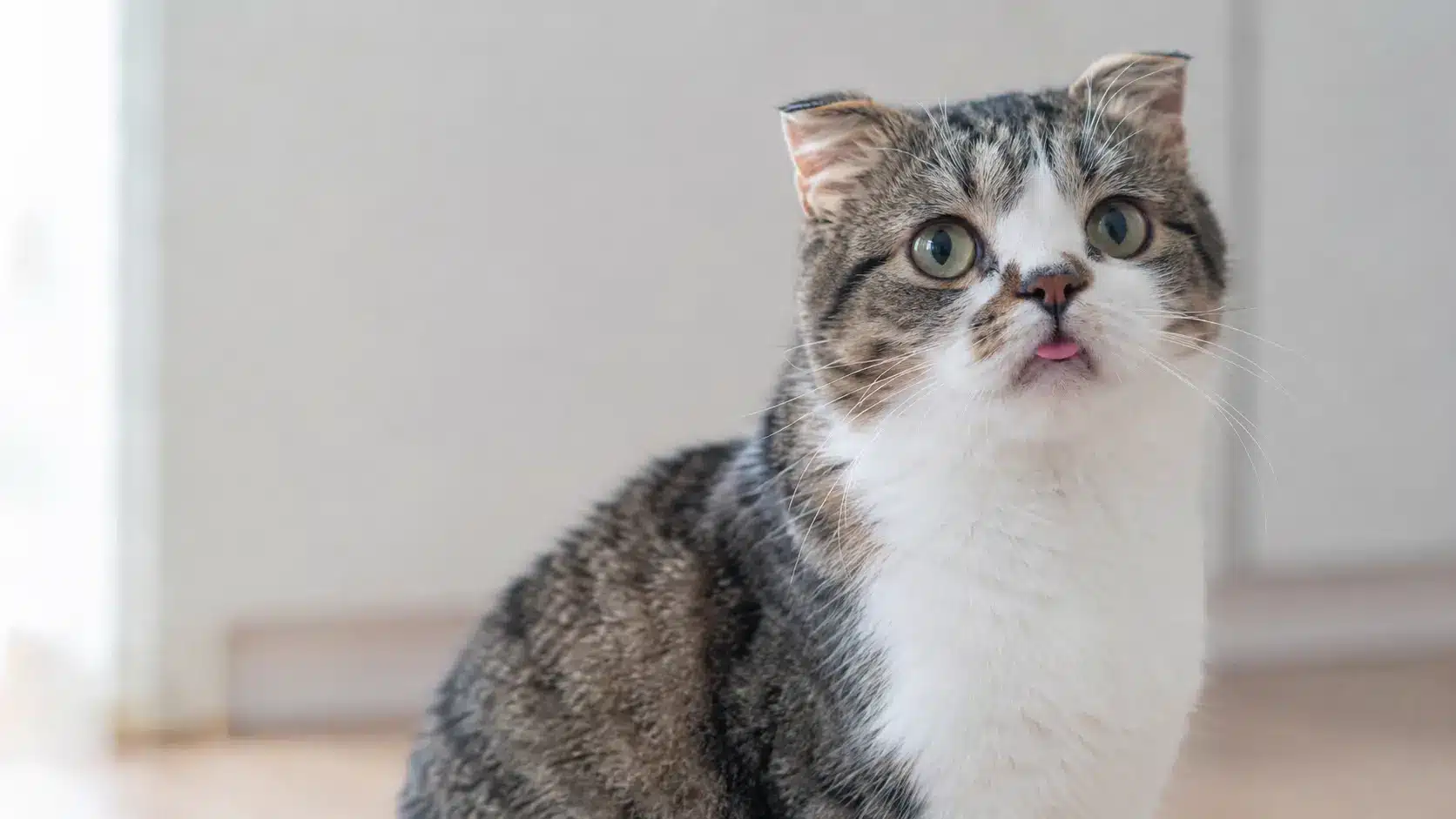
Some cats may look or act differently due to various health or developmental reasons, and also, these signs can have multiple causes.
Physical Features Owners May Notice:
Some cats may have facial or body features that look different from other cats. Common examples include:
- Wide-set eyes
- Different face shape
- Unusual ear placement
- Changes in head shape
- Different body proportions
These traits may come from genetics, prenatal development, or certain medical conditions, and while some cats are naturally different in appearance, they still remain healthy throughout their life.
Behavioral Changes That May Look Similar:
Some cats may behave differently because of changes affecting their brain, nerves, muscles, or senses. So on that note, owners may notice:
- Difficulty with balance
- Unsteady walking
- Slow responses
- Trouble jumping
- Changes in normal activity
These signs can happen for different reasons. For example, a kitten with a condition affecting brain development may have coordination problems but can still enjoy daily activities with the right care.
Conditions that Can Cause Similar Signs in Cats

Several health conditions can cause signs that look similar to developmental differences in cats. Understanding these causes can help owners recognize possible concerns and provide proper care.
1. Cerebellar Hypoplasia in Cats
What It Is: Cerebellar hypoplasia occurs when the cerebellum does not develop fully. The MSD Veterinary Manual links feline cases to exposure to panleukopenia before birth. This brain region controls balance, posture, and coordinated movement.
Common Signs:
- Shaky or unsteady movement
- Wide-legged walking
- Head tremors
- Difficulty jumping
- Poor balance
What Happens Next: The condition is nonprogressive, meaning it does not worsen because of ongoing degeneration. Many affected cats can live comfortably with secure flooring, accessible litter boxes, and protection from falls.
2. Hydrocephalus in Cats
What It Is: Hydrocephalus develops when excess cerebrospinal fluid places pressure on the brain and may damage brain tissue.
Common Signs:
- Trouble walking
- Vision problems
- Seizures
- Altered awareness
- Changes in skull shape
What Happens Next: A veterinarian may use neurological testing, ultrasonography, or MRI to assess the condition. Treatment depends on its cause, severity, and effects on brain function.
3. Genetic Changes and Birth Differences
What They Are: Some cats are born with inherited or developmental differences that affect their appearance, growth, movement, vision, or organ function. The effects depend on the gene or developmental process involved.
Possible Signs:
- Unusual facial structure
- Abnormal eye development
- Differences in limb formation
- Slow growth
- Movement difficulties
What Happens Next: A veterinarian reviews the cat’s history, development, symptoms, and daily abilities. Bloodwork or imaging may be needed, while the University of California, Davis offers feline DNA tests for certain known inherited conditions.
Signs Owners Notice in Cats with Unusual Development
Owners often look for explanations when their cat shows differences in movement, appearance, or behavior. But these signs can have several possible causes and should be considered with the cat’s overall health.
| Sign | Possible Reasons |
|---|---|
| Poor coordination | Cerebellar problems or nervous system concerns |
| Wide-set eyes | Natural variation or facial development differences |
| Trouble walking | Brain, nerve, or muscle-related problems |
| Slow responses | Neurological or developmental concerns |
| Difficulty eating | Mouth, facial, or nervous system issues |
While these signs do not point to one specific condition. A veterinarian can help understand the actual cause by considering the cat’s history, symptoms, and daily abilities.
How Veterinarians Find the Cause of Similar Symptoms
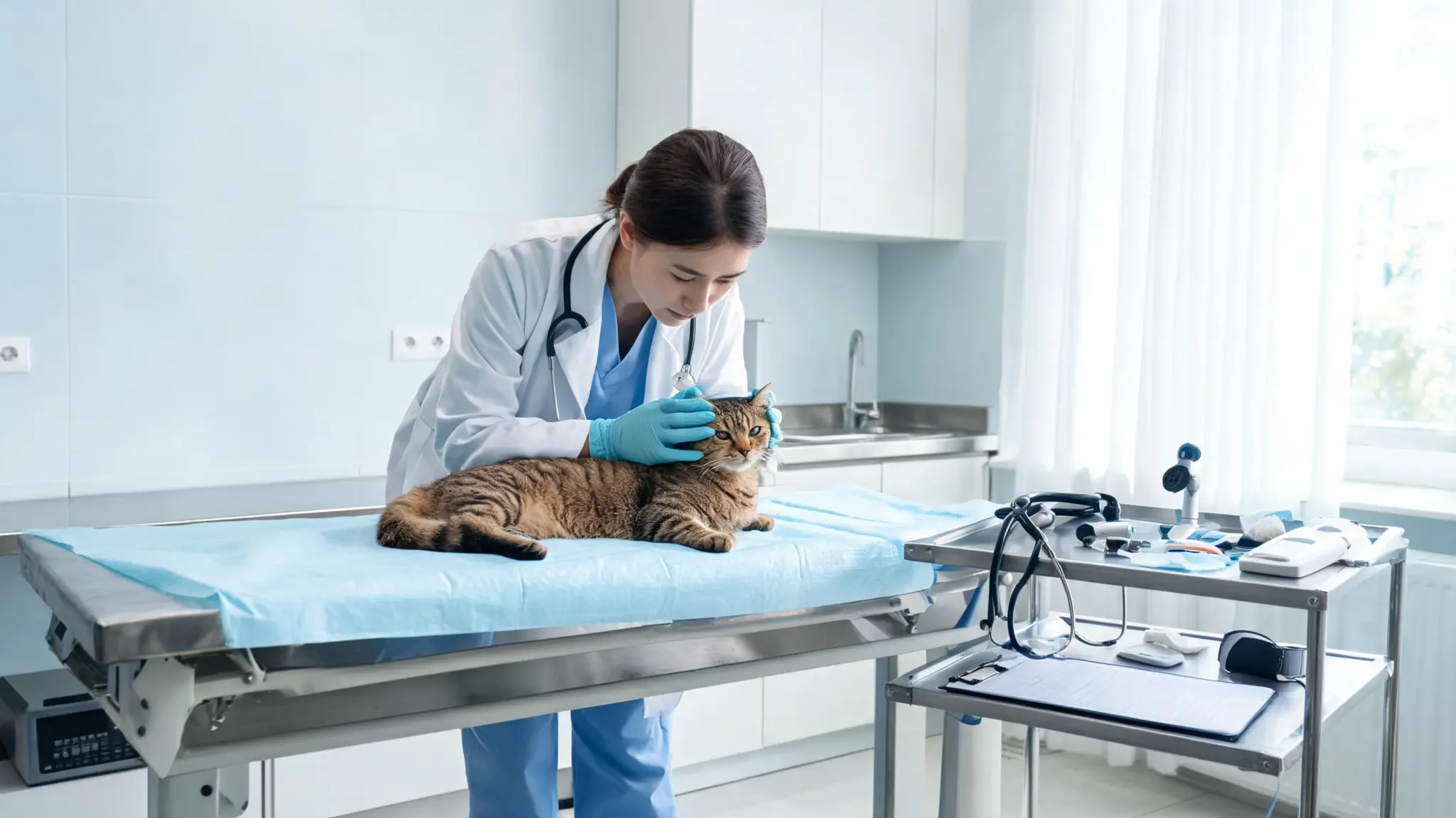
The process usually involves learning about the cat’s health history, checking physical signs, and using tests when needed. This helps determine if the cat has a neurological problem, genetic issue, developmental concern, or another health condition.
1. Physical Examination and Health History
The first step is usually a detailed health check. A veterinarian may ask about:
- When the signs first appeared
- Whether the cat was born with these differences
- Changes in movement or behavior
- Eating and drinking habits
- Previous illnesses or injuries
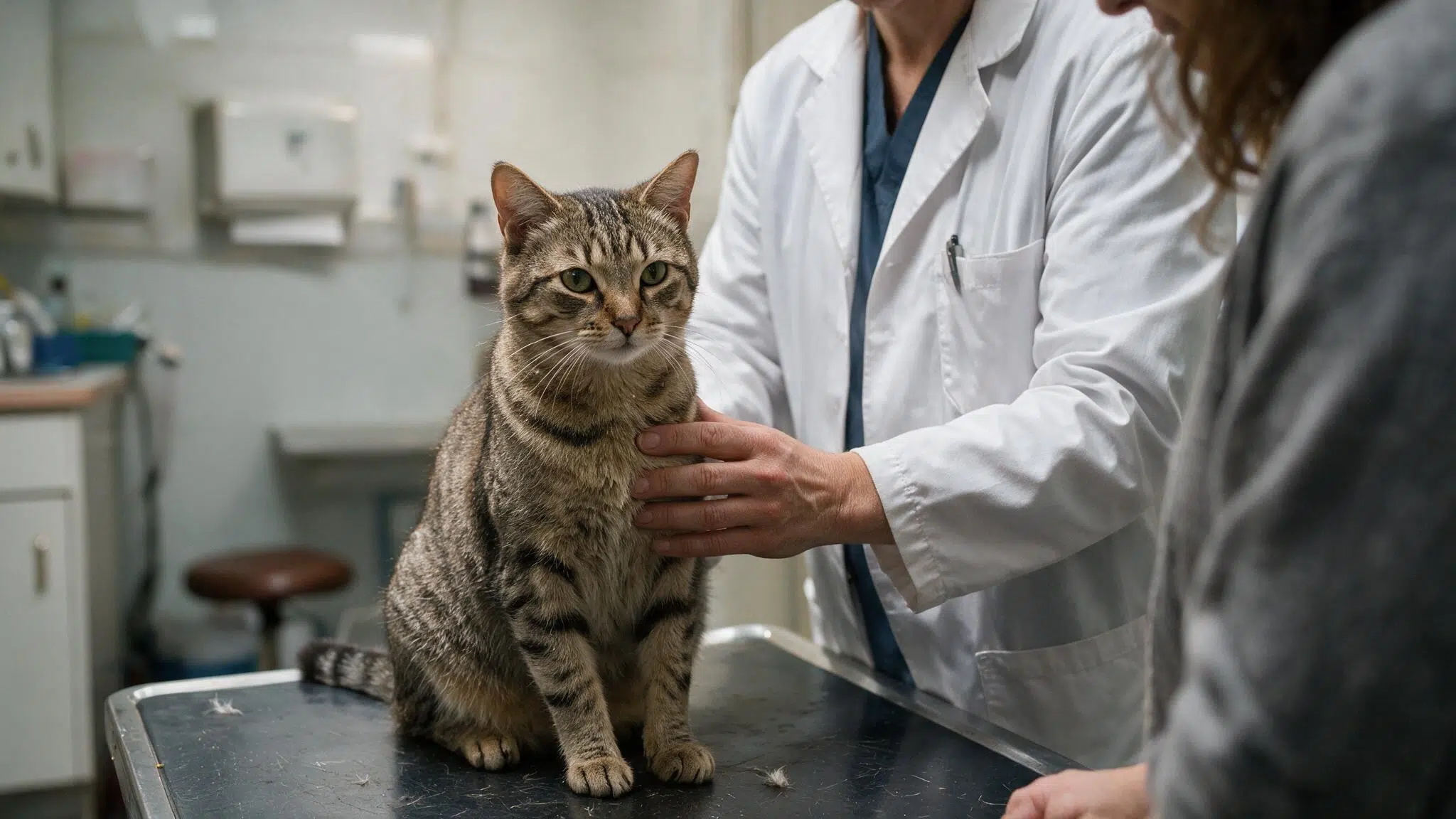
During the examination, the veterinarian may check the cat’s eyes, ears, muscles, joints, reflexes, and overall body condition.
This helps identify whether the signs are normal traits or linked to a health concern.
2. Neurological Examination
A neurological examination helps check how a cat’s brain, spinal cord, and nerves are working when movement or behavior changes appear.
The veterinarian may observe:
- Walking pattern
- Balance
- Coordination
- Muscle strength
- Reflexes
- Response to surroundings
These checks help identify health problems affecting movement or behavior. The purpose of it is to find the cause of the signs, not diagnose Down syndrome in cats.
3. Imaging and Other Tests
Some symptoms require additional testing to understand what is happening inside the body of your small creature. Depending on the signs, a veterinarian may recommend:
- Blood tests: Help check general health, infections, and body function.
- X-rays: Help identify bone problems and certain structural concerns.
- Ultrasound: Helps examine internal organs and soft tissues.
- CT or MRI scans: Help check changes in the brain and nervous system.
- Genetic testing: May help identify possible inherited conditions.
Remember that not every cat needs every test. The recommended approach mostly depends on the symptoms, age, and health history of the individual cat.
Caring for a Cat with Special Needs

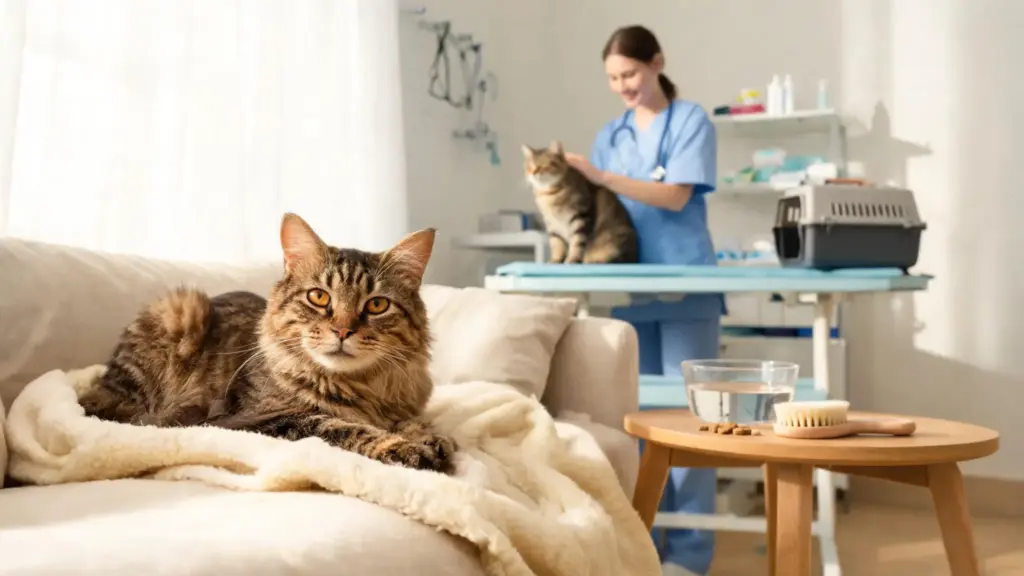
Cats with these challenges may need a few adjustments to stay comfortable. Simple changes at home, regular health checks, and daily interaction can help support their wellbeing.
| Care Area | Helpful Steps |
|---|---|
| Making the Home Safer | Use non-slip mats, keep food and water easy to reach, choose an accessible litter box, and remove unsafe climbing areas. |
| Supporting Daily Health | Monitor appetite, weight, grooming, activity levels, movement changes, and signs of discomfort. |
| Providing Comfort and Enrichment | Maintain a routine, provide comfortable resting spaces, use gentle play, and offer attention and interaction. |
Small adjustments to daily care can help cats with different needs stay comfortable and improve their overall wellbeing.
What Cat Owners Say Online About Special-Needs Care
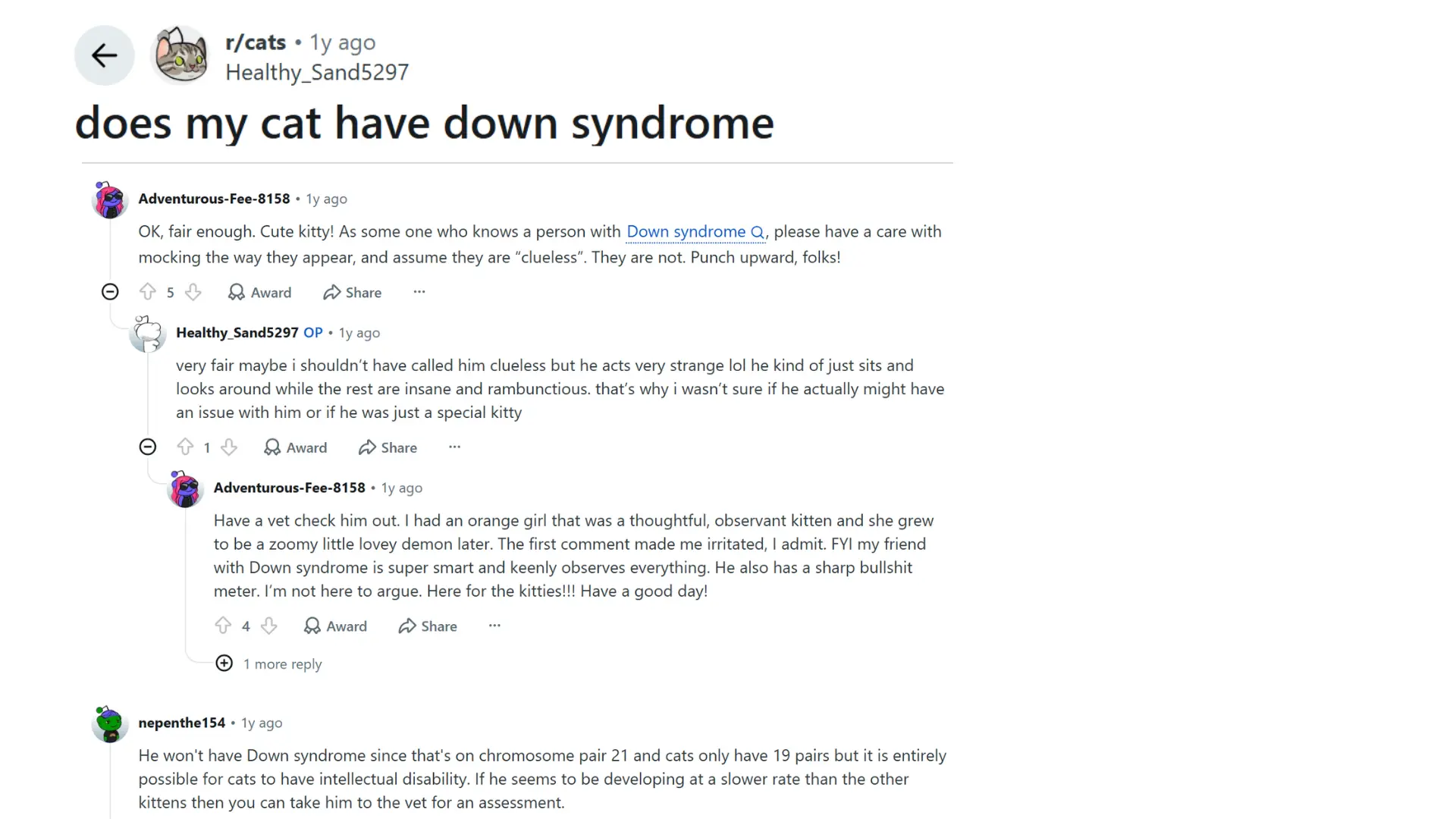
Many cat owners turn to online communities after noticing unusual facial features, behaviors, or development in their pets.
In one Reddit discussion, an owner asked if their cat had Down syndrome because the cat behaved differently, often sitting quietly while other cats were more active.
Other users suggested a veterinary check and explained that cats cannot have human Down syndrome, but similar signs may have other causes.
These discussions show why the label becomes common online, while also highlighting the importance of professional advice for understanding a cat’s health.
What Should You Do If Your Cat Looks Like It Has Down Syndrome?
If your cat looks or acts differently, focus on changes in daily habits rather than appearance alone. Watch for these signs:
| Sign | Why It May Need Attention |
|---|---|
| Trouble walking or balance issues | May relate to brain, nerve, or muscle problems |
| Difficulty eating | Could involve mouth, facial structure, or nervous system concerns |
| Sudden behavior changes | May indicate illness, pain, or stress |
| Vision or response changes | May involve sensory or neurological problems |
| Reduced activity | Could be linked to discomfort or health changes |
If these changes appear, a veterinary visit can help identify what is happening. The veterinarian can examine your cat, discuss possible causes, and suggest the right care approach.
Final Verdict
A cat with different features or behaviors deserves understanding rather than assumptions based on appearance. While the term “down syndrome cat” is commonly used online, it does not explain what is happening medically.
Cats with movement difficulties, facial differences, or developmental concerns may have many possible reasons behind these signs.
Learning about conditions such as neurological problems, genetic changes, and developmental issues helps owners make better choices for their pets.
Every cat has different abilities and care needs, and many cats with health challenges can still enjoy daily activities, affection, and a comfortable life with the right attention.
Frequently Asked Questions
Can Food Affect a Cat’s Growth And Development?
Proper nutrition supports a cat’s growth, brain function, and overall health. Nutritional problems may affect development, especially in kittens.
Why Does My Cat Have a Different-Looking Face?
A cat may have a different facial appearance because of genetics, natural variation, birth-related changes, or certain health problems. A veterinarian can help determine if the difference affects the cat’s wellbeing.
Can Health Problems Change a Cat’s Behavior?
Yes, some health issues can affect a cat’s activity, reactions, or habits. Sudden behavior changes may be a sign that a health check is needed.
Can a Cat With Developmental Differences Live Normally?
Many cats with developmental differences can have comfortable lives. Their needs may differ, but proper care, a safe environment, and regular veterinary attention can help.