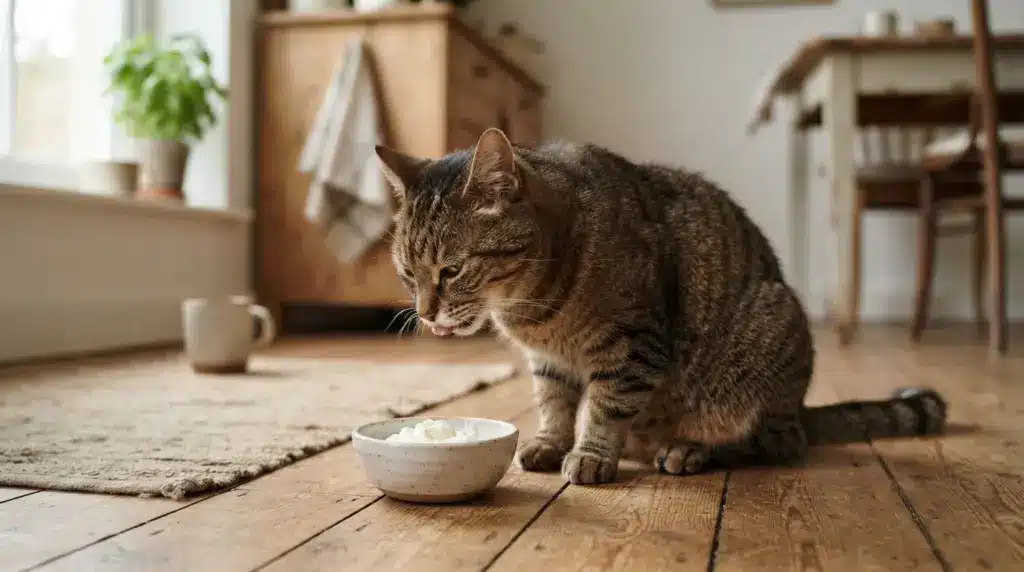
Ever wondered if sharing a spoonful of yogurt with your cat is actually safe? The answer to can cats eat yogurt depends on the type, portion, and your cat’s ability to tolerate dairy.
Some healthy adult cats can handle a tiny amount of plain, unsweetened yogurt without digestive problems, but it should stay an occasional treat rather than an everyday food.
Serving size and frequency matter because too much dairy can lead to vomiting, diarrhea, gas, or stomach discomfort in sensitive cats.
The safest amount also varies with yogurt ingredients, lactose tolerance, body condition, and existing health problems, so smaller and less frequent servings are generally the better approach.
Can Cats Eat Yogurt Safely?
For a healthy adult cat, a small taste of plain, unsweetened yogurt may be tolerated, but yogurt is not a necessary part of a feline diet.
The FDA explains that foods labeled “complete and balanced” are intended to meet a pet’s nutritional needs, while treats and snacks generally are not nutritionally complete.
Yogurt should therefore remain an extra rather than replace any part of a cat’s regular balanced food. Some adult cats also digest dairy poorly because their ability to process lactose often decreases after weaning.
Although fermentation can reduce some of the lactose in yogurt, the amount varies by product and does not make every yogurt suitable for every cat.
A cat tolerating a small taste without symptoms also does not mean yogurt should become a regular part of its diet.
How Much Yogurt Can Cats Have and How Often?
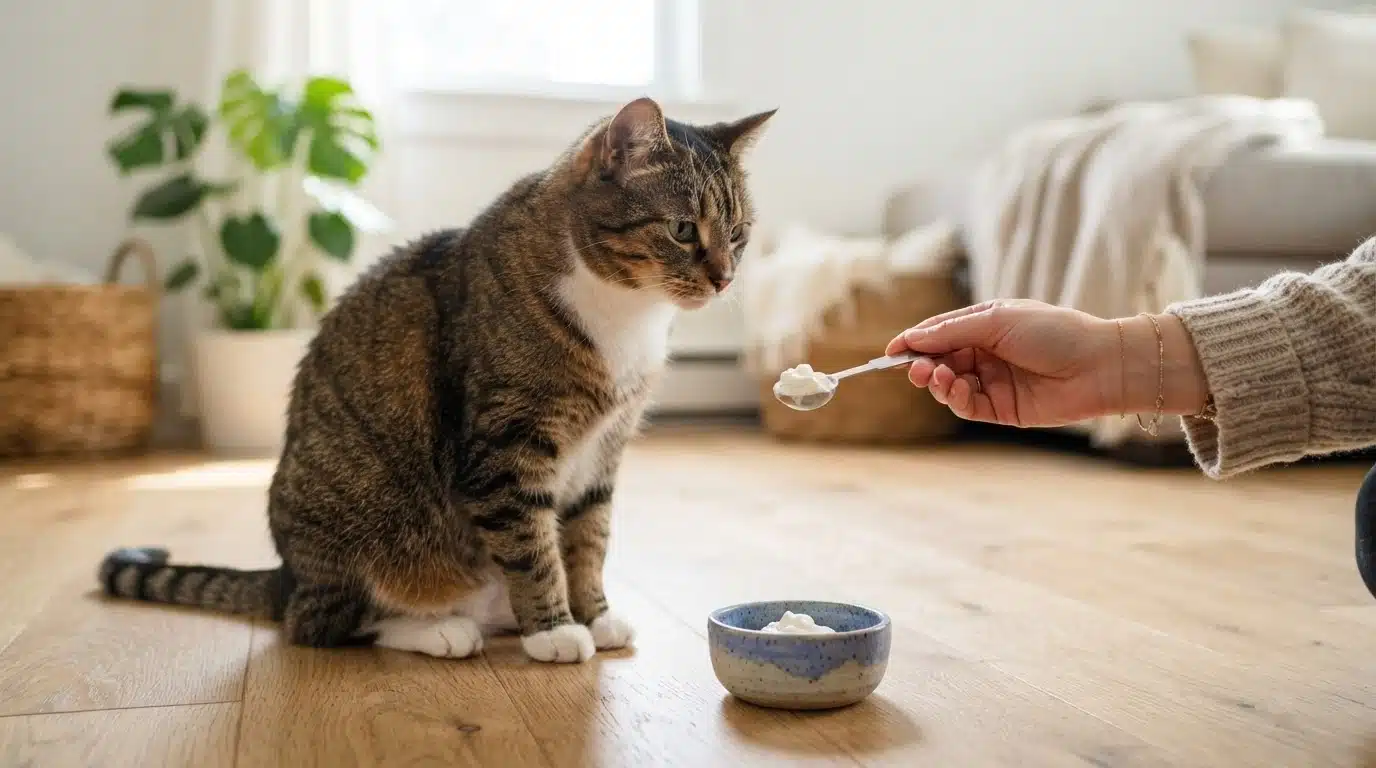
With yogurt, portion size and frequency matter. A tiny amount may be tolerated, but larger or frequent servings can add unnecessary calories and increase digestive problems, a caution that applies just as much to other dairy products cats sometimes beg for.
1. First Serving Size
Start with only a small lick of plain, unsweetened yogurt and watch how your cat responds. One teaspoon is a reasonable starting amount, but it isn’t a universal dose.
Smaller amounts are sensible for first-time feeding, especially when your cat has never eaten dairy before, the same cautious first-try approach worth taking with other human snacks cats show curiosity about.
2. Occasional Treat Frequency
Keep yogurt occasional rather than adding it to your cat’s daily feeding routine. Veterinary-reviewed guidance suggests that a lick or two of plain yogurt once or twice a week is enough for most healthy adult cats.
Cats do not need yogurt regularly to meet their nutritional requirements.
3. Daily Treat Calorie Limit
Count yogurt alongside every other treat, food topper, table scrap, or reward your cat receives that day.
General feline nutrition guidance recommends keeping treats to about 10 to 15 percent or less of daily calories because treats are generally not nutritionally complete.
4. Individual Tolerance Factors
Adjust any serving according to your cat’s digestive response, body condition, regular diet, and medical history. Cats with sensitive stomachs, diabetes, previous dairy reactions, or veterinary diets may need to avoid yogurt entirely, and understanding why so many adult cats struggle with dairy in the first place helps explain why individual tolerance varies so much.
Chewy specifically advises skipping yogurt for cats with diabetes, sensitive digestion, or veterinary diets unless a veterinarian recommends otherwise.
Note: One teaspoon should be treated as an example upper trial amount, not a serving goal. Some cats may develop digestive upset from much less, while others may tolerate a small taste.
Which Types of Yogurts are Better for Cats?

The type of yogurt matters because ingredients, sugar, dairy content, and additives vary widely. Plain options are generally simpler, while flavored or mixed varieties can introduce unnecessary ingredients for cats.
Yogurt Type | General Guidance | Main Concern |
|---|---|---|
Plain, unsweetened | May be tolerated in tiny amounts | Lactose and calories |
Plain Greek | May be tolerated in tiny amounts | Still contains dairy |
Lactose-free | May reduce lactose concerns | Added ingredients |
Vanilla | Better skipped | Sugar and flavorings |
Fruit | Better skipped | Sugar and mix-ins |
Frozen yogurt | Better skipped as a regular treat | Sugar and calories |
Plant-based | Depends on the product | Base ingredients and additives |
Note: Greek yogurt is not always lactose-free, and plant-based yogurt may still contain unsuitable ingredients.
If yogurt is offered at all, keep the choice plain, unsweetened, and simple. Check the ingredient list first, offer only a tiny amount, and stop if digestive symptoms appear afterward.
What are the Risks of Giving Yogurt to Cats?
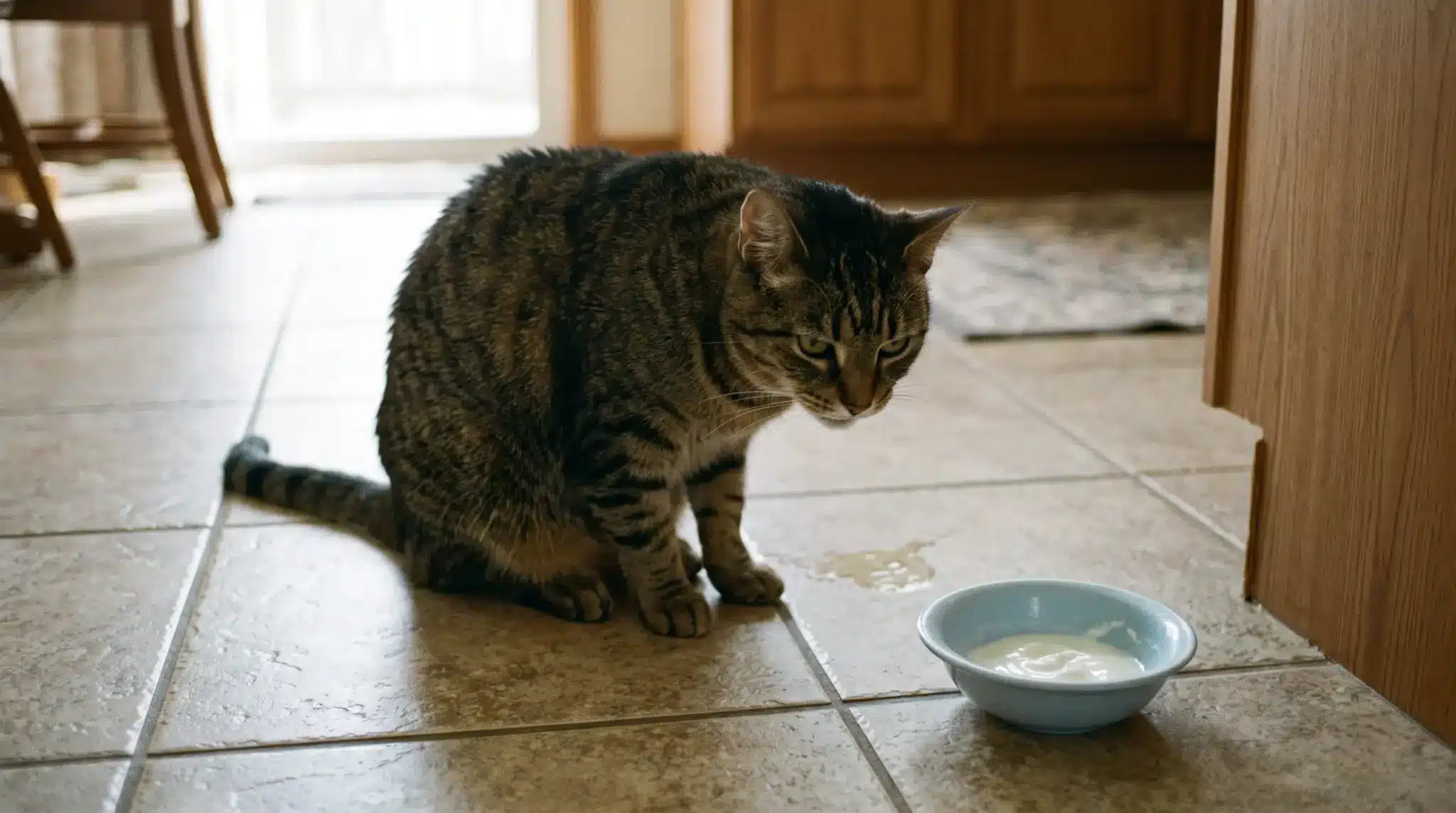
Yogurt can cause problems even when a cat tolerates a small taste. The main risks come from lactose, sugar, extra calories, mix-ins, and digestive reactions.
- Lactose Sensitivity: Many adult cats produce less lactase after weaning, so dairy can be harder to digest. Even a small serving of yogurt may cause diarrhea, gas, cramping, or vomiting in sensitive cats.
- Added Sugar and Extra Calories: Sweetened yogurt adds calories and sugar without meeting any nutritional need a balanced cat food already covers. Frequent extras can displace meals and contribute to unwanted weight gain over time.
- Problematic Mix-Ins: Flavored yogurts may contain chocolate, raisins, granola, dessert toppings, fruit preparations, or other ingredients cats should avoid. Check the full ingredient label instead of relying only on the flavor name.
- Digestive Warning Signs: After yogurt, watch for vomiting, diarrhea, loose stool, gas, abdominal discomfort, reduced appetite, or unusual lethargy. Persistent, severe, or worsening symptoms should prompt a call to your veterinarian.
A small amount is not risk-free for every cat. Choose plain yogurt, keep portions tiny, check ingredients carefully, and stop offering it if symptoms develop.
What to Do if Your Cat Ate Too Much Yogurt
If your cat gets into yogurt, the next steps depend on the product, amount eaten, timing, ingredients, symptoms, and your cat’s overall health.
Step 1: Identify the Yogurt Product: Identify the exact yogurt your cat ate, including the brand, flavor, and whether it was plain, sweetened, flavored, Greek, frozen, dairy-free, or mixed with other foods, toppings, or added sauces.
Step 2: Check the Ingredient List: Check the full ingredient list carefully for chocolate, raisins, sweeteners, fruit preparations, granola, dessert toppings, or other mix-ins instead of judging safety from the flavor name alone on the package.
Step 3: Estimate the Amount and Timing: Estimate how much yogurt your cat ate and note roughly when it happened. A lick, a spoonful, or a large serving represents different exposure levels, so quantity matters for your next decision.
Step 4: Watch for Symptoms: Watch for vomiting, diarrhea, loose stool, gas, abdominal discomfort, reduced appetite, unusual tiredness, or behavior changes. Note when symptoms begin, how severe they are, and whether they worsen over time.
Step 5: Decide When to Call a veterinarian: If your cat ate only a small amount of plain yogurt and seems normal, monitor closely. Contact your veterinarian promptly for large amounts, concerning ingredients, significant symptoms, or medical conditions.
The safest response depends on what your cat ate and how your cat feels. When symptoms are significant or ingredients are concerning, contact your veterinarian.
When Yogurt is Better Skipped
Yogurt is not suitable for every cat. Certain health conditions, dietary needs, or previous reactions can make even small amounts an unnecessary risk. Skip yogurt if your cat:
- Has reacted badly to dairy before
- Has recurring vomiting or diarrhea
- Has diabetes or calorie restrictions
- Follows a prescription or elimination diet
- Is being treated for a gastrointestinal problem
- Would receive yogurt specifically as a home remedy
Cats in these situations may need tighter dietary control. Discuss yogurt and other food extras with your veterinarian before adding them to regular meals.
Conclusion
A small amount of plain, unsweetened yogurt may be acceptable for some cats, but it should never replace a complete and balanced diet.
Since every cat handles dairy differently, portion size, ingredients, and your cat’s digestive response matter before offering it as an occasional treat.
So, can cats eat yogurt safely? Some can tolerate a tiny amount, while others may experience stomach upset because many cats have difficulty digesting lactose.
If you decide to offer yogurt, choose a simple option and watch for changes in your cat’s digestion. Have you tried giving your cat yogurt before? Share what happened in the comments.
Frequently Asked Questions
Can Kittens Eat Yogurt the Same Way Adult Cats Do?
No. Kittens have different digestive and nutritional needs. Most veterinarians recommend avoiding yogurt and other human foods until a kitten is fully weaned and established on an appropriate kitten diet.
Is a Cat Allergic to Dairy Different from One That’s Lactose Intolerant?
Yes. Lactose intolerance means poor digestion of milk sugar, causing gas or diarrhea. A true dairy allergy involves an immune reaction to milk protein, which can also cause itching or skin irritation.
Can Yogurt Be Used to Hide Medication for a Cat?
Check with your veterinarian first. Some medications interact poorly with dairy, and using yogurt as a hiding method can make a cat suspicious of the flavor and refuse future doses.
Are Pet-Marketed Frozen Yogurt Treats Safer Than Regular Frozen Yogurt?
Often, but not guaranteed. Pet-formulated versions may avoid problematic sugars or add-ins, but “pet-safe” labeling varies by brand, so checking the ingredient list still matters.