

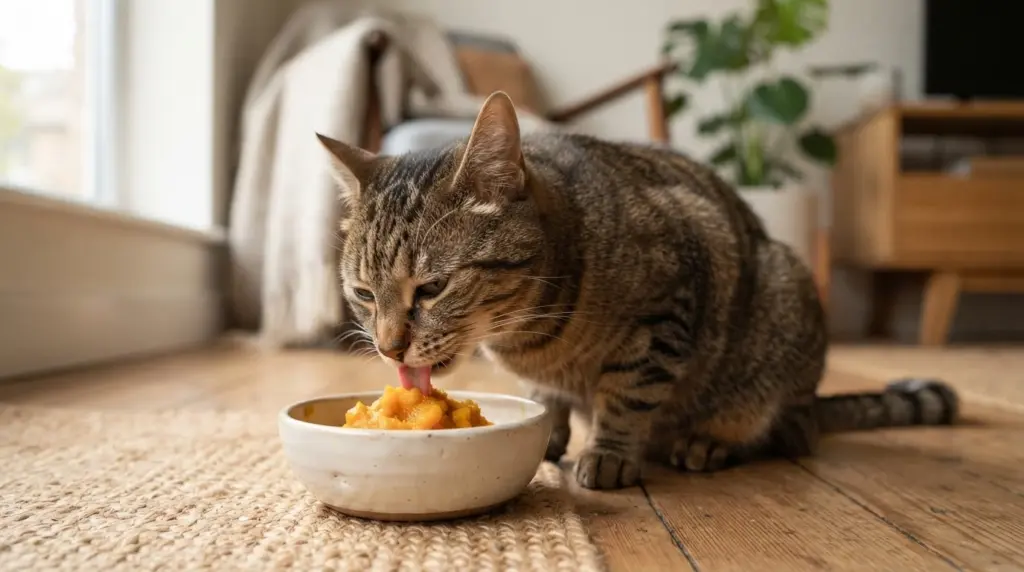
Have you ever watched your cat sniff a new food and wondered if it could actually be good for them?
Many pet parents ask questions about everyday ingredients, especially when they hear different experiences from other cat owners.
I know how much small feeding decisions can matter when you want to keep your companion healthy and comfortable. For questions like can cats eat pumpkin, the answer depends on your cat’s needs, the type of pumpkin, and how it is introduced.
Looking at the benefits, possible concerns, and real experiences can help you decide if this food addition makes sense for your feline friend.
Can Cats Eat Pumpkin Safely?
Yes, cats can eat plain pumpkin when it is prepared correctly and offered in small amounts.
The safest choice is unseasoned canned pumpkin or cooked pumpkin without added sugar, salt, spices, or other ingredients found in pumpkin pie fillings.
Cats are obligate carnivores, meaning their bodies are designed to get most of their nutrition from animal-based foods that provide essential protein and nutrients.
Federal guidance on pet food labeling emphasizes that complete and balanced nutrition is important for maintaining feline health, and that treats like pumpkin are meant to supplement, not replace, that base diet.
When introduced properly, it may support digestive health, but it should complement your cat’s regular meals rather than become a main food source, the same supporting role pumpkin plays in several homemade cat food recipes built around safe, simple ingredients.
Pumpkin Options Cat Parents Commonly Choose
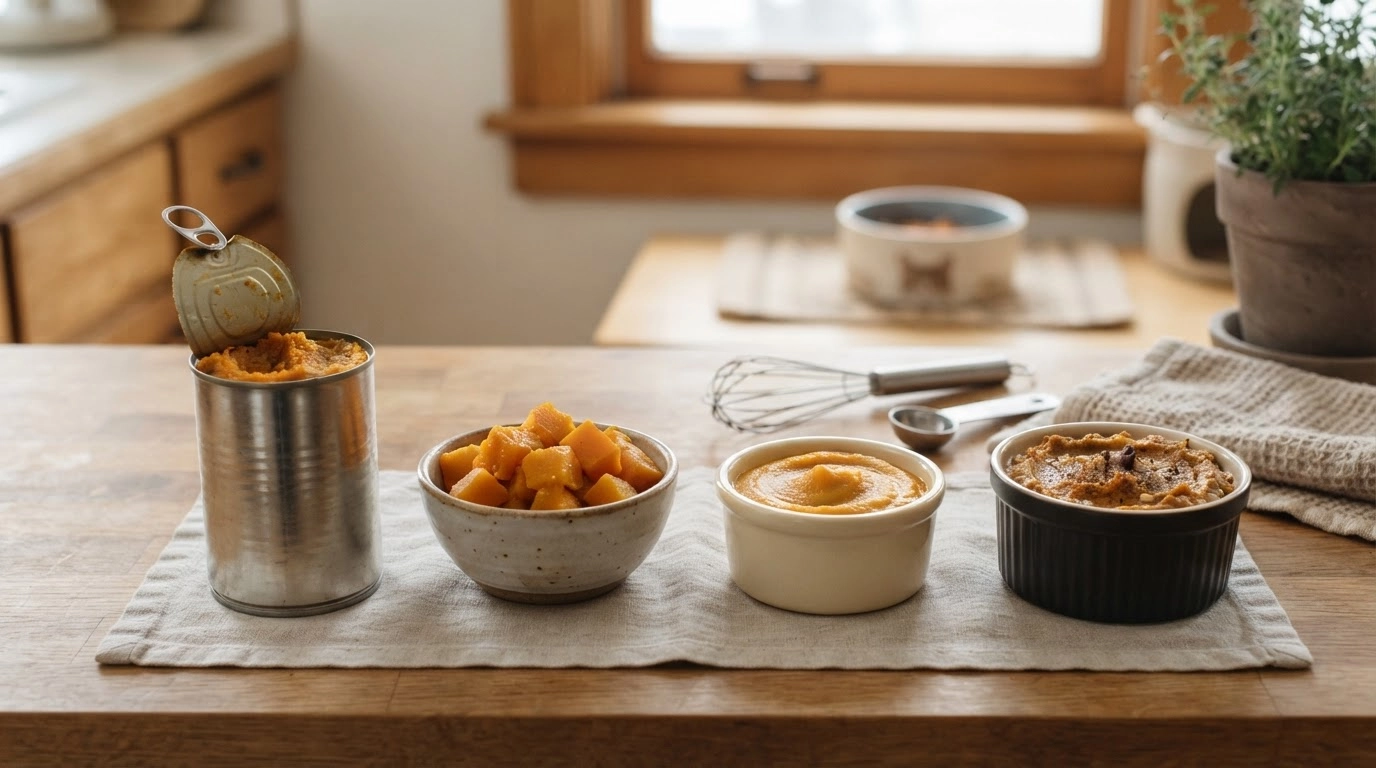
Cat owners often choose pumpkin based on convenience and availability. However, only plain, unseasoned options are suitable for cats, while flavored products may contain harmful ingredients.
Pumpkin Type | Owner Experience | Safety Notes |
|---|---|---|
Plain canned pumpkin | Most common and easy to serve | No sugar or spices |
Fresh cooked pumpkin | Used by some owners | Serve plain only |
Pumpkin puree | Convenient choice | Check ingredients carefully |
Pumpkin pie filling | Often confused with safe pumpkin | Avoid due to additives |
Choosing the right pumpkin matters because cats have sensitive digestive systems, and federal guidance on foods that are risky for pets specifically flags the nutmeg, spices, and added sugar found in pie fillings.
Real Experiences With Feeding Pumpkin to Cats
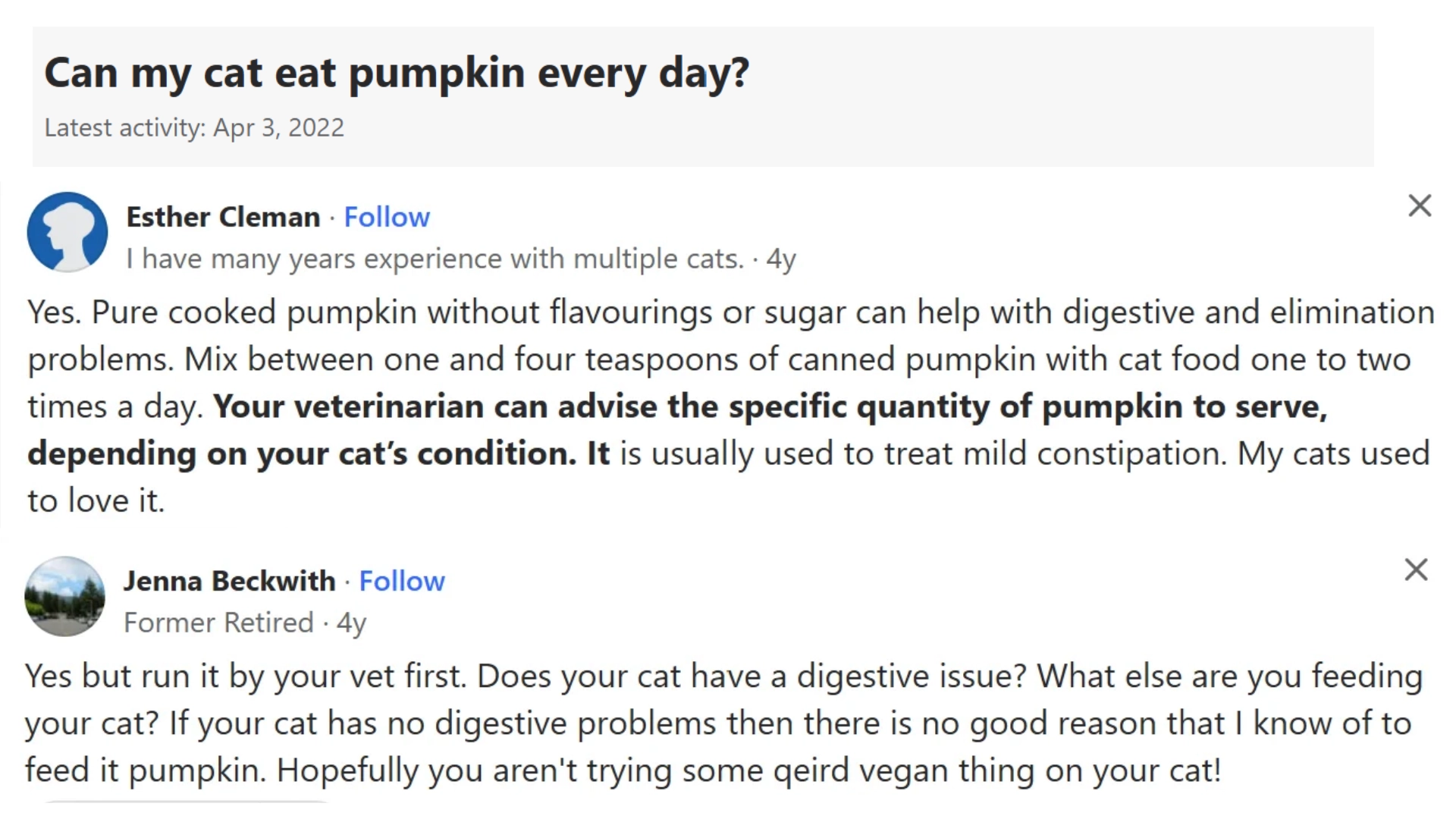
Cat owners on Quora often discuss pumpkin as a small dietary addition rather than a regular food source. In the discussion “Can my cat eat pumpkin every day?”, one commenter shared that cats may eat plain pumpkin in moderation but suggested avoiding making it a daily habit without a specific reason.
The response noted, “Pumpkin should be given in small amounts and not replace a cat’s normal diet.” Many pet owners also mention using a small spoonful mixed with wet food to support occasional digestive issues.
These experiences show that some cats tolerate pumpkin well, while others may not need it or may refuse it. Always consider your cat’s individual needs and ask a veterinarian about frequent use, since owners often reach for the same spoonful of pumpkin described in broader advice on foods that help an upset stomach.
Safe Pumpkin Portions for Cats
Cat owners usually start with a small amount of plain pumpkin and adjust slowly based on their cat’s weight, digestion, and response. Keeping portions limited helps avoid unwanted stomach changes.
Cat Size | Starting Amount | Feeding Notes |
|---|---|---|
Small cats under 8 pounds | ½ teaspoon | Begin with a small portion and watch for stool changes |
Average adult cats 8 to 12 pounds | ½ to 1 teaspoon | Mix with regular food and adjust if needed |
Larger cats over 12 pounds | 1 to 2 teaspoons | Keep portions controlled despite larger size |
A gradual approach makes it easier to see whether pumpkin suits your cat. Every cat responds differently, so adjust portions based on comfort, digestion, and overall health.
Note: Pumpkin should remain a supplement, not a replacement for balanced cat food. If your cat develops loose stools, vomiting, or refuses food after adding pumpkin, reduce the amount and consider veterinary advice.
How to Add Pumpkin to Your Cat’s Food
Adding pumpkin to your cat’s diet works best when you do it gradually and in small portions. Simple methods help your cat adjust while allowing you to watch for digestive changes.
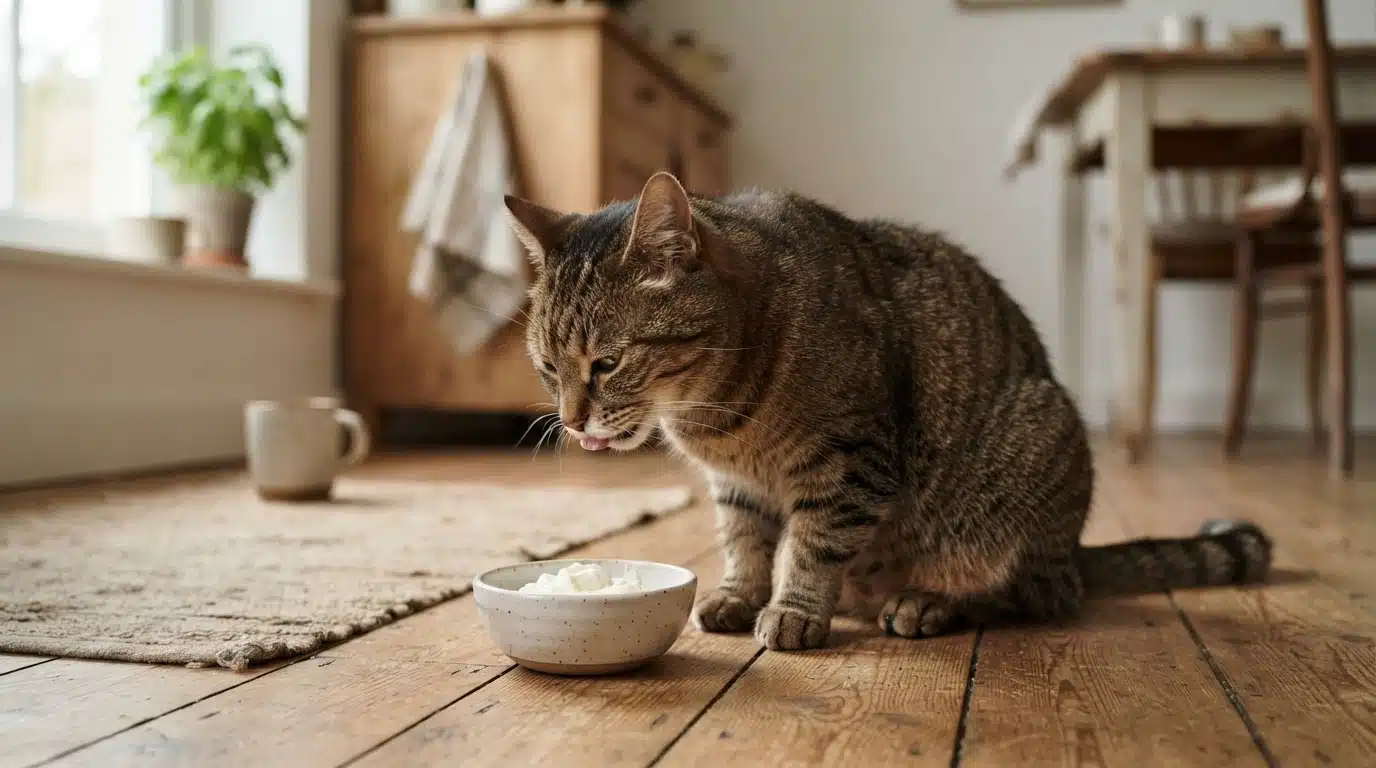
1. Mix Pumpkin with Wet Food: Stir a small amount of plain pumpkin into your cat’s wet food until it is evenly combined. This method blends the flavor with familiar food, making it easier for your cat to accept.
2. Introduce It Slowly: Start with a tiny amount and increase gradually over several days if your cat responds well. Sudden fiber changes may cause stomach upset or changes in stool consistency.
3. Monitor Litter Box Changes: Pay attention to your cat’s stool after adding pumpkin. Softer stools, constipation improvement, or diarrhea can show how your cat’s body is reacting to the added fiber.
4. Store Leftover Pumpkin Safely: Keep unused pumpkin in an airtight container and refrigerate it after opening. Use it within a few days or freeze small portions for easier future servings.
Adding pumpkin carefully helps your cat receive the benefits of fiber without unnecessary digestive stress. Always adjust portions based on your cat’s response.
When Pumpkin May Not Be Enough for Your Cat
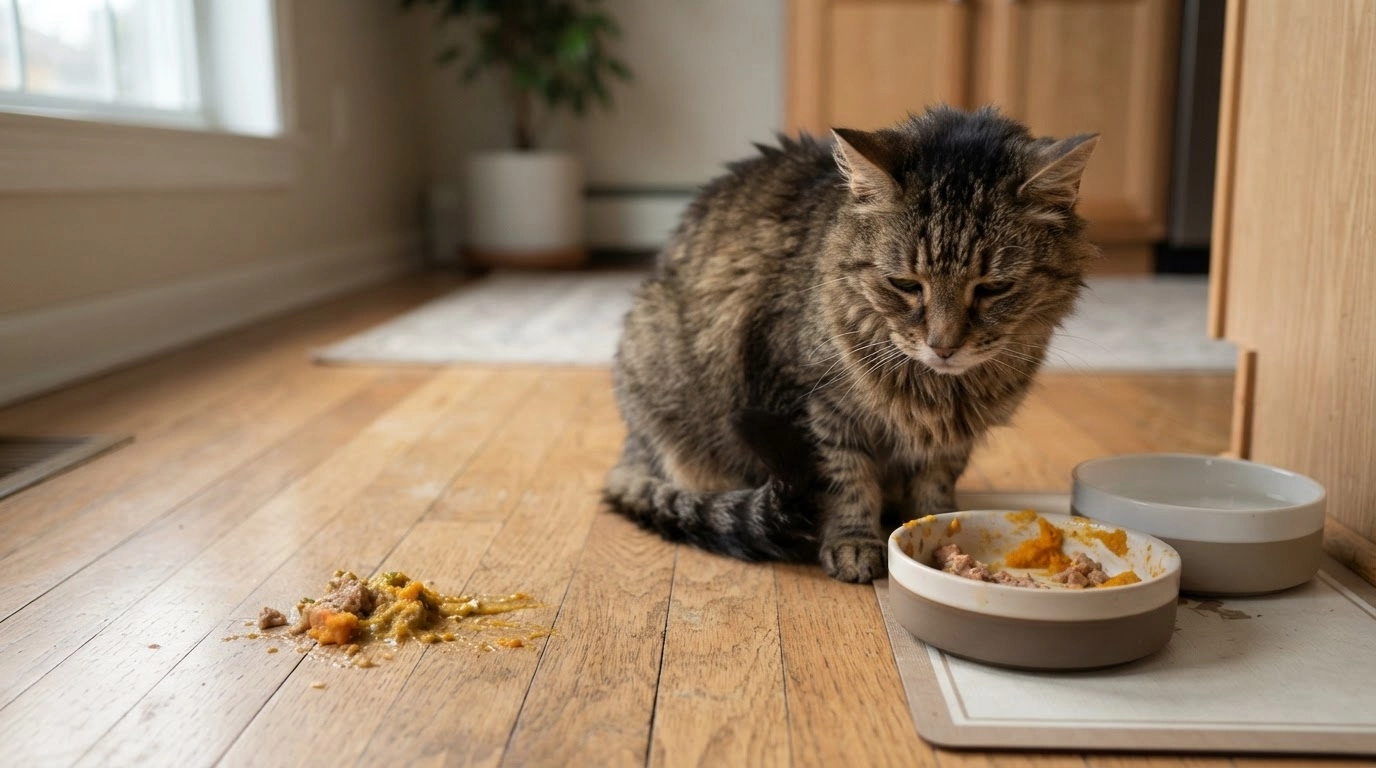
Pumpkin may support mild digestive changes, but it cannot replace veterinary care for ongoing or serious symptoms. Watch for these signs that need closer attention.
- Persistent Constipation: If constipation continues despite adding pumpkin, your cat may need medical evaluation for underlying causes.
- Repeated Diarrhea: Ongoing loose stools can indicate infections, food issues, or digestive disorders that pumpkin alone cannot resolve.
- Vomiting: Frequent vomiting after eating pumpkin or at other times may require a veterinarian’s assessment to identify the cause.
- Appetite Loss: A cat refusing food, especially for more than a day, may need prompt veterinary guidance to prevent health complications.
- When to Contact a Veterinarian: Contact your veterinarian if symptoms persist, worsen, or appear with weakness, pain, dehydration, or behavior changes.
Veterinary guidance recommends evaluation when cats show persistent changes in appetite, digestion, or overall health. Pumpkin can help some cats, but a veterinarian should always check unusual or lasting symptoms to ensure proper care.
Final Thoughts
Every cat responds differently to new foods, and what works well for one feline may not suit another. Pumpkin can be a useful addition for some cats when served properly, but it should always fit your cat’s overall diet and health needs.
When I look at questions like can cats eat pumpkin, I focus on the details that matter most: safe preparation, reasonable portions, and watching how your cat reacts.
Small changes can tell you a lot about your pet’s comfort and digestion. If you have tried pumpkin with your cat, sharing your experience can help other pet parents make thoughtful choices while caring for their own furry companions.
Frequently Asked Questions
Can Cats Be Allergic to Pumpkin?
Some cats may have sensitivities to new foods, although pumpkin allergies are uncommon. Watch for changes like itching, vomiting, or digestive upset after introducing any new ingredient.
Can Pumpkin Change a Cat’s Stool Color?
Yes, pumpkin may slightly affect stool appearance because of its natural color and fiber content. Temporary changes can happen, but discuss unusual or lasting changes with a veterinarian.
Should Pumpkin Be Mixed With Dry or Wet Food?
Pumpkin can be mixed with either type of cat food if your cat accepts it. Many cats prefer it blended into familiar meals because the texture and flavor are less noticeable.
Can Senior Cats Have Pumpkin?
Senior cats may eat small amounts of plain pumpkin, but consider their age, health conditions, and current diet before adding new foods regularly.