I have spent years helping pet owners understand how nutrition affects animal health, and fish are no exception. One of the most common mistakes I see is assuming every fish can eat the same food.
When someone asks what do fish eat, the answer depends on the species, habitat, size, and natural feeding habits.
A small aquarium fish may rely on prepared pellets, while a wild predator may hunt smaller aquatic animals for survival.
Understanding these differences helps you choose better food, recognize natural diets, and avoid feeding mistakes that can affect fish health over time.
What Do Fish Eat?
Fish diets can look very different depending on where they live and how they find food. Some species mainly consume plants and algae, while others need protein-rich foods from insects, crustaceans, or smaller aquatic animals.
Wild fish usually eat whatever food sources are available in their environment, including plankton, aquatic plants, insects, worms, and other organisms.
Aquarium fish often receive prepared foods created to match their nutritional needs, such as flakes, pellets, wafers, and frozen options.
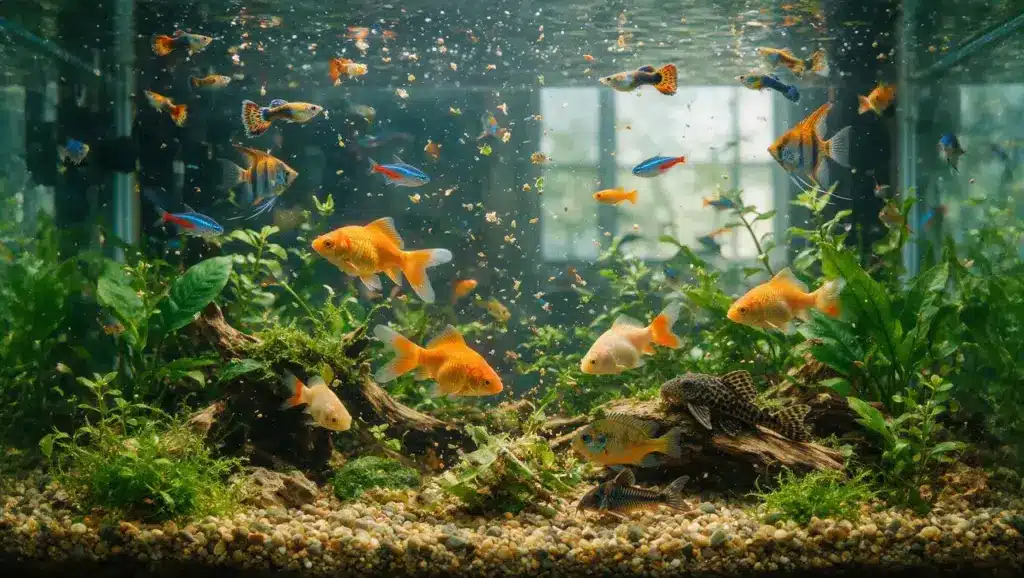
A goldfish, betta, and pleco may live in the same aquarium but require different diets because their feeding habits and nutritional needs are not identical.
Understanding a fish’s natural diet is the first step toward choosing suitable food and creating a healthier feeding routine.
What Nutrients Do Fish Need in their Diet?
Fish need balanced nutrition to support growth, energy, and normal body functions. Their nutritional needs vary by species, but most fish require a combination of protein, fats, carbohydrates, vitamins, and minerals.
- Protein: Supports growth, tissue repair, and overall body maintenance. Carnivorous fish usually require more animal-based protein, while herbivorous species often need diets with more plant ingredients.
- Fats: Provide energy and support important body processes. Quality fish foods include suitable fat levels based on the nutritional needs of different fish species.
- Carbohydrates: Can provide energy, but fish do not all process them the same way. Some species are better suited to diets with more plant-based ingredients.
- Vitamins and Minerals: Help support normal health and body functions. Commercial fish foods are often formulated with these nutrients to create a balanced diet.
PetMD recommends selecting fish food based on the species’ nutritional requirements rather than feeding all fish the same type of food.
Different Types of Fish Diets and Feeding Habits
Fish eat different foods based on their species, habitat, and feeding behavior. Some depend on prepared foods, while others rely on naturally available resources. These categories explain common feeding patterns.
1. Home Pet Fish Diets
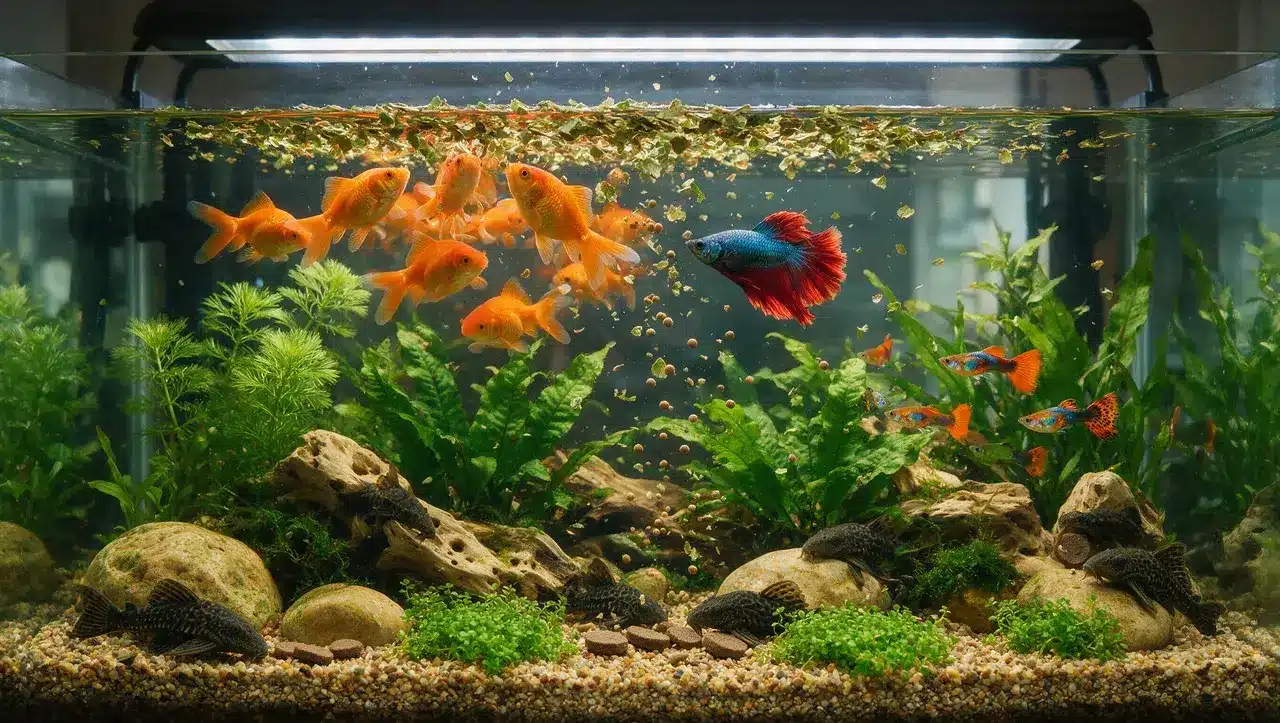
Home pet fish usually receive prepared foods designed to provide balanced nutrition in an aquarium environment. Their diet depends on the species, size, feeding level, and natural preferences.
Choosing suitable food helps support growth, activity, and overall health. Examples include goldfish, bettas, guppies, and plecos, which may require different diets despite living in similar tanks. Getting the basics right for a common starter fish, like setting up a beginner-friendly goldfish routine, makes it easier to branch out to other species later.
Common foods include:
- Flakes
- Pellets
- Wafers
- Frozen foods
2. Wild Fish Diets
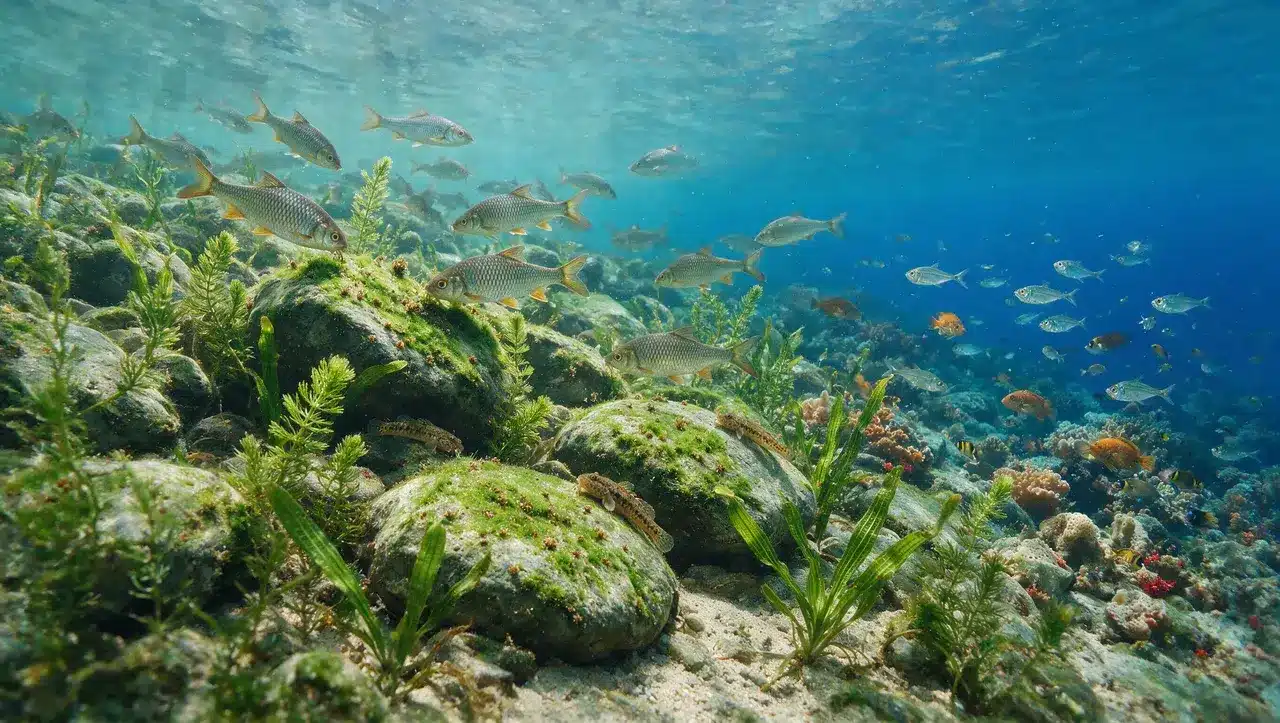
Wild fish depend on food sources available in their natural surroundings, including rivers, lakes, and oceans.
Their diets change based on location, season, and the organisms found in their environment; patterns in long-term research on wild fish stomach contents have helped scientists track these across many decades.
Some species search for plants and tiny organisms, while others consume larger prey. Examples include freshwater and marine fish that adapt their feeding habits according to available resources, much like how freshwater species adapt to their specific habitat and adjust their feeding accordingly.
Common foods include:
- Algae and aquatic plants
- Plankton
- Insects and larvae
- Smaller aquatic animals
3. Predator Fish Diets
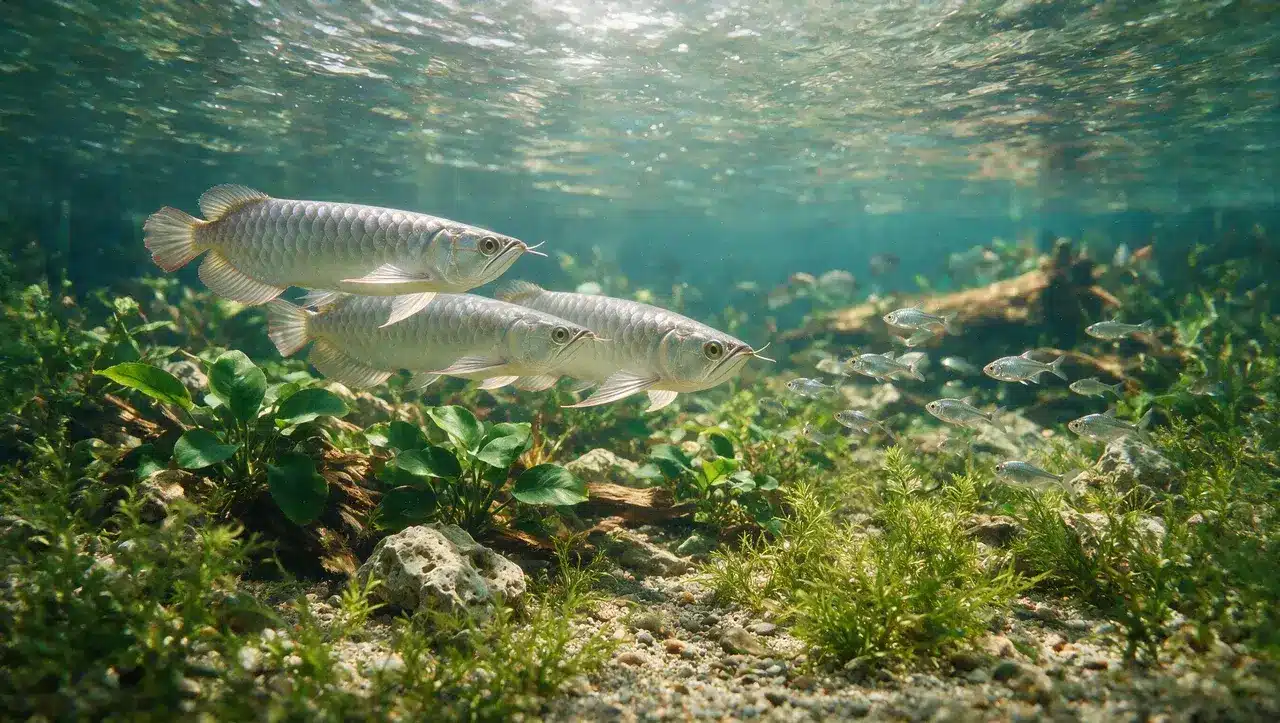
Predator fish mainly consume animal-based foods because they rely on hunting or capturing other organisms for energy and protein. Their feeding behavior often involves chasing prey or searching for suitable food sources.
These fish usually require diets with higher protein levels compared with plant-focused species, which the Merck Veterinary Manual notes is a key difference from herbivorous fish, which need more fiber.
Examples include arowanas, piranhas, and other predatory fish.
Common foods include:
- Insects
- Worms
- Shrimp
- Smaller fish
4. Plant-Eating Fish Diets
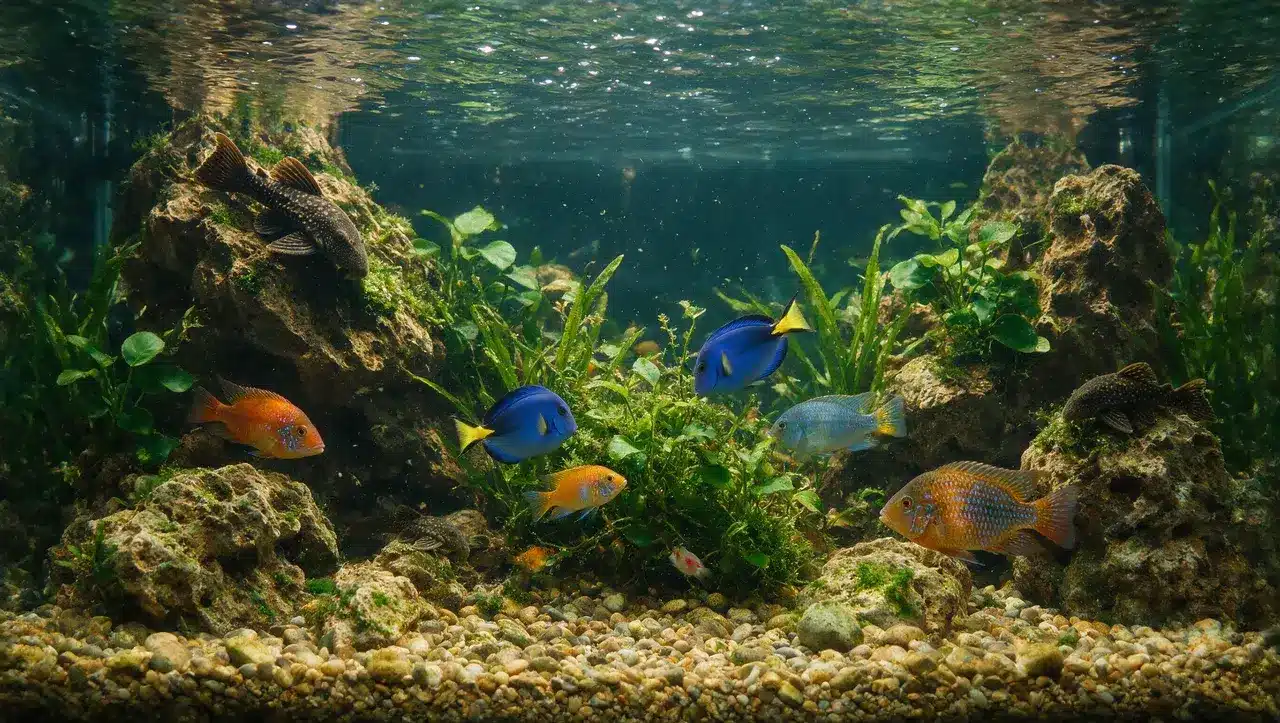
Plant-eating fish mainly consume vegetation and algae found in their natural habitats. These foods provide fiber and nutrients that support digestion and daily activity, and a closer look at herbivorous feeding habits explains why these fish also need to eat more frequently than carnivores.
Their feeding patterns differ from fish that depend heavily on animal-based foods. Examples include some plecos, surgeonfish, and certain cichlid species that rely on plant matter as a major food source.
Common foods include:
- Algae
- Aquatic plants
- Vegetables
- Plant-based foods
5. Bottom-Feeding Fish Diets
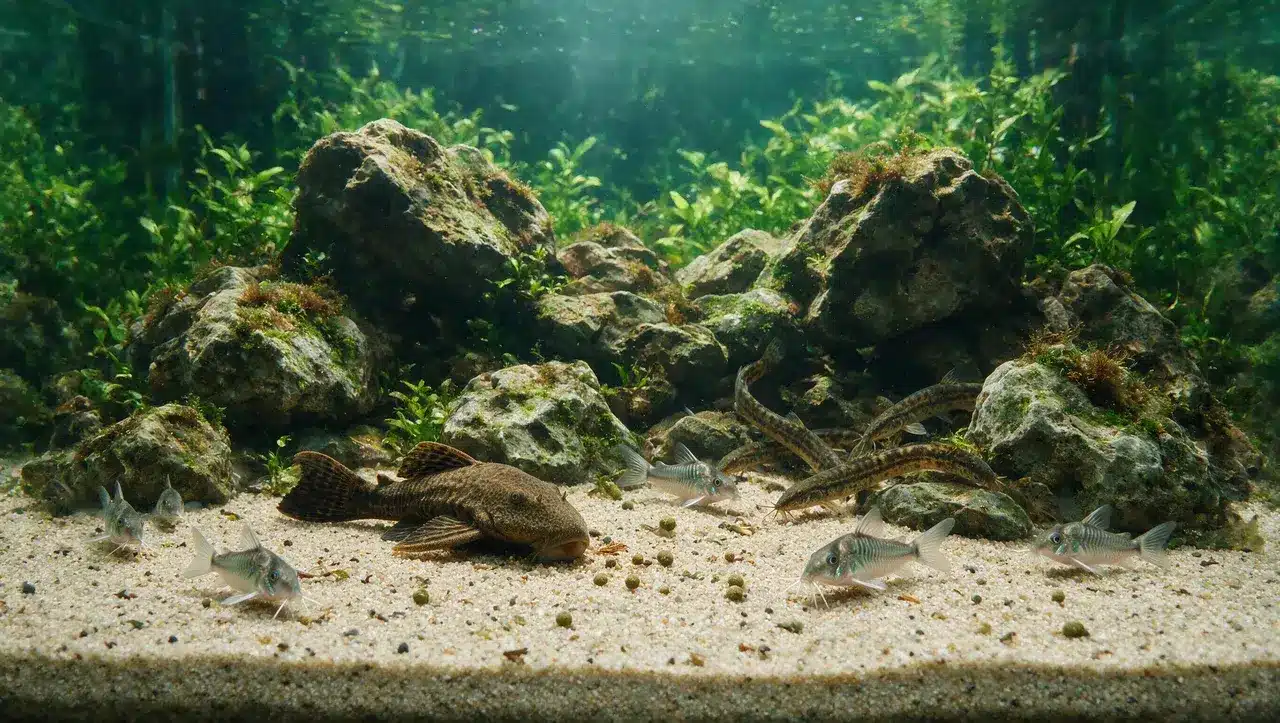
Bottom-feeding fish search for food near the lower areas of their habitat, where organic matter, plants, and small organisms collect, and these are often the first places where algae buildup becomes noticeable in a home aquarium.
Their feeding style requires foods that sink and remain available near the bottom. Examples include plecos, cory catfish, and some loach species that naturally feed around surfaces and sediment.
Common foods include:
- Algae wafers
- Sinking pellets
- Plant matter
- Small aquatic organisms
Understanding these feeding categories helps explain why fish need different foods based on their environment and behavior. Choosing food that matches their natural diet supports better nutrition and healthier fish.
What Do Popular Pet Fish Eat?
Common pet fish have different feeding requirements based on their species and natural diet. The table below highlights typical foods for some popular aquarium fish.
| Fish | Common Foods |
|---|---|
| Goldfish | Pellets, flakes, vegetables, and plant matter |
| Betta Fish | Protein-rich pellets, insects, shrimp, and frozen foods |
| Guppies | Flakes, pellets, and small frozen foods |
| Tetras | Flakes, pellets, and small frozen foods |
| Angelfish | Pellets, flakes, worms, and shrimp |
| Plecos | Algae wafers, vegetables, and plant-based foods |
Choosing food based on the fish species is important because a diet suitable for one aquarium fish may not provide the nutrients needed by another.
What Fish Keepers Feed their Fish
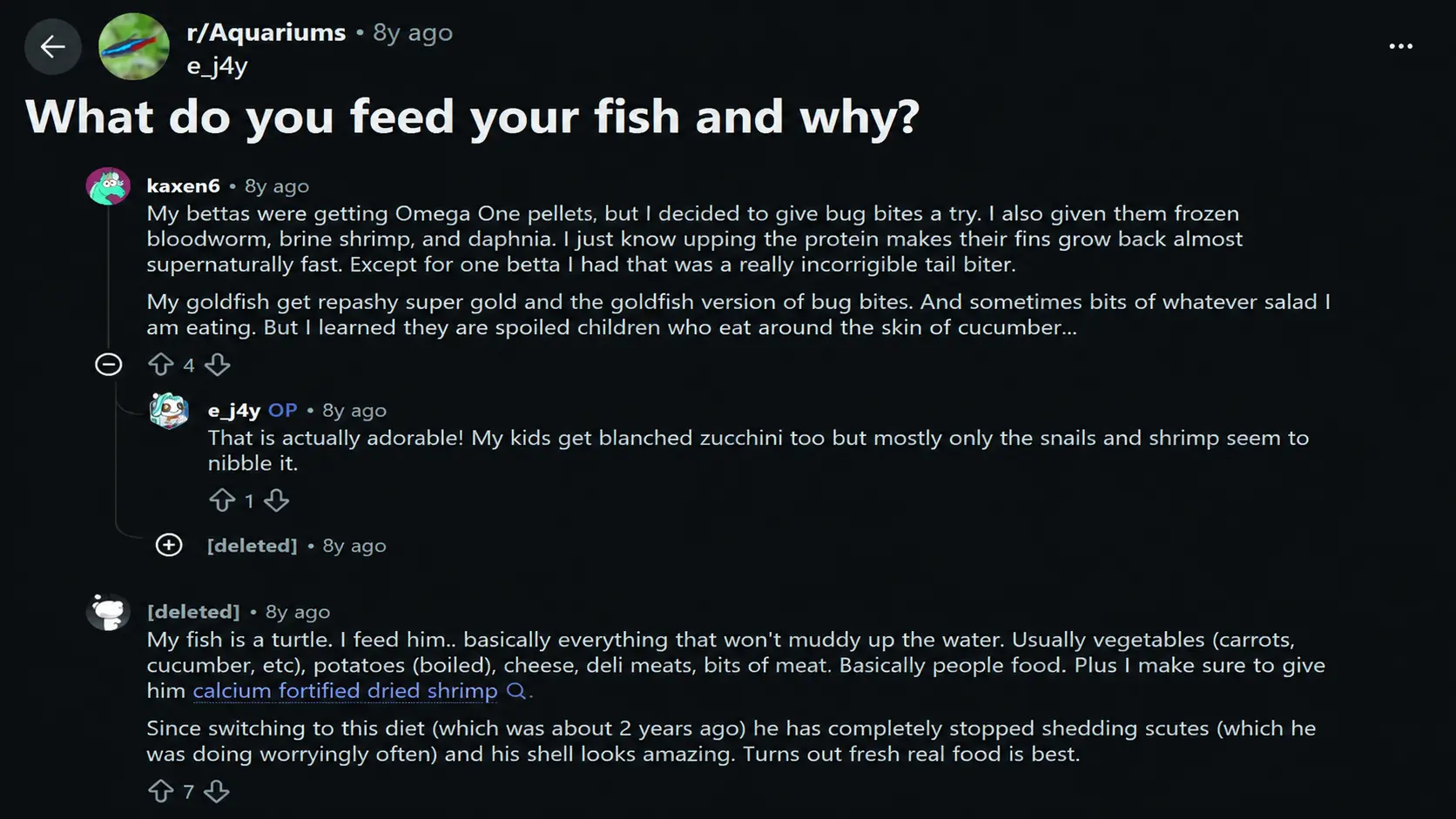
Reddit aquarium discussions show that fish keepers often choose food based on their fish species, tank setup, and personal experience.
Many owners use quality pellets or flakes as staple foods and add options like frozen foods, vegetables, or other supplements for variety.
A common point among hobbyists is that no single food is suitable for every fish, so diets should match the natural feeding habits of herbivores, carnivores, and omnivores while avoiding overfeeding.
Observing fish behavior and adjusting portions are also frequently mentioned as important parts of maintaining a healthy feeding routine.
How Often Should You Feed Fish?
Feeding frequency depends on the fish species, age, size, and activity level. Providing the right amount of food is important because excess food can remain uneaten, affect water quality, and create problems in the aquarium.
Most adult aquarium fish are commonly fed once or twice daily, while younger fish may need more frequent meals because they are still growing.
The portion should be enough for the fish to consume within a few minutes without leaving excess food behind.
A healthy feeding routine usually includes:
- Little or no leftover food in the tank
- Clear water quality
- Normal swimming and activity
Adjusting portions based on your fish’s behavior is more useful than using the same amount for every species. Different fish have different energy needs, so feeding should match the type of fish you keep. Feeding routines may also change during illness, breeding, or when caring for very young fish.
Foods Fish Should Not Eat
Fish need foods that match their natural diet and nutritional needs. Some human foods or unsuitable options can cause digestive problems, reduce water quality, or fail to provide the nutrients fish require for healthy growth.
| Food | Why It Causes Problems |
|---|---|
| Bread | Provides little nutrition and may affect digestion. |
| Processed foods | Can contain unsuitable ingredients like salt and additives. |
| Seasoned foods | Spices and extra ingredients may harm fish. |
| Wrong fish food | May not provide the nutrients a species needs. |
Avoiding unsuitable foods helps maintain better aquarium conditions and supports healthier feeding habits. Fish should receive food designed for their specific species rather than leftovers or random household foods.
How to Choose the Right Food for Your Fish
Choosing fish food depends on the species, size, natural diet, and feeding behavior of your fish. The right food should provide suitable nutrients while matching how your fish naturally searches for and consumes food.
Before selecting fish food, consider:
- Identify the fish species: Different fish have different nutritional needs.
- Match the food type: Choose flakes, pellets, wafers, or frozen foods based on feeding habits.
- Choose the right size: Food should be easy for your fish to eat.
- Observe feeding behavior: Notice if your fish feeds near the surface, middle, or bottom.
- Adjust portions: Avoid giving more food than your fish can consume.
Selecting food based on your fish’s natural diet supports better nutrition and helps prevent problems caused by unsuitable feeding choices.
Common Fish Feeding Mistakes
Feeding fish correctly requires more than adding food at regular times. Many aquarium problems happen because of incorrect portions, unsuitable food choices, or ignoring the natural diet of different fish species.
| Mistake | Why It Causes Problems |
|---|---|
| Overfeeding | Extra food can pollute water and affect fish health. |
| Feeding the wrong food | Fish may not receive the nutrients they need. |
| Ignoring species differences | Different fish require different diets. |
| Leaving uneaten food | Food waste can lower water quality. |
| Giving too much variety | An unbalanced diet may affect nutrition. |
Understanding your fish’s feeding habits and adjusting food choices accordingly can help maintain better aquarium conditions and support healthier fish. Small changes in portions and food type can prevent common feeding problems.
Final Thoughts
Fish have different diets based on their species, habitat, and natural feeding behavior. Understanding what fish eat makes it easier to choose suitable foods and avoid feeding mistakes that can affect their health.
Wild fish follow diets based on available resources, while pet fish need foods designed around their nutritional needs. The best feeding routine depends on the type of fish, the food provided, and how the fish responds.
A suitable feeding routine is not only about providing enough food but also about matching the diet to the fish species. Learning what a fish naturally consumes makes it easier to avoid unsuitable choices and maintain better feeding habits over time.
Paying attention to eating habits and choosing appropriate food helps create better conditions for fish in both natural and aquarium environments.
Frequently Asked Questions
How Much Food Should Fish Eat at Each Feeding?
Fish should receive only enough food that they can finish within a few minutes. The exact amount depends on the species, size, and feeding habits. Too much food can create waste, reduce water quality, and affect fish health.
Do Fish Need Variety in their Diet?
Fish can benefit from dietary variety when different foods meet their nutritional needs. However, variety should not replace a balanced staple diet designed for the specific fish species.
Can Fish Eat Vegetables?
Some fish can eat vegetables as part of a balanced diet. Species that naturally consume plant matter may benefit from options such as peas, spinach, or zucchini when prepared appropriately.
Why Do Fish Stop Eating?
Fish may stop eating due to stress, poor water conditions, illness, unsuitable food, or changes in their environment. Any sudden change in feeding behavior should be checked against tank conditions.
Should Fish Food Float or Sink?
The right food type depends on where a fish naturally feeds. Surface feeders may prefer floating foods, while bottom feeders often need sinking options that reach their feeding area.