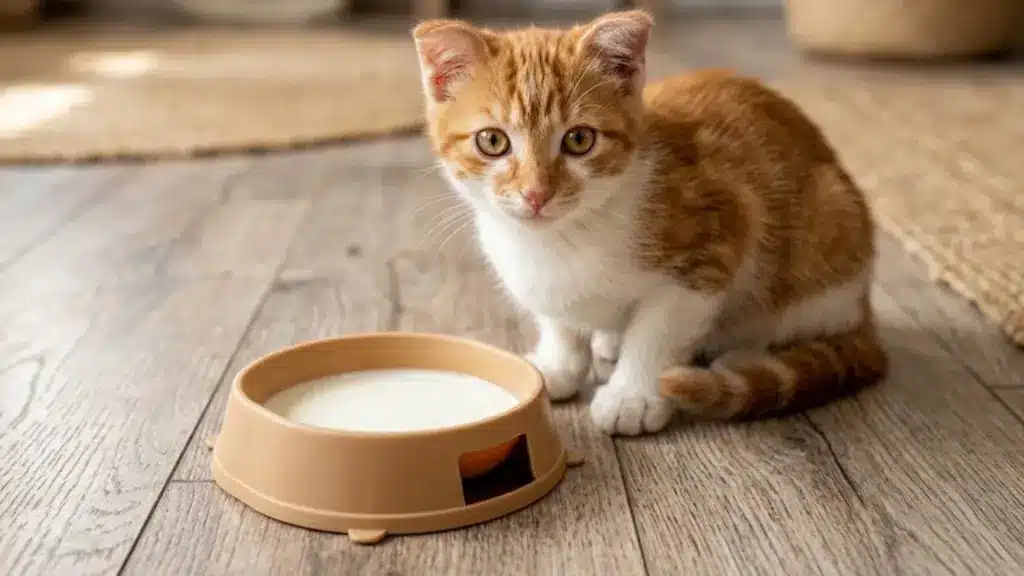
You might have seen it in countless cartoons and old movies: a contented cat curled up next to a saucer of milk. It looks wholesome, natural even.
So when your cat stares up at you while you pour your morning coffee, it’s tempting to offer them a little splash of milk as a treat.
Knowing whether milk is bad for cats is one of those small but important pieces of responsible pet ownership that can make a noticeable difference in how your cat feels day to day.
In this guide, we’ll walk through exactly what milk does inside a cat’s body, which types of milk are safer than others, what signs to watch for if your cat has already had some, and what you should be offering your cat to drink instead.
Is Milk Bad for Cats?
For most adult cats, yes, milk is bad because most cats cannot properly digest it.
Milk contains a sugar called lactose. To break down and safely absorb lactose, the body needs an enzyme called lactase.
Kittens produce plenty of lactase early in life because they rely on their mother’s milk for nutrition. But as they grow and transition to solid food, their bodies naturally reduce lactase production.
By the time most cats reach adulthood, they don’t produce enough lactase to digest cow’s milk properly.
If a cat does tolerate milk, it should be limited to 1-2 teaspoons occasionally, not daily. Even then, it is better treated as a rare treat rather than a regular addition.
There are no nutritional benefits to giving an adult cat milk, provided they are already eating a complete, age-appropriate diet.
It’s also worth understanding where the myth came from. Historically, before commercial pet food existed, cats on farms were fed table scraps, and milk was readily available.
Beyond lactose, cow’s milk is also high in fat. One more consideration: cats are obligate carnivores. Their digestive systems evolved to process animal-based protein and moisture from prey.
Pairing the right formula with a carefully considered homemade or balanced cat diet as they wean makes a meaningful difference in early development.
Signs Your Cat is Reacting Badly to Milk
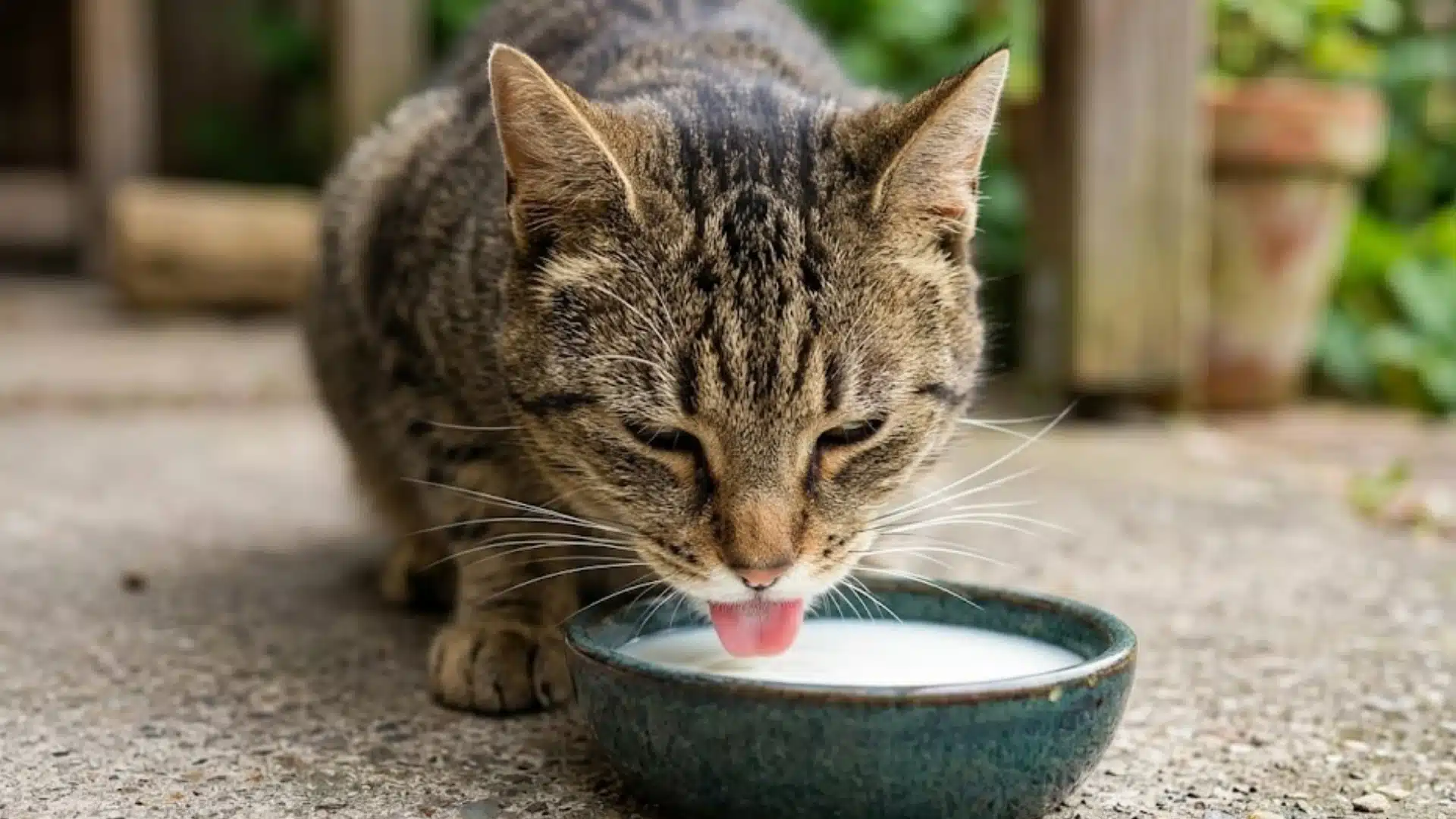
Even a small amount of milk can trigger discomfort in cats that struggle to digest lactose. The reaction may not always be immediate, but symptoms usually show up within a few hours.
- Diarrhea: The ASPCA notes that pets lack sufficient lactase to digest milk properly, often leading to diarrhea or upset.
- Vomiting: Some cats may throw up shortly after consuming milk, especially if their digestive system is sensitive.
- Gas and bloating: A swollen or tight abdomen, often paired with visible discomfort or restlessness.
- Stomach pain: Your cat may hunch, avoid touch, or act unusually withdrawn due to abdominal discomfort.
- Increased flatulence: Excess gas production can lead to frequent passing of gas, often with a strong odor.
- Lethargy: Low energy levels or unusual tiredness after consuming milk can signal digestive distress.
- Loss of appetite: A cat may refuse food temporarily if their stomach feels unsettled.
- Dehydration (in severe cases): Ongoing diarrhea or vomiting can lead to fluid loss, which may require veterinary attention.
Which Types of Milk Are Safe for Cats?
Not all milk affects cats in the same way, but that does not mean any type is truly beneficial. Some options are easier to digest than others, while a few are specially made to be safer.
1. Cow’s Milk
Cow’s milk is the most common type people think of, but it is also the most likely to cause problems. It contains a high level of lactose, which most adult cats cannot digest properly.
When a cat drinks it, the lactose often stays undigested, leading to stomach upset.
This can result in diarrhea, gas, or vomiting within hours. Even small amounts can trigger discomfort in sensitive cats.
I always tell my clients that, while it may seem harmless, cow’s milk is one of the main reasons cats experience digestive issues after drinking milk.
2. Lactose-Free Milk
Lactose-free milk is often seen as a safer option because the lactose has been broken down. This makes it easier for cats to digest compared to regular milk.
However, it is still not an ideal choice as it contains fats and calories that cats do not need, especially if they already eat a balanced diet.
Some versions may also include added ingredients that are not beneficial for cats. While it may reduce the risk of stomach upset, it should only be given in very small amounts, if at all.
3. Goat Milk
Goat milk is sometimes considered gentler on the stomach because it has slightly less lactose than cow’s milk.
Some cats may tolerate it better, but that does not make it a healthy regular option. It still contains enough lactose to cause issues in many adult cats.
In addition, it is rich in fat, which can add unnecessary calories to your cat’s diet. Occasional small servings may not cause harm for some cats, but regular use can still lead to digestive upset or weight gain over time.
4. Plant-Based Milk (Almond, Oat, Soy)
Plant-based milk does not contain lactose, which might sound like a safer alternative. However, these options are not designed for cats.
They offer very little nutritional value and often include added sugars, flavors, or preservatives.
Almond and oat milk can upset a cat’s stomach, while soy milk may trigger allergies or other sensitivities in some cats.
Cats also do not process plant-based ingredients as efficiently as animal-based nutrients. Because of these concerns, I often advise pet owners to avoid plant-based milk as a treat or regular drink.
5. Cat Milk (Commercial Products)
Commercial cat milk is specially made to be safer for cats. It usually has reduced or removed lactose, making it easier to digest than regular milk.
These products are designed with a cat’s system in mind and are often fortified with nutrients.
While they are a better option, they should still be treated as an occasional treat rather than a daily drink. Too much can still add extra calories.
When used in moderation, cat milk can be a safer way to offer a milk-like treat without causing digestive issues.
Real Cat Owners’ Experience with Cats and Milk
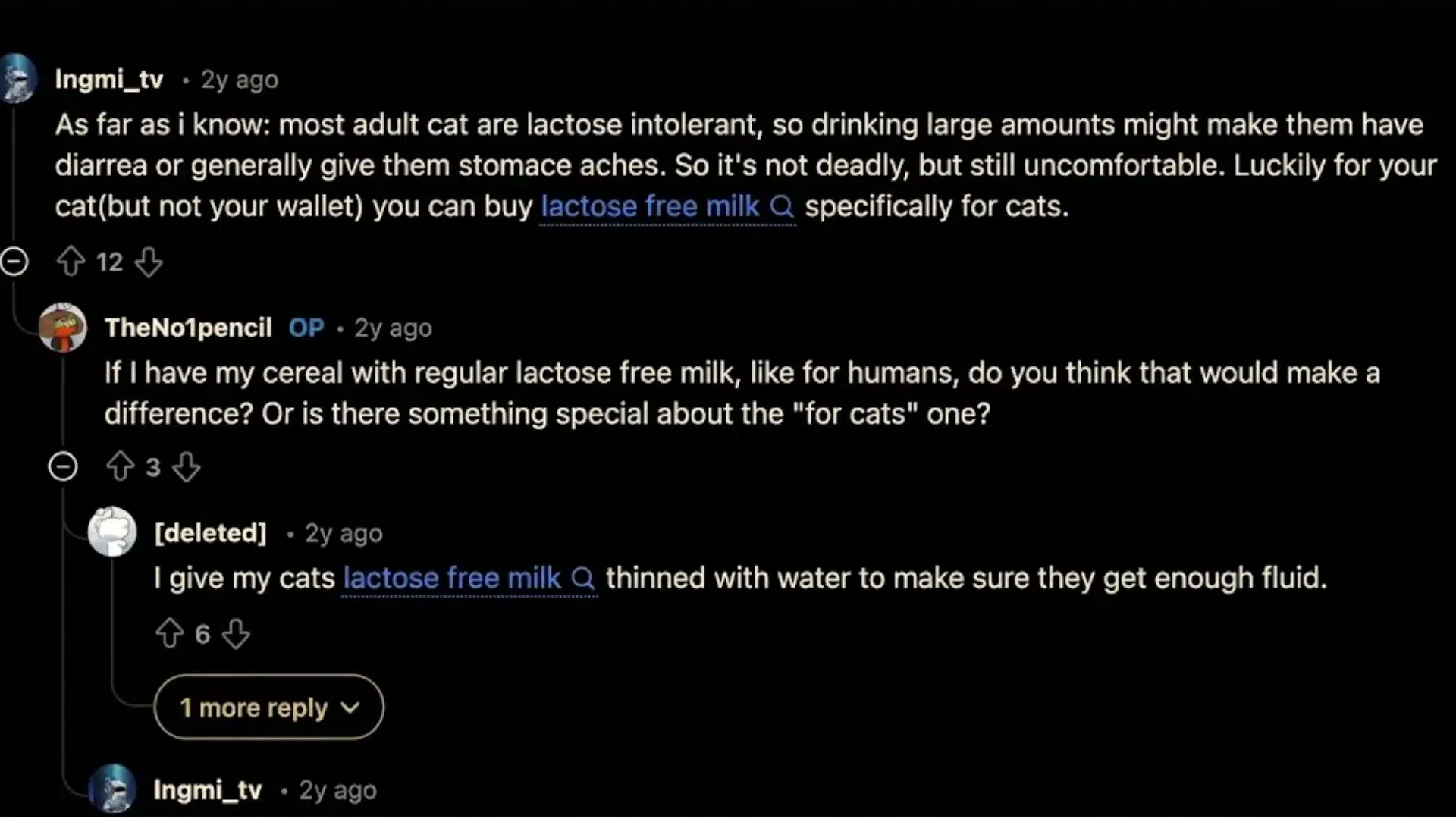
Reddit discussions show a clear middle ground on cats drinking milk.
Many users agree that while cats love milk, it should only be treated as an occasional indulgence, not a daily habit.
One common point is that most adult cats are lactose intolerant, which can lead to stomach issues like diarrhea or discomfort if consumed in large amounts.
That said, several cat owners shared personal experiences in which small amounts didn’t cause noticeable problems, as long as the cat remained healthy overall.
Some even mentioned switching to lactose-free or plant-based alternatives to avoid digestive trouble.
The overall takeaway from Reddit is simple: milk isn’t toxic, but moderation is key.
If a cat shows no negative reaction, a tiny amount once in a while is generally considered acceptable by many pet owners.
What Should Cats Drink Instead of Milk?
The only drink your cat truly needs is fresh, clean water. It sounds simple, but encouraging adequate water intake is one of the most practical things you can do for your cat’s long-term health.
Cats are naturally prone to a low thirst drive, which is why dehydration is one of the most common issues seen in feline patients.
When owners substitute milk for water, thinking they are providing something more nourishing, they often end up with cats who aren’t drinking enough of what they actually need.
There are a few practical ways to encourage better hydration. Many cats prefer moving water over still water, so a cat drinking fountain can make a noticeable difference.
Placing multiple water bowls around the house, away from food bowls, also helps.
Adding wet food to your cat’s daily meals is another effective strategy, as it contributes meaningfully to daily moisture intake.
Wet food typically contains 70 to 80% water, compared to dry kibble at around 10%, making it one of the most practical ways to improve a cat’s overall hydration without any supplemental drinks.
If your cat still seems reluctant to drink enough water, speak with your veterinarian. Persistent low water intake can sometimes signal an underlying health concern worth investigating early.
Common Myths About Cats and Milk
Many cat owners still believe that milk is a healthy and natural treat, mostly because of long-standing cultural images and outdated advice. In reality, much of what people think about cats and milk is based on myths rather than facts.
- “Milk is a natural food for cats.”Cats may be drawn to milk, but it is not a natural part of an adult cat’s diet. Their bodies are designed to get nutrients from animal-based food, not dairy.
- “All cats can drink milk safely.” Most adult cats are lactose intolerant, which means they cannot properly digest milk and may experience stomach problems after drinking it.
- “Milk is a healthy treat”: Milk contains extra fat and calories without offering real nutritional value, making it more harmful than beneficial over time.
- “If a cat likes milk, it must be good for them.” Cats are attracted to the taste and smell, especially the fat content, but that does not mean their bodies can handle it well.
- “A small amount of milk won’t hurt”: Even small servings can cause digestive upset in sensitive cats, including diarrhea or gas.
- “Kittens and adult cats have the same diet needs.” Kittens can digest milk early in life, but adult cats lose that ability as they grow, making milk unsuitable later on.
- “Plant-based milk is a safe alternative”: While it does not contain lactose, plant-based milk often includes additives and lacks the nutrients cats need, so it is not a good option.
Conclusion
Milk is not toxic to cats, but it is generally harmful for most adult cats; the main issue is digestion.
Since many cats are lactose intolerant, even small amounts can lead to diarrhea, bloating, or discomfort.
Over time, the extra fat and calories can also affect weight and overall health. That is why most veterinarians agree that milk should not be part of a cat’s regular routine.
The best approach is simple. Avoid offering milk and focus on safer options, such as fresh water and balanced cat food. If a treat is needed, choose products made specifically for cats.
Still wondering: is milk bad for cats in your case? Share your experience or questions in the comments.
Frequently Asked Questions
Can Cats Eat Yogurt Or Cheese?
Some cats can tolerate small amounts of yogurt or cheese due to lower lactose levels, but it is not recommended regularly since dairy can still cause digestive upset.
What To Do If Your Cat Already Drank Milk?
Monitor your cat for symptoms like diarrhea or vomiting, provide fresh water, and avoid giving more milk. Contact a vet if symptoms persist or worsen within 24 hours.
Are Some Breeds More Lactose Intolerant Than Others?
Lactose intolerance is common across all cat breeds, though sensitivity levels may vary slightly. Most adult cats, regardless of breed, have a reduced ability to digest lactose properly.