You’re settling in for an evening petting session with your dog when your fingers stop on something unexpected: a small, firm bump near their jaw.
Your first thought is panic, and your second question is: What is that?
For many dog owners, this is the moment they first question themselves: Do dogs have lymph nodes?
And that realization quickly leads to more questions. Here’s the honest truth that most pet parents never think about lymph nodes until something feels off.
But knowing where your dog’s lymph nodes are located and what they normally feel like can be one of the most valuable health habits you develop.
By the end of this guide, you’ll know exactly where to find your dog’s major lymph nodes, how to check them yourself at home, what swelling can indicate, and when it’s time to call your vet.
Do Dogs Have Lymph Nodes?
Yes, dogs absolutely have lymph nodes, and they have quite a few of them.
Dogs have lymph nodes distributed throughout their entire body, though only a handful of them are close enough to the skin’s surface to be felt from the outside.
Lymph nodes are small, bean-shaped organs that are part of the lymphatic system, a network of vessels and tissues that work alongside the immune system to protect the body.
Think of lymph nodes as the body’s filtration checkpoints.
Lymph fluid, which carries waste, bacteria, viruses, and immune cells, flows through these nodes on its way around the body. Inside each node, white blood cells called lymphocytes work to detect and destroy anything harmful that passes through.
In a healthy dog, lymph nodes are small, soft, and non-painful. Most of them can’t be felt at all through the fur and skin; they’re simply doing their job quietly in the background.
It’s only when a node becomes enlarged, usually in response to infection, inflammation, or disease, that it becomes noticeable.
I always advise pet owners to keep an eye out for changes in their dog’s skin or coat, which can sometimes accompany lymph node changes.
Where are a Dog’s Lymph Nodes Located?
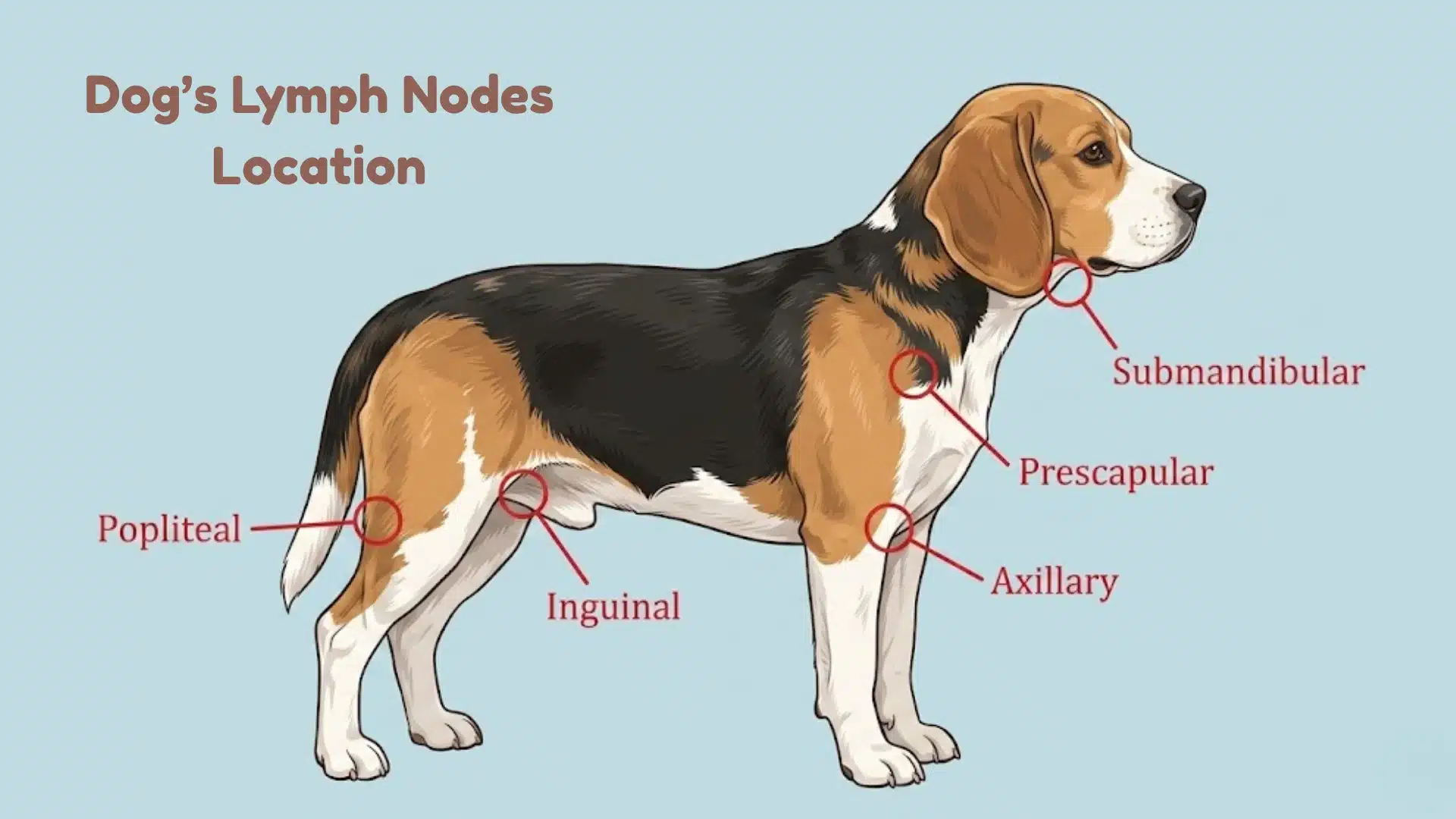
While dogs have lymph nodes spread throughout their entire body, including deep within the chest, abdomen, and internal organs, there are five key locations where lymph nodes sit close enough to the surface to be checked by hand.
These are called the peripheral lymph nodes, and they’re the ones your vet will check during a physical exam.
1. Submandibular Lymph Nodes
These nodes are located just beneath and behind the jawbone, on both sides of the lower face.
They are the most commonly noticed lymph nodes in dogs because their location makes them easy to see and feel, especially if swollen.
They drain the head, mouth, teeth, and throat, which is why dental disease so frequently causes these nodes to react.
2. Prescapular Lymph Nodes
Also called the superficial cervical lymph nodes, these are located in the lower neck area, just in front of the shoulder blades on both sides.
They drain the neck, front limbs, and parts of the chest. These are among the three node groups that can most reliably be felt in a healthy dog.
Because of their position near the surface, even slight swelling in these nodes is often easier to detect early during routine checks compared to deeper lymph node groups.
3. Axillary Lymph Nodes
These nodes sit tucked under the front legs, where they meet the torso, essentially in your dog’s armpit.
They’re harder to feel in dogs of normal weight unless they are enlarged, because they sit deeper in the fatty tissue. They drain the chest wall and front limbs.
Due to their deeper placement, noticeable swelling in this area may sometimes indicate a more significant underlying issue that requires closer observation or veterinary evaluation.
4. Inguinal Lymph Nodes
Located on both sides of the groin in the inner thigh region, the inguinal nodes drain the rear limbs, lower abdomen, and reproductive organs.
Like the axillary nodes, these are often difficult to locate unless swollen.
When enlarged, these nodes may become more visible or easier to feel, especially in lean dogs, making them an important area to include during monthly health checks.
5. Popliteal Lymph Nodes
Found at the back of each hind leg, just behind the knee joint, the popliteal nodes drain the lower hind legs and paws.
Along with the submandibular and prescapular nodes, these are among the most reliably palpable in a normal-weight dog.
Because these nodes are easier to locate, they often serve as a useful reference point for detecting changes in size, consistency, or sensitivity over time.
How to Check Your Dog’s Lymph Nodes at Home?
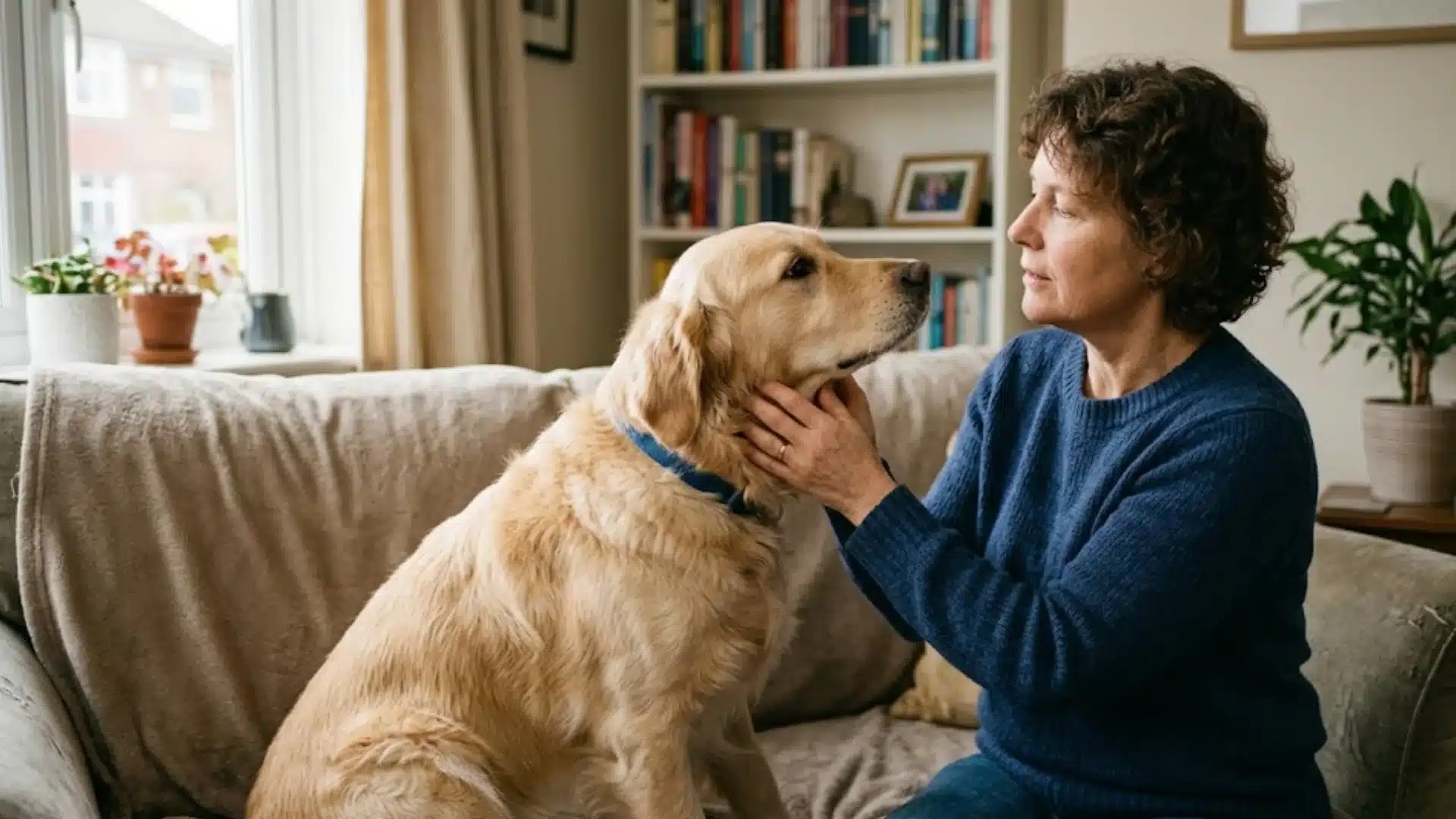
Checking your dog’s lymph nodes doesn’t require any special tools or training, just your hands, a calm dog, and a few minutes.
As I always tell pet owners in my clinical practice, the value of this routine comes from familiarity. When you know what your dog’s nodes normally feel like, you’ll notice the moment something changes.
Step 1: Get Your Dog Comfortable
Choose a time when your dog is relaxed after a walk, during quiet evening time, or after a meal. Have them sit or lie down in a comfortable position.
Speak calmly and reward with gentle praise throughout the process. The goal is to make this feel like an extension of regular bonding, not a medical procedure.
Creating a calm environment reduces anxiety and helps your dog stay still, making it easier to perform a thorough and accurate check without resistance or distraction.
Step 2: Check the Submandibular Nodes
Using your fingertips, gently feel the area just behind and beneath your dog’s jawbone on both sides of the face. Apply light, circular pressure.
In a healthy dog, you may feel small, soft, smooth bumps or nothing at all.
Note: the salivary glands are located in this same region and can feel similar to an enlarged lymph node, so if you feel something here and are unsure, your vet can help you distinguish between the two.
Step 3: Check the Prescapular Nodes
Move your fingers to the front of each shoulder blade, pressing gently into the soft tissue just ahead of where the shoulder meets the neck.
These nodes should feel small and pliable if detectable at all. Check both sides and compare.
Using consistent pressure and technique each time you check will help you build familiarity with your dog’s normal feel, making subtle changes easier to recognize over time.
Step 4: Check the Axillary Nodes
Lift one front leg gently and use your fingers to feel in the armpit area where the leg meets the chest.
These are deeper and may be harder to locate unless enlarged and repeated on the other side. A healthy axillary node is typically not palpable in most dogs.
Move slowly and keep your dog relaxed during this step, as this area can be sensitive, and a calm approach will help prevent discomfort or sudden movement.
Step 5: Check the Inguinal Nodes
With your dog lying on their back or standing, feel gently along the inner thigh on both sides of the groin. The inguinal nodes sit in this soft, fatty area.
Again, these are often not palpable unless swollen; check both sides equally.
Make sure your dog is fully relaxed in this position, as tension in the hind legs can make it harder to feel accurately and may lead to missing subtle swelling.
Step 6: Check the Popliteal Nodes
Feel the back of each hind leg, directly behind the knee joint.
These are often the easiest rear nodes to find and may be detectable as a small, firm but smooth bump in lean or medium-build dogs, and compare both sides.
Because these nodes are easier to locate, they can serve as a useful baseline reference point when learning what normal lymph nodes feel like during routine checks.
Step 7: Note What You Feel and Track Any Changes
After each monthly check, take a mental note or even a quick written note of anything you feel. Healthy lymph nodes should be small, soft, smooth, and non-painful.
Your dog should not react with discomfort when you press on them. If a node feels noticeably larger than last month, hard, warm, or causes your dog to flinch, that’s worth a call to your vet.
One must also know that dental disease can cause nearby lymph nodes to react, particularly the submandibular nodes. So if you notice swelling under the jaw, a dental check is often the first place your vet will look.
Causes of Swollen Lymph Nodes in Dogs
Swollen lymph nodes, medically known as lymphadenopathy, are always a sign that the immune system is responding to something.
That something can range from a minor infection to a more serious systemic disease. Understanding the possible causes helps you better communicate with your vet and respond appropriately.
- Bacterial infections: Including skin infections, wound infections, dental abscesses, and tick-borne diseases such as Lyme disease and ehrlichiosis. The node nearest the infected area typically reacts first.
- Viral infections: Parvovirus, distemper, and other viral illnesses can trigger widespread lymph node activity as the immune system works to contain the infection.
- Fungal infections: Less common but possible, particularly in dogs with outdoor exposure in certain geographic regions.
- Allergies: Food allergies, environmental allergens, and flea allergies can all cause regional or widespread lymph node reactivity, often accompanied by itching, ear infections, or skin irritation.
- Dental disease: Advanced periodontal disease allows bacteria to enter the bloodstream, directly triggering the submandibular and cervical nodes to enlarge.
- Trauma or injury: A bite wound, laceration, or physical trauma to an area can cause the nearby node to swell as the body responds to tissue damage.
- Autoimmune diseases: Conditions like lupus and immune-mediated hemolytic anemia IMHA can cause systemic lymph node enlargement as the immune system becomes dysregulated.
- Cancer / Lymphoma: Lymphoma is one of the most common cancers in dogs, and it directly affects the lymphatic system, causing multiple nodes to swell simultaneously.
- Certain medications: Some antibiotics and anticonvulsants can trigger reactive lymph node enlargement as a temporary side effect.
Treatment Options for Lymph Nodes
Swollen lymph nodes in dogs are a symptom rather than a diagnosis, so treatment always depends on identifying the underlying cause first.
As suggested by MSPCA to determine the exact cause, vets rely on exams and tests such as fine needle aspirates, bloodwork, imaging, or biopsies, ensuring the treatment plan is accurate and effective.
Infections are commonly treated with antibiotics, while fungal cases may require antifungal medication, and tick-borne illnesses like Lyme disease often respond well to doxycycline.
Allergies are managed by addressing triggers through antihistamines, dietary changes, or long-term therapies.
Dental disease may require professional cleaning or tooth extraction along with antibiotics to resolve the issue.
Injuries are handled with proper wound care and medication if needed.
According to the American Kennel Club, in more serious cases like lymphoma or other cancers, treatment may include chemotherapy, surgery, or radiation, depending on severity and spread.
Autoimmune conditions are typically controlled using immunosuppressive drugs.
When to Seek Vet Care for Swollen Lymph Nodes
Noticing a swollen lymph node in your dog is always worth a veterinary call, but there are specific signs that indicate you should act quickly rather than wait and watch.
Schedule a prompt vet visit if you notice:
- A node that feels noticeably larger than it did at your last monthly check
- Firmness or a rubbery texture that wasn’t there before, swollen nodes often feel like a grape just under the skin
- Swelling in more than one node location at the same time
- Mild changes in appetite or energy alongside the swelling
Seek same-day or emergency veterinary care if your dog shows:
- Extreme lethargy with no energy to move or engage
- Pale or white gums
- Vomiting combined with lymph node swelling
- Rapid or labored breathing
- Significant pain when the swollen area is touched
Multiple swollen nodes throughout the body are a particularly important signal; this pattern points to a systemic condition such as lymphoma, and early diagnosis is critical for the best possible outcome.
Conclusion
Dogs have hundreds of lymph nodes and five key external locations where you can check them yourself at home.
If the question do dogs have lymph nodes has ever crossed your mind, building awareness through regular checks can make a real difference in how quickly changes are noticed.
Start a monthly check routine today. Set a reminder on your phone, tie it to grooming day, or make it part of your evening petting session.
It takes less than five minutes and could make a meaningful difference in your dog’s long-term health.
As with most things in pet care, early detection is everything, and your hands are one of the best tools you have.
Have you ever discovered a swollen lymph node on your dog during a routine check? Share your experience in the comments.
Frequently Asked Questions
Can Swollen Lymph Nodes Go Back To Normal On Their Own?
Yes, in mild cases like minor infections, lymph nodes may return to normal once the issue resolves. However, if swelling persists or worsens, a veterinary check is always recommended.
What Breed of Dog is Especially Prone to Lymphoma?
Certain breeds like Boxers, Golden Retrievers, and Labrador Retrievers are more prone to lymphoma due to genetic factors. Owners of these breeds should stay alert to early signs and changes.
At What Age is Lymphoma Most Common In Dogs?
Lymphoma is most commonly diagnosed in middle-aged to older dogs, typically between six and nine years of age, though it can occasionally occur in younger dogs as well.