

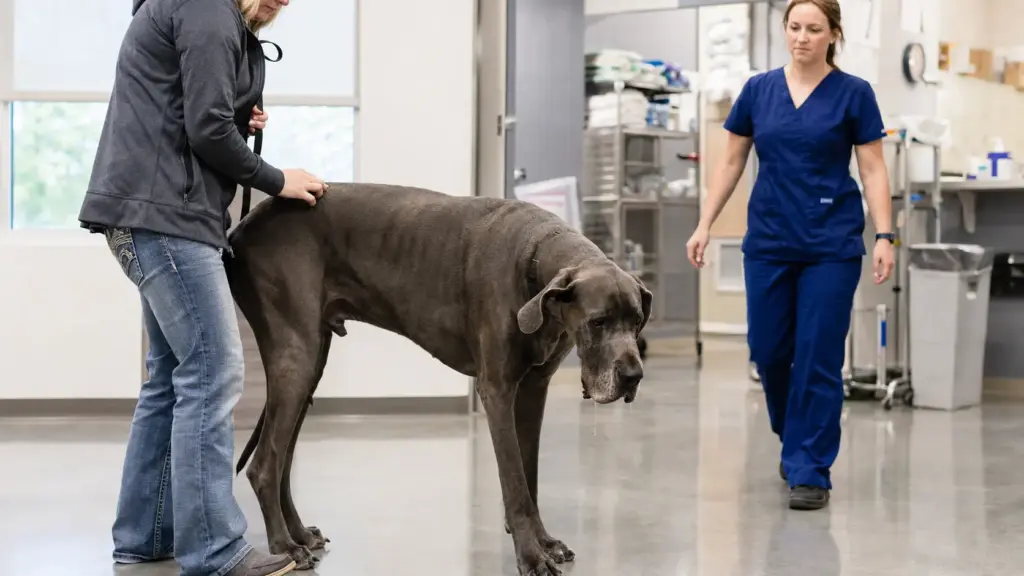
A swollen belly and repeated attempts to vomit without bringing anything up can signal a life-threatening emergency. Do not wait for every symptom to appear before contacting an emergency veterinarian.
A twisted stomach, medically called gastric dilatation-volvulus (GDV), occurs when a dog’s stomach expands and rotates. The rotation traps its contents, restricts blood flow, and can quickly lead to shock and organ damage. A dog stomach flip cannot be confirmed or treated safely at home.
Knowing the early signs, major risk factors, emergency response, diagnostic process, surgery, and prevention options can help you act without losing time.
Any suspected case needs immediate veterinary assessment, even when abdominal swelling is mild or difficult to see.
What is a Twisted Stomach in Dogs?
A twisted stomach occurs when a dog’s stomach expands and rotates, trapping gas, food, or fluid inside. Veterinarians call this condition gastric dilatation-volvulus, gastric torsion, or GDV.
The rotation can restrict blood flow to the stomach and spleen while reducing blood returning to the heart. Pressure from the enlarged stomach may also interfere with breathing and contribute to shock. The American College of Veterinary Surgeons classifies GDV as a rapidly progressing emergency.
| Condition | What Happens | Required Response |
|---|---|---|
| Gastric dilatation | The stomach expands without confirmed rotation | Immediate veterinary assessment |
| GDV | The stomach expands and rotates | Stabilization and emergency surgery |
Owners cannot reliably distinguish gastric dilatation from GDV by looking at their dog. Treat sudden swelling, unsuccessful retching, severe restlessness, weakness, or collapse as an emergency.
Is a Dog Stomach Flip an Emergency?
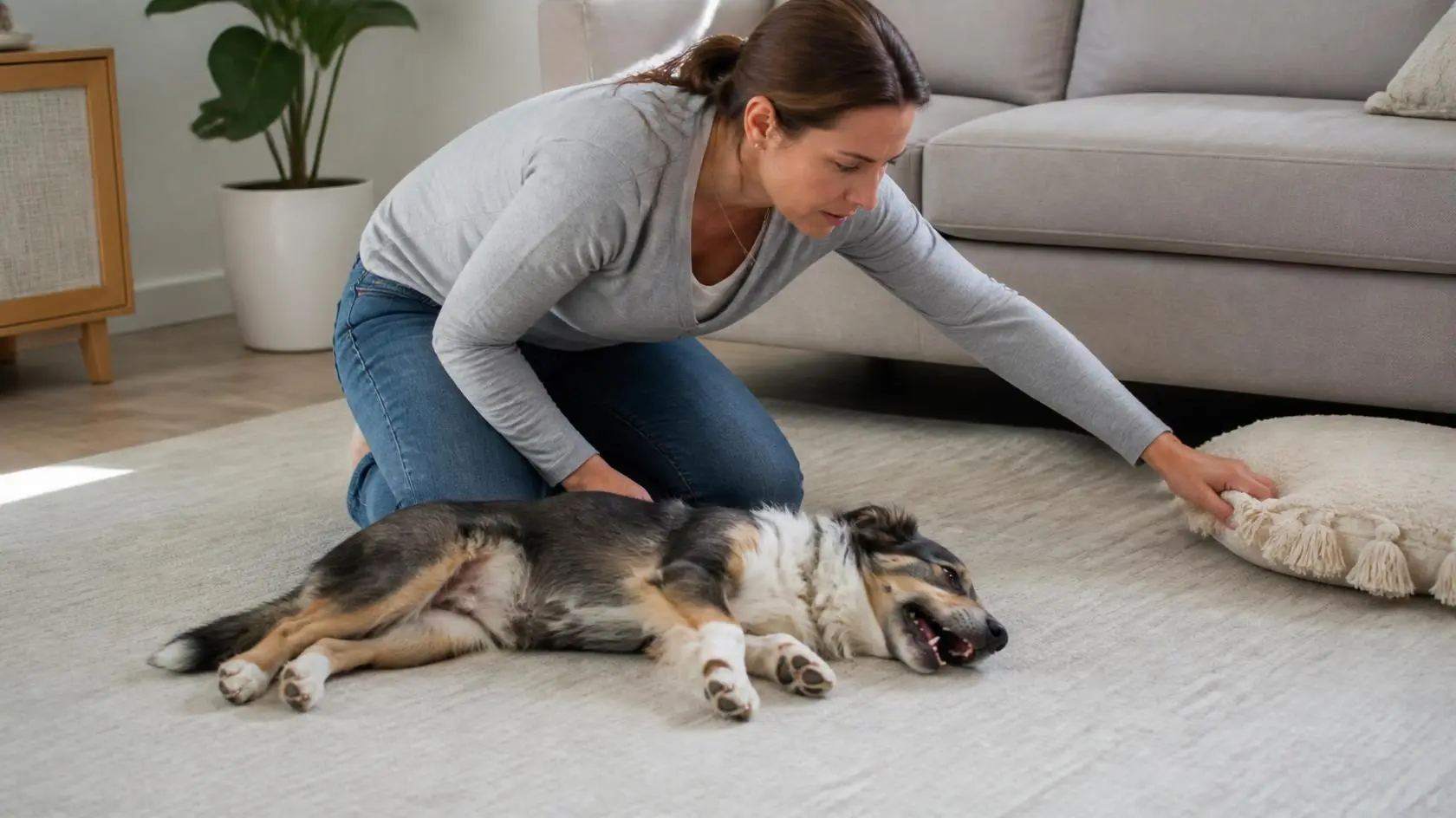
Yes. A dog stomach flip is an immediate veterinary emergency that cannot be managed safely at home. Treatment delays allow pressure, poor circulation, tissue injury, shock, and organ problems to worsen, much like other conditions where recognizing warning signs early can change the outcome.
- Call While Leaving: Contact the nearest open emergency veterinary hospital and state that you suspect GDV. Confirm its address and tell the clinic when you expect to arrive.
- Do Not Wait for Every Sign: Abdominal swelling may be subtle or absent early. Repeated dry heaving, drooling, pacing, abdominal pain, pale gums, weakness, or collapse is enough reason to leave.
- Avoid Home Treatment: Do not press the abdomen or attempt to release gas. Do not give food, water, medication, antacids, or gas remedies unless the emergency veterinarian instructs you to do so.
- Transport Carefully: Keep your dog as calm as possible and limit unnecessary movement. Ask someone else to call the clinic or drive when another person is available.
The safest response is immediate transport. A temporary pause in retching or pacing does not prove that the danger has passed.
Signs of a Twisted Stomach in Dogs

GDV signs can appear suddenly and become worse within a short period. Abdominal swelling is common, but it may be difficult to see when the stomach sits partly beneath the rib cage.
| Sign | What It May Look Like |
|---|---|
| Unsuccessful retching | Repeated attempts to vomit that produce little, nothing, or only foam |
| Swollen or firm abdomen | The belly appears enlarged, tight, or painful |
| Restlessness | Pacing, repeated position changes, or inability to settle |
| Excessive drooling | More saliva than usual, sometimes with lip licking |
| Rapid breathing | Panting or breathing faster because of pain or pressure |
| Pale gums | Gum tissue appears lighter or whiter than its usual color |
| Prayer position | Front legs extend forward while the chest lowers and the rear remains raised |
| Weakness or collapse | Difficulty standing, sudden loss of strength, or unresponsiveness |
These signs can occur with other illnesses, but they cannot be safely assessed at home. Contact an emergency veterinarian immediately when several signs appear together, particularly unsuccessful retching, abdominal swelling, pale gums, or weakness, since pale or unusually white gums can also point to other urgent conditions unrelated to the stomach.
Risk Factors for GDV in Dogs
GDV has no single confirmed cause. A combination of body structure, inherited risk, age, eating patterns, and other factors may make the condition more likely.
- Body Shape and Breed: Large and deep-chested dogs face greater risk. Commonly affected breeds include Great Danes, Weimaraners, Saint Bernards, Irish Setters, Standard Poodles, and Doberman Pinschers.
- Age and Family History: Risk generally rises with age. A dog with a parent, sibling, or offspring that developed GDV may also face increased risk.
- Meals and Eating Speed: Eating one large daily meal or consuming food rapidly has been associated with GDV, and broader choices about what makes up daily meals are worth discussing with a veterinarian too. The Purdue University Animal Disease Diagnostic Laboratory discusses these documented GDV risk factors.
- Raised Feeding Bowls: Raised bowls were once recommended for prevention, but research has associated them with increased risk in some dogs. Use one only when your veterinarian recommends it for another medical reason.
These factors indicate probability rather than certainty. GDV can occur in dogs without an obvious risk factor and in breeds that are not commonly associated with it.
How Veterinarians Diagnose and Treat GDV

Veterinary teams begin assessment and stabilization as soon as the dog arrives. The order of testing and treatment may change when the dog is already showing signs of shock.
1. Diagnosis
A physical examination may raise strong suspicion of GDV, but abdominal X-rays are generally used to confirm stomach rotation.
Cornell University College of Veterinary Medicine states that bloodwork and abdominal X-rays help assess the condition, while an ECG can detect abnormal heart rhythms.
2. Stabilization and Decompression
Veterinarians may provide intravenous fluids, pain medication, oxygen, electrolytes, and other support for shock.
Trapped gas may be released through a stomach tube or a needle or catheter placed through the abdominal wall.
3. Surgery
Once the dog is stable enough for anesthesia, the surgeon returns the stomach to its proper position and checks the stomach wall, spleen, and nearby tissues. Damaged tissue may need to be removed.
A gastropexy is normally performed during surgery to attach the stomach to the abdominal wall. This greatly lowers the chance of another rotation but does not prevent future stomach expansion.
4. Hospital Monitoring
After surgery, the dog remains hospitalized for monitoring. The veterinary team watches for abnormal heart rhythms, low blood pressure, infection, continued shock, bleeding, and problems affecting other organs.
Recovery depends partly on how quickly treatment begins and whether tissue damage has already occurred. The veterinary team can provide a more specific outlook after surgery and early monitoring.
Can You Reduce the Risk of a Dog Stomach Flip?
No routine can guarantee prevention, but certain choices may address known risk factors. Recommendations should be based on your dog’s breed, body shape, family history, age, and medical needs.
- Divide daily food into two or more smaller meals instead of one large meal.
- A slow-feeder bowl may reduce rapid eating, but it is not proven to prevent GDV.
- Avoid raised bowls unless a veterinarian recommends one for another condition.
- Ask about GDV history when obtaining a dog from a breeder.
- Discuss preventive gastropexy for deep-chested breeds or dogs with affected close relatives.
- Follow your veterinarian’s advice about activity around meals.
One important thing to remember: preventive gastropexy lowers the odds of rotation, but it doesn’t stop the stomach from filling with gas. Warning signs still deserve a vet visit even after the procedure.
Final Verdict
A twisted stomach can go from restlessness and unsuccessful retching to shock and collapse faster than most owners expect.
There’s no home exam that can rule GDV in or out, which is exactly why suspected signs mean getting to an emergency vet, not waiting to see what happens.
Treatment means fast stabilization, decompression, and surgery when rotation is confirmed.
Feeding changes can help with some of the known risk factors, but nothing guarantees prevention entirely, and if your dog is deep-chested or has a close relative who’s had GDV, it’s worth having the preventive gastropexy conversation with your vet before an emergency, not during one.
Save the number and route to your nearest emergency clinic today, while things are calm. If you’re seeing warning signs right now, call the clinic on your way out the door and go.
Frequently Asked Questions
Can the Abdomen Look Normal During an Emergency?
Yes. Early swelling may be subtle, especially when the stomach sits partly beneath the rib cage. Repeated dry heaving, drooling, pacing, abdominal pain, pale gums, weakness, or collapse still require immediate emergency veterinary assessment without delay.
Should I Offer Food or Water Before Leaving?
Do not offer food, water, antacids, gas remedies, or other medication unless an emergency veterinarian specifically instructs you to do so. Leave for the clinic promptly because home treatment cannot release pressure safely or untwist the stomach.
Does Retching Always Come with Visible Swelling?
No. A dog may appear restless, drool, pant, or repeatedly try to vomit before the abdomen looks enlarged. Waiting for visible swelling can delay treatment, so contact an emergency clinic when several warning signs occur together.
Can Bloating Occur After Preventive Surgery?
Yes. Gastropexy greatly lowers the chance of the stomach twisting again, but it does not stop the stomach from filling with gas. New bloating, retching, abdominal pain, weakness, or collapse still requires prompt veterinary assessment.