

One day, they’re tiny, sleepy bundles curled close to their mother. The next, they’re wobbling forward on unsteady paws, exploring a world that suddenly seems much bigger.
Puppy development has a way of feeling almost magical, especially when those first steps appear out of nowhere.
But every little stumble, stretch, and curious movement is part of a bigger growth story.
Those early weeks can pass quickly, and it is not always easy to know what is normal, what comes next, or when to pay closer attention.
This blog takes a closer look at: when do puppies start walking, how puppies grow through their earliest stages, what those first milestones usually look like, and how you can support them as they become stronger, steadier, and more confident.
When Do Puppies Start Walking?
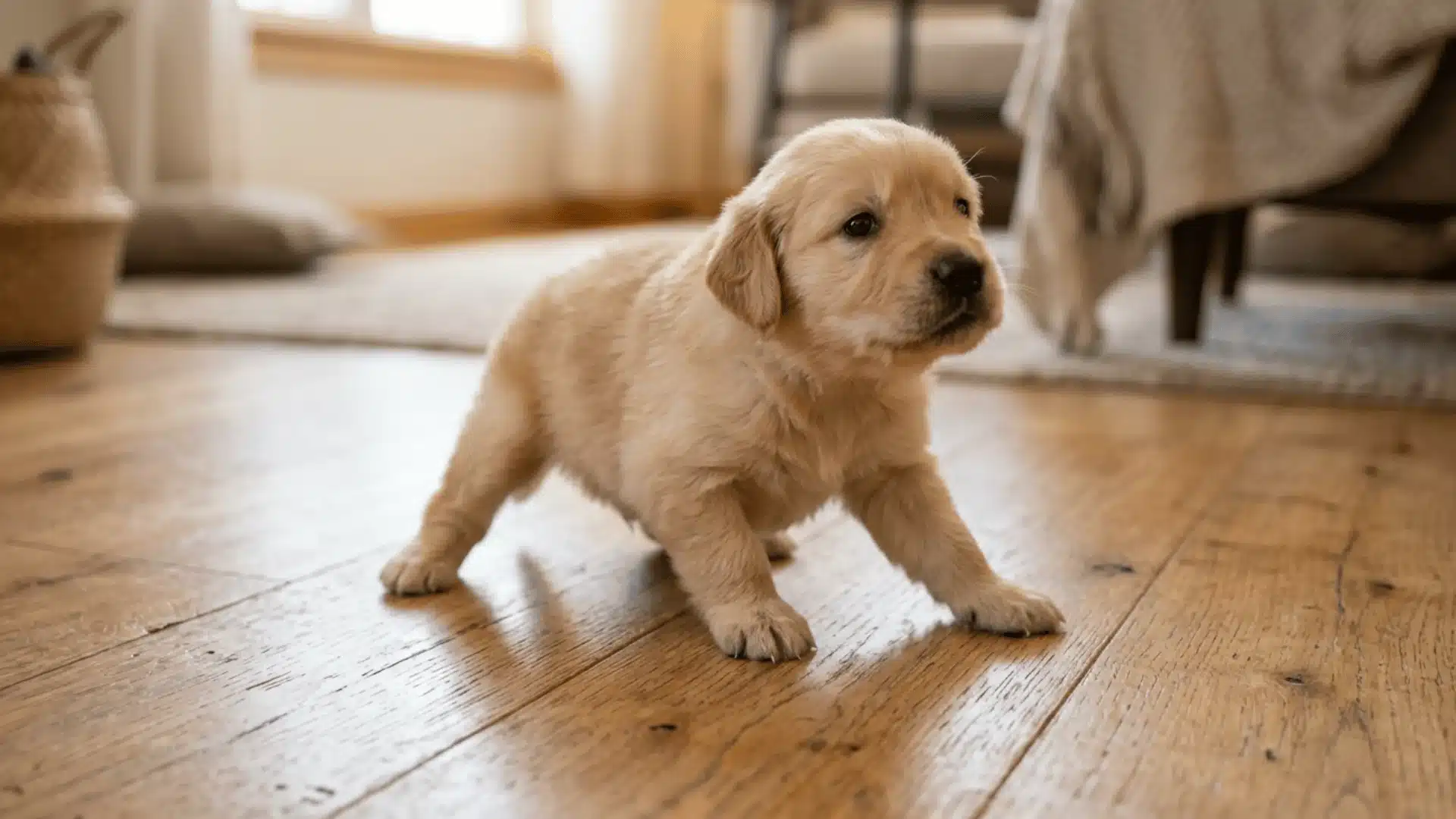
Puppies often begin trying to stand and take their first wobbly steps near the end of week 3. By 3 to 4 weeks, their walking usually becomes steadier.
Falls happen constantly at this stage, and that is completely normal. Their muscles are simply catching up to their ambition. By week 4, most puppies are walking. Not gracefully, but walking.
Some may even try to trot or chase a littermate across the whelping box.
Around the four-week mark, puppies may also begin wagging their tails, which is one of those small moments that makes everything feel real.
Some puppies develop a little later, depending on breed, size, litter size, and individual variation. But if a puppy still cannot stand or bear weight by 5 weeks, it is time to see a vet.
What Affects How Quickly a Puppy Walks?
Not every puppy hits the walking milestone on the same schedule, and that’s fine. A few factors can push the timing earlier or later:
- Breed and body size: Larger breeds sometimes take a little longer to get coordinated because their limbs have more length to manage. Toy breeds can be quicker on their feet.
- Litter size: Puppies in large litters may get less nursing time, which can affect early weight gain and muscle development.
- Maternal care: A mother dog who’s attentive and calm gives her puppies a stable environment that supports healthy neurological development in those first weeks.
- Individual variation: Like any animal, some puppies just develop a bit earlier or later than their littermates, with no underlying cause.
Puppy Development Timeline: From Newborn to Adolescence
Puppies grow quickly, moving from helpless newborns to curious, playful young dogs. Each stage brings important physical, social, and behavioral changes owners should understand.
1. The First 2 Weeks
Newborn puppies are completely dependent on their mother. Their eyes and ears are closed, they cannot walk, and they cannot regulate body temperature.
They rely on touch and smell to crawl toward warmth and milk. Most of their time is spent sleeping and nursing, which supports rapid growth.
Handling should stay brief and gentle, with a warm, quiet space kept close to the mother.
2. Early Walking Stage
A puppy’s movement develops in small stages rather than all at once. First, they crawl toward warmth and food.
As their eyes and ears begin working, they become more curious and start pushing up on their legs. Their first steps are usually shaky, with frequent falls.
By week 4, most puppies can move around the whelping area, explore littermates, and show better balance.
3. The Socialization Stage
A 4-to 12-week period shapes how they respond to people, dogs, sounds, and new places.
According to the USDA Animal Care program, peak socialization often falls around 6 to 8 weeks. Weaning usually starts at 4 to 5 weeks as soft food is introduced.
Littermate play teaches bite control, body language, and confidence, which is why rehoming before 8 weeks is discouraged.
4. Juvenile Puppy Development
By around 3 months, puppies move with more confidence and energy. This is when teething, chewing, and short bursts of play become common.
Training can begin with simple cues like sit, stay, and name recognition, but sessions should stay short. Positive reinforcement works best at this age.
Crate training is also helpful, teaching puppies to rest calmly and making travel, vet visits, and daily routines easier.
5. Adolescent Puppy Development
Around 6 months, puppies may look more grown, but they are still mentally immature. Sexual maturity often occurs between 6 and 12 months, while emotional maturity takes longer.
Some dogs may seem to forget training, but this is normal adolescent behavior. Smaller breeds often mature by 10 to 12 months, while large breeds may need 18 to 24 months.
Nutrition, exercise, and training should match their growth stage.
How Long Should You Walk a Puppy?
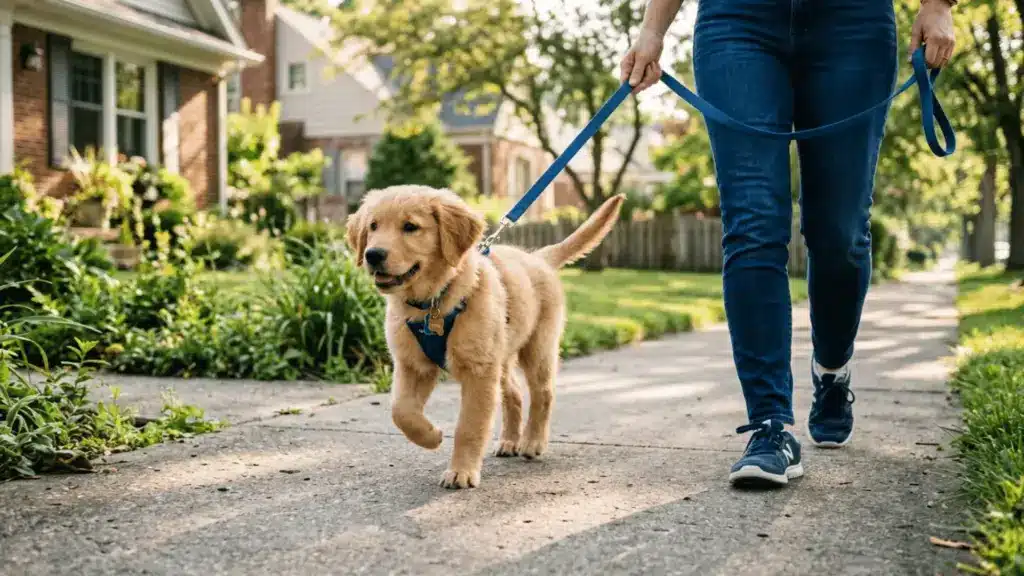
Once your puppy is vaccinated and walking with confidence, leash walks can begin. But there’s a limit that many new owners miss.
A widely used guideline among veterinarians is 5 minutes of walking per month of age, twice a day(though focus on your puppy’s energy, breed, and signs of fatigue rather than strict timing).
A 3-month-old puppy needs about 15 minutes per session. This keeps walks short enough to protect developing bones and joints without leaving a puppy frustrated.
Running, jumping, and long hikes should wait until a puppy is fully grown. High-impact activity on growing joints, especially in large breeds, can cause lasting damage.
Leash training a puppy helps build good walking habits from the very first outing.
Signs Your Puppy is Developing Normally
A healthy puppy should make steady progress week by week. These signs can help you understand whether your puppy is moving in the right direction.
- Steady Weight Gain: A healthy puppy should gain weight regularly and should not look thin, weak, or smaller than littermates.
- Strong Nursing: Normal puppies nurse often, latch well, and seem satisfied after feeding from their mother.
- More Movement: Puppies should slowly move from crawling to standing, wobbling, and walking as their legs grow stronger.
- Opening Eyes: Most puppies begin opening their eyes around two weeks, though vision stays blurry at first.
- Responding to Sound: As hearing develops, puppies may react to voices, movement, or noises around them.
- Growing Curiosity: By a few weeks old, puppies start exploring, sniffing, playing, and interacting with littermates.
Other Puppy Development Milestones to Watch
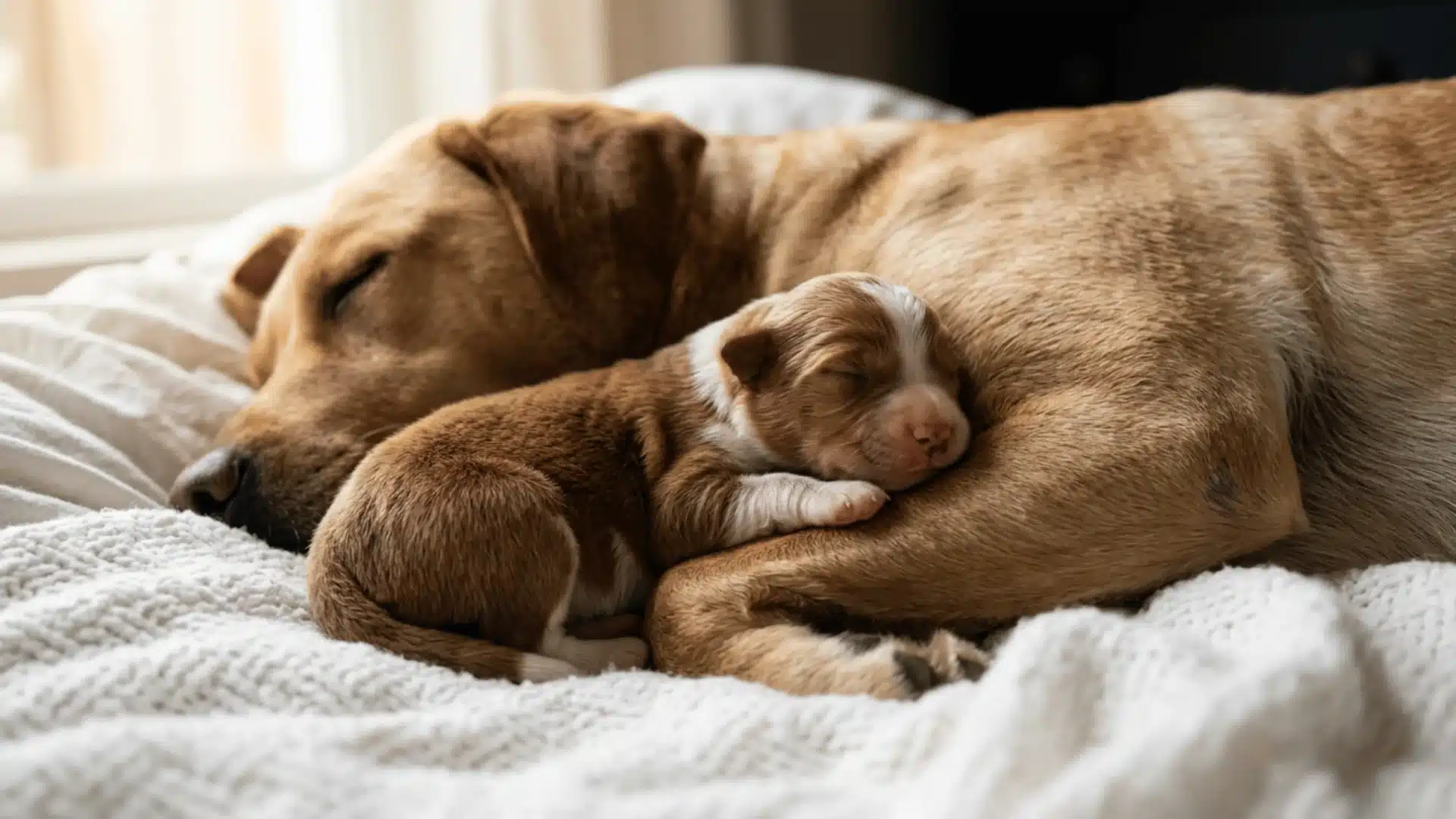
Walking is only one piece of what’s happening in those first weeks. Puppies hit several other milestones in rapid succession, and knowing the sequence helps you understand what your pup is ready for and when.
1. Puppy Eye Development
Puppies’ eyes begin to open around 10 to 14 days old. Vision is blurry at first and sharpens gradually over the following week or two. By about 5 weeks, sight is reasonably well developed.
Don’t be alarmed if a puppy’s eyes look a little cloudy right after opening; that’s normal and clears on its own.
2. Early Hearing Milestones
Hearing usually starts developing around 2 to 3 weeks old. Before that, the ear canals are sealed shut.
Once hearing comes online, puppies begin reacting to sounds in their environment, and you’ll notice them startling or turning their heads in response.
This is also when gentle exposure to everyday household sounds becomes valuable.
3. First Signs of Play
Play behavior starts appearing around 3 to 4 weeks old. At first, it looks more like gentle pawing and bumping into littermates.
By weeks 5 and 6, it becomes much more obvious: chasing, pouncing, and the earliest versions of play-fighting. This isn’t just fun; it’s how puppies build coordination and learn how to read other dogs’ body language.
4. Starting Solid Food
Weaning typically begins around 3 to 4 weeks old. At this point, soft puppy food or puppy gruel (moistened kibble) is introduced alongside nursing.
By 7 to 8 weeks, most puppies have made a full transition to solid food.
Weaning shouldn’t be rushed; puppies that are separated from their mother before 8 weeks often miss important social learning alongside the nutritional transition.
5. Beginning Potty Training
Very young puppies can’t control their bladder at all; their mother stimulates elimination by licking their belly in the first few weeks. The ability to “hold it” develops gradually.
Formal potty training typically starts around 8 weeks, once a puppy comes home. Even then, accidents are frequent and normal.
When to See a Vet?
Most puppies start walking at their own pace, and small delays can improve with time. Still, some signs should not be ignored.
Schedule a vet check if your puppy is not trying to stand by about three weeks, especially when littermates are already moving around.
You should also contact a vet if one leg looks stiff, weak, swollen, painful, or does not bear weight.
Dragging the back legs, walking on the wrists, falling often, or struggling to balance can also point to a problem.
Watch closely for unusual weakness, limpness, low activity, crying during movement, poor nursing, weight loss, or falling behind the rest of the litter.
If there is no progress over several days, early veterinary advice can help find possible causes, such as nutrition problems, infections, birth defects, joint issues, or nerve-related concerns.
Conclusion
Watching a puppy grow from a tiny, helpless newborn into a playful, confident dog is a special experience.
Those first wobbly steps may seem small, but they mark the beginning of major physical, social, and emotional development.
As your puppy grows, each stage brings something new, from opening their eyes and learning to walk to playing, training, teething, and exploring the world.
You can encourage healthy movement, avoid excessive exercise, catch delays early, and make training and socialization easier.
Most puppies develop at their own pace, but gentle guidance, patience, and regular vet care go a long way.
We’d love to hear about your puppy’s milestones. Drop a comment below and tell us when your pup took their first steps.
Frequently Asked Questions
What Should I Feed My Puppy at Different Stages?
Newborns nurse from mom. Start soft gruel at 3-4 weeks, full solids by 8 weeks. Feed 3-4 meals daily until 6 months, then 2 meals. Use high-quality puppy food and consult your vet about portion sizes.
What are Common Health Concerns in the First Months?
Watch for parvovirus, distemper, intestinal parasites, diarrhea, and kennel cough. Stick to vaccination schedules, deworming, and preventive meds. Contact your vet for lethargy, vomiting, or loss of appetite.
How Can I Help with Teething and Chewing?
Provide frozen rubber toys, soft chew rings, or puppy teething treats to soothe sore gums. Redirect from furniture with positive praise. Supervise closely and avoid hard bones or sticks that can damage teeth.