

Bringing home a dog comes with a long list of responsibilities, one of which is to decide how often dogs get rabies shots.
Questions about timing, booster schedules, legal rules, and vaccine safety often leave people searching through conflicting advice online.
Add in different state laws and changing vaccine schedules, and it becomes easy to miss something important.
Because rabies laws can affect travel, boarding, grooming visits, dog licensing, and bite-related emergencies, it’s important to keep the schedule up to date.
Understanding how the schedule works early on can make routine vet care much simpler for years ahead and help owners avoid last-minute stress.
What is the Importance of Rabies Shots?
Rabies is a deadly viral disease that attacks the brain and nervous system of mammals, including dogs and humans.
It usually spreads through bites or saliva from infected animals such as bats, raccoons, skunks, or foxes. Once symptoms appear, rabies is almost always fatal, making prevention extremely important.
Rabies shots protect dogs from infection and help stop the virus from spreading to people and other animals.
Vaccination also plays a major role in public safety and is legally required in many areas.
Keeping a dog’s rabies vaccine current can also prevent problems with emergency bite-related situations.
How Often Do Dogs Get Rabies Shots?
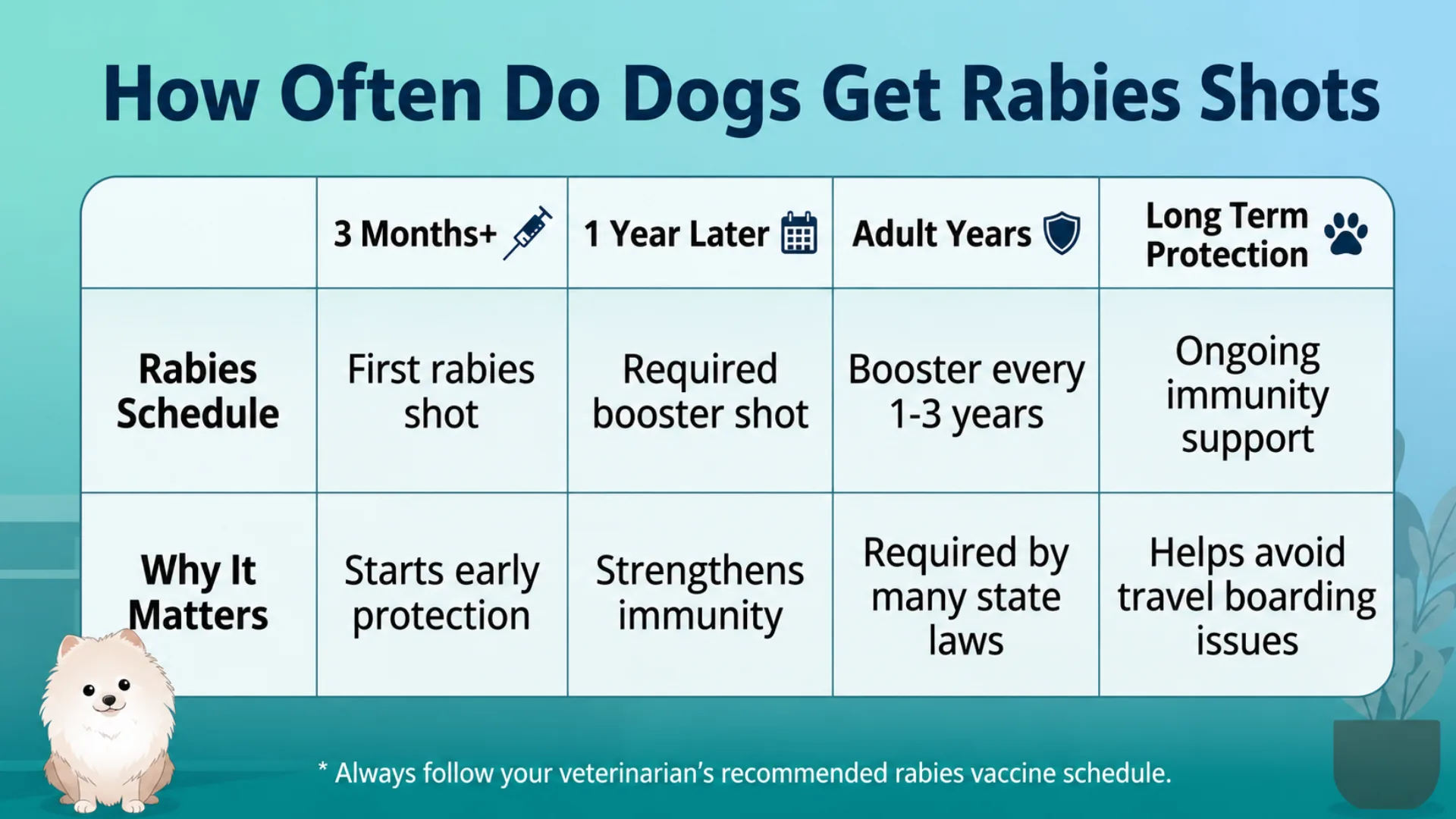
Over a dog’s lifetime, they’ll need several rabies shots, starting in puppyhood and continuing into their senior years.
The exact number depends on how long they live and whether your vet uses a one-year or three-year vaccine, but the structure is always the same.
Here’s the standard schedule most U.S. vets follow:
- First shot: Given at 3 months of age or older, depending on local law and vaccine labeling.
- One-year booster: Given 1 year after the first shot, even if the product is labeled for 3-year use.
- Ongoing boosters: Every one to three years after that, depending on local laws and the vaccine product your vet carries.
Regular boosters are what keep your dog’s immune system ready to fight off the virus if they’re ever exposed.
For a complete overview of early puppy care, the dog vaccination-by-age timeline is a helpful, full-picture reference.
How Long is Rabies Vaccine Good for Dogs?
A rabies vaccine for dogs is usually good for either 1 year or 3 years.
The exact length depends on the vaccine your dog gets, your dog’s vaccination history, and the rules in your local area.
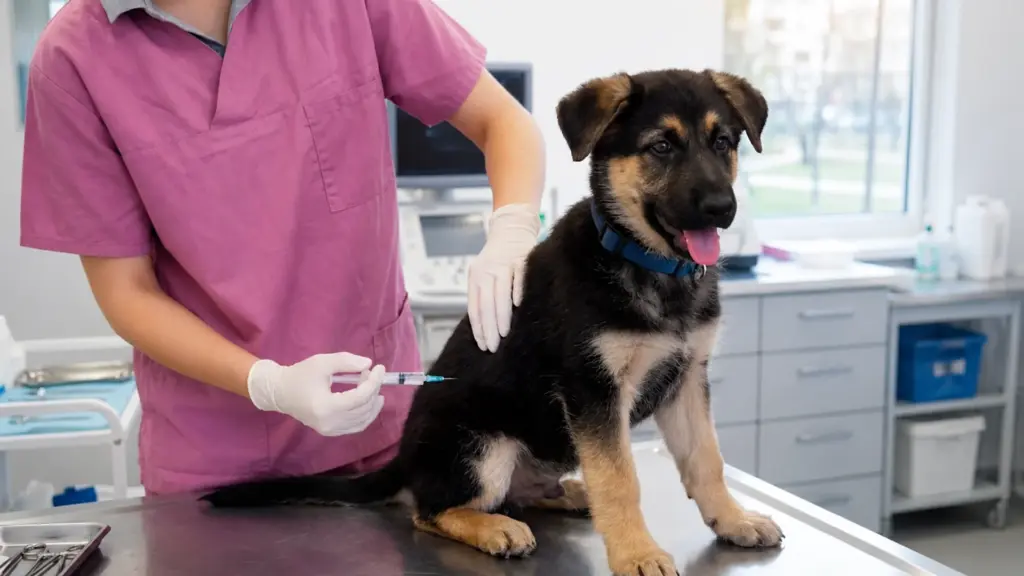
Most puppies receive their first rabies shot at around 12 to 16 weeks old, then need a booster one year later.
After that, many adult dogs can move to a 3-year rabies vaccine if local law allows it. Some places still require yearly rabies shots, so it is important to follow your vet’s advice.
The best way to know how long your dog’s rabies vaccine is good for is to check the rabies certificate. It lists the vaccine date and the next due date.
Do not wait until the shot expires. Keeping your dog’s rabies vaccine current helps protect your dog and keeps you compliant with local rules.
1-Year vs 3-Year Rabies Vaccine: What is the Difference?
One of the most common questions dog owners ask is whether the one-year and three-year rabies vaccines are genuinely different products. The short answer: not by much.
The main difference is the label, which the manufacturer controls and which determines how the product is licensed for use in your state.
| Feature | 1-year rabies vaccine | 3-year rabies vaccine |
|---|---|---|
| Duration of protection (labeled) | 12 months | 36 months |
| First dose valid for | 12 months | 12 months (same as 1-year) |
| Booster schedule after year 1 | Annually | Every 3 years (where the law allows) |
| Formulation | Largely similar | Largely similar |
| Legal acceptance | All U.S. states | Varies by state |
An important detail: the first dose of a three-year vaccine is still only valid for one year.
A dog that received its first-ever rabies shot with a three-year product must still get a booster 12 months later. Only after that second dose does the three-year interval apply.
Some states require annual boosters regardless of the vaccine label. Always confirm with your vet which products they carry and what your local laws require.
What if Your Dog Misses a Rabies Booster?
A lapsed rabies vaccine isn’t just a scheduling problem. It can have real legal consequences.
If your dog’s rabies shot is overdue by a short period, your vet can usually get them back on schedule with a new booster.
Some states treat a recently lapsed dog the same as a current one for a brief grace window, but that varies, so don’t count on it.
If your unvaccinated or lapsed dog bites someone or is exposed to a potentially rabid animal, the consequences are much more serious.
Local authorities may require an extended quarantine period, sometimes lasting several months. In some cases, euthanasia for rabies testing may be required.
The safest approach is to call your vet as soon as you realize the booster is overdue. They’ll advise on whether your dog can simply continue the existing schedule or needs to restart.
Is Rabies Vaccine Required by Law for Dogs?
Rabies vaccination is required by law for dogs in many places, but the exact rules depend on where the dog lives.
In the United States, rabies rules are set by state and local authorities, so the required age for the first shot, booster timing, proof of vaccination, and exemption rules can vary.
The CDC advises that dogs should be vaccinated according to local rabies laws, not a single national schedule.
In most areas, a licensed veterinarian must give the rabies shot and provide an official rabies certificate.
This certificate may be needed for dog licensing, boarding, grooming, travel, or bite reports. Some areas accept a 3-year rabies vaccine, while others may require yearly vaccination.
Keeping rabies shots current protects the dog and helps avoid legal problems.
For full accuracy, dog owners should check their city, county, or state rabies law and follow their vet’s guidance.
What to Expect After Your Dog’s Rabies Shot?

Most dogs recover quickly after a rabies shot. Any side effects are usually mild and resolve within 24 to 48 hours.
Common mild reactions:
- Mild tiredness or lower energy for a day or two
- Small lump or soreness near the injection site
- Reduced appetite for a few hours
- Mild fever that improves on its own
Signs that need prompt veterinary attention:
- Facial swelling or hives
- Vomiting or diarrhea that continues for several hours
- Difficulty breathing
- Collapse or extreme weakness
Serious allergic reactions are rare but can happen quickly. If your dog shows any of the severe signs above within an hour of vaccination, contact your vet or an emergency animal hospital immediately.
What to Do if Your Dog is Exposed to a Rabid Animal?
A bite or scratch from a wild animal can quickly turn into a serious situation, especially if rabies exposure is possible.
Raccoons, bats, foxes, and skunks are among the most common carriers in the United States, and unusual behavior from wildlife should never be ignored.
If exposure happens, contact a veterinarian immediately and avoid handling the animal yourself.
For vaccinated dogs, vets usually recommend an immediate rabies booster, followed by a home monitoring period. Existing vaccine protection greatly lowers the risk and often prevents strict quarantine requirements.
Unvaccinated dogs face much more severe consequences, including long quarantine periods that can last several months.
It is also important to report the incident to local animal control or public health authorities.
Contact your vet and local animal control immediately if your dog has been exposed to a potentially rabid animal.
Core and Non-Core Vaccines for Dogs
Rabies gets most of the attention because it’s the law. But your dog needs more than one vaccine.
The AAHA canine vaccination guidelines split dog vaccines into two groups: core vaccines that every dog needs and non-core vaccines chosen based on your dog’s lifestyle and environment.
| Vaccine | What it protects against | Schedule | Average Cost |
|---|---|---|---|
| Rabies | Fatal viral disease that can spread to humans | Every 1-3 years | $20-$75 |
| Distemper (DHPP) | Respiratory, digestive, and nervous system virus | Puppy series, then every 3 years | $20-$60 |
| Parvovirus (DHPP) | A highly contagious virus that survives in soil | Included in the DHPP series | Included in DHPP |
Leptospirosis | Bacterial infection from contaminated water/soil (can spread to humans) | Puppy series (2 doses 2–4 weeks apart starting ~12 weeks), then annually | $20–$45 |
| Adenovirus/Hepatitis (DHPP) | Infectious canine hepatitis and liver damage | Included in the DHPP series | Included in DHPP |
| Bordetella | Kennel cough common in boarding facilities | Every 6-12 months | $20-$50 |
| Leptospirosis | Bacterial infection from contaminated water | Annually for at-risk dogs | $20–$40 |
| Lyme disease | Tick-borne illness common in certain regions | Annually for at-risk dogs | $30-$65 |
| Canine influenza | Contagious respiratory illness | As recommended by your vet | $30-$70 |
If your puppy is starting the DHPP combo series, the 5-in-1 puppy vaccine guide explains exactly what’s in that combination shot.
Note: According to the latest AAHA Canine Vaccination Guidelines (updated in 2024), Leptospirosis is now considered a core vaccine recommended for all dogs due to widespread risk and improved vaccine safety.
How to Keep Track of Your Dog’s Rabies Records?
A rabies certificate can cause real stress when it goes missing, especially before boarding, grooming, travel, or an unexpected bite situation.
Most vets give one after the shot, but it is easy to misplace. The certificate should include your dog’s name, breed, age, sex, vaccine manufacturer, product name, vaccination date, expiration date, vet name, vet license number, and rabies tag number.
The expiration date matters most because groomers and boarding facilities usually check it first. Keep one physical copy and one digital copy.
A photo on your phone or a folder in your Photos app is enough, though pet record apps can also help.
Your vet keeps records, too, but they may not be available after hours or if you change clinics.
If records are lost or your adopted dog has no history, vets usually restart the vaccination schedule rather than rely on uncertain paperwork.
Conclusion
Keeping your dog up to date on rabies vaccines is one of the simplest ways to protect both your pet and the people around them.
Most dogs get their first rabies vaccine as puppies, then a booster one year later, followed by shots every one to three years, depending on the vaccine and your area’s law.
The best thing you can do is check your dog’s rabies certificate, note the next due date, and ask your vet if anything is unclear.
Rabies protection is not just about paperwork. It helps keep your dog, your family, and your community safer.
Have you gone through puppy vaccines, missed boosters, or state rule changes with your dog? Share your experience in the comments below.
Frequently Asked Questions
Can Rabies Shots Cause a Lump in Dogs?
A small lump near the injection site can occur after vaccination and usually fades, but any growing or painful swelling requires veterinary attention.
Can my Dog Exercise After a Rabies Shot?
Light activity is usually fine after a rabies shot, but avoid intense play if your dog seems tired, sore, or uncomfortable.
Is There a Blood Test that Can Replace the Rabies Booster Shot?
A rabies titer test measures antibodies, but most U.S. states do not accept it as a legal replacement for required rabies booster vaccinations.
Can Dogs Get a Medical Exemption from the Rabies Vaccine?
Some states allow a licensed veterinarian to grant a rabies vaccine exemption for dogs with documented health conditions, such as serious allergic reactions to prior doses or certain immune disorders. Exemption rules vary widely by state, and not all jurisdictions permit them