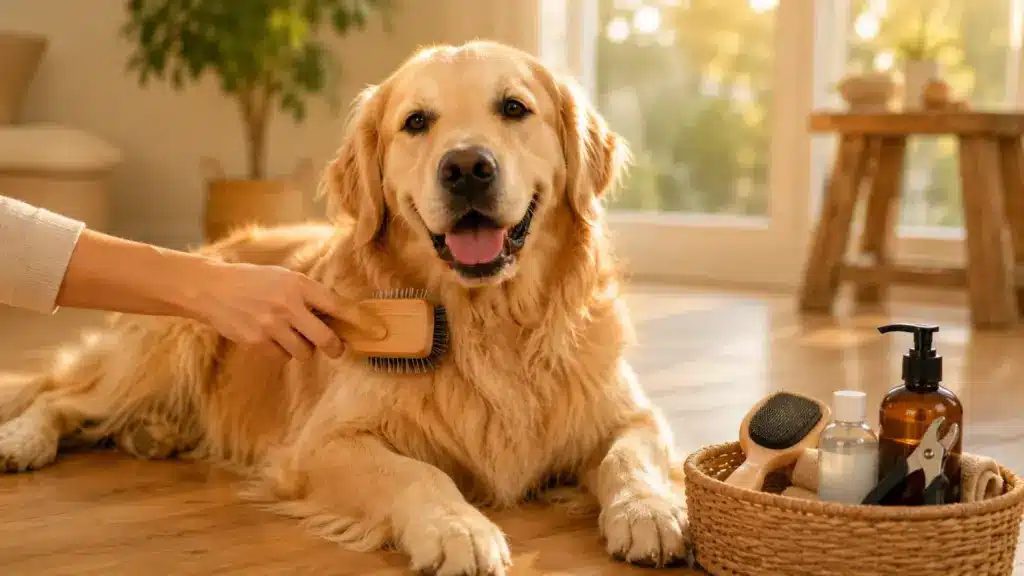
Dog grooming tips help keep your dog clean, comfortable, and healthy between vet visits. Brushing, baths, nail trimming, and dental care all play a part.
The challenge is knowing what matters most and how to make at-home grooming easier.
I have seen many dog owners become stressed once shedding, odor, or tangles start to worsen.
After years in practice, I learned that simple routines work better than complicated grooming schedules. A few consistent habits can completely change how your dog looks and feels.
In this blog, I will cover how to groom a dog at home, which tools are actually useful, and the common grooming mistakes that make dogs hate the process.
What You Need to Groom a Dog at Home
Most people think dog grooming starts and ends with a bath. In reality, a proper at-home dog grooming routine covers several important areas of your dog’s health and comfort.
The basics include:
- Brushing the coat
- Bathing
- Nail trimming
- Ear cleaning
- Dental care
Each step serves a different purpose. Brushing helps prevent tangles and loose fur buildup. Baths remove dirt, odor, and allergens from the coat. Nail trimming keeps walking comfortable and reduces the risk of injury. Ear cleaning helps prevent irritation and infections, while dental care supports healthier gums and fresher breath.
Together, these habits create a simple routine that keeps your dog cleaner, healthier, and more comfortable at home.
Essential Tools for Grooming a Dog at Home
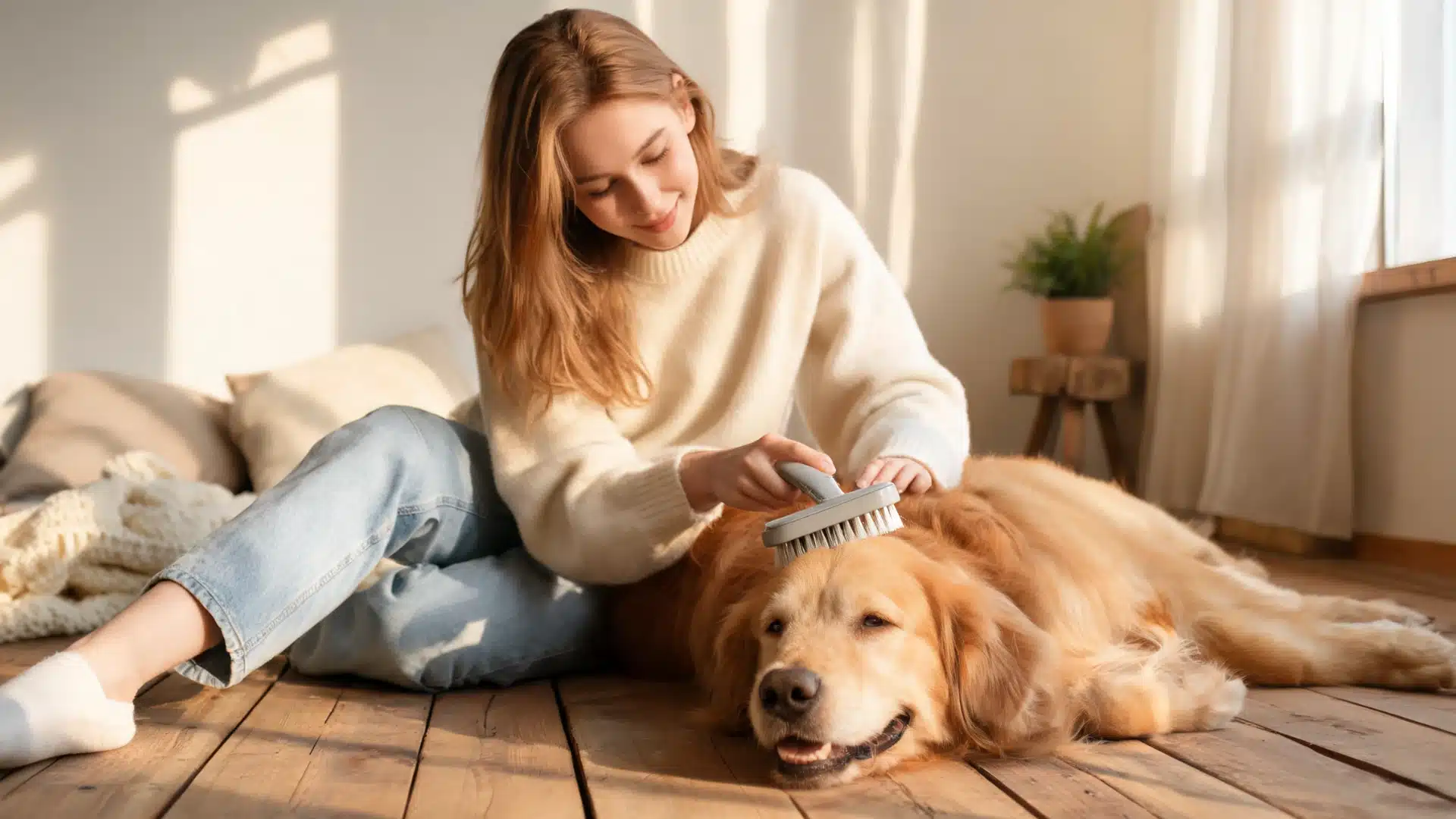
Using the wrong grooming tools can turn a simple routine into a stressful experience for both you and your dog. The right setup makes grooming faster, safer, and much more comfortable.
I have seen many dogs become nervous around grooming simply because the tools pulled their fur, made them feel uncomfortable, or made too much noise. Choosing tools that match your dog’s coat and size makes a huge difference from the start.
Here are the basic dog grooming tools worth keeping at home:
- Coat brush or comb: Slicker brushes work well for medium and long coats, while bristle brushes suit short-haired breeds. Heavy shedders like Huskies and German Shepherds benefit from deshedding tools. This guide to dog brush types can help you choose the right one.
- Dog shampoo: Always use shampoo made for dogs. Human shampoo can irritate their skin because dogs have a different skin pH. Oatmeal or aloe-based formulas are usually better for sensitive skin.
- Nail clippers or grinder: Pick clippers based on your dog’s size. Nail grinders can work well for dogs that stay calm around sound and vibration.
- Styptic powder: This helps stop bleeding quickly if a nail gets trimmed too short.
- Ear cleaning solution: A gentle dog-safe cleaner and cotton balls are enough for regular ear care.
- Dog toothbrush and toothpaste: Never use human toothpaste on dogs. Dog toothpaste is made to be safe if swallowed.
Getting the right tools early makes grooming easier and helps your dog feel more comfortable with the process over time.
How Often Should You Brush Your Dog?
If there is one habit that makes the biggest difference in a dog grooming routine, it is regular brushing. It removes loose fur, dirt, and debris while spreading natural oils across the coat to keep it healthier and shinier.
Brushing also helps prevent painful mats that can pull on the skin and trap moisture. Beyond coat care, it gives you a chance to check for lumps, dry patches, irritation, or anything unusual before it becomes a bigger issue.
Short-Coated Dogs
Short-coated dogs, such as Beagles, Boxers, and Dalmatians, usually need brushing once a week. Their fur may look easy to manage, but they still shed and collect dirt.
Regular brushing helps remove loose hair before it spreads around your home. A soft bristle brush, rubber curry comb, or grooming glove works well for short coats.
Brush in the same direction as the hair growth and use gentle pressure. These dogs do not need long grooming sessions.
A few minutes each week is usually enough to keep their coat smooth, clean, and healthy.
Medium and Double Coated Dogs
Medium and double-coated dogs, such as Golden Retrievers, Corgis, and Huskies, need brushing two to three times a week. These dogs have thicker coats, and loose fur can build up quickly under the top layer.
If the undercoat is not brushed out, it can lead to shedding, tangles, and discomfort. During spring and fall, many double-coated dogs shed much more than usual. Daily brushing may be needed during these seasons.
A slicker brush, undercoat rake, or de-shedding tool can help remove loose fur. Pay extra attention to the neck, tail, belly, and back legs.
Long Coated Dogs
Long-coated dogs, such as Shih Tzus, Maltese, and Afghan Hounds, usually need daily brushing. Their hair tangles quickly around the ears, collar, legs, tail, and underarms.
If brushing is skipped for several days, small knots can turn into painful mats. Use a pin brush or slicker brush, then check with a wide-tooth comb to remove any hidden tangles.
Always brush before bath time because water can tighten knots. Using a dog safe coat conditioner after bathing can also make brushing smoother and more comfortable.
How to Bathe a Dog at Home without the Chaos?
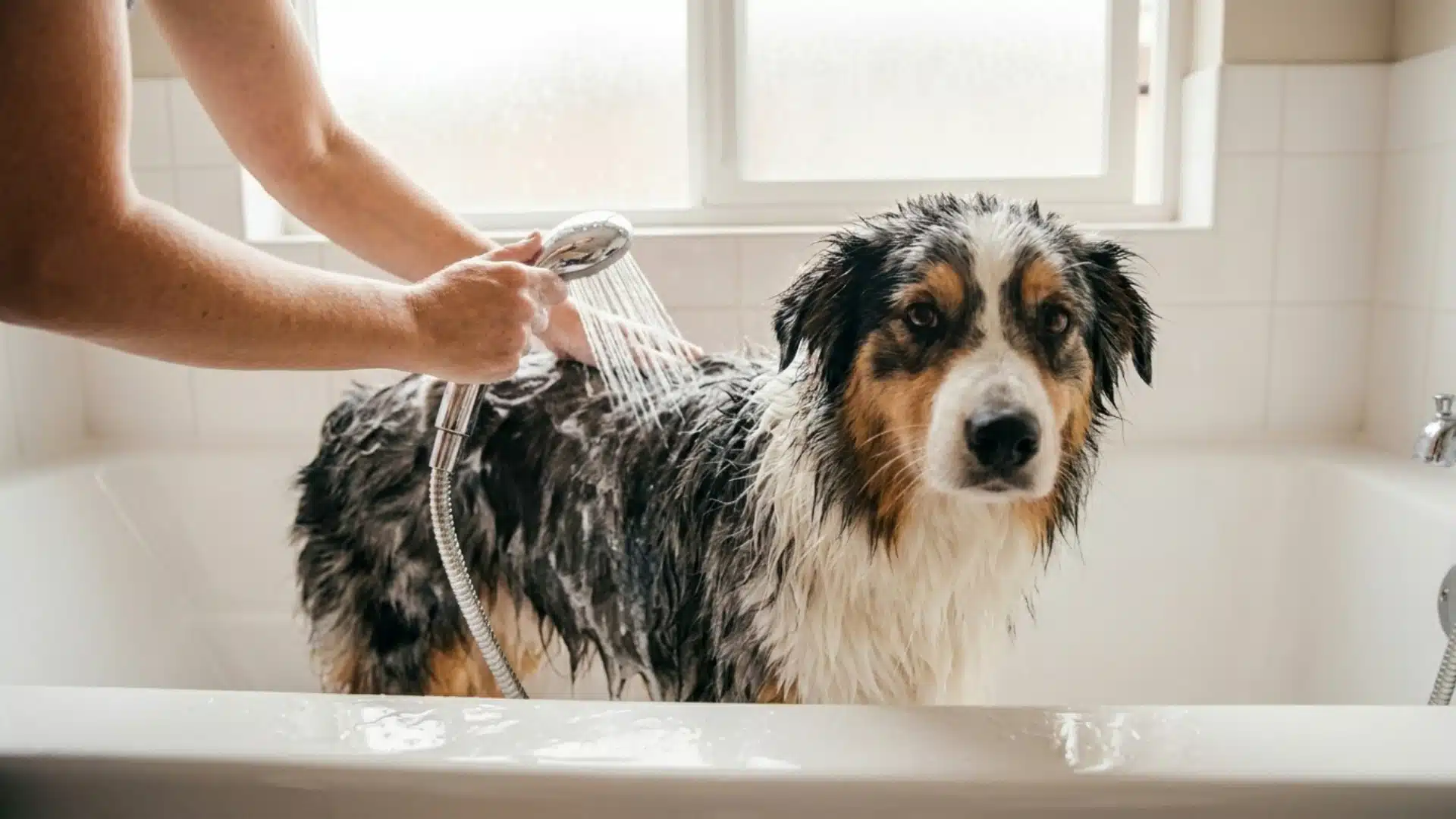
Bath time becomes much easier when you slow the process down. Many dogs dislike baths because of cold water, loud dryers, or rushed handling. A calmer routine helps dogs feel safer and more cooperative over time.
Here is a simple step-by-step routine that works well at home:
- Brush the coat first. Remove tangles and loose fur before the bath starts.
- Use lukewarm water. Water that is too hot can dry the skin, while cold water makes dogs uncomfortable fast.
- Fully wet the coat. Thick and double coats need water to reach the skin before shampoo is applied.
- Apply dog shampoo gently. Work from the neck down while avoiding the eyes and the inside of the ears.
- Rinse thoroughly. Leftover shampoo can cause itching, irritation, and dull-looking fur.
- Dry carefully. Start with a towel, then use a low, cool dryer setting if your dog tolerates it.
Most dogs do not need frequent baths. Short-coated breeds often only need bathing every couple of months unless they get especially dirty. Long-coated and curly-coated dogs usually benefit from a bath every four to six weeks.
Bathing too often can strip natural oils from the coat and lead to dry, itchy skin, so less is usually better.
Complete Dog Grooming Goes Beyond the Coat
1. Nail Trimming
Long nails do more than look untidy. They can change the way a dog walks, put pressure on the joints, and cause discomfort over time. Most dogs need nail trimming every three to four weeks.
Trim small amounts at a time, especially on dark nails where the quick is harder to see. If you accidentally cut too far, styptic powder usually stops the bleeding within seconds. If nail trimming still feels stressful, a trained professional groomer can safely handle it as a quick, standalone service.
2. Ear Cleaning
A dog’s ear canal traps moisture easily, which is why breeds with floppy ears are more prone to infections.
Clean the outer ear once or twice a month using a dog-safe ear cleaning solution and a cotton ball. Never push swabs deep into the canal. A strong odor, redness, dark discharge, or constant head shaking are common signs that an infection may require veterinary care rather than more cleaning at home.
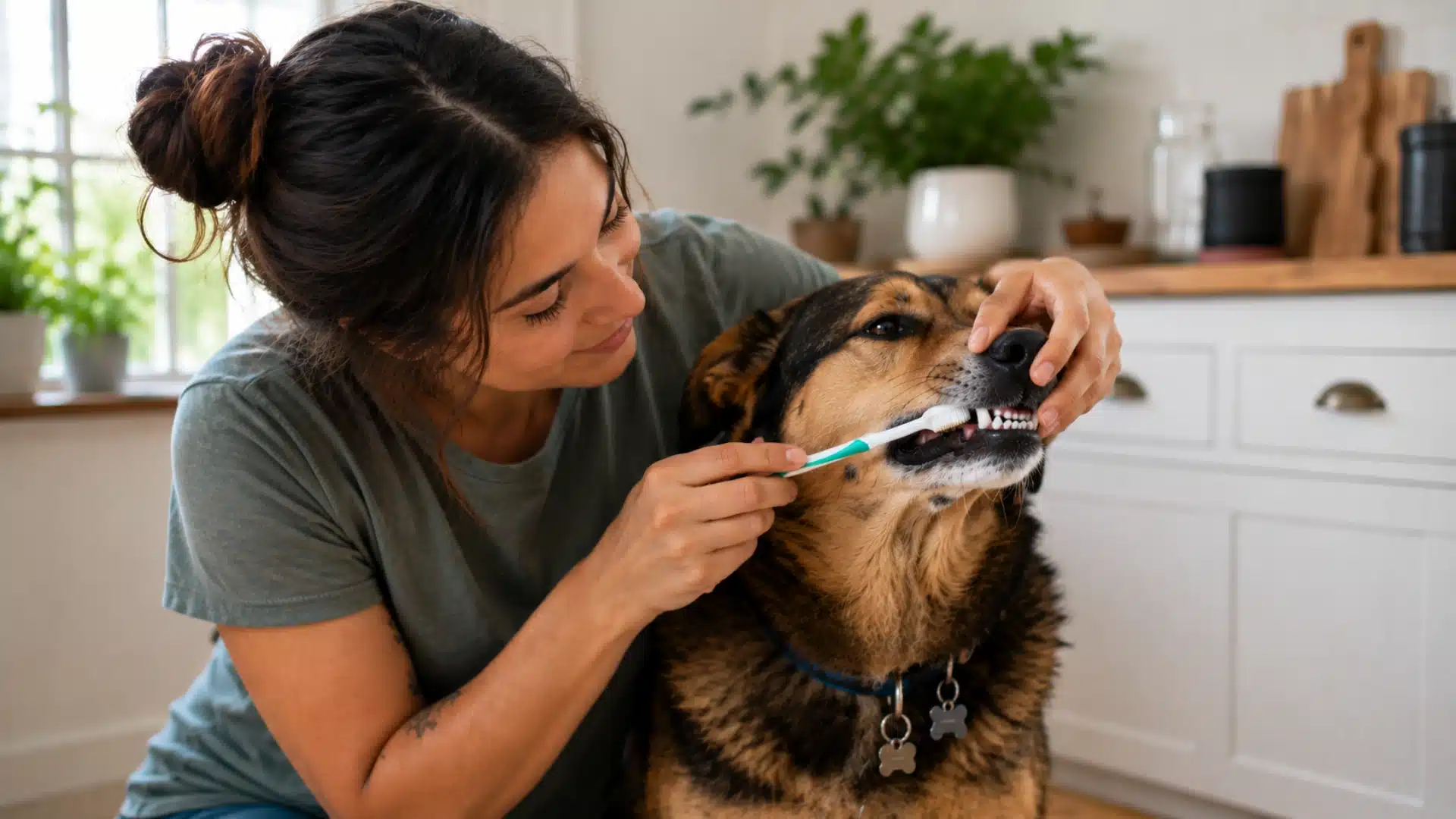
3. Dental Care
Dental care is one of the most skipped parts of dog grooming, even though many dogs develop dental disease by age three.
The AKC dog teeth brushing guide recommends regular brushing to support healthier gums and cleaner teeth. Research also shows that consistent brushing works far better for plaque and gingivitis control than occasional cleaning.
Start slowly by letting your dog taste dog toothpaste first. Then move to a finger brush or toothbrush over time.
Short sessions with rewards usually help dogs adjust to the routine much faster.
Simple Ways to Reduce Grooming Anxiety in Dogs
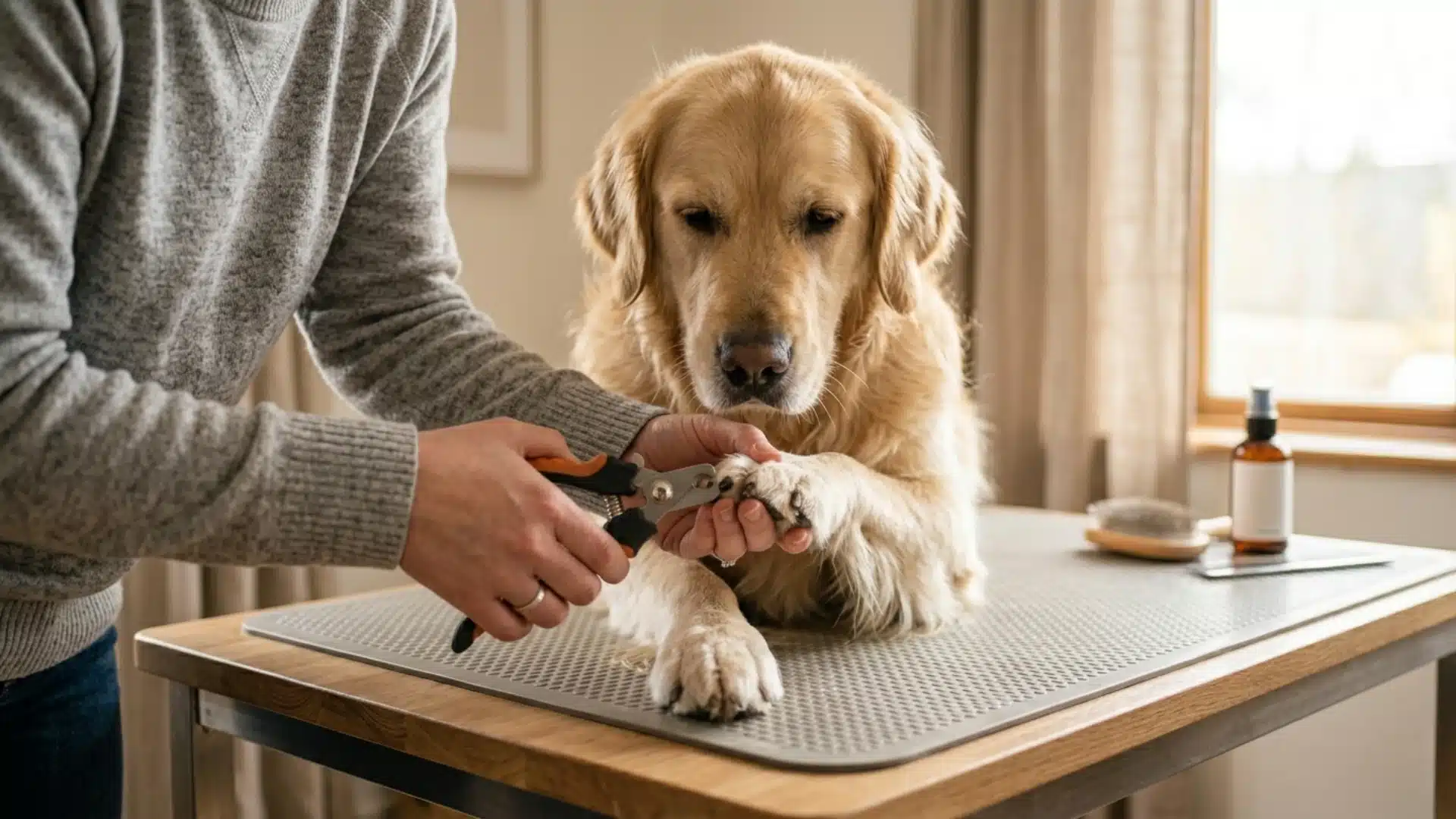
A dog that feels nervous during grooming can turn even simple tasks into a struggle. The good news is that most grooming anxiety improves with patience and consistent routines.
Start slowly when introducing brushes, clippers, or nail tools. Let your dog sniff the equipment first and keep early sessions short. Reward calm behavior with treats and praise so that grooming feels positive rather than stressful.
If your dog becomes tense or tries to walk away, avoid forcing the session. Ending calmly builds more trust than pushing through fear.
Early exposure also helps a lot. Puppies that get used to paw, ear, and mouth handling usually adapt to grooming much faster later in life. Older dogs can learn too, but they often need more time and consistency.
Keeping the routine predictable also makes a difference. Following the same steps each time helps dogs feel more secure because they know what to expect.
How Often Should You Groom Your Dog?
A simple grooming routine helps you stay ahead of shedding, odor, overgrown nails, and coat problems before they become harder to manage.
| Grooming task | Short coat | Medium/double coat | Long coat |
|---|---|---|---|
| Brushing | Once a week | 2-3x per week (daily during shedding) | Daily |
| Bathing | Every 2-3 months | Every 6-8 weeks | Every 4-6 weeks |
| Nail trimming | Every 3-4 weeks | Every 3-4 weeks | Every 3-4 weeks |
| Ear cleaning | Once a month | Once a month | Once or twice a month |
| Teeth brushing | Daily or every other day | Daily or every other day | Daily or every other day |
These are general guidelines. Active outdoor dogs may need more frequent baths, and some breeds have specific needs worth checking with your vet.
If you’re ever weighing whether to handle something at home or book a session, a look at professional grooming costs can help you decide what’s worth doing yourself and what’s worth outsourcing.
Conclusion
Grooming is about more than keeping your dog clean. It helps you notice problems early, build trust, and spend quiet time together, which many owners end up enjoying more than expected.
I have seen many people feel overwhelmed by grooming at first, especially when it comes to nails and teeth. The easiest way to handle it is to start small and stay consistent.
A few minutes of brushing or cleaning each week can make a big difference over time. Your dog does not need perfect grooming. They just need patience, gentle handling, and a routine that feels safe and comfortable.
If one part of grooming still feels difficult, drop a comment below. I would love to help you make it easier.
Frequently Asked Questions
Can I Use Human Shampoo on My Dog?
It is best to avoid it. Human shampoo is made for a different skin pH and can dry out or irritate a dog’s skin. In emergencies, a gentle baby shampoo is safer, but dog shampoo should be the regular choice.
What is the Best Age to Start Grooming a Puppy?
The earlier the better. Short, gentle handling sessions during the first few weeks at home help puppies become comfortable with grooming. Most puppies can have their first bath around eight weeks old.
How Do I Know if My Dog’s Nails are Too Long?
If you hear nails clicking on hard floors while your dog walks, they are usually too long. Nails should not rest against the floor when your dog is standing still.
Should I Groom My Dog Before or After a Walk?
Bathing is usually better after a walk, so the coat stays cleaner longer. Brushing can happen before or after walks, while nail trimming and ear cleaning can be done at any time.