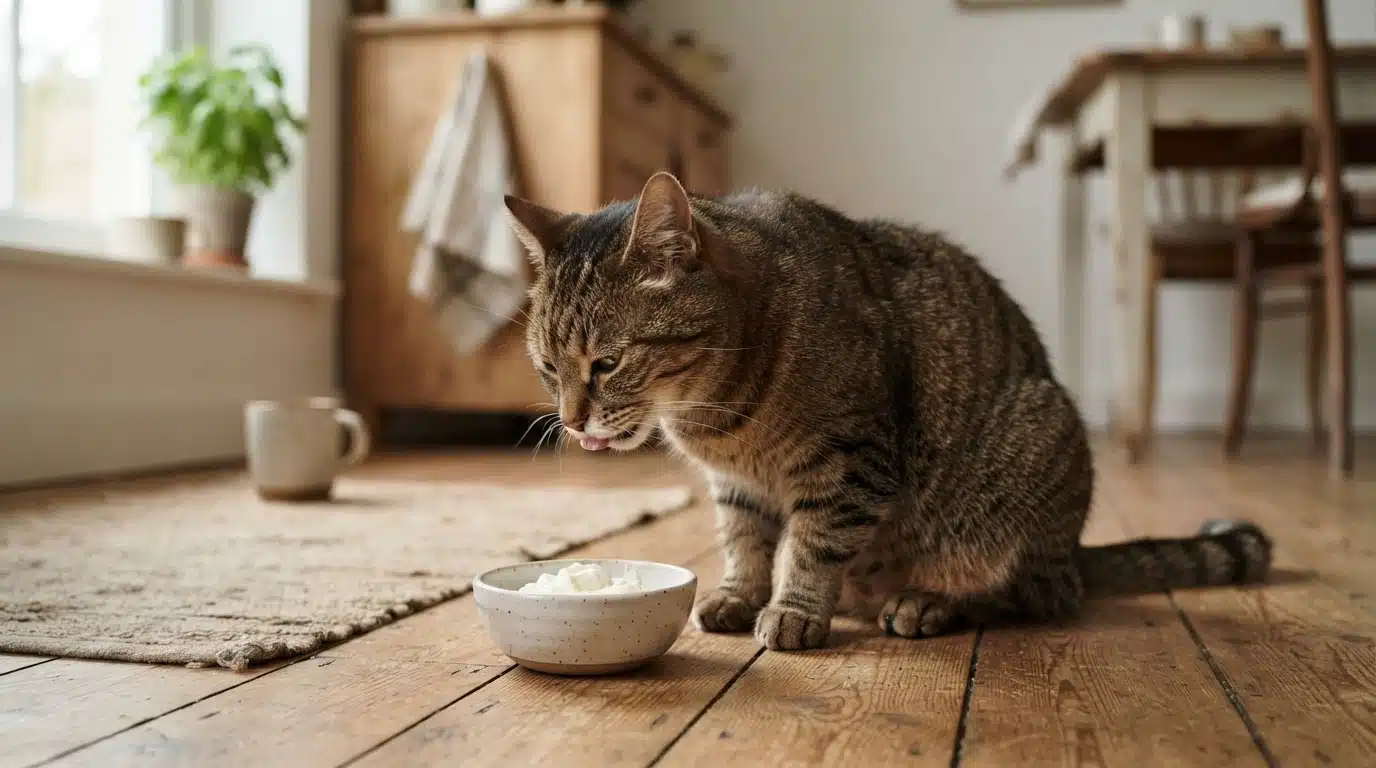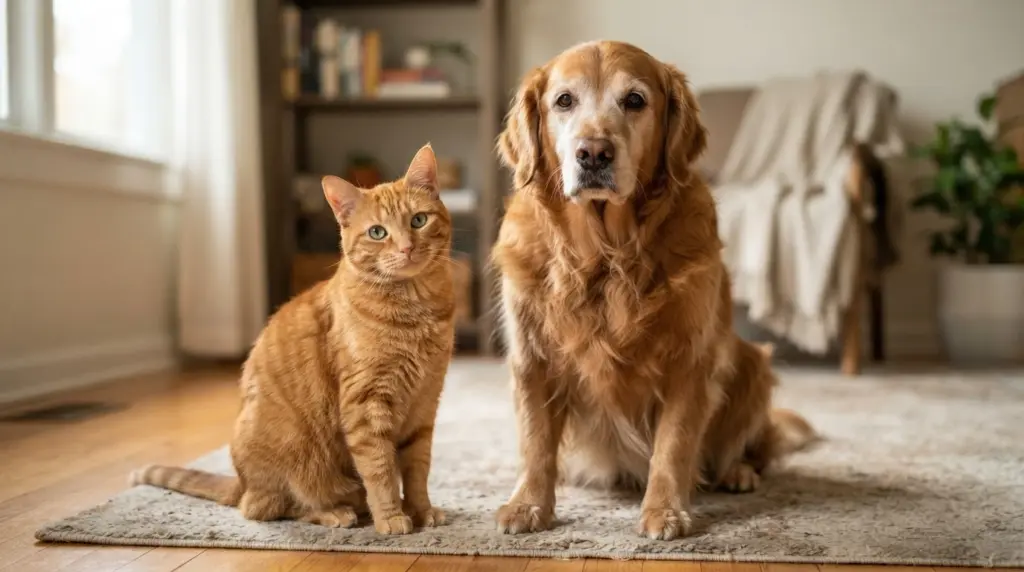
We’ve all done the math at some point, multiplied our pet’s age by seven and either gasped or breathed a sigh of relief.
It’s a fun little party trick, but here’s the truth: that seven-year rule doesn’t actually hold up. Cats and dogs age in their own ways, and once you understand the real pattern, your pet’s age starts making a lot more sense.
So, are cat years the same as dog years? Nope. Cats tend to age at a steady, predictable pace. Dogs are a different story entirely; size and breed change the whole equation. Let’s break down what’s really going on.
Are Cat Years and Dog Years the Same?
Both cats and dogs hit puberty and physical maturity way ahead of humans. That part’s simple enough. What happens after that first year or two is where things really split, and that’s where the seven-year rule falls apart.
The rule sticks around because it’s catchy and you can do it in your head at a dinner party. Problem is, it just doesn’t hold up once you actually look at how pets age.
Cats tend to settle into a fairly steady, predictable pace once they’re past the kitten stage. Dogs are messier. A lot depends on how big they end up.
A Chihuahua might still be spry at twelve, chasing squirrels off the porch, while a Great Dane the same age is often already considered a senior, health-wise.
Cats don’t really deal with that size spread, which is part of why their age math stays more consistent.
How Cat Years are Calculated
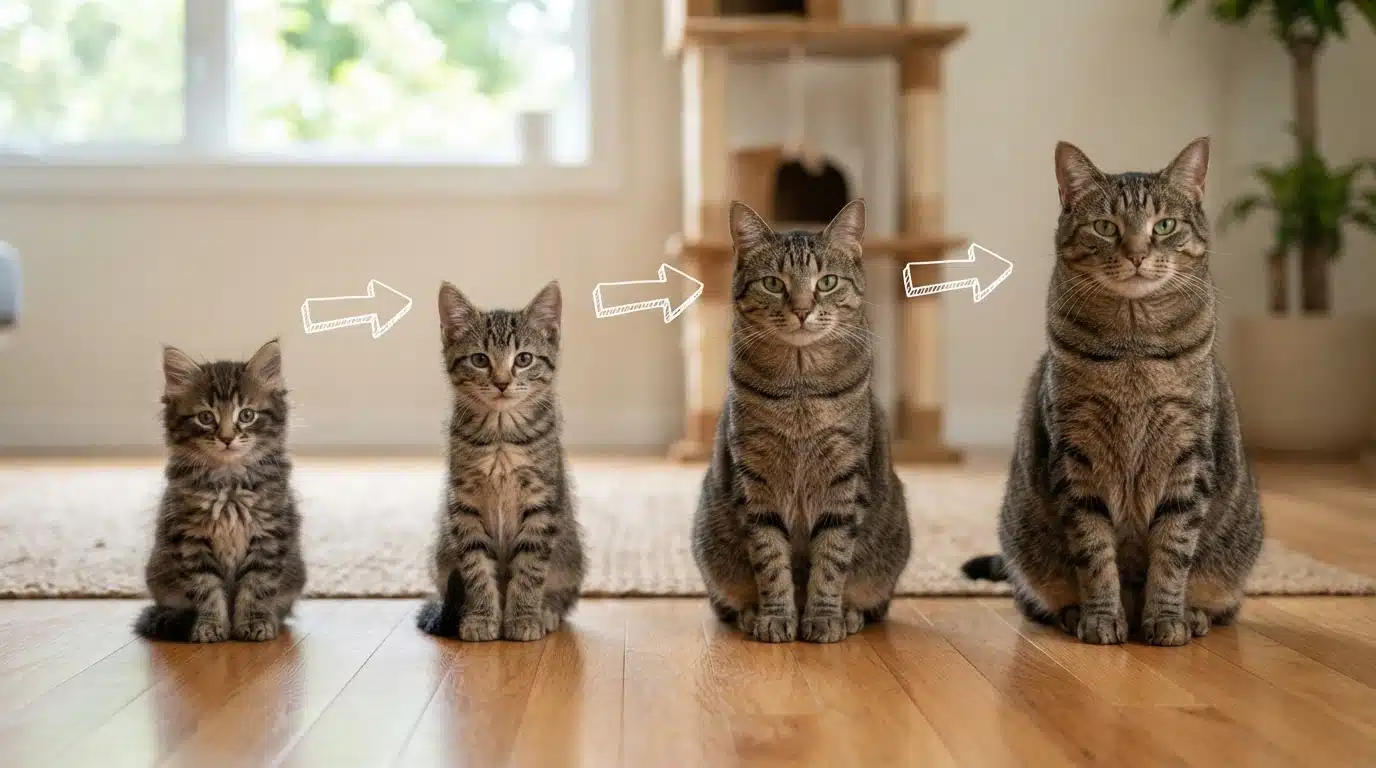
Cat aging is front-loaded. Most of the “growing up” part happens in years one and two, and then it slows way down, almost to a crawl.
According to the American Animal Hospital Association, cats blow through major life stages far quicker than people do. That’s basically why the old conversion charts stop making sense after a certain age.
Roughly speaking:
- Year one: about 15 human years
- Year two: jumps to around 24
- Every year after that: roughly 4 more human years
So a 5-year-old cat isn’t a kid, and even an 8-year-old cat’s age follows the same steady climb. She’s more like someone in her mid-30s, probably wondering why you still call her “kitty.
Cat Age Chart:
| Cat Age | Human Age Equivalent |
|---|---|
| 1 year | 15 years |
| 2 years | 24 years |
| 3 years | 28 years |
| 5 years | 36 years |
| 10 years | 56 years |
| 15 years | 76 years |
| 20 years | 96 years |
Where a cat lives and how well it’s cared for still matter. Indoor cats sidestep a lot of the outdoor hazards. Diet, activity level, and regular vet visits can all shift how gracefully a cat ages, sometimes more than people expect.
How Dog Years are Calculated
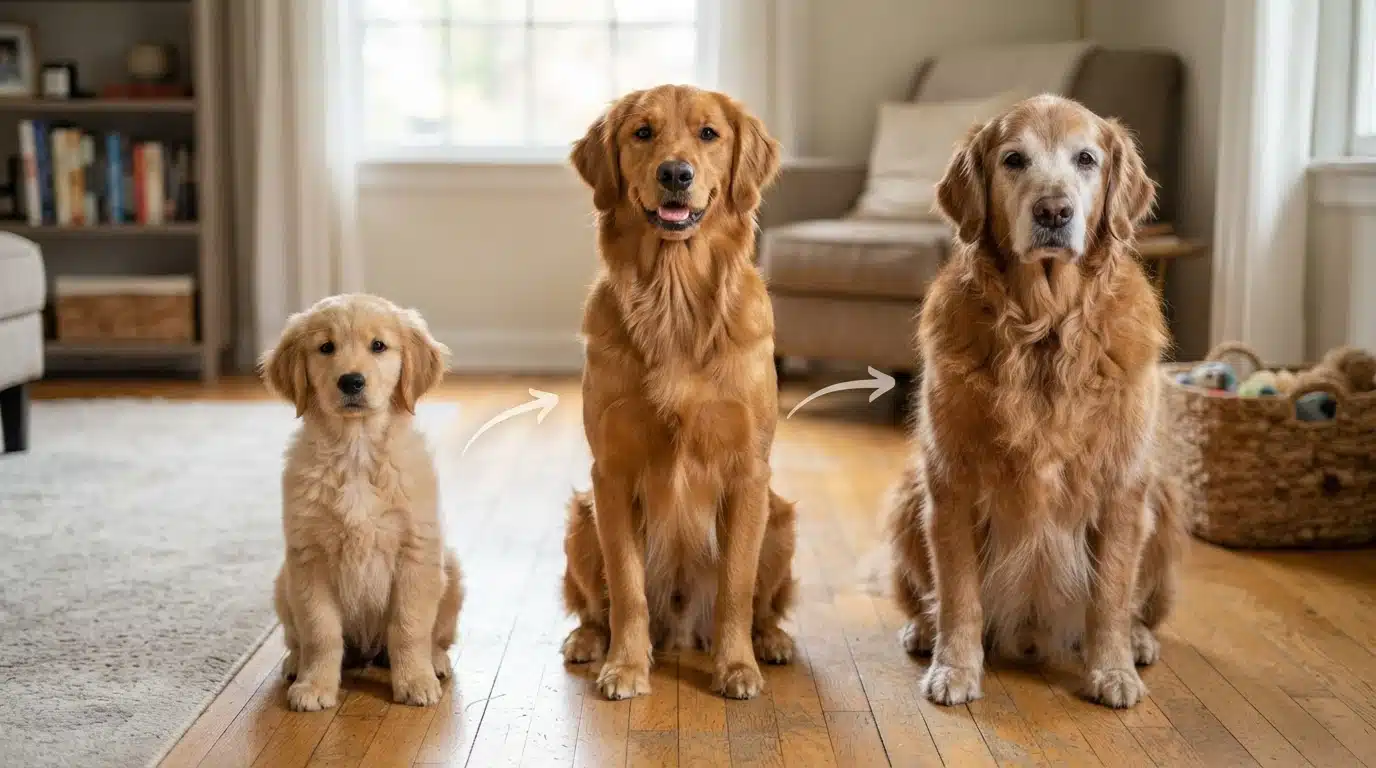
Dogs are the trickier bunch. Breed and size throw a wrench into any single formula, which is exactly why you’ll find a dozen different dog-age calculators online, each giving you a slightly different answer.
Both the AVMA and the AKC land on the same basic idea, though: bigger dogs tend to age faster overall, and size is one of the biggest factors in how long, and how well, a dog lives.
The first two years look pretty similar no matter the size:
- Year one: around 15 human years
- Year two: around 24 human years
After that is where it gets complicated, and understanding a young dog’s actual age can help make sense of the jump. Small dogs generally age more slowly from here on out.
A ten-year-old Yorkie might still be chasing the mail carrier down the driveway, while a ten-year-old Great Dane may already be dealing with the aches of what most people would call an old dog.
Dog Age Chart by Size:
| Dog Age | Small Dog | Medium Dog | Large Dog |
|---|---|---|---|
| 1 year | 15 years | 15 years | 15 years |
| 2 years | 24 years | 24 years | 24 years |
| 5 years | ~36 years | ~42 years | ~45 years |
| 10 years | ~56 years | ~60 years | ~66 years |
| 12 years | ~64 years | ~69 years | ~77 years |
There’s no single formula that works for every dog. A Chihuahua and a Great Dane at the same birthday party are, in real terms, living in two completely different life stages.
Why Cats and Dogs Age Differently
A few things drive the gap between how cats and dogs age. It’s rarely just one factor:
- Size: smaller dogs typically age more slowly, and larger ones speed up.
- Breed: genetics shape lifespan and which health issues tend to crop up down the line.
- Lifestyle: food, activity level, and general day-to-day care all leave a mark eventually.
- Health: an existing condition can speed things up or complicate the whole picture.
- Environment: living indoors versus outdoors brings its own set of risks along the way.
Put simply, two pets born in the same year won’t necessarily be in the same physical shape five or ten years down the line. There’s no guarantee.
Common Myths About Cat and Dog Years
A lot of what people believe about pet aging comes from hand-me-down rules of thumb rather than anything a vet actually said. Here are a few that deserve to be put to rest.
- One pet year equals seven human years: catchy, sure, but wrong. Pets age fast early on, then the pace shifts depending on species and, for dogs, size.
- Cats and dogs age the same way: not even close, really. Dogs have way more variation because breed size changes the whole equation.
- A young-looking pet is a young pet: Plenty of older cats and dogs still act like puppies and kittens well into their senior years, which is part of what makes them so fun to have around. Looks can be deceiving.
- Indoor cats don’t age: aging doesn’t stop at the front door. Indoor cats just deal with fewer outdoor risks along the way, no matter how cozy the couch is.
None of these myths are malicious; they’re just outdated shorthand that stuck around longer than it should have. Once you toss the seven-year rule and start thinking in terms of life stage instead of a flat multiplier, your pet’s actual age starts making a lot more sense.
What Pet Owners Say About Age Charts
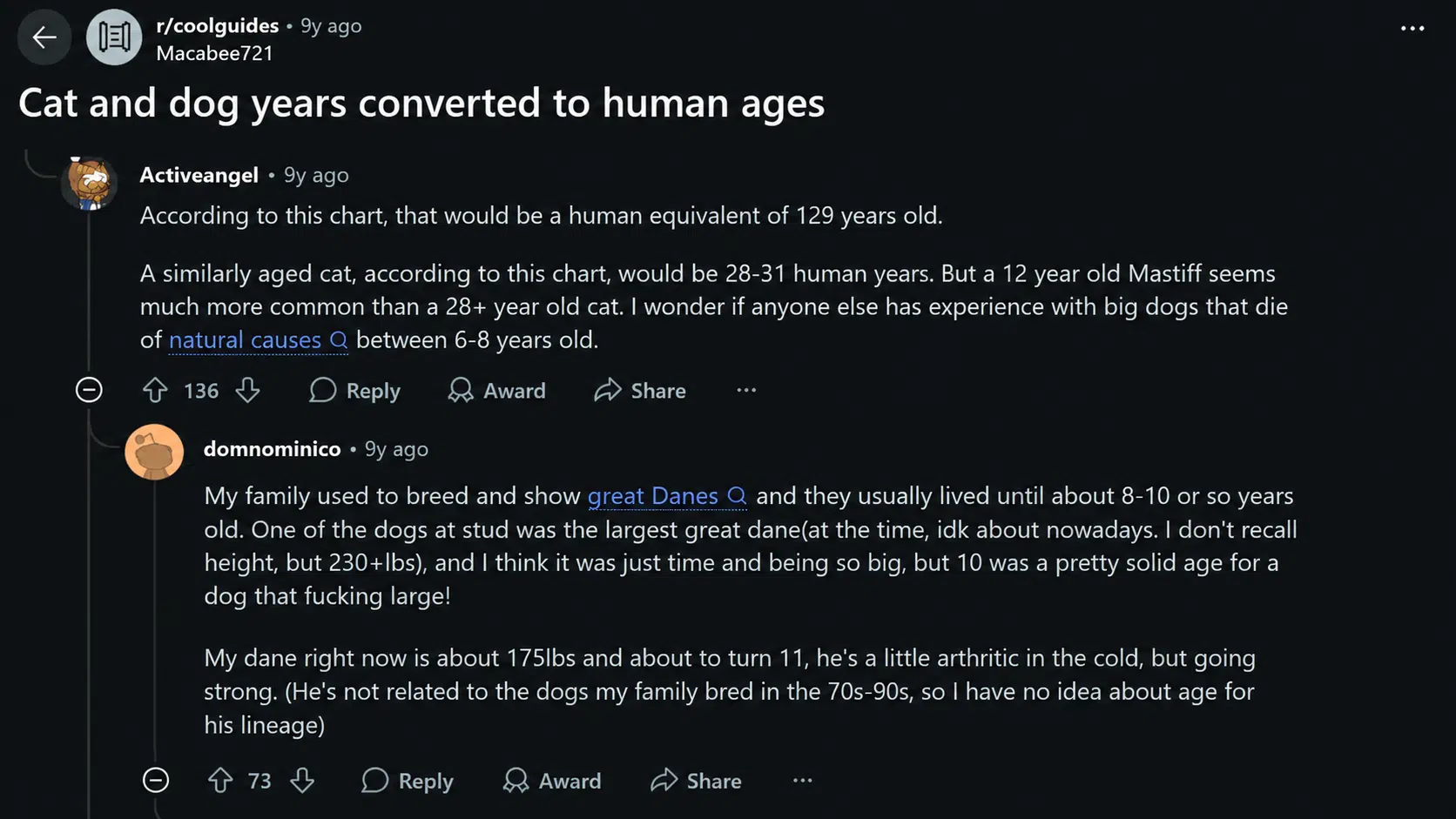
Many pet owners use age charts to understand how their cats and dogs compare with human ages.
A Reddit discussion about a cat-and-dog years conversion chart shows how people use these comparisons to understand their pets’ life stages.
The discussion highlights that simple charts can make pet aging easier to understand, but they are only estimates. Owners often point out that pets of the same age can have different energy levels, health conditions, and care needs.
These comparisons are helpful for getting a general idea of a pet’s age, but factors like breed, lifestyle, and health also play an important role in how cats and dogs age.
Signs Your Pet is Getting Older
Aging shows up differently in every pet. Some slow down gradually. Others need extra help almost overnight, seemingly out of nowhere. Keep an eye out for:
- Activity: less interest in running, playing, or long walks.
- Sleep: more naps and downtime, less pep in general.
- Movement: stiffness, slower steps, maybe trouble with stairs.
- Behavior: a shift in routine, or in how they react to things that used to be no big deal.
- Appearance: graying fur, weight changes, a coat that’s lost some shine.
- Appetite: eating less, more, or just differently than they used to.
A lot of this is just normal aging, and knowing when dogs become seniors can help you judge what’s expected. But if changes show up suddenly, it’s worth a vet visit.
How Age Changes Pet Care
As cats and dogs grow older, their needs can change in areas such as diet, activity, health, and daily comfort. Adjusting care based on their life stage can help older pets stay comfortable and support their changing needs.
- Nutrition: Older pets may need food that matches their age, activity level, and health needs, with senior diets supporting healthy weight and body functions.
- Exercise: Aging pets still need movement, but activities may need to be adjusted, such as shorter play sessions for cats and shorter walks for dogs.
- Health Monitoring: Regular veterinary visits help track changes and identify concerns that may not be easy to notice at home.
- Daily Comfort: Simple changes like easier access to food, water, and resting areas can help older pets feel more comfortable.
Simple changes in daily care can help cats and dogs stay comfortable as they move through different stages of life.
| Tip: Pet age charts are only estimates and should not be used to judge a pet’s health by age alone. Two cats or dogs of the same age can have different needs based on their breed, lifestyle, genetics, and overall health. Regular veterinary checkups are the best way to understand your pet’s changing needs. |
Final Thoughts
Understanding how cat years and dog years compare makes it easier to see how our pets grow, mature, and change throughout their lives. Both age faster than we do, but they follow very different patterns along the way.
So if you’ve been wondering whether cat years are the same as dog years, they’re not. Cats tend to follow a steadier pattern, while dogs can age at very different speeds depending on their size and breed.
Age charts are a great starting point for understanding your pet’s life stage, but their health, lifestyle, and daily care matter just as much, if not more.
Knowing how your pet’s age stacks up against human years can help you give them exactly the support they need, whenever they need it.
Frequently Asked Questions
When is a Cat Considered “Senior”?
Vets typically start using the word “senior” around age 11, though that’s more of a guideline than a hard line. Plenty of cats stay active, curious, and healthy well past that age with good care.
Why Do Some Dogs Age Faster than Others?
Mostly it comes down to size. Larger breeds tend to hit age-related changes, like joint issues or slowing down, noticeably sooner than smaller breeds, which often stay spry well into their teens.
Can a Pet’s Personality Change with Age?
Often, yes. Many pets mellow out, get more affectionate, or shift their habits as they get older. It can come from aging itself, an underlying health change, or simply settling into a slower daily routine.