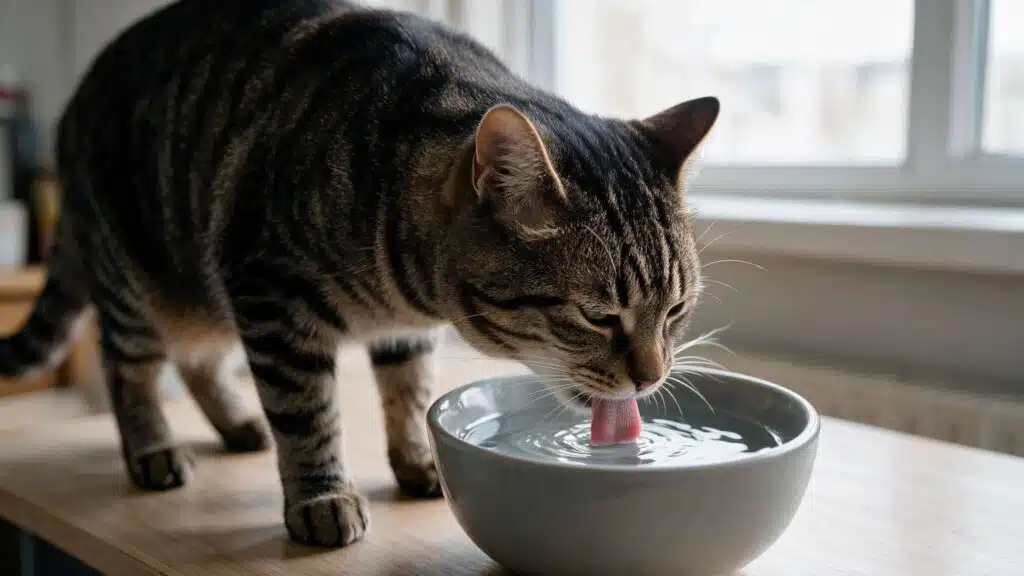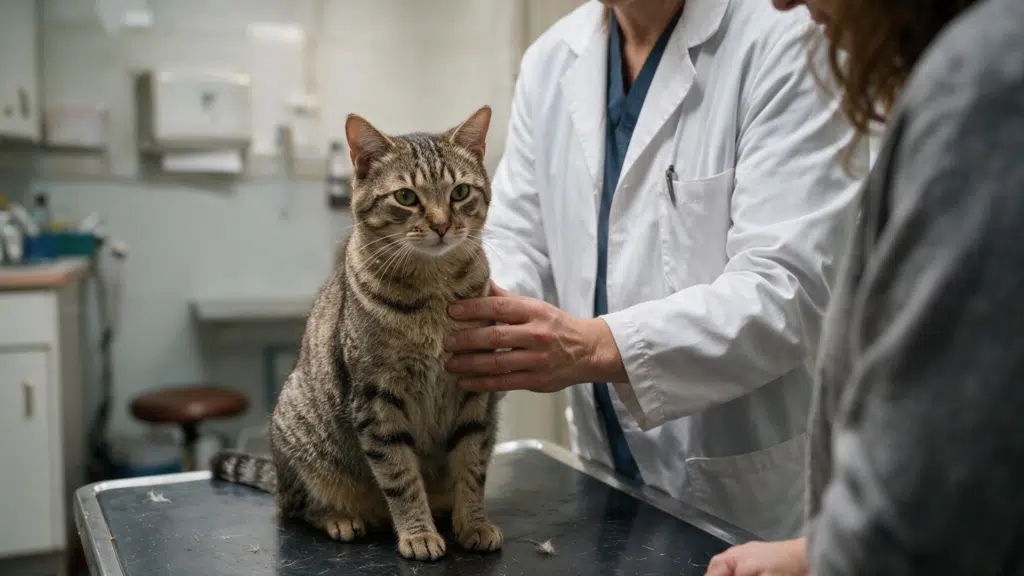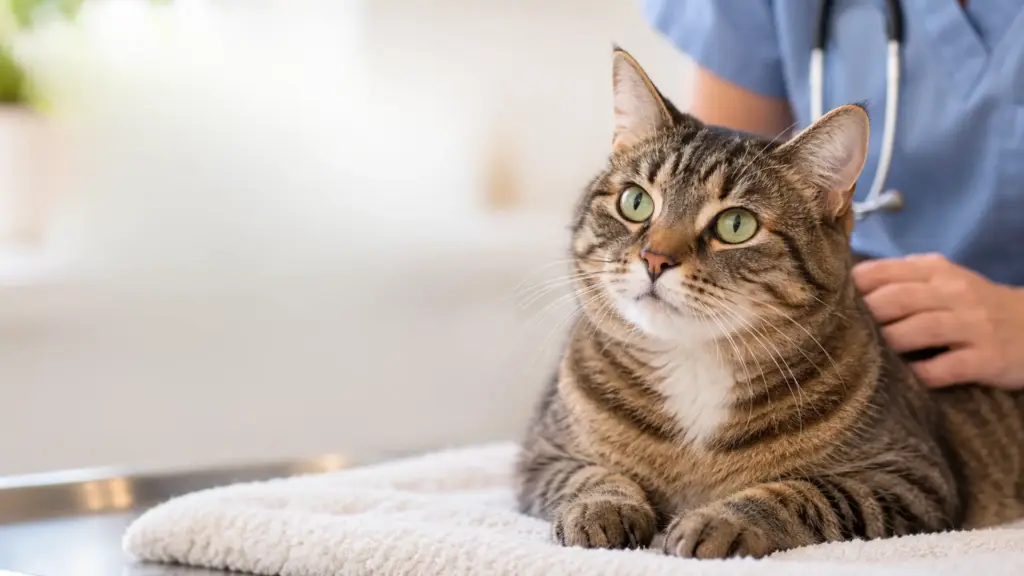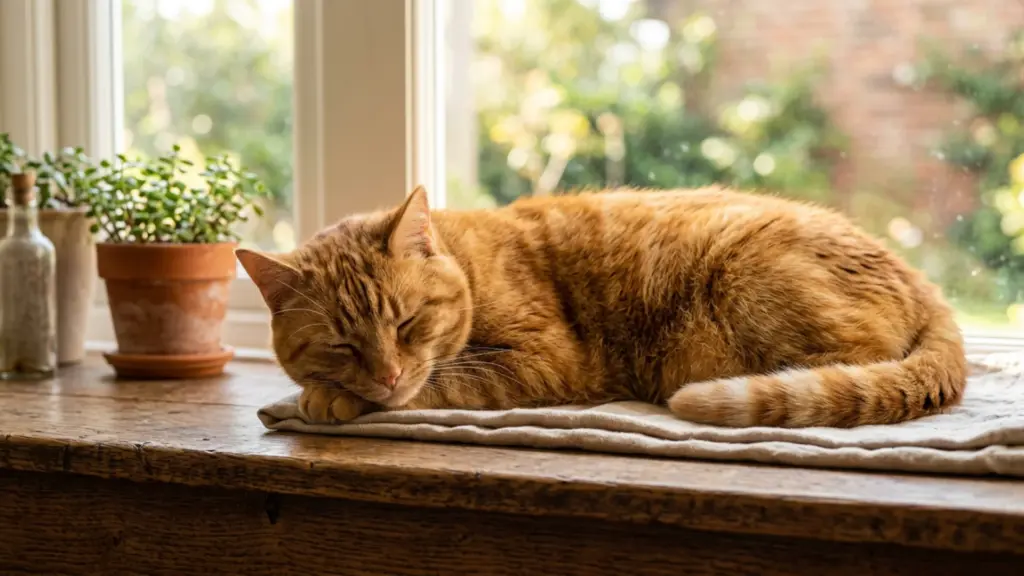
Eight can feel like a steady, comfortable age for a cat. She may still run through the house, nap in her favorite sunny spot, and act much as she did a few years ago.
But this is also the stage when her body may begin changing in small ways.
If you are searching for how old 8 is in cat years, you are likely trying to understand what this age really means for her health and daily care.
As a veterinarian, I see this as an important point for prevention, not panic.
This blog post explains how cat age is calculated, what life stage an 8-year-old cat is in, and which care habits can help her stay active and comfortable.
How Old is 8 in Cat Years?
An 8‑year‑old cat is about 48 human years old (some sources round to 50). The old “multiply by 7” rule has been around forever, and it is wrong. A one-year-old cat is not developmentally similar to a seven-year-old child.
They are sexually mature, fully mobile, and navigating the world independently. That is closer to a 15-year-old teenager. According to the American Veterinary Medical Association (AVMA), the more accurate formula works like this:
- Year 1: 15 human years
- Year 2: adds 9 more (total: 24)
- Every Year After that adds 4 human years
So for an 8-year-old cat: 24 + (6 x 4) = 48 human years. Either way, your cat is sitting comfortably in what most of us would call middle age.
Cat Years to Human Years Conversion Chart
Here is a quick-reference table so you can check any age at a glance.
| Cat age | Human equivalent | Life stage |
|---|---|---|
| 1 year | 15 years | Kitten |
| 2 years | 24 years | Young adult |
| 3 years | 28 years | Young adult |
| 5 years | 36 years | Young adult |
| 6 years | 40 years | Young adult |
| 7 years | 44 years | Mature adult |
| 8 years | 48 years | Mature adult |
| 9 years | 52 years | Mature adult |
| 10 years | 56 years | Mature adult |
| 12 years | 64 years | Senior |
| 15 years | 76 years | Senior |
Life stage labels follow the 2021 AAHA/AAFP guidelines, which are the current veterinary standard.
What Life Stage is an 8-Year-Old Cat in?
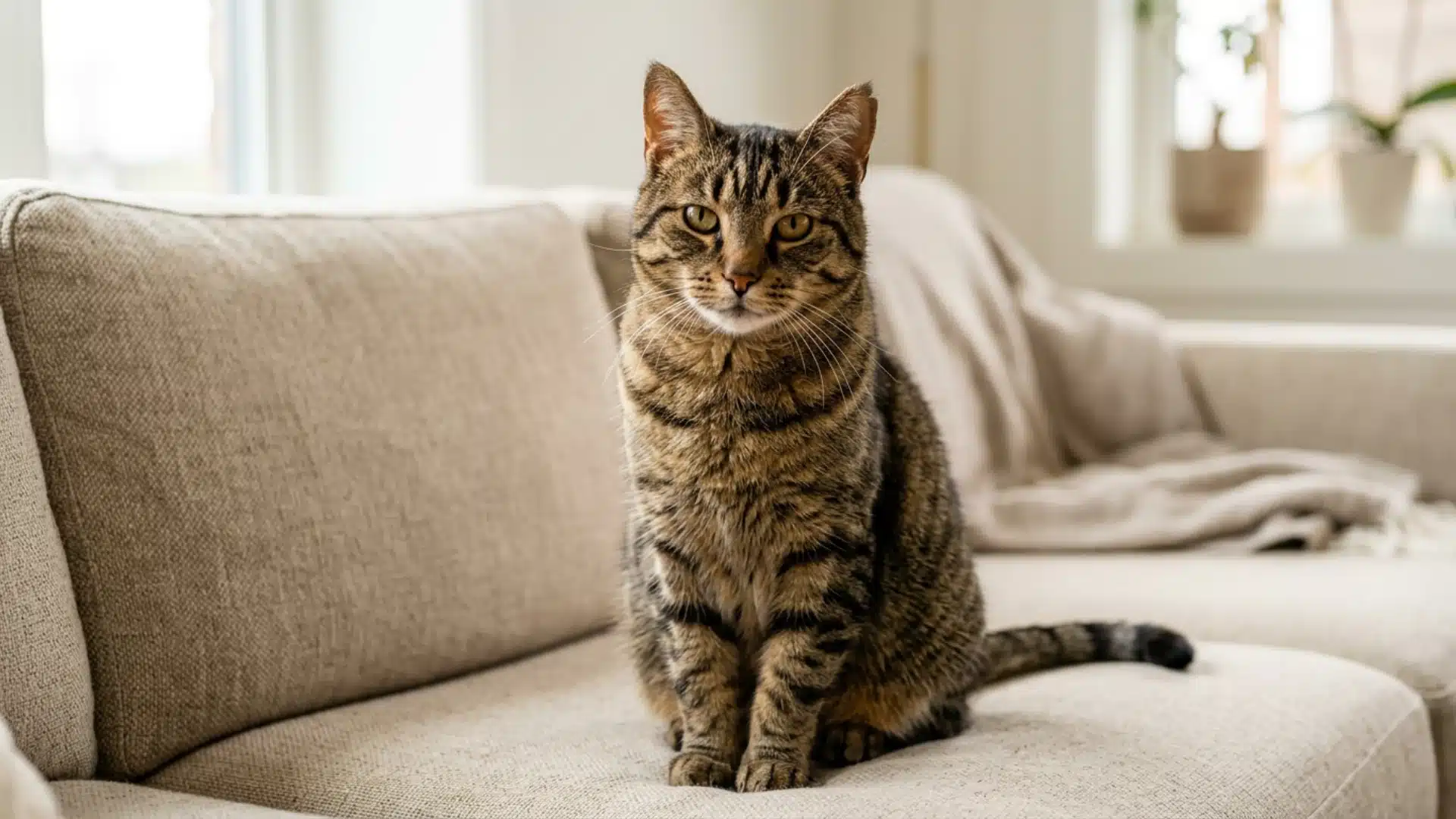
Cats between 7 and 10 years old are considered mature adults.
That is different from being senior, which begins around age 10. So your 8-year-old cat is not entering old age. She is more like a person in her late 40s: still active, still capable, and still full of personality.
But her body may be working a little harder behind the scenes. In real life, many 8-year-old cats still look completely healthy. They may play, jump, groom, eat, and nap just like they did at 5.
The changes are often quieter. Metabolism may slow. Organ function can begin to shift. And the risk of certain health problems slowly rises.
That is why this age matters. Even when everything looks fine on the outside, this is the stage where closer attention can make a real difference.
Signs Your 8-Year-Old Cat Might Be Showing Early Aging
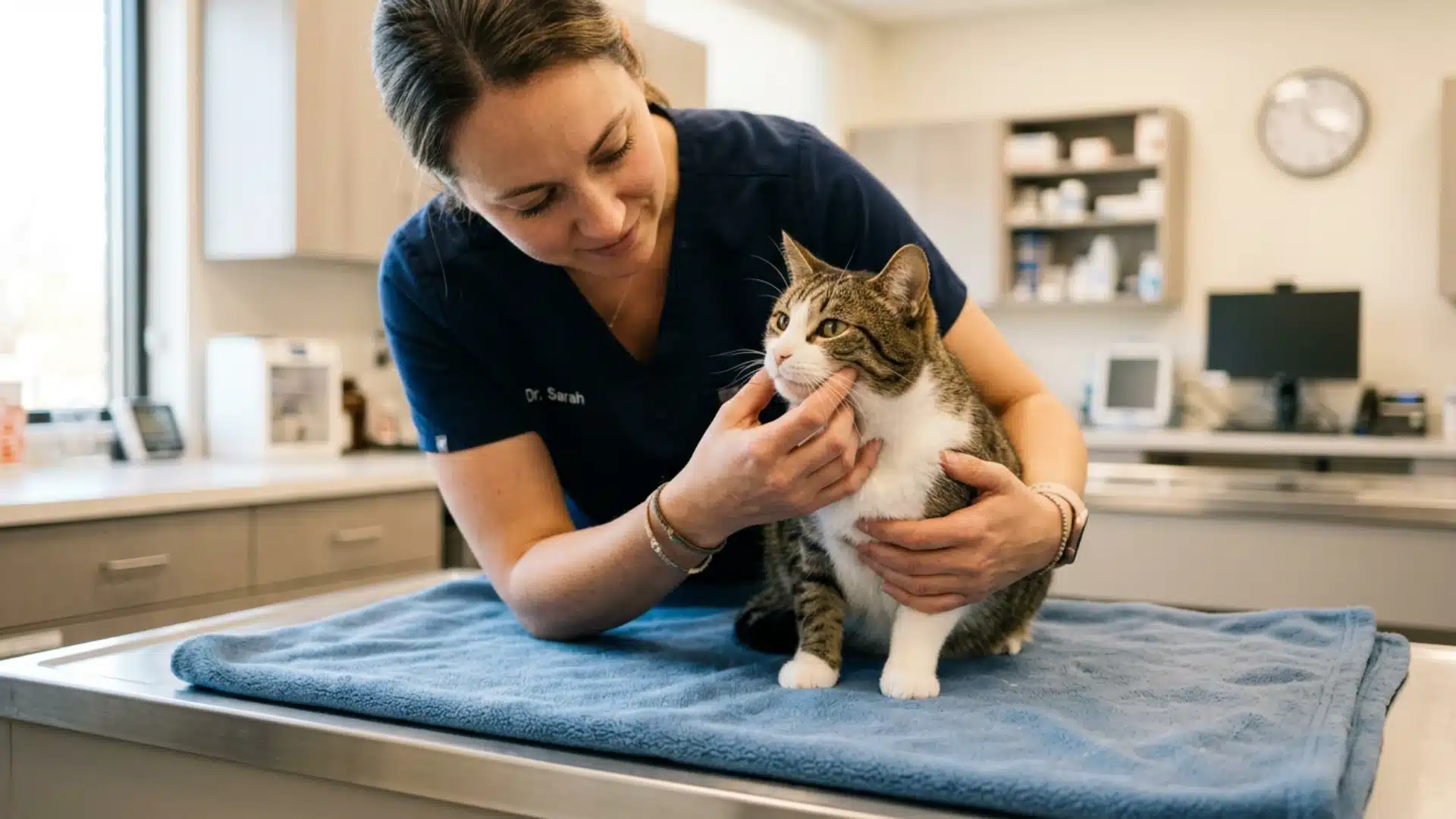
Not every 8-year-old cat shows the same signs. Some still act like they did at 3. Others start showing subtle shifts. Here is what to watch for.
Physical Changes Worth Noticing
- Weight Gain or Loss: Metabolism slows in mature cats, which can tip toward weight gain if the diet is not adjusted. Unexplained weight loss is a different concern and worth a vet visit.
- Coat Changes: A slightly duller coat or less consistent grooming can appear. It is not always a red flag, but it is worth noting.
- Less Enthusiasm for Jumping: If your cat is skipping their usual high spots, it may be early joint discomfort, not laziness.
- Thicker Nails: Nail growth patterns can change with age. They may need trimming more often.
Behavioral Shifts
- Sleeping More: Totally normal. Cats already sleep 12 to 16 hours a day, and this tends to increase slightly with age.
- Preferring Quieter Spots: Many mature cats start seeking calmer areas of the house. Personality-driven, not usually a concern.
- Increased Vocalization: If your cat suddenly becomes louder, especially at night, that is worth mentioning to your vet. It can indicate pain, hyperthyroidism, or early cognitive changes.
- Changes in Litter Box Habits: Any shift in frequency, output, or location is always worth a conversation with your vet.
Does Breed or Lifestyle Affect How Your Cat Ages?
Breed matters less than many cat parents think. Unlike dogs, where large breeds often age faster, most domestic cats age at a fairly similar rate.
Breed usually affects things like personality, coat type, and grooming needs more than the aging process itself.
That is why browsing the most popular cat breeds often tells you more about temperament than lifespan.
Lifestyle, however, makes a much bigger difference.
Indoor cats generally live longer than outdoor cats because they face fewer daily risks. Traffic, parasites, infectious diseases, predators, fights, and harsh weather can all take a toll over time.
So, an 8-year-old indoor cat is often in a stronger position than an outdoor cat of the same age.
Her birthday may be the same, but her lifestyle can shape how her body ages.
How to Care for an 8-Year-Old Cat at This Life Stage
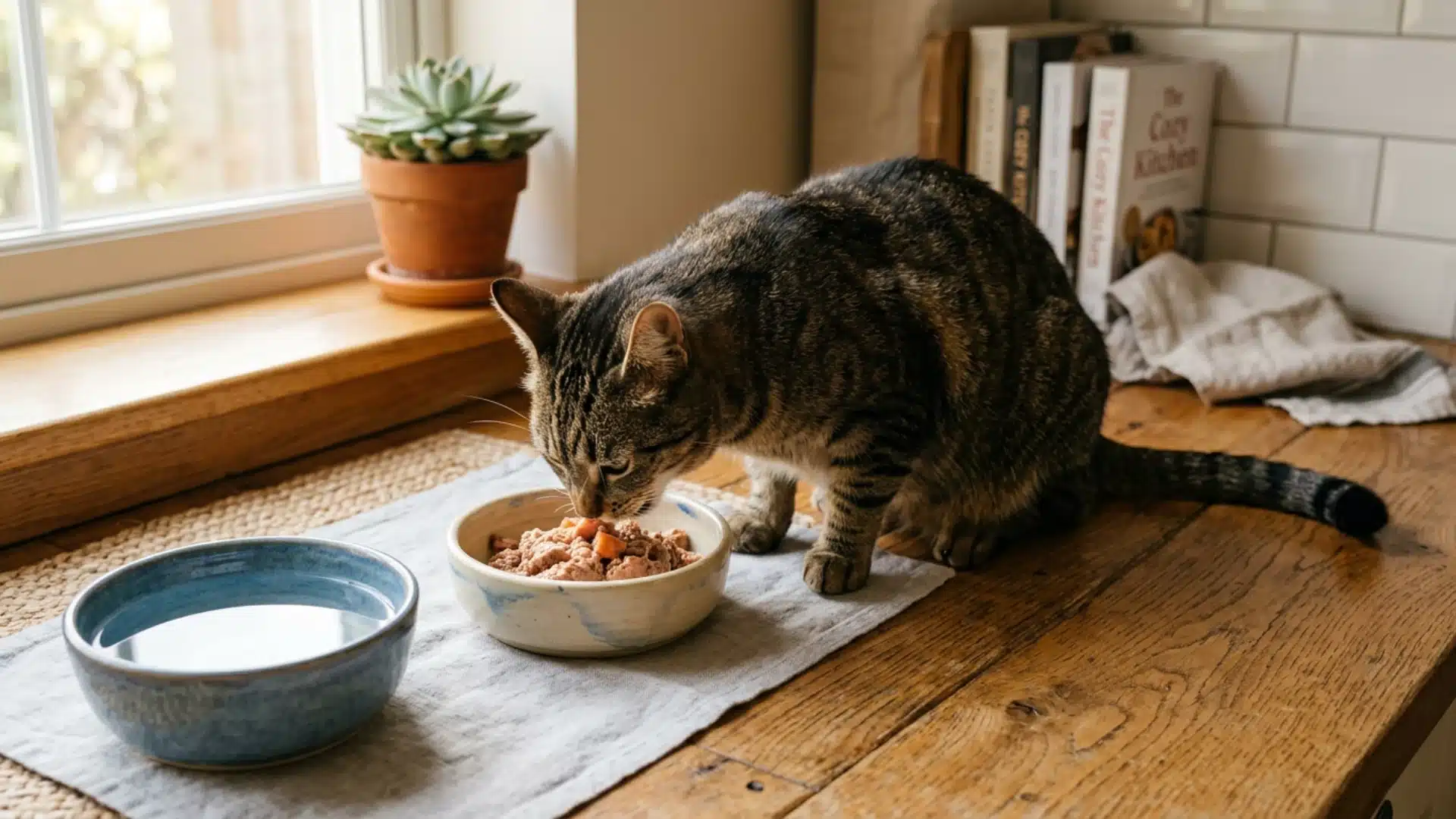
Caring for an 8-year-old cat means focusing on regular vet checks, balanced nutrition, dental care, joint comfort, and daily mental stimulation.
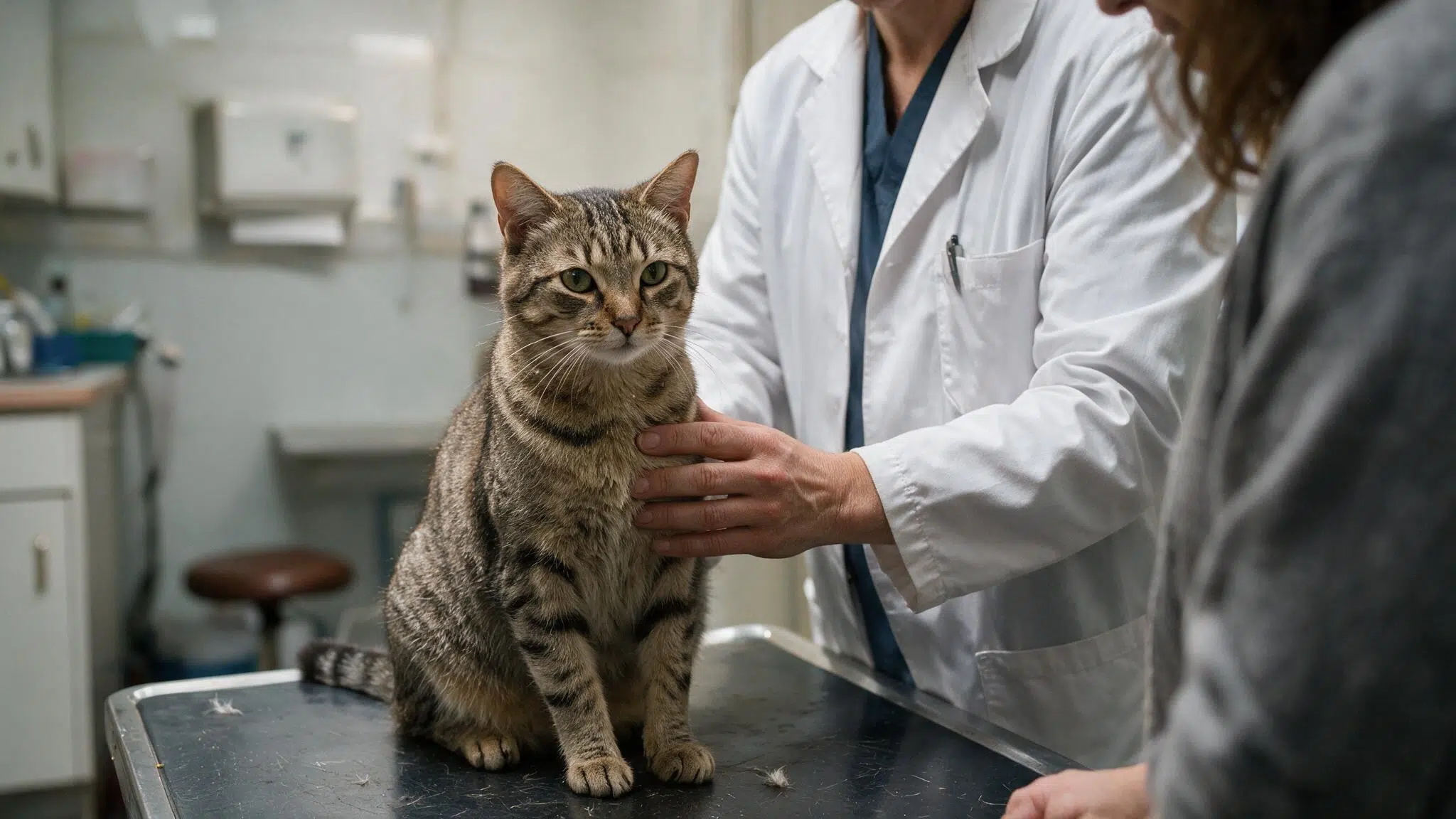
- Vet Visits: Annual exams are the baseline, but many vets recommend 6-month checkups for mature adult cats. Bloodwork is also smart at this age because it creates a baseline for future changes.
- Diet: Activity and calorie needs can shift. If your cat is gaining weight, consider a mature or weight-management formula. For a whole-food meal, easy homemade cat food recipes can help.
- Dental Care: Dental disease is common in cats over 7. If brushing is not part of your routine yet, this is the time to start.
- Joint Support: Early arthritis can be subtle. Low-sided litter boxes, raised bowls, and steps near favorite spots can help.
- Enrichment: Puzzle feeders, window perches, and short daily play sessions keep her mind and body active.
Conclusion
An 8-year-old cat is not old. In human terms, she is around 48, right in the middle of a life that may still have a decade or more ahead with good care.
This mature adult stage is not about worrying. It is about noticing.
Better nutrition, regular vet check-ins, dental care, and a few small home adjustments can help keep her comfortable, active, and healthy through these years.
If your cat just turned 8, the fact that you are thinking about her needs already matters. Pay attention to the small changes: appetite, weight, jumping, grooming, sleep, and mood.
And if you have noticed something new in your cat lately, share it in the comments. Other cat parents may be wondering the same thing.
Frequently Asked Questions
Can a Vet Estimate My Cat’s Age if I Do Not Know Their Birthday?
Yes. Vets look at teeth, eyes, coat condition, muscle tone, and overall body condition to estimate age. It is not exact, but it is often close.
Is an 8-Year-Old Cat Too Old to Be Adopted?
Not at all. An 8-year-old cat can still have many healthy, happy years ahead and often comes with a calmer, more settled personality.
At What Age Do Cats Stop Growing?
Most cats reach full size by 12 to 18 months. Larger breeds, such as Maine Coons, may continue filling out until around 3 to 4 years old.