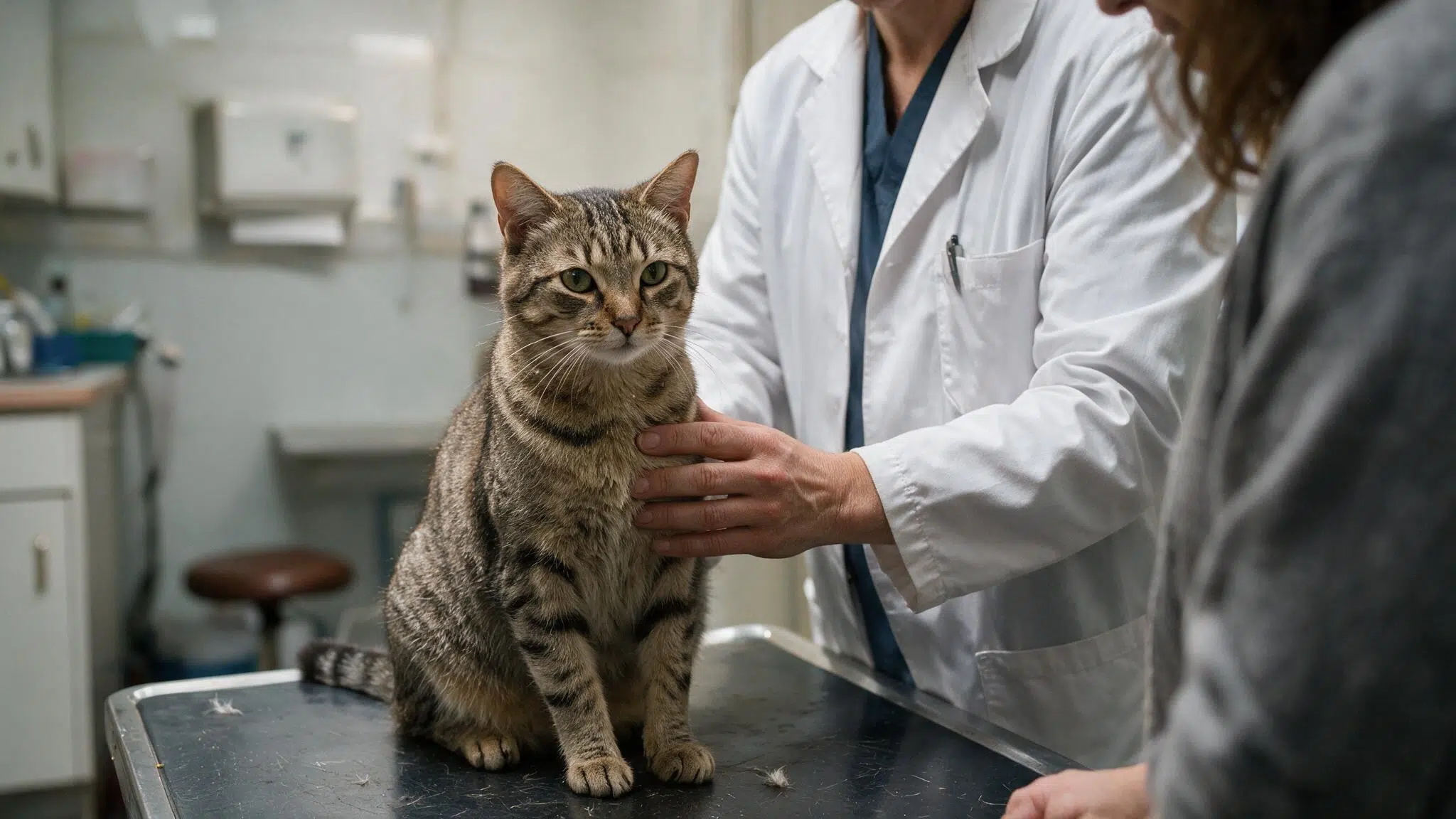
If your dog has started limping and it just won’t go away, it’s natural to worry. Most limps are minor.
But in some cases, a persistent limp or firm swelling can indicate something serious. Bone cancer in dogs is an aggressive disease, and osteosarcoma is by far its most common form.
It tends to strike large and giant breeds, though any dog can develop it.
Catching it early gives your dog the best shot at comfort and more good days. In this guide, I’ll walk you through the symptoms, causes, diagnosis, treatment choices, prognosis, and how to care for a dog living with it.
Understanding Bone Cancer in Dogs
Bone cancer happens when abnormal cells grow inside the bone and destroy healthy tissue. As the tumor grows, it weakens the bone from the inside, which causes pain and swelling.
Bone cancer comes in two forms, based on where it begins. Primary bone cancer starts in the bone itself. Secondary cancer spreads to the bone from elsewhere in the body, such as the lungs or a gland.
Primary tumors are the ones most dog owners face, and they come in a few types that grow and spread at different rates.
Common Types of Bone Cancer
Knowing the tumor type helps guide treatment and prognosis. Osteosarcoma accounts for most cases, while the remaining, less common tumors develop differently and require different approaches to care.
1. Osteosarcoma
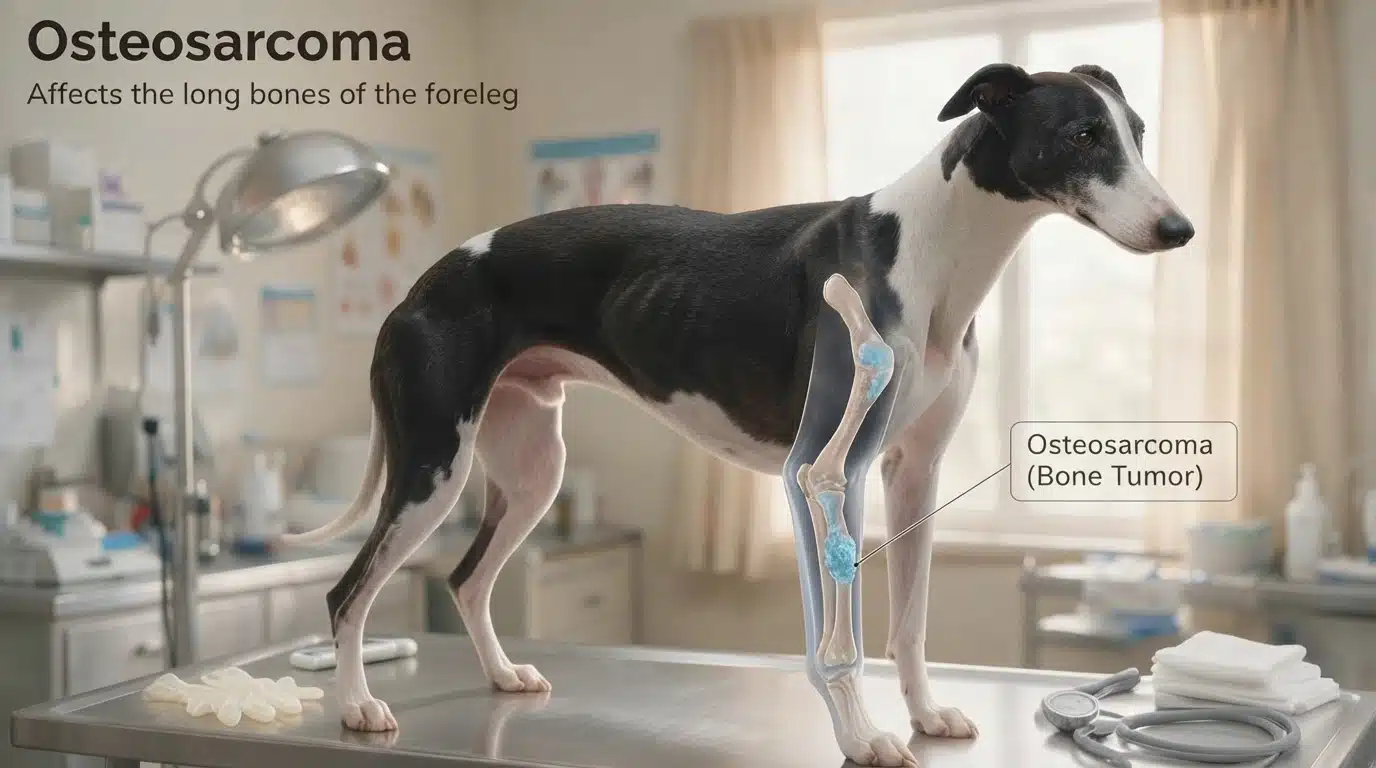
This is the most aggressive of the bone cancers. It grows fast, destroys bone from the inside, and often reaches the lungs early, sometimes before any symptoms show. Here is what sets it apart:
- Speed: grows and spreads faster than other bone tumors
- Location: usually the long leg bones, near the shoulder, wrist, or knee
- Spread: travels to the lungs early, which shapes the outlook
- Pain: causes strong bone pain as it eats away at tissue
This mix of quick growth and early spread is why fast diagnosis and treatment matter so much.
2. Chondrosarcoma

This is the second most common bone cancer in dogs, and it tends to behave less aggressively than osteosarcoma. Instead of solid bone, it begins in cartilage, the smooth tissue that cushions the joints. Here is what sets it apart:
- Origin: develops from cartilage cells
- Location: common in the ribs, nasal cavity, and pelvis
- Speed: usually slower to grow than osteosarcoma
- Spread: reaches other organs less often and later
Because it spreads later, dogs with chondrosarcoma often have a better outlook, especially when it is caught and removed early.
3. Fibrosarcoma
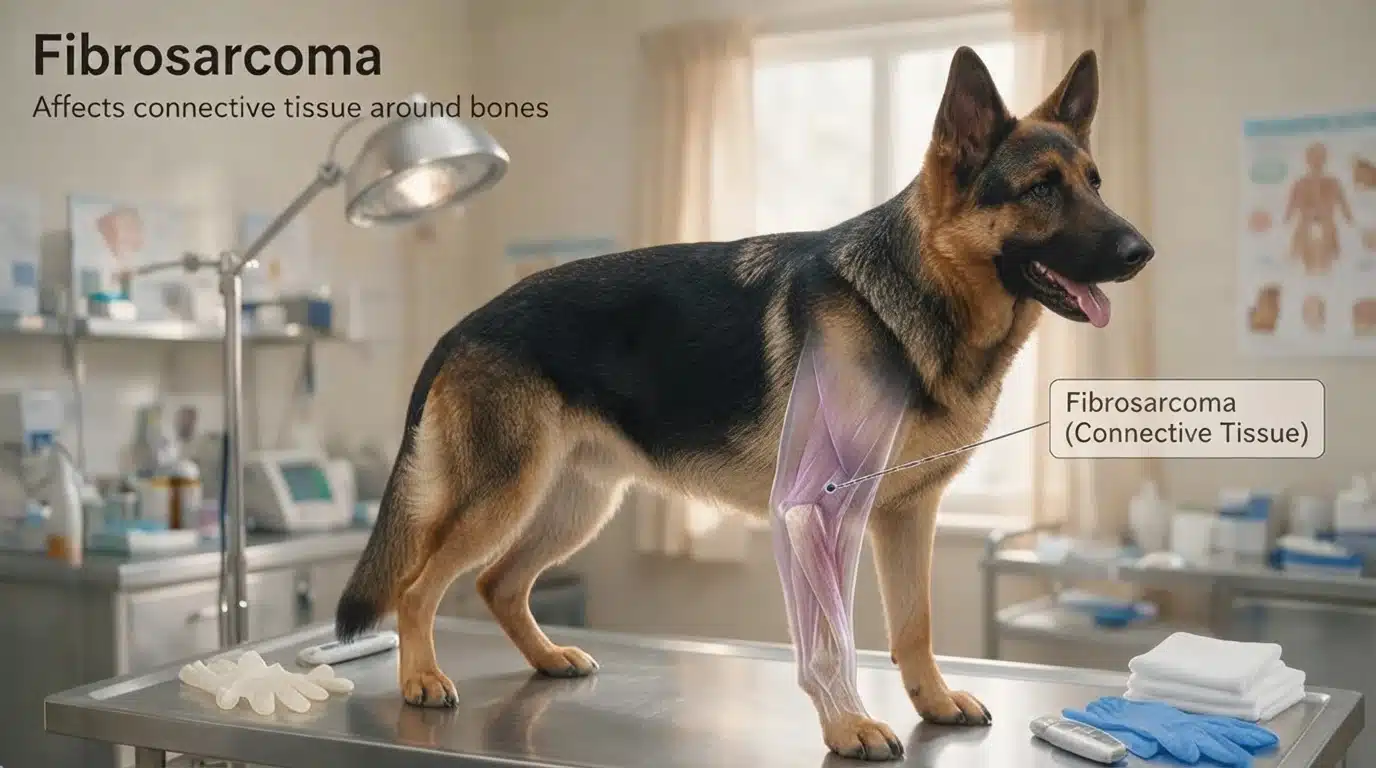
Fibrosarcoma is a less common type of bone cancer that develops from fibrous connective tissue around or inside the bone. It usually grows locally and can damage nearby structures as the tumor expands. Here is what makes it different:
- Origin: starts in fibrous tissue that supports bones and surrounding areas
- Location: can develop in the limbs, jaw, or other skeletal areas
- Growth tends to spread into nearby tissues rather than quickly moving to distant organs
- Treatment: Surgery is often considered when the tumor can be fully removed
Because fibrosarcoma can look similar to other bone tumors, testing is needed to confirm the exact diagnosis.
4. Hemangiosarcoma
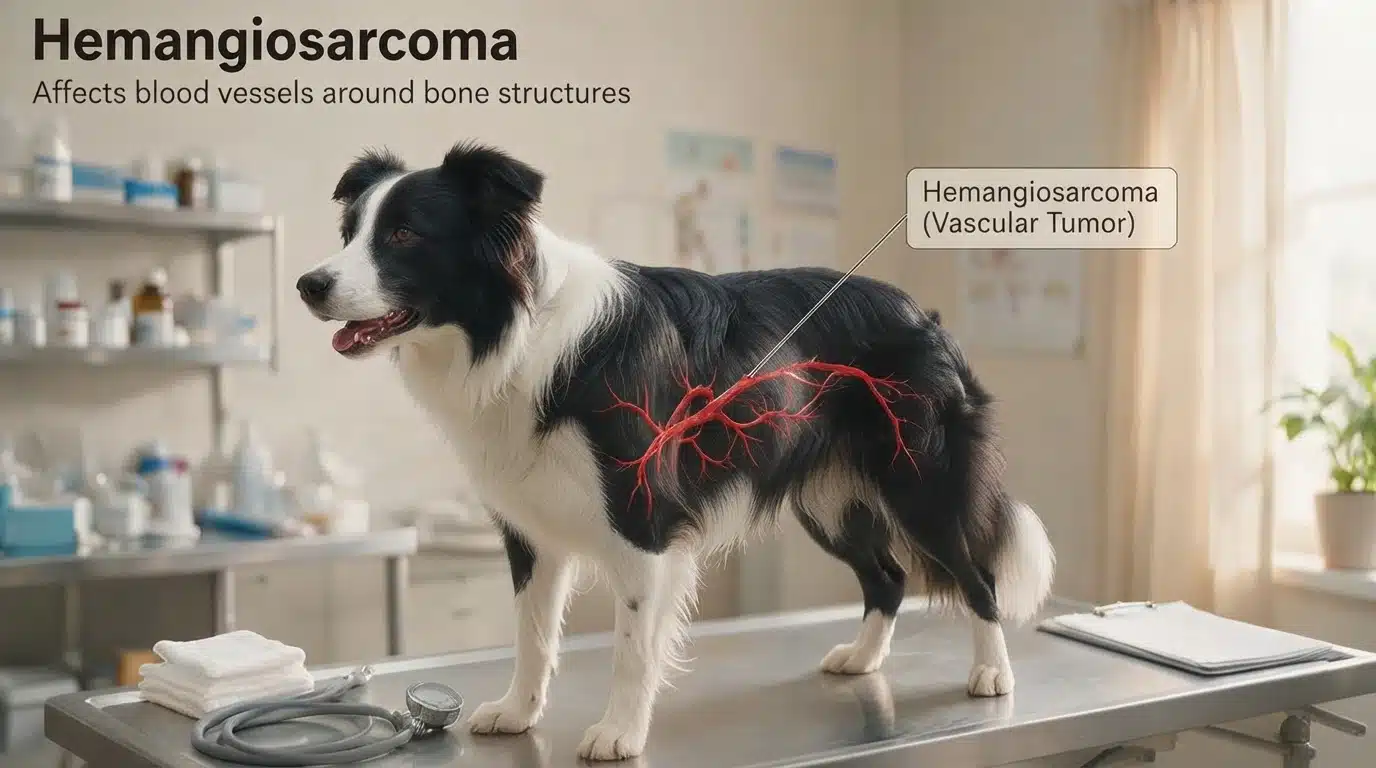
Hemangiosarcoma is a rare but aggressive cancer that begins in blood vessel cells and can sometimes affect the bones. It spreads quickly and may involve multiple areas of the body.
Here is what makes it different:
- Origin: develops from cells that form blood vessels
- Location: may affect bones, along with organs such as the spleen or heart
- Spread: can move through the bloodstream and reach other tissues
- Behavior: often progresses rapidly and requires prompt veterinary evaluation
Since hemangiosarcoma behaves differently from other bone tumors, accurate diagnosis helps determine the most suitable care plan.
Bone cancer can also appear in flat bones like the jaw, skull, ribs, and spine, where there is no limp to warn you. Whatever the type or location, only a vet’s testing can confirm what you are dealing with, so spotting the early signs is the first real step.
Early Signs and Symptoms of Bone Cancer in Dogs
Early symptoms of bone cancer in dogs can look similar to an injury, arthritis, or normal aging, which makes them easy to overlook. Pay attention to changes in movement, swelling, pain, and your dog’s overall behavior. Common signs to watch for include:
- Persistent limping: A limp that does not improve with rest or keeps returning after activity
- Difficulty moving: Trouble walking, running, jumping, or climbing stairs
- Reduced activity: Less interest in walks, play, or normal daily routines
- Firm swelling: A noticeable lump or enlargement near a bone or joint
- Pain and sensitivity: Flinching, whining, licking the area, or avoiding touch
- Behavior changes: Restlessness, guarding a leg, or reluctance to move
- General health changes: Loss of appetite, unexplained weight loss, or low energy
Veterinary guidance from the American Kennel Club notes that persistent limping in dogs can point to bone diseases such as osteosarcoma. These signs often appear near areas where bone cancer commonly develops, such as the shoulder, wrist, or knee. A limp that improves temporarily but worsens over time should be evaluated by a veterinarian.
Advisory: A persistent limp or firm swelling should not be ignored, especially in large-breed dogs. If lameness lasts more than a week or your dog shows ongoing pain, an X-ray and veterinary checkup can help identify conditions like osteosarcoma early.
Which Dogs are Most at Risk?
The exact cause is still not fully understood. Researchers believe several things play a part. Genetics may raise the risk, and studies continue to look at environmental factors.
The clearest pattern is size. Large and giant breeds, and dogs whose bones grow fast during puppyhood, are diagnosed far more often. This is why big dogs top the risk list.
Bone cancer is most common in middle-aged and older dogs, though it can appear in younger dogs too. Careful breeding and steady growth are part of why some large breeds still reach longer, healthier lifespans.
Higher-risk breeds:
| Breed | Why is the risk higher |
|---|---|
| Great Dane | Giant size and rapid bone growth |
| Rottweiler | One of the most frequently diagnosed breeds |
| Irish Wolfhound | Very tall, heavy skeletal frame |
| Saint Bernard | Giant build and high body weight |
| Greyhound | Known for a notably high osteosarcoma rate |
| Golden Retriever | Common large breed with a raised occurrence |
How Bone Cancer is Diagnosed
Diagnosing bone cancer in dogs involves several steps to confirm the tumor type and check if it has spread. Your vet combines physical exams, imaging, and lab tests to understand the condition and plan the right course of care.
- Exam and X-rays: Your vet checks for swelling, pain, and movement issues. X-rays help identify changes in the bone, such as abnormal growth or areas of damage.
- Biopsy and Lab Tests: A tissue sample from the affected area helps confirm the tumor type. Laboratory testing identifies the specific cancer involved.
- Staging Tests: Chest X-rays or a CT scan help check if the cancer has reached other parts of the body, especially the lungs, where osteosarcoma commonly spreads.
A complete diagnosis gives your vet important details about the tumor’s type, location, and stage. This information helps create a treatment plan based on your dog’s specific condition.
Treatment Options for Bone Cancer
The right plan depends on where the tumor is, whether it has spread, and your dog’s overall health. Most vets combine more than one approach.
1. Surgery and Amputation
For a tumor affecting a leg, removing the limb is often the most effective way to remove the main source of pain. Although amputation can feel overwhelming, many dogs recover quickly and return to normal activities.
According to the American College of Veterinary Surgeons, most dogs walk unassisted within 12 to 24 hours after surgery and adjust well to life on three legs.
2. Chemotherapy
Osteosarcoma often spreads before diagnosis, which means surgery alone may not remove all cancer cells. Chemotherapy is usually recommended after surgery to target hidden cancer cells and slow further spread.
Many dogs tolerate chemotherapy better than expected, with manageable side effects compared with human treatments. Your veterinarian can adjust the plan based on your dog’s response and comfort.
3. Radiation and Pain Relief
When surgery is not possible, radiation therapy may help reduce tumor size and relieve pain. Managing discomfort is a major part of treatment, especially as bone cancer progresses.
As noted by Cornell’s College of Veterinary Medicine, veterinarians may use medications such as NSAIDs, gabapentin, and other pain-relief options to help dogs maintain a better quality of life.
Disclaimer: Bone cancer treatment should always be planned with your veterinarian or a board-certified veterinary oncologist. The best option depends on the type of cancer, whether it has spread, your dog’s overall health, and quality of life. If your dog develops worsening pain, difficulty breathing, is unable to stand, or stops eating or drinking, seek veterinary care promptly to discuss treatment adjustments or supportive care options.
Life Expectancy and Prognosis
Survival depends on the tumor location, how early it is caught, and whether it has spread. Once osteosarcoma reaches the lungs, the outlook is usually much worse.
Here is what the numbers generally show:
- Amputation alone: Median survival is about 4 months, and only about 1 in 10 dogs reaches the 1-year mark.
- Amputation plus chemotherapy: Median survival often extends to about eight to twelve months, with some dogs living longer.
- Palliative care only: When aggressive treatment is not suitable, supportive care focuses on managing pain, maintaining mobility, and preserving comfort. Survival varies based on the dog’s health and response to care.
These figures are averages, not promises. Every dog is different, and early detection gives the best chance at a more comfortable and meaningful time.
What Real Dog Owners Say
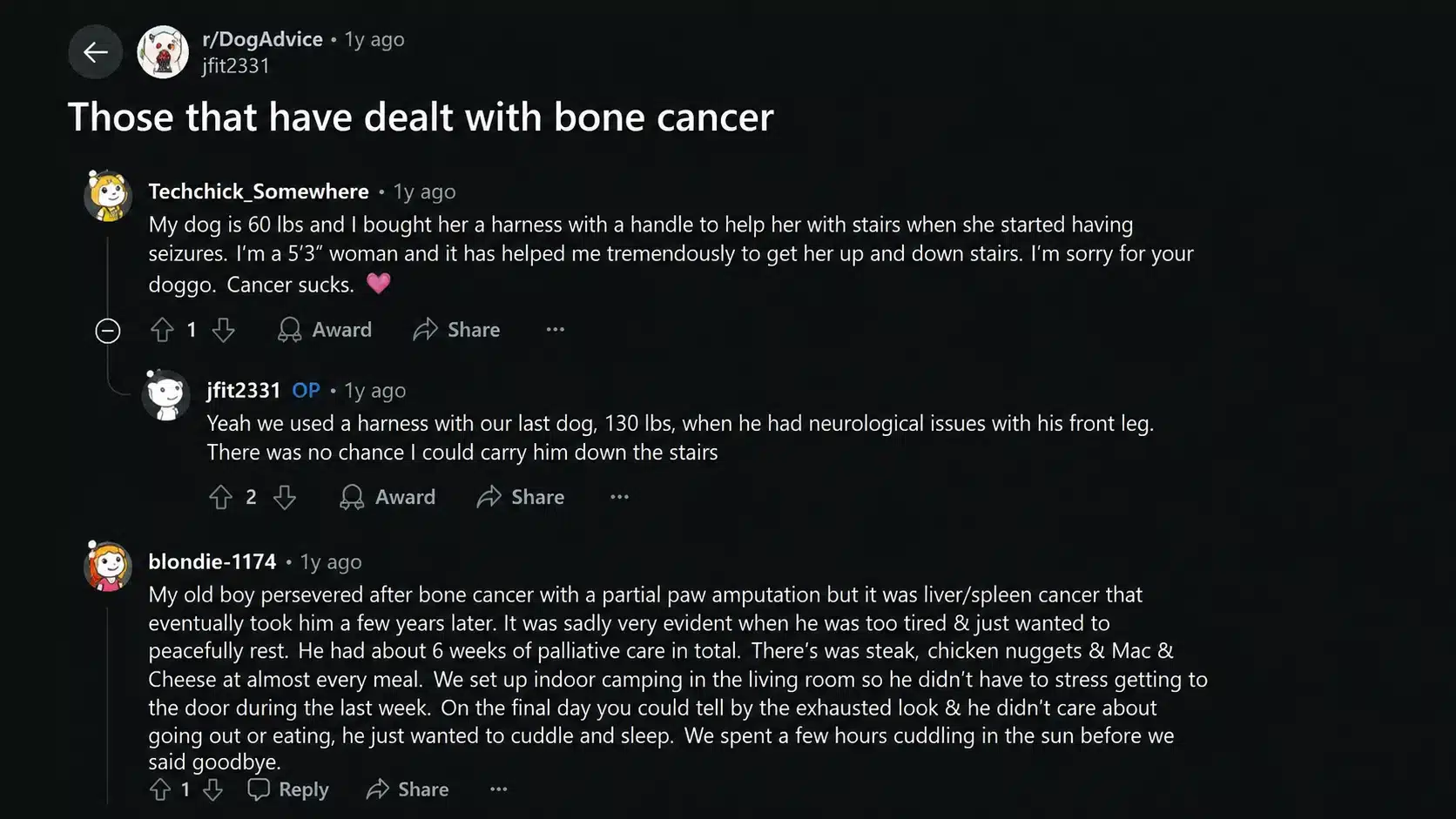
Numbers only tell part of the story. In owner discussions, such as Reddit threads about canine osteosarcoma, several common experiences appear repeatedly.
Many owners share that they initially feared amputation but were surprised by how quickly their dogs adapted and returned to normal movement.
Others mention that focusing on comfortable, happy days became more important than simply extending time.
Some owners also highlight the importance of trusting early warning signs, as a limp they almost ignored turned out to be the first indication of a serious problem.
A frequent recommendation is to seek advice from a veterinary oncologist early to better understand available care options.
Caring for a Dog with Bone Cancer
Daily care can make a major difference in keeping a dog with bone cancer comfortable and maintaining a good quality of life. Simple adjustments at home can reduce strain, support mobility, and help you notice changes early.
- Pain: Follow your veterinarian’s medication plan and report any changes in discomfort.
- Movement: Use ramps, rugs, or supportive tools to make walking safer and easier.
- Rest: Provide a soft, supportive bed in a quiet area where your dog can relax.
- Routine: Keep activities gentle and adjust walks based on your dog’s energy level.
- Monitoring: Track changes in appetite, mood, mobility, and behavior.
- Checkups: Keep regular veterinary visits to review treatment and comfort levels.
Many large breeds are also prone to joint conditions, so mobility support helps whether the cause is cancer or everyday wear. With consistent support and close attention, many dogs can continue enjoying meaningful moments with their families while receiving care.
Disclaimer: Home care supports comfort but does not replace veterinary treatment for bone cancer. Contact your veterinarian if your dog’s pain worsens, mobility declines suddenly, a limb fractures, breathing becomes difficult, or your dog refuses food or water for more than a day. Prompt reassessment can help adjust pain management and maintain the best possible quality of life.
Signs a Dog May Be Near the End of Life
This is a difficult stage for any pet owner, but recognizing changes in your dog’s comfort and behavior can help you provide the right support.
Signs that quality of life may be declining include severe pain that medication no longer controls, weakness or trouble standing, refusing food, losing interest in family or activities, and breathing difficulties that may indicate cancer has spread to the lungs.
When these changes appear, speak openly with your veterinarian about your dog’s condition.
Together, you can make decisions focused on comfort, pain relief, and maintaining the best possible quality of life.
Final Thoughts: Helping Your Dog Through Bone Cancer
Bone cancer in dogs is a serious diagnosis, but understanding the signs, treatment choices, and care needs can help you make informed decisions.
Osteosarcoma is aggressive, yet early veterinary attention and supportive care can improve comfort and quality of life.
Every dog responds differently, so work closely with your veterinarian to choose the approach that best fits your dog’s condition.
If you notice persistent limping, swelling, or changes in behavior, schedule a veterinary checkup as soon as possible. Early action can make a meaningful difference. Drop a comment below and let me know if you found this helpful.
Frequently Asked Questions
Is Bone Cancer In Dogs Contagious to Other Pets?
No. Bone cancer cannot pass between animals or to people. It grows from a dog’s own cells, so there is no risk to other pets, children, or you.
How Fast Does Bone Cancer Spread In Dogs?
Osteosarcoma spreads quickly. In most dogs, microscopic cancer cells have already reached the lungs by diagnosis, even when chest X-rays still look clear. Early treatment matters.
How Much Does Bone Cancer Treatment Cost for Dogs?
Costs vary widely by region and clinic. Amputation with chemotherapy often runs from a few thousand dollars upward. Ask your vet for a clear estimate before deciding.
Can Diet or Supplements Help a Dog with Bone Cancer?
No diet or supplement can cure bone cancer. Some may support appetite and overall health during treatment. Always check with your vet before adding anything new.
Does Bone Cancer in Dogs Come Back After Surgery?
Yes, it can. Even after surgery, hidden cancer cells may spread and form new tumors, often in the lungs. Chemotherapy lowers this risk but cannot remove it entirely.