A heat cycle can bring unexpected spotting, behavior changes, and sudden attention from male dogs. It can also leave you questioning whether the timing is normal.
With more than 15 years of clinical experience, I understand why an irregular-looking schedule can worry pet parents. Most unspayed female dogs cycle about twice yearly, but breed, body size, age, and individual reproductive patterns can affect the timing. Smaller dogs may cycle more frequently, while large and giant breeds may have longer gaps.
If you are asking, “How often do dogs go into heat?” the most useful answer begins with your dog’s usual pattern. Tracking each cycle can help you anticipate hygiene needs, manage behavioral changes, prevent an unplanned pregnancy, and recognize when you may need veterinary advice.
Dog Heat Cycle Frequency at a Glance
Going into heat means an unspayed female dog has entered the reproductive phase when she can become fertile and potentially pregnant.
Most dogs experience heat about twice a year, with roughly six months between cycles, but that interval is only an average.
Some healthy dogs have shorter or longer gaps depending on breed, size, age, and their usual pattern. The visible heat period, which may include swelling, discharge, and behavior changes and requires extra care and safety precautions, lasts only part of the full reproductive cycle.
The complete cycle also includes quieter stages between heats. Unspayed female dogs generally continue having reproductive cycles throughout adulthood rather than reaching menopause.
Recording the start and end dates of each heat can make it easier to recognize your dog’s normal rhythm and estimate when the next cycle may occur.
How Often Do Female Dogs Go into Heat?
Most unspayed female dogs experience heat about twice yearly, but individual schedules can vary. Watching several cycles over time gives owners a clearer sense of what is normal for them.
- Typical spacing: Many dogs come into heat every six to seven months, which often means two cycles each year. This timing is common, but it should not be treated rigidly.
- Natural variation: Breed, body size, age, and individual reproductive patterns can shorten or lengthen the gap between heats. Smaller dogs may cycle sooner, while giant breeds may naturally wait longer.
- One cycle is not enough: A single heat may arrive earlier or later than expected. Illness, maturity, and normal biological variation can affect timing, so avoid predicting based on a single cycle.
- Compare past cycles: Recording start dates from several heats helps reveal your dog’s personal pattern. Once a trend appears, you can estimate the next likely window with greater confidence overall.
- Planning ahead: If heats began in February and August, another cycle may occur around the following February. That estimate helps schedule walks, supervision, hygiene supplies, decisions about the right spay timing, and separation from intact males.
Your dog’s own history is usually more useful than a calendar average. Consistent records can help you prepare calmly and notice meaningful changes that may deserve veterinary attention sooner.
Timing note: Cycle frequency varies among individual dogs. General intervals can provide context, but they cannot predict the exact date of your dog’s next heat. |
Breed, Size, and Age Can Change Heat Timing
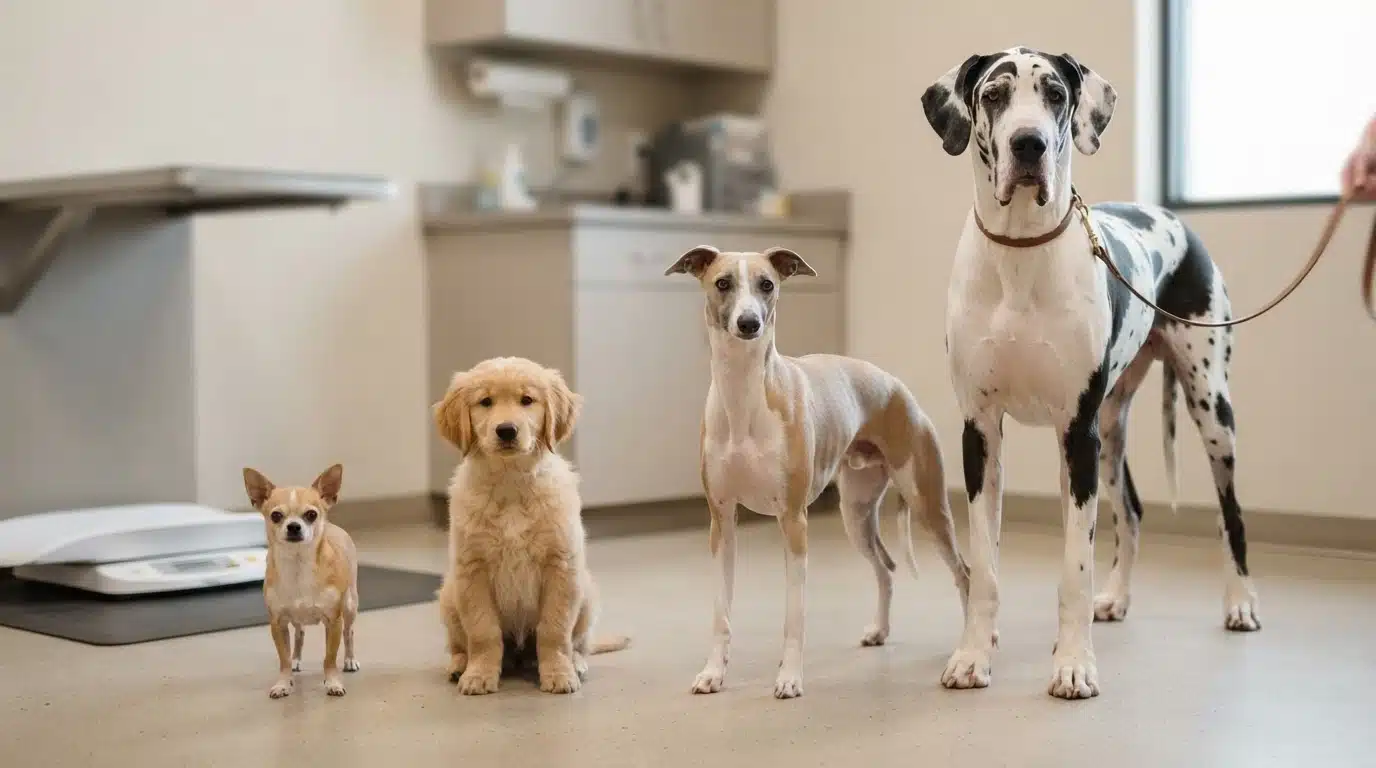
Heat timing can differ widely between female dogs because breed, body size, and age influence reproductive development. Knowing these factors helps owners set realistic expectations for each dog’s cycle pattern.
1. Small Breed Heat Patterns
Small breeds often reach reproductive maturity earlier than larger dogs and may begin cycling at a younger age. Some small dogs also experience heat more frequently, occasionally having three cycles within a year.
Even within the same breed, timing can vary from one dog to another. Tracking several cycles helps owners learn the usual interval and spot changes from that individual pattern.
2. Medium and Large Breed Patterns
Medium and large dogs commonly settle into a pattern of about two heat cycles per year, often with several months between episodes. However, not every dog follows an exact six-month schedule.
Breed traits, age, and individual reproductive patterns can affect the interval. Owners can get a clearer picture by recording several cycle dates rather than relying on a single expected timeframe.
3. Giant Breed Heat Patterns
Giant breeds often mature later and may have much longer intervals between heat cycles than smaller dogs. Some may go into heat only once a year, which can still be normal for that dog.
Because the spacing can be lengthy, keeping accurate records is especially helpful. A consistent history makes it easier to recognize when the timing changes unexpectedly.
4. Age and Early Cycle Irregularity
Puppies and young female dogs may not develop a predictable heat schedule right away, especially during the early puppy growth stages. Their first few cycles can occur at uneven intervals as the reproductive system matures.
One heat may arrive sooner or later than the next without automatically indicating a problem. Over time, many dogs develop a more consistent pattern, making future cycles easier for owners to anticipate and record.
Breed, size, and age affect heat timing, but each dog has her own pattern. Tracking cycles helps owners plan ahead and spot unusual changes.
| Individual-variation note: Breed size may influence general heat patterns, but it does not determine one dog’s schedule. Health, age, reproductive history, and individual development also matter. |
When to Expect a Puppy’s First Heat
A puppy’s first heat can begin at different ages depending on breed and size. Knowing the likely timing helps owners prepare before visible signs appear.
- Typical age range: A first heat commonly occurs between 6 and 24 months. The wide range reflects differences in breed, size, and individual reproductive development rates.
- Small breeds: Small breeds often mature earlier, so their first heat may appear near six months. Some puppies begin a little sooner or later than owners expect.
- Large and giant breeds: Large and giant breeds usually mature more slowly, so the first heat may not occur until 12 to 24 months of age in some dogs.
- Early cycle timing: The first heat does not set a permanent schedule. Early cycles may be irregular, and intervals can change as a young dog reaches reproductive maturity.
- Early signs: Early signs can include vulvar swelling, increased licking, more frequent urination, restlessness, clinginess, or extra interest from male dogs before noticeable bleeding becomes clearly visible.
- Preparing ahead: Prepare washable bedding, dog diapers if needed, cleaning supplies, secure leashes, and a plan to prevent contact with intact males during walks and outdoor time.
Record the first day you notice heat signs, especially discharge or swelling. That date can help estimate future intervals and make cycles easier to anticipate.
How Long a Dog Stays in Heat
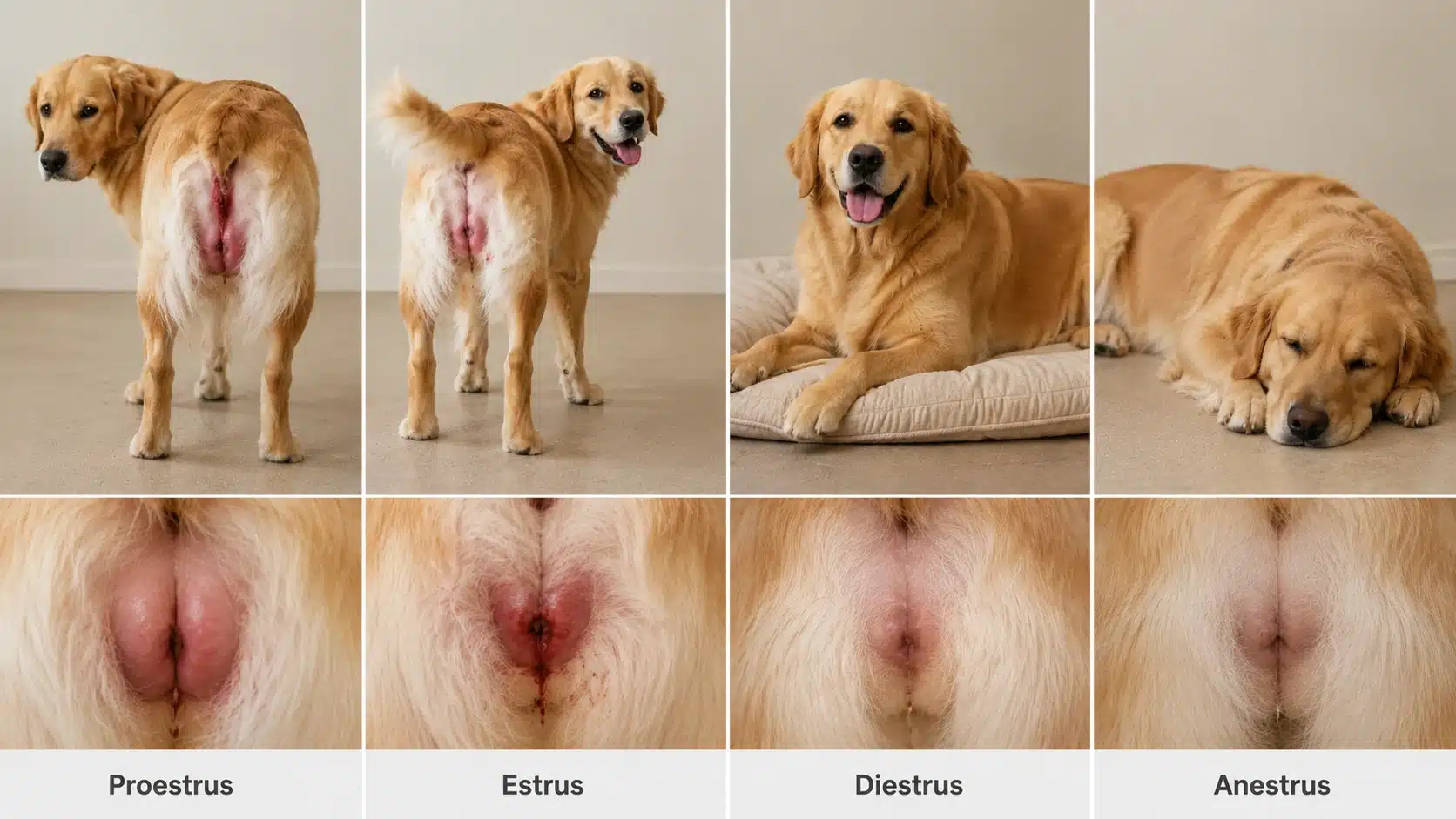
A dog may show visible heat signs for about two to three weeks, but this is different from the full reproductive cycle, which continues for several months between episodes overall.
1. Proestrus and Early Visible Signs
Proestrus marks the beginning of heat and often lasts about seven to ten days. During this stage, the vulva may swell, and bloody discharge can appear. Some dogs become more restless, affectionate, or distracted than usual.
Male dogs may show increased interest because of hormonal scent changes, but the female typically does not accept mating yet. These early signs help owners recognize that the heat cycle has started more clearly.
2. Estrus and the Fertile Period
Estrus is the stage when a female dog may accept mating and can become pregnant. It commonly lasts about five to ten days, although timing varies between dogs. Vaginal discharge may become lighter, and the vulva can remain enlarged.
Some females become more receptive to male dogs and may move their tail aside when approached. Because fertility timing is not identical in every dog, supervision is important throughout this stage.
3. Diestrus After Active Heat
Diestrus follows estrus after the female is no longer receptive to mating. Visible signs such as discharge and swelling usually fade, and behavior often begins returning to normal.
However, the reproductive cycle continues because hormone levels remain active for several weeks. This stage may last around two months. Owners should understand that the end of visible heat does not mean the entire reproductive cycle has completely finished yet.
4. Anestrus Between Heat Cycles
Anestrus is the resting stage between active heat cycles and usually lasts several months. During this time, visible reproductive signs are absent, and hormone activity is relatively quiet.
This interval makes up much of the time owners count when estimating when the next heat may begin. Its length can vary by breed, age, and individual dog, so previous cycle records help predict the next likely window more accurately.
Understanding the difference between visible heat and the full reproductive cycle makes timing easier. Recording each stage can help owners anticipate future heats and notice unusual changes early.
| Fertility note: Visible signs cannot confirm the exact fertile period. Discharge may decrease before pregnancy risk has passed, so keep your dog separate from intact males throughout the complete heat cycle. |
How to Predict and Track the Next Heat Cycle
Tracking heat dates can help owners estimate when the next cycle may begin. A simple record also makes it easier to notice patterns and prepare before visible signs return.
- Record the first signs: Note the first day of discharge or vulvar swelling, along with behavior changes such as restlessness, increased licking, or greater interest from male dogs.
- Mark when signs stop: Record the date when discharge, swelling, and other visible signs fade. This gives you a clearer picture of how long each episode lasts.
- Calculate the interval: Count from the first day of one heat to the first day of the next. For example, February 10 to August 18 is about six months.
- Compare several cycles: After tracking two or three heats, your dog’s own pattern may become more useful than a general breed average for estimating the next likely cycle.
- Prepare for the expected window: Keep dog diapers and cleaning supplies ready, adjust walking routines, check gates and fences, and arrange separation from intact male dogs if needed.
Consistent records can make future heat cycles easier to anticipate. Use your dog’s previous dates as a reference while allowing for some natural variation between individual cycles over time.
When a Heat Schedule May Need Veterinary Attention
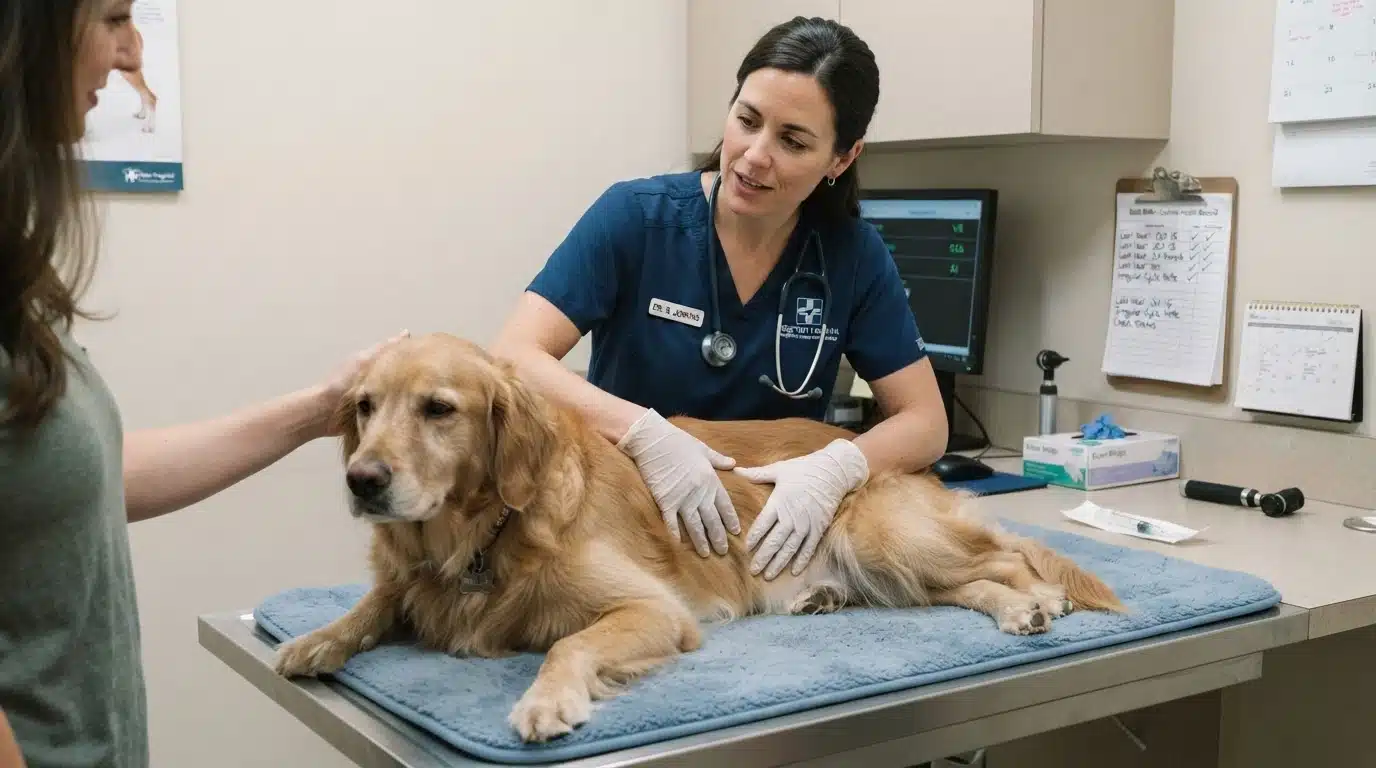
Some variation in heat timing is normal, but certain changes may need veterinary attention. Compare changes with your dog’s usual cycle pattern, not only a six-month average.
Firstly, a mature dog with a previously predictable schedule should be checked if her cycles suddenly become much earlier, later, or irregular.
Secondly, very short or unusually long gaps between heats may deserve attention, especially when they differ from her normal pattern. Thirdly, a young dog reaching an unusually late age without an obvious first heat should be discussed with a veterinarian.
Fourthly, heat signs lasting longer than expected, including persistent swelling or discharge, may require evaluation. Fifthly, Unusual vaginal discharge, lethargy, poor appetite, fever, or vomiting can be associated with serious reproductive illness and should prompt veterinary attention.
Lastly, very mild silent heat signs can be difficult to recognize. Regular cycle records help identify meaningful changes and support timely veterinary advice.
| Urgent-care note: Foul-smelling discharge, fever, vomiting, abdominal swelling, marked lethargy, excessive thirst, collapse, or signs of pain may indicate illness rather than a normal cycle. Seek veterinary care promptly. |
Final Thoughts
Most unspayed female dogs experience heat about twice a year, though breed, size, age, and individual patterns can change the timing.
Tracking cycle dates, recognizing physical and behavioral signs, and preparing for each stage can make upcoming heats easier to manage.
Understanding how often do dogs go into heat becomes easier when you compare several cycles instead of relying only on a six-month average.
Regular records can also help you notice unusual changes that may need veterinary attention. What has your dog’s heat schedule been like? Share your experience in the comments below.
Frequently Asked Questions
Do Male Dogs Go into Heat?
No. Male dogs do not have heat cycles. Intact males can remain fertile year-round and may become strongly interested when nearby females enter heat.
Can a Dog Get Pregnant During Her First Heat?
Yes. A female dog can become pregnant during her first heat once she reaches the fertile estrus stage, even though she is still young.
Can a Spayed Dog Go into Heat?
Normally, no. A properly spayed dog should not cycle because her ovaries are removed. Heat-like signs after spaying may indicate ovarian remnant syndrome.
Is There a Specific Mating Season for Dogs?
Most domestic dogs do not have a fixed mating season and may cycle throughout the year. Certain breeds, including Basenjis, can show seasonal patterns.