You’ve just brought home a puppy, maybe he’s already stolen your socks, or she’s claimed your entire couch.
Now your vet mentions spaying or neutering, and suddenly you’re drowning in conflicting advice: “Do it at six months!” “No, wait until he’s a year!” “Never before her first heat!”
When I started out, I gave every client the same answer: six months. Today, I give a completely different answer depending on who walks through the exam room door.
The honest truth? There’s no single “right age” that works for every dog.
The best time to spay or neuter depends on your dog’s breed, size, lifestyle, and the latest veterinary research, which has shifted dramatically over the past decade.
Whether you have a tiny Chihuahua or a giant Rottweiler, you’ll leave with a real answer, not a guess.
What Does Spaying or Neutering a Dog Mean?
Spaying and neutering are both surgical sterilization procedures, but they apply to different sexes and involve different operations.
Spaying (for female dogs) is medically called an ovariohysterectomy(OHE), which removes both the ovaries and the uterus.
A less invasive option called an ovariectomy (OVE) removes only the ovaries and is increasingly used in Europe, with growing recognition in the US as equally effective with a simpler recovery.
In my own practice, I’ve begun discussing OVE more frequently with owners of smaller-breed females.
The incision is shorter, recovery is typically 1 to 2 days faster, and long-term outcomes appear equivalent to OHE in dogs without preexisting uterine disease.
Neutering (for male dogs), also called castration, involves the surgical removal of both testicles. This permanently eliminates testosterone production and the ability to reproduce.
A less common alternative, vasectomy, renders a male dog infertile without removing the testicles or eliminating testosterone, sometimes considered for large breed males where hormonal development is a priority.
For cat owners navigating a similar decision, the timing and risks of spaying a cat in heat follow entirely different guidelines.
When Should You Spay Your Dog?
The timing of spaying or neutering is no longer based on a fixed age. Modern veterinary guidance supports a personalized approach, in which decisions are made based on breed, size, sex, and long-term health risks rather than universal rules.
Today, the consensus among leading organizations, including the American Animal Hospital Association (AAHA), is that individualized timing is preferred over universal protocols, as reflected in the 2024 reproductive control guidelines.
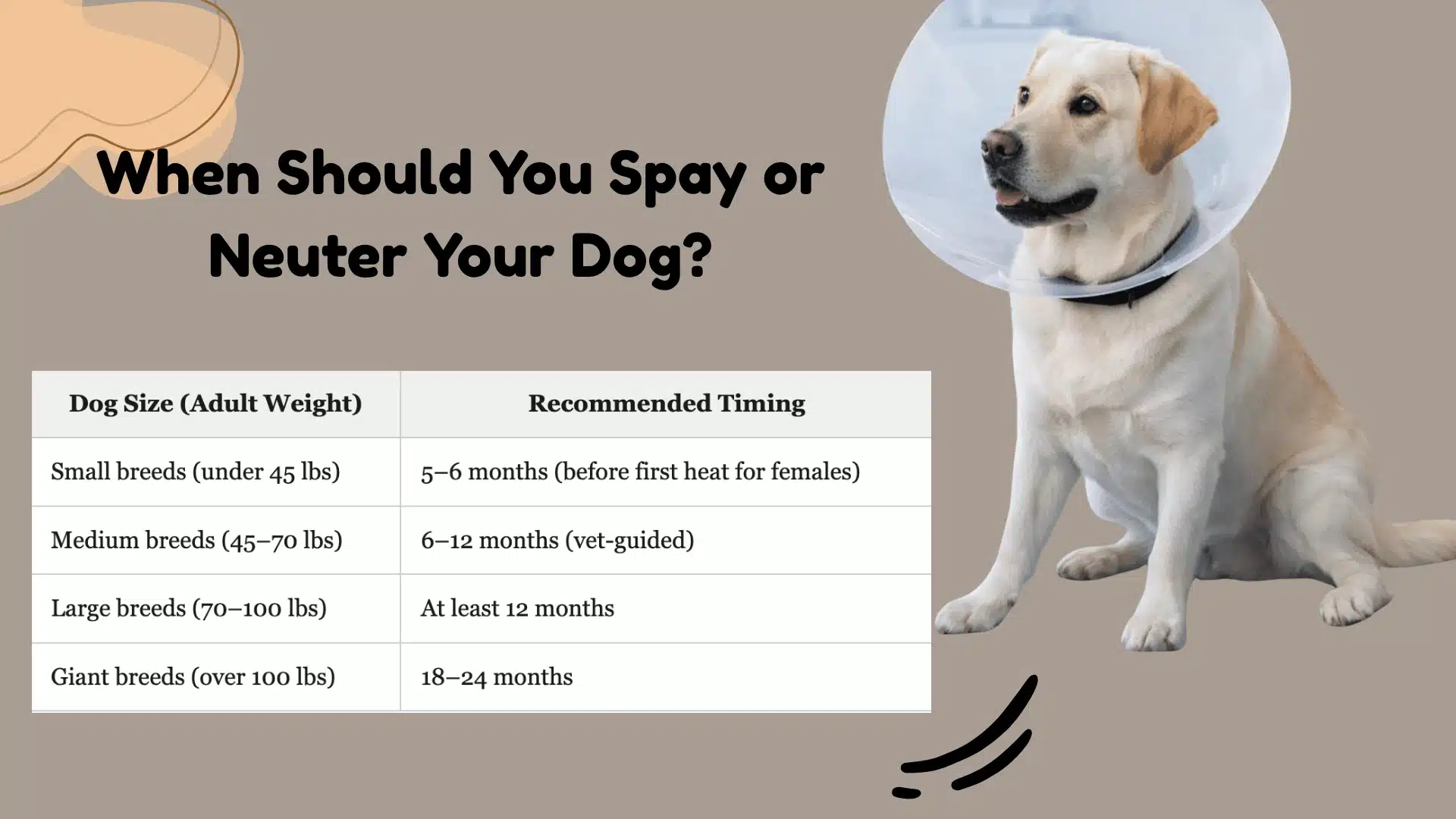
Small dog breeds that typically weigh under 45 pounds as adults can usually be spayed or neutered safely around 5 to 6 months of age. These dogs mature faster, and early procedures tend to carry fewer risks for both males and females.
For medium-sized dogs weighing 45 to 70 pounds, the recommended timing is usually 6 to 12 months.
However, this can vary depending on the specific breed, so discussing the timing with a veterinarian is important to make the right decision.
Large breeds, which typically weigh between 70 and 100 pounds, often benefit from waiting longer.
Most current veterinary guidance suggests delaying spaying or neutering until at least 12 months of age.
Giant breeds that exceed 100 pounds generally require the most patience. In my clinical experience, this is where I see the most mistakes made by well-intentioned owners bringing in their 6-month-old Golden or German Shepherd for a spay because that’s what they were told at adoption.
Spaying vs Neutering: Key Differences by Gender
Spaying before the first heat cycle, typically around 5–7 months for small breeds, significantly reduces the risk of mammary cancer and eliminates the risk of pyometra in females.
For large breed females, however, the calculus shifts: waiting longer protects against joint disorders and urinary incontinence, which is why the decision cannot be reduced to a single number.
Testosterone supports bone and muscle development in males. For small breeds, knowing when to neuter a dog is relatively straightforward. Neutering at 6 months carries little risk.
For large and giant breeds, early neutering is increasingly linked to joint disorders and some cancers, making delayed neutering (12–24 months) the more evidence-based choice.
Neutering Age by Breed
Research from the UC Davis School of Veterinary Medicine confirmed that breed matters as much as size when it comes to spay and neuter timing.
One-size-fits-all guidance has been replaced by breed-specific recommendations based on joint disorder and cancer risk data.
For mixed-breed dogs, the vet will estimate adult weight and apply the size-based guidelines above.
These are starting points for the conversation with your vet, not substitutes for it. Spay and neuter timing varies by breed size and health risks.
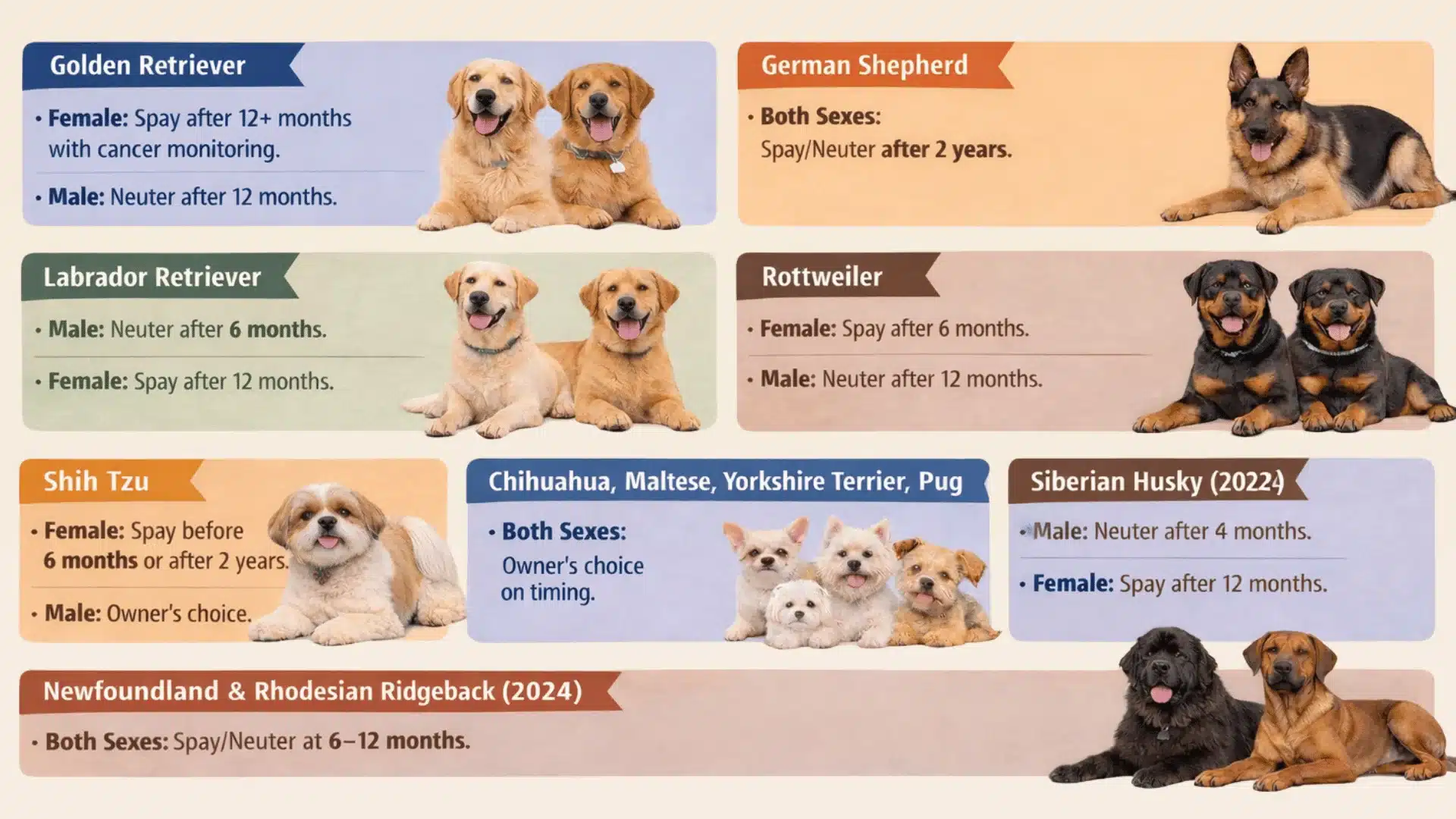
Breeds like Golden Retrievers, German Shepherds, Mastiffs, and Rottweilers benefit from delaying procedures until at least 12–24 months to reduce joint issues and cancer risks.
Labradors and Huskies follow a moderate approach, with females often needing later timing than males.
Breeds such as Chihuahuas, Maltese, Yorkies, and Pugs have greater flexibility, typically around 5–6 months old, with fewer long-term risks.
Some breeds, like Shih Tzus, show mixed results, requiring careful timing decisions.
Overall, larger dogs need delayed intervention, while smaller breeds allow earlier, lifestyle-based choices.
Factors That Determine the Right Timing
There is no universal answer to when you should spay your dog, but the decision is not a guessing game either. Veterinarians today look at a specific set of factors before making a recommendation.
- Breed and Size: Small breeds mature faster and handle earlier procedures well, while large and giant breeds need more time for proper development, making delayed timing safer for joints and long-term health.
- Sex of the Dog: Females face rising risks like mammary cancer and pyometra with each heat, while males benefit more from extended hormonal development and face fewer immediate risks if delayed.
- Lifestyle and Environment: Exposure to other dogs, presence of intact pets, and outdoor conditions increase pregnancy risk, making delayed timing harder to manage in high-contact or multi-dog settings.
- Health Status: Existing conditions and overall health determine surgical safety, with pre-operative tests guiding timing, especially in older dogs or those with medical concerns.
- Breeder or Rescue Requirements: Adoption or breeder agreements may set fixed timelines, sometimes requiring early procedures or delaying until full physical maturity, depending on the source.
Health Risks of Spaying Too Early
The shift away from the traditional six-month rule is based on solid evidence showing real tradeoffs.
Early removal of sex hormones can affect development, especially in large breeds.
Joint disorders are a major concern since hormones control growth plate closure; early procedures may lead to longer bones, misalignment, and higher risks of hip dysplasia, elbow issues, and ligament tears.
Cancer risk is another factor, with some studies linking early alteration to increased cases of lymphoma and related cancers. Urinary incontinence can also occur due to hormone loss.
However, waiting too long brings its own risks, as repeated heat cycles raise the chances of mammary cancer and pyometra, making timing a careful balance.
Health Benefits of Spaying Your Dog
Timing nuance aside, spaying and neutering dogs not intended for breeding remain among the most health-protective decisions an owner can make. Here’s what both procedures offer:
- Cancer risk reduction: Spaying eliminates ovarian and uterine cancers and significantly lowers mammary cancer risk, especially when done early. Neutering removes the risk of testicular cancer.
- Prevention of serious medical conditions: Spaying completely prevents pyometra, a life-threatening uterine infection. Neutering reduces the risk of prostate enlargement and infections in male dogs.
- Behavioral improvements: Hormone-driven behaviors such as roaming, urine marking, and certain types of aggression may decrease after neutering. Spaying also eliminates heat-related behaviors like restlessness and vocalization.
- No reproductive cycles: Female dogs no longer experience heat cycles, which removes bleeding, discomfort, and attraction to male dogs.
- Longer lifespan potential: Studies suggest neutered and spayed dogs may live longer due to reduced disease risk and lower chances of injuries from roaming or fighting.
- Population control: Helps reduce the number of unwanted litters and lower shelter intake, affecting millions of animals each year.
- Lower long-term healthcare costs: Preventing reproductive diseases often reduces the need for expensive emergency treatments and surgeries later in life.
- Better household compatibility: Supports more stable behavior, especially in multi-pet homes, making daily management easier.
What if You’ve Already Missed the Ideal Spay Window?
This is one of the most common situations I see in my practice: an owner adopts an 18-month-old Labrador, or rescues a 3-year-old intact female, and wants to know whether it’s “too late” to spay.
The short answer: it is almost never too late, and spaying is still strongly recommended for most healthy adult and senior dogs.
The veterinarian will likely recommend pre-operative bloodwork to assess kidney and liver function before anesthesia.
The risk of surgical complications is slightly higher in dogs over 7, not because of age alone, but because undetected health conditions become more common.
A clean pre-op panel gives a strong green light. For intact females over 5 years old, the risk of pyometra, a life-threatening uterine infection, increases meaningfully with every additional heat cycle, which makes the case for spaying even more compelling if they’ve been intact to that point.
Real Dog Owners About Spaying/Neutering a Dog

Real owner experiences on Reddit reflect exactly what the research shows.
Large-breed owners who followed the old “six months” rule reported regretting joint problems, early surgeries, and outcomes they’d now handle differently.
Small-breed owners, by contrast, found timing far less critical and reported smooth recoveries regardless of exact age.
Several commenters echoed a point I make to every client: waiting is not the same as neglecting.
For large breeds, a deliberate delay to 12-18 months is a medical decision, not a mistake. For small breeds, 5-6 months remains a safe and sensible window.
Preparing Your Dog for Spay or Neuter Surgery
Most owners think about the recovery, not the preparation, but what you do in the 12–24 hours before surgery matters.
- Fasting: Most veterinarians will ask you to withhold food after midnight the night before surgery. Water restrictions vary by clinic and anesthesia protocol. Confirm with your vet. This prevents vomiting during anesthesia, which can lead to dangerous aspiration.
- Pre-operative bloodwork: For young, healthy dogs, this is optional at many practices, but I routinely recommend it. A basic panel takes minutes and can flag anemia, liver enzyme elevations, or clotting concerns that would change the anesthetic plan. For dogs over 5, it’s not optional in my practice; it’s standard.
- Confirm medications: If your dog is on any supplements, flea/tick preventives, or prescribed medications, let your vet know. Some NSAIDs need to be paused before surgery.
- Prepare your home first: Set up a quiet, low-traffic recovery space before you leave for the appointment. You don’t want to be moving furniture while your dog is still groggy from anesthesia.
What Happens After Spaying?
| Timeline | What To Expect |
|---|---|
| Day 1-3 | Grogginess and reduced appetite are normal post-anesthesia responses. |
| Days 4-7 | Strict activity restriction, no running, jumping, or swimming. The E-collar must stay on to prevent licking the incision. |
| Day 10-14 | External stitches are removed. Most dogs are cleared for normal activity after a vet check. |
What happens after spaying or neutering plays a major role in recovery and long-term health.
One of the most noticeable changes is weight gain in both sexes due to slower metabolism caused by hormonal shifts.
Dogs may need fewer calories after surgery, and without portion control or switching to lighter food, weight gain can occur within months.
Along with diet, monitoring recovery is essential.
While most dogs heal without issues, certain warning signs should never be ignored, including redness, swelling, or discharge at the incision site, vomiting or diarrhea beyond 24 hours, ongoing lethargy, or difficulty urinating.
Early attention to these symptoms helps prevent complications.
One thing I always tell owners: the E-collar is non-negotiable. I’ve seen more incision complications from dogs who “only licked it once” than from almost any other cause.
A licked incision can become infected within 24 hours. If your dog absolutely won’t tolerate a cone, ask about soft recovery collars or surgical recovery suits as alternatives, but something must protect that incision.
Should You EVEN Spay or Neuter Your Dog?
For most dogs, leaving spaying and neutering is not recommended unless there is a clear, informed reason, such as breeding or specific working roles.
Spaying or neutering reduces health risks and makes day-to-day management much easier for most owners.
But it’s worth understanding what “leaving intact” actually means in daily life for both male and female dogs.
I do see intact dogs in my practice managed responsibly, mostly working dogs or dogs whose owners have made an informed, breed-specific decision. What distinguishes successful intact ownership isn’t just intention; it’s active monitoring.
For intact females, especially, I recommend learning how to perform a simple mammary chain exam at home.
I walk owners through it during wellness visits: you’re feeling for any new lumps, firmness, or asymmetry along the two rows of glands from chest to groin.
Caught early, many mammary tumors are benign and surgically straightforward. Caught late, the picture changes considerably.
Conclusion
There is no single “right age” to spay or neuter your dog, and any guide that tells you otherwise is oversimplifying decades of nuanced research.
If you have a small breed, spaying or neutering around 5-6 months is generally safe and protective.
If you have a large or giant breed male or female, waiting until 12 to 24 months is increasingly supported by evidence.
And if you’ve already missed the ideal window, whether you adopted an adult dog or circumstances changed, don’t let perfect be the enemy of good.
That individualized conversation is exactly what veterinary care is for. Above all, your vet is your best partner for both decisions.
What decision did you make for your dog, or what concerns are you still weighing? Share your thoughts in the comments below.
Frequently Asked Questions
How Do I Know if My Female Dog Has Already Been Spayed?
Your vet can check for a small tattoo (often a green line or dot near the abdomen) placed by many spay clinics. A physical exam may also reveal a surgical scar on the belly.
Will Neutering Stop My Male Dog from Being Aggressive?
A dog’s core temperament is shaped by genetics and socialization, not testosterone alone. Behavioral evaluation and training should accompany or precede neutering if aggression is a concern.
Can My Dog Get Pregnant During Her First Heat Before Spaying?
Yes, dogs can get pregnant during their first heat cycle, which may occur as early as 5-6 months in small breeds and later in larger breeds. Careful supervision is essential.