Dehydration in dogs often goes unnoticed until it becomes a serious problem, and that’s what makes it so dangerous.
Unlike visible injuries, the signs can be subtle at first, leaving many pet owners unsure about what’s normal and what’s not.
A slightly dry nose, low energy, or reduced interest in water might not seem alarming, but these small changes can quickly turn into a health emergency if ignored.
This blog breaks everything down in a clear and practical way. From understanding what dehydration really does inside a dog’s body to spotting early warning signs at home, each section is designed to help make informed decisions quickly.
You’ll also learn about daily water needs based on weight, common causes, and simple ways to improve hydration through food and routine care.
By the end, recognizing when to monitor at home and when to contact a vet will feel far less confusing.
What is Dehydration in Dogs?
Dog dehydration happens when your dog loses more water than it takes in, and it can set in quicker than most people expect. Sometimes it shows up within hours, while other times it builds slowly over a day.
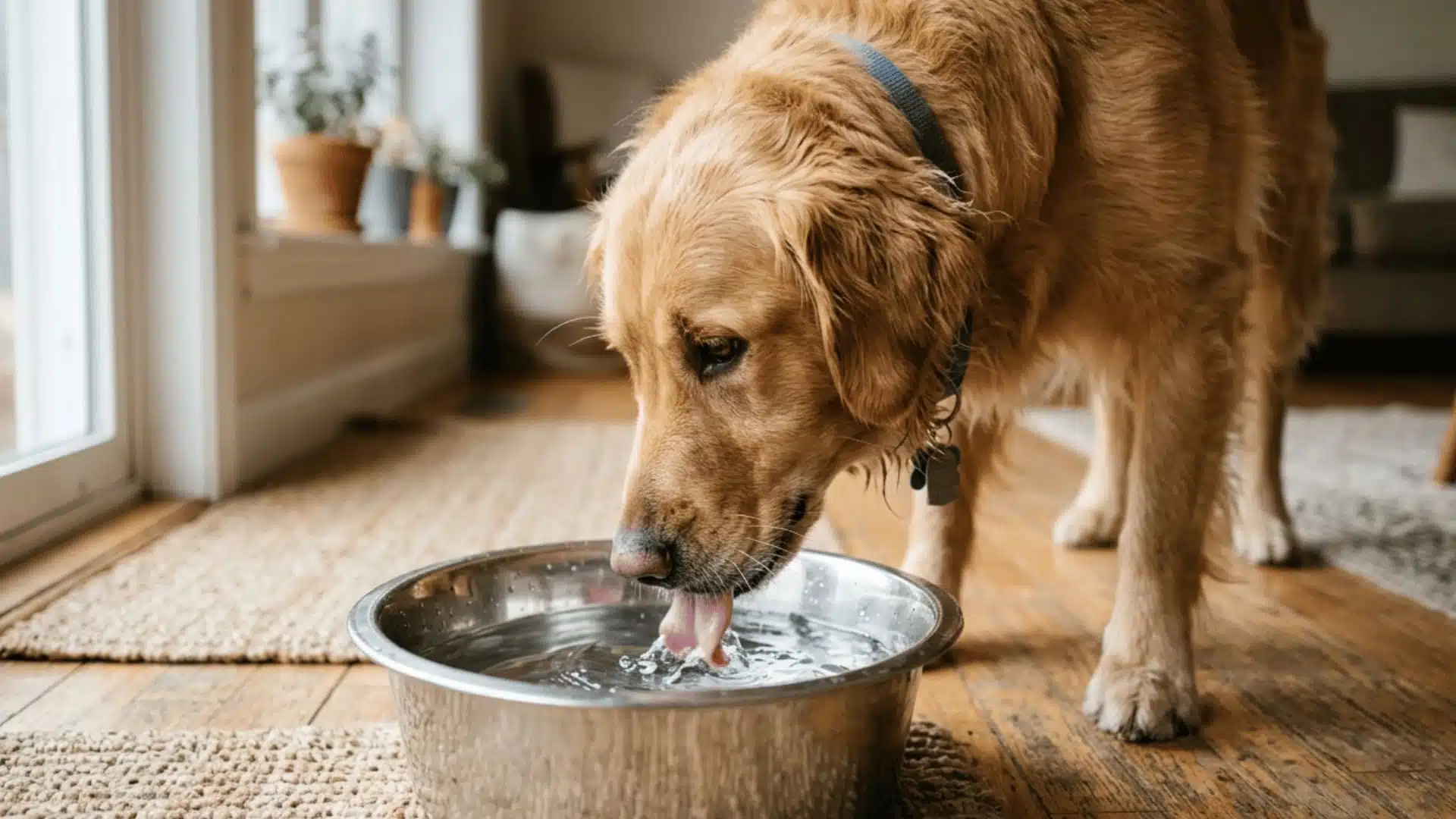
Water plays a major role inside your dog’s body, helping move nutrients, regulate temperature, support digestion, and keep joints working smoothly.
Even a small drop can affect how the body functions. Dogs constantly lose fluids through panting, urination, and even breathing, and this is usually balanced by drinking water or eating wet food.
When that balance breaks, dog dehydration begins. A simple rule is that dogs need about one ounce of water per pound of body weight daily, so a 50-pound dog should drink around six cups.
Active dogs, nursing mothers, and those in warm conditions need more. Vets classify it as mild (under 5%), moderate (5-10%), or severe (above 10%), which requires urgent care.
Serious Signs of Dog Dehydration

Some symptoms clearly signal that dehydration has gone beyond mild or moderate levels, and waiting it out at home can put your dog at serious risk.
1. Sunken Eyes
When a dog’s eyes appear sunken, it usually means significant fluid loss has already occurred.
The fat and tissue that support the eyes begin to shrink due to dehydration, creating a hollow look. This is not an early warning sign; it points toward moderate to severe dehydration.
If you notice this along with lethargy or weakness, it is a strong indicator that your dog needs immediate veterinary attention instead of home care.
2. Thick Saliva
Normal saliva is light and watery, but severe dehydration can make it thick, sticky, and even stringy. You might see mucus-like strands around your dog’s mouth or lips.
This happens because the body is trying to conserve remaining fluids. Thick saliva can also make swallowing difficult, which reduces food and water intake further.
At this stage, hydration cannot be restored easily at home, and professional treatment becomes necessary.
3. Skin Losing Elasticity
A common way to check hydration is to gently pinch your dog’s skin and release it. In a healthy dog, it snaps back instantly.
In a dehydrated dog, the skin returns slowly or stays slightly raised. This delayed movement shows the tissues lack proper fluid levels.
It is one of the most reliable physical signs of severe dehydration, and it usually means your dog needs veterinary fluids to recover safely.
4. Pale or White Gums
Healthy gums should look pink and moist. If they appear pale, grey, or white, it signals poor blood circulation along with dehydration.
This can point toward shock, which is a life-threatening condition. At this stage, offering water is not enough, and delaying action can make things worse.
Immediate veterinary care is critical, and it is best to call ahead so the clinic is prepared for emergency treatment.
5. Signs of Heat Stroke
Severe dehydration often overlaps with heat stroke, especially in hot conditions. When a dog’s body temperature rises above safe levels, symptoms like excessive panting, disorientation, stumbling, or collapse can appear.
If the temperature continues to climb, organs may begin to fail. In this situation, start cooling your dog with cool water right away and head to an emergency vet.
Quick action can make the difference between recovery and serious complications.
What are the Most Common Causes of Dog Dehydration?

Dog dehydration often builds from simple, everyday situations that owners overlook. Small habits or conditions can quietly reduce water intake or increase fluid loss faster than expected.
- Not drinking enough water: Some dogs naturally drink less, especially if the bowl is dirty, water feels warm, or placement makes them uncomfortable.
- Hot weather and heat exposure: Dogs rely on panting to cool down, which releases moisture fast, especially during sunny outdoor time without proper water breaks.
- Vomiting and diarrhea: Both remove fluids quickly, and repeated episodes drain not just water but also essential electrolytes in a short span.
- Illness or infections: Health issues such as kidney problems, diabetes, or fever can reduce thirst or increase fluid loss, worsening dehydration.
- Over-exercising without hydration: Long activity sessions increase panting and fluid use, and without water intake, the body cannot replace what it loses. If you regularly use dog enrichment activities to keep your dog mentally and physically stimulated, always pair those sessions with consistent water access before, during, and after.
Water-Rich Foods to Boost Your Dog’s Hydration

One of the most practical but underrepresented strategies for keeping dogs hydrated is food. Many dogs who don’t drink enough water will readily absorb moisture from their food.
Safe high-moisture foods to offer dogs:
- Watermelon (seedless, no rind): 92% water, low calorie, dogs typically love it
- Cucumber: 95% water, crunchy, almost no calories, great as a training treat
- Cooked plain chicken broth (no onion, no garlic, low sodium): can be mixed into food or frozen into ice cubes
- Plain canned pumpkin (not pie filling): 90% water, also supports gut health
- Blueberries: 84% water, antioxidant-rich, bite-sized for any dog. For a creative way to serve these, frozen dog treat recipes using ingredients like watermelon, broth, and blueberries make it easy to combine hydration with something dogs actually get excited about.
- Plain wet dog food or food toppers: The easiest, most reliable way to boost moisture intake in kibble-fed dogs
What not to use: Gatorade and most human sports drinks contain sugar and artificial sweeteners that are inappropriate or dangerous for dogs. Diluted, unflavored Pedialyte is sometimes recommended by vets in mild cases, but always check dosage with your vet first.
When Should You See a Vet for Dog Dehydration?

Some cases of dog dehydration need more than home care, and waiting too long can make things worse. Knowing when to step in matters.
If your dog shows no improvement after a few hours of basic care, it is time to act. A dog that refuses to drink, stays low on energy, or looks worse should be checked by a vet without delay.
Ongoing vomiting or diarrhea is another clear sign. When fluids are leaving the body faster than they can be replaced, dehydration worsens quickly, and electrolyte balance gets disturbed, affecting normal body function.
Emergency signs such as pale gums, rapid breathing, or collapse should never be ignored. These point to shock, in which vital organs are not receiving enough blood or fluids.
Puppies and senior dogs are at higher risk. Their bodies cannot handle fluid loss well, so even mild symptoms should be taken seriously and checked early.
How to Manage Mild Dog Dehydration at Home

If dehydration is mild, acting quickly at home can help stabilize your dog before the condition worsens. The focus should be on restoring fluids slowly without overwhelming the body.
Start by offering small, controlled amounts of water, such as teaspoons for small dogs and a few tablespoons for larger ones, to avoid triggering vomiting.
You can also use a diluted electrolyte solution like unflavored Pedialyte mixed with water to help replace lost minerals, but the quantity should suit your dog’s size.
Adding water-rich foods like watermelon, cucumber, or plain broth can further support hydration. At the same time, move your dog to a cool, shaded area to reduce ongoing fluid loss caused by heat.
Keep checking their gums and skin every 30 minutes, and if there is no visible improvement within one to two hours, it is best to contact a vet.
How to Prevent Dehydration in Dogs
Preventing dog dehydration comes down to consistent daily habits. Small changes in routine can make a big difference in keeping your dog properly hydrated.
- Keep fresh water available: Make sure clean water is always within reach, both indoors and outdoors, as dirty or stale water can reduce a dog’s willingness to drink.
- Adjust intake in hot weather: Offer water more often on warm days, keep your dog in shaded areas, and limit outdoor activity during peak heat hours.
- Hydrate during walks: Carry water on longer walks and let your dog drink before, during, and after activity instead of waiting for signs of thirst.
- Watch sick dogs closely: Dogs recovering from illness need extra care, as they can lose fluids quickly and may not drink enough on their own.
- Include wet food: Adding wet food or mixing it with kibble helps boost daily water intake, especially for dogs that naturally drink less.
Conclusion
Dehydration in dogs is not just a minor issue; it can escalate quickly and affect vital organs if left unchecked. Early recognition makes all the difference.
Simple checks like gum moisture, skin elasticity, and energy levels can help identify a problem before it becomes severe.
Consistent access to clean water, adjusting intake based on weather and activity, and adding moisture-rich foods are small steps that support long-term health.
Responsible care comes down to awareness and timely action. When signs appear, acting early can prevent unnecessary complications and stress for both the dog and the owner.
If anything feels off, it is always better to consult a veterinarian rather than wait.
Stay proactive with daily hydration habits, and keep a close eye on changes. For more pet health guides and practical care tips, continue reading and make every step count toward better care.
Frequently Asked Questions
How Quickly Can a Dog Become Dehydrated?
In hot conditions without access to water, a dog can progress from mild to severe dehydration in under 2-3 hours. Small dogs, puppies, and brachycephalic breeds can deteriorate even faster.
Is it Normal for a Dog Not to Drink Much Water?
Some dogs are naturally lower drinkers than others, especially those on wet food. But a dog that drinks noticeably less than usual, or refuses water entirely, warrants a vet call.
Can Dehydration Cause Permanent Damage?
Yes. Prolonged or severe dehydration can cause kidney damage, organ failure, and in extreme cases, death. Even moderate dehydration impairs organ function and should be taken seriously.