


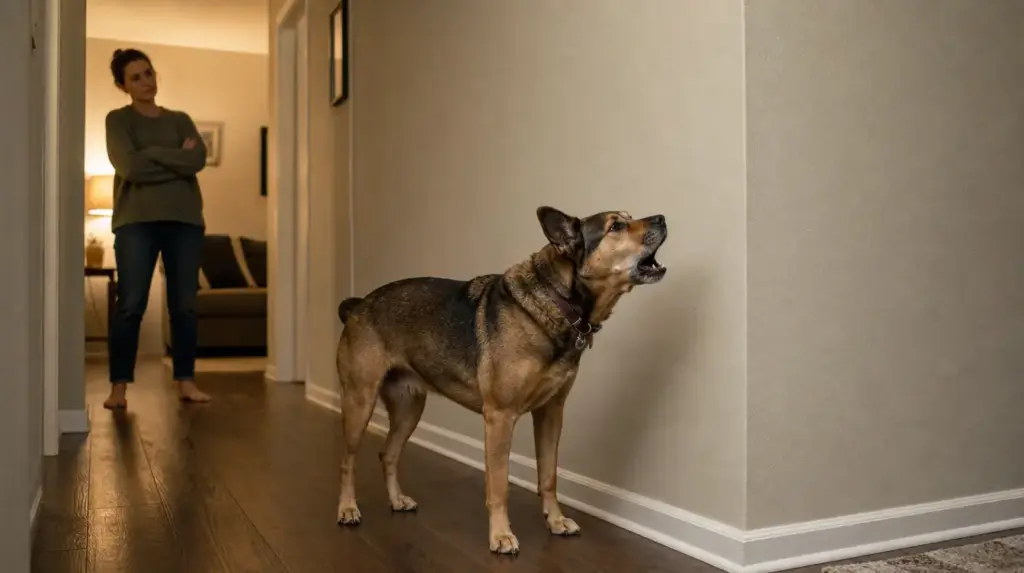
I know how unsettling it can feel when your dog suddenly stares at a blank wall or dark hallway and starts barking. You look in the same direction, see nothing unusual, and may wonder what your dog can detect that you cannot.
If you are asking, “why is my dog barking at nothing,” start by noting when it happens, where your dog looks, and what occurs just before the barking begins.
Dogs may react to faint sounds, slight movement, unfamiliar scents, anxiety, boredom, territorial behavior, pain, or age-related changes.
I will help you sort through these possible causes, respond calmly, reduce repeated barking, and recognize the signs that mean your dog should be examined by a veterinarian.
How to Read Unexplained Barking
Barking that appears random often follows a consistent time, location, or event. Before responding, notice whether your dog focuses on a window, wall, doorway, appliance, or outdoor area.
Body language can provide another clue. A stiff posture may suggest alertness, while pacing, hiding, trembling, or difficulty settling may indicate distress; AKC’s guide to reading these stress signals breaks down what each one typically means. Record when each episode begins, how long it lasts, and what happened immediately beforehand.
These observations can help separate an occasional reaction from a repeated behavior that may require environmental changes, training support, or veterinary attention.
Why Does My Dog Keep Barking at Nothing?
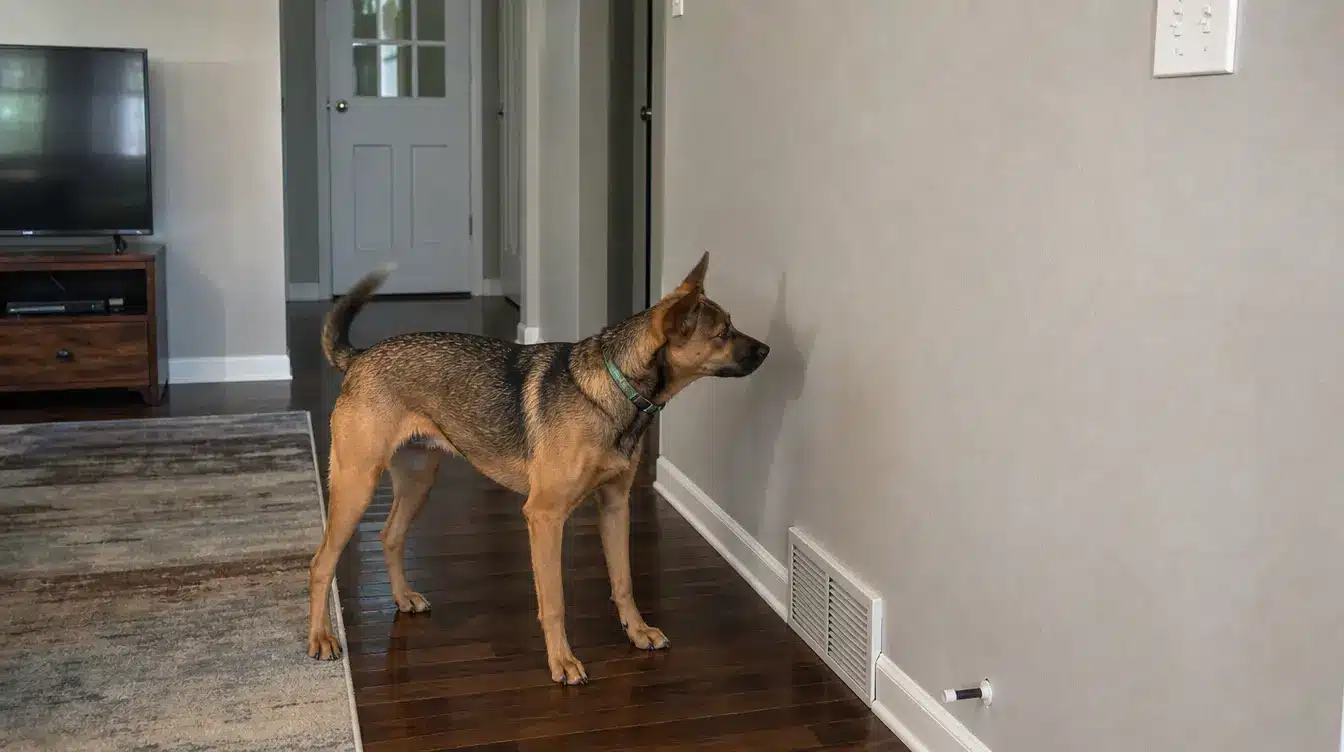
A quiet room may contain sounds, scents, and movement that your dog notices before you do. The behavior may also come from an emotional response or a change in health.
1. Sounds You Cannot Hear
Dogs can detect higher-frequency sounds than people, including noises made by electronics, rodents, distant animals, pipes, or activity in another room. Walls and closed windows may reduce these sounds without completely blocking them.
People generally cannot hear frequencies above 20,000 Hz, while dogs can detect much higher-frequency sounds. The exact distance at which your dog notices a noise depends on its pitch and volume, the surroundings, weather conditions, and your dog’s hearing.
2. Movement You Cannot See
Dogs notice small movements and generally see better than people in dim light. Reflections, passing headlights, curtain shadows, insects, wildlife, or movement outside a side window may catch their attention, an advantage rooted in the structure of a dog’s eye rather than simple curiosity.
Their field of vision also differs from yours, so your dog may notice movement without turning their head directly toward it.
3. Unfamiliar Scents
A visitor, new object, outdoor animal, or open window may introduce a scent that seems ordinary to you but unfamiliar to your dog.
Wind and humidity can also carry outdoor odors into the home, and a dog’s nose is built to detect scents at concentrations people could never detect. Repeated barking toward one wall or floor area may warrant checking for rodents, insects, or other hidden sources.
4. Anxiety, Boredom, or Alert Behavior
Some dogs bark when they feel worried, frustrated, excited, protective, or underoccupied. Common triggers include being left alone, changes to the household routine, outdoor activity, unfamiliar visitors, or a lack of suitable physical and mental activity; structured play and problem-solving games can help fill that gap between walks.
Watch your dog’s entire response. Pacing, a tucked tail, raised fur, repeated window-checking, stiff posture, or difficulty settling can provide clues about the reason for the barking.
The cause may involve more than one factor. Your dog might hear someone outside and also feel anxious or protective about the sound.
Why It Often Happens at Night
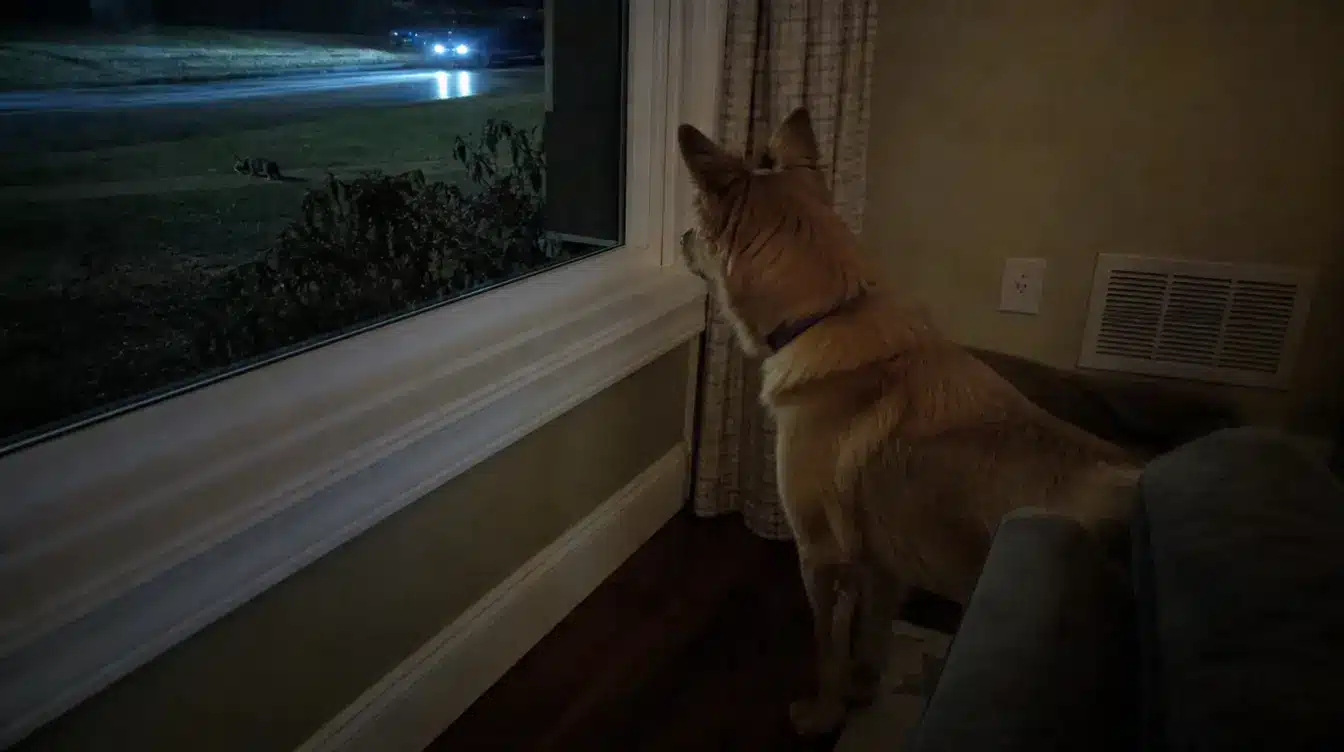
Nighttime barking can feel more concerning because the house appears quiet and empty. With less background noise, your dog may hear wildlife, rodents inside walls, neighbors, vehicles, pipes, or heating systems that are harder to notice during the day.
Visual triggers can also become more noticeable after dark. Passing headlights may create reflections across walls, while insects or animals moving outside can catch your dog’s attention through a window.
Early-morning barking may have a different cause. Your dog might need to go outside, expect breakfast, or respond to activity beginning in the neighborhood. For puppies, the timing may also relate to how bathroom schedules develop.
Track when the barking begins and which direction holds your dog’s attention. Repeated times or locations often point to an environmental trigger, while barking accompanied by confusion, pain, pacing, or changes in movement warrants veterinary attention.
What to Do When the Barking Starts
Your immediate response can either calm the situation or intensify the barking. Stay neutral while checking what may have attracted your dog’s attention.
- Check the surroundings: Look through nearby windows and listen for animals, people, vehicles, pipes, appliances, or movement inside walls.
- Call your dog away: Use a familiar cue and reward them when they turn toward you or move away from the trigger.
- Avoid shouting: Your dog may interpret yelling as attention or as confirmation that something is wrong.
- Record the episode: Note the time, location, duration, body language, and events that occurred immediately beforehand.
- Take a short video: Record the behavior when it is safe so a veterinarian or behavior professional can review it.
A record kept for several days can reveal patterns that are easy to miss when each episode is considered separately, and having a few go-to reward options ready makes it easier to reinforce calm behavior in the moment.
How to Reduce Repeated Barking

Once you identify the likely cause, choose a response that addresses that trigger. Avoid trying several unrelated methods at the same time because it becomes difficult to tell what is helping.
- Block visual triggers: Close curtains, apply removable window film, or move your dog’s bed away from a busy window.
- Reduce outside noise: Use a fan, quiet background audio, or a resting area farther from doors and shared walls.
- Provide suitable activities: Walks, sniffing time, play, food puzzles, and short training sessions, based on your dog’s age and health.
- Reward quiet behavior: Give praise or a small treat when your dog notices a trigger and remains calm.
- Practice a quiet cue: Teach the cue during manageable situations instead of waiting until your dog is highly aroused.
- Avoid punishment: Shock, pain, intimidation, or angry reactions may increase fear without addressing the cause.
Consistency matters more than reacting strongly. Rewarding the response you want gives your dog a clearer way to behave around familiar triggers.
When to Contact a Veterinarian
Not every barking episode requires medical care. Consider how suddenly it started, how often it occurs, and whether other physical or behavioral changes are present.
| What You Notice | Recommended Response |
|---|---|
| Occasional barking with an identifiable trigger and otherwise normal behavior | Monitor the pattern and manage the trigger at home |
| New or increasing barking that repeatedly interrupts sleep | Arrange a veterinary appointment |
| Pacing, confusion, appetite changes, reduced energy, or sensitivity to touch | Contact your veterinarian promptly |
| Changes in hearing, vision, balance, or movement | Schedule a veterinary assessment |
| Collapse, seizure, severe breathing difficulty, suspected poisoning, or intense pain | Seek emergency veterinary care immediately |
This table helps readers distinguish manageable alert barking from behavior that may need routine, prompt, or emergency veterinary care.
Senior dogs with canine cognitive dysfunction may become disoriented, develop altered sleep patterns, or vocalize more often. Pain, anxiety, sensory loss, and neurological conditions can cause similar changes, so barking alone cannot identify the underlying problem.
Final Take
If you are still asking, “why is my dog barking at nothing,” focus on patterns instead of assuming there is no cause. Note the time, location, body language, nearby sounds, and anything that changed before each episode.
Reduce visible or audible triggers, provide suitable activity, and reward calm behavior without shouting or punishment. Occasional alert barking may be normal, but sudden, persistent, or hard-to-interrupt barking deserves closer attention.
Contact your veterinarian if it begins with pain, confusion, pacing, changes in sleep, altered appetite, reduced energy, or unusual movement.
Start a barking log today and record each episode for one week so you have clear information if professional help becomes necessary.
Frequently Asked Questions
Can a Camera Help Identify the Trigger?
Yes. A home camera can show where your dog looks, what happens before barking, and whether the behavior occurs only when nobody is nearby. Save relevant clips for your veterinarian or behavior professional.
Should I Use a Bark Collar?
Avoid devices that rely on shock, pain, or fear. They may suppress barking without addressing its cause. Use trigger management, reward-based training, and qualified professional help instead.
Who Can Help with Persistent Barking?
Begin with your veterinarian when the behavior is sudden or accompanied by other changes. For an ongoing behavioral issue, seek help from a board-certified veterinary behaviorist or a qualified reward-based trainer.
Could Something Be Living in the Wall?
Possibly. Rodents and insects can create faint sounds or movement inside walls. Check for droppings, damage, or repeated attention to one location, then contact a licensed pest professional if needed.