If your dog just snatched a piece of avocado off the counter, you’re probably not in the mood for a long lecture on canine nutrition right now; you want a straight answer, fast.
So here it is: can dogs eat avocado? In small amounts, plain avocado flesh generally isn’t a huge cause for alarm for most dogs.
But avocado isn’t something you should be handing out as a regular treat either, and the real risks aren’t always where people expect them to be.
A lot of the fear around avocado and dogs gets lumped into one big “toxic!” warning, when in reality, different parts of the fruit carry very different levels of risk.
Can Dogs Eat Avocado Safely?
This is the question everyone actually wants answered, so let’s not bury it. A small taste of plain, ripe avocado flesh, no salt, no seasoning, no guacamole mix-ins, is something many dogs can handle without a dramatic reaction.
The bigger issue is that avocado flesh is pretty fatty. A dog sneaking a small lick is a very different situation from a dog polishing off half an avocado on their own.
Larger amounts can upset the stomach fast, and some dogs are more sensitive to rich, fatty foods than others; it really comes down to your individual dog’s size, age, and overall health.
How Much is Actually “Too Much”?
“Small amount” means something different depending on the dog in front of you, so it helps to think in rough size terms rather than a fixed number.
- A lick or a tiny nibble (think: a fingertip-sized taste) is unlikely to cause much of anything in most healthy adult dogs.
- A tablespoon or so of flesh might be fine for a large dog but could realistically upset a small dog’s stomach.
- A quarter avocado or more, especially for a dog under 20 pounds, is enough fat in one sitting to raise real concern, even without any pit or skin involved.
- Any amount is worth more caution in dogs with a history of pancreatitis, existing digestive issues, or those who are already overweight; for these dogs, “small” doesn’t apply the same way.
This isn’t a precise dosing chart; it can’t be, since so much depends on the individual dog, but it’s a more useful way to think about risk than “small vs. large” alone.
Nutritional Data of an Avocado
To understand why the fat content matters so much, it helps to see the actual numbers. Here’s a general breakdown of what’s in about 100 grams of raw avocado flesh, roughly half a medium avocado.
| Nutrient | Approximate Amount (per 100g) |
|---|---|
| Calories | ~160 kcal |
| Water | ~73% |
| Total fat | ~15g |
| — Saturated fat | ~2g |
| — Monounsaturated fat | ~10g |
| Protein | ~2g |
| Carbohydrates | ~9g |
| Fiber | ~7g |
| Sugar | Less than 1g |
| Potassium | ~485 mg |
| Folate | ~80mcg |
| Vitamin K | ~21mcg |
| Vitamin C | ~10 mg |
That fat and fiber combination is exactly why a few bites can sit fine with most dogs, while a larger amount can hit their digestion hard; there’s simply a lot packed into a small volume of fruit.
Avocado also contains relatively little protein, so it shouldn’t be viewed as a meaningful protein source for dogs. A balanced diet instead relies on appropriate healthy protein sources for dogs along with the other nutrients they need.
These figures are general averages for raw avocado flesh and can shift somewhat depending on ripeness, growing conditions, and variety, so treat them as a reasonable ballpark rather than an exact lab measurement for any single fruit. They’re also human nutrition reference values, not a dosing guide for dogs, a dog’s much smaller body size means even a “moderate” amount of fat by human standards is a proportionally bigger load for them to digest.
What Should You Do If Your Dog Ate Avocado?
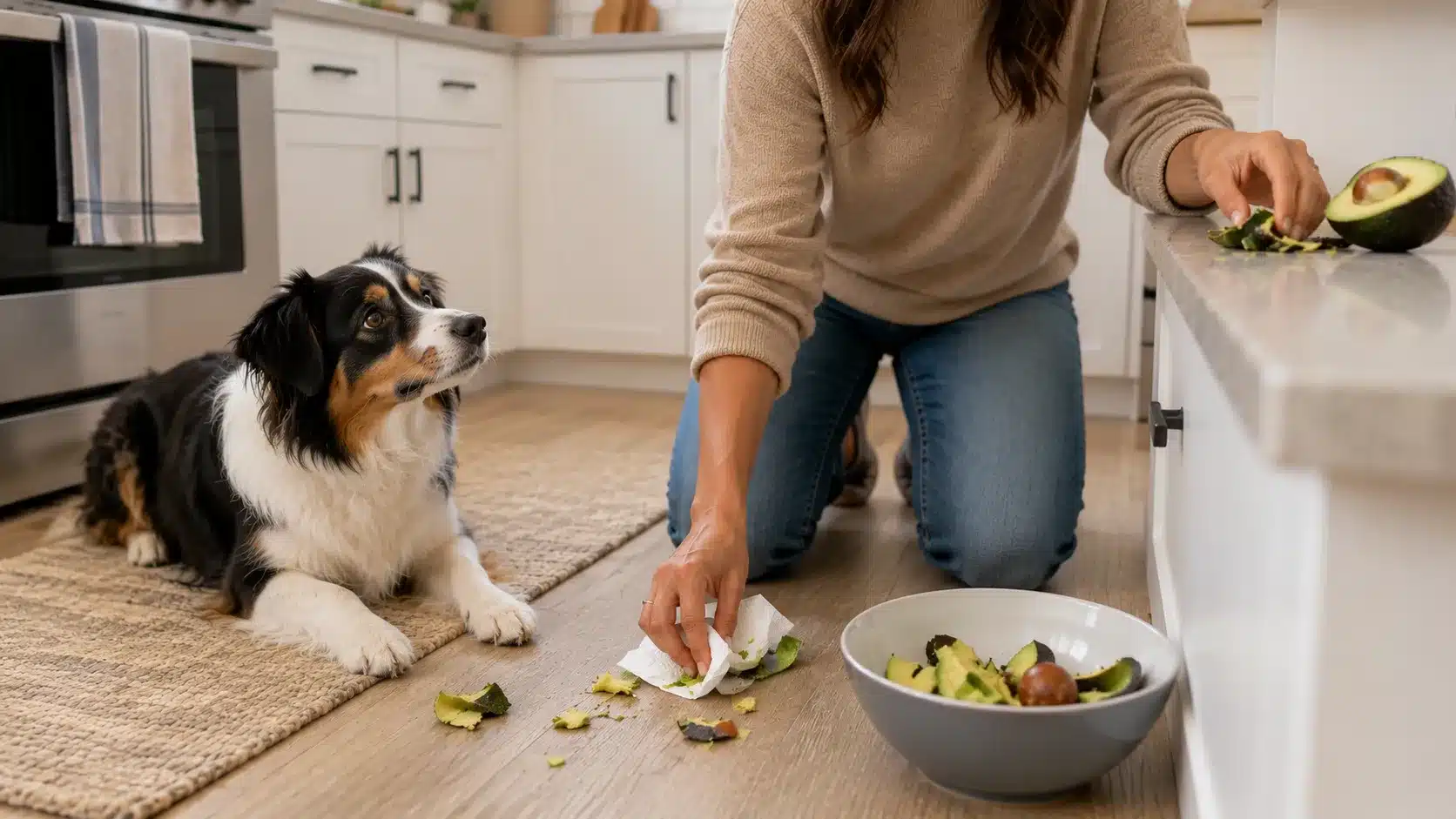
Okay, so the avocado’s already been eaten, and you’re standing in the kitchen trying to figure out your next move. Here’s a simple way to work through it.
1. Figure Out Exactly What Your Dog Ate
Before you panic, take thirty seconds to actually assess the situation. Did your dog get into just the flesh, or was the pit involved too? Was there skin lying around?
Did they somehow get into a plant and chew on avocado leaves? Also think about whether it was plain avocado or something mixed in, like guacamole or avocado toast, because those add other ingredients into the equation.
2. Get Rid of Any Leftover Avocado
This sounds obvious, but in the chaos of the moment it’s easy to forget. Clear away whatever’s left on the counter, on the floor, wherever, so your dog can’t go back for seconds while you’re figuring out what to do next.
Check nearby trash cans too, since dogs are often just as happy to dig out a discarded pit or peel as they were to grab the original piece.
The same caution applies to other tempting items dogs may grab from the kitchen, including bones that are safe for dogs to chew versus those that can splinter, cause choking, or create digestive problems.
3. Watch Your Dog Closely
Once the immediate mess is handled, shift into observation mode. Keep an eye on their behavior, appetite, energy, and bathroom habits over the next several hours.
Every dog reacts a little differently, and how they respond often depends on how much they ate and which part of the avocado was involved.
What NOT to Do
In the panic of the moment, a few instincts can actually make things worse rather than better.
- Don’t induce vomiting on your own. It’s rarely necessary for avocado flesh alone, and doing it incorrectly can cause more harm than the avocado itself, including aspiration risk. Only do this if a vet specifically instructs you to and tells you how.
- Don’t give milk, oil, or butter “to help it pass.” This is a common piece of home advice for blockages, but it isn’t a reliable fix and can add even more fat on top of what’s already causing the problem.
- Don’t wait it out just because “it’s only fruit.” The fruit itself is usually the smaller concern; the pit is the part that can turn into a genuine emergency, and that’s not something a wait-and-see approach is well suited for.
- Don’t assume a calm dog means nothing happened. A pit can sit without symptoms for a stretch of time before causing a blockage. Calm right now doesn’t rule out a problem developing later.
Why is Avocado Actually Risky for Dogs?
There’s a lot of internet folklore around avocado being “toxic” to dogs, so let’s separate the myth from the more practical concerns.
The Persin Question
Avocados contain a natural compound called persin, known for causing serious problems in animals like birds and horses. Dogs tend to tolerate persin considerably better than those species do; this is actually one of the more overstated fears out there.
The ASPCA Animal Poison Control Center lists avocado as a food to avoid for pets generally, largely because of the fat content and pit risk rather than persin toxicity specific to dogs.
The Fat Content Problem
Avocado is naturally high in fat, which is part of why humans love it so much. A sudden intake of high-fat food can throw a dog’s digestion off balance fast, even without persin being involved at all.
In more serious cases, a sudden fat load like this can contribute to pancreatitis, inflammation of the pancreas that causes real pain, vomiting, and sometimes requires hospitalization.
This is more serious than ordinary stomach upset, and it’s the main reason vets take “how much fat” questions seriously rather than shrugging them off.
The Pit Is the Real Danger
The pit is genuinely the biggest physical hazard in an avocado, smooth, hard, and just the right size to get stuck. A lodged pit can cause serious harm and sometimes requires surgery to remove.
A Special Note on Guacamole
Guacamole deserves its own callout, because it’s not just “avocado with extra steps.” Onion and garlic, both genuinely toxic to dogs in meaningful amounts, are common guacamole ingredients, along with heavy salt and lime.
If your dog got into guacamole rather than plain avocado, treat it as a different, higher-risk situation than plain flesh alone, and mention the full ingredient list if you call your vet.
Taken together, these factors explain why avocado isn’t a simple yes-or-no food. The real danger usually comes down to the pit, the amount eaten, and what else was mixed in, not the fruit being “toxic” in the dramatic way people often assume.
What Symptoms Should You Watch For?
Not every dog reacts the same way after eating avocado, so it helps to know what’s normal versus what’s a red flag. After your dog’s had a run-in with avocado, keep an eye out for these signs over the following hours and days.
| Symptom | Possible Reason |
| Vomiting | Digestive irritation |
| Diarrhea | Stomach upset |
| Loss of appetite | General discomfort or nausea |
| Weakness or unusual tiredness | Body responding to distress |
| Stomach pain or bloating | Digestive disruption |
| Coughing or gagging | Possible pit-related blockage |
Mild symptoms like a bit of stomach upset are more likely if your dog only got into the flesh. Anything more severe, especially repeated vomiting, gagging, or visible discomfort, deserves a call to your vet rather than a wait-and-see approach.
When Should You Call a Veterinarian?
When in doubt, calling is almost always the safer move. But here’s a checklist to help you decide if it’s more than a “keep an eye on it” situation.
Reach out to a vet if:
- Your dog swallowed the pit
- They ate avocado skin or leaves
- A large amount of avocado went missing
- Vomiting keeps happening rather than settling down
- Your dog can’t keep food or water down
- They seem to be in pain, or their belly looks swollen
- They’re unusually weak, lethargic, or “just not themselves”
If you’re not sure how much your dog actually ate, that uncertainty alone is a good enough reason to call. Vets would much rather field a precautionary call than see a dog after a blockage has already become an emergency.
Safer Fruit Alternatives for Dogs
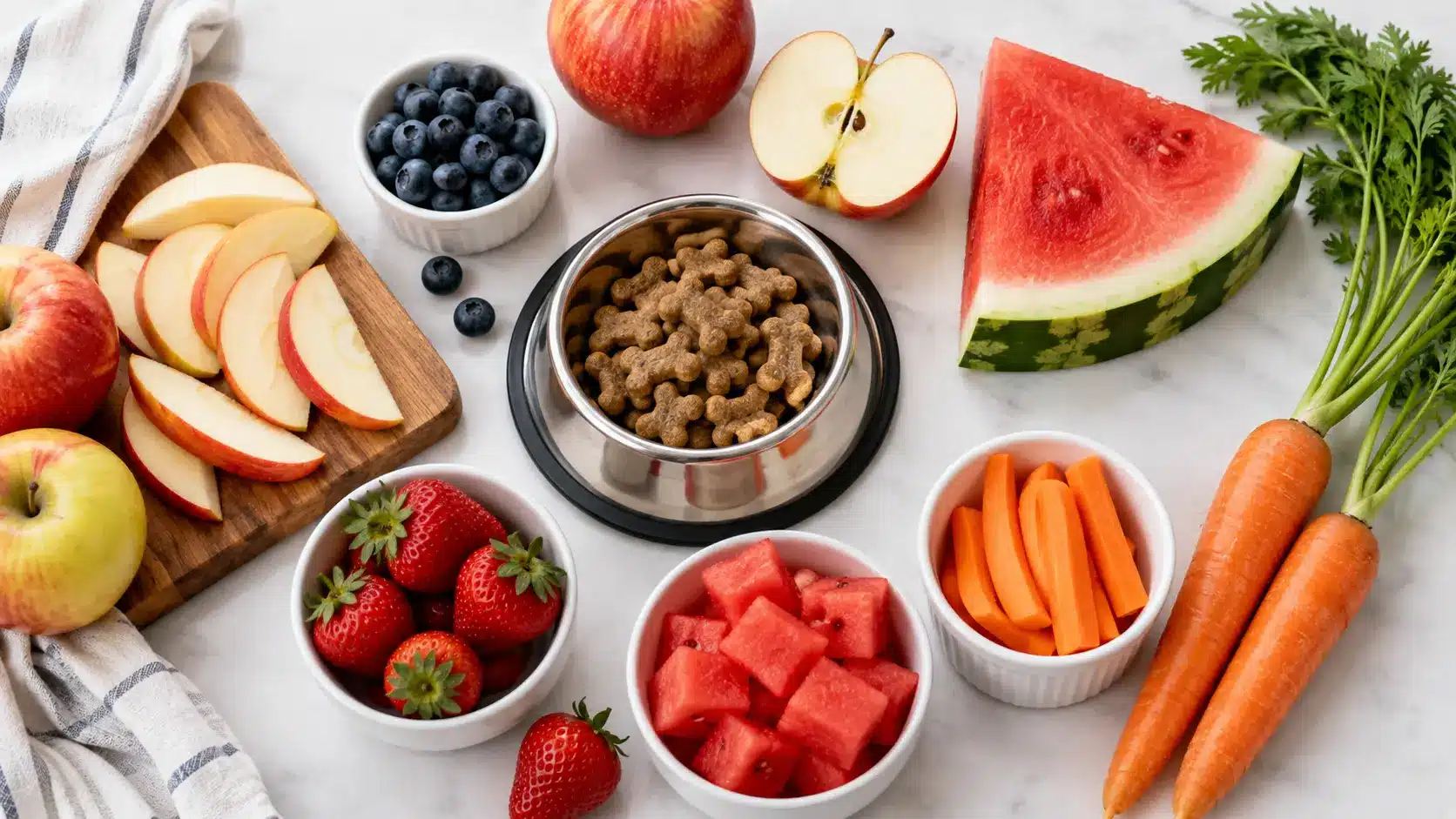
If you want to share a snack with your dog without worrying about avocado, several simpler, dog-friendly options can work well:
- Apple slices: Remove the seeds and core before serving.
- Blueberries and strawberries: These offer a naturally sweet, bite-sized treat.
- Watermelon: Remove the seeds and rind before giving it to your dog.
- Carrot pieces: Plain carrots provide a crunchy, satisfying snack.
Keep treats to a small part of your dog’s overall diet so they don’t replace balanced, complete meals.
What Dog Owners are Saying on Reddit?
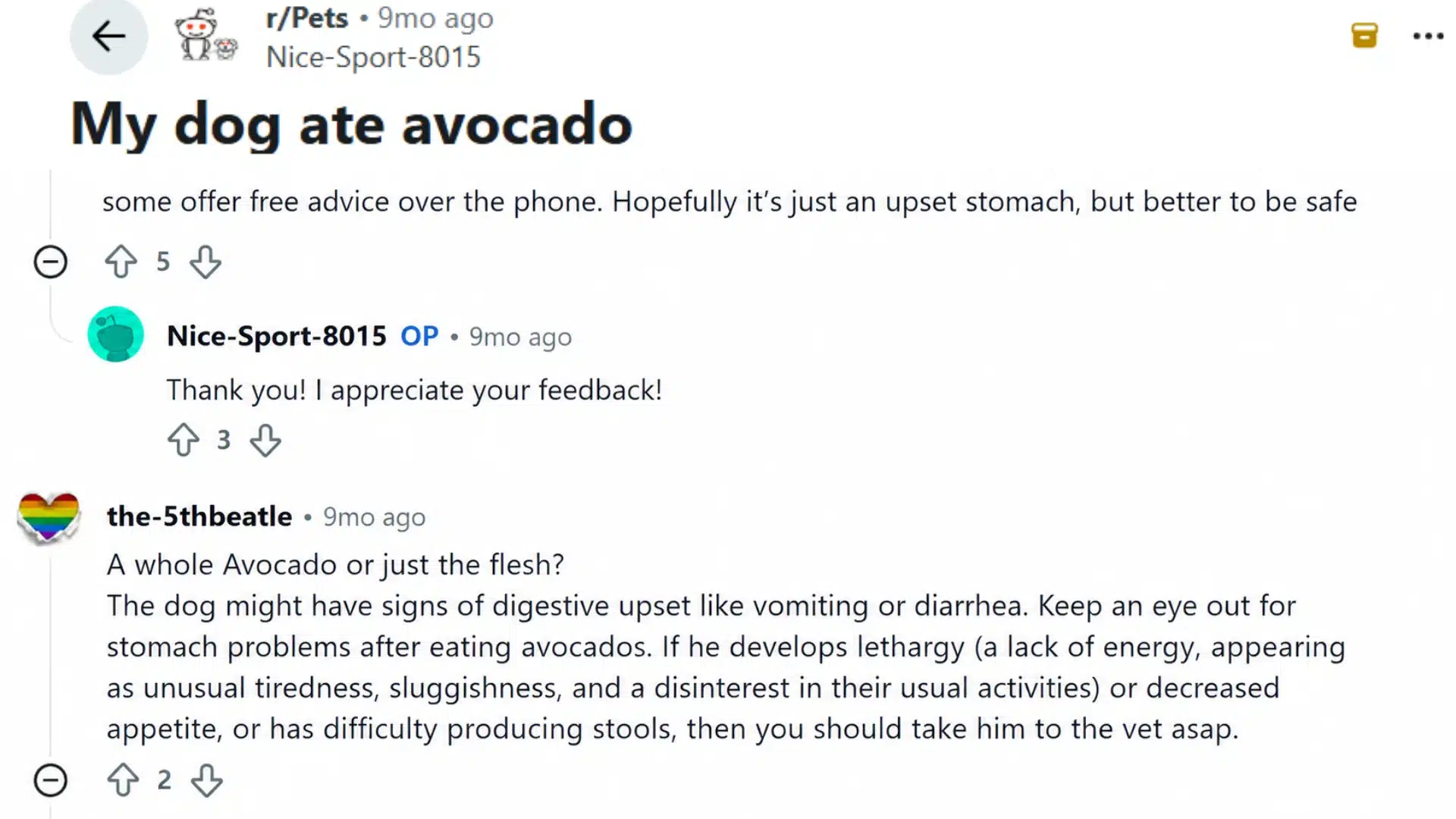
Anxious pet owners often turn to Reddit after an avocado mishap, and the community advice tends to line up with what vets recommend.
Commenters generally note that the flesh itself isn’t the main worry, but the pit poses a real blockage risk worth watching closely.
Owners are typically advised to track whether it was the whole avocado or just the flesh, then monitor for vomiting, diarrhea, lethargy, or low appetite.
The consistent takeaway: mild digestive upset can often be watched at home, but bloating, weakness, or difficulty with stools should prompt an urgent vet visit rather than waiting it out.
Tips to Prevent Future Avocado Incidents
Once the immediate situation is handled, it’s worth thinking about how to avoid a round two.
- Keep avocados, pits, and peels off the counter’s edge; dogs are surprisingly good at grabbing things that seem just out of reach.
- Use a lidded or dog-proof trash can, especially on days you’re prepping avocado; pits and skins in an open bin are an easy target.
- Be extra mindful during gatherings. Guacamole bowls left at dog-height on a coffee table during a party are one of the most common ways this happens.
- Watch houseplants: if you have an avocado plant or pit-growing project going, the leaves and pit are within the same risk category as the fruit itself.
- Loop in guests and family. A well-meaning visitor sneaking your dog a chip with guac is a common, avoidable version of this whole situation.
The Bottom Line
So, can dogs eat avocado? In small amounts, plain avocado flesh is something many dogs can tolerate without major issues, but the pit, skin, and leaves are where the real risks live, from digestive upset to serious blockages.
There’s really no nutritional reason for avocado to be part of your dog’s regular diet, and it’s always worth watching closely for symptoms after any accidental ingestion.
When in doubt, especially if the pit is involved, or your dog is showing any concerning symptoms, don’t wait it out.
Curious about other foods that might be lurking in your kitchen? Check out our other dog nutrition and safety guides to stay one step ahead.
Frequently Asked Questions
Is Avocado in Dog Food or Dog Treats Different from Raw Avocado?
Yes. Some commercial dog foods and treats include small, controlled amounts of avocado oil or avocado meal that have been processed specifically for pet safety.
Are Certain Dog Breeds More Sensitive to Avocado Than Others?
There isn’t strong evidence pointing to specific breeds being uniquely sensitive to avocado itself. However, smaller dogs generally have less margin for error with fatty foods and blockages simply due to their size.
Can Puppies Eat Avocado the Same Way as Adult Dogs Can?
Puppies tend to have more sensitive digestive systems overall, and their smaller size means less room for error if something goes wrong, whether that’s an upset stomach from fat content or a blockage risk from a pit fragment.