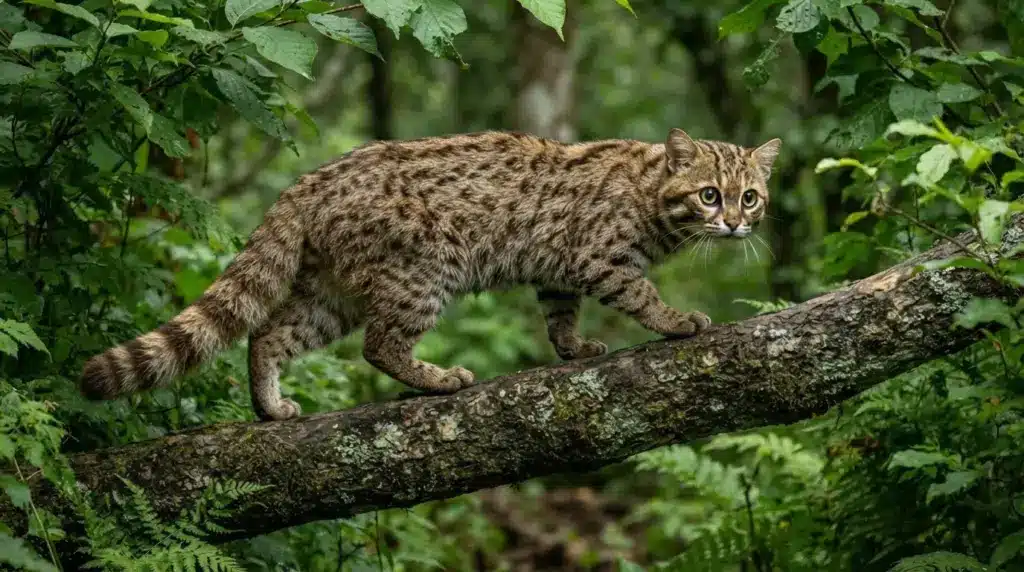
We know what you picture when someone says “wild cat”: a lion mid-roar, a tiger prowling through tall grass, maybe a leopard draped over a tree branch. Big. Fierce. Definitely not something that could curl up in your hands.
But here’s the surprise: some of the world’s wild cats are smaller than the house cat snoozing on your lap right now.
Tiny, scrappy, and every bit as skilled at hunting as their oversized cousins. From dense Asian forests to bone-dry deserts, these little felines have figured out how to survive on quiet feet and clever instincts, no size required.
Let’s meet them, starting with the smallest of them all.
What is the Smallest Wild Cat in the World?
That title belongs to the rusty-spotted cat (Prionailurus rubiginosus), a pint-sized hunter found in India, Sri Lanka, and parts of Nepal.
We’re talking 35 to 48 cm (14 to 19 inches) long and just 0.9 to 1.6 kg (2 to 3.5 lbs), about half the size of an average house cat.
Small enough to make you do a double-take, but don’t let that fool you. This cat moves fast, hunts often, and holds its own in forests, grasslands, and rocky terrain.
Its closest rival for the “smallest” crown is the black-footed cat of Africa. The two get compared constantly, and honestly, it’s close, but the rusty-spotted cat edges it out by a narrow margin.
Quick tip: Size ranges shift by region and by individual, so when you’re comparing cats, look at the average, not the one record-holder someone spotted once.
Tiniest Wild Cats Ranked
From dense Asian forests to dry African landscapes, some of the world’s smallest wild cats survive in very different environments. Their tiny bodies hide impressive hunting skills and unique adaptations.
These seven species are ranked by average size, starting with the smallest. While weight can differ between individuals, each cat has traits that help it survive in its own habitat.
1. Rusty-Spotted Cat
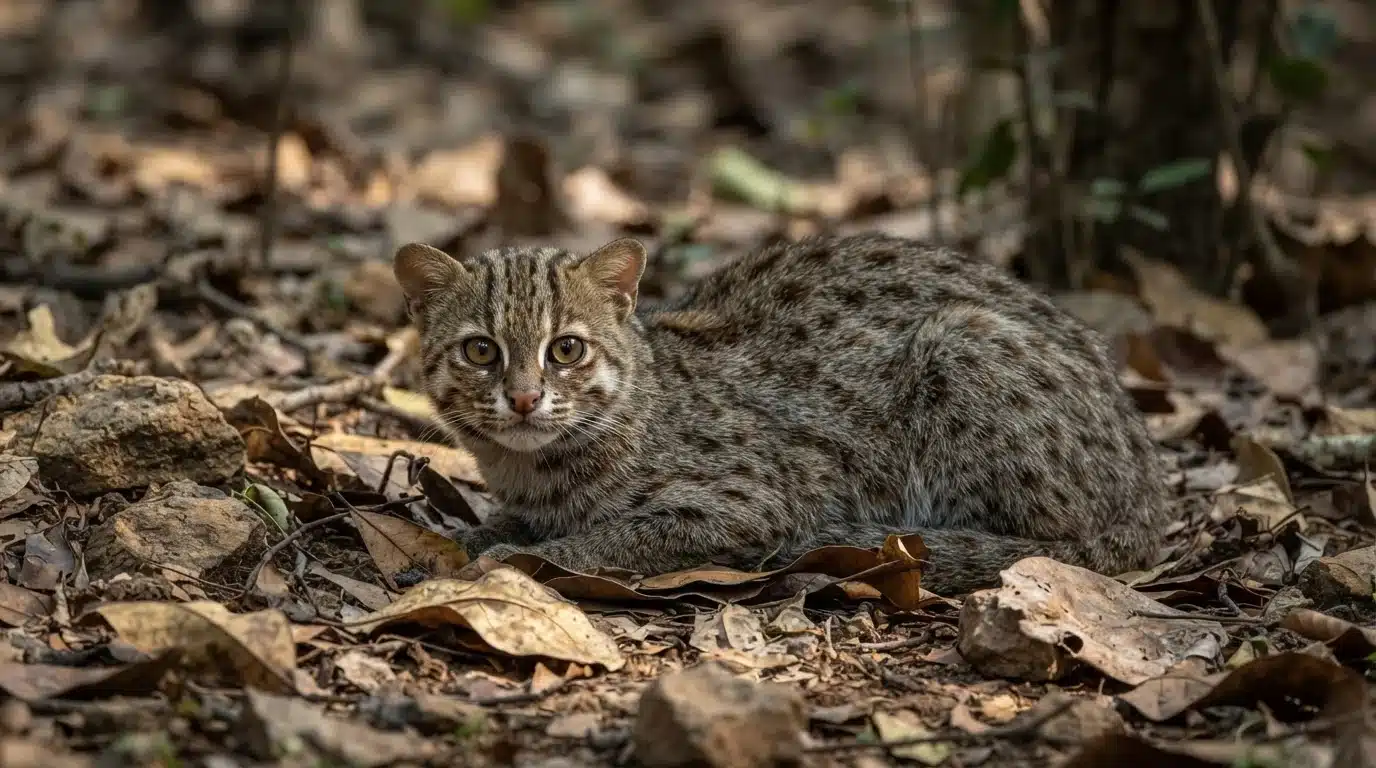
The rusty-spotted cat holds the title of the world’s smallest wild cat. Its name comes from the small rusty-red spots spread across its grey-brown coat, which help it blend into forests and rocky areas. This tiny feline has a compact body, short legs, and large eyes that support its nighttime hunting habits.
Despite its size, the rusty-spotted cat is an active predator that hunts rodents, birds, frogs, and insects. It moves quickly through dense vegetation and often rests in hidden spots during the day. Habitat loss, forest clearing, and road accidents are some of the biggest threats affecting its population.
- Size: It weighs around 0.9 to 1.6 kg (2 to 3.5 lbs) and measures about 35 to 48 cm (14 to 19 inches) long.
- Home: It is found mainly in India, Sri Lanka, and parts of Nepal, living in forests, grasslands, and scrub areas.
- Status: The species is listed as Near Threatened on the IUCN Red List due to habitat decline.
2. Black-Footed Cat
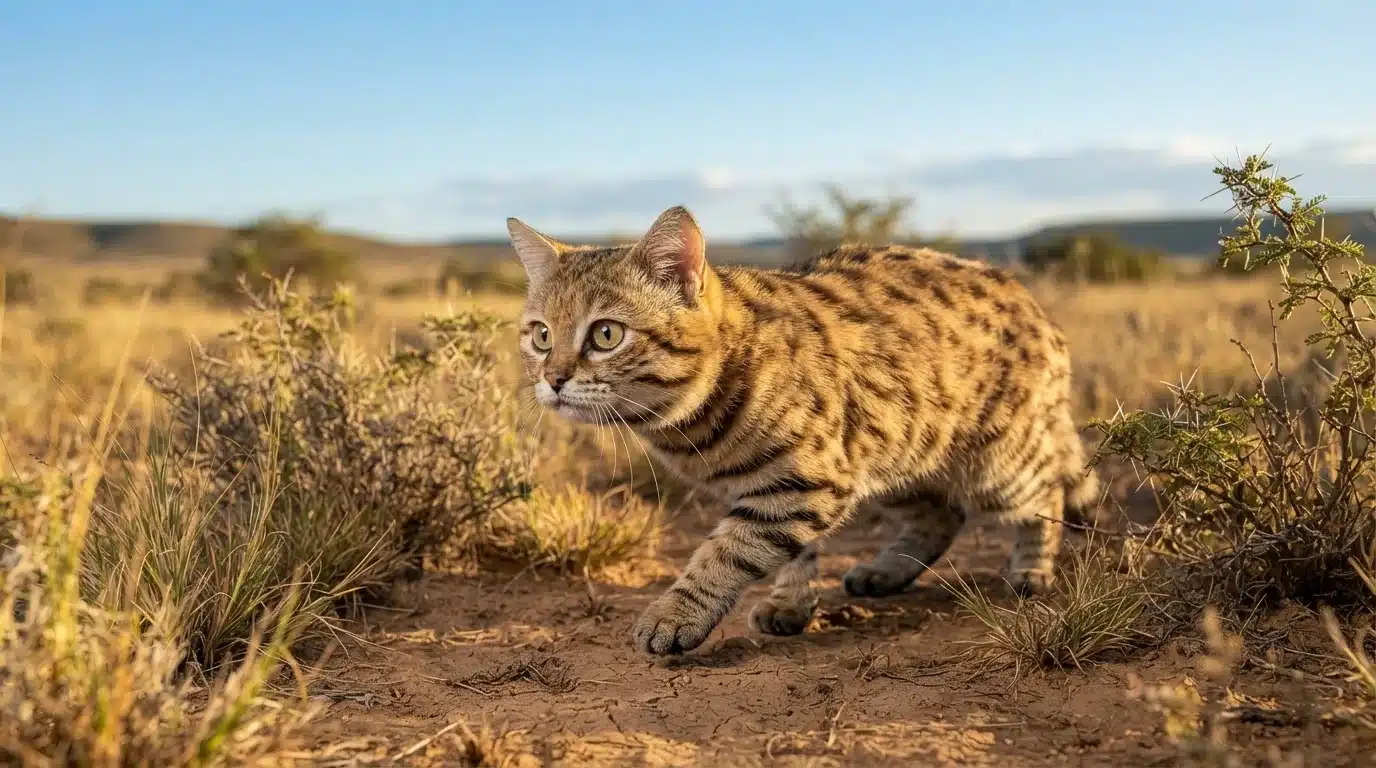
The black-footed cat is Africa’s smallest wild cat and one of the strongest hunters among small feline species. Its name comes from the dark-colored pads on the underside of its paws. It has a sandy coat with dark markings, large ears, and a body built for quick movement across dry landscapes.
This cat is often called one of the most successful hunters in the feline family because it catches prey more often than many larger cats.
It hunts mostly at night, targeting rodents, birds, and small reptiles. Information from black-footed cat research and facts helps explain more about this species’ behavior and hunting habits. Its survival depends on open grasslands and dry habitats where it can search for food.
- Size: It usually weighs 1 to 2.4 kg (2 to 5 lbs) and has a body length of around 36 to 52 cm (14 to 20 inches).
- Home: It lives in South Africa, Botswana, and Namibia, mainly in dry savannas and grasslands.
- Status: Its numbers are declining due to habitat changes, poisoning, and reduced prey availability.
3. Kodkod (Guiña)
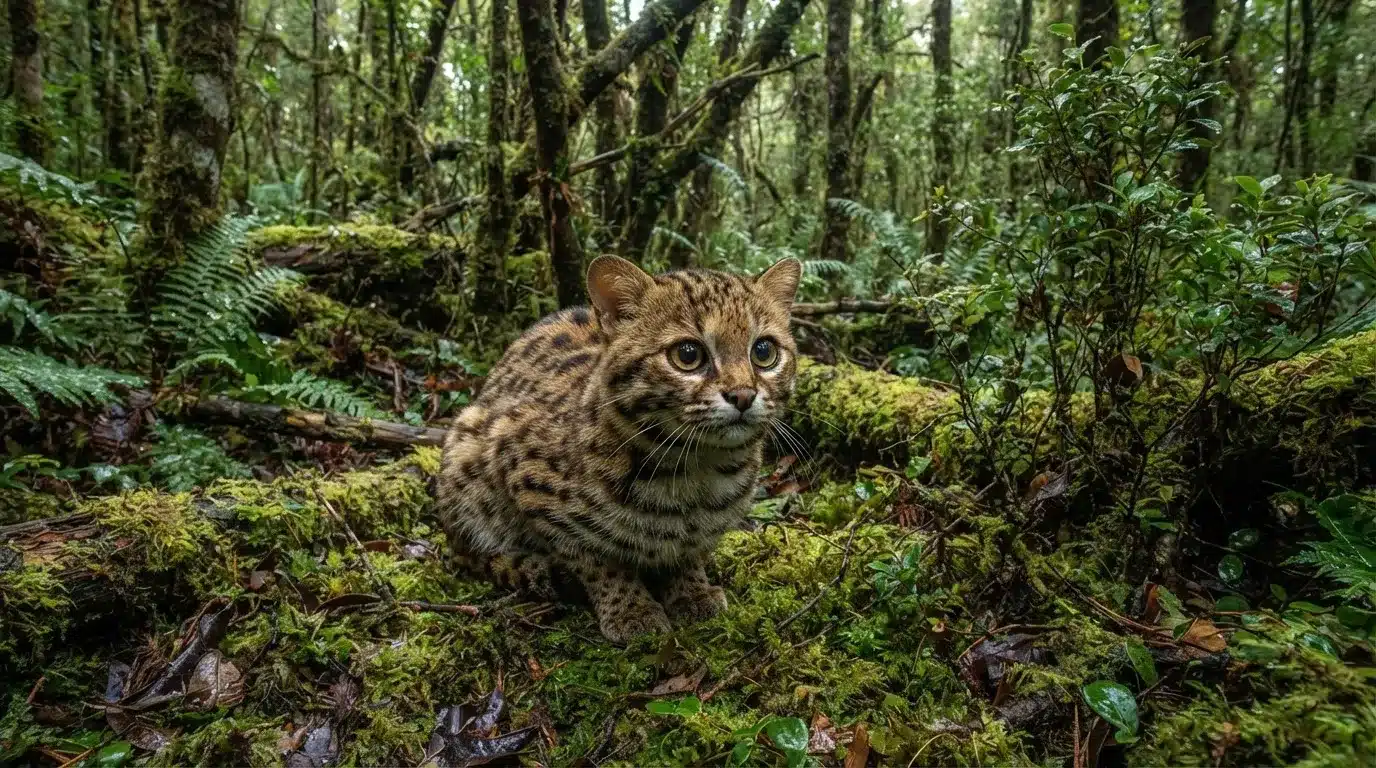
The kodkod, also known as the guiña, is the smallest wild cat in the Americas. Its name comes from the Mapuche language, where “guiña” refers to this small forest-dwelling feline. It has a rounded face, short legs, and a spotted coat that helps it remain hidden among thick vegetation.
Kodkods are skilled climbers and spend much of their time moving through dense forests. They hunt small mammals, birds, and reptiles while staying close to areas with heavy plant cover.
Their limited range makes them especially vulnerable when forests are cleared for farming, roads, and other development.
- Size: It weighs around 1.5 to 3 kg (3 to 6 lbs) and has a body length of approximately 39 to 51 cm (15 to 20 inches).
- Home: It is found in Chile and parts of Argentina, especially in temperate rainforest areas.
- Status: Habitat loss and fragmentation are major threats to this species.
4. Flat-Headed Cat
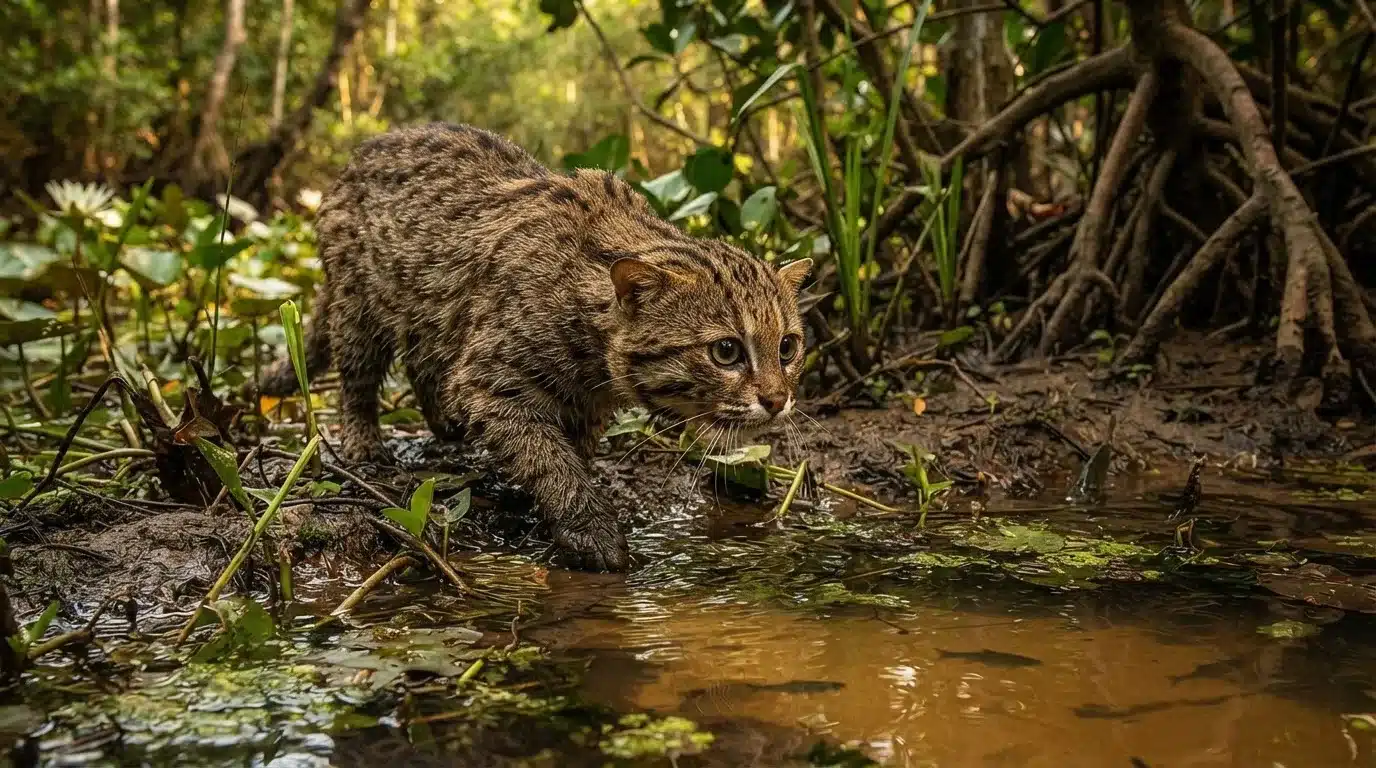
The flat-headed cat gets its name from its flattened skull shape, small ears, and long, narrow face. Unlike many other small cats, it is closely linked to wet environments and has adaptations that help it hunt near rivers and wetlands.
Its partially webbed toes improve movement on muddy ground, while its sharp teeth help catch slippery prey.
The flat-headed cat mainly feeds on fish, frogs, and crustaceans. Pollution, wetland destruction, and loss of freshwater habitats have made survival harder for this rare feline.
- Size: It weighs about 1.5 to 2.5 kg (3 to 5.5 lbs) with a body length of around 41 to 50 cm (16 to 20 inches).
- Home: It lives in Malaysia, Indonesia, and Thailand, mainly around rivers and swamp forests.
- Status: It is classified as Endangered due to habitat decline.
5. Oncilla
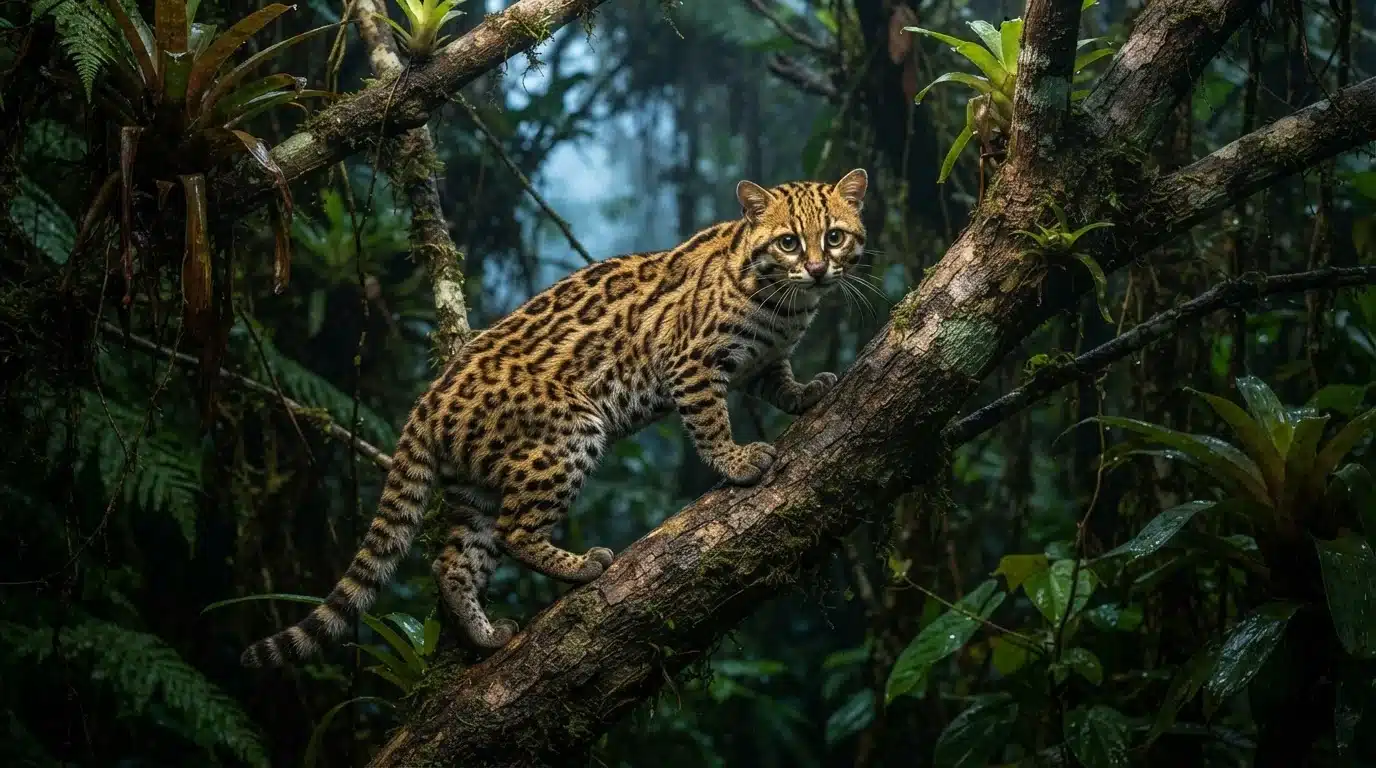
The oncilla, also called the little spotted cat, gets its name from its appearance, which resembles a smaller version of an ocelot. It has a golden-yellow coat covered with dark spots and stripes, along with a lightweight body designed for climbing.
This forest cat spends much of its time in trees, where it searches for birds, rodents, and small reptiles.
Its secretive behavior makes it difficult for researchers to estimate population numbers. Deforestation and historical hunting for fur have contributed to its decline in several areas.
- Size: It weighs approximately 1.5 to 3 kg (3 to 6 lbs) and measures around 38 to 59 cm (15 to 23 inches) long.
- Home: It is found across Central and South America, especially in forest habitats.
- Status: Habitat loss continues to threaten many oncilla populations.
6. Sand Cat
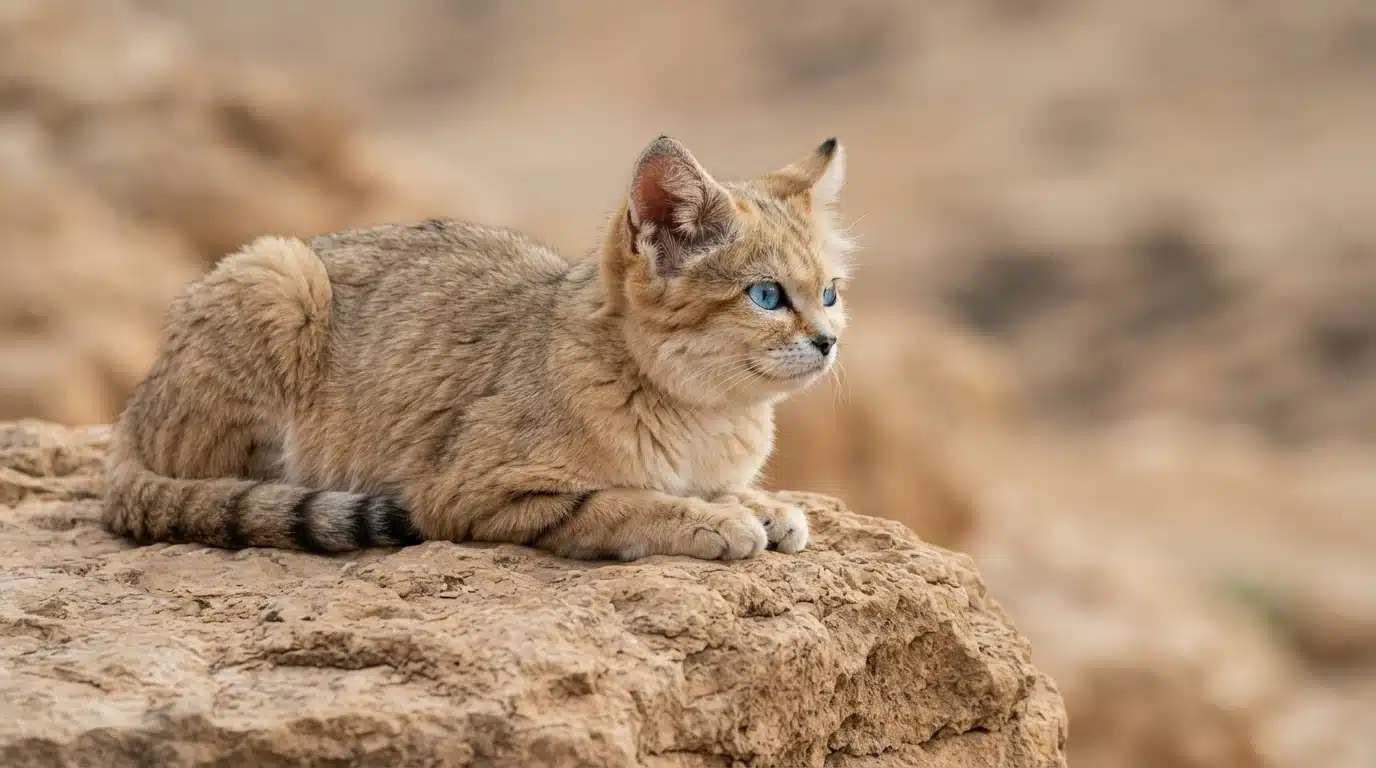
The sand cat is the only wild cat species that lives almost entirely in desert environments. Its name comes from its sandy-colored coat, which helps it blend into desert landscapes. It has thick fur on its paw pads that protects against hot sand and cold desert nights.
This small hunter spends much of the day inside burrows to avoid extreme temperatures and becomes active after sunset.
It hunts rodents, birds, insects, and reptiles, relying mostly on moisture from its prey for survival. Its hidden lifestyle makes population studies difficult.
- Size: It weighs around 1.5 to 3.5 kg (3 to 7.5 lbs) and measures about 39 to 52 cm (15 to 20 inches) long.
- Home: It lives in North Africa, the Middle East, and parts of Central Asia.
- Status: It is considered relatively stable, although exact population numbers remain difficult to measure.
7. Bay Cat
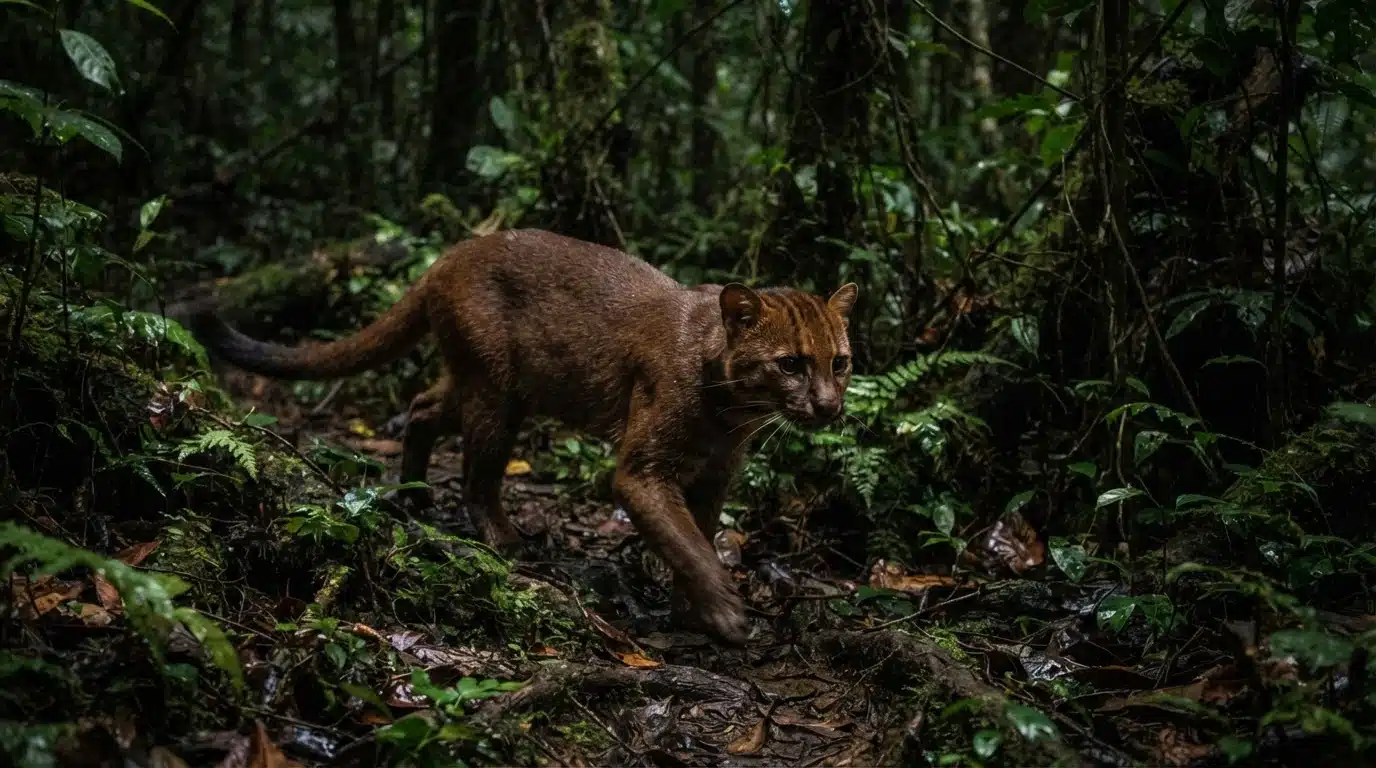
The bay cat is one of the rarest and least-known wild cats in the world. It is named after the reddish-brown or grey coat color often seen in recorded individuals. This small feline has a long tail, rounded ears, and a compact body suited for forest life.
The bay cat is found only on Borneo and has been recorded only a few times in the wild.
Scientists still know very little about its behavior because sightings are extremely rare. Heavy logging and forest destruction remain the biggest concerns for this secretive species.
- Size: It weighs around 3 to 4 kg (6.5 to 9 lbs) and measures about 49 to 67 cm (19 to 26 inches) long.
- Home: It lives only on the island of Borneo, mainly in forest habitats.
- Status: It is classified as Endangered due to habitat loss and its restricted range.
8. Pallas’s Cat (Manul)
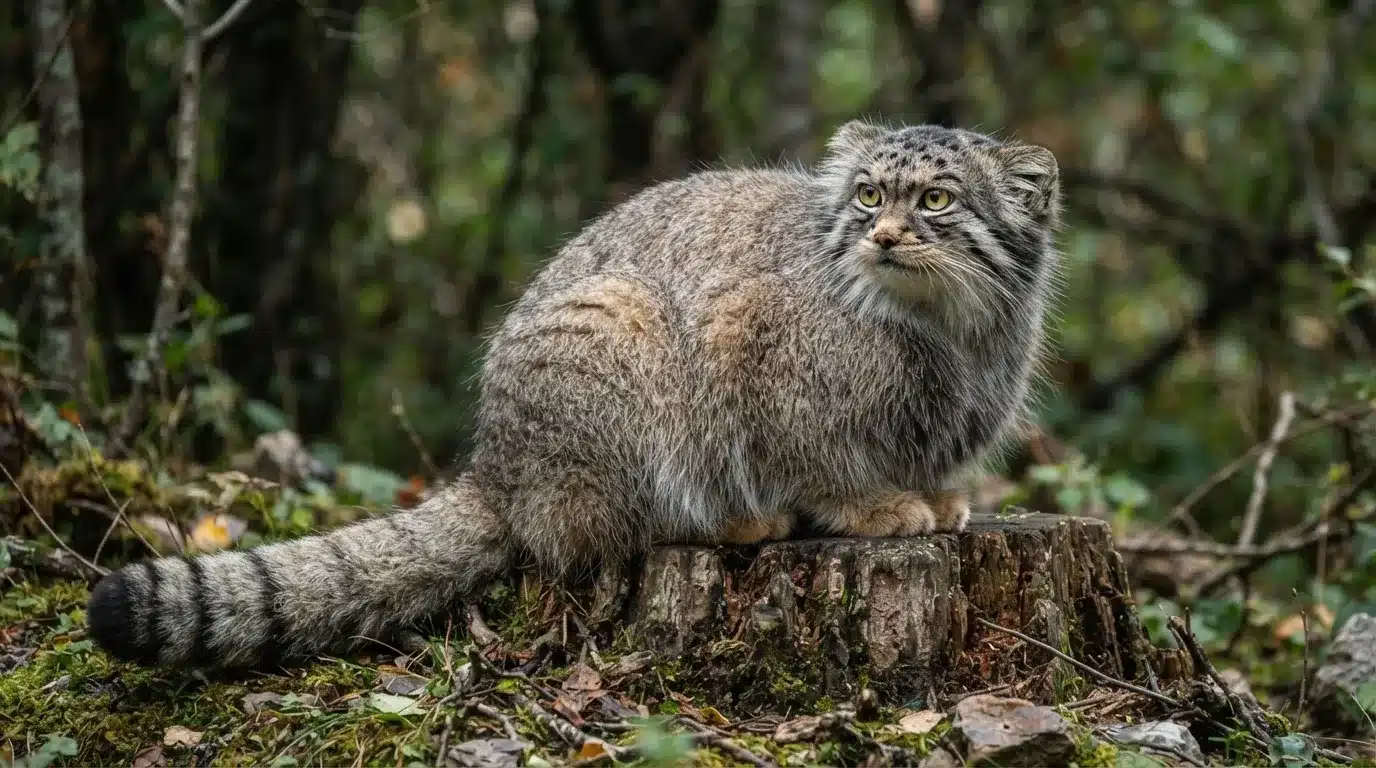
Pallas’s cat, also known as the manul, gets its name from German naturalist Peter Simon Pallas, who first described the species in the 18th century.
It has one of the thickest coats among small wild cats, a round face, short legs, and a stocky body that helps it survive cold environments.
This mountain-dwelling cat hunts small mammals and birds while hiding among rocky landscapes. Its dense fur makes it appear larger than it really is. Changes in habitat, reduced prey, and accidental trapping have affected populations in parts of its range.
- Size: It weighs around 2.5 to 4.5 kg (5.5 to 10 lbs) and measures about 46 to 65 cm (18 to 26 inches) long.
- Home: It lives in Central Asia, including Mongolia, China, and parts of Russia.
- Status: It is listed as Least Concern, but some populations face local threats.
9. Margay
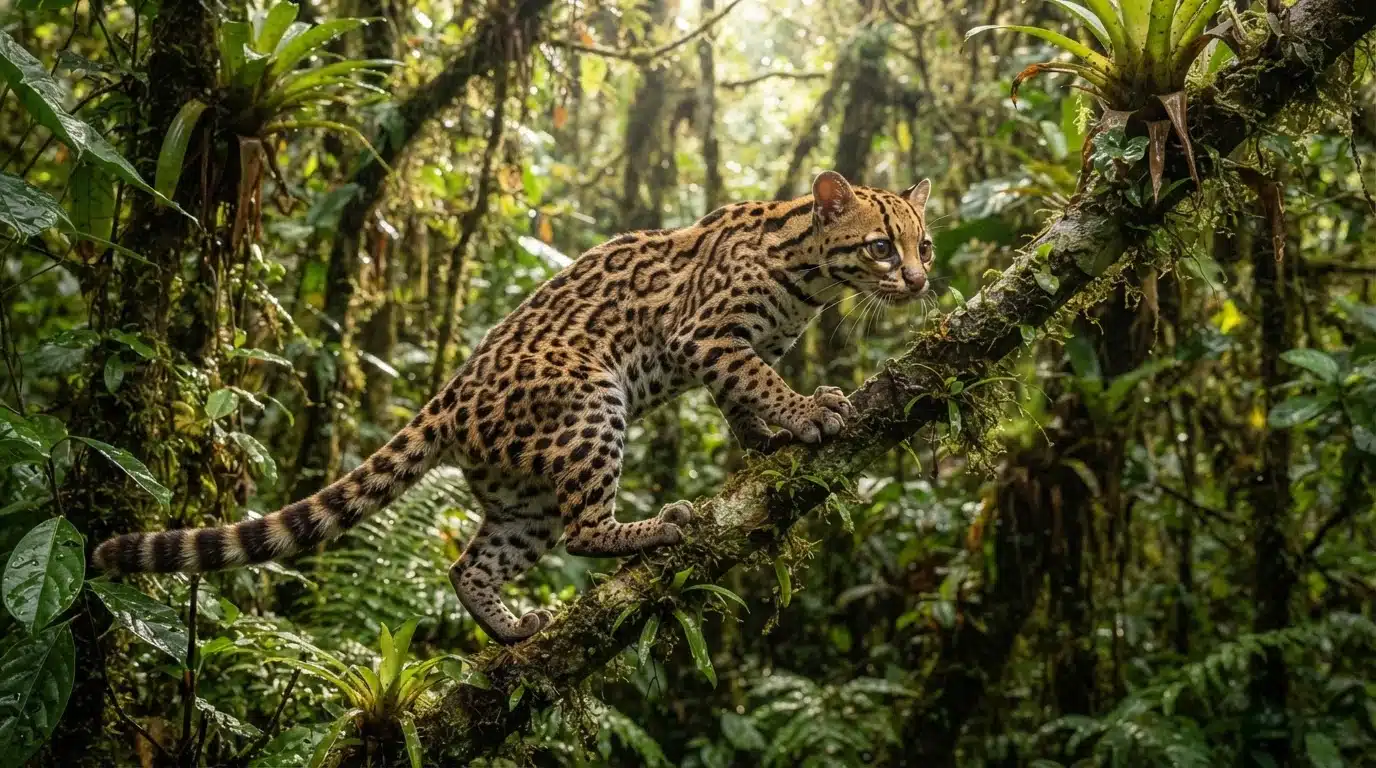
The margay is a small spotted cat known for its exceptional climbing abilities. Its name comes from the Portuguese and Spanish word “margay,” used for this forest-dwelling feline. It has large eyes, a long tail, and flexible ankles that allow it to move through trees with ease.
Unlike many small cats, the margay spends much of its life above the ground. It hunts birds, rodents, reptiles, and small mammals while moving quietly through forest branches.
Deforestation is one of the biggest challenges because this cat depends heavily on continuous forest areas.
- Size: It weighs around 2.6 to 4 kg (5.7 to 8.8 lbs) and measures about 45 to 79 cm (18 to 31 inches) long.
- Home: It is found in Central and South America, mainly in tropical forests.
- Status: Habitat loss has caused population declines in several areas.
10. Leopard Cat
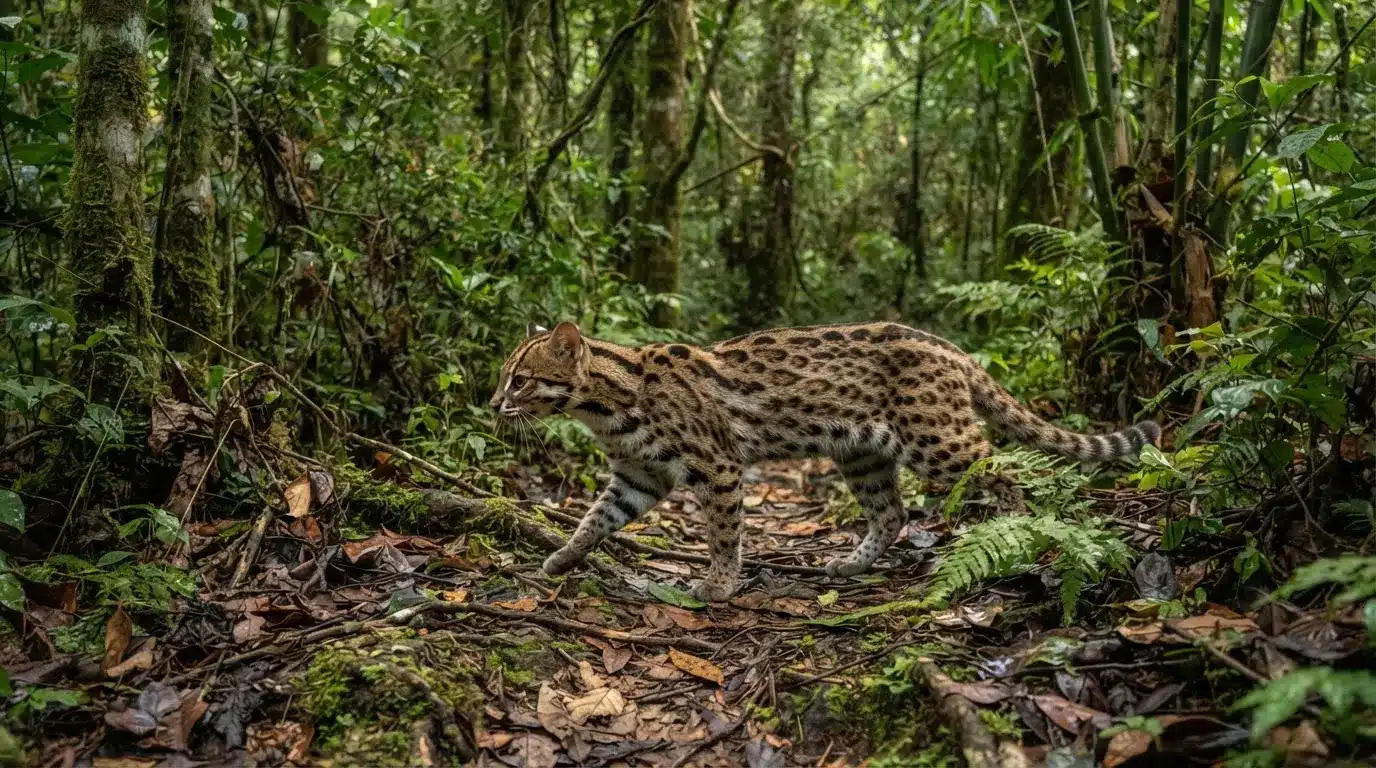
The leopard cat is a small spotted feline named for its leopard-like markings. It has a slender body, rounded ears, and a coat pattern that varies depending on the region where it lives. These markings help it remain hidden while hunting.
This cat can survive in forests, grasslands, wetlands, and agricultural areas. The leopard cat’s habitat, diet, range, and behavior vary across Asia.
It mainly hunts rodents, birds, insects, and small reptiles at night, while habitat change and illegal wildlife trade affect some populations.
- Size: It weighs around 2 to 7 kg (4.4 to 15 lbs), with smaller individuals found in many regions.
- Home: It lives across South Asia, Southeast Asia, China, and parts of Russia.
- Status: It is listed as Least Concern, although some local populations face threats.
11. Geoffroy’s Cat
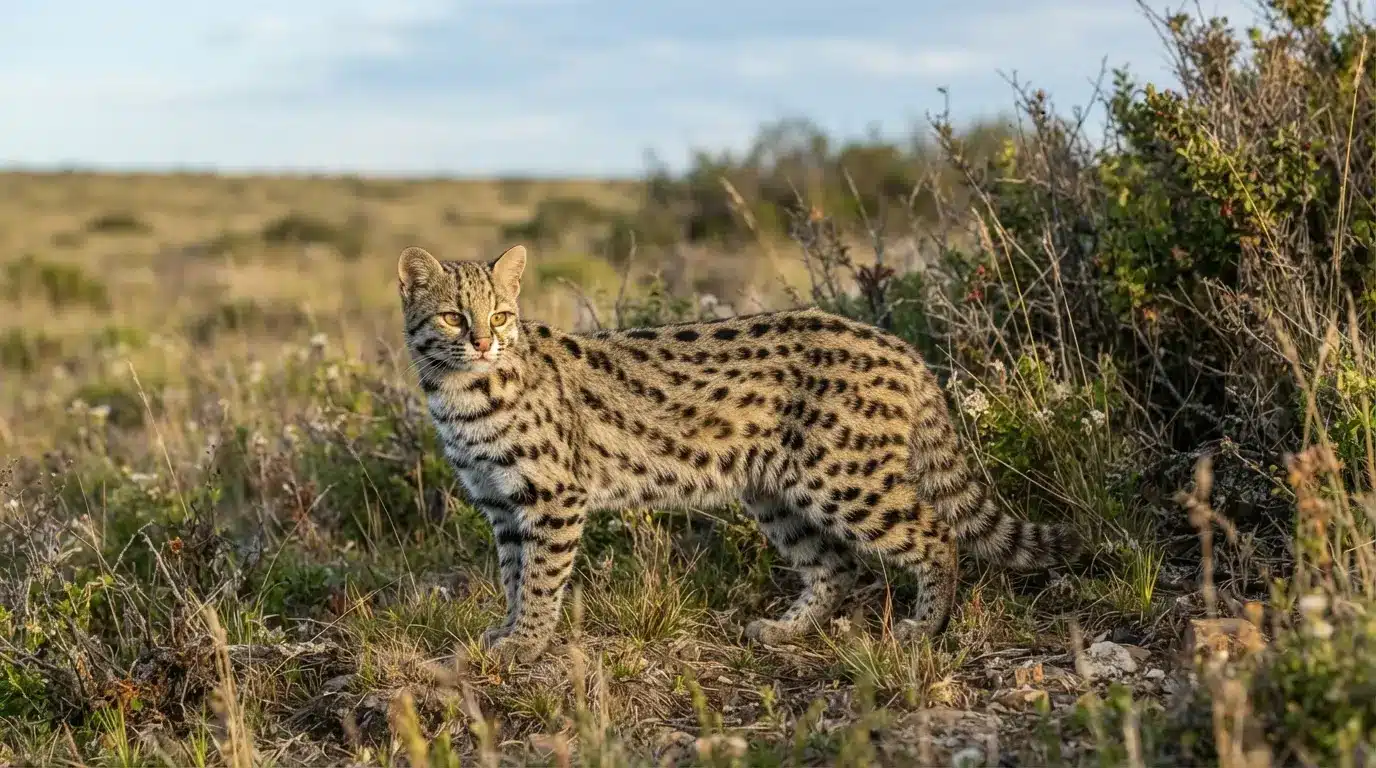
Geoffroy’s cat is a small South American feline named after French naturalist Étienne Geoffroy Saint-Hilaire. It has a golden-grey coat covered with dark spots and stripes, making it one of the most recognizable small cats in its region.
This adaptable hunter lives in different environments, from grasslands to forests. It feeds on rodents, birds, reptiles, and insects while usually hunting alone.
Although it can survive in various habitats, hunting pressure and habitat changes have affected some populations.
- Size: It weighs around 2 to 5 kg (4.4 to 11 lbs) and measures about 42 to 66 cm (16 to 26 inches) long.
- Home: It is found in Argentina, Bolivia, Brazil, Paraguay, and Chile.
- Status: It is considered Least Concern, but some populations need protection from human pressures.
These tiny wild cats show how different environments shape survival. From forests and wetlands to deserts, each species has developed unique traits that help it live as a small but capable predator.
Rusty-Spotted Cat vs Black-Footed Cat
The rusty-spotted cat and black-footed cat are often compared because they are the two smallest wild cats in the world. Both are tiny predators with impressive hunting skills, but they differ in habitat, behavior, and survival strategies. Here is a quick comparison of their main features.
| Feature | Rusty-Spotted Cat | Black-Footed Cat |
|---|---|---|
| Weight | Usually weighs 0.9 to 1.6 kg (2 to 3.5 lbs), making it the smallest wild cat by average size | Usually weighs 1 to 2.4 kg (2 to 5 lbs) and is slightly larger on average |
| Home | Found in India, Sri Lanka, and Nepal, living in forests, grasslands, and scrub areas | Found in South Africa, Botswana, and Namibia, mainly across dry grasslands and savannas |
| Nickname | Often called the “hummingbird of the cat family” because of its tiny size and quick movements | Known as one of the most successful small-cat hunters because of its high hunting success rate |
| Hunting style | Uses speed and stealth to catch rodents, birds, frogs, and insects, usually during nighttime | Hunts throughout the night and targets small mammals, birds, and reptiles with remarkable accuracy |
| Main threat | Habitat loss, forest clearing, and road accidents are major concerns | Habitat changes, reduced prey, and human-related threats affect its population |
So, who wins? The rusty-spotted cat, by a hair, based on average weight. But the black-footed cat isn’t exactly losing here either; it’s earned its reputation as one of the fiercest little hunters in the entire cat family.
A gentle reminder: as adorable as these cats are, they’re wild animals through and through, not pets. Keeping or buying a wild cat can hurt the animal and is illegal in plenty of places. If you want to help, supporting real conservation programs is the way to go.
What Reddit Says About These Cats

Reddit users often share surprise when they see how small a fully grown wild cat can be. A post featuring the rusty-spotted cat sparked reactions from users who were amazed that a wild feline could be smaller than many house cats.
Many commenters noted that the animal looked like a kitten despite being fully grown, while others compared its size and markings with their pets or a full-grown Bengal cat.
However, the rusty-spotted cat remains a wild species with needs that a domestic home cannot meet. It usually weighs around 0.9 to 1.6 kg (2 to 3.5 lbs) and lives mainly in India, Nepal, and Sri Lanka.
The reactions also showed a common theme among wildlife communities: people find these cats adorable, but they also understand that their small size does not make them suitable pets. Wild cats need natural habitats and conservation efforts rather than human ownership.
Final Thoughts
The smallest wild cat on Earth is the rusty-spotted cat, followed closely by the black-footed cat.
From the forest-dwelling kodkod and bay cat to the desert-adapted sand cat, each of these tiny felines has developed unique ways to hunt, hide, and survive in its environment.
Although they are small, many face serious challenges caused by habitat loss, human activity, and the illegal wildlife trade. Understanding these cats helps highlight why protecting their natural homes matters.
If you enjoyed learning about these tiny wild predators, share this with another cat lover and explore more wildlife stories to learn about rare species around the world.
Frequently Asked Questions
How Long Can Small Wild Cats Survive?
Most small wild cats live around 10 to 15 years in the wild. In protected environments, some may live longer due to regular food, medical care, and fewer dangers.
Do Small Wild Cats Hunt Alone?
Many small wild cats are solitary hunters. They usually search for rodents, birds, insects, frogs, and reptiles alone, especially during nighttime when they are most active.
Can Small Wild Cats Be Kept as Pets?
No, small wild cats are not suitable pets. They have natural hunting behaviors and specific habitat needs that cannot be replaced by a domestic home environment.
What Makes Small Wild Cats Good Hunters?
Their small size helps them move quietly and hide easily. Sharp senses, quick movements, and specialized adaptations allow them to catch prey effectively.
Why are Some Small Wild Cats Rarely Studied?
Many tiny wild cats are difficult to study because they are secretive, nocturnal, and live in remote habitats. Limited sightings make population research challenging for scientists.