Every dog owner wants to give the healthiest treat to their dogs, but a quick look at store-bought treats can raise questions.
What’s really inside them?
Many are filled with preservatives and ingredients that don’t support your dog’s health. That moment of doubt often leads to a simple thought: There has to be a better way.
Healthy homemade dog treats bring that sense of control back into your hands.
Fresh ingredients, simple recipes, and the comfort of knowing exactly what your dog is eating make the whole process feel more intentional.
There’s also something quietly satisfying about watching your dog gobble up something you made yourself, knowing it’s actually doing them good.
As a certified pet nutritionist, I’ve helped hundreds of clients make this shift.
The results I see most often, better digestion, steadier energy, and noticeably shinier coats, consistently trace back to cleaner, simpler food.
It often starts with what goes into their bowl, and yes, even their treats.
Why Choose Healthy Homemade Dog Treats?
Store-bought dog treats often contain additives, preservatives, and low-quality fillers that do not support a dog’s health and may cause digestive issues over time.
Labels can be unclear, making it difficult to know what is actually being fed.
Healthy homemade dog treats offer full control over ingredients, allowing the use of simple and safe foods like oats, pumpkin, and natural peanut butter.
This makes it easier to manage nutrition and adjust recipes for dogs with allergies or sensitivities.
Over time, homemade options can also be more cost-effective since basic ingredients are already available in most kitchens, whereas the store-bought treats range from $3 to $15 per bag.
One thing I emphasize to every client I work with: homemade treats aren’t just about avoiding bad ingredients.
They’re a real opportunity to actively support your dog’s health, whether that means adding fiber for a dog with sluggish digestion, or using anti-inflammatory ingredients like turmeric for an older dog with stiff joints.
Homemade vs. Store-Bought Dog Treats: A Quick Comparison
This comparison highlights key differences between homemade and store-bought dog treats, covering ingredients, cost, nutrition, shelf life, and safety for better pet care decisions.
| Feature | Homemade Treats | Store-Bought Treats |
|---|---|---|
| Ingredient control | Full control over every ingredient | Limited; additives and fillers are common |
| Allergen management | Easy to customize for sensitivities | Cross-contamination risk in facilities |
| Cost | Lower over time using pantry staples | $3 to $15 per bag |
| Nutritional value | Whole food ingredients, no fillers | Varies widely; often calorie-dense |
| Shelf life | Shorter; requires proper storage | Longer due to preservatives |
| Preservatives | None required with correct storage | Often present to extend shelf life |
Vet Approved Healthy Homemade Dog Treats
Dog treats can be both safe and nutritious when they are made with the right ingredients and methods.
I often recommend simple recipes that use whole foods like lean proteins, vegetables, and fiber-rich grains, while avoiding harmful additives and artificial ingredients.
1. Peanut Butter and Pumpkin Dog Treats
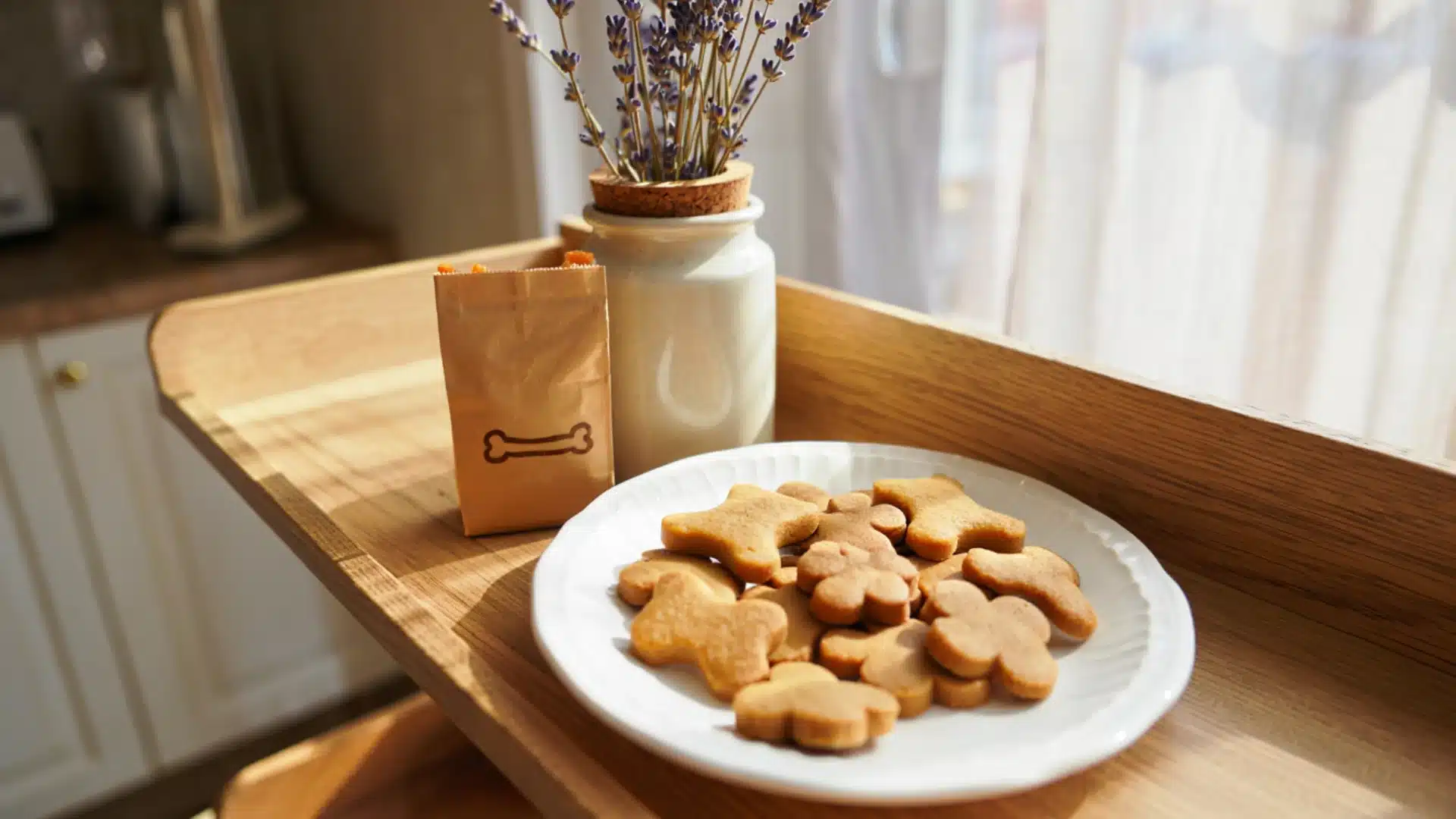
Pumpkin supports digestion and helps regulate bowel movements, while peanut butter provides energy and essential nutrients.
This combination is often recommended for dogs with sensitive stomachs and works well as a regular treat option.
This is one of the first recipes I recommend to clients whose dogs show signs of an irregular digestive system
Portion size: 1-2 small treats for small dogs, 2-3 for medium dogs, and up to 4 for large dogs per day.
Ingredients:
- 1 cup pumpkin puree (unsweetened)
- 1/2 cup peanut butter (xylitol-free)
- 2 cups oat flour
- 1 egg
Recipe:
- Mix pumpkin puree, peanut butter, and egg in a bowl until smooth
- Add oat flour gradually and form a soft dough
- Roll out the dough and cut into small bite-sized shapes
- Bake at 180°C (350°F) for 20-25 minutes until firm
- Let treats cool completely before serving or storing
Storage tip: These baked treats last up to 1 week at room temperature in an airtight container, 2 weeks refrigerated, or up to 3 months frozen.
2. Peanut Butter and Banana Biscuits
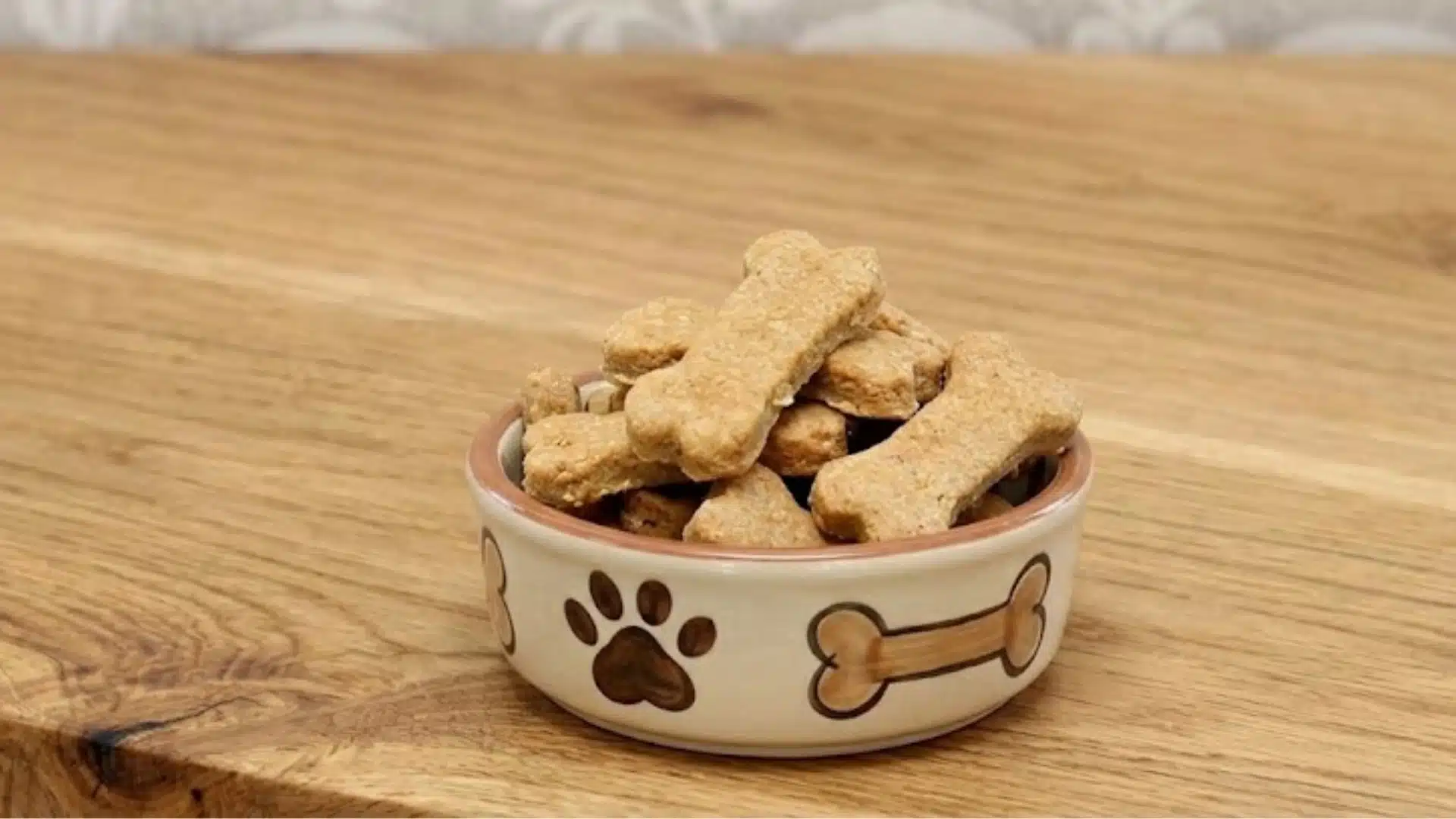
These healthy homemade dog treats are a nutritious option that combines natural sweetness with essential nutrients.
Bananas provide potassium and vitamins that support muscle function and energy levels, while peanut butter adds healthy fats and protein.
I particularly recommend these for active or working dogs that need a quick energy boost between sessions.
Portion size: 1-2 small biscuits for small dogs, 2-3 for medium dogs, and up to 4 for large dogs per day.
Ingredients:
- 1 ripe banana (mashed)
- 1/2 cup peanut butter (xylitol-free)
- 1 and 1/2 cups oat flour
- 1 egg
Recipe:
- Mash the banana and mix with the peanut butter and egg until smooth
- Add oat flour slowly and knead into a soft dough
- Roll out the dough and cut into small biscuit shapes
- Bake at 180°C (350°F) for 18-22 minutes until golden
- Cool completely before serving or storing
Storage tip: Refrigerate in an airtight container for up to 2 weeks, or freeze for up to 3 months.
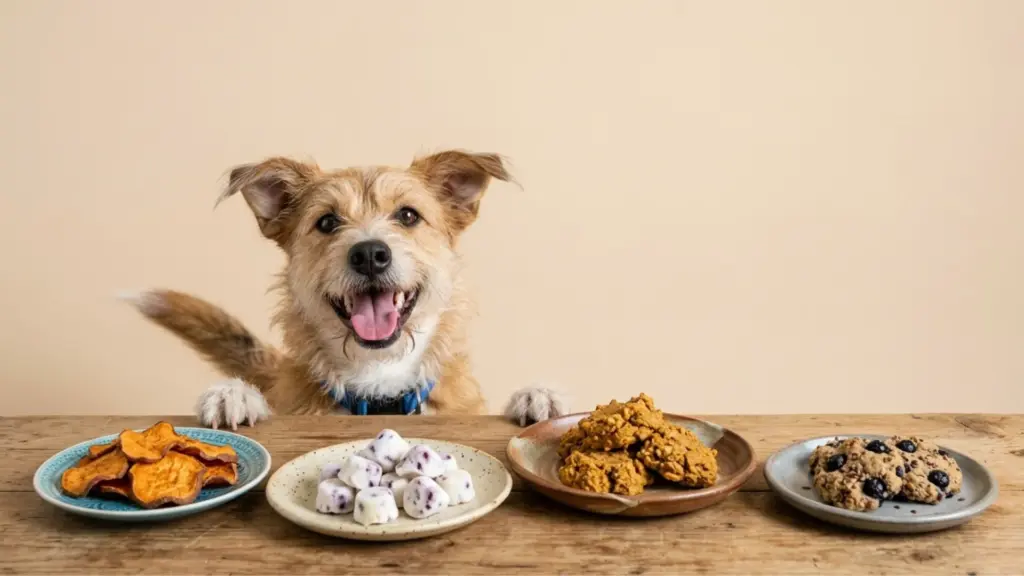
3. Sweet Potato Chews
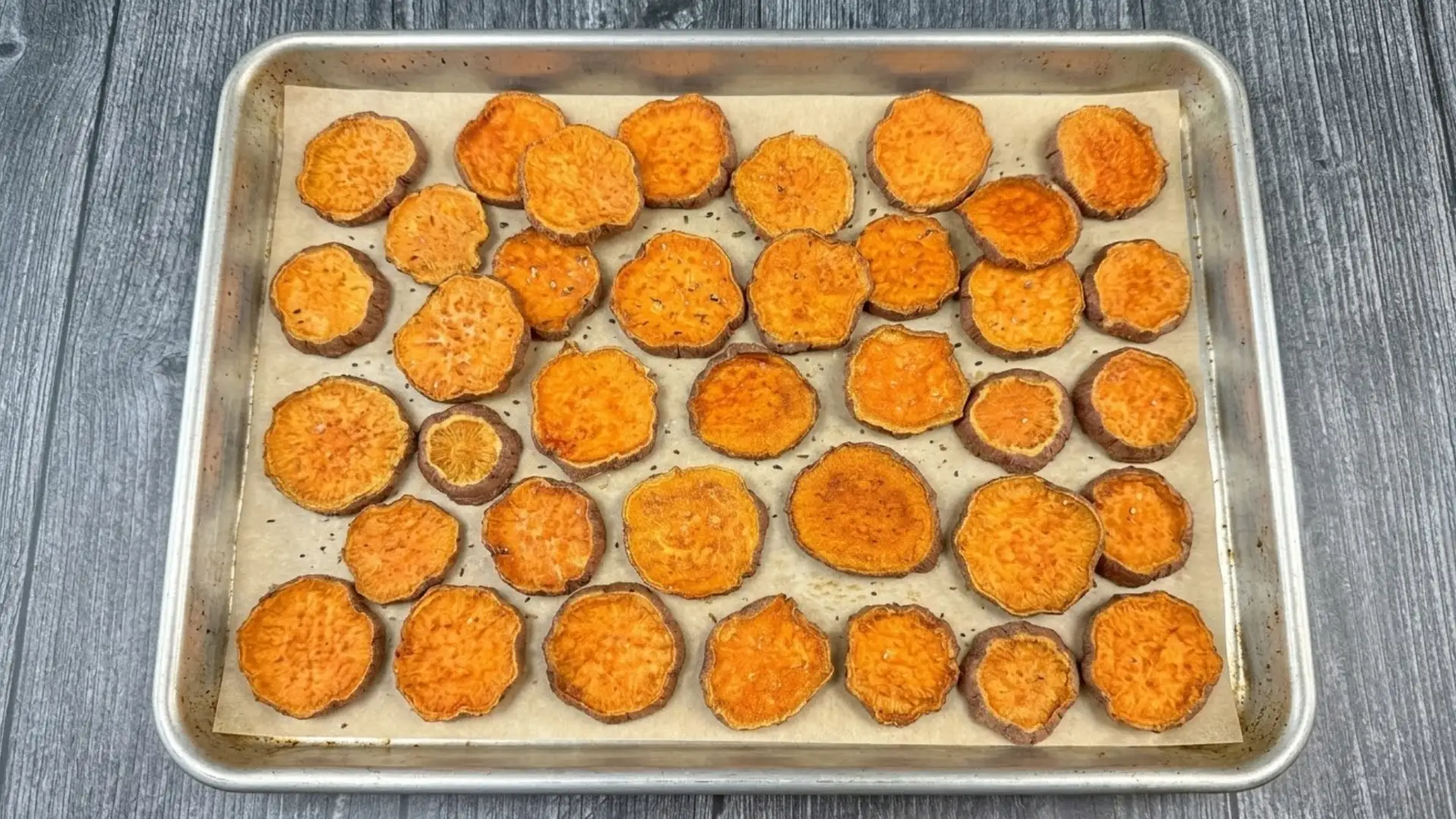
They are rich in fiber, vitamins A and C, and antioxidants that support digestion, immune health, and overall well-being.
These chews also help promote dental health by encouraging natural chewing behavior, making them a great long-lasting treat.
Portion size: 1-2 chews for small dogs, 2-3 for medium dogs, and up to 4 for large dogs, depending on size and thickness.
Ingredients:
1-2 large sweet potatoes
Recipe:
- Wash and peel the sweet potatoes, then slice them into thin, even strips
- Arrange slices on a baking tray lined with parchment paper
- Bake at 120°C (250°F) for 2-3 hours, flipping halfway through
- Continue baking until slices are dried and chewy, not soft
- Let them cool completely before serving or storing
Storage tip: Because of their low moisture content after baking, these chews store well at room temperature for up to 2 weeks in a sealed container. For longer storage, refrigerate for up to a month.
4. Blueberry and Flaxseed Cookies
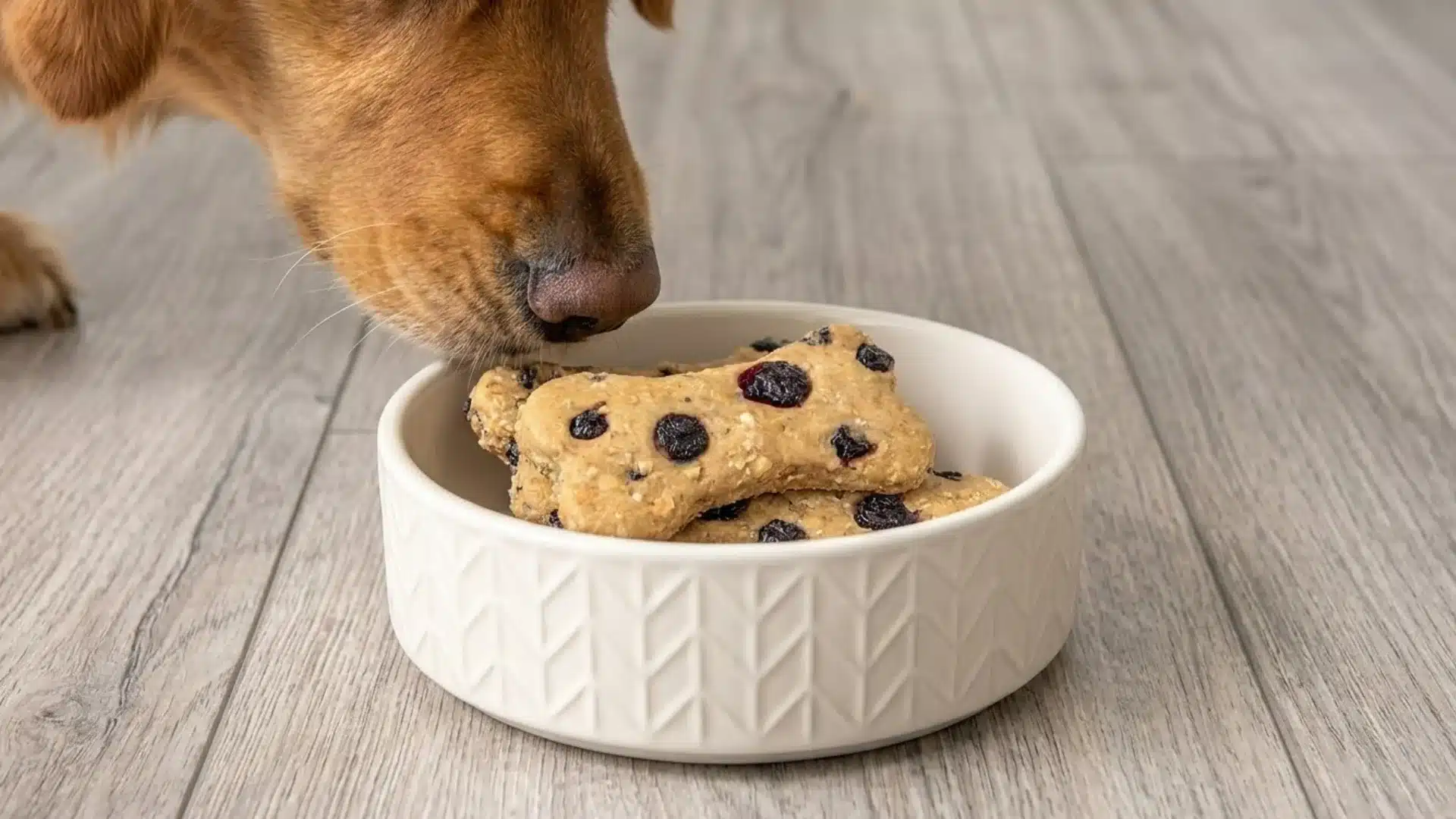
These healthy homemade dog treats are packed with antioxidants and omega-3 fatty acids, making them a great choice for supporting brain health, skin, and coat condition.
Blueberries help fight oxidative stress, while flaxseed aids digestion and promotes a healthy coat.
Portion size: 1-2 small cookies for small dogs, 2-3 for medium dogs, and up to 4 for large dogs per day.
Ingredients:
- 1/2 cup fresh or frozen blueberries
- 1 tablespoon ground flaxseed
- 1 and 1/2 cups oat flour
- 1 egg
Recipe:
- Mash blueberries and mix with egg and ground flaxseed until well combined
- Add oat flour gradually to form a soft dough
- Roll out the dough and cut into small cookie shapes
- Bake at 180°C (350°F) for 18-22 minutes until firm
- Cool completely before serving or storing
Storage tip: Refrigerate in an airtight container for up to 2 weeks. These freeze particularly well and store for up to 3 months without texture loss.
5. Apple and Cinnamon Crisps
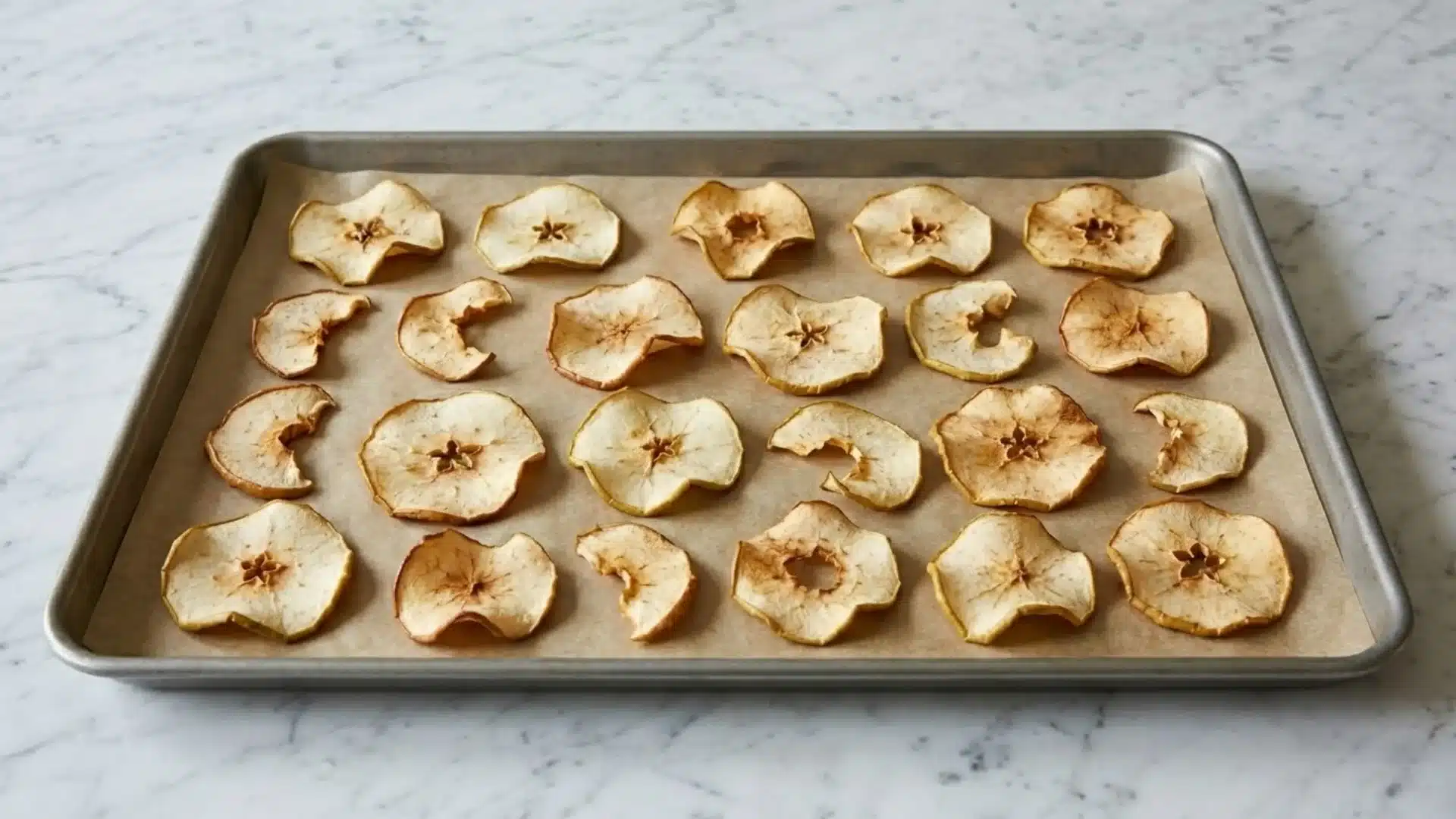
Apples are rich in vitamins A and C, which support immune health, while a small amount of cinnamon can help with digestion and add flavor.
These treats are low in fat, making them a good choice for dogs that need a lighter snack.
Portion size: 2-3 small crisps for small dogs, 3-4 for medium dogs, and up to 5 for large dogs per day.
Ingredients:
- 1-2 apples (seeds removed)
- A small pinch of cinnamon
Recipe:
- Wash apples, remove seeds, and slice into thin, even pieces
- Lightly sprinkle a small amount of cinnamon over the slices
- Arrange slices on a baking tray in a single layer
- Bake at 120°C (250°F) for 1.5-2 hours until crisp
- Let them cool completely before serving or storing
Storage tip: Keep in an airtight container at room temperature for up to 2 weeks.
6. Frozen Yogurt Dog Treats
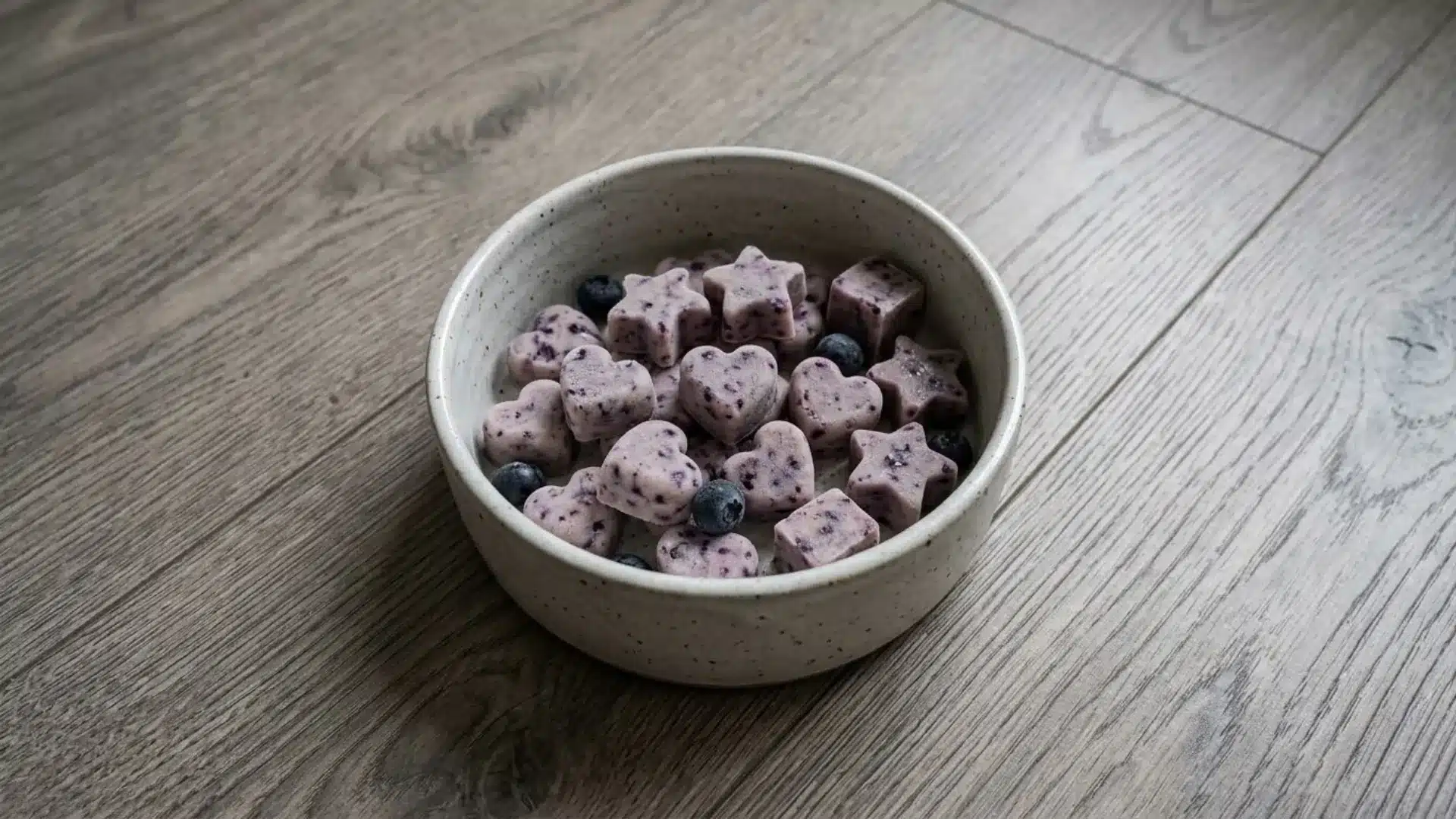
These healthy homemade dog treats contain probiotics from yogurt that support gut health and digestion, along with natural vitamins from added fruits.
These treats are soft, cooling, and easy to prepare, making them ideal for dogs that enjoy lighter, hydrating snacks.
I also suggest them to clients whose dogs are recovering from a course of antibiotics.
Portion size: 1-2 small frozen bites for small dogs, 2-3 for medium dogs, and up to 4 for large dogs per day.
Ingredients:
- 1 cup plain yogurt (unsweetened, no artificial sweeteners)
- 1/2 cup dog-safe fruits (like blueberries or strawberries)
- 1 tablespoon peanut butter (optional, xylitol-free)
Recipe:
- Blend yogurt with fruits and optional peanut butter until smooth
- Pour mixture into silicone molds or ice cube trays
- Freeze for 3-4 hours until fully set
- Remove treats from molds and store in the freezer
- Serve frozen in small portions as a cool snack
Storage tip: Once frozen and removed from molds, store in a sealed freezer bag for up to 3 months.
7. Broccoli and Chicken Bites
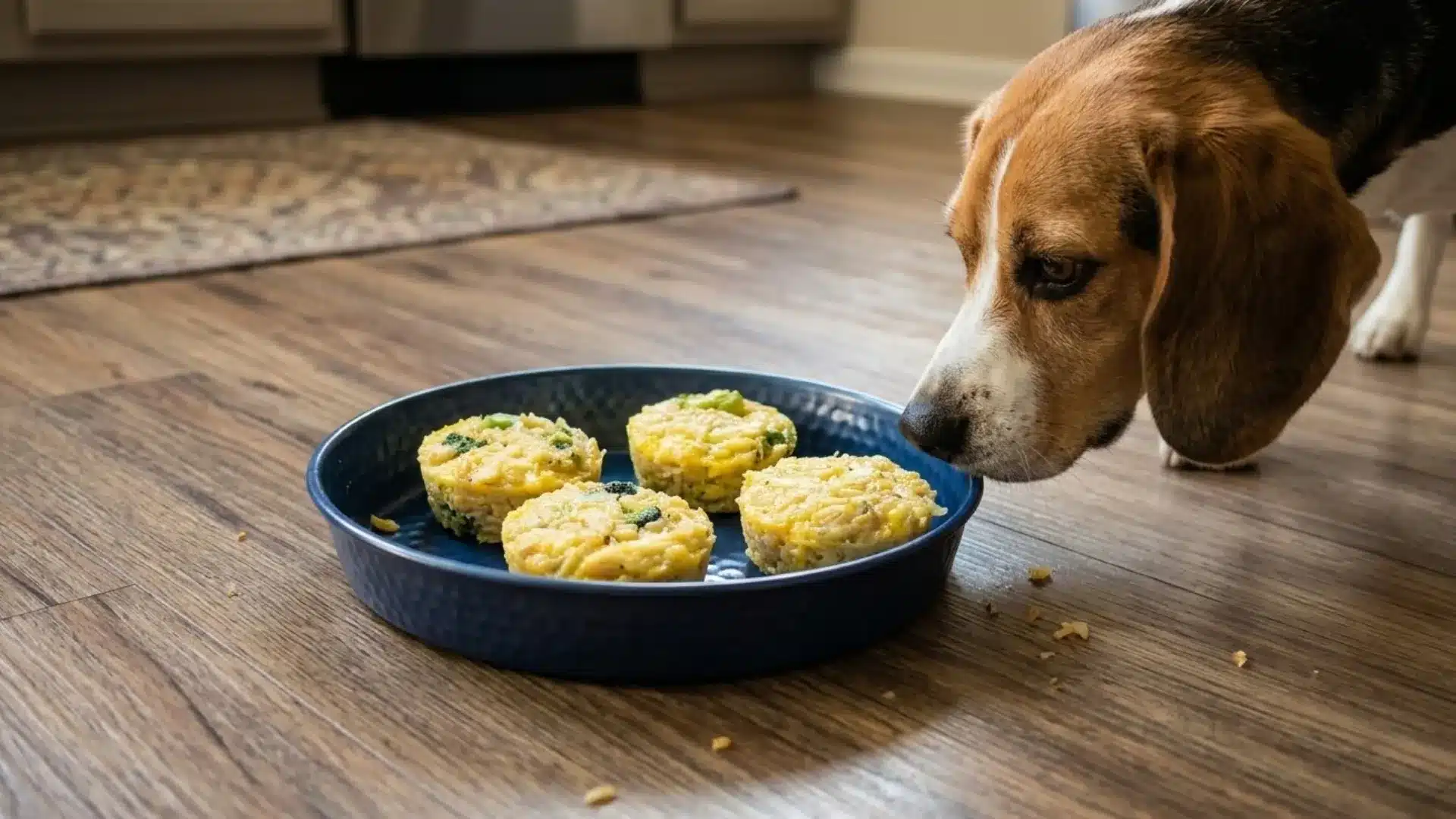
Broccoli and chicken bites are a protein-rich and nutrient-dense option that supports muscle health and overall energy.
Chicken provides lean protein, while broccoli adds fiber, vitamins, and antioxidants that help with digestion and immune support.
This is the recipe I recommend most often to owners of large, active breeds.
The lean protein content is meaningfully higher than most baked treat recipes
Portion size: 1-2 small bites for small dogs, 2-3 for medium dogs, and up to 4-5 for large dogs per day.
Ingredients:
- 1 cup cooked chicken (shredded, unseasoned)
- 1/2 cup finely chopped broccoli (steamed)
- 1 egg
- 1 cup oat flour
Recipe:
- Mix shredded chicken, chopped broccoli, and egg in a bowl until well combined
- Add oat flour gradually to form a firm mixture
- Shape into small bite-sized balls or patties
- Bake at 180°C (350°F) for 20-25 minutes until cooked through
- Let cool completely before serving or storing
Storage tip: Because these contain chicken, refrigerate them within 2 hours of baking. Store in an airtight container in the fridge for up to 5 days, or freeze for up to 2 months.
Ingredients That Are Safe and Unsafe for Dogs
ASPCA clearly outlines which ingredients should be included and which must be avoided. Understanding this helps ensure healthy homemade dog treats support your dog’s health and avoid unnecessary risks.
| Ingredient | Status | Why It’s Safe or Unsafe |
|---|---|---|
| Cooked chicken, turkey, beef | Safe | Lean protein is easy to digest when unseasoned |
| Peanut butter (xylitol-free) | Safe | Healthy fats and protein must be free from artificial sweeteners |
| Pumpkin | Safe | Supports digestion and gut health |
| Carrots | Safe | Low-calorie, rich in vitamins, supports dental health |
| Apples (no seeds) | Safe | Good source of fiber and vitamins, seeds are toxic |
| Oats (plain, cooked) | Safe | Good source of soluble fiber and B vitamins; use plain with no added sweeteners |
| Plain yogurt | Safe (moderation) | Contains probiotics, supports digestion if tolerated |
| Sweet potato (plain, cooked) | Safe | Rich in vitamins A and C, fiber, and antioxidants; serve without seasoning |
| Chocolate | Unsafe | Contains toxic compounds that affect the heart and nervous system |
| Grapes and raisins | Unsafe | Can cause kidney failure even in small amounts |
| Onions and garlic | Unsafe | Damages red blood cells, may lead to anemia |
| Xylitol | Unsafe | Causes a rapid drop in blood sugar and liver failure |
| Alcohol | Unsafe | Highly toxic, affects the brain and breathing |
| Excess salt and processed foods | Unsafe | Leads to dehydration and kidney stress |
How to Customize Homemade Dog Treats for Your Dog?
Every dog has different needs, so healthy homemade dog treats should be adjusted to match your dog’s size, age, and diet.
A small dog needs smaller portions and softer textures, while larger dogs can handle bigger, crunchier treats.
If your dog has dietary restrictions, simple ingredient swaps can make a meaningful difference.
Oats can replace wheat for grain-sensitive dogs, and pumpkin can replace dairy-based ingredients for easier digestion.
For dogs with protein allergies, swapping chicken for turkey or a novel protein like rabbit is often enough to eliminate the reaction.
One thing I tell clients consistently: introduce any new treat gradually over 3–5 days.
Even healthy ingredients can cause temporary digestive upset if introduced all at once, simply because the gut microbiome needs time to adjust.
Start with a small amount alongside their regular food, and watch for any signs of loose stool, gas, or itching before making it a daily staple.
This small adjustment can make a real difference for dogs with dental wear or reduced jaw strength.
Quick Guide: Treat Swaps by Dog Need
This quick guide helps match dog dietary needs with smart ingredient swaps, supporting sensitivities, weight control, aging, and joint health through simple, practical treat adjustments.
| Dog’s Need | Swap Out | Swap In |
|---|---|---|
| Grain sensitivity | Wheat flour | Oat flour or coconut flour |
| Dairy sensitivity | Yogurt or cheese | Plain pumpkin puree |
| Chicken allergy | Chicken | Turkey, rabbit, or salmon |
| Weight management | Peanut butter (high fat) | Pureed carrots or sweet potato |
| Senior dogs (softer texture) | Baked crunchy treats | Frozen yogurt bites or soft patties |
| Dogs with joint issues | Standard recipe | Add a pinch of turmeric or a drizzle of fish oil |
If your dog tends to skip meals but eats treats eagerly, it may be worth reading about why dogs prefer treats over regular food before adjusting their treat routine.
Tips for Preparing and Storing Homemade Dog Treats
Making healthy homemade dog treats requires attention not only to ingredients but also to preparation, storage, and portion control. Proper handling ensures treats remain safe, fresh, and beneficial for your dog’s overall health.
- Hygiene during preparation: Always wash your hands, sanitize surfaces, and use clean utensils to prevent harmful bacteria from contaminating your dog’s treats.
- Proper baking temperatures: Bake treats at the right temperature until fully cooked to remove moisture and reduce the risk of spoilage or bacteria.
- Refrigeration: Store soft or moist treats in airtight containers in the refrigerator to keep them fresh and safe for several days.
- Freezing: Freeze extra batches in sealed containers or bags to extend shelf life and maintain freshness for longer periods.
- Shelf life awareness: Dry-baked treats last longer at room temperature, while soft treats require refrigeration and quicker consumption for safety.
- Treat portion guidelines (10% rule): As per the American Kennel Club, treats should not exceed 10% of daily calorie intake for balanced nutrition.
- Avoiding overfeeding: Giving too many treats can lead to obesity, digestive issues, and an imbalance in your dog’s overall daily nutrition.
- Balancing with daily meals: Reduce meal portions slightly when offering treats regularly to maintain proper calorie intake and a healthy weight.
- Vet recommendation angle: Veterinarians recommend moderation, proper storage, and balanced feeding habits to support long-term canine health and well-being.
- Label all frozen batches: Write the recipe name and date on freezer bags so you can rotate stock and avoid feeding treats past their safe window.
- Use silicone molds for portion consistency: Uniform treat sizes make it easier to track daily calorie intake accurately, especially for dogs on a weight management plan.
Conclusion
Healthy homemade dog treats offer a simple way to improve your dog’s diet while keeping safety and nutrition in check.
Using fresh, known ingredients gives full control over what goes into each treat, helping avoid harmful additives and supporting overall health.
These recipes are easy to prepare and can be adjusted based on your dog’s needs, making them a practical choice for everyday use.
Starting with one or two recipes is a great way to see what your dog enjoys and responds to best.
Over time, this small effort can make a noticeable difference in your dog’s energy and well-being.
If you want to explore more nutritious snack options beyond these recipes, there are additional ideas worth looking at for variety and seasonal rotation.
Have you tried any of these homemade dog treats? Share your experience or your dog’s favorite recipe in the comments below.
Frequently Asked Questions
Do Homemade Dog Treats Require Preservatives?
Homemade treats do not need preservatives when stored properly. Refrigeration or freezing helps maintain freshness and prevents spoilage without artificial additives.
What 3 Meats Should Dogs Avoid?
Dogs should avoid processed meats, fatty cuts like bacon, and heavily seasoned meats, as these can cause digestive issues, pancreatitis risk, and long-term health complications.
What Chews Can Dogs With Pancreatitis Have?
Dogs with pancreatitis should have low-fat chews like dehydrated sweet potato slices, carrot sticks, or vet-approved low-fat treats to prevent flare-ups and support digestion.
Can I Use Whole Wheat Flour Instead of Oat Flour?
Yes, whole wheat flour is safe for most dogs and is a suitable substitute.
However, for dogs with grain sensitivities or gluten issues, oat flour or coconut flour is a better alternative.
Always introduce any flour swap gradually and watch for digestive changes in the first few days.