



Can dogs eat rice? is something many pet owners check at some point. You give a few spoonfuls from your plate.
Then you pause and wonder if that was the right thing to do. It happens more often than people admit. Rice is a common kitchen food.
It smells good. It is simple to cook. Dogs usually eat it without any fuss. That is why many people assume it is always a safe option.
The simple answer is yes. Rice is generally safe for dogs. But that does not mean it works for every dog or every situation.
The type of rice matters. How it is prepared matters. The portion size matters. Your dog’s health matters too. Some dogs may benefit from it during certain times.
Others may not handle it well if given too often. In this guide, you will learn which types of rice are safe, how each type compares, when rice can help, when to avoid it, and how to feed it in a balanced way without causing issues.
Can Dogs Eat Rice Safely?
Yes, plain cooked rice is safe for dogs. It is non-toxic. In fact, it is one of the few human foods vets often suggest.
Rice has been used for years in simple diets for dogs with stomach issues. When a dog has diarrhea or vomiting, vets often suggest white rice with boiled chicken.
According to the AKC nutrition guide, this is a long-standing recommendation among veterinarians. It is light and easy on the stomach. You will also find rice in many dog foods. It is not just filler.
Dogs can digest it well, and it works as a steady source of energy. But there is one rule that matters the most. Rice must always be plain.
No salt. No butter. No spices. No garlic or onion powder. Even small amounts of these can cause problems.
When people ask whether dogs can eat rice, they often miss this part. It is not about rice itself. It is about how it is prepared.
Rice should make up only a small part of the diet. It does not have all the nutrients a dog needs. Think of it as support food, not a full meal.
Types of Rice Dogs Can and Cannot Eat

1. White Rice
White rice is widely recommended by veterinarians because it is gentle on a dog’s digestive system. It is easy to digest and helps settle upset stomachs, especially during diarrhea or vomiting.
Its low fiber content prevents further irritation.
However, it can raise blood sugar quickly, so it is not suitable for diabetic dogs. It works best as a temporary diet or when mixed in small portions with regular food.
2. Brown Rice
Brown rice contains more nutrients, including fiber, vitamins, and minerals, which can support overall health in dogs. However, the outer bran layer makes it harder to digest, especially for dogs with sensitive stomachs.
It may worsen loose stools if your dog is already unwell.
This type of rice is better suited for healthy dogs and should not be used during recovery. It can be given occasionally, but not as a primary food source.
3. Basmati Rice
Basmati rice is a long-grain white rice that shares similar qualities with regular white rice. It is safe for dogs when cooked plain without any added spices, salt, or oil.
It is light on the stomach and mixes easily with other foods like boiled chicken.
While it does not provide additional health benefits, it is a convenient option if available at home and works well as a simple, digestible meal component.
4. Jasmine Rice
Jasmine rice is another safe white rice variety for dogs when prepared properly. It has a natural fragrance that does not harm dogs and a soft texture that makes it easy to eat.
When cooked thoroughly and served plain, it digests well and can help with mild stomach issues.
It is suitable as an occasional addition to meals but should not replace a balanced diet or be fed in large quantities regularly.
5. Wild Rice
Wild rice is technically not rice but a type of grass seed, yet it is safe for dogs in small amounts. It contains more protein and nutrients compared to regular rice, which can benefit healthy dogs.
However, it is denser and takes longer to digest, making it less suitable for dogs with sensitive stomachs.
It should only be given occasionally and in controlled portions to avoid digestive discomfort or heaviness.
6. Instant or Processed Rice
Instant or processed rice is generally not recommended for dogs due to the way it is manufactured.
It often contains added salt, oils, preservatives, or flavorings that can be harmful.
The processing also removes much of its natural nutritional value. Packaged varieties may include hidden ingredients that are unsafe for pets.
Since plain rice is simple to prepare, choosing fresh, unprocessed rice is always the safer and healthier option.
7. Yellow Rice
Yellow rice is unsafe for dogs because it typically includes spices and seasonings that can be harmful. Ingredients like turmeric, saffron, garlic powder, or onion powder are commonly used and can cause digestive issues or toxicity.
Even small amounts can lead to stomach upset or more serious health concerns.
It is best to avoid feeding yellow rice entirely and stick to plain, unseasoned rice when feeding dogs.
If you are wondering if dogs can eat rice, the answer depends on the type you choose. Plain, simple, and well-cooked rice is always the safer option.
What Does Rice Actually Do for Your Dog’s Health?
Rice is often used because it is gentle on the digestive system. Plain white rice is soft and low in fiber. It does not put extra stress on the stomach.
That is why it is commonly given when a dog is not feeling well. It can also help manage diarrhea. The starch and soluble fiber in white rice help firm up loose stool.
It slows down an overactive digestive system and brings things back to normal. Rice is also a quick source of energy. It is a simple carbohydrate that the body can break down fast.
This makes it useful for active dogs that need an energy boost, though it should still be paired with balanced, nutritious snacks rather than relied on alone. Another benefit is its low fat content.
This makes it a safer short-term option for dogs dealing with conditions like pancreatitis or those on a low-fat diet.
Rice is also gluten-free. It works well for dogs with issues with wheat-or gluten-based foods.
Along with all this, rice still provides small amounts of nutrients, such as calcium, iron, and B vitamins.
These are not enough on their own, but they do add some value when rice is part of a balanced meal.
Why Feeding Your Dog Too Much Rice Can Cause Problems
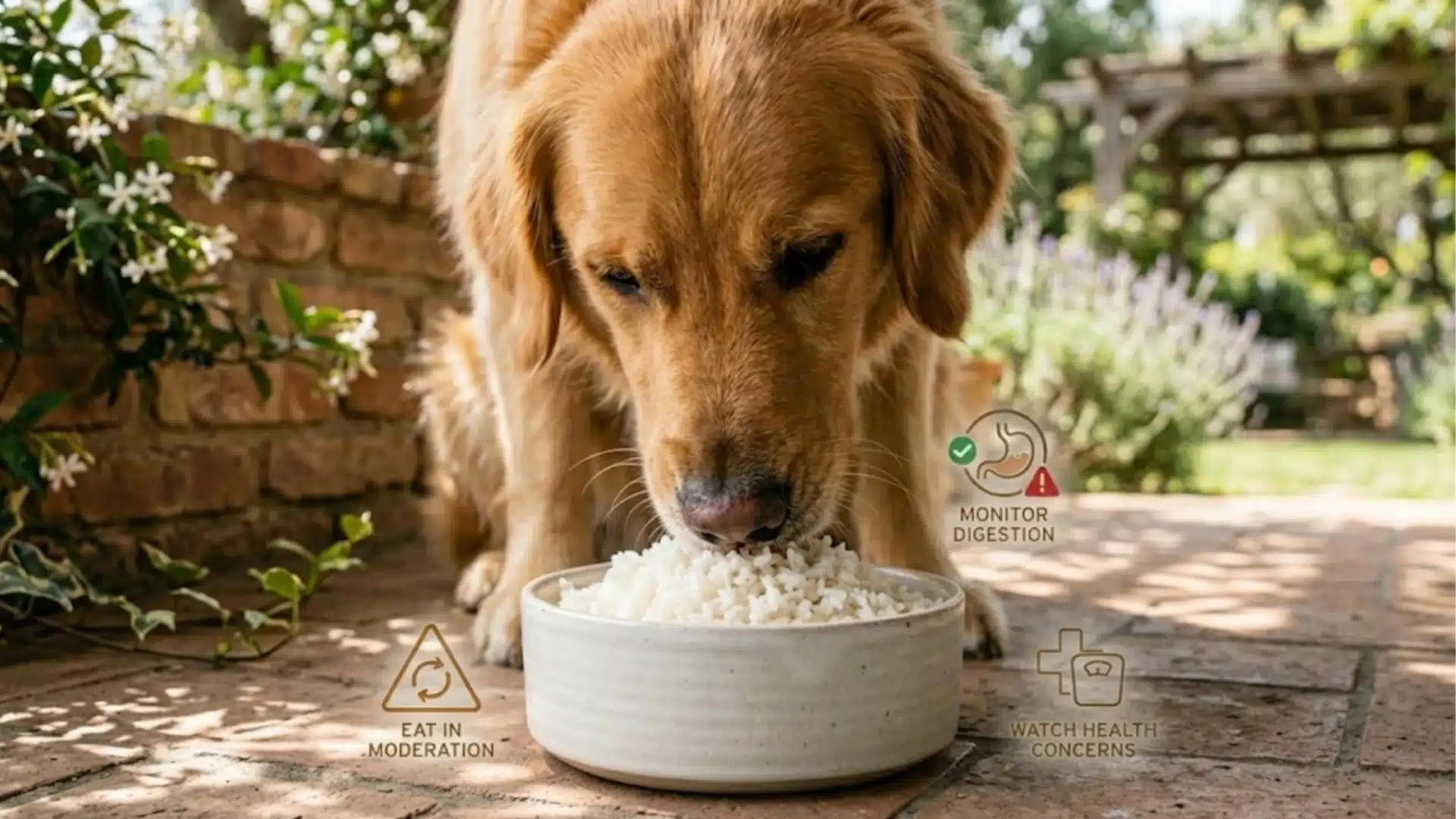
Rice is safe in most cases, but it is not perfect. One of the main concerns is weight gain. Rice is calorie-dense, and feeding it regularly alongside regular meals can slowly lead to weight gain.
White rice can also raise blood sugar levels quickly. This can be risky for dogs with diabetes or those already dealing with blood sugar issues.
Rice is not a complete food. It lacks sufficient protein, fat, and essential nutrients. Feeding it alone for long periods can lead to poor nutrition and deficiencies.
Brown rice can be harder to digest. Its outer layer can be rough on sensitive stomachs, and in some cases, it can make diarrhea worse rather than help.
Some dogs may also show intolerance. This is uncommon, but signs such as itching, vomiting, or loose stools should be taken seriously.
There is another factor many people overlook. Rice can contain small amounts of arsenic from soil and water. Occasional feeding is fine, but using it daily is not ideal.
Rinsing rice well and cooking it in extra water can reduce this. Rotating it with other foods like oats or sweet potatoes is a better approach.
This does not mean rice is harmful; it just needs to be used in moderation.
The Right Way to Cook and Serve Rice for Your Dog
Feeding rice the right way makes all the difference. Start by choosing the right type. Plain white rice works best for dogs with stomach issues.
For healthy dogs, both white and brown rice can be given once in a while. Before cooking, rinse the rice well. This helps remove extra starch and reduces unwanted residue.
Cook it in plain water only. Do not add salt, butter, oil, spices, or broth. Even small amounts of these can cause harm.
Make sure the rice is fully cooked. Hard or undercooked grains can be difficult to digest and may even cause choking.
Once cooked, let it cool down completely before serving. Hot rice can burn your dog’s mouth. Rice can be served on its own, but it works better when mixed with lean protein.
Boiled chicken or turkey, skinless and boneless, is a good option. This makes the meal more balanced and easier to eat.
Portion Size Guide by Dog Size
Feeding the right portion of rice depends on your dog’s weight and size, as too much can lead to excess calories or digestive imbalance. Keep rice as a small part of the meal rather than the main component.
| Dog Size | Weight | Rice Portion per Meal |
|---|---|---|
| Extra Small | 2–10 lbs | 1 tablespoon |
| Small | 10–25 lbs | 2–3 tablespoons |
| Medium | 25–50 lbs | 1/4 cup |
| Large | 50–100 lbs | 1/3 cup |
| Extra Large | 100+ lbs | 1/2 cup max |
As a general rule, rice and other treats should not make up more than a small part of the daily diet. Keeping it limited helps maintain proper balance.
Dogs That Should Not Be Eating Rice At All
Rice is safe in many cases, but not for every dog. Dogs with diabetes should avoid it. White rice can raise blood sugar quickly, which can be risky.
Dogs that are overweight also need limits, as rice is high in calories and can add up fast. Some dogs may not tolerate rice well.
This is rare, but it can cause issues like vomiting, loose stool, or itching. If that happens, it is better to stop.
Dogs on a grain-free diet should not be given rice without checking first. Some diets are planned for specific health reasons, and adding rice can interfere.
Dogs with sensitive digestion may also struggle with certain types like brown rice. It can be harder to break down, leading to gas or discomfort.
Puppies can eat rice, but only in small amounts. Their stomachs are still developing, so new foods should be introduced slowly. It should never replace their regular food.
Rice should also be avoided if your dog is already eating a fully balanced diet with no issues. Adding extra rice without need can throw off that balance.
Leftover rice is safe only if stored properly. Fresh, plain, and well-handled rice is always the better option. If rice causes any change in digestion or behavior, it is best to avoid it and seek advice.
Healthier Alternatives to Rice If Your Dog Can’t Tolerate It
Rice works for many dogs, but it is not the only option. If it does not suit your dog, there are other simple foods that can do the same job.
- Sweet potato: Lower impact on blood sugar and rich in fiber and vitamins. Always cook it and serve it plain. Never raw.
- Pumpkin: Plain canned pumpkin helps with both diarrhea and constipation. Make sure it is 100 percent pure pumpkin, not pie filling.
- Oats: Cooked plain oats provide fiber and nutrients. Safe for most dogs, but avoid if your dog is grain-sensitive.
- Mashed potato: A simple, bland option for dogs that do not handle rice well. Must be plain with no butter, salt, or dairy.
- Quinoa: Contains more protein than most grains. Safe in small amounts, but introduce slowly as it can be harder to digest.
If you are thinking, ” Can dogs eat rice, or need an alternative, these options can help you adjust based on what your dog handles best.
Conclusion
Rice can be a helpful addition to your dog’s diet when used the right way. It is easy to digest, simple to prepare, and widely recommended by vets for short-term stomach issues.
But it works best as an occasional support food rather than a daily staple. Choosing the right type, keeping portions appropriate for your dog’s size, and always serving it plain are the most important things to get right.
Every dog responds differently, so watching how yours reacts after eating rice is the best guide you have.
The goal is always a balanced, consistent diet that suits your individual dog, and rice is just one small piece of that picture.
Have questions about what else your dog can safely eat? Drop them in the comments below, and we will do our best to help.
And if this guide was useful, share it with a fellow dog owner who might need it — because every dog deserves a diet that actually works for them.
Frequently Asked Questions
Can Dogs Eat Rice Every Day, or Should I Limit It?
Feeding rice daily is not the best idea. While it is safe, it lacks essential nutrients your dog needs for a complete diet. Occasional use is fine, especially during stomach issues, but long-term feeding can lead to imbalance, weight gain, or even nutrient deficiencies if not combined properly.
What Type Of Rice Is Best For My Dog With An Upset Stomach?
White rice is the safest choice during stomach issues. It is soft, easy to digest, and helps settle digestion. It also helps firm loose stools. Avoid brown rice in this case because it is harder to digest and may worsen symptoms instead of helping recovery.
Can I Mix Rice With My Dog’s Regular Food Or Should It Be Given Alone?
Rice works better when mixed with lean protein like boiled chicken. Feeding it alone does not provide enough nutrition. Mixing helps create a more balanced meal and makes it easier for your dog to eat, especially if they are recovering or being picky with food.
Is It Safe To Give My Dog Flavored Or Leftover Rice From My Plate?
No, flavored or leftover rice is not safe. Ingredients like salt, butter, spices, garlic, or onion can harm dogs even in small amounts. Always prepare rice separately in plain water. What feels harmless to you can easily upset your dog’s stomach or lead to serious issues.
How Much Rice Should I Actually Feed Based On My Dog’s Size?
Portion size depends on your dog’s weight. Small dogs need only a few tablespoons, while large dogs can have up to half a cup. Rice should always be a small part of the meal, not the main dish, to maintain proper nutrition and avoid excess calories.
Are There Situations Where I Should Completely Avoid Feeding Rice To My Dog?
Yes, dogs with diabetes, weight issues, or grain sensitivities should avoid rice or limit it. It can raise blood sugar quickly and add extra calories. Also, if your dog shows signs like itching or digestive upset after eating rice, it is better to stop and switch to alternatives.