The first time I came across a platinum French Bulldog in person, I was visiting a breeder in Vermont for a profile piece.
The dog was sitting in a patch of afternoon sunlight, and the coat genuinely stopped me mid-sentence, pale, almost luminous, somewhere between cream and silver.
I understood immediately why people search so hard trying to figure out what color that even is. If you have seen a photo of a pale, shimmery Frenchie online and could not quite place the color, you are not alone.
The platinum French Bulldog is one of the most searched and most misunderstood color variations in the breed.
Having spent over a decade interviewing breeders, veterinarians, and shelter staff across the U.S., I have seen how often buyers confuse the marketing around this color with the reality of owning one.
This blog will give you a clear, honest breakdown of what it actually is, what the genetics look like, how to tell it apart from similar colors, what it costs, and what you need to know before buying one.
What is a Platinum French Bulldog?
Quick Definition: A platinum French Bulldog is a visually pale, shimmery-coated Frenchie produced by a specific combination of three recessive gene pairs: the cream gene (ee), the dilute/blue gene (dd), and either the chocolate (bb) or cocoa (coco) gene. The AKC does not recognize platinum as an official color, but platinum Frenchies can still be AKC-registered as French Bulldogs if both parents meet standard registration requirements.
A platinum French Bulldog is not an officially recognized color by the American Kennel Club. The AKC’s breed standard lists brindle, fawn, white, and pied as accepted colors; platinum is not among them.
However, platinum Frenchies can still be registered with the AKC as French Bulldogs, provided both parents are registered, and the dog meets all other breed standards. This is a detail many buyers overlook entirely.
In practical terms, platinum is a visual label for Frenchies with a very light, almost silvery cream coat that gives off a shiny, metallic appearance.
The term exists mainly because breeders needed a way to market this unique appearance. Calling it “platinum” creates a premium association, and the market price reflects that.
Visually, these dogs often have a pale cream coat, lighter eyes in some cases, and a soft, glossy coat that stands out from the standard cream or fawn French Bulldog coat.
One thing worth knowing early: a dog can look platinum without having the full genetic combination that defines a true platinum.
Visual assessment alone is not reliable; DNA testing from a recognized lab, such as Embark, Animal Genetics, or UC Davis, is the only way to confirm it.
This matters both for buyers and for breeders planning future pairings.
Part of the appeal of the platinum Frenchie comes from the same draw that makes small dog breeds known for their personality so sought after; compact companions with standout looks tend to generate serious buyer interest.
Platinum vs. Champagne: The Most Commonly Confused Pair
This is one of the most common points of confusion. If a French Bulldog carries the cream gene and the dilute (blue) gene, but not the chocolate or cocoa gene, the result is a Champagne Frenchie, not a Platinum.
Champagne dogs can look deceptively similar to platinum but lack the full three-gene combination.
Breeders who do not distinguish between the two, or do not test for it, may be selling you a champagne dog at a platinum price.
Always ask for the DNA report before agreeing to any price in the platinum range.
Key Characteristics of Platinum French Bulldogs
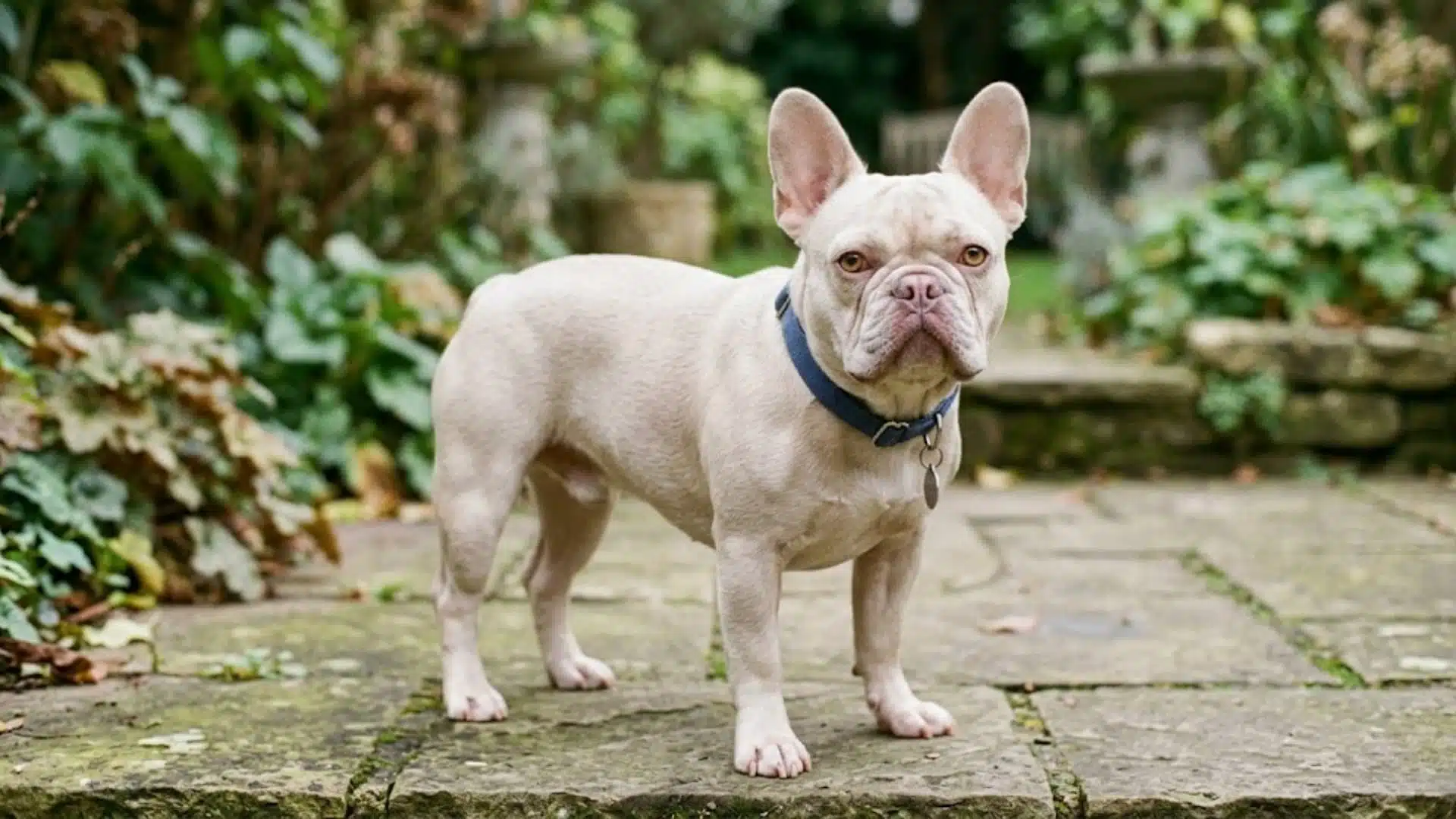
A platinum French Bulldog refers to a light-coated Frenchie with diluted tones that create a pale, glossy, almost metallic appearance.
- Coat color: Pale cream base with a faint silver tone and a slightly glossy finish that catches light differently than standard coats.
- Eye color: Often lighter brown or amber, sometimes giving a softer and more striking facial expression.
- Nose and skin tone: Typically lighter pigmentation, including pinkish or diluted tones around the nose, lips, and paw pads.
- Overall appearance: Cleaner, brighter look compared to fawn or cream, with less yellow warmth and more muted tones.
- Visual consistency: Not all look identical, but most share a washed-out, almost luminous coat effect.
- Consistency: Not all platinum Frenchies look identical. Shade intensity can vary depending on whether the dog carries lilac, chocolate, or cocoa genes in addition to the base platinum combination. This is why the term covers a range of appearances rather than one fixed look.
The Genetics: Why is it So Hard to Breed?

The platinum look is not random. It comes from a very specific genetic combination, and that is exactly why it is so difficult to produce consistently.
In simple terms, a platinum French Bulldog needs three separate recessive gene pairs to come together: the cream gene (ee), the blue or dilute gene (dd), and either the chocolate (bb) or cocoa (coco) gene.
Each must be inherited in two copies, one from each parent. This is what breeders mean by “homozygous recessive.”
A breeder I interviewed in Colorado put it simply: “You can have two dogs that look platinum and still not produce platinum puppies if one parent is only a carrier for one of the three genes.
That’s why we DNA test every single dog before pairing; without that, you’re essentially guessing.”
Even when both parents carry all the right genes, the odds are not guaranteed. On average, only about 25 percent of a litter displays the platinum coat.
The rest might look completely different while still carrying parts of the same genetic mix. This also explains why most litters are advertised as “platinum litters”.
Still contain non-platinum puppies; those pups are not failures of breeding, they are the statistical reality of recessive genetics.
That is why reputable breeders rely on DNA testing from labs such as Embark or Animal Genetics. You cannot confirm a true platinum by coat appearance alone.
Platinum vs. Other French Bulldog Colors – At a Glance
The confusion around platinum mostly comes from how similar it can look to other light-colored Frenchies. The table below breaks down the key differences at a glance.
| Color | Key Genes | Coat Appearance | Nose/Paw Pads | AKC Recognized? |
|---|---|---|---|---|
| Platinum | ee + dd + bb or coco | Pale cream with silver-metallic sheen | Pinkish/diluted | No |
| Cream | ee only | Warm cream, no metallic sheen | Black | Yes |
| Champagne | ee + dd (no chocolate) | Light cream, faint dilution | Pinkish/diluted | No |
| Blue | dd only | Solid gray/blue-toned | Gray/diluted | No |
| Lilac | dd + bb | Soft grayish-purple | Lavender/pink | No |
| Isabella | dd + bb (fawn base) | Pale grayish-brown | Pink/pale | No |
| Isabella Platinum | ee + dd + bb | Very pale, muted cream-silver | Pale pink | No |
Top Colors People Get Confused with Platinum French Bulldog
The confusion around platinum mostly comes from how similar it can look to other light-colored Frenchies. Here is how it actually compares when you break it down.
1. Platinum vs. Cream
Cream French Bulldogs are much simpler genetically. They carry the cream gene but lack the dilution gene, which is why they retain dark eyes, a black nose, and black paw pads.
Platinum Frenchies, by contrast, show diluted features, lighter noses, softer pigmentation, and a subtle gray or metallic sheen.
Cream Frenchies are also AKC color-recognized and typically cost $2,000–$7,000, making platinum a significant price premium for what can look like a similar dog to the untrained eye.
2. Platinum vs. Blue
Blue French Bulldogs also carry the dd dilute gene, but they lack the cream and chocolate or cocoa combination.
This gives them a deeper gray or blue-toned coat. Platinum appears much lighter, almost washed out, with a silvery or pale cream finish instead of a solid gray look.
3. Platinum vs. Lilac
Lilac Frenchies are a combination of blue and chocolate genes, resulting in a soft, grayish-purple coat.
Platinum is noticeably lighter and lacks the purple tint, leaning more toward a silvery-cream appearance.
4. Platinum vs. Isabella
Isabella French Bulldogs have a diluted fawn or chocolate shade, often appearing pale grayish-brown.
Isabella Platinum is a more complex version that carries cream, blue, and chocolate genes together, making the coat even lighter and more muted.
Many buyers and even some breeders use “Isabella” and “Isabella Platinum” interchangeably, but they are not the same thing. Isabella Platinum is genetically distinct and typically commands a higher price.
How Much Does a Platinum French Bulldog Cost?
Price is one of the first things buyers want to know, so here is what the current U.S. market looks like based on breeder data.
| Type | Price Range (2025) |
|---|---|
| Standard platinum (pet/limited AKC) | $6,000–$10,000 |
| Platinum with full breeding rights | $12,000–$14,000+ |
| Isabella, platinum, or a new shade | $10,000–$15,000+ |
| Fluffy platinum | $25,000–$30,000+ |
These ranges vary based on pedigree, structure, DNA results, and breeder reputation. Female platinum Frenchies typically carry a 15–25% price premium over males.
A word of caution: if you see a platinum Frenchie listed under $3,000, that is a serious red flag.
It likely means no genetic testing, poor breeding practices, or misrepresentation of the dog’s actual genetics. Legitimate platinum pricing starts well above standard Frenchie prices because the production costs alone are high.
Why Platinum French Bulldogs Are So Expensive?
The high price of platinum French Bulldogs is driven by a mix of genetics, production costs, and market demand.
Breeding two dogs with the right genetic setup requires DNA testing of both parents, careful pairing, and often multiple breeding attempts, most of which involve artificial insemination and C-section delivery, which alone can cost breeders $5,000–$7,000 per litter before a single puppy is sold.
At the same time, demand plays a significant role. The “platinum” label carries a premium image in the exotic Frenchie market, allowing sellers to price these dogs significantly above the price of standard colors.
Understanding that dynamic is useful; it means a higher price does not automatically mean a healthier dog.
The premium reflects rarity and market perception, not necessarily superior breeding quality.
This is why asking for health certifications and genetic test results matters more than the number on the price tag.
Red Flags to Watch for When Buying a Platinum Frenchie

Watch for these red flags before buying or adopting a platinum French Bulldog:
- No DNA testing proof: If the breeder cannot show verified lab results from Embark, UC Davis, or Animal Genetics, treat it as a major warning
- Price feels too low: A so-called platinum listed under $3,000 usually points to incorrect labeling or poor breeding standards
- Seller lacks clarity: If they cannot clearly explain the difference between platinum, champagne, and cream, they likely do not understand the genetics
- Health history is missing: No vet records or certifications for parent dogs suggest a lack of responsible breeding practices
- No transparency on genetics: A breeder unwilling to share DNA panel results may be hiding important information
- Look closely at physical signs: Dark noses or paw pads often indicate a cream French Bulldog, not a true platinum
Health Considerations You Should Know

There is no health condition linked specifically to the “platinum” label itself. However, the genes involved in creating that look can carry certain risks.
The dilute gene (dd) is sometimes associated with color dilution alopecia, a condition that can cause patchy hair loss and skin sensitivity in some affected dogs.
Not all platinum Frenchies develop this, but it is more common in dogs carrying the blue/dilute gene than in standard-colored Frenchies.
For a closer look at what skin conditions in dogs can look like and how they are typically managed, this guide covers the visual signs and treatment approaches in detail.
Beyond color-related concerns, platinum Frenchies share all the same structural health considerations as any French Bulldog.
Their flat faces (brachycephalic anatomy) make them prone to breathing difficulties, especially in heat.
During my years volunteering at rescue shelters, I noticed a recurring pattern: a significant portion of surrendered exotic-colored Frenchies came from owners who were drawn in by the rare coat and were completely unprepared for the respiratory care, vet costs, and heat sensitivity that come standard with the breed, regardless of color.
If you are not ready for brachycephalic dog ownership, the coat color is irrelevant.
Other health areas to monitor include joint health (hip dysplasia, patellar luxation), eye conditions (cherry eye, corneal ulcers), and skin allergies, all of which are documented in the breed generally.
This is why ethical breeding prioritizes health testing beyond coat genetics alone.
Should You Buy a Platinum French Bulldog?
A platinum Frenchie is not just a visual upgrade; it comes with real responsibility. If you are only chasing the label or the hype, this is not the right choice.
These dogs are expensive, often require attentive health care, and their platinum status cannot be confirmed without proper DNA testing.
However, if you genuinely love French Bulldogs and understand what goes into owning one, a platinum Frenchie can be a great companion. Their personality, loyalty, and charm remain the same as any other Frenchie.
The key is to focus on responsible ownership. Always buy from reputable breeders who prioritize health, transparency, and proper genetic testing over marketing claims.
Basic Care for a Platinum French Bulldog

Platinum Frenchies have the same care needs as the broader breed, with a few considerations worth noting given their dilute coat genetics:
- Exercise: Short walks of 15–20 minutes, twice daily. Avoid heat and humidity; overheating is a genuine risk for brachycephalic breeds. Morning or evening walks are safest in warmer months.
- Grooming: Weekly brushing to remove loose coat. Bathe every 4-8 weeks using a gentle shampoo, particularly one suited to sensitive skin, if your dog shows any signs of dilution-related skin sensitivity. Clean facial folds regularly to prevent moisture buildup and irritation.
- Skin monitoring: Given the dd gene association with color dilution alopecia, keep an eye on coat density and skin condition. Patchy hair loss or chronic skin irritation warrants a vet visit.
- Diet: High-quality, grain-free food helps reduce the digestive sensitivity and skin reactions that Frenchies are prone to. Avoid overfeeding; their compact frames make weight gain easy and joint stress worse.
- Separation anxiety: Frenchies are companion dogs and do not do well alone for extended periods. Building a routine that includes mental stimulation through enrichment toys can make a real difference in how settled and calm a Frenchie stays between interactions.
Conclusion
Platinum French Bulldogs are genuinely eye-catching, and the curiosity they generate is completely understandable.
But after a decade of talking to breeders, vets, and rescue workers, the most useful thing I can tell you is this: the coat is the least important part of the decision.
The platinum look comes down to specific genetics, careful breeding, and proper DNA testing verification.
It is easy to get drawn in by the rarity and premium pricing, but the smarter approach is to focus on health documentation, transparent breeders, and honest expectations about what brachycephalic dog ownership actually involves.
A platinum Frenchie can be a great companion, but only if you make an informed, eyes-open choice. The color fades into the background once you are living with the dog.
What lasts is the temperament, the health history, and the relationship you build with the breeder who handed them to you.
Got questions or thoughts? Drop them in the comments below.
Frequently Asked Questions
How Can I Tell if My Frenchie is Truly Platinum?
Visual assessment alone is not reliable. The only way to confirm a true platinum is through DNA testing from a recognized lab (Embark, Animal Genetics, UC Davis) that shows homozygous expression of the ee, dd, and bb or coco genes.
Can a Platinum French Bulldog Be AKC Registered?
Yes. The AKC does not recognize platinum as an official color, but platinum Frenchies can still be registered as French Bulldogs as long as both parents are AKC-registered purebreds and the dog meets all other breed standards.
What is the Difference Between Platinum & Champagne French Bulldogs?
A champagne Frenchie carries only the cream and dilute genes, without the chocolate gene. A platinum carries all three. They can look similar, but they are genetically distinct and are priced differently.
What is an Isabella Platinum French Bulldog?
An Isabella Platinum carries the cream (ee), blue/dilute (dd), and chocolate (bb) genes together, producing an even paler, more muted coat than standard platinum. It is genetically distinct from both Isabella and standard platinum, and typically priced higher than either.
Is a Platinum Frenchie Healthier Than a Standard Frenchie?
No. Platinum Frenchies share all the same breed-wide health risks as any French Bulldog, including brachycephalic airway syndrome, hip dysplasia, and skin sensitivity. The dilute gene may carry an additional risk for color dilution alopecia in some dogs. A higher price does not indicate better health; what matters is thorough health testing of parent dogs by the breeder.