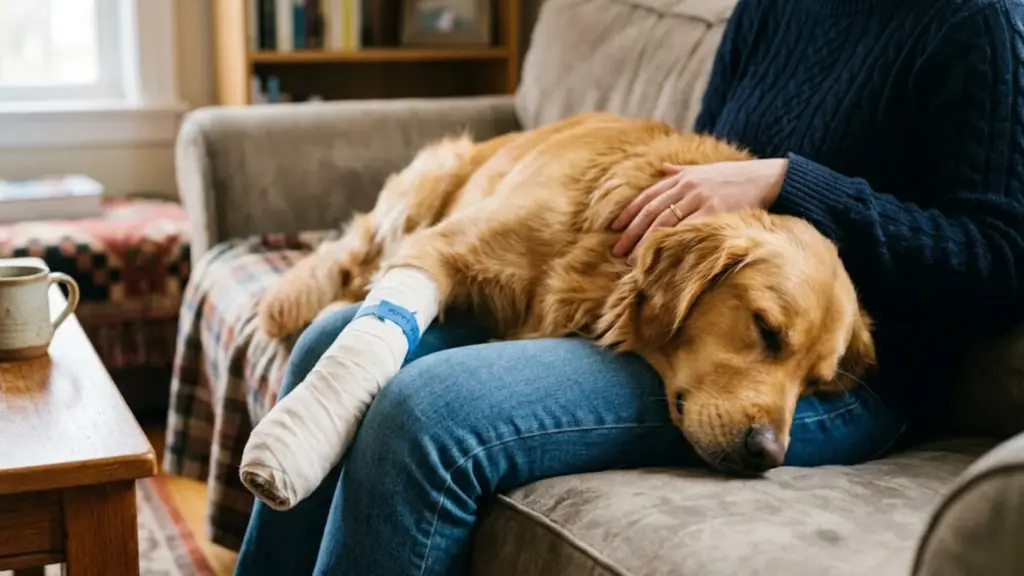
Seeing a fresh cut or scrape on your dog can instantly make your heart sink.
One moment, they are happily running around the yard, and the next, you notice limping, licking, or a small wound that was not there before.
In situations like these, many pet owners start searching for how to heal a dog wound fast at home without making the injury worse.
The fear of infection, pain, or slow healing can feel overwhelming, especially when your dog depends on you for comfort and care.
The good news is that proper wound care for dogs does not always have to be complicated.
This blog covers how to heal a dog wound fast at home, natural remedies that actually work, products to avoid, and the when it’s time to call the vet.
What Counts as a Minor Dog Wound?
Minor dog wounds are usually small injuries that affect only the surface of the skin and can often be treated safely at home with proper care.
These may include small cuts, scrapes, abrasions, superficial wounds, or mild paw injuries that do not bleed heavily or appear deep.
A minor wound should look clean and manageable and should not cause severe pain or swelling.
However, some injuries should never be treated only at home, including deep punctures, bite wounds, exposed tissue, wounds near the eyes or joints, or cuts with heavy bleeding.
To quickly assess the severity of a dog wound, check the depth of the injury, the amount of bleeding, swelling, pain response, and whether there is any discharge or foul smell.
Serious symptoms usually mean your dog needs veterinary treatment as soon as possible.
Supplies You Will Need to Clean a Dog Wound Safely at Home
Before cleaning a dog wound at home, it is important to gather the right supplies so the process stays safe, clean, and stress-free for your dog.
Using pet-safe materials can help prevent irritation, lower infection risk, and support faster healing. Having everything ready beforehand also makes wound care easier and more organized.
- Saline Solution: Helps flush dirt and debris from the wound gently without irritating the skin.
- Clean Gauze Pads: Useful for wiping the area, controlling minor bleeding, and applying antiseptics safely.
- Pet Safe Antiseptic Solution: Diluted chlorhexidine or povidone iodine can help disinfect the wound properly.
- Disposable Gloves: Help keep bacteria away from the wound during cleaning.
- Clean Towel: Useful for drying the area gently after washing.
- Bandages or Wraps: May help protect certain wounds from dirt or licking.
Always avoid harsh chemicals, dirty cloths, or human medications unless approved by a veterinarian.
Keeping supplies clean and using gentle techniques can make home wound care safer and more effective for your dog.
How to Heal a Dog Wound Fast at Home: Step by Step
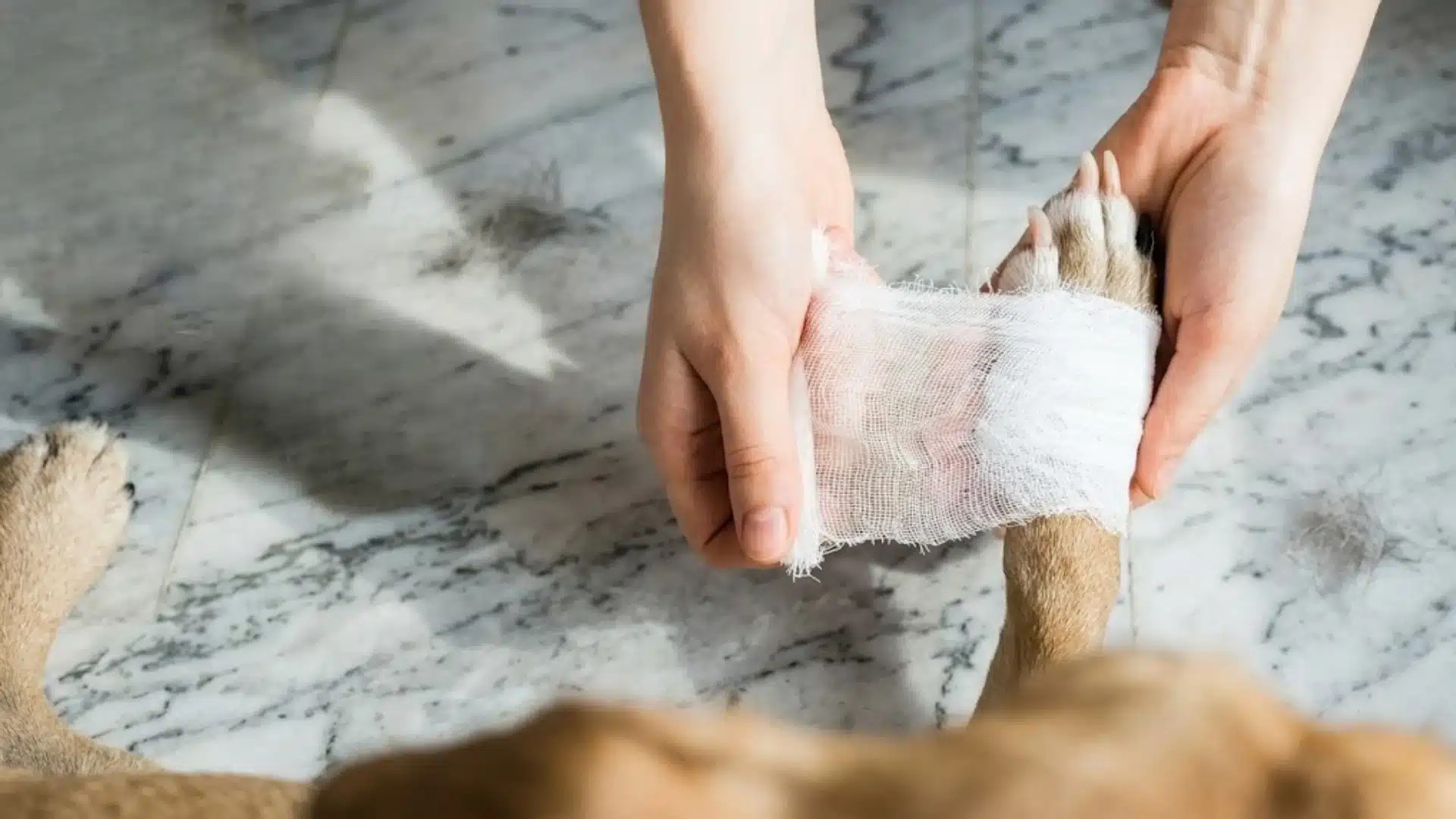
Even small wounds can become serious if infection develops or healing slows down.
Watch the area closely during recovery and contact a veterinarian if swelling, discharge, odor, or worsening pain appear.
Never give human medications to dogs unless a veterinarian approves them first, as many common medicines can be harmful. Always consult a licensed veterinarian before treating wounds beyond minor scrapes or if you have any doubt about severity.
Step 1: Keep Your Dog Calm and Secure
Dogs in pain may react differently than usual, including growling, snapping, or trying to pull away during wound care.
Gentle restraint helps prevent sudden movement and allows the injury to be checked safely.
If needed, use a soft muzzle while examining the wound to reduce the risk of accidental bites or additional injury.
Step 2: Control Any Bleeding
Apply steady pressure to the wound using clean gauze or a soft cloth for several minutes without lifting it repeatedly.
Mild bleeding from small cuts often slows quickly with consistent pressure.
If bleeding becomes heavy, continues after several minutes, or soaks through the material, contact a veterinarian immediately for further treatment.
Step 3: Remove Fur Around the Area
Carefully trim the hair around the wound to prevent dirt, bacteria, and moisture from becoming trapped against the injured skin.
Clearing away excess fur also makes it easier to clean the area and monitor healing.
Electric clippers are usually safer and more precise than scissors, which can accidentally cut sensitive skin.
Step 4: Clean the Wound Properly
Flush the wound gently with saline solution or another pet-safe cleanser to remove dirt, bacteria, and small debris before applying any treatment.
Proper cleaning lowers the risk of infection and helps the skin heal more effectively.
According to VCA Animal Hospitals, a simple saline solution can be made by mixing one level teaspoon of salt into two cups of water, an easy option you can prepare at home.
Step 5: Apply Treatment and Cover
Apply a thin layer of pet-safe antibiotic ointment if recommended by your veterinarian, then place sterile gauze gently over the wound.
Secure the area with a clean bandage that feels snug enough to stay in place without restricting circulation.
A proper covering helps protect the wound from dirt, licking, and further irritation during healing.
Step 6: Monitor Healing Daily
Check the wound daily to ensure the bandage remains clean, dry, and properly in place. Watch for redness, swelling, discharge, or unusual odor that may signal infection.
Prevent your dog from licking or scratching the area by using an Elizabethan collar, and reward calm behavior during wound care to reduce stress.
Replace dirty or wet bandages promptly to help the wound heal safely and stay protected from bacteria.
How Dog Wounds Heal: The Four Stages
Understanding what’s happening beneath the surface helps you know whether healing is on track. All dog wounds go through four stages regardless of their size.
Most minor wounds show clear improvement by days 3 to 5. If healing stalls or reverses at any stage, that’s a signal to see a vet rather than continue home care.
- Inflammation (days 1-3): The body slows blood flow to the injured area and activates the immune system. You’ll see swelling, redness, and warmth; these are normal signs that healing has started.
- Debridement (hours to days 2-3): The immune system removes dead tissue and bacteria. This is why some wounds look worse before they look better.
- Skin Repair (days 4-14): New tissue forms, and the wound begins to close. You may see pink or red granulation tissue, which is a healthy sign.
- Skin Strengthening Stage (day 15 onward): The wound fully closes, and new tissue strengthens. Scar tissue continues to remodel for weeks to months.
Best Home Remedies for Minor Dog Wounds
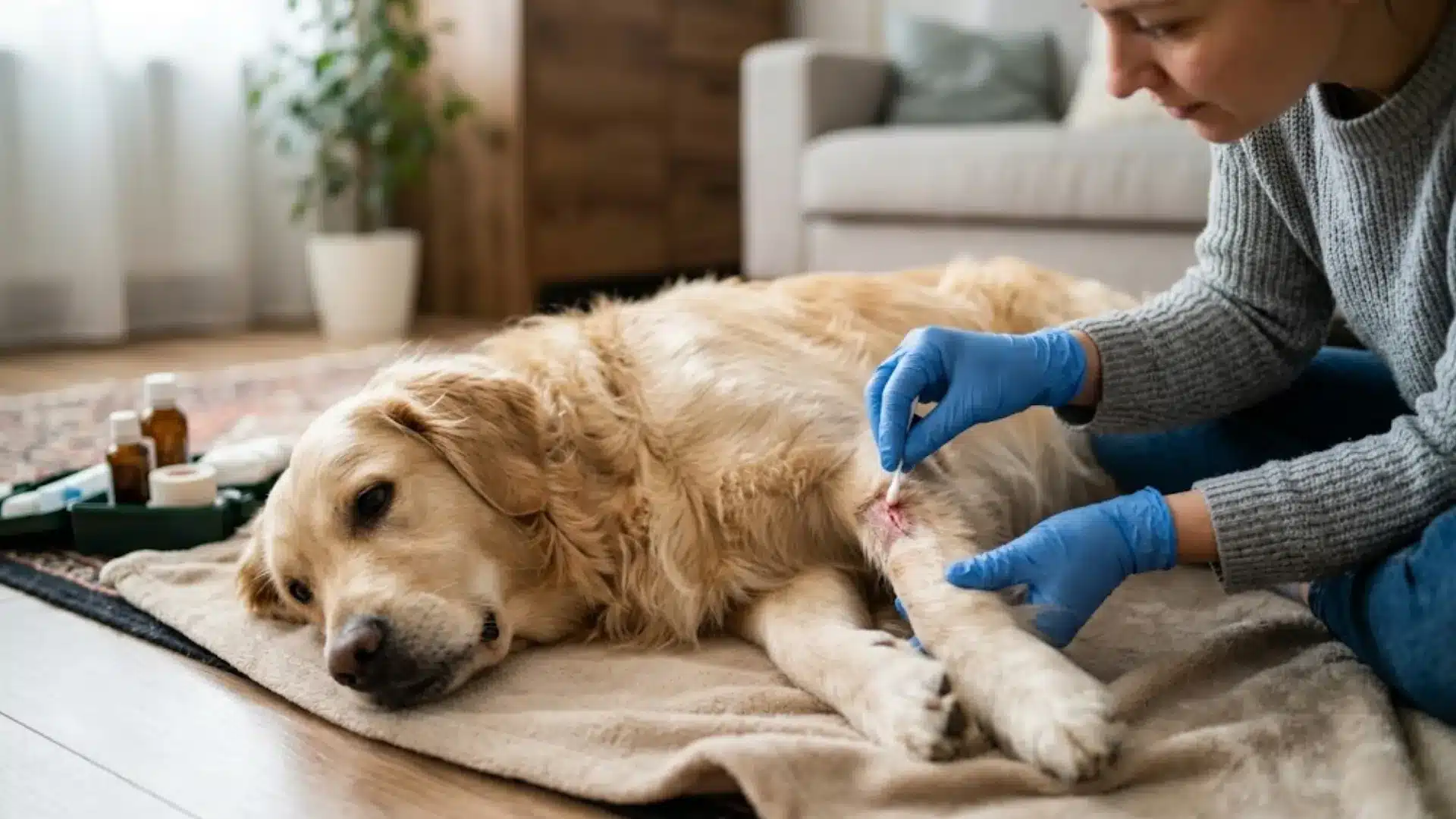
Some minor dog wounds can heal well at home with proper cleaning and safe natural remedies. Certain ingredients may help soothe irritated skin, support healing, and keep the wound moisturized while it recovers.
1. Coconut Oil for Dog Wounds
Coconut oil is often used as a natural remedy for small dog wounds because of its moisturizing and soothing properties.
It can help reduce dryness around the injured area and may calm irritated skin while the wound heals. Before applying coconut oil, gently clean the wound and pat it dry.
Use only a thin layer to avoid making the area too greasy. While coconut oil may help with minor scrapes and dry skin, it should not replace veterinary treatment for deep or infected wounds.
2. Aloe Vera for Skin Irritation
Aloe vera can help soothe irritated skin around minor dog wounds because of its natural cooling effect. Many dog owners use pure aloe vera gel to calm redness and discomfort after cleaning a wound.
It is important to choose pet-safe aloe vera products without added fragrances, alcohol, or artificial flavors that may irritate the skin.
Apply a small amount gently around the affected area and prevent your dog from licking excessive amounts. Aloe vera works best for mild irritation and should not be used on serious or infected wounds.
3. Turmeric Paste for Minor Scratches
Turmeric paste is sometimes used on small scratches because it contains natural anti-inflammatory properties that may help calm irritated skin.
A small amount of turmeric mixed with water can be applied carefully around minor wounds after proper cleaning. It should only be used in limited amounts and on very small injuries.
Turmeric can leave strong yellow stains on fur, furniture, and fabric, so many pet owners use it carefully indoors. If the wound becomes red, swollen, or painful, veterinary care is still important for proper treatment.
4. Honey for Wound Healing
It may help protect minor dog wounds because of its natural antibacterial support and ability to retain moisture around the injured area.
Keeping the wound slightly moist can help the skin heal more comfortably and reduce cracking or dryness. Only medical-grade honey should be used because regular honey may contain bacteria or impurities.
After cleaning the wound, apply a thin layer and monitor the area daily for any signs of irritation or infection.
If your dog’s wound isn’t healing as expected or you notice the skin around it changing in texture or color, it may point to underlying skin conditions in dogs that need a separate look.
Products to Avoid on Dog Wounds
Many common first-aid products seem helpful at first, but several can actually slow healing, irritate tissue, or pose serious health risks to dogs.
| Product | Why It Should Be Avoided |
|---|---|
| Hydrogen Peroxide | Can damage healthy skin cells and slow the natural healing process, especially when used repeatedly. |
| Rubbing Alcohol | Often causes burning and irritation on open wounds and may dry out healthy tissue. |
| Essential Oils | Many essential oils are toxic to dogs and can irritate wounds or cause poisoning if licked. |
| Human Pain Relief Creams | Some creams made for people contain ingredients that are unsafe for dogs if absorbed or swallowed. |
| Powders or Talcum Products | It can trap moisture inside the wound and increase irritation instead of helping with healing. |
| Undiluted Apple Cider Vinegar | May sting badly and irritate sensitive or broken skin. |
| Harsh Disinfectants | Strong cleaning chemicals can damage tissue and delay recovery. |
| Dirty Cloths or Used Bandages | Reusing unclean materials may introduce bacteria into the wound and increase infection risk. |
When to Call the Vet?
Some wounds need more than home care. Contact a vet if bleeding doesn’t stop within 5 to 10 minutes, the wound is deep, swollen, or has a bad smell.
Bite wounds, punctures, limping, or obvious signs of pain also require professional attention.
Even small wounds can become serious if bacteria enter the skin and cause an infection.
A veterinarian can properly clean the area, remove debris, and provide treatment such as safe medications, stitches, or antibiotics if needed
If you notice new lumps or bumps near the wound while monitoring recovery, have a vet take a look at these, as they can occasionally signal an abscess forming below the surface.
Quick treatment lowers the risk of complications and helps your dog recover without setbacks.
Conclusion
Taking care of a dog wound at home can feel stressful at first, but staying calm and acting quickly can make a big difference in your dog’s comfort and recovery.
Simple steps can help support healthy healing. At the same time, it is important to know when a wound needs professional veterinary attention instead of home care.
Every dog heals differently, so patience and regular monitoring matter just as much as treatment itself.
Have you ever treated a minor dog wound at home or used a remedy that worked well for your pet? Share your experience, tips, or questions in the comments below
Frequently Asked Questions
Can I Let My Dog Sleep without a Bandage on the Wound?
If the wound is small and clean, some dogs may heal better with airflow. However, uncovered wounds can attract licking, dirt, and bacteria during sleep or movement.
Should I Bathe My Dog While the Wound is Healing?
Avoid full baths until the wound starts healing properly. Excess moisture may slow recovery, soften scabs, and increase the risk of irritation or bacterial growth around the area.
Can Dog Wounds Heal Faster with Better Nutrition?
Yes, a healthy diet with enough protein, vitamins, and water can support skin repair and overall healing. Poor nutrition may slow the body’s natural recovery process.