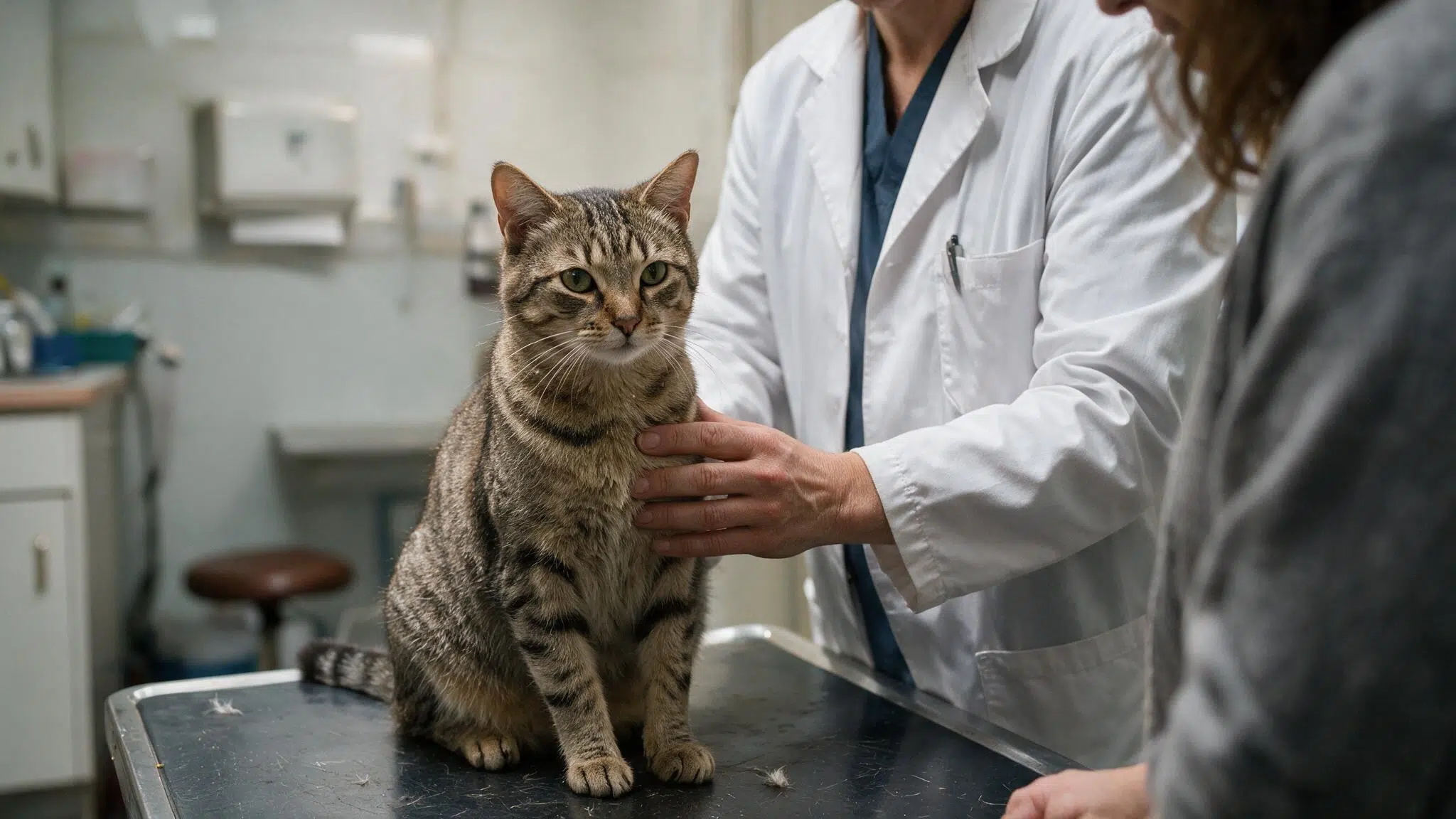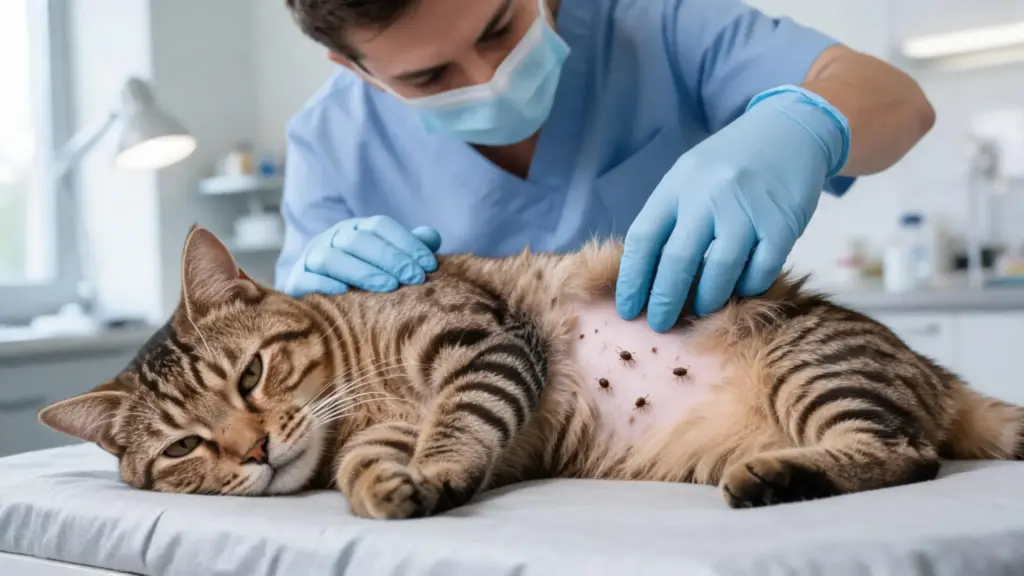
Finding fleas crawling through your cat’s coat can be upsetting, especially when your cat seems tired or stops eating. A few fleas can multiply quickly, and a heavy infestation may cause ongoing blood loss.
So, can fleas kill a cat? In severe, untreated cases, they can. Kittens, senior cats, and cats with existing health problems face the greatest risk of flea-related anemia.
Watch for pale gums, weakness, rapid breathing, reduced appetite, or unusual sleepiness. Acting early can protect your cat from serious complications.
The information below explains when fleas become dangerous, which warning signs require veterinary care, and how to remove fleas safely while preventing another infestation in your home.
Can Fleas Kill a Cat or Kitten?
Yes, fleas can become dangerous when an infestation is severe or remains untreated. A large number of fleas feeding repeatedly may remove enough blood to cause anemia, leaving a cat weak and unable to carry enough oxygen throughout the body.
Kittens face the highest risk because their small bodies contain less blood. Senior cats, underweight cats, and those with existing illnesses may also have greater difficulty coping with continued blood loss.
Watch for pale or white gums, low energy, reduced appetite, weakness, rapid breathing, unsteady movement, or collapse. These symptoms can indicate that the infestation is affecting more than the skin.
Contact a veterinarian promptly if your cat shows any of these changes. Treatment may include blood tests, supportive care, treatment for severe anemia, and a flea-control plan based on your cat’s age, weight, health, and current condition, since pale gums and low energy show up as warning signs across several other common feline illnesses as well.
Why Fleas Can Become Dangerous for Cats
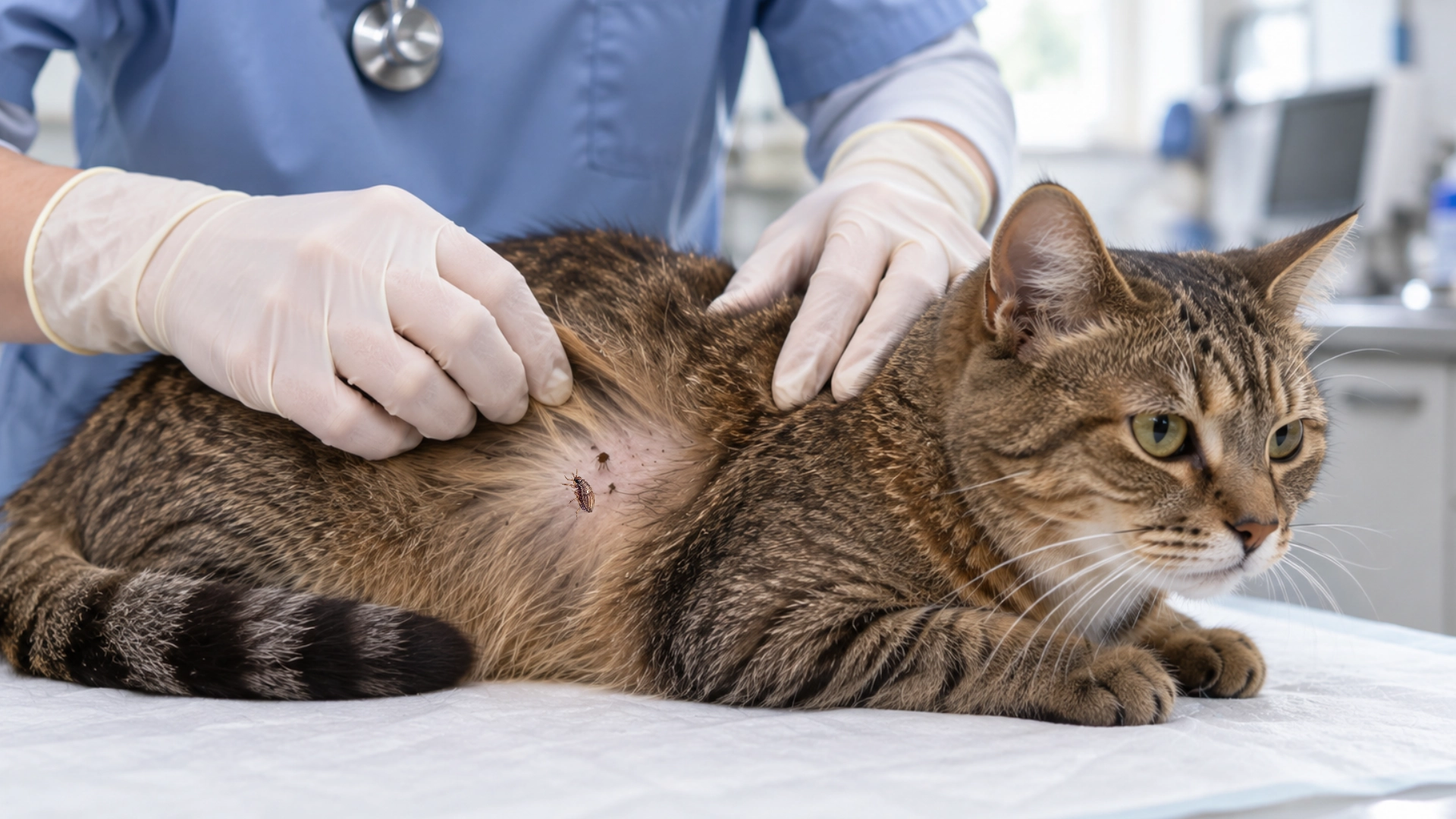
Adult fleas survive by feeding on blood. One flea removes only a small amount, but a heavy infestation allows many fleas to feed repeatedly throughout the day.
A New Mexico State University blood-feeding study measured blood consumption by cat fleas. When ongoing blood loss exceeds the body’s ability to replace red blood cells, anemia can develop.
Anemia reduces the blood’s ability to carry oxygen. Affected cats may become weak, tired, pale, short of breath, or less interested in food.
Kittens have less total blood, while senior cats and cats with existing illnesses may tolerate blood loss poorly. The number of fleas matters, but your cat’s gum color, breathing, strength, appetite, and behavior provide more useful warning signs.
Which Cats Are Most at Risk From Fleas?
No single flea count predicts danger. Body size, age, health, nutrition, and infestation length all influence how much blood loss a cat can tolerate.
Higher-Risk Cat | Why the Risk Can Rise |
|---|---|
Young kittens | Small blood volume makes ongoing loss dangerous sooner. |
Older cats | Illness or reduced grooming can lower tolerance. |
Underweight cats | Poor body condition leaves less reserve. |
Cats already ill | Existing disease can make anemia harder to tolerate. |
Heavily infested cats | More feeding fleas increase cumulative blood loss. |
Outdoor or neglected cats | Infestations may remain unnoticed and untreated longer. |
Risk categories help with context, but symptoms matter more than labels. Judge a cat with whole-body changes by condition, not flea count, the same individualized approach that matters when managing day-to-day care for an older cat with less reserve to draw on.
Signs a Flea Infestation Is Becoming Serious
Serious flea illness is not measured by scratching alone. Changes in gum color, energy, breathing, and stability can show when blood loss affects the whole body.
1. Pale or White Gums
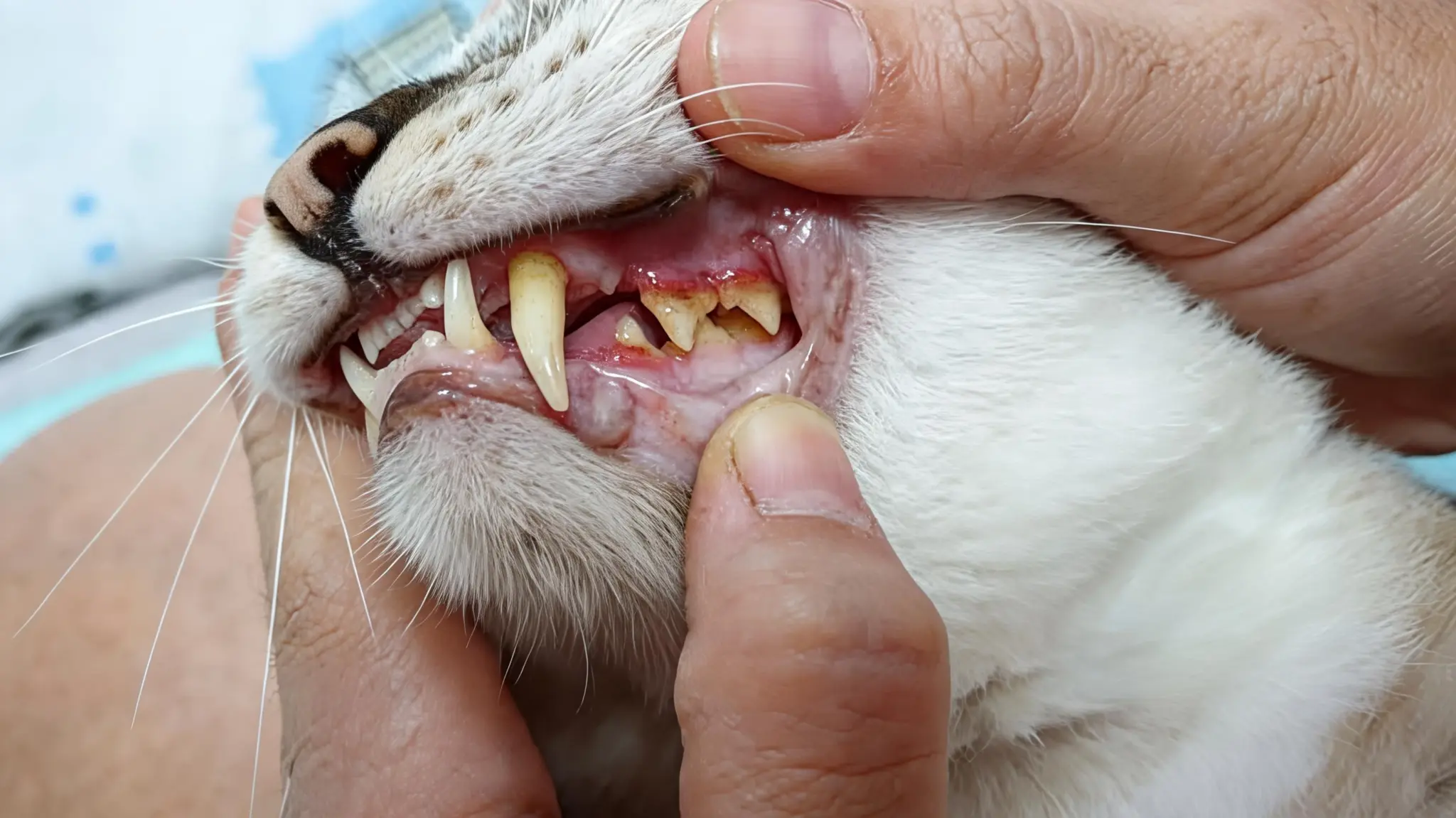
Healthy cat gums are usually pink. Gums that become unusually pale, nearly white, or grayish can signal reduced red blood cells or poor circulation.
Check in good light and compare with the cat’s normal color if possible. Pale gums become more concerning when fleas are present alongside low energy, poor appetite, weakness, or breathing changes, and veterinary assessment should not be delayed.
2. Weakness, Lethargy, or Collapse
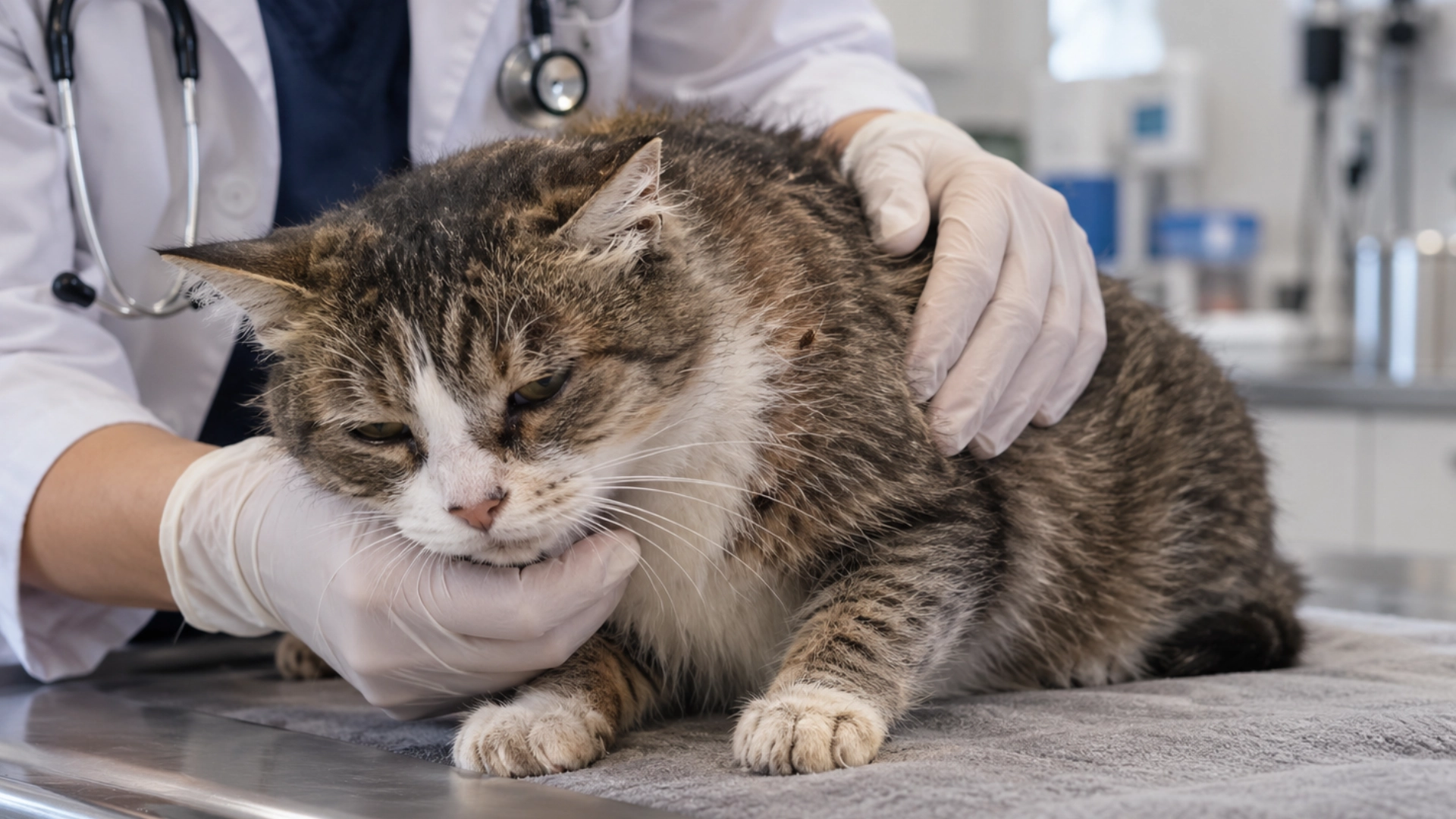
A cat losing too much blood may become quieter, sleep longer, hide, wobble, or struggle with ordinary movement.
The important change is a clear drop from that cat’s usual behavior. Collapse or inability to stand suggests the problem may be advanced. Weakness is especially concerning when paired with pale gums, poor appetite, cool paws, or a clearly heavy flea burden.
3. Fast or Difficult Breathing
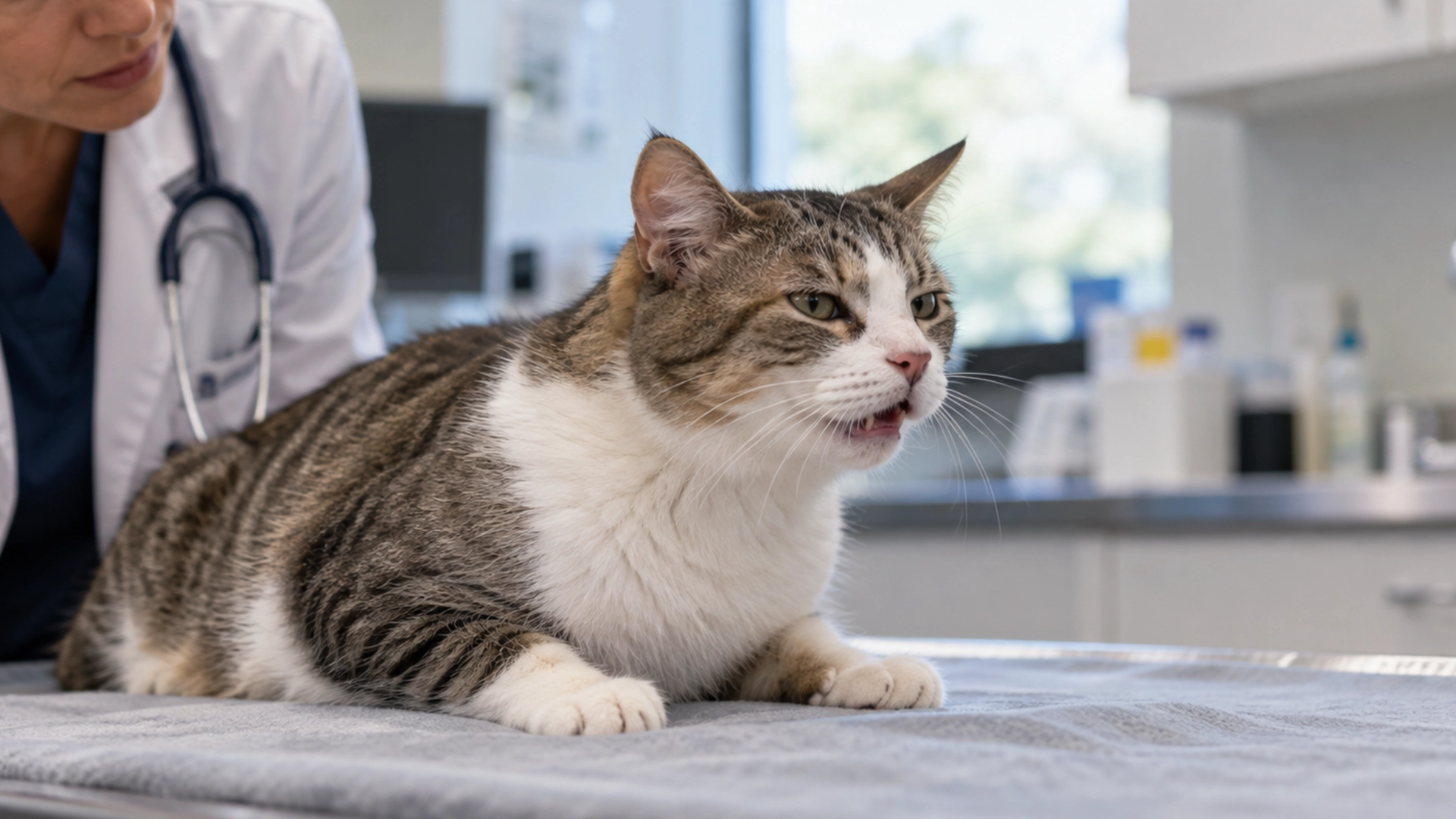
Red blood cells carry oxygen through the body, so severe anemia can force a cat to work harder to meet normal oxygen needs.
Breathing may become faster, deeper, or more effortful, even at rest. Treat open-mouth breathing, pronounced chest or abdominal effort, or sudden respiratory distress as an emergency, not a reason to try another flea treatment first, and reviewing the broader causes of heavy breathing in cats can help you describe what you’re seeing to your vet.
These signs show when fleas may be affecting more than the skin. Knowing when to stop home monitoring can help prevent dangerous delays in veterinary care.
What Happens If Fleas Are Left Untreated?
Untreated fleas can affect more than your cat’s comfort. Continued feeding and scratching may lead to blood loss, skin damage, parasites, and flea-borne infections.
- Anemia: A heavy flea burden may remove enough blood to cause weakness, pale gums, rapid breathing, or collapse.
- Flea allergy dermatitis: Sensitivity to flea saliva can cause severe itching, crusty bumps, hair loss, and repeated grooming.
- Skin infections: Scratching and licking can damage the skin, allowing bacteria to enter.
- Tapeworm infection: Cats may swallow infected fleas while grooming.
- Flea-borne disease: A 2026 Texas A&M University study detected Bartonella and Rickettsia organisms in fleas collected from cats in South Texas.
Treating only the itching does not remove the underlying infestation. The cat, other suitable household pets, and flea sources in the home must be addressed together.
What Cat Owners on Reddit Say About Severe Flea Infestations
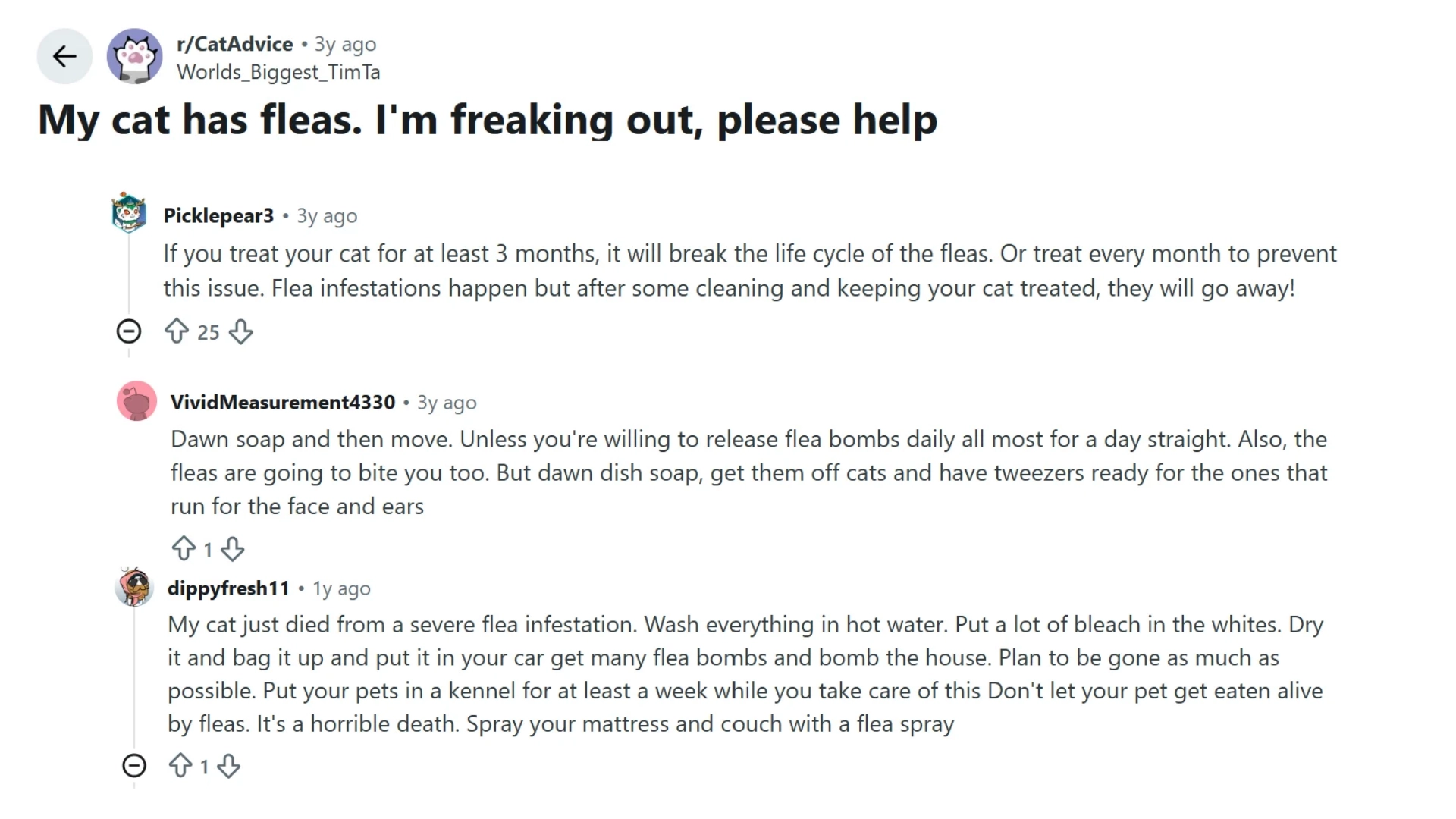
A Reddit thread shows how stressful flea infestations can become for pet owners. Several commenters stressed consistent treatment, repeated cleaning, and patience while the flea life cycle runs its course.
One owner said a cat had died after a severe flea infestation, highlighting how dangerous uncontrolled cases can become.
Others suggested dish soap, flea bombs, or aggressive home treatment, but these are personal experiences, not veterinary advice. The thread also shows that seeing occasional fleas after treatment does not always mean control has failed.
The strongest community takeaway is to act early, keep treatment consistent, clean the environment, and contact a veterinarian if the cat becomes weak, pale, or otherwise unwell.
What Should You Do If Your Cat Has Fleas?
Start by checking the cat’s condition, then use cat-safe treatment and deal with household flea sources. This order helps reduce health risks and reinfestation.
Step | What to Do |
|---|---|
Check the cat first | Look at gum color, breathing, appetite, activity, and strength. Use a flea comb to check for live fleas or dark flea dirt. |
Contact a vet if needed. | Seek veterinary advice if the cat is a young kitten, has pale gums, seems weak, or is breathing abnormally. |
Use cat-safe flea treatment. | Choose a product labeled for cats and suitable for the cat’s age and weight. Follow the dose and schedule exactly. |
Avoid dog flea products | Never apply a product labeled only for dogs. Use a cat-specific treatment suitable for your cat’s age, weight, and health. |
Treat the household | Wash bedding, vacuum carpets and upholstery, and treat other suitable pets as directed to reduce reinfestation. |
A Colorado State University randomized trial assessed the tolerance of a cat-specific flea collar. Product suitability still depends on the individual cat, so follow the label and ask a veterinarian before treating kittens, sick cats, or cats taking medication.
Conclusion
Flea infestations deserve prompt attention when your cat’s condition begins to change. Pale gums, weakness, reduced appetite, rapid breathing, or collapse can indicate anemia and require veterinary care.
Kittens, senior cats, and cats with existing illnesses may decline more quickly because they tolerate blood loss poorly. So, can fleas kill a cat? Severe untreated infestations can be fatal, but early treatment greatly lowers the risk.
Use only cat-safe products chosen for your cat’s age and weight, and treat household sources so fleas do not return.
Check your cat’s gums and behavior today, then contact your veterinarian if anything seems abnormal, if the infestation is heavy, or if fleas continue after treatment.
Frequently Asked Questions
Can Fleas Live in Cat Litter?
Fleas prefer feeding on animals, but eggs, larvae, or pupae may collect near a litter box when an infested cat spends time there. Empty the box regularly, clean the surrounding floor, and maintain veterinarian-approved flea control.
Can Fleas Stay on Human Clothing?
Adult fleas may briefly travel on clothing after contact with an infested pet or room, but they do not usually remain on people. Wash exposed clothing and address the animal and household sources to prevent continued spread.
Can Fleas Live in a Car?
Fleas, eggs, or larvae can enter a car on a pet, carrier, or blanket. Vacuum seats, floor mats, and fabric seams, wash removable bedding, and keep every household pet on suitable flea prevention as directed.