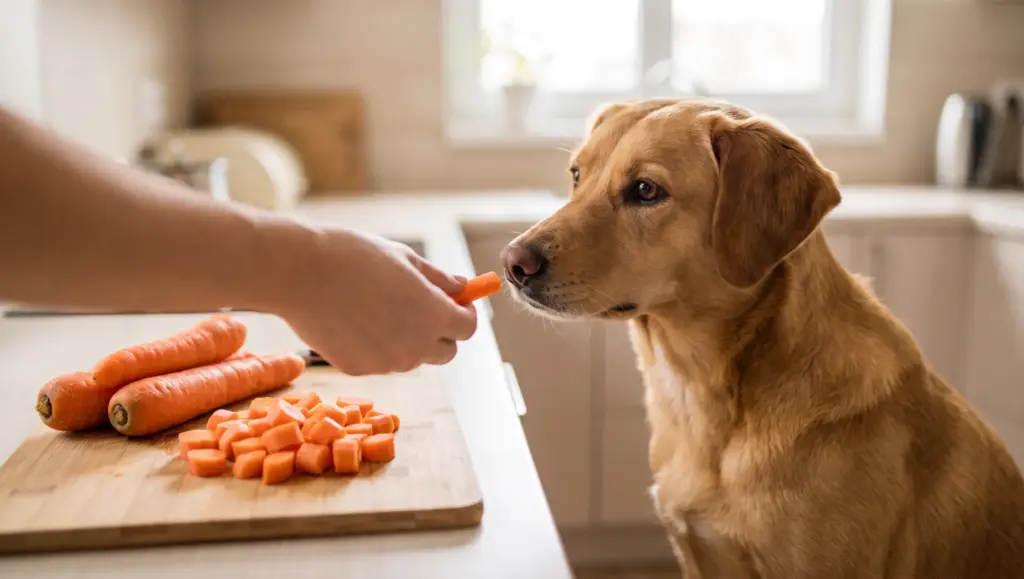
Your dog hears the snap of a carrot and appears beside the cutting board before the next slice lands. That hopeful look makes sharing tempting, but the right portion and shape matter as much as the food itself.
So, can dogs eat carrots? Yes, most healthy dogs can have plain raw or cooked carrots as a small treat. Carrots offer fiber, beta-carotene, and a satisfying crunch without many calories.
They can still cause choking or stomach trouble when pieces are too large, or servings are too generous. Here is how to prepare a piece that suits your dog, spot the forms to skip, and know when a veterinarian should make the final call.
Can Dogs Eat Carrots?
Yes, plain carrots are safe for most dogs in moderation. Serve them washed, unseasoned, and cut into pieces that match your dog’s mouth and eating habits.
Raw, steamed, boiled, baked, or mashed carrots can all work. The safest option isn’t the same for every pet. A careful chewer may handle a crisp piece, while a puppy, senior, small breed, or eager gulper may need tiny cooked pieces.
Carrots should be an extra, not a replacement for complete and balanced dog food, the same rule that applies across most vegetables considered safe for dogs. If your pet has diabetes, digestive disease, trouble swallowing, painful teeth, or a prescription diet, ask the veterinarian before changing the menu.
That simple answer covers the central decision: plain carrot is usually fine, but size, amount, and health history decide how it should be served.
Why Carrots Can Be Good for Dogs
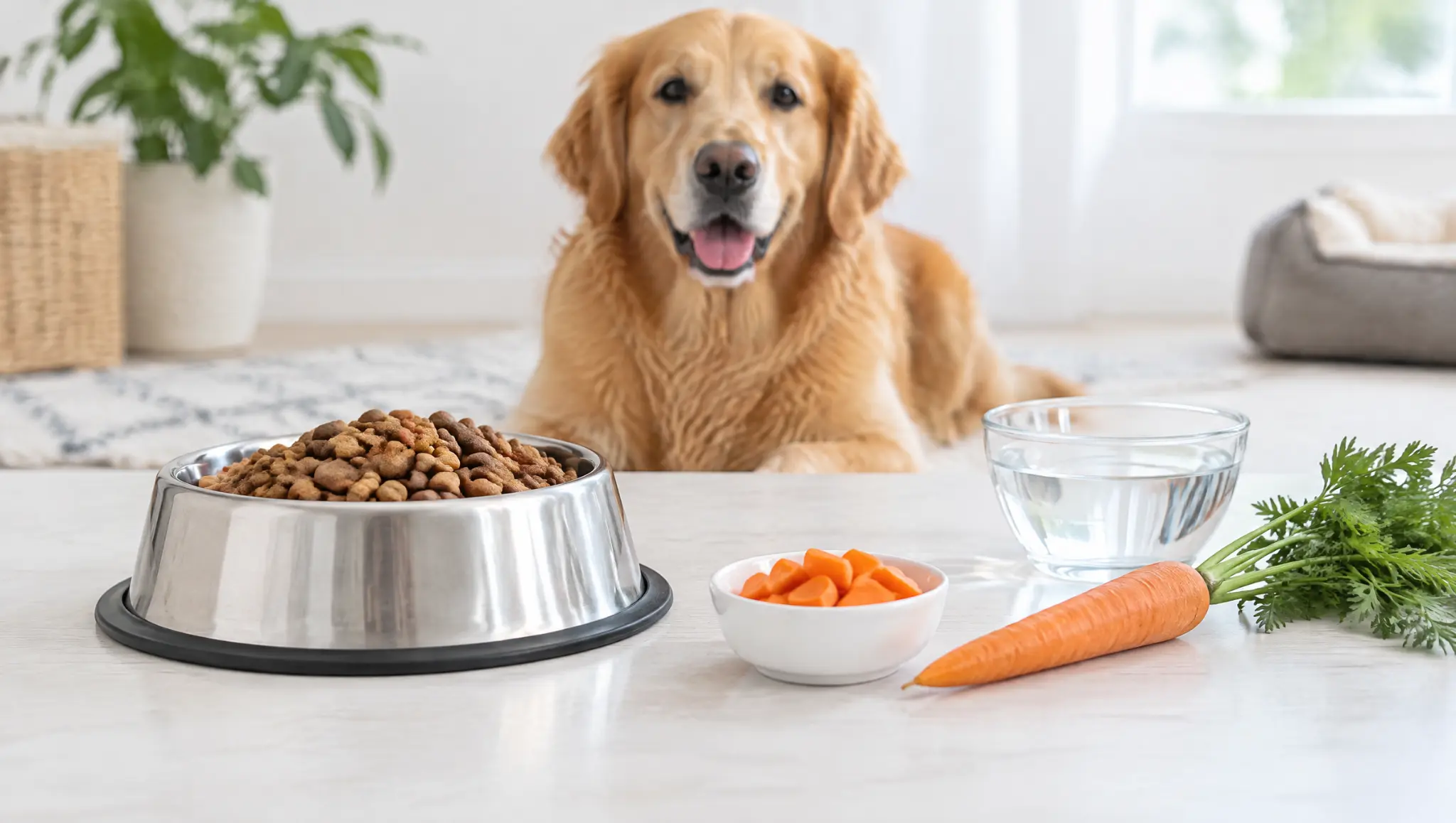
Carrots bring useful nutrients in a low-calorie package, which can make them a practical swap for richer treats. Their value comes from supporting an adequate diet, not from acting as medicine.
- Fiber and digestion: Fiber adds bulk to stool and supports normal digestive function. A study from The Ohio State University found that increased dietary fiber improved fecal and clinical scores in dogs with chronic enteropathy, but it tested planned dietary changes under veterinary care, not carrots as a home treatment.
- Beta-carotene and vitamin A: Beta-carotene is a plant pigment that a dog’s body can convert to vitamin A. This vitamin supports normal vision, skin, immune function, and growth, yet extra carrot will not correct an eye problem or a poorly planned diet.
- Lower-calorie reward: The high water content and relatively low calorie count make plain carrot pieces a good option when replacing a richer reward. They still contribute calories and should be counted with every other treat.
- Crunchy texture: A crisp carrot may satisfy a dog that likes to chew. It may rub against tooth surfaces, but it cannot replace brushing, professional assessment, or dental treatment.
These benefits are modest and useful. A carrot earns its place as an occasional snack, not as a supplement prescribed for a health condition.
How Much Carrot Can a Dog Eat?
There is no medically exact number of slices for every dog. Body weight, activity, regular food, other rewards, and health conditions all affect the suitable amount.
A common veterinary nutrition rule keeps all treats combined at no more than 10 percent of daily calories. Research on commercial dog treats also shows wide differences in calorie content, which is why Giada Morelli and fellow researchers advised owners to consider treats as part of total energy intake.
Dog size | First serving | Suitable preparation |
|---|---|---|
Extra small | 1 or 2 tiny pieces | Finely chopped or soft-cooked pieces |
Small | 2 or 3 small pieces | Thin pieces smaller than a normal bite |
Medium | 3 or 4 bite-size pieces | Raw or cooked, based on chewing style |
Large | A small handful of bite-size pieces | Raw or cooked, with supervision |
Any dog on a medical diet | Ask the veterinarian | Follow the prescribed feeding plan |
Offer one small piece the first time, then wait and watch for vomiting, loose stool, itching, or other changes. If your dog tolerates it, an occasional measured serving can fit within the daily treat allowance.
How to Prepare Carrots Safely
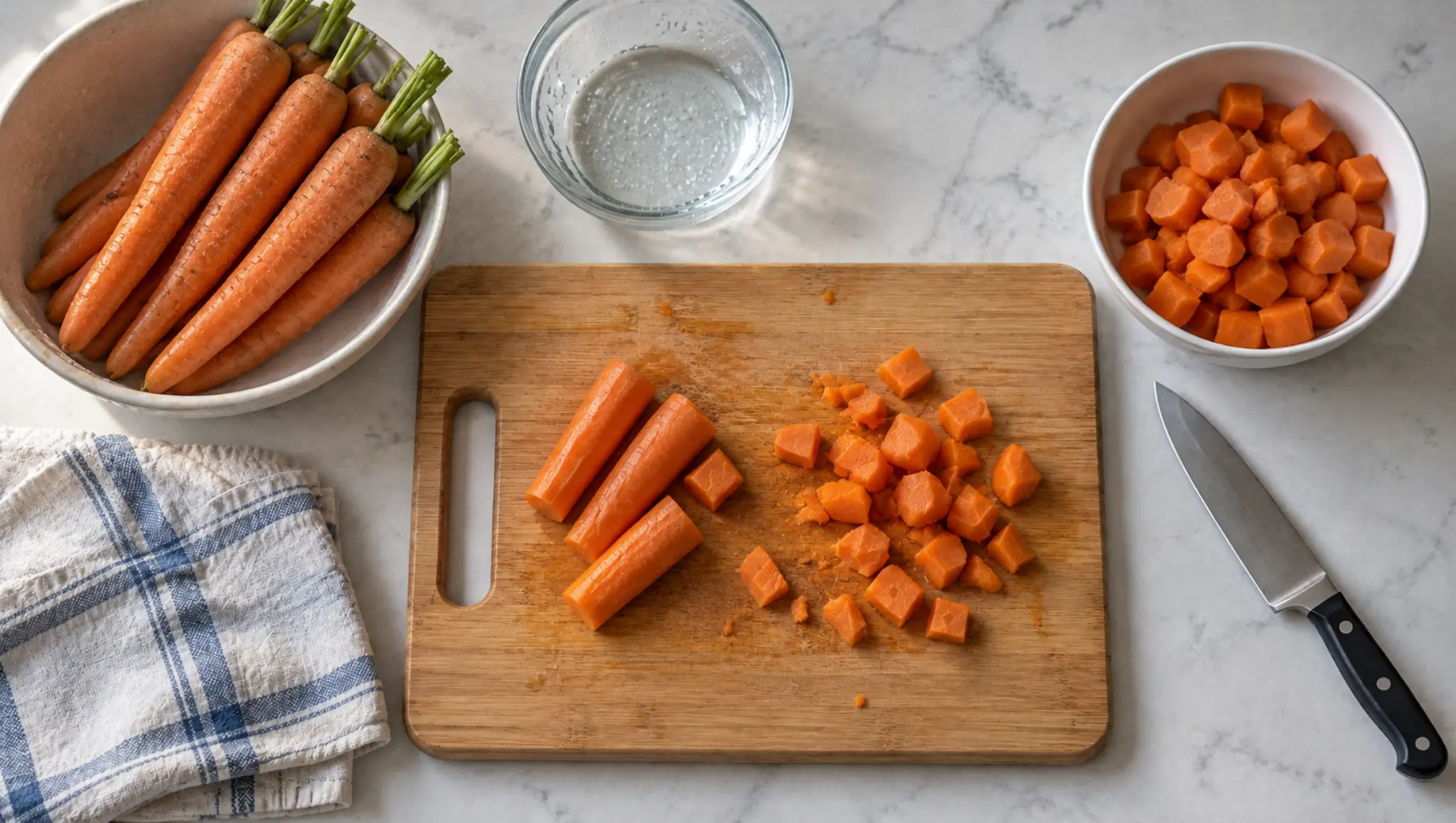
Preparation reduces the most immediate risk: a piece lodging in the throat. The goal is a clean, plain portion that your dog can chew and swallow without strain.
- Wash the carrot under running water and trim damaged areas.
- Cut it into small, irregular bite-size pieces rather than thick round coins.
- Steam, boil, or bake it plain when you need a softer texture.
- Cool cooked pieces before serving.
- Offer the first piece by hand and watch how your dog chews.
- Store the remaining portion safely so your dog can’t swallow the whole carrot during an unsupervised raid.
Do not add butter, oil, salt, sugar, gravy, seasoning blends, onion, or garlic. Plain preparation keeps the snack simple and avoids ingredients that add calories or may be harmful, the same plain-prep habit that matters when slicing up fruit like apples for a dog too.
Raw, Cooked, Baby, Frozen, or Canned Carrots?
The carrot itself may be safe, but its texture or added ingredients can cause trouble. Choose the form by checking hardness, piece size, sodium, sugar, and seasoning.
Form | General answer | Main consideration |
|---|---|---|
Raw | Usually suitable | Cut small enough to reduce choking risk |
Steamed or boiled | Suitable when plain | Softer for young, older, or dental-sensitive dogs |
Baby | Suitable | Still needs cutting for small dogs and gulpers |
Frozen | Better avoided when rock hard | May injure a tooth or become a choking hazard |
Canned | Only with care | Choose no-salt-added, rinse, and check ingredients |
Puréed | Suitable when plain | Measure it because it is easy to overfeed |
Juice | Poor routine choice | Less fiber and easy to consume quickly |
Cake | Do not serve | May contain excess fat, sugar, raisins, xylitol, or nutmeg |
Frozen carrots are often suggested for teething puppies, but very hard food can damage teeth, and large pieces can be swallowed. A chilled, soft piece is a safer choice when your veterinarian approves it, the same caution that applies to other frozen fruit treats given during warm weather.
Risks of Giving Dogs Carrots
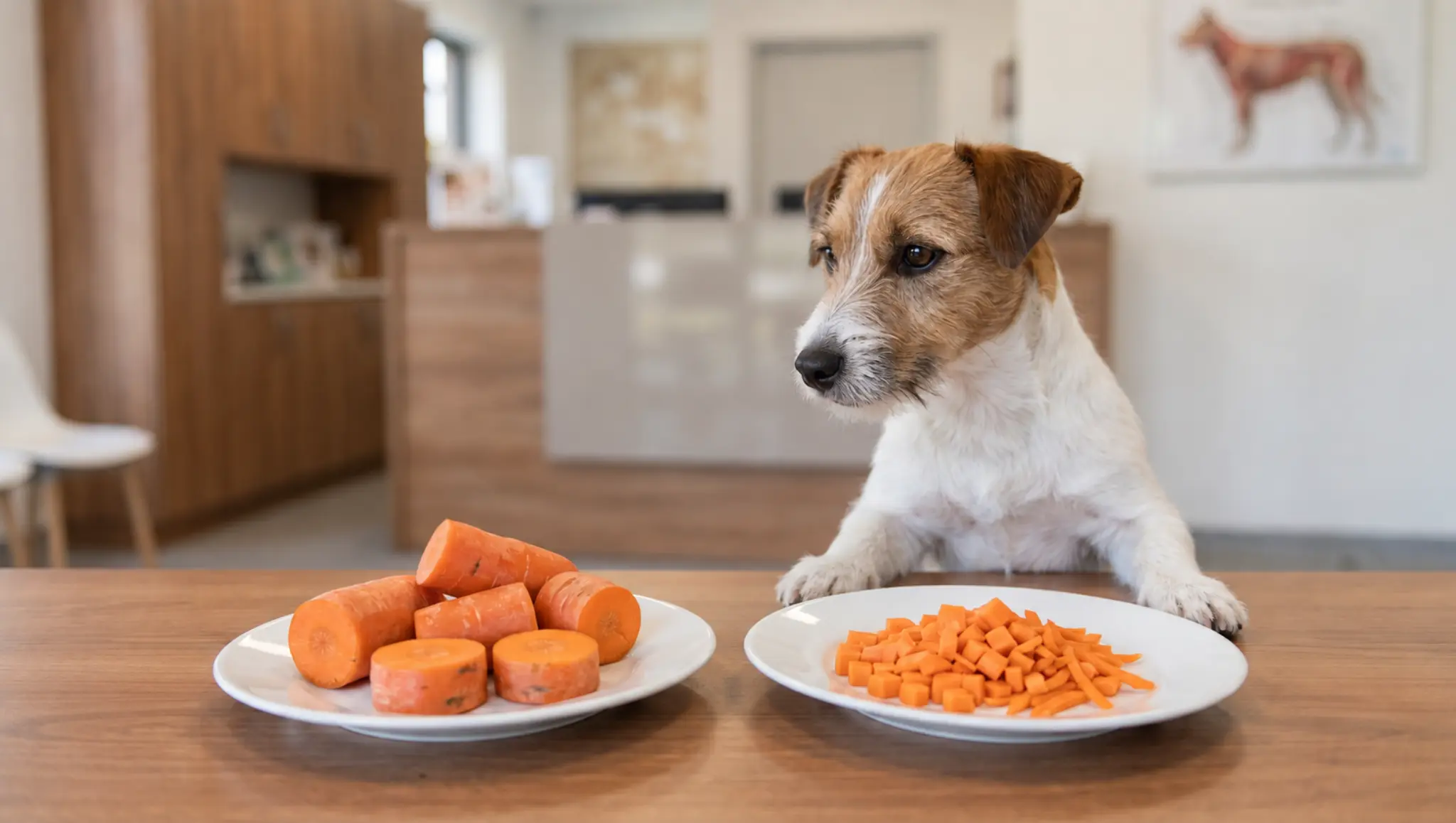
Most problems come from how you serve them or how much you give, not toxicity. Knowing the warning signs helps you respond without treating every extra bite as an emergency.
- Choking and blockage: Choking is the main immediate concern. A dog that cannot breathe, makes frantic mouth movements, paws at the face, or develops blue or pale gums needs urgent veterinary help. Large swallowed chunks may also cause an intestinal blockage.
- Digestive upset: Too much carrot may cause gas, vomiting, abdominal discomfort, or diarrhea, especially when introduced suddenly. Natural sugars and calories also add up when you hand out pieces throughout the day.
- Dental care limits: Crunching vegetables is not reliable dental care. The American Animal Hospital Association recommends home plaque control and regular veterinary dental assessment rather than relying on hard foods to clean teeth.
- Food sensitivity: Carrot sensitivity is uncommon but possible. Stop serving it and call a veterinarian if itching, hives, repeated vomiting, facial swelling, or breathing changes appear.
Small portions prevent most avoidable problems. If you see medical symptoms, swallowing difficulty, or possible obstruction, seek professional advice rather than adjusting your feeding at home.
When Your Veterinarian Should Decide
A food can be safe for the average dog but still a poor fit for an individual. Existing diagnoses and prescribed diets take priority over general snack advice.
Ask before serving carrots if your dog has diabetes, chronic intestinal trouble, kidney disease, obesity, recurring pancreatitis, food allergies, dental pain, or swallowing difficulty. The same applies to dogs eating a prescription diet, since an unplanned treat may interfere with the diet’s purpose.
Puppies eating solid food can usually try a tiny soft piece, but treats must not displace growth food. Seniors may prefer cooked or mashed carrot if chewing is uncomfortable. If a dog suddenly struggles with familiar textures, it needs an oral and swallowing assessment, not just softer snacks.
Individual advice matters most when health needs alter calories, fiber, minerals, or texture. Bring the product label or recipe to the appointment if the carrot came in a prepared food.
Simple Serving Ideas for Carrot-Loving Dogs
Once your dog handles a small plain piece well, you can serve the same measured portion in several ways. Keep each idea simple so extra ingredients do not quietly raise calories.
- Use tiny raw pieces as occasional training rewards.
- Mix soft cooked cubes into the regular meal.
- Spread a measured spoonful of plain purée across a lick mat.
- Add cooled mashed carrot to a food toy.
- Use a few pieces to replace, rather than accompany, richer treats.
Skip multi-ingredient recipes unless you’ve checked every ingredient and the total calorie count. Homemade snacks are extras and should not be presented as complete meals.
Final Thoughts
Can dogs eat carrots as part of a sensible treat routine? For most healthy dogs, the answer is yes, as long as each piece is plain, properly sized, and counted with other daily extras.
Your dog’s chewing style matters more than an appealing serving idea, so soften the carrot for a puppy, senior, or pet with dental trouble and avoid rock-hard frozen chunks.
Stop if stomach or skin symptoms appear, and let your veterinarian set the rules for diabetes, prescription diets, or swallowing problems. The safest first serving is one small piece followed by patient observation.
Check your dog’s daily treat allowance, prepare a suitable bite, and ask the veterinary team if any health condition makes the choice uncertain.
Frequently Asked Questions
Are the Leafy Tops Edible?
Clean carrot greens are not generally classed as toxic, but they add little practical value to a dog’s diet. If offered, chop a very small amount and stop if loose stool or vomiting follows the new food.
Why Are Orange Pieces Visible in Stool?
Dogs may pass visible plant fragments because firm vegetable cell walls are not always fully broken down during digestion. Occasional fragments without other symptoms are usually minor, but ongoing diarrhea, pain, or appetite loss warrants veterinary advice.
Can Different Colors Be Served?
Purple, yellow, white, and red varieties can be treated like the common orange type when they are fresh and plain. Pigment and nutrient levels differ, but safe portion size, preparation, and supervision remain the important factors.
Can One Be Given During a Food Trial?
Do not add it during a veterinary elimination or hydrolyzed-diet trial unless the supervising veterinarian approves it. One unplanned ingredient can interfere with the trial and make it harder to identify what is causing a suspected food reaction.