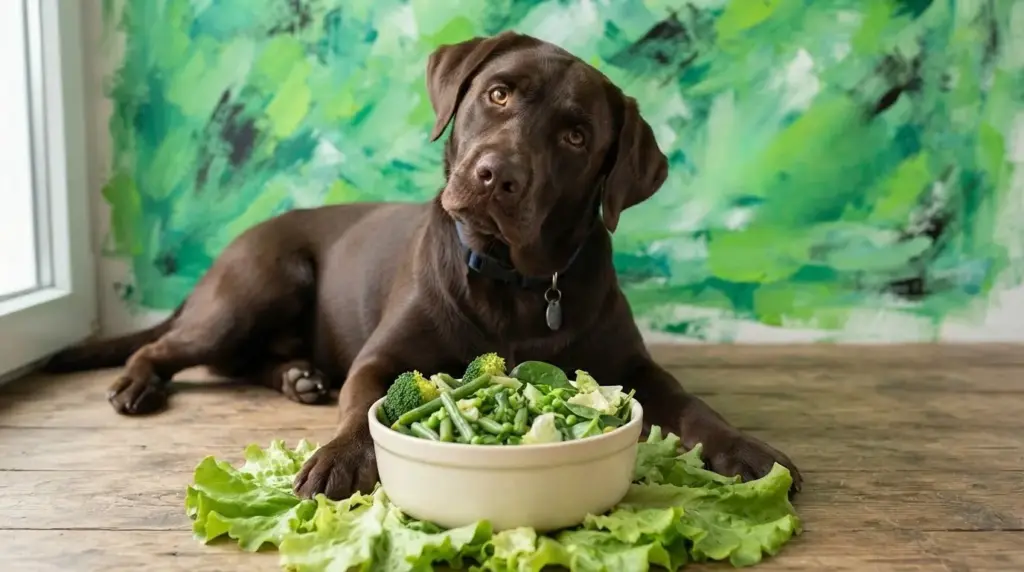
If you’ve ever tossed your dog a baby carrot and watched them crunch it with pure joy, you already know fresh vegetables can be a winning treat. I see it all the time with the dogs I work with.
A little produce here and there can add real nutrition, support digestion, and give your pup something to look forward to that isn’t loaded with fillers or mystery ingredients.
The tricky part is knowing which ones are actually good for them. Some vegetables are fantastic. Others can land your dog at the vet.
This list covers the best vegetables for dogs you can confidently add to the bowl, plus the ones you’ll want to keep far away.
Are Vegetables Good for Dogs?
Yes, Many vegetables are good for dogs in the right amounts. Dogs are omnivores, so they can digest some plant foods along with animal protein.
Fresh vegetables can add fiber, vitamins, minerals, and antioxidants that support digestion, immunity, and coat health.
Because vegetables are usually low in calories, they can also work well as treats, especially for dogs that gain weight easily. Just keep treats and extras under 10 percent of your dog’s daily intake so they do not upset a balanced diet.
Start slowly. Some dogs handle raw vegetables well, while others digest cooked vegetables more easily.
Serve them plain, without oil, salt, spices, or sauces. Introduce one new vegetable at a time in small amounts, and watch for any stomach upset or sensitivity.
Best Vegetables for Dogs to Grow at Home
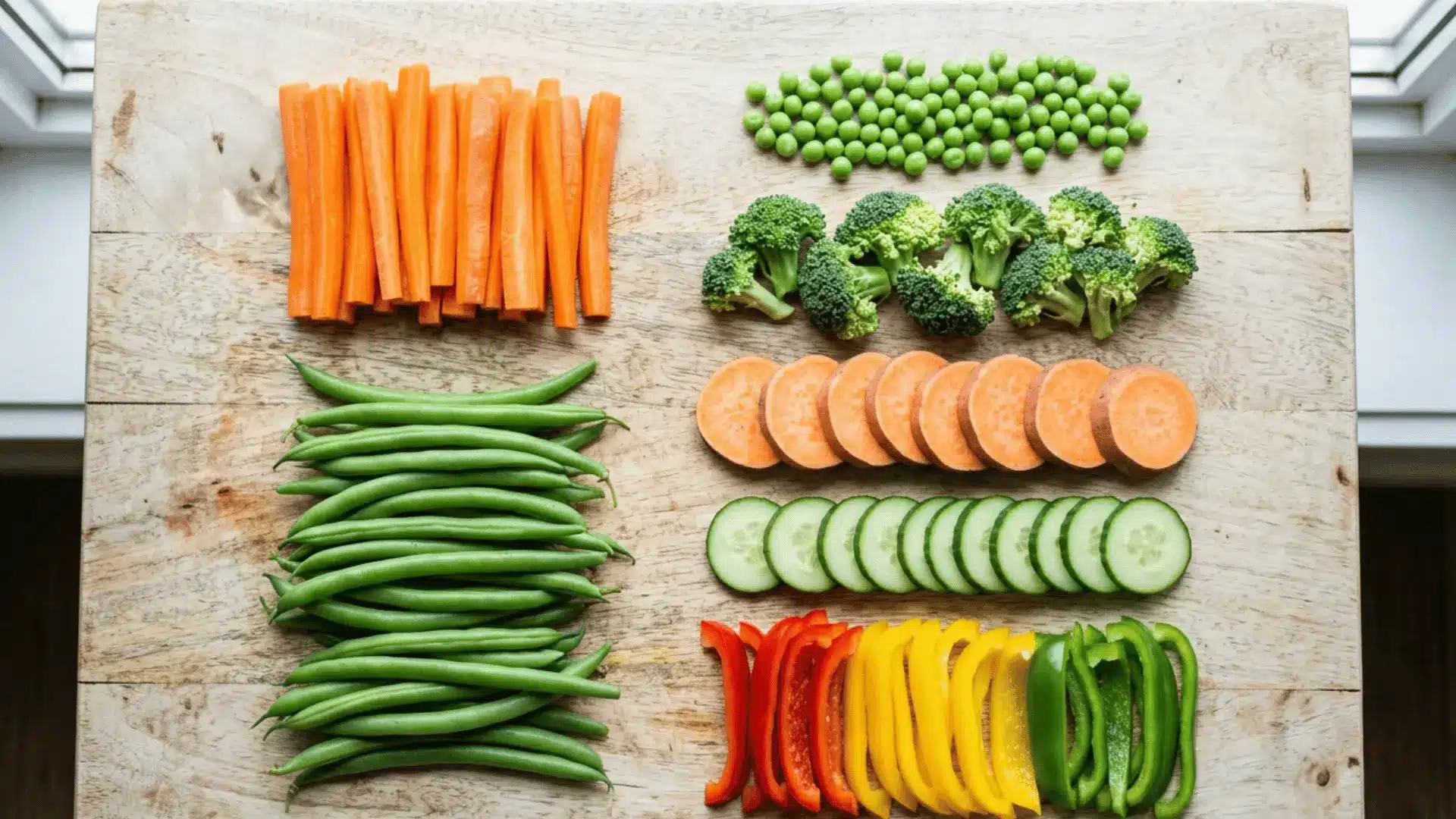
These vegetables are safe, nutritious, and worth adding to your dog’s diet.
Several of them are also easy to grow yourself, which makes them even better if you’re trying to keep things fresh and budget-friendly. Each entry below includes what to know nutritionally and how to serve it safely.
1. Carrots
Carrots are one of the best vegetables you can give a dog. They’re high in beta-carotene, which the body converts to vitamin A, supporting eye health, skin condition, and immune function.
Raw carrots also act as a natural tooth scrubber, which is a nice bonus. You can serve them raw as a crunchy snack or lightly cooked.
Caution: Cut them into small pieces for smaller dogs to avoid a choking hazard.
2. Green Beans
Green beans are one of my go-to recommendations for dogs that need to manage their weight. They’re filling, low in calories, and high in fiber.
They also bring vitamins A, C, and K along with calcium and iron . Most dogs like the texture, whether raw, steamed, or cooked plain.
Caution: Just keep them unseasoned and skip the canned variety with added sodium.
3. Sweet Potato
Sweet potatoes are a favorite among dogs and pet nutritionists alike. They’re rich in dietary fiber, vitamin A, vitamin C, and manganese.
The fiber content supports healthy digestion, and the natural sweetness makes them easy to serve without needing anything added.
Caution: Always cook sweet potatoes before giving them to your dog. Raw sweet potato is harder to digest. Serve plain and mashed, or slice and bake without oil.
4. Pumpkin
Pumpkin is one of the most useful vegetables in a dog’s diet. Vets regularly recommend plain canned pumpkin to help dogs with both diarrhea and constipation because of its fiber content.
It’s also rich in antioxidants and vitamins A, C, and E. If fiber is something you’re actively managing in your dog’s diet, fiber foods for dogs go deeper into what works and how much to give.
Caution: Make sure you’re using plain pumpkin, not pumpkin pie filling, which contains sugar, spices, and xylitol that are harmful to dogs.
5. Peas
Peas are small but packed with nutrition. They contain vitamins A, B, and K along with iron, zinc, and potassium. Their small size makes them a practical addition to meals, a quick training treat, or a simple topper for picky eaters.
Fresh, frozen, or thawed peas all work well. Avoid canned peas that have added sodium.
Caution: If your dog has kidney issues, check with your vet first, as peas contain purines that can be a concern for some dogs.
6. Broccoli
Broccoli is a solid source of fiber, vitamin C, and antioxidants, and most dogs will happily munch on a small floret.
The important word there is small. Broccoli florets contain isothiocyanates, compounds that can irritate the stomach lining in larger amounts and cause gas.
Caution: Keep it to an occasional treat rather than a daily addition. Steamed broccoli is easier on the digestive system than raw.
7. Brussels Sprouts
Brussels sprouts are loaded with vitamins A, B1, B6, C, and K, along with antioxidants and fiber. Dogs can absolutely eat them.
A small amount goes a long way. Cook them plain, either steamed or boiled, and serve just a piece or two to start. They’re better as an occasional treat than a regular part of the rotation.
Caution: they tend to cause excessive gas; limit to small servings
8. Zucchini
Zucchini is underrated as a dog vegetable. It’s very low in calories, fat, and cholesterol, and it’s rich in fiber, vitamins A, C, B6, and K .
Dogs that are carrying extra weight do well with zucchini as a treat because it fills them up without adding much to their daily calorie count. Serve it raw in slices, lightly steamed, or mixed into their regular food.
Caution: None for most dogs; easy to introduce gradually
9. Cucumber
Cucumbers are one of the most hydrating snacks you can give a dog, especially on warm days. They’re made up of mostly water and are very low in calories .
Cucumbers also contain a small amount of vitamins C and K .
Caution: If your dog seems put off by the skin, peel it first. The waxy exterior can occasionally cause stomach discomfort in sensitive dogs.
10. Bell Peppers
Bell peppers of any color are safe and healthy for dogs. They’re a good source of vitamins A, B6, and E, along with antioxidants like beta-carotene and vitamin C.
Red bell peppers tend to have the most nutrients of the bunch since they’ve been on the vine longest. Peppers can be given raw or cooked plain.
Caution: Remove seeds and stem; skip spicy peppers entirely
11. Spinach
Spinach is iron-rich and packed with magnesium, folate, and beta-carotene, making it one of the more nutrient-dense options on this list.
That said, spinach also contains oxalic acid , which can interfere with calcium absorption and potentially strain the kidneys if given in large amounts over time.
Caution: Small, occasional servings are fine for healthy dogs. Dogs with kidney issues should avoid it entirely.
12. Kale
Kale gets a lot of attention as a superfood, and it does bring real benefits, including vitamins K, A , and iron that support bone health, vision, and immune function.
Like spinach and broccoli, though, it contains isothiocyanates and oxalates that can cause digestive upset in larger amounts. A little kale occasionally is fine. It’s not something to pile into the bowl every day.
Caution: Limit to small portions; avoid for dogs prone to bladder stones
13. Celery
Celery is a crunchy, hydrating snack that most dogs enjoy. It’s low in fat and cholesterol and contains vitamins A, C, and K.
Celery may also help freshen a dog’s breath, though that’s more of a side effect than a guarantee.
Caution: Chop it into small pieces to make it safe to eat and easier to digest. The stringy texture can be a bit much for some dogs in large pieces.
14. Cauliflower
Cauliflower is a good source of vitamin C, fiber, and antioxidants. It’s safe for dogs in small amounts and works well lightly steamed, which makes it easier to digest and less likely to cause gas.
Raw cauliflower is fine in very small portions, but some dogs find it harder on their stomachs. Plain, no cheese sauce or seasoning anywhere near it.
Caution: Can cause gas in larger amounts; always plain
15. Lettuce
Lettuce is safe for dogs and is mostly water, making it a good low-calorie hydration boost. Romaine, arugula, and iceberg are all fine. The nutritional value isn’t especially high, but it’s a harmless addition to a meal or a light snack.
Spinach and kale are technically lettuces in the broader leafy greens family, but should be given in moderation as noted above.
Caution: No dressing, seasonings, or mixed salad bags with onion or garlic
16. Asparagus
Asparagus is safe for dogs and brings vitamins A, C, E, K, and B, along with fiber and folate . The one thing to know is that raw asparagus is tough and fibrous, which makes it hard to chew and digest.
Cooking it first makes a big difference. Cut it into small pieces before serving. Some dogs simply don’t like the taste, which is completely fair.
Caution: Always cook first; raw asparagus is hard to chew and digest
17. Beets
Beets are a lesser-known vegetable for dogs, but a nutritious one. They contain fiber, vitamin C, folate, and manganese. They also support immune function and healthy skin.
Cook beets before serving and skip any pickled or canned varieties that contain vinegar and added sodium.
Caution: Beets are naturally high in sugar, so keep servings small and occasional, not pickled or canned.
Toxic Vegetables for Dogs to Avoid
Not every vegetable that’s healthy for people is safe for dogs. Some of the most common kitchen staples are genuinely toxic to them.
The ASPCA Animal Poison Control Center lists several vegetables that dog owners should keep out of reach entirely.
- Onions: Contain compounds that damage red blood cells in dogs, which can lead to anemia. All forms are dangerous, including raw, cooked, and powdered onion.
- Garlic: More concentrated than onions and toxic even in small amounts. Garlic powder is particularly risky because it’s easy to add to food without thinking.
- Chives and leeks: Both are in the same Allium plant family as onions and garlic and carry the same risks.
- Raw potatoes: They contain solanine, a compound that is toxic to dogs. Cooked potatoes are fine in small amounts, but raw potatoes should always be avoided.
- Unripe tomatoes: The green parts of the tomato plant, including the leaves, stem, and unripe fruit, contain tomatine, which can cause vomiting, weakness, and heart problems. Ripe red tomatoes in small amounts are generally fine.
- Wild mushrooms: Any mushroom that did not come from a grocery store should be treated as potentially toxic. Symptoms of mushroom poisoning can be severe.
If your dog has eaten any of these, don’t wait. Knowing the signs of dog poisoning can help you act fast before symptoms worsen.
How to Grow Dog-Friendly Vegetables at Home?
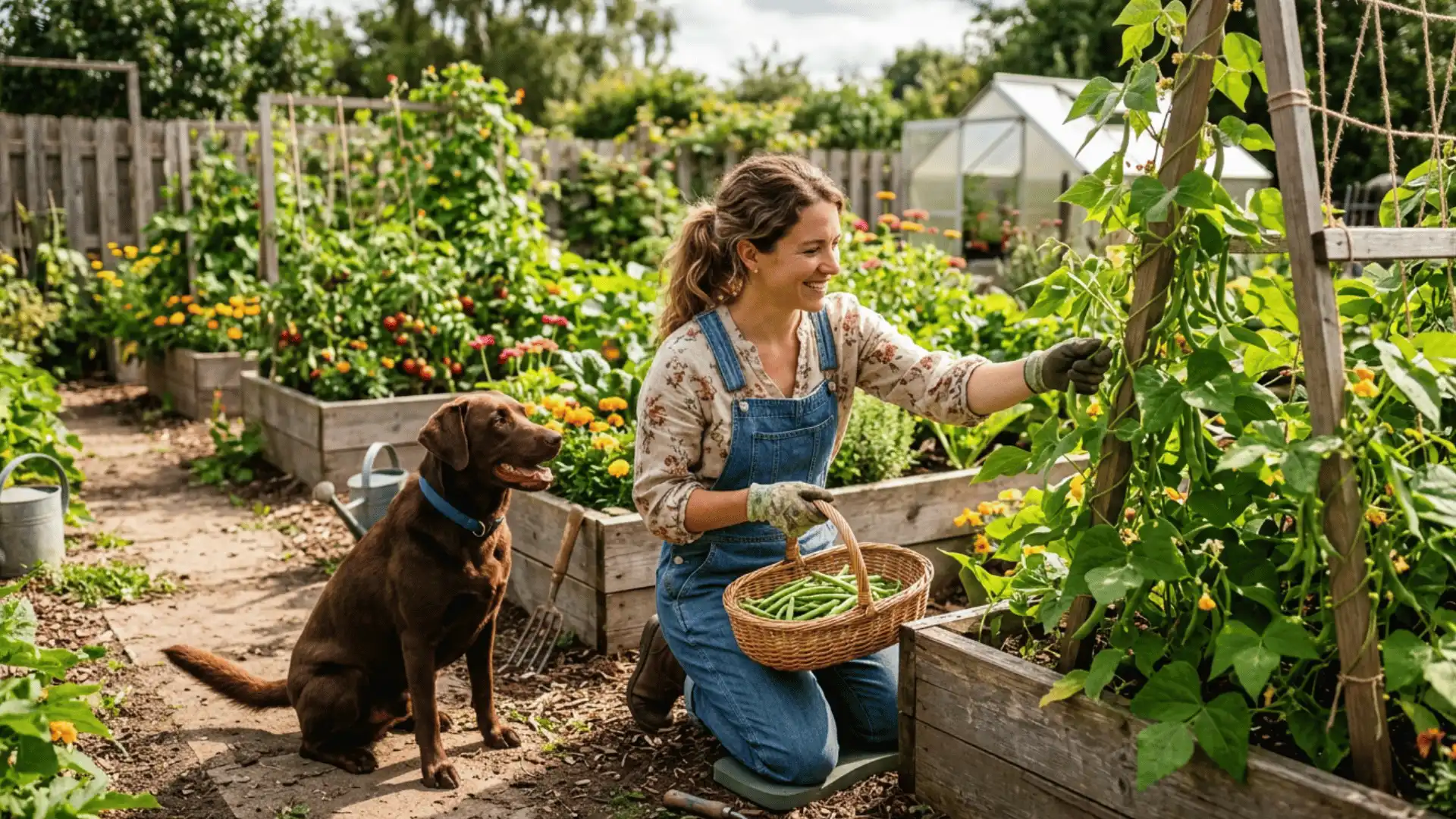
Growing dog-friendly vegetables at home is easier than it sounds and gives you control over what goes into the soil.
Great options include carrots, green beans, peas, pumpkin, sweet potato, zucchini, and beets. These are hardy, productive plants that can grow in containers, raised beds, or small garden spaces.
The most important rule is to avoid pesticides, chemical herbicides, and synthetic fertilizers where your dog may roam. Garden chemicals and fertilizers can be harmful if ingested, so stick with organic growing methods whenever possible.
Peas and green beans are easy starters, while carrots need loose, deep soil. Pumpkins and zucchinis need more room but produce generously.
After harvesting, prep vegetables in small portions or freeze purees in ice cube trays for quick snacks. Finally, add a low barrier around the garden. Dogs love digging, and this helps protect both your plants and your dog.
How to Safely Serve Vegetables Dogs can Eat?
The vegetables themselves are only half the equation. How you prepare and serve them matters just as much. A carrot is great for your dog. A carrot cooked in garlic butter is not.
Here are the rules that apply across the board:
- Plain only: No salt, oil, butter, seasonings, or sauces. Ever. What tastes good to you can be harmful to a dog.
- Bite-sized pieces: Always cut vegetables into appropriately small pieces. What’s bite-sized for a large dog is a choking hazard for a small one.
- Introduce one at a time: When trying a new vegetable, start with a small amount and wait a day or two. Digestive upset or unusual stool is a sign that a particular vegetable doesn’t agree with your dog.
- Cooked vs. raw: Some vegetables like carrots and cucumbers are fine raw. Others, like sweet potato, asparagus, and cauliflower, are easier to digest when cooked. When in doubt, lightly steam without any additions.
- Watch the portions: Vegetables should be 10 percent of your dog’s total daily food intake. For a medium-sized dog around 15 to 20 kg, that works out to roughly 50 to 70 grams of vegetables per day, depending on the type.
Dogs on prescription diets should not have vegetables or any other food additions without checking with their vet first. What’s safe for a healthy dog may not be right for a dog managing a health condition.
For dogs that enjoy variety in their meals, pairing safe vegetables with other nutritious snacks for dogs is a great way to keep mealtime interesting without reaching for processed options.
When Should You Call a Vet?
Vegetables are usually safe for dogs, but certain symptoms or toxic foods need fast vet care, especially with existing health issues or prescription diets involved.
- Digestive trouble: Vomiting, diarrhea, bloating, stomach pain, or discomfort after eating vegetables may mean the food did not suit your dog.
- Serious symptoms: Pale gums, trouble breathing, trouble swallowing, seizures, collapse, or a swollen stomach should always be treated as an emergency.
- Toxic foods: Onions, garlic, chives, leeks, and wild mushrooms are unsafe for dogs. Symptoms may take several hours to appear.
- Kidney concerns: Large or regular amounts of spinach, kale, or peas may not suit dogs with kidney problems or bladder stone history.
- Health conditions: Dogs with kidney, liver, or heart issues, or those on prescription diets, should avoid new vegetables unless their diet plan allows them.
Conclusion
Fresh vegetables are one of the easiest ways to add real nutrition to your dog’s routine. No long ingredient labels, no mystery additives, just simple food you can feel good about giving them.
Start with two or three vegetables you already have in the kitchen and see what your dog goes for.
A baby carrot, a few frozen peas, or a spoonful of plain pumpkin mixed into the bowl can all make a small but genuine difference over time.
Once you know their favorites, it’s easy to make vegetables part of treat time or mealtime without much extra effort.
Which vegetable does your dog go wild for? Drop it in the comments below, we’d love to hear what your pup loves most