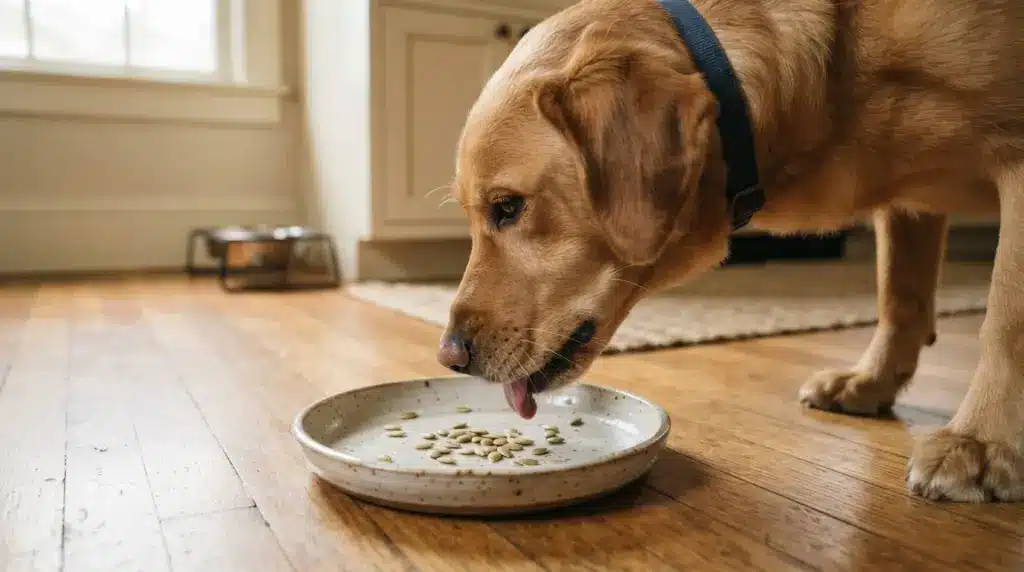
Has your dog ever hovered beside you while you were scooping seeds from a pumpkin, hoping a few would fall?
That moment often raises the question are pumpkin seeds good for dogs? Plain, unseasoned pumpkin seeds are generally considered safe for healthy dogs when served in small amounts.
Still, portion size and preparation matter because these seeds are relatively high in fat and calories. Too many may lead to digestive upset or add unnecessary calories to your dog’s diet.
You’ll learn how much to offer, which forms are safest, their possible nutritional benefits, key risks to consider, and what to do if your dog eats too many.
Are Pumpkin Seeds good for Dogs to Eat?
Yes, dogs can eat pumpkin seeds, but a few conditions matter. Many healthy dogs can have plain, unseasoned seeds in small amounts, but avoid salted, flavored, candied, or heavily seasoned versions.
A food being safe does not mean your dog needs it nutritionally. A complete and balanced diet should remain the main source of your dog’s daily nutrition, while pumpkin seeds and other treats should stay limited.
Individual tolerance also matters, especially for dogs with digestive problems, medical conditions, food sensitivities, or prescription diets. Pumpkin seeds also differ from pumpkin flesh or plain pumpkin purée in texture, nutrient profile, and serving size.
If you choose to offer the seeds, preparation and quantity should match your dog’s size and health needs. The next step is knowing how many pumpkin seeds are appropriate for your dog.
How Many Pumpkin Seeds Can a Dog Eat?
Pumpkin seeds should be an occasional treat, not a daily snack. Start with a very small amount, then increase only if your dog tolerates them without digestive upset or discomfort.
Dog Size | General Serving | What to Watch |
|---|---|---|
Small, 2–30 lb. | 3–5 seeds | Stool changes or stomach upset |
Medium, 31–50 lb. | 5–10 seeds | Digestion and added calories |
Large, 51+ lb. | 10–20 seeds | Total daily treat intake |
These general serving ranges are based on general veterinarian-reviewed feeding guidance. Begin below the full serving when introducing pumpkin seeds for the first time.
Note: There is no medically established pumpkin-seed dose based on a dog’s weight. The WSAVA recommends keeping all treats combined under 10% of a healthy adult dog’s daily calory.
Keep pumpkin seeds within your dog’s overall treat allowance and avoid increasing portions just because they seem well tolerated. For dogs with medical conditions, ask your veterinarian about safer limits.
How to Serve Pumpkin Seeds to Dogs Safely
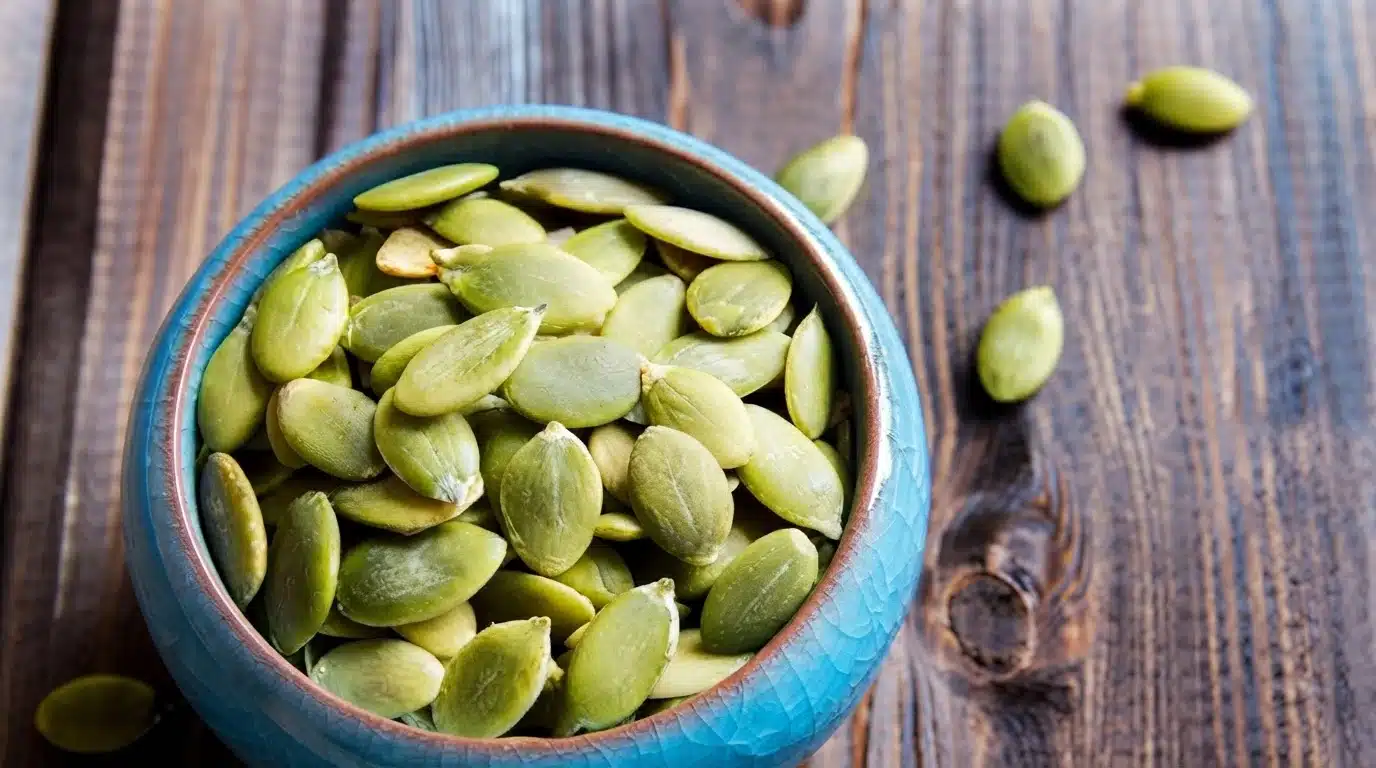
How pumpkin seeds are prepared matters just as much as how many your dog eats. Choosing plain, easy-to-chew seeds helps reduce unnecessary salt, fat, seasoning, and digestive concerns during feeding.
1. Plain and Unsalted Seeds
Choose plain, unsalted pumpkin seeds whenever you offer them to your dog. Added salt raises sodium intake, while sugar, butter, and oils increase calories and fat without adding a needed benefit.
Seasoning blends may also contain onion or garlic, which are toxic to dogs. Serve seeds with no added ingredients and avoid sharing flavored snack mixes made for people with your dog, the same plain-preparation rule that applies to pumpkin flesh and puree when that’s what you’re offering instead.
2. Shelled or Ground Seeds
Use shelled pumpkin seeds or grind them before serving when chewing or swallowing may be a concern. Shells can be harder to chew and digest, while smaller pieces mix more easily into regular food.
Grinding does not make pumpkin seeds nutritionally necessary or remove every choking risk. For small dogs, fast eaters, or dogs with dental or swallowing problems, ask your veterinarian about the safest texture, and ground seeds mixed into homemade treats made with simple ingredients can be an easy way to work them into a recipe.
3. Raw or Dry-Roasted Seeds
You can offer both raw and dry-roasted pumpkin seeds plain, but neither form should include added oil, salt, or seasoning. Roasting changes texture and moisture but doesn’t create a proven nutritional advantage for dogs.
If you roast seeds at home, dry-roast them without toppings and let them cool completely. Introduce only a small amount at first and watch for vomiting, diarrhea, or abdominal discomfort afterward.
4. Ingredients and Seasonings to Avoid
Read the ingredient label before sharing packaged pumpkin seeds with your dog. Products made for people may contain high levels of salt, added sugar, oils, butter, spice blends, or sweet coatings that add unnecessary sodium, fat, and calories.
Onion and garlic are among the foods the FDA warns can be dangerous for pets, so avoid pumpkin seeds seasoned with either ingredient.
Keep pumpkin seeds plain, simply prepared, and limited to small portions. If your dog has trouble chewing, digestive disease, or a prescription diet, check with your veterinarian before offering them.
Potential Benefits of Pumpkin Seeds for Dogs
Pumpkin seeds provide fiber, healthy fats, minerals, and antioxidants. These nutrients support normal body functions, but they do not make the seeds necessary in a balanced diet.
- Fiber: Supports normal digestion, but too much may cause gas, loose stools, or stomach upset, a balance worth keeping in mind alongside other fiber-based approaches to digestive issues some owners already use.
- Healthy fats: Provide energy and fatty acids, but also add calories, so keep portions small.
- Magnesium and zinc: Support normal muscle, nerve, immune, and metabolic functions. Balanced dog food should already supply these minerals.
- Antioxidants: Add nutritional value but should not be considered a treatment or replacement for veterinary care.
Pumpkin seeds can provide useful nutrients in small portions, but they remain an optional treat. A complete, balanced diet should supply your dog’s main nutritional needs.
Risks of Feeding Dogs Too Many Pumpkin Seeds
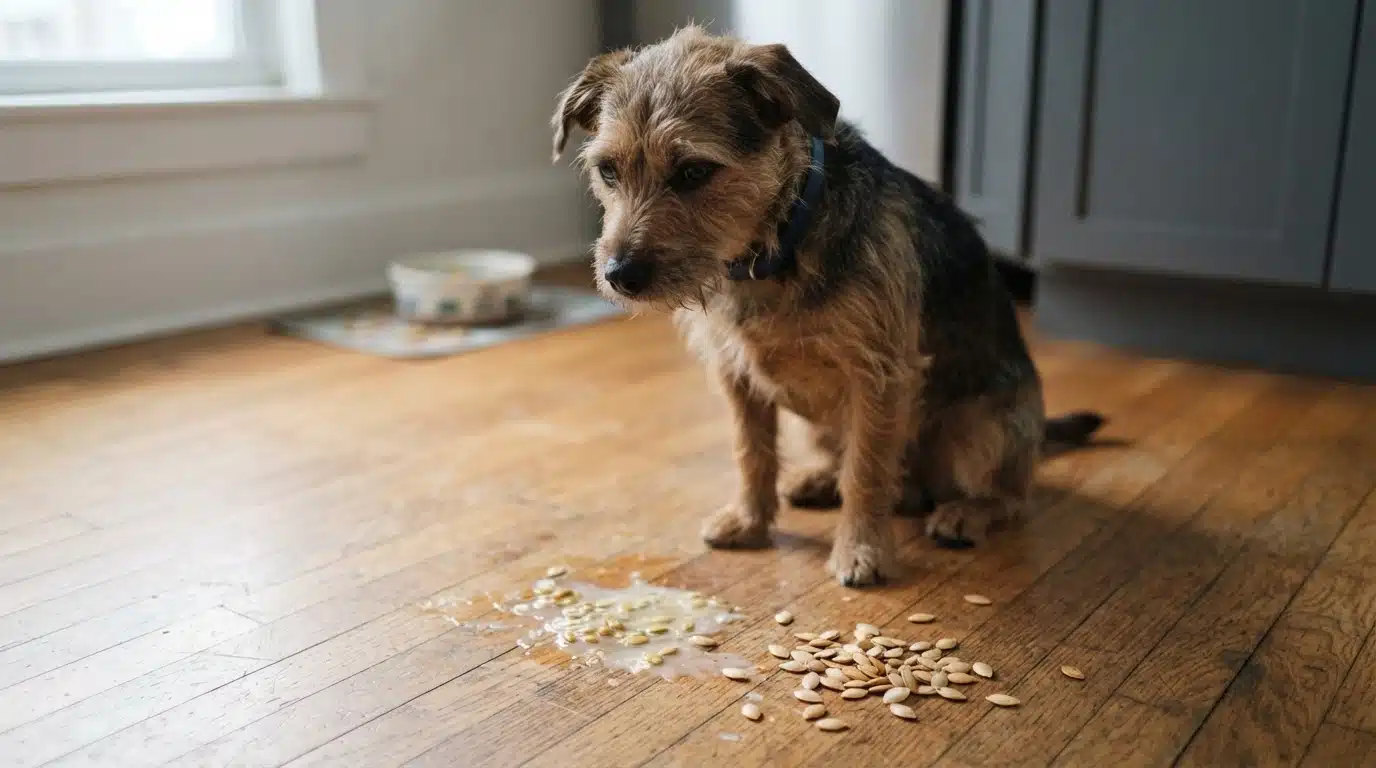
Pumpkin seeds are generally safe in small amounts, but large portions or poorly prepared seeds can lead to digestive problems, excess calories, or other concerns.
- Diarrhea: Too many seeds can increase fat and fiber intake, which may cause loose stools or digestive upset.
- Vomiting: Large portions may irritate the stomach, particularly in dogs with sensitive digestion or when seeds are introduced suddenly.
- Gas or bloating: Excess fiber can contribute to gas, abdominal fullness, or discomfort, especially when a dog eats several seeds at once.
- High fat intake: Their fat content makes large portions unsuitable for some dogs, particularly those with pancreatitis or fat-sensitive digestive conditions.
- Seed shells: Tough shells can be hard to chew and digest and may pose a choking risk, especially for smaller dogs.
- Excess sodium: Salted pumpkin seeds can add unnecessary sodium to a dog’s diet and should be replaced with plain, unsalted varieties.
Most concerns come from portion size and preparation, not because plain pumpkin seeds are inherently toxic. Keep servings small, plain, and appropriate for your dog’s health.
Can Pumpkin Seeds Get Rid of Worms in Dogs?
No. Pumpkin seeds should not be relied on to get rid of worms in dogs. They are often promoted online because they contain cucurbitin, a plant compound associated with anthelmintic activity in some laboratory and non-canine research.
However, this does not make pumpkin seeds a clinically proven deworming treatment for dogs. Nutritional value and parasite control are separate issues, and no veterinary dose of pumpkin seeds is established for clearing intestinal worms.
The U.S. FDA’s guidance on canine anthelmintics explains that parasite-control products must demonstrate effectiveness with appropriate evidence. If you suspect worms, ask your veterinarian to identify the parasite and recommend an appropriate dewormer.
Pumpkin seeds may be offered as food in suitable portions, but they should never replace veterinary diagnosis or prescribed parasite treatment.
What to Do If Your Dog Ate Too Many Pumpkin Seeds
What you should do depends on how much your dog the, how the seeds were prepared, and whether your dog develops symptoms.
Situation | What to Do |
|---|---|
A few plain seeds | Monitor your dog. Small amounts are unlikely to cause problems in healthy dogs. |
A large quantity | Watch for vomiting, diarrhea, gas, or discomfort. Contact your veterinarian if symptoms persist. |
Seeds with shells | Consider your dog’s size and how much the eat. Watch for choking or digestive trouble. |
Salted or seasoned seeds | Check the ingredients and quantity. Seek advice if they contain onion, garlic, or other harmful seasonings. |
Seek veterinary advice for persistent vomiting, repeated diarrhea, marked discomfort, unusual lethargy, breathing difficulty, or other concerning changes.
Common Pumpkin Seed Feeding Mistakes
Pumpkin seeds can be a safe occasional treat, but simple feeding mistakes can add calories, upset digestion, or create avoidable problems for some dogs.
- Giving handfuls instead of measured portions
- Sharing heavily salted or flavored pumpkin seeds
- Ignoring calories because the food is natural
- Introducing too many seeds at once
- Ignoring existing digestive or pancreatic conditions
Keeping servings measured, plain, and suited to your dog’s health helps make pumpkin seeds a safer treat without displacing a balanced daily diet over time.
Final Thoughts
Pumpkin seeds can be a safe occasional treat for many healthy dogs when they are plain, unsalted, and given in small portions. Preparation, serving size, and your dog’s health history all affect how well they are tolerated.
They can provide fiber, healthy fats, minerals, and antioxidants, but they are not essential to a balanced diet and should never replace veterinary treatment for worms or other health concerns.
So, are pumpkin seeds good for dogs? They can be, as long as portions stay controlled and the seeds are prepared safely.
Have you ever given pumpkin seeds to your dog? Comment below and share your experience or thoughts.
Frequently Asked Questions
Can Puppies Eat Pumpkin Seeds?
Healthy puppies can have a few plain pumpkin seeds occasionally, but treats should not replace balanced puppy food needed for growth. Ask your veterinarian first.
Are Pepitas Safe for Dogs?
Yes. Pepitas are a type of pumpkin seed and can be offered plain in small amounts. Avoid salted, seasoned, or heavily flavored versions.
Can Dogs Eat Pumpkin Seed Butter?
Only if it is plain and free from xylitol, added salt, sugar, and seasonings. Check the label carefully and offer only a small amount.
Can Senior Dogs Eat Pumpkin Seeds?
Many healthy senior dogs can tolerate small amounts, but dental problems, digestive disease, weight control, or prescription diets may make another treat a better option.