Most cats act like they couldn’t care less about you. They ignore your calls, knock things off tables on purpose, and leave the room the moment you sit down.
So when your cat suddenly decides to lick you like you’re the most interesting thing they’ve encountered all week, it catches you off guard.
In my years of clinical practice, licking is one of the behaviors pet owners bring up most often, usually with some version of “is this normal?”
The answer is almost always yes, but the reason behind it matters more than most people realize.
It could be affection, a grooming instinct, a territorial claim, or a quiet cry for help. Understanding which one changes how you respond.
This post covers: what does it mean when a cat licks you, what the body language around it means, and when to call your vet.
Why Does a Cat’s Tongue Feel So Rough?
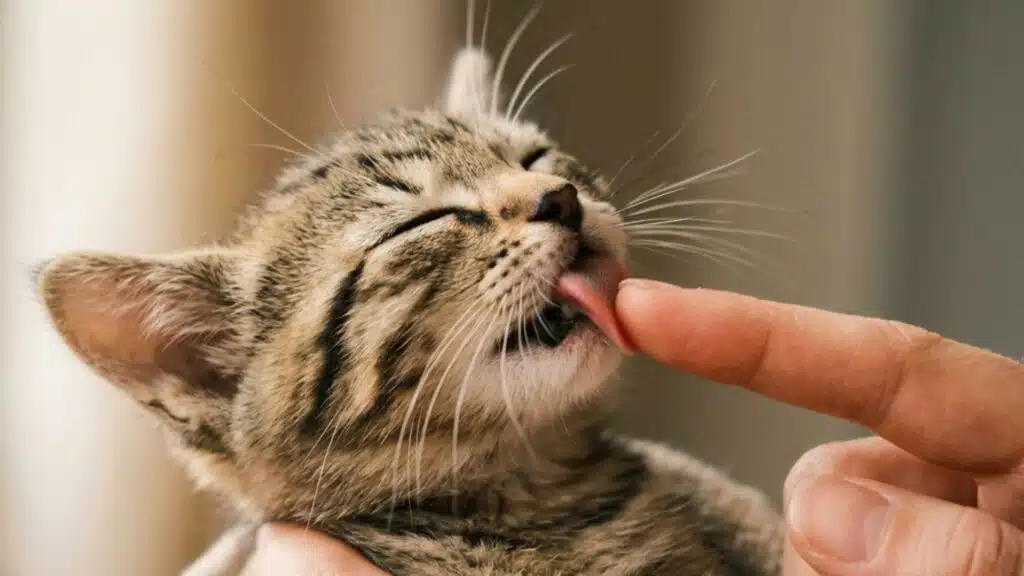
Cat tongues are covered in tiny, backward-facing spines called papillae.
These are made of keratin, the same material as human fingernails, and they’re what give a cat’s tongue its sandpaper texture.
When cats groom themselves, the papillae pull through fur like a comb, removing loose hair, dirt, and redistributing natural oils across the coat.
When your cat licks your skin, those same spines are at work. That scratchy feeling isn’t aggression; it’s just the same tool designed for fur being applied to your arm.
Occasional licking is safe for most people, though it’s worth avoiding if you have an open wound or have applied topical medication, since cats can ingest small amounts of whatever is on your skin.
Why Does My Cat Lick Me?
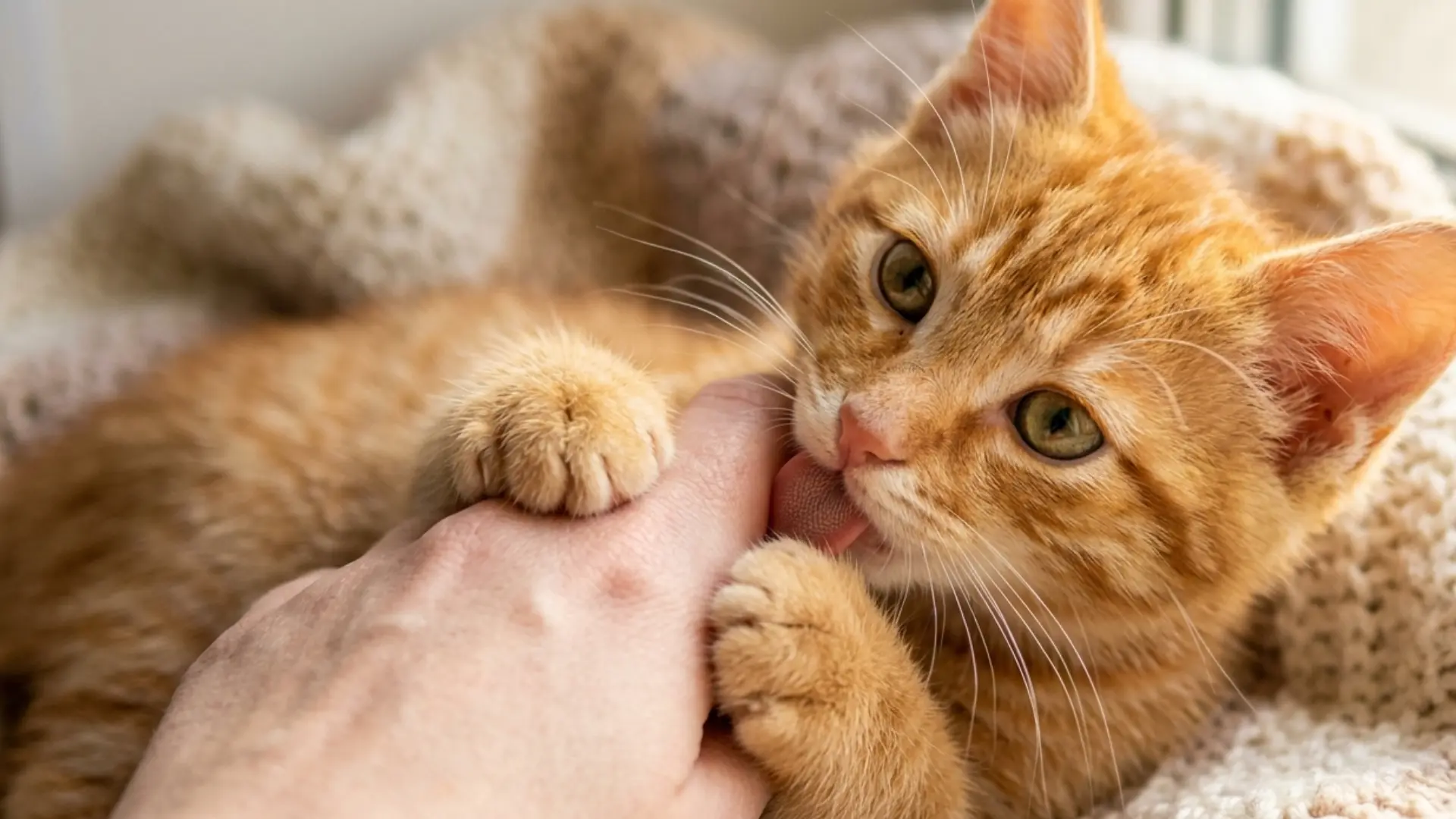
Cats lick people for many reasons, and most of them come from bonding, grooming, scent, taste, or habit. The best clue is the full situation, including body language, timing, and how often the licking happens.
1. A Sign of Affection and Trust
When a cat licks you during a calm moment, it can be a soft sign of affection.
Cats do not always show love in obvious ways, so licking may be their version of staying close and sharing comfort.
If your cat licks you while purring, kneading, or resting near you, the behavior usually points to trust and a safe bond.
It connects to the same comfort instinct behind what cat kneading really means in adult cats.
2. Social Grooming Behavior
Cats often groom other cats they feel close to, especially in a familiar group.
When a cat licks your hand, arm, or hair, it may be treating you like part of that trusted circle.
This behavior stems from social grooming, where licking helps cats bond, clean one another, and feel connected. To your cat, grooming you may feel natural.
3. Scent Marking and Familiarity
Cats rely heavily on scent to understand their world. When a cat licks you, it may leave behind its scent and mix it with yours.
This can make you feel more familiar and comforting to them.
In a cat’s mind, shared scent can create a sense of safety, which is one reason licking often happens during relaxed moments.
Licking is just one part of a wider communication system, alongside how cats chirp and communicate with the people around them.
4. A Way to Ask for Attention
Some cats lick to get a reaction. Maybe your cat wants petting, food, playtime, or simply wants you to look at them.
If licking makes you talk, laugh, move, or touch them, your cat may repeat it.
Over time, licking can become a learned way to get attention, especially when a cat feels ignored or bored.
5. Salty Skin, Food Smells, or Lotion
Sometimes, the reason is very simple. Your skin may taste salty after sweating, or your hands may smell like food, soap, or lotion.
Cats have strong senses, so even a small scent can make them curious.
Keep strong creams, oils, and skincare products away from cats, since some ingredients can upset their stomach or harm them.
6. Stress, Anxiety, or a Need for Comfort
Licking can also be a comfort behavior when a cat feels stressed.
A new pet, loud noise, house move, schedule change, or lack of attention can make some cats lick more than usual.
If the licking becomes intense, sudden, or hard to stop, look for changes in the home and watch for other signs of stress, such as hiding or restlessness.
7. A Kittenhood Habit That Stayed
Some cats keep licking habits from kittenhood.
As kittens, they are cleaned by their mother, and that early comfort can shape later behavior. A grown cat may lick when feeling relaxed, sleepy, or close to someone they trust.
For these cats, licking is less about one clear message and more about comfort, routine, and emotional security.
How to Respond When Your Cat Licks You?
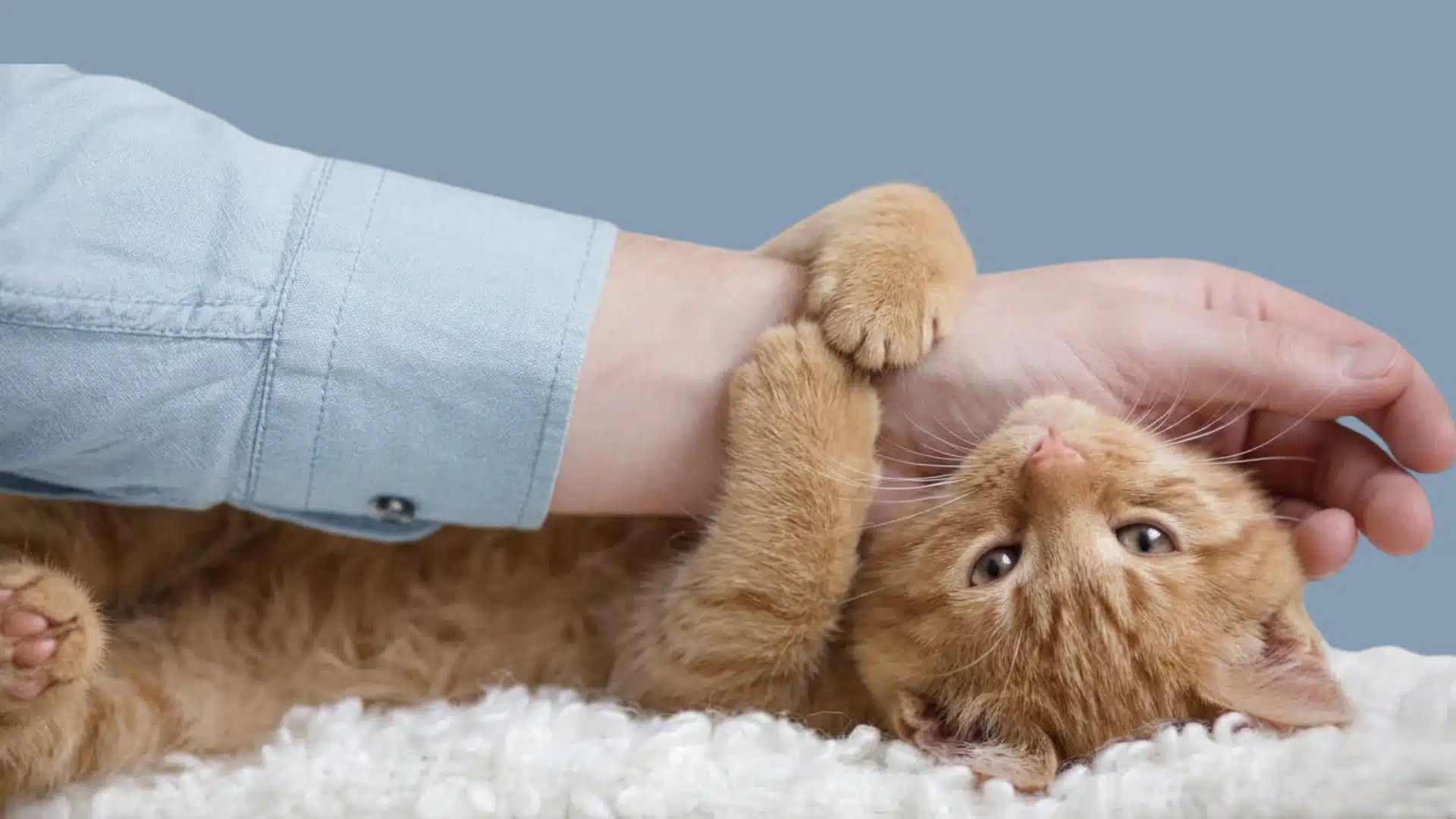
If the licking feels sweet and you’re happy to let it happen, lean into it. Pet them softly, speak in a calm voice, or simply stay still and let them finish.
Your cat is bonding with you, and matching that energy tells them the feeling is mutual.
You can also reach for a brush and groom them back. Most cats love it, and it turns a one-sided lick session into something you’re both enjoying.
If you’d rather they stopped, keep it gentle. Slide your hand away calmly, offer a toy, or stand up and move.
Do it every time, and your cat will gradually learn that licking doesn’t get the reaction they were hoping for. No scolding, no spray bottles, no drama. Just a quiet, consistent redirect that keeps the trust between you fully intact.
What Cat Body Language Can Tell You?
A lick never happens in isolation. To really understand what your cat means, watch everything else going on at the same time. Their body is always talking, even when their mouth is busy grooming your arm.
Signs your cat is comfortable:
- Soft, half-closed eyes: Your cat feels safe and is not on alert.
- Slow blinking: A classic trust signal, almost like a cat version of a smile.
- Relaxed tail: Held loosely or curled, not puffed or lashing.
- Purring: It usually confirms that the licking comes from a calm, content place.
Signs your cat may want space:
- Tail flicking sharply: Irritation is building, even if the licking seems gentle.
- Flattened ears: A clear signal that the interaction has gone on too long.
- Tense, stiff body: They’re tolerating the moment, not enjoying it.
- Sudden biting after licking: Overstimulation, not aggression. Stop and give them room.
Should You Stop a Cat from Licking You?
Gentle, occasional licking doesn’t need to be stopped.
It’s your cat communicating in the most natural way they know, and interrupting that without reason can confuse them.
That said, there are times when redirecting makes sense.
If the licking feels uncomfortable, happens constantly, targets your face, or seems to spike during stressful periods around the house, it’s worth gently steering them elsewhere.
Understanding the full range of cat body language and trust signals can help you tell the difference between a cat that’s bonding and one that’s asking for something else.
Offer a toy, start a brushing session, or simply shift your position. Never push your cat away sharply or raise your voice.
When Should You Be Concerned About Cat Licking?
Occasional licking is nothing to worry about. The behavior only becomes a concern when something about it changes noticeably. If your cat suddenly starts licking you far more than usual, that shift alone is worth paying attention to.
Watch for these specific red flags:
- Obsessive frequency: Licking that happens constantly, feels difficult to stop, or continues even after distraction may point to anxiety or discomfort.
- Skin damage: Bald patches, raw skin, scabs, or sores from self-licking suggest irritation, allergies, stress, or another health issue.
- Drooling: Licking paired with unusual drooling, bad breath, or pawing at the mouth may signal nausea, dental pain, or oral discomfort.
- Licking non-food objects: Walls, floors, blankets, plastic, or fabrics alongside licking you may suggest pica, stress, nutritional issues, or stomach upset.
- Aggression after licking: Licking that regularly turns into biting, scratching, growling, or swatting may mean overstimulation, fear, stress, or pain.
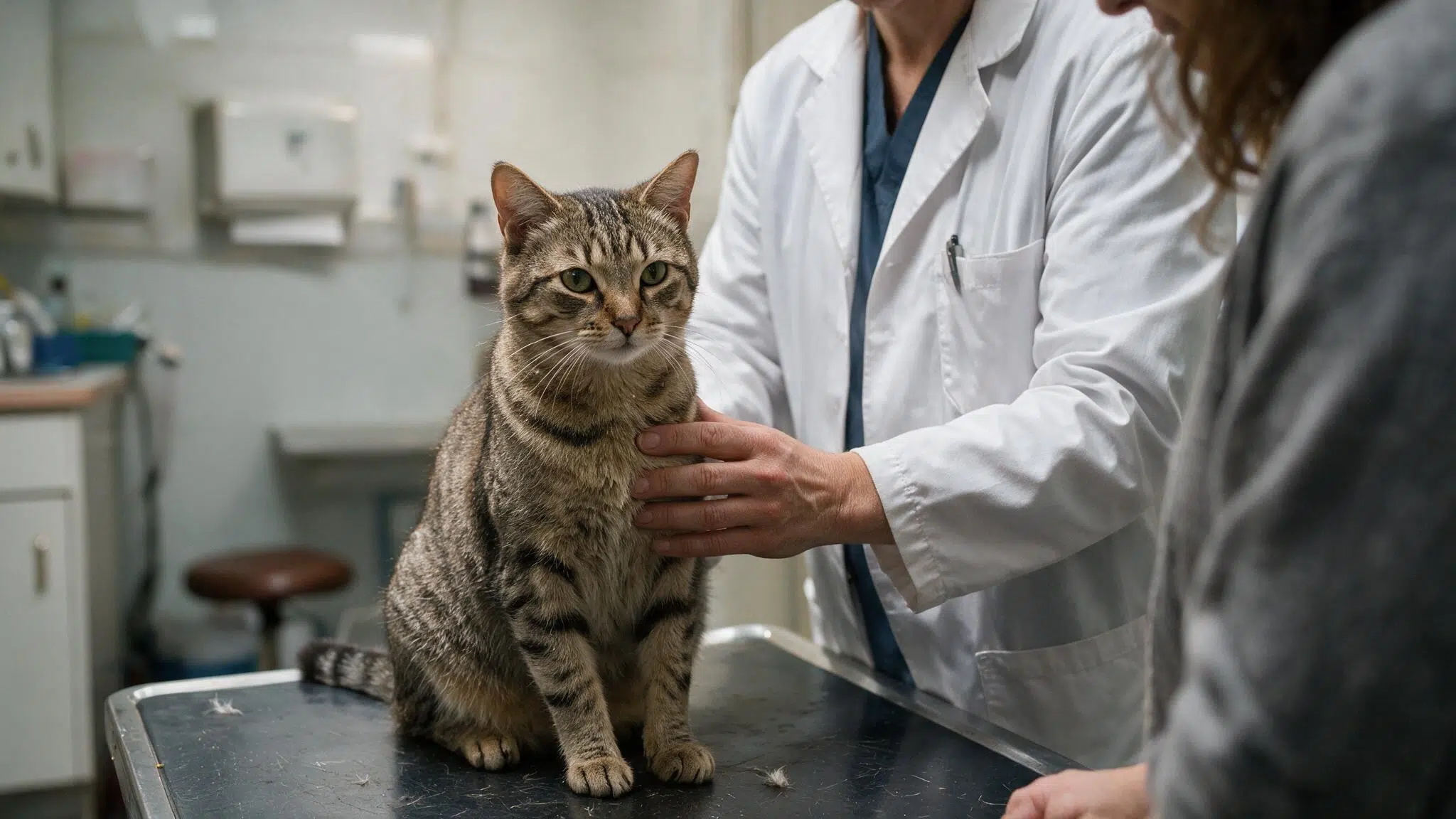
If you spot any of these signs, skip the wait-and-see approach. A vet visit rules out medical causes quickly and gives you a clear path forward, whether that’s a health treatment or a behavioral plan.
Conclusion
Your cat’s tongue is rough, a little relentless, and one of the more honest things about them.
Whether they’re grooming you, claiming you, asking for attention, or just working through a stressful afternoon, licking is their way of reaching out.
Most of the time, it means you’ve earned their trust, and that’s not a small thing with a cat. Pay attention to the full picture: their body, the timing, the mood in the room.
That behavior will tell you what it means when a cat licks you.
If something feels off or the licking becomes obsessive, your vet is always a good first call. Otherwise, enjoy the sandpaper kisses.
Got a funny or surprising moment when your cat couldn’t stop licking you? Share your experience in the comments below.
Frequently Asked Questions
Why Does My Cat Lick Me and Then Bite Me?
This usually comes down to overstimulation. Your cat starts the interaction feeling relaxed and affectionate, but too much contact tips them over. The lick-then-bite combo is their way of saying the moment is over. Watch for tail flicking or tense posture just before the bite. That’s your warning sign.
Why Does My Cat Lick Me when I’m Crying or Upset?
Cats are more tuned into your emotional state than most people realize. Changes in your breathing, body tension, and even the salt on your skin when you cry can register with them. Licking in these moments is a comfort response. They’re not solving your problem, but they are staying close on purpose.
Do All Cats Lick Their Owners?
No, and that’s completely normal. Some cats show affection through head bunting, slow blinking, or simply sitting nearby. A cat that never licks you isn’t cold or indifferent. They just have their own language. Licking is one dialect, not the only one.