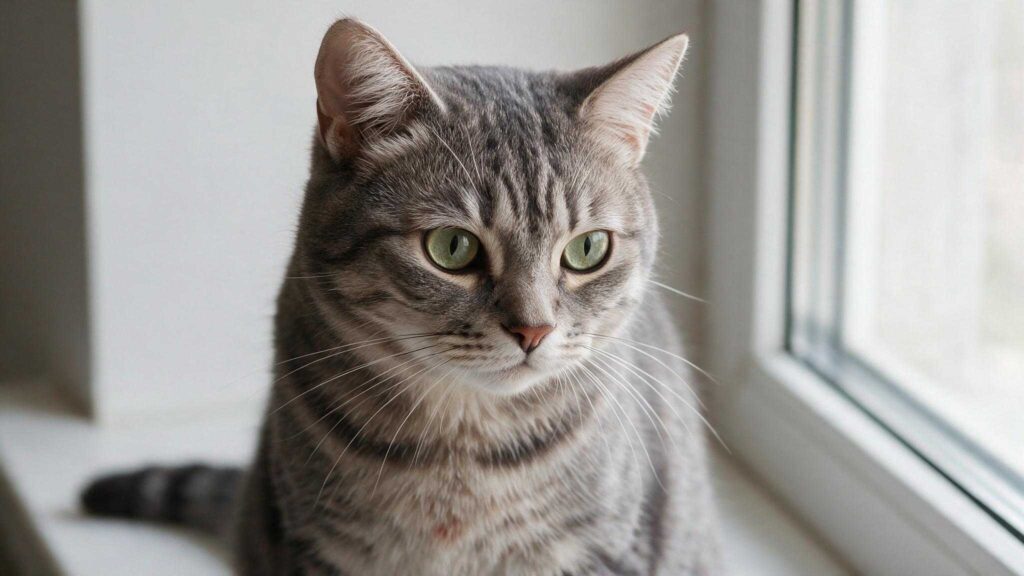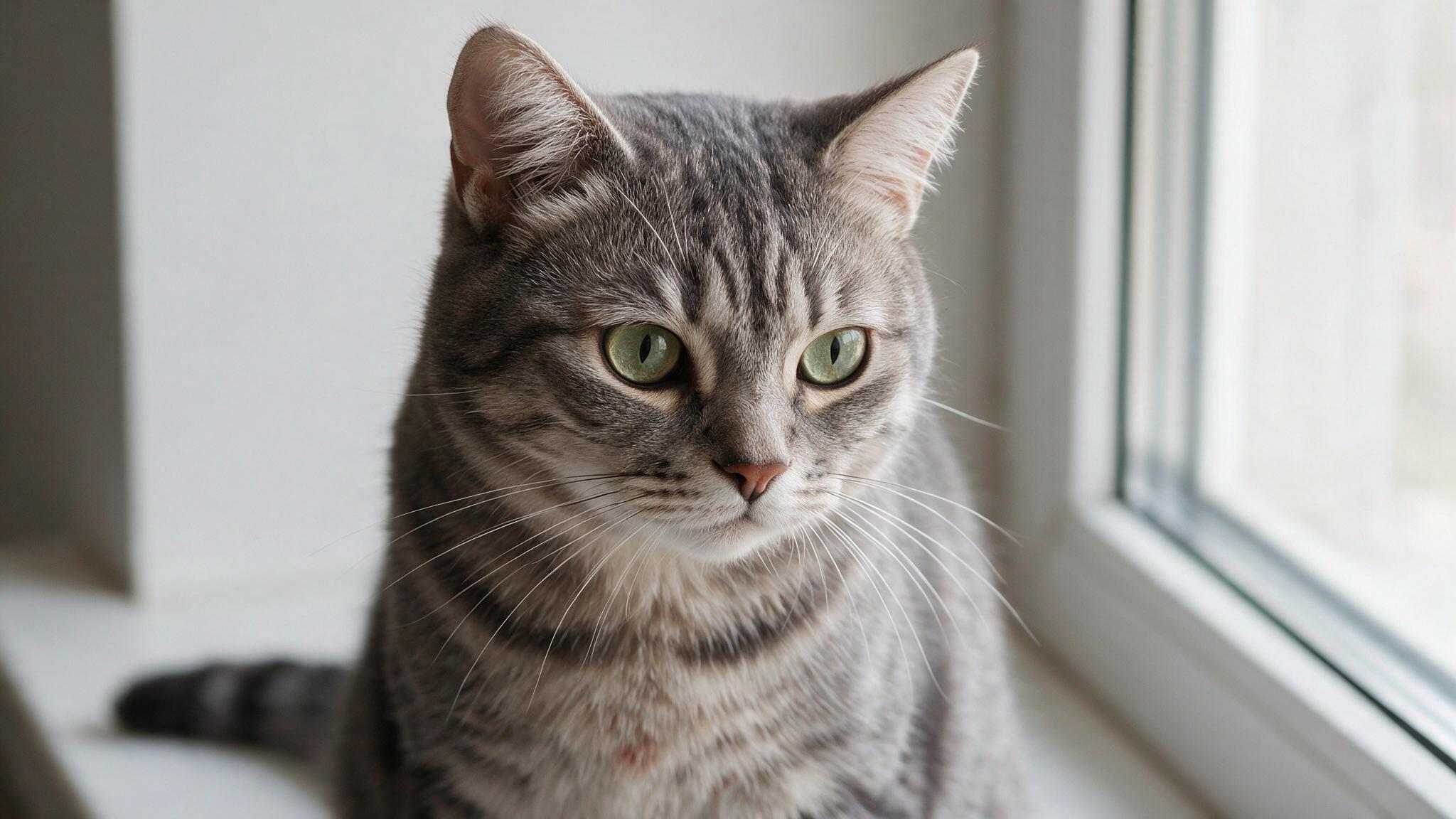
Some cats feel impossible to walk away from. You see the soft eyes, the curled tail, the little stretch against your hand, and suddenly you are already imagining them at home.
Then reality hits: itchy eyes, sneezing, fur on every surface, and that familiar worry that maybe a cat just will not work for your household.
That is where low-shedding cat breeds become especially worth knowing about.
They are not perfect, and no breed can promise a symptom-free life, but some cats leave far less loose hair behind and are easier for sensitive owners to manage.
The real trick is finding a breed whose coat, grooming needs, and personality fit your home.
The breeds below are a practical place to start if you want a cat that feels easier to live with, gentler on allergies, and less likely to leave your home covered in fur.
Why Do Some Cats Shed Less Than Others?
Some cats shed less than others because of their coat type, hair growth cycle, and genetics. Cats with short, fine, curly, or sparse coats often release less loose fur around the home.
Breeds like the Devon Rex and Cornish Rex have unusual coats that do not shed as much as many regular cats.
Hairless cats, such as the Sphynx, do not drop fur in the same way, but they still need skin care.
Age, health, diet, season, and grooming habits also affect shedding. A cat with poor nutrition or dry skin may lose more hair than usual.
Some cats shed more during warmer months as their coat changes. Regular brushing can also control loose hair before it lands on furniture, clothes, and floors.
Low shedding does mean no allergens, because cat allergies often come from saliva, dander, and skin oils, not fur alone.
Low Shedding Cat Breeds Worth Knowing
Low-shedding cats can make life easier for allergy-sensitive owners, but no cat is completely allergen-free. The right breed depends on coat type, Fel d 1 production, grooming needs, and personality.
1. Sphynx
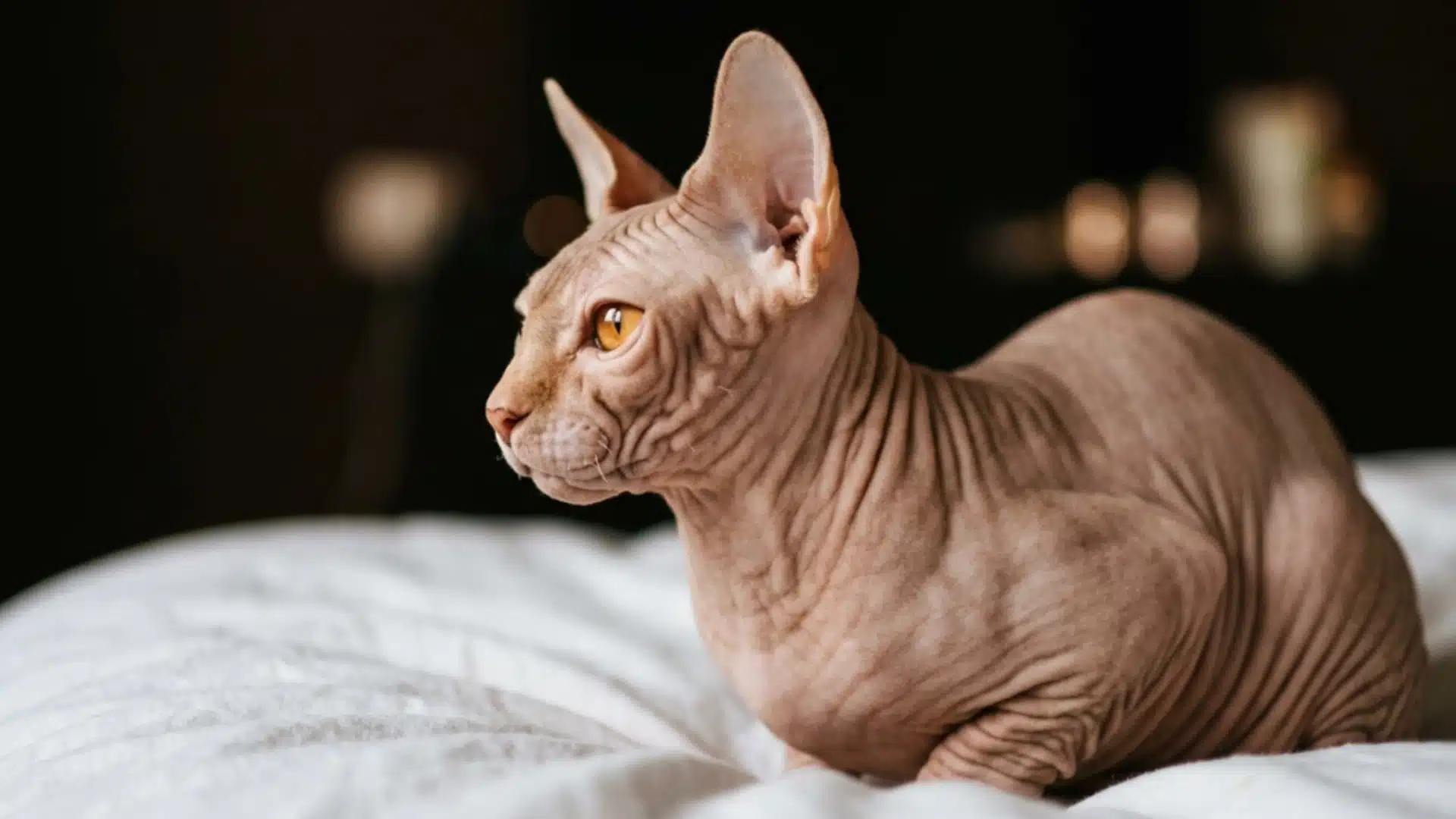
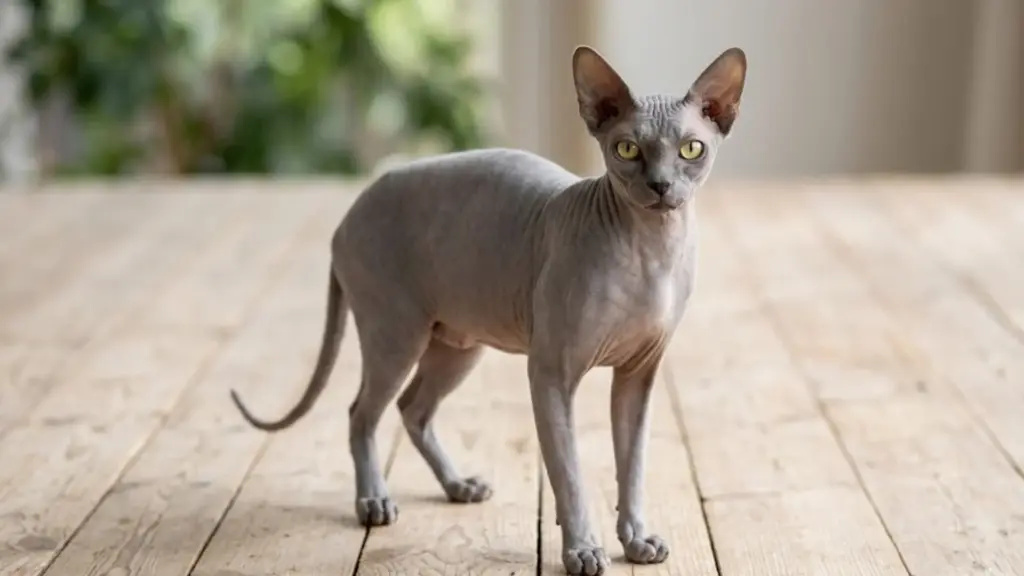
The Sphynx is one of the most well-known low-shedding cat breeds. Since it has little to no fur, there is very little hair around the home compared to most cats.
Its playful personality, social nature, and love of attention make it a favorite among cat lovers.
Despite being nearly hairless, their skin produces oils that would normally be absorbed by fur, so a consistent Sphynx care routine matters more than most people expect.
2. Siberian
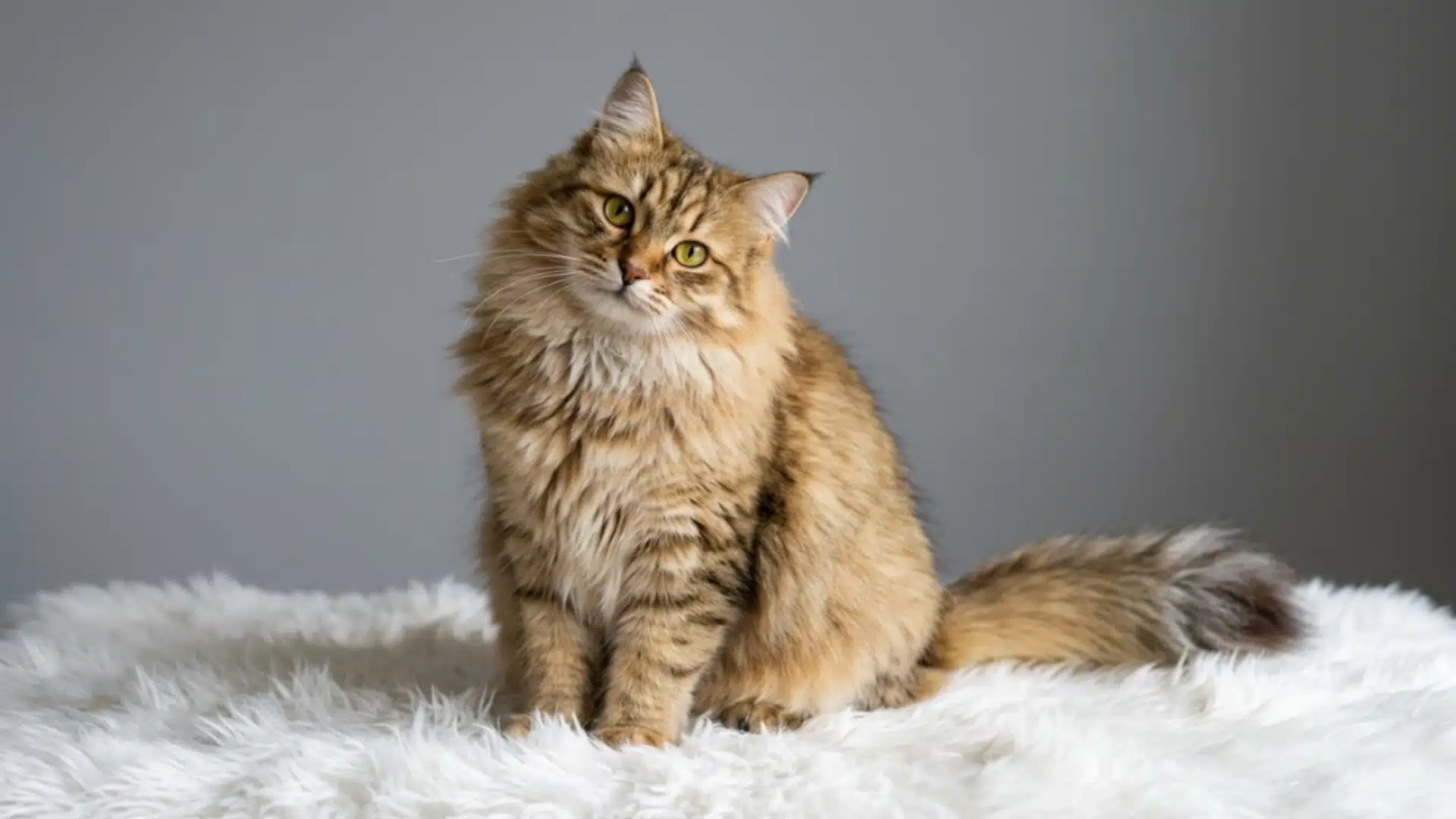
Siberians look like heavy shedders, but many are popular with allergy-sensitive owners because some produce lower Fel d 1 than average cats.
Their thick triple coat still needs regular brushing, especially during seasonal coat changes.
They suit owners who want a fluffy, loyal cat without ignoring grooming and allergy concerns. Regular combing keeps loose undercoat from spreading everywhere in busy homes.
3. Balinese
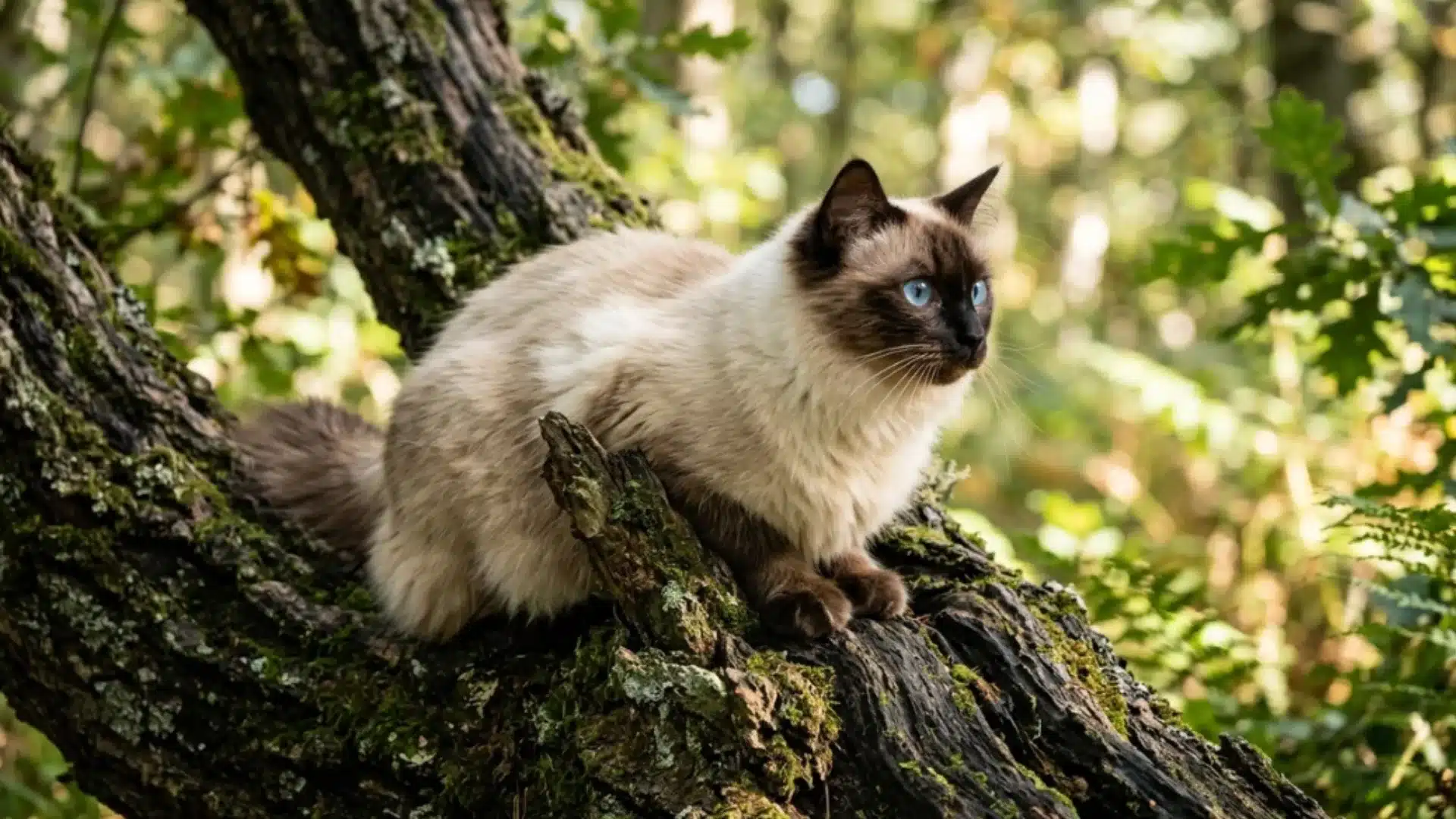
Balinese cats have a silky, long coat without the dense undercoat that usually causes heavy shedding.
They are often chosen by allergy-sensitive owners because they are associated with lower Fel d1 production.
Their social nature means they do best in homes where people can give daily attention, play, and conversation. Weekly grooming keeps their coat smooth and tidy with minimal effort.
4. Devon Rex
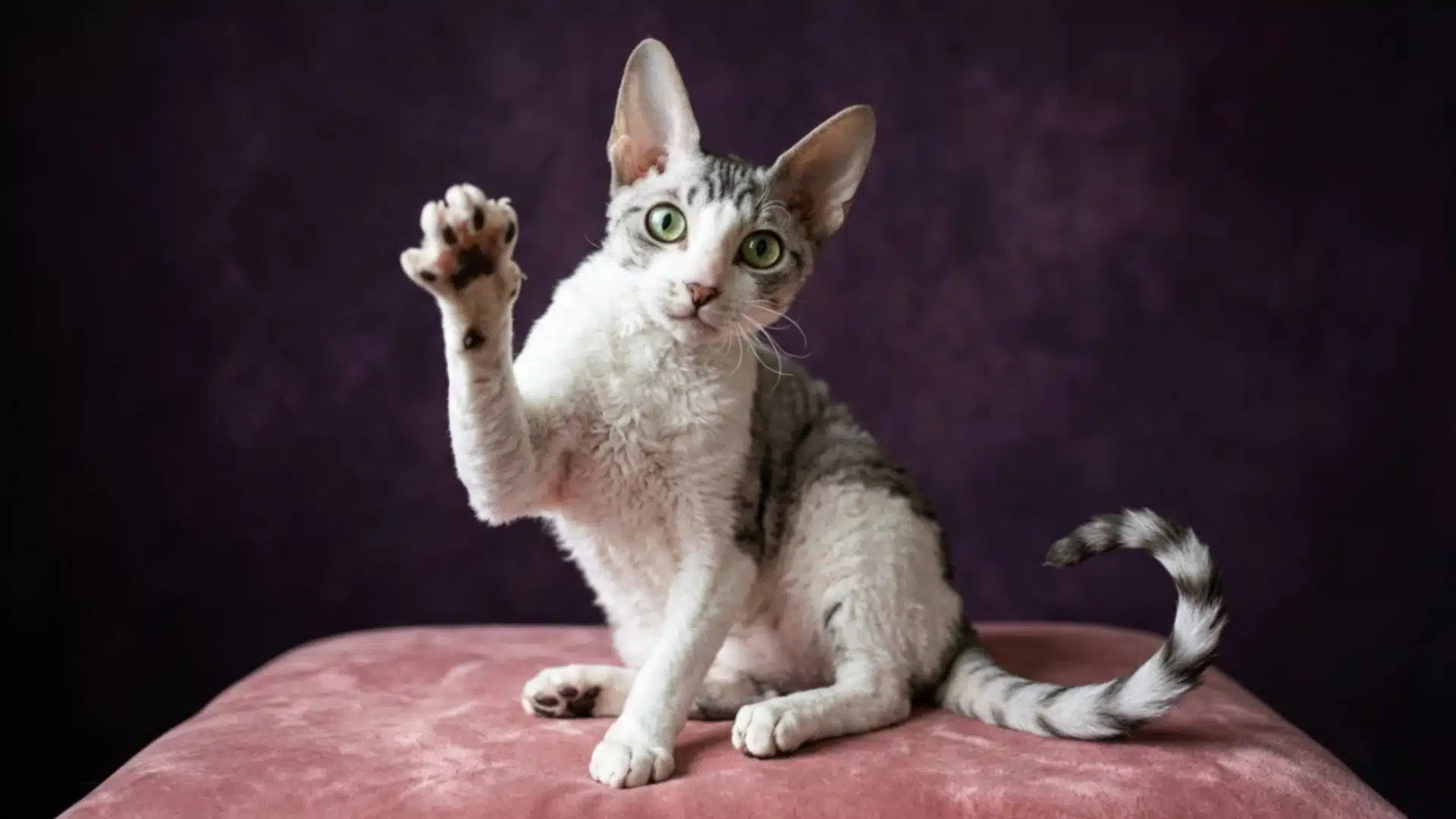
Devon Rex cats have soft wavy fur and very little guard hair, so loose hair usually stays close to the body. Their delicate coat needs gentle handling instead of rough brushing.
They are lively cats that enjoy climbing, lap time, warm spaces, and constant household involvement.
Their fun nature suits owners who want daily interaction, entertainment, and frequent movement through the house.
5. Cornish Rex
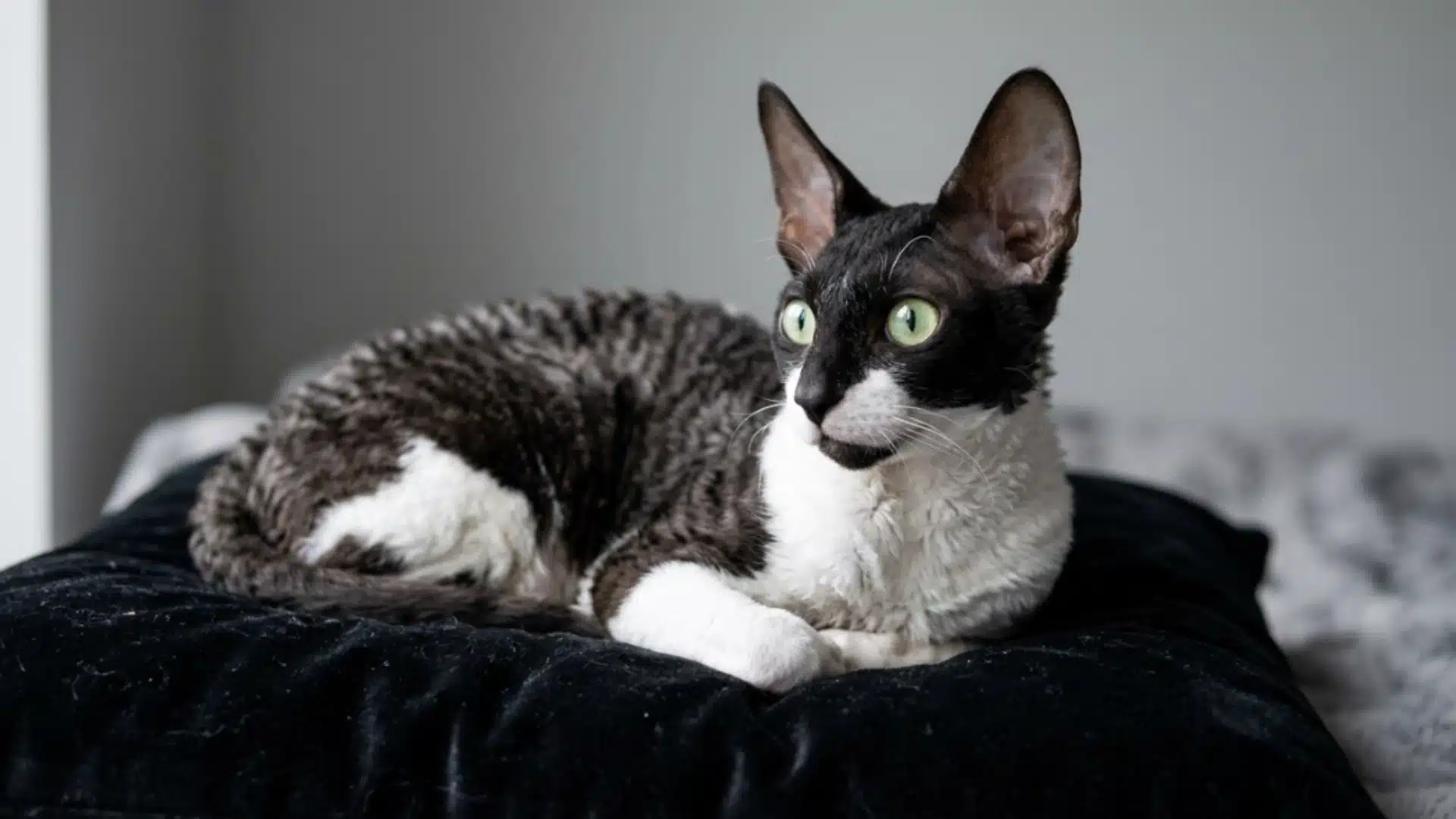
Cornish Rex cats have only a soft curly undercoat, with no outer guard hairs. This makes shedding extremely light compared with many short-haired breeds.
They are energetic, curious, and often seek warm places because their coat gives less insulation. Daily play and attention help them stay happy.
Their light coat still benefits from gentle skin and coat care between weekly grooming.
6. Russian Blue
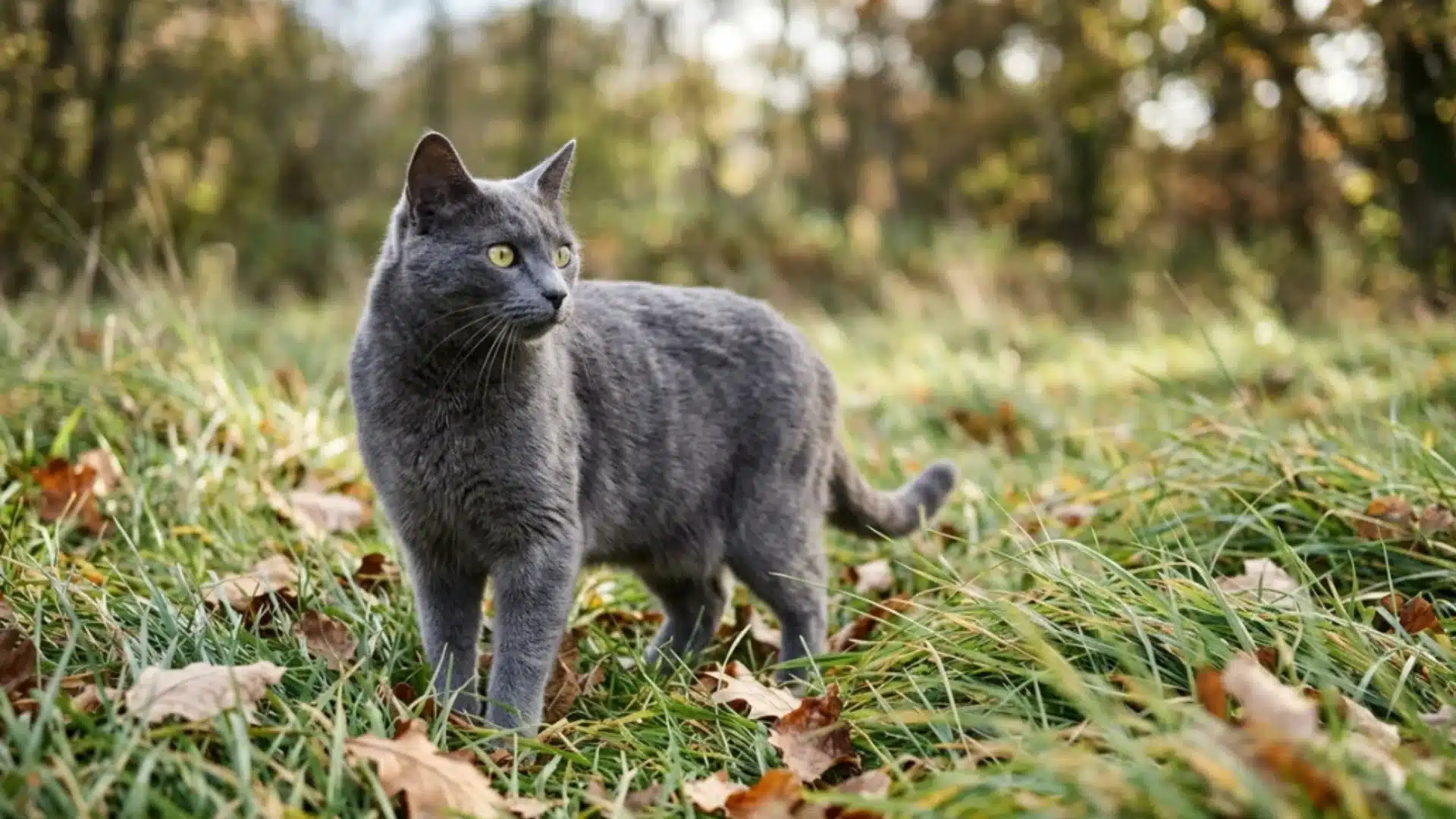
Russian Blues are known for a dense blue-gray coat that releases less loose hair than many breeds.
They are also linked with lower Fel d 1, which makes them appealing to allergy-conscious homes.
Their quiet nature fits calm spaces, but they bond deeply with trusted people. Weekly brushing helps keep the plush coat clean and controlled between full grooming sessions.
7. Bengal
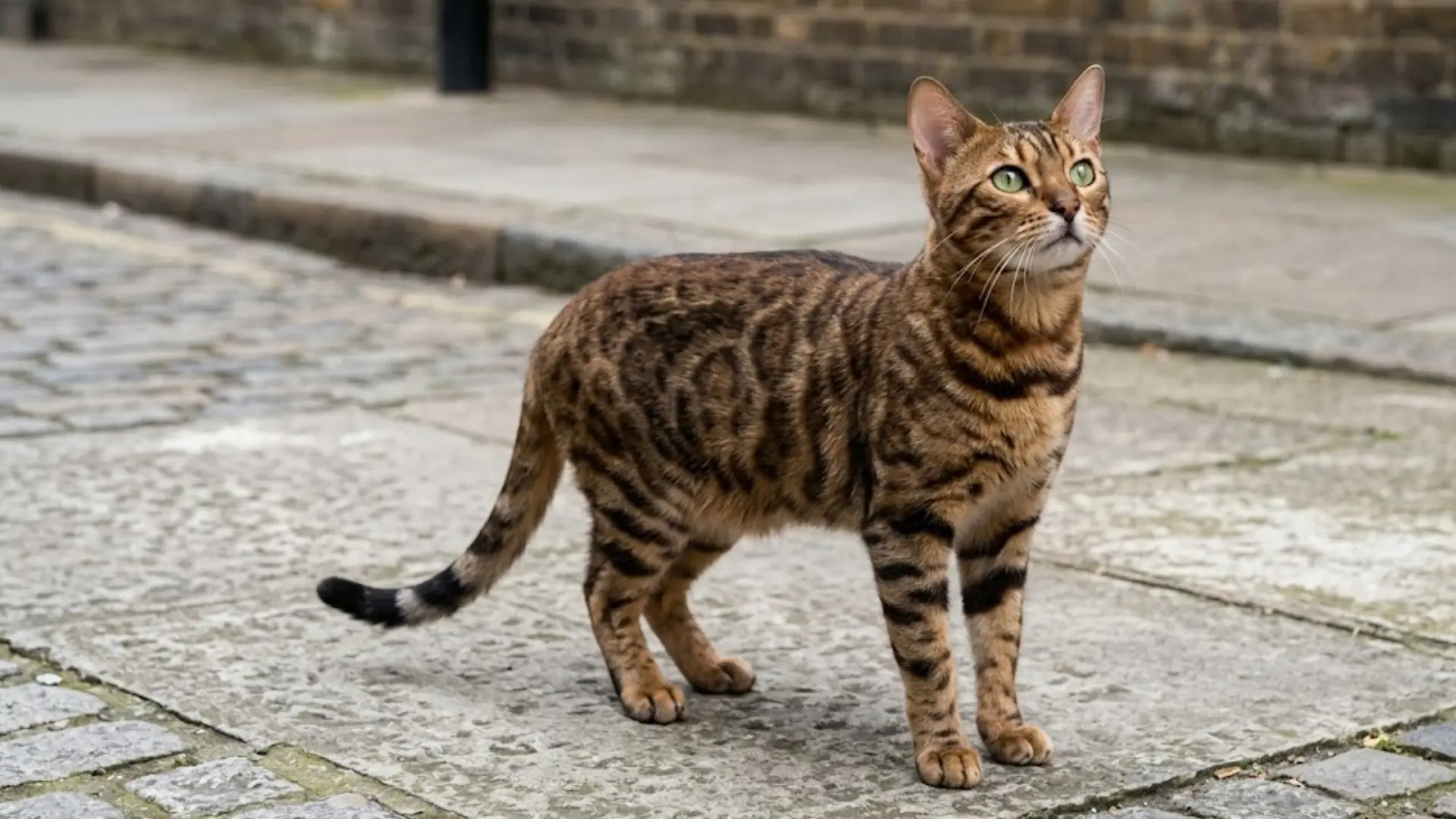
Bengals have a short, pelt-like coat that lies flat and sheds less than that of many domestic cats. Their coat is easy to maintain, but their energy level is not.
They need climbing space, puzzles, play, and daily engagement. Their low shedding appeal works best for owners ready for a bold cat.
A grooming glove usually keeps loose hair controlled between short weekly grooming sessions.
8. Oriental Shorthair
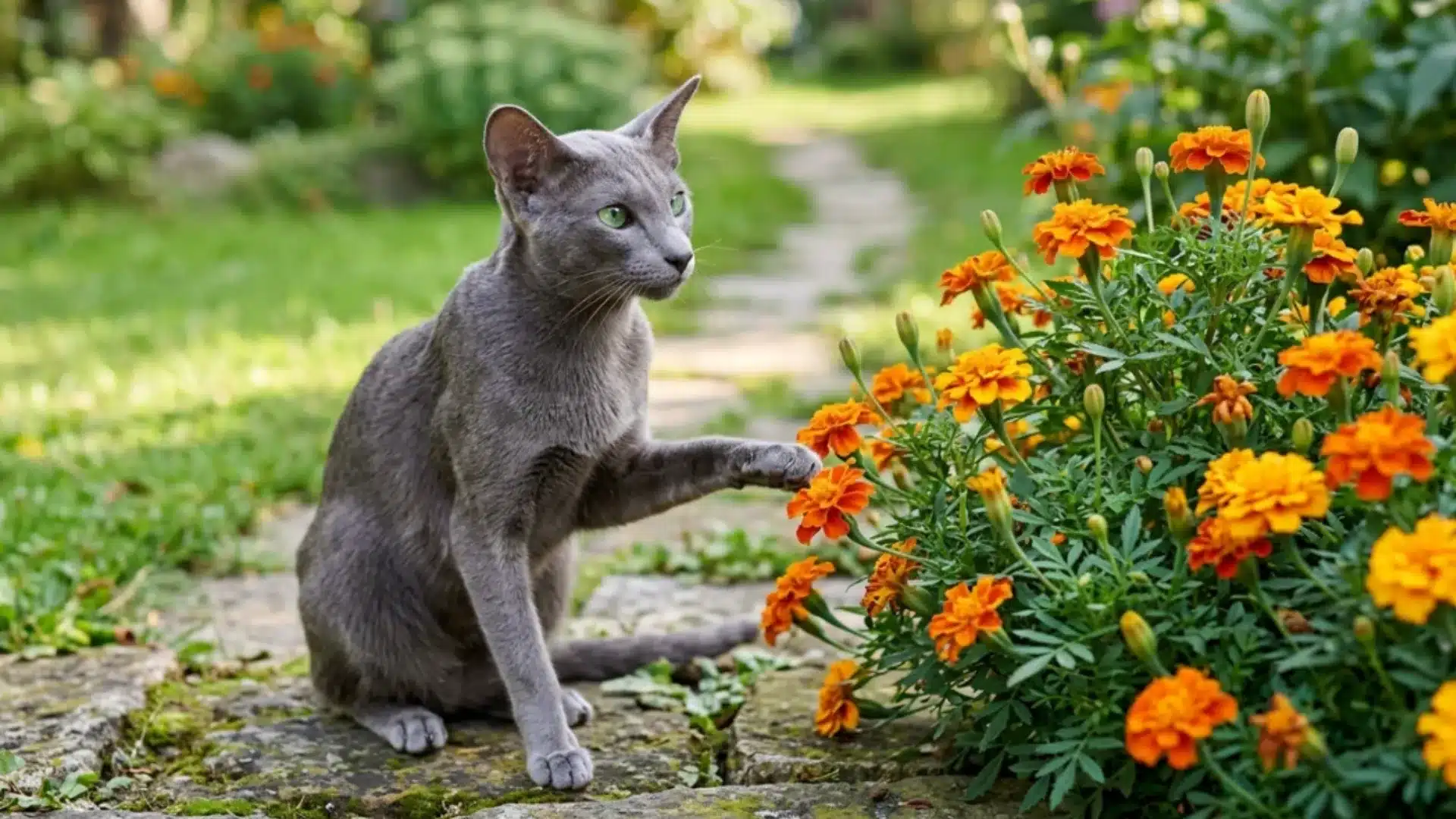
Oriental Shorthairs have a fine, close coat that sheds very little and is easy to maintain.
They are highly social cats, so they do best with attention, company, and daily interaction.
Their Siamese-style personality can feel intense for owners who are away from home all day. They thrive in homes with talkative, involved companions who require little coat care each week.
9. Siamese
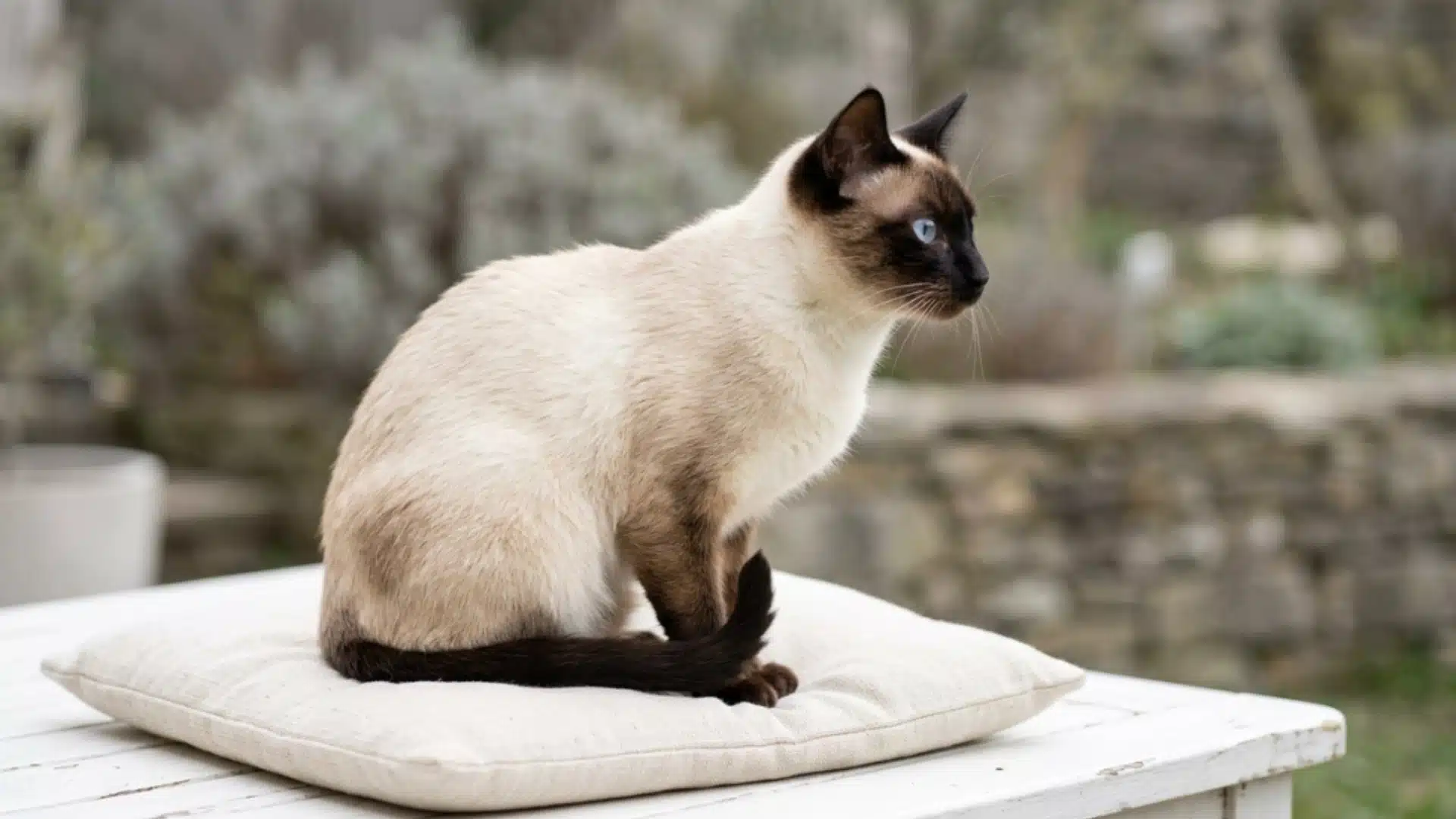
Siamese cats have a short, single-layer coat that sheds lightly and needs only simple weekly grooming.
They are also linked with lower Fel d 1, which may help allergy-conscious owners. Expect a loud, loyal companion that wants to follow routines, join conversations, and stay close to family.
They need attention as much as easy coat care while keeping grooming simple each week.
10. Burmese
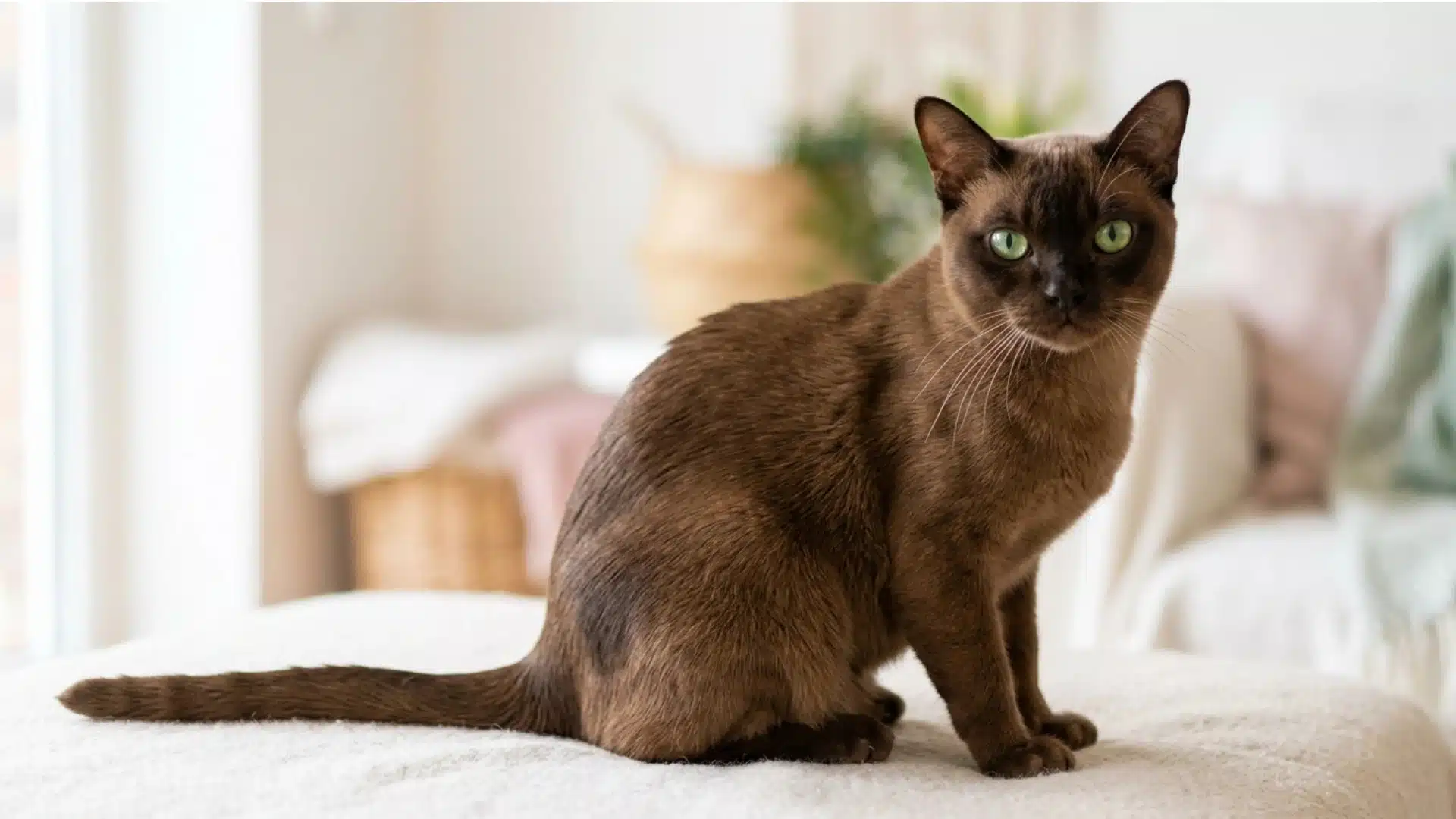
Burmese cats are a good choice for people who want a low-shedding cat with a loving personality.
They have a short, smooth coat that is easy to maintain and does not usually leave heavy fur around the home.
A quick weekly brushing can help remove loose hair and keep the coat shiny. Burmese cats are social, playful, and often enjoy being close to their owners.
11. Javanese
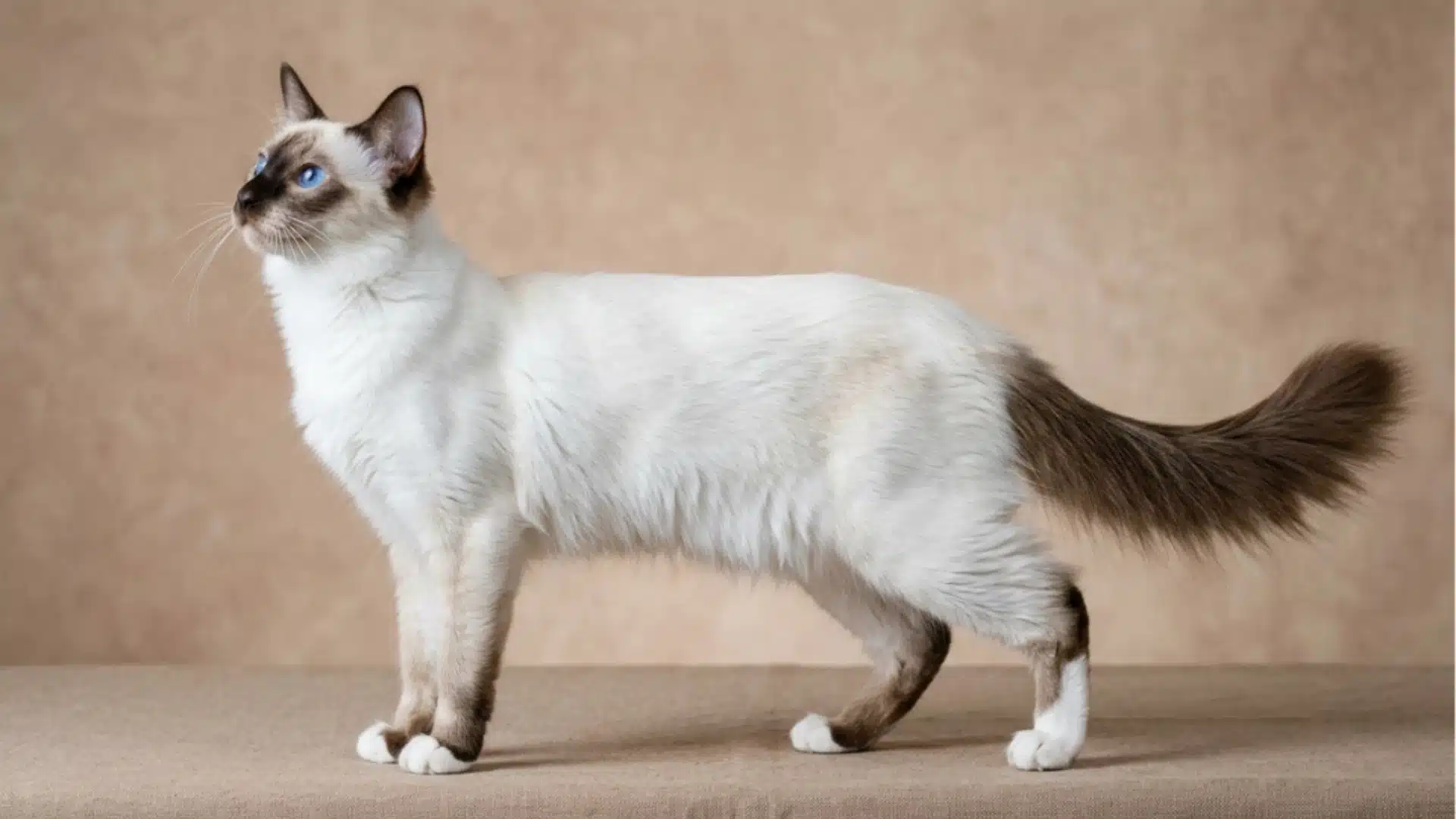
Javanese cats look fluffy, but they lack the dense undercoat that usually drives heavy shedding. They are smart, trainable, and often grouped with allergy-friendlier Siamese-type cats.
Their playful personality needs toys, puzzles, daily attention, and people who enjoy an active, talkative companion at home.
Light brushing helps keep their medium coat smooth and clean without creating much loose hair around furniture daily.
12. La Perm
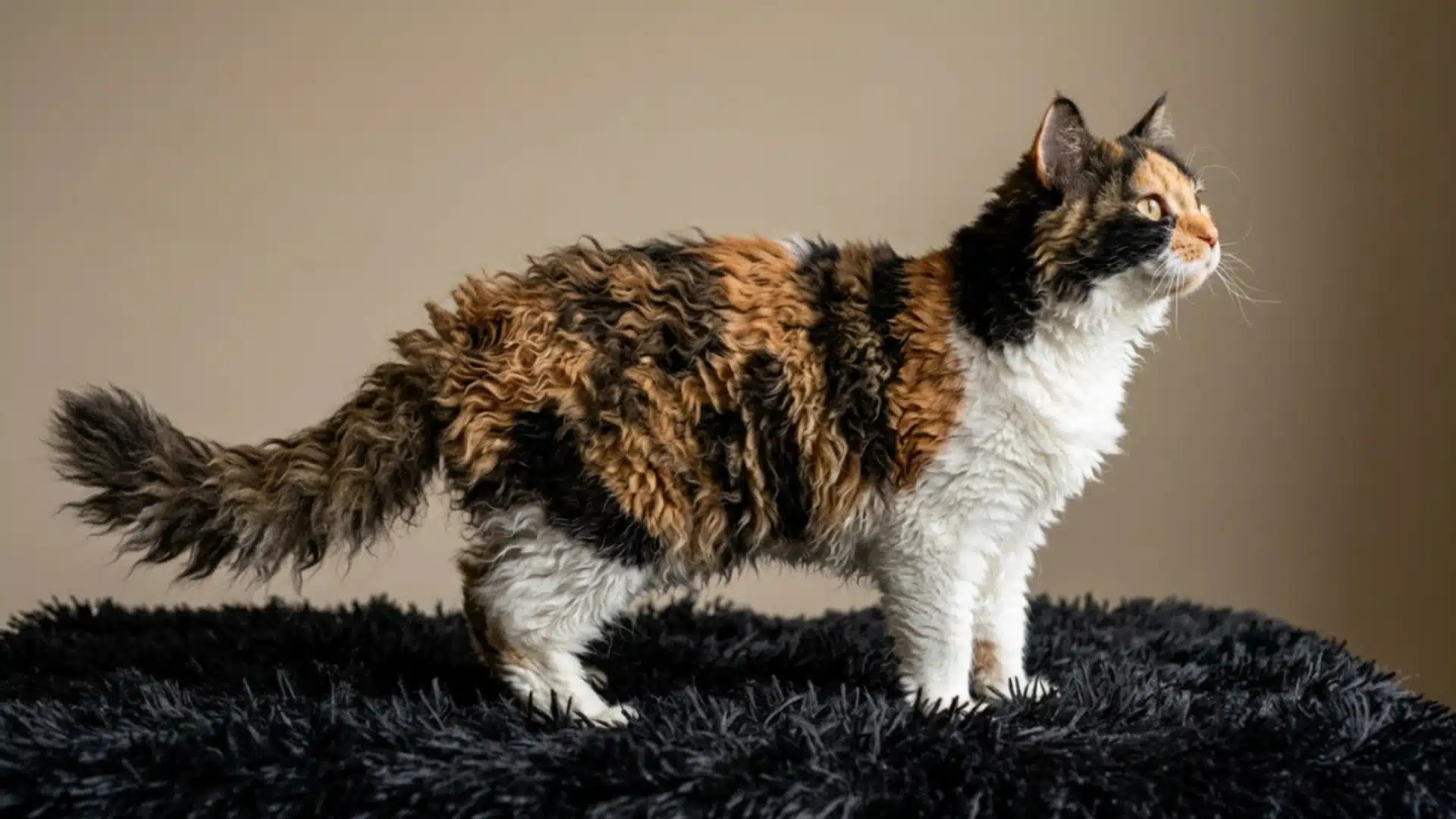
LaPerm cats have curls and waves that help trap loose hair before it spreads around the home. Their coat needs gentle grooming because rough brushing can disturb the curl pattern.
They are affectionate cats with a soft, unusual look, and they suit patient owners who enjoy calm interaction.
Regular light combing keeps curls cleaner without flattening their texture throughout the week with gentle patience.
13. Tonkinese
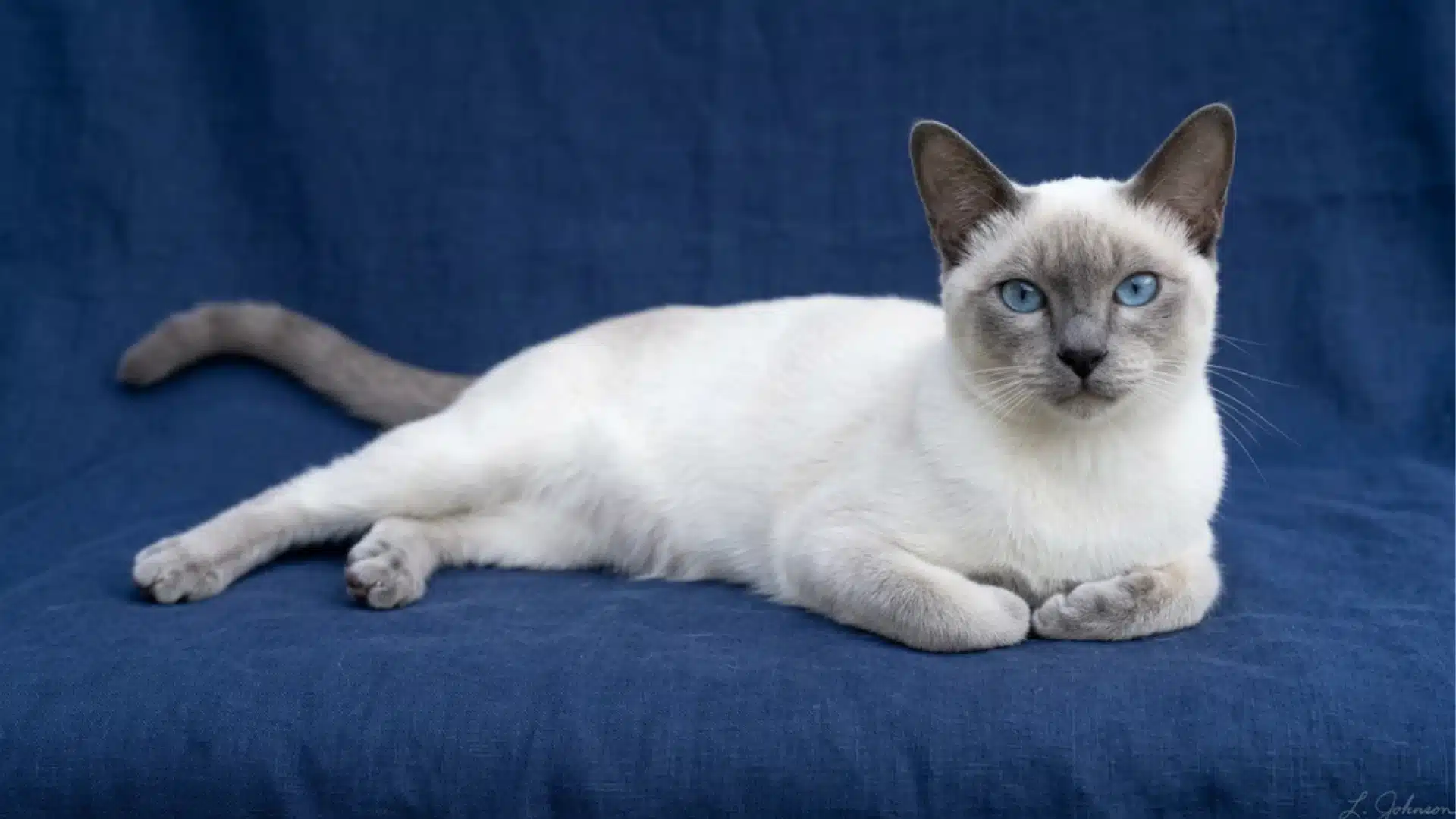
Tonkinese cats combine Siamese and Burmese traits, including a short, close coat that sheds very little. They are social without being as intense as some Siamese cats, which suits many families.
Their balanced temperament makes them friendly, playful, easy to engage, and comfortable around involved owners.
Their coat stays simple with light weekly grooming without needing complicated brushing or heavy daily coat care routines.
14. Ocicat
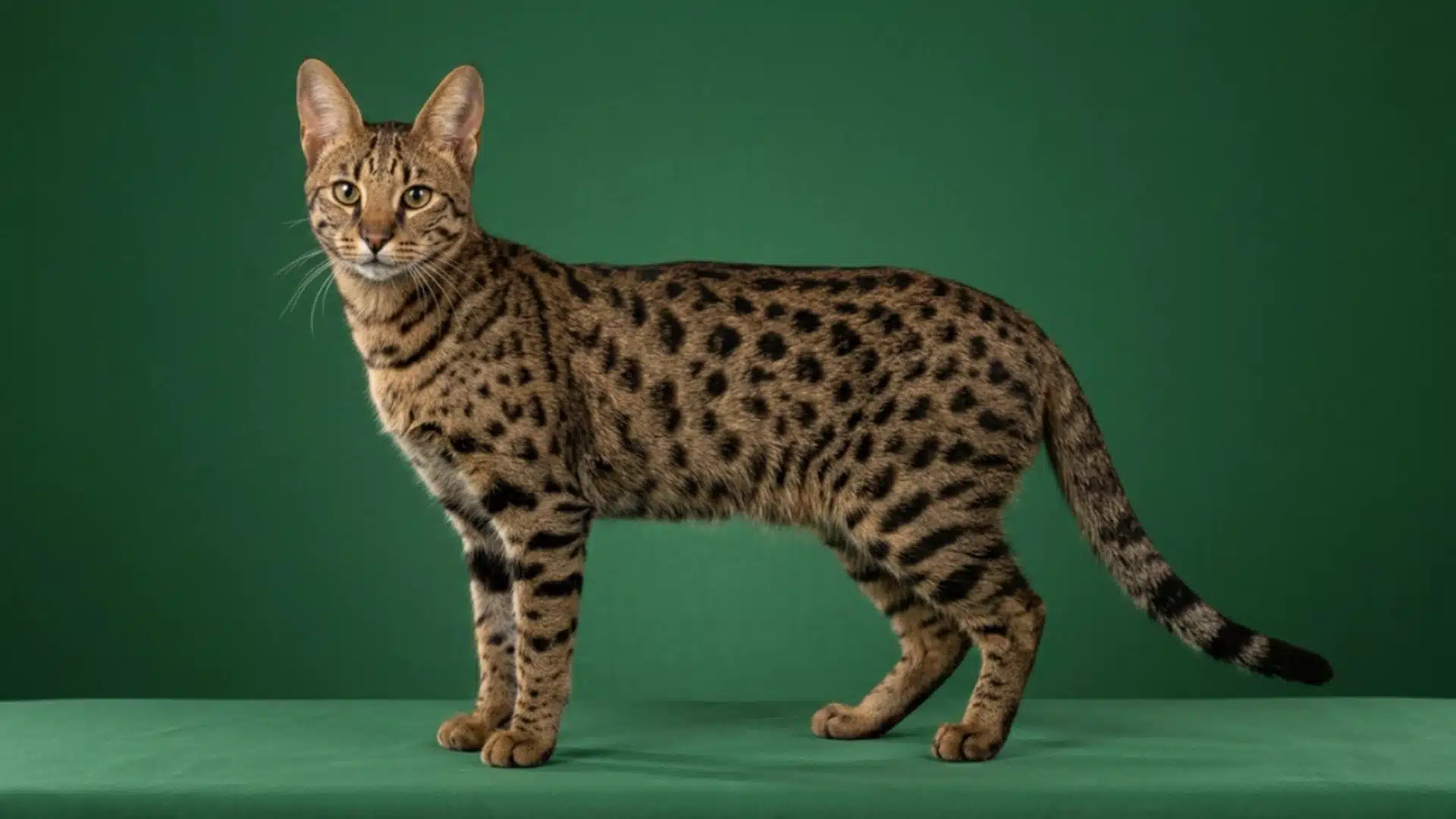
Ocicats look wild, but they are fully domestic cats with a short coat that stays neat and sheds lightly. A weekly wipe or grooming glove usually removes loose hair before it spreads.
Their confident nature works well in active homes that offer play, climbing, and companionship.
They suit owners who want bold looks without heavy coat upkeep while keeping grooming simple for busy owners.
15. Bombay
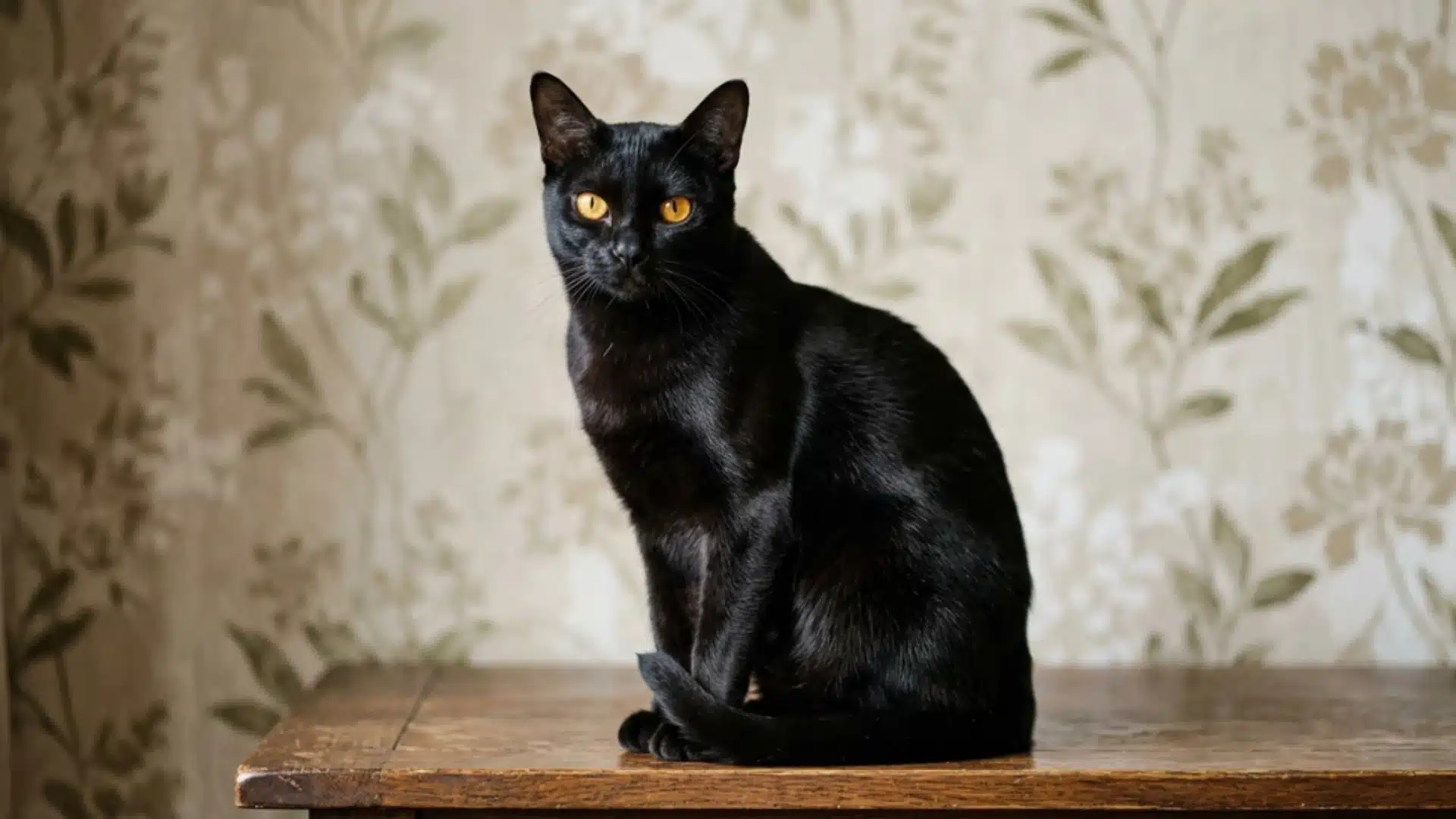
Bombay cats have sleek black coats that lie tight against the body and shed very little. Their coat needs minimal grooming, which makes them easy to keep neat.
Their warm personality makes them steady companions, and they bring a polished look without the heavy fur cleanup of fluffier breeds.
Regular petting often works like simple coat care between short weekly grooming sessions, too.
16. Snowshoe
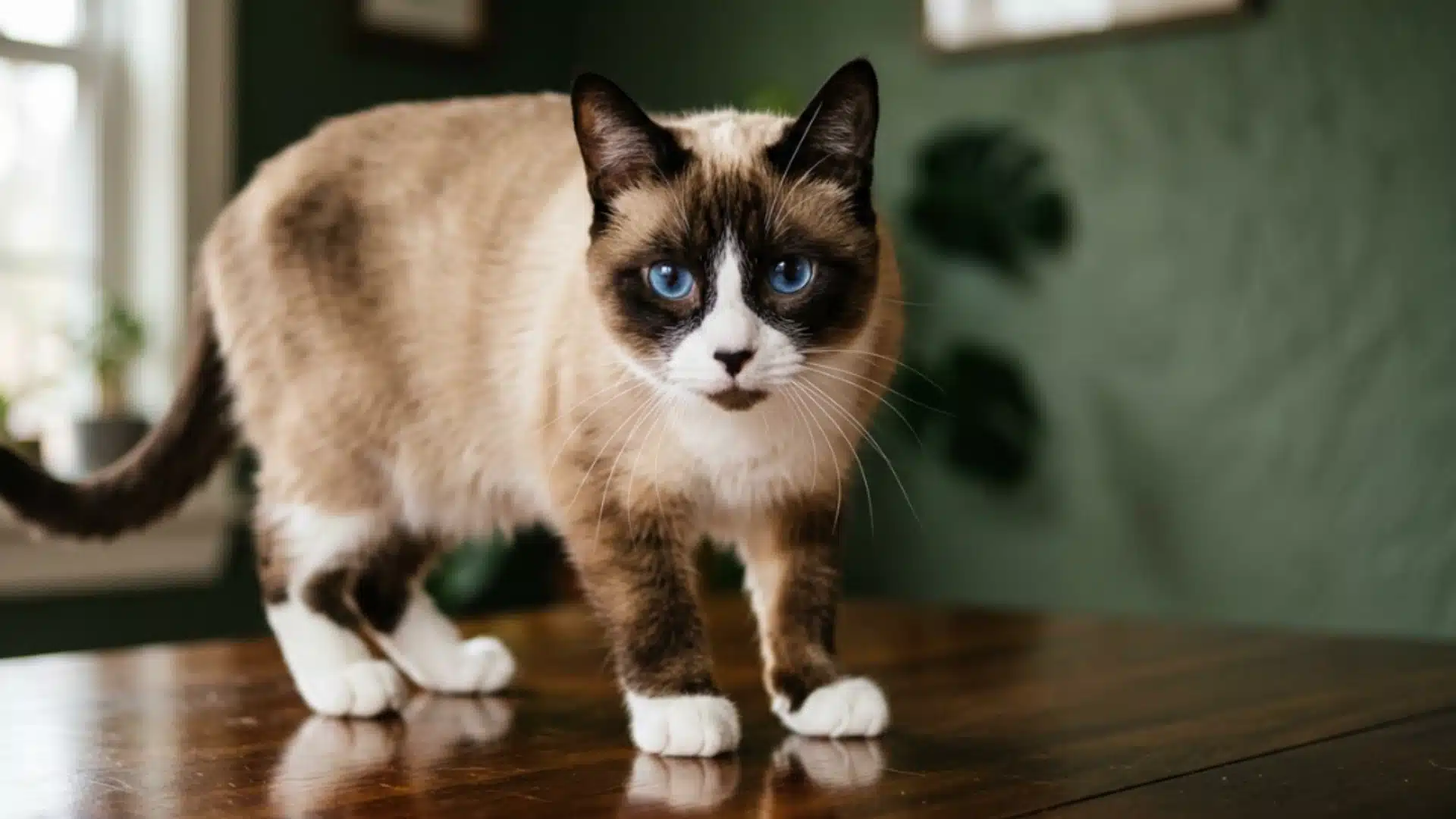
Snowshoe cats have a short, single-layer coat and usually shed less than thicker-coated breeds. They are gentle, social, and often easier around water than many cats.
Their balanced temperament makes them a good fit for families who want a calm, beautiful cat with manageable grooming needs.
Weekly brushing keeps loose hair from collecting on furniture without needing a difficult daily coat routine.
17. Peterbald
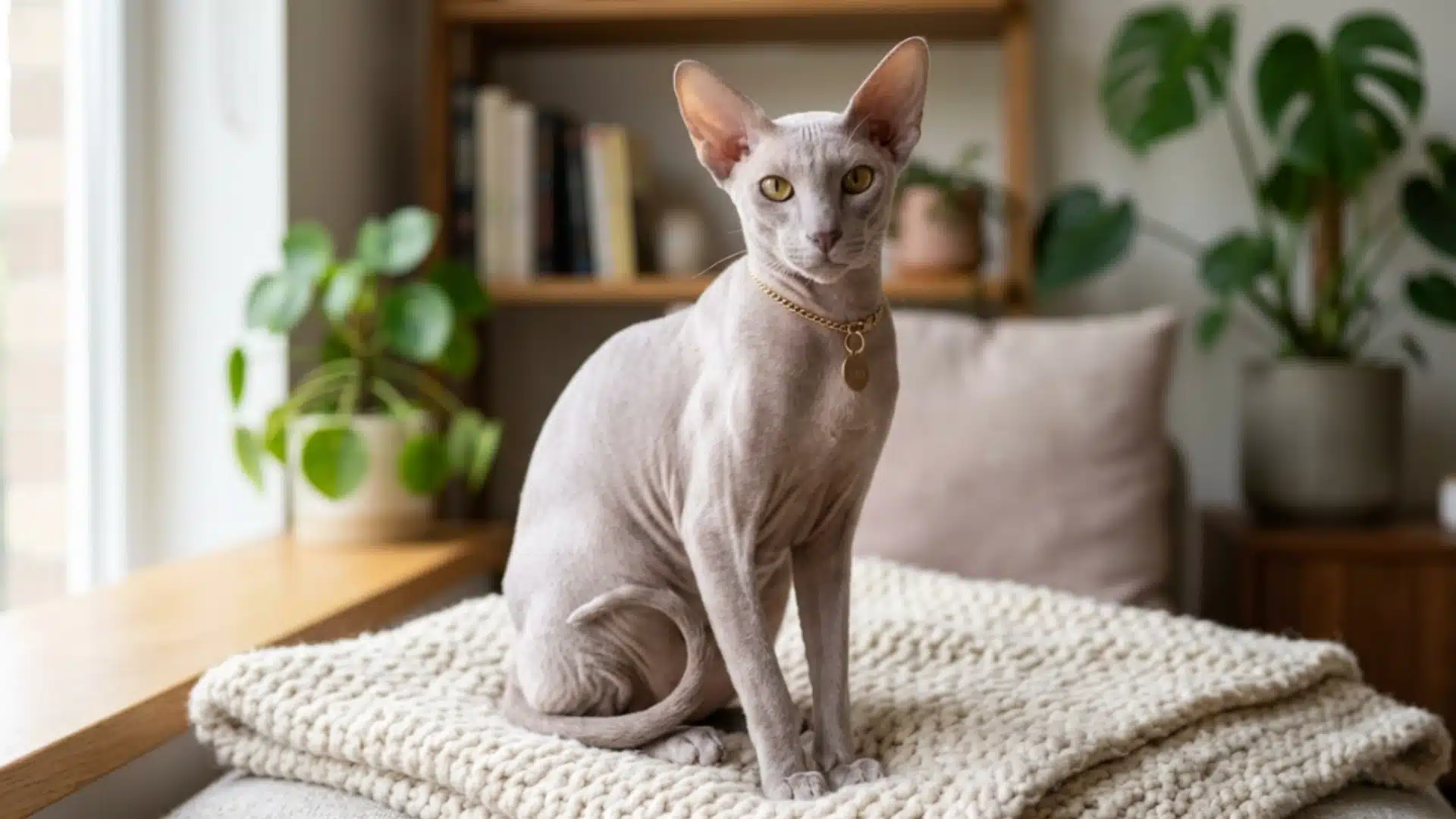
Peterbald cats can range from hairless to fine velour-coated, so shedding may be minimal or almost absent.
Like other nearly hairless cats, they need skin care instead of regular brushing. They are elegant, social cats that stay close to their people and enjoy daily attention.
Warmth, gentle bathing, and soft bedding matter for comfort, especially in cooler homes or drafts indoors.
18. Donskoy
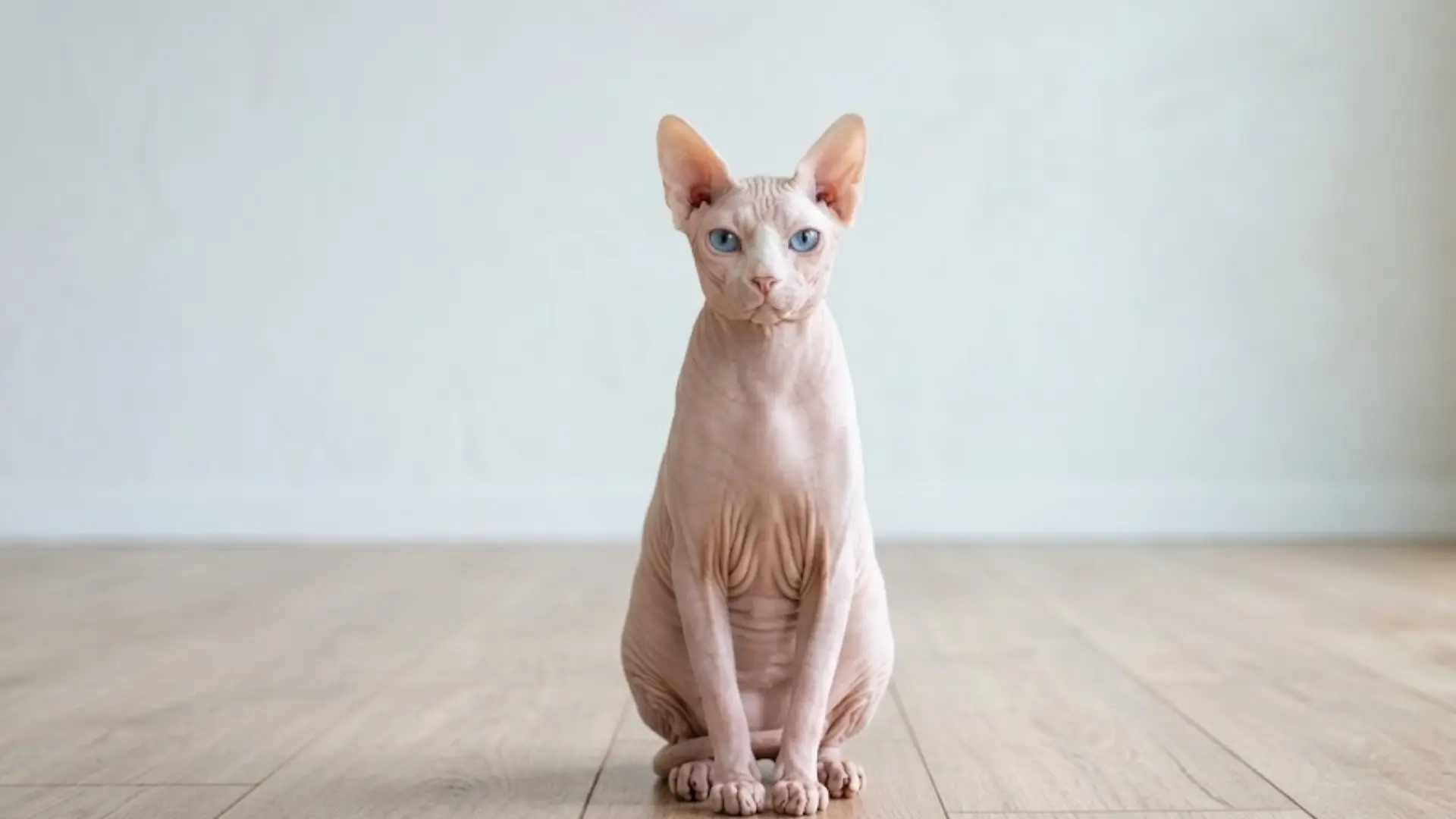
Donskoy cats are hairless Russian cats that shed virtually nothing, though allergens can still remain on the skin.
Regular bathing, warmth, and gentle skin care are important parts of their routine. They are cuddly, devoted cats, but their skin needs more attention than a normal coated breed.
Owners should protect them from cold drafts and watch for dry patches or oil buildup weekly.
19. Colorpoint Shorthair
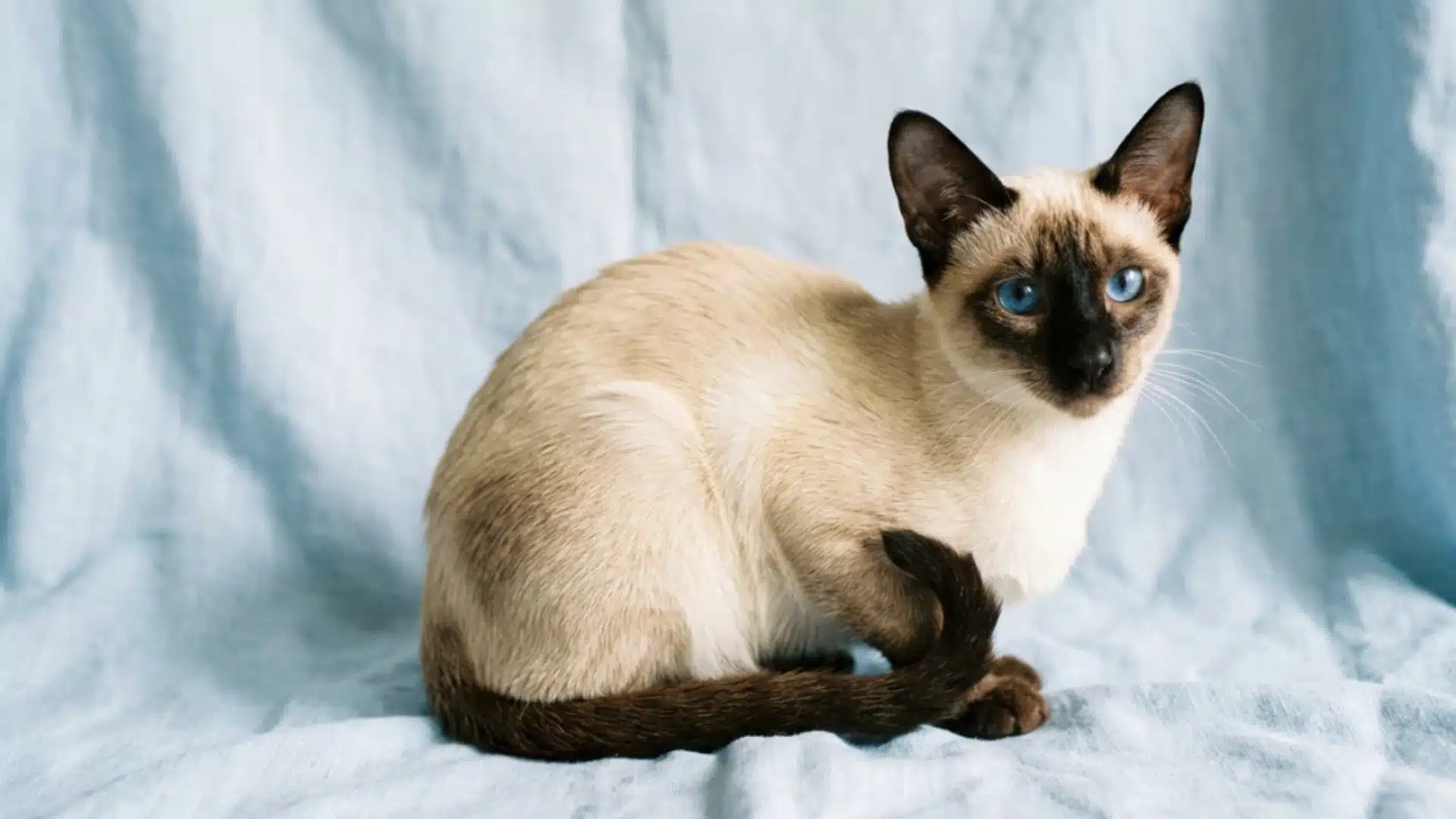
Colorpoint Shorthairs are closely related to Siamese cats and share many low-shedding traits. Their short, fine coat is easy to manage, but their big personality needs daily attention.
They offer the Siamese look in more colors, with the same strong attachment to their favorite people.
Weekly grooming is usually enough to manage loose hair without requiring a difficult daily grooming routine at home.
20. Lykoi
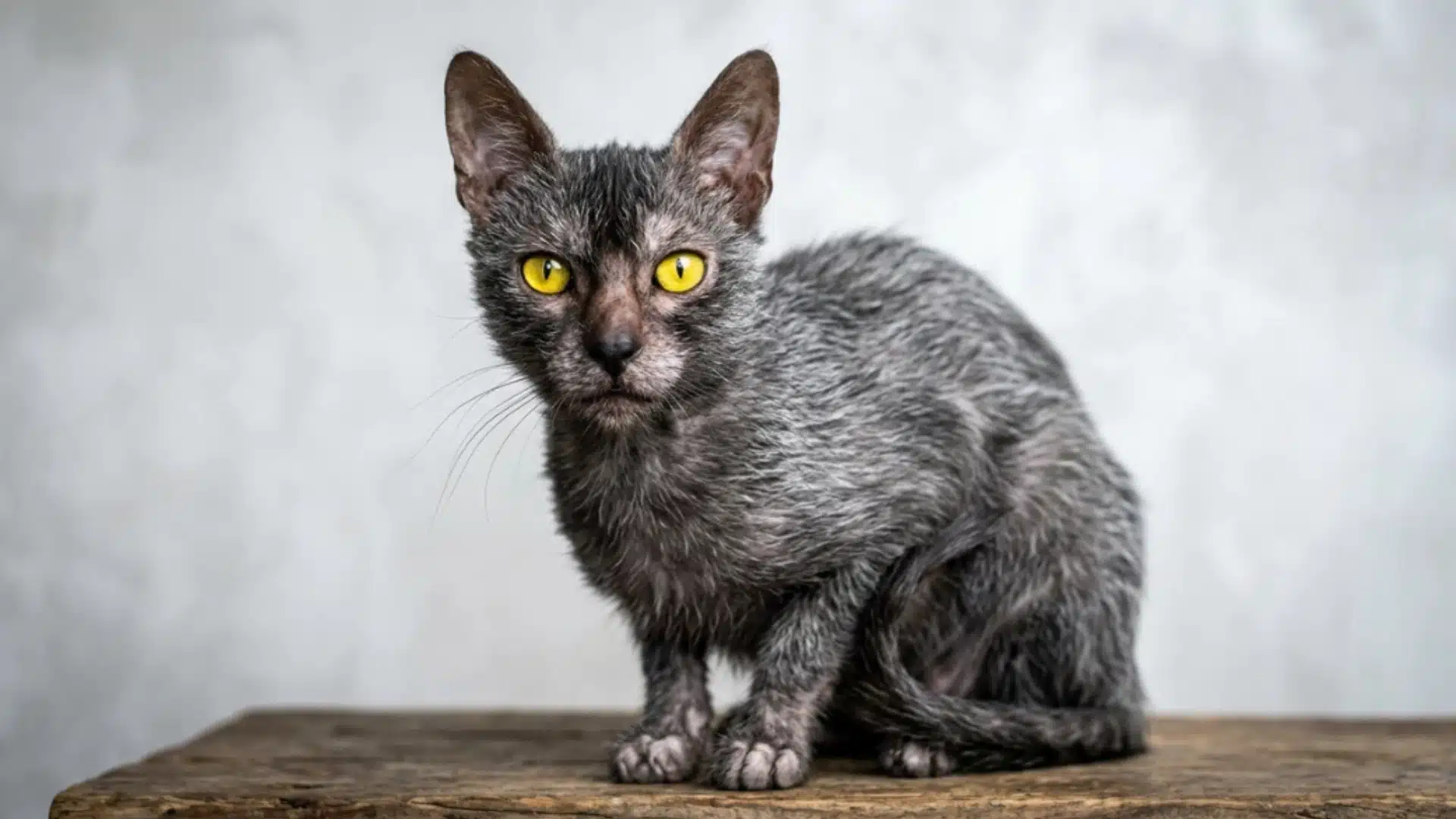
Lykoi cats have a sparse, unusual coat with little undercoat, which helps keep shedding low.
Their werewolf appearance is dramatic, but their care still centers on gentle grooming and regular attention.
They suit owners who want a rare, intelligent breed with minimal loose fur around the home. Their coat pattern can vary naturally, so care needs may change throughout the year.
21. Scottish Fold
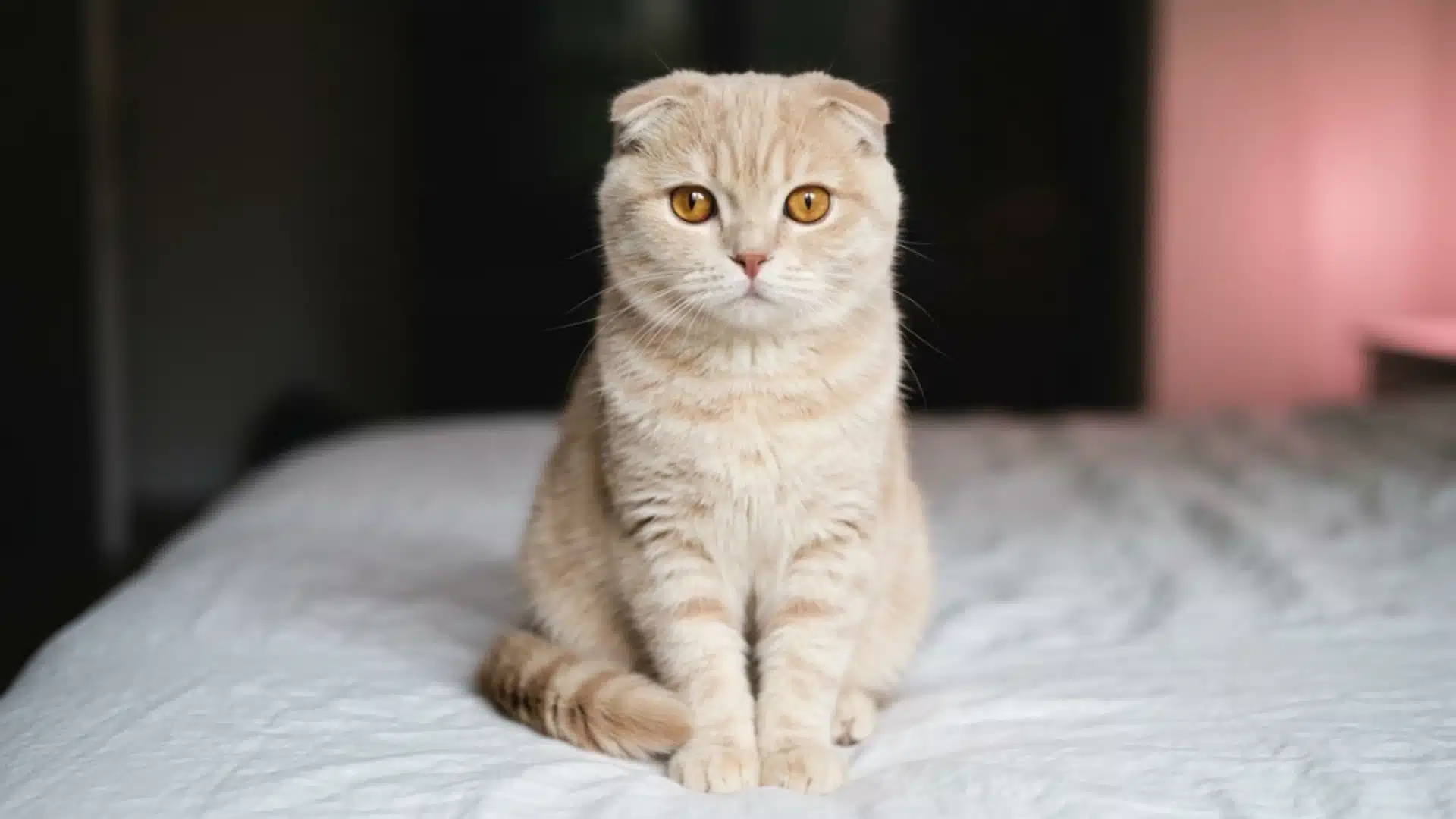
Shorthaired Scottish Folds have dense coats that shed less than longhaired varieties, though weekly brushing still helps. Choose breeders carefully because the folded ear gene can bring health concerns.
A well-bred Scottish Fold offers calm companionship, soft manners, and manageable grooming needs for many apartment homes.
Their relaxed nature suits quieter households and gentle routines without much coat work at home.
Cats to Avoid if Shedding is a Concern
Knowing which breeds shed the most can be just as useful as the list above. If fur management or allergies are a real priority in your home, these breeds are worth approaching with caution:
- Maine Coon: Long, dense double coat that sheds year-round and increases significantly with seasonal changes.
- Persian: Their luxurious coat mats easily and requires daily brushing; shedding is constant and heavy.
- Ragdoll: Semi-long soft coat that spreads freely through the home; beautiful but leaves behind plenty of fluff.
- Norwegian Forest Cat: Thick double coat designed for harsh climates; heavy seasonal shedding in spring.
- British Longhair: The longer-coated variant of the British Shorthair sheds considerably more than its short-haired counterpart.
None of these breeds are bad cats. But if you’re already managing allergies or genuinely don’t want fur on every surface, starting with a low-shedding breed saves a lot of daily friction.
Are Low Shedding Cats Really Hypoallergenic?
Low-shedding cats can be easier for allergy-sensitive owners, but they are not truly hypoallergenic. Most reactions come from Fel d 1, a protein in saliva, skin oils, and dander.
Fel d 1 can spread on clothing and surfaces, even in homes without cats.
When a cat grooms, that protein moves onto the coat and later spreads through loose hair, dust, bedding, and furniture.
A cat that sheds less may spread fewer particles, but it can still trigger symptoms. That is why breed reputation should never be the only deciding factor.
Some cats naturally release less fur, some produce lower allergen levels, and some simply suit one person better than another.
Before adopting, spend time with the specific cat, handle its coat, sit in the same room, and watch for sneezing, itching, watery eyes, or changes in breathing over the next day or two.
How to Further Reduce Allergens at Home?
Even low-shedding cats spread Fel d 1, so consistent grooming habits help catch loose hair and manage allergens.
Groom outdoors or in an area with open airflow when possible. Use a HEPA air purifier in bedrooms and main sitting areas to reduce airborne particles.
Wash bedding, throws, cat beds, and soft furnishings often because allergens stick to fabric and can remain active for months, according to Purina Institute research.
Vacuum carpets, rugs, and upholstery with a HEPA filter, and wipe hard surfaces weekly. Keep the bedroom cat-free if allergies are strong, giving the body a cleaner space overnight.
The best results come from matching the breed to your home, grooming routine, and allergy level before bringing a cat home.
How to Choose the Best Non-Shedding Cats for Your Lifestyle?
Choosing the best low-shedding cat means looking beyond fur control. The right breed should match your daily routine, cleaning habits, allergy concerns, grooming comfort, and home setup.
- Grooming needs: Choose a cat with coat care that fits your routine, because curly, fine, long, or nearly hairless coats still need regular brushing or skin care.
- Energy level: Match the cat’s activity level to your home, since active breeds need climbing space, daily play, toys, and more attention than calmer cats.
- Allergy comfort: Spend time around the cat first when possible, because low shedding does not always mean allergy-free for every person or household.
- Attention needs: Pick a breed that suits your schedule, since social cats may feel lonely or stressed if left alone for long hours.
- Apartment fit: Consider noise level, movement needs, and personality, because some low-shedding cats handle small spaces better than highly active breeds.
- Skin and warmth care: Hairless or thin-coated cats may need extra warmth, gentle bathing, and skin care, especially in cooler homes or dry weather.
Compare your schedule, cleaning habits, allergy level, and grooming patience, then get the right cat supplies before arrival.
The right cat should feel manageable every day, not just impressive on a breed list. Spend time with the cat first, if possible.
Conclusion
Cat allergies can make cat ownership feel impossible, but the right low-shedding breed can make the idea much more realistic.
No cat can promise an allergy-free home, and even the lightest shedder still needs grooming, cleaning, and a trial visit before adoption.
Still, the right match can mean less fur on furniture, less dander in the air, and fewer daily flare-ups.
The best choice is not always the rarest cat or the shortest coat. It is the breed whose temperament, care needs, and allergen level fit your actual routine.
Have you lived with a low-shedding cat or found a breed that worked well for allergies? Share your experience in the comments to help other cat lovers choose with more confidence.
Frequently Asked Questions
Do Male or Female Cats Shed More?
Male and female cats usually shed about the same amount. The bigger difference is allergen production. Male cats often produce more Fel d 1 than females, and neutering a male cat can reduce those levels, which may help allergy-sensitive owners.
Can I Test a Cat’s Fel d 1 Levels Before Adopting?
Yes. Individual Fel d 1 testing can show how much allergen a specific cat produces before adoption. This is useful because allergen levels vary from cat to cat, even within the same breed or litter.
How Often Should I Groom a Low-Shedding Cat?
It depends on coat type. Short-coated cats may only need a weekly wipe or grooming glove. Curly-coated cats need gentle, careful grooming, while longer, low-shedding coats may need brushing two to three times a week to prevent loose hair and tangles.