Few predators depend on family cooperation as heavily as this long-legged, patterned hunter. An African wild dog lives, hunts, feeds, and raises pups within a pack whose survival depends on coordinated action.
Also called a painted wild dog, it is a separate canid species rather than a feral dog or wolf. Its oversized ears, four-toed feet, mottled coat, wide-ranging habitat, and complex calls make it easy to identify once you know what to look for.
Its story also carries urgency because habitat fragmentation, human-wildlife conflict, road deaths, snares, and infectious diseases continue to reduce scattered populations.
The following sections explain its identity, range, diet, social behavior, hunting methods, threats, and current conservation work.
What is an African Wild Dog?
The African wild dog, scientifically known as Lycaon pictus, is a wild canid native to sub-Saharan Africa. It is the only living member of the genus Lycaon and is neither a wolf nor a feral domestic dog.
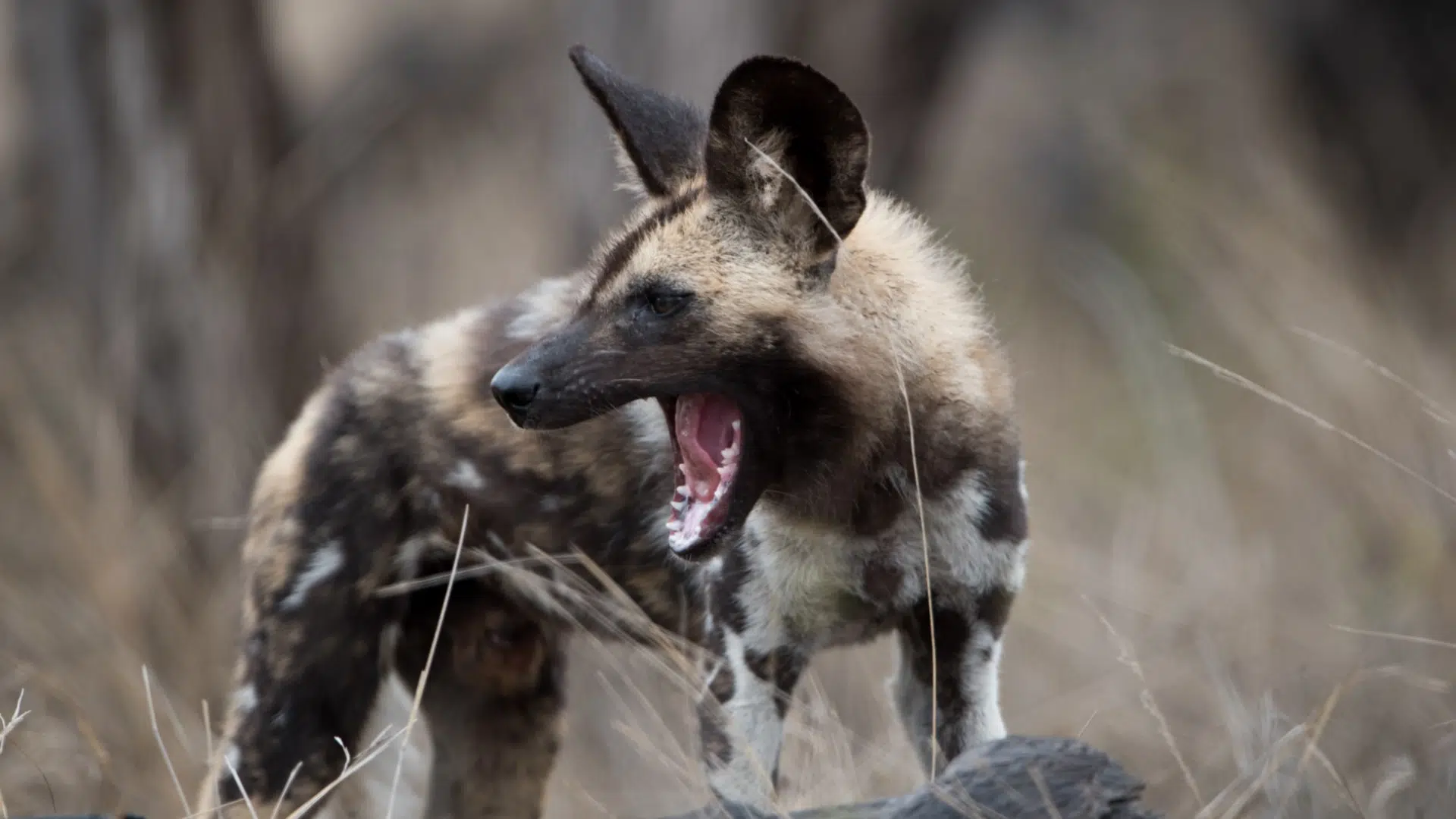
Its mottled coat, rounded ears, long legs, white-tipped tail, and four-toed feet distinguish it from other canids. Common names include painted dog, painted wolf, Cape hunting dog, and African hunting dog.
Although it belongs to the family Canidae alongside wolves and domestic dogs, it follows its own evolutionary branch and remains an undomesticated wildlife species.
Why are They Called Painted Dogs?
The name painted dog refers to the irregular patches of black, white, brown, tan, and yellow across the animal’s coat. The arrangement differs from one individual to another.
These individual patterns allow researchers to identify animals in monitored packs. The white tail tip may also act as a visible signal when pack members move through tall grass or vegetation.
The scientific name Lycaon pictus also refers to the animal’s appearance, with pictus commonly translated as painted or marked.
Where Do African Wild Dogs Live?
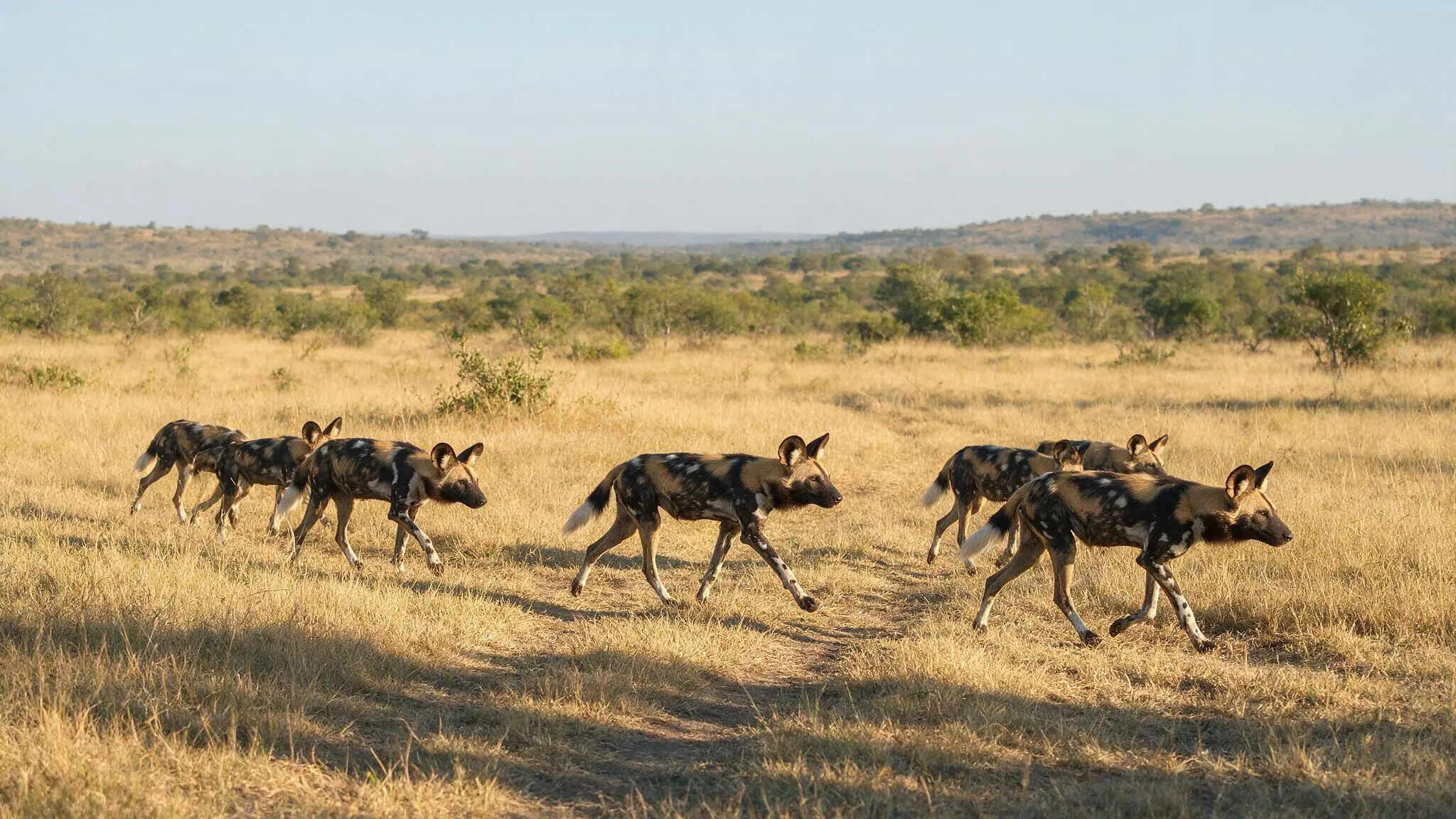
African wild dogs once occupied a much larger area across sub-Saharan Africa. Remaining populations are now scattered mainly across eastern and southern Africa.
They can live in savannas, grasslands, shrublands, open woodlands, dry regions, and some forests when enough prey and roaming space are available.
Important populations remain in Botswana, Zimbabwe, Zambia, Tanzania, Mozambique, Namibia, Kenya, and South Africa.
Packs travel across very large home ranges and often move beyond national parks. Connected wildlife corridors are therefore as important as protected reserves because roads, farms, fences, and settlements can divide their habitat.
African Wild Dog Physical Characteristics
Their lean bodies, long limbs, large ears, and specialized feet suit a highly mobile lifestyle. Several visible features also separate them from wolves and domestic dogs.
- Coat Pattern: Each animal has a different arrangement of black, white, brown, and rust-colored patches. This individual pattern can help researchers identify particular animals in the wild.
- Large Rounded Ears: Their ears help detect calls from pack members, approaching prey, and possible threats. They may also help release body heat in warm conditions.
- Feet and Tail: African wild dogs have four toes on each foot because they lack dewclaws. Their bushy tails usually have white tips, which may help pack members follow one another through tall vegetation.
- Body Size: Adults commonly weigh 40 to 79 pounds and stand about 24 to 31 inches at the shoulder. Measurements can differ slightly across populations and sources.
- Lean Build: Long legs and a light frame support sustained movement while packs search for prey, water, denning sites, or safe resting areas.
Viewed together, their patterned coats, rounded ears, four-toed feet, white-tipped tails, and slender bodies make African wild dogs easy to distinguish from other canids.
African Wild Dog Behavior and Social Life
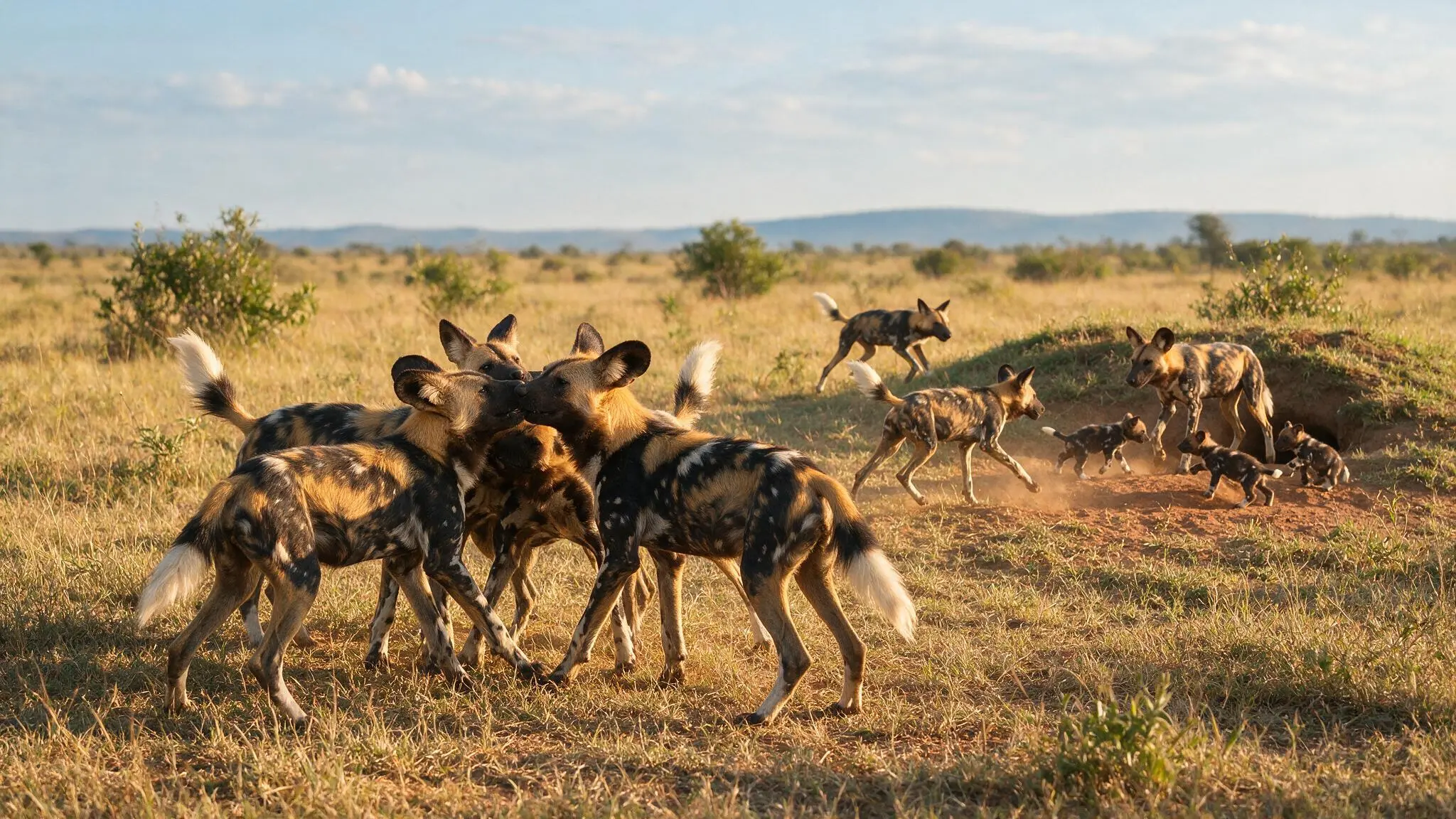
Pack cooperation affects nearly every part of daily life, including movement, feeding, protection, and pup care. Pack size varies, but a group commonly contains related adults, younger animals, and one main breeding pair.
1. Pack Structure
A typical pack includes a breeding male and female, other adults, yearlings, and pups. Membership can change when young animals leave their birth pack and join another group, adjusting to time away from familiar packmates in the process.
Pack members hunt, guard resting areas, share food, and care for pups. Their roles may change based on age, health, social position, and the pack’s immediate needs.
2. Communication Between Pack Members
African wild dogs communicate through contact calls, alarm barks, whines, body positions, facial movements, nose touches, and lively greeting rituals, not unlike how domestic dogs express vocal signs of stress or need at home.
Researchers have also linked repeated sneezing during group rallies with decisions about when a resting pack begins moving. These signals help members stay connected and coordinate their activity.
3. Caring for Puppies
The breeding female usually remains near the den while her pups are young, a period that mirrors the extra attention needed during a puppy’s early growth phase. Other adults hunt, guard the area, and return with regurgitated food for her and the pups.
Older members may also supervise and protect the young. Packs with more capable helpers may have greater support for feeding and defending their pups.
These social habits explain why losing even a few adults can affect feeding, protection, movement, and pup survival throughout the pack.
What Do African Wild Dogs Eat and How Do They Hunt?
African wild dogs are carnivores that commonly target medium-sized antelopes such as impalas and gazelles. They may also take warthogs, wildebeest calves, rodents, birds, and other available animals.
Their hunting methods vary by habitat. Packs observed on open East African plains have used longer pursuits, while a Nature Communications study from Botswana recorded multiple short, opportunistic chases in woodland savanna rather than highly coordinated long-distance pursuit.
Pack members travel and search together, several animals may chase prey at once, and successful kills are shared. Larger groups can improve prey detection, food sharing, carcass defense, and the chance that at least one chase succeeds.
This variation means their hunting cannot be reduced to one fixed method used by every pack.
How they Differ from Wolves, Hyenas and Domestic Dogs
Similar body shapes can cause confusion, but these animals belong to different evolutionary groups. Taxonomy, range, social structure, and domestication provide the clearest distinctions.
| Feature | African Wild Dog | Gray Wolf | Spotted Hyena | Domestic Dog |
|---|---|---|---|---|
| Family | Canidae | Canidae | Hyaenidae | Canidae |
| Genus | Lycaon | Canis | Crocuta | Canis |
| Native Range | Sub-Saharan Africa | North America, Europe, and Asia | Sub-Saharan Africa | Worldwide with people |
| Social Unit | Pack | Family-based pack | Clan | Varies |
| Domesticated | No | No | No | Yes |
The African wild dog is a canid, but it is not a wolf or domestic breed. Hyenas are more distantly related because they belong to a separate mammal family.
Why are African Wild Dogs Endangered?
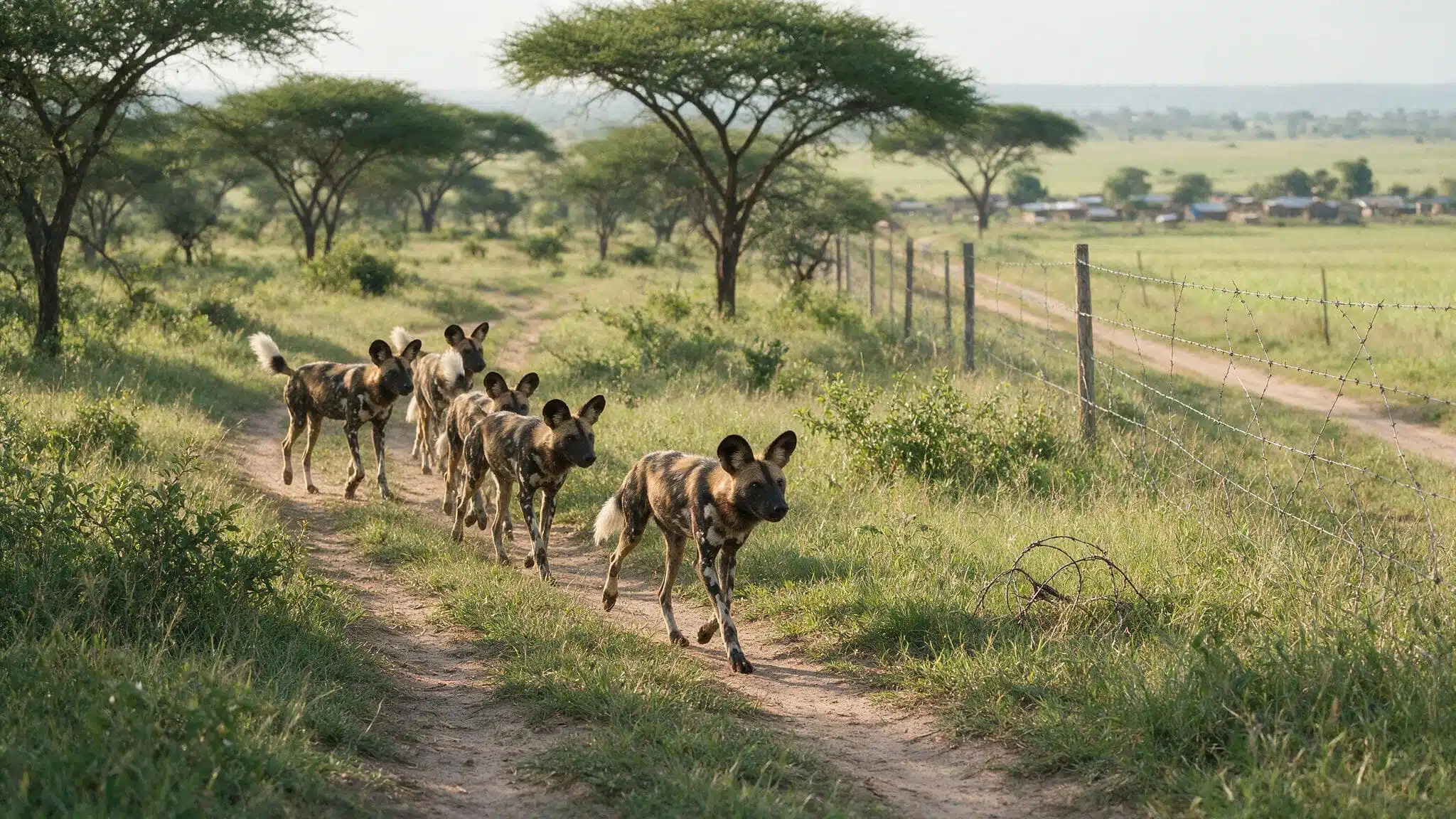
The species is classified as Endangered, and remaining packs are spread across fragmented areas of sub-Saharan Africa. The U.S. Fish and Wildlife Service has listed it as Endangered under U.S. law since 1984.
Major threats include:
- Habitat Fragmentation: Roads, farms, fences, and settlements divide large roaming areas.
- Conflict With People: Wild dogs may be killed after real or suspected livestock losses.
- Infectious Disease: Rabies and canine distemper can spread from domestic animals.
- Accidental Snaring: Snares placed for other wildlife can injure or kill pack members.
- Road Deaths: Wide-ranging packs frequently cross roads outside protected areas.
- Larger Predators: Lions can kill adults and pups, especially in smaller packs.
- Reduced Prey: Lower prey numbers force packs to travel farther for food.
Because packs depend heavily on cooperation, losing only a few adults can reduce hunting capacity, pup care, and group stability.
Conservation Efforts for Painted Wild Dogs
Protected reserves remain important, but packs often travel beyond park boundaries. Conservation work must connect habitat protection with help from nearby communities.
Current actions include protecting wildlife corridors, monitoring packs with tracking collars, removing snares, reducing road deaths, vaccinating domestic dogs, improving livestock enclosures, and warning herders when packs enter grazing areas.
The African Wildlife Foundation supports community monitoring and stronger livestock enclosures in landscapes shared by people and wild dogs.
These measures address threats both inside and outside reserves, where many packs spend part of their time.
Are African Wild Dogs Dangerous to People?
African wild dogs are powerful hunters, but they are not commonly associated with attacks on people. Their natural diet consists mainly of wild prey rather than humans.
They remain undomesticated predators and should never be approached, surrounded, fed, or handled. Visitors should stay inside vehicles or follow instructions from trained wildlife staff.
Respectful viewing protects people and animals by preventing stress, food conditioning, and unsafe close contact. Their avoidance of people should never be treated as permission to approach them.
Final Thoughts
The African wild dog is defined by more than its patterned coat. Pack cooperation shapes how it hunts, communicates, feeds young, and survives across large areas of sub-Saharan Africa.
The painted wild dog remains endangered, as habitat fragmentation, snares, road deaths, human-wildlife conflict, and diseases transmitted by domestic animals continue to affect scattered populations.
Protected reserves help, but connected habitat, community partnerships, veterinary programs, and careful population monitoring are also necessary.
These animals should remain wild and be viewed only from a safe distance.
Share these facts, support evidence-based conservation groups, and choose wildlife experiences that respect animals and local communities. Responsible interest can keep attention on the species without disturbing it.
Frequently Asked Questions
Can They Be Kept as Pets?
No. They are undomesticated pack predators with extensive space, social, dietary, and behavioral needs. Keeping one in a household would be unsafe and unsuitable, while possession or import may also be restricted by wildlife laws.
How Far Does a Pack Roam?
A pack may use hundreds of square miles, with the exact range changing by habitat, prey, season, and pack size. Their wide movements often carry them beyond reserve boundaries, increasing their contact with roads, livestock, and people.
What Happens to Injured Pack Members?
Pack members have been observed supporting sick, injured, and young animals by sharing food and providing group protection. The response differs by situation, and severely injured individuals still face major risks from hunger, predators, infection, or separation.