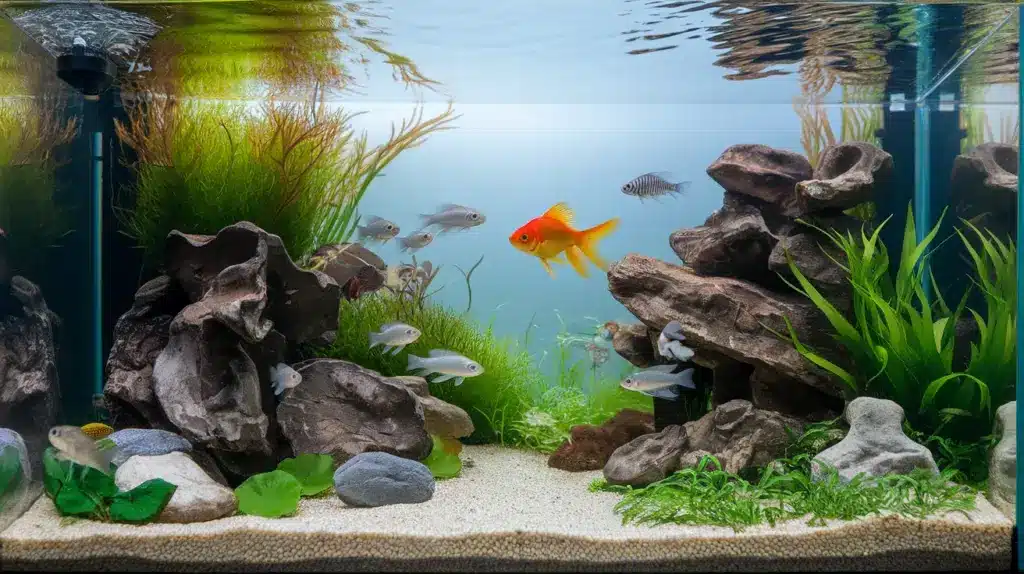
We know that moment. You’re standing in front of the tank, watching your goldfish glide around alone, and you start wondering: does she get lonely in there? Maybe you’ve even opened a new tab and started Googling “what fish can live with goldfish” at 11 p.m., half-hoping there’s a simple answer.
Here’s the honest one: it’s not as simple as “goldfish are peaceful, so almost anything works.”
Goldfish have their own quirks, cooler water needs, a surprising amount of waste for their size, and appetites that don’t always leave much for a smaller neighbor.
Adding a tankmate can absolutely work, but it takes a little more thought than tossing in whatever looks cute at the store.
So let’s walk through it together: what actually works, what to skip, and how to introduce a new fish without stressing anyone out.
Quick Answer: Best Goldfish Tankmates at a Glance
Before choosing a companion, it helps to see which options generally match goldfish requirements. The best choices are usually cold-water species that can handle similar conditions and are not aggressive.
| Tankmate | Why It Can Work | Best For |
|---|---|---|
| White Cloud Mountain Minnows | Cold-water compatible and peaceful | Active community tanks |
| Zebra Danios | Hardy and fast swimmers | Larger goldfish setups |
| Hillstream Loaches | Prefer cooler, oxygen-rich water | Mature aquariums |
| Dojo Weather Loaches | Similar temperature needs | Large tanks |
| Rosy Barbs | Active and colorful | Experienced owners |
| Bristlenose Plecos | Bottom-dwelling behavior | Larger aquariums |
| Mystery Snails | Non-fish companion option | Goldfish owners wanting variety |
A compatible species still needs enough space, proper filtration, and monitoring after introduction.
Why Goldfish are Tricky Tankmates
Goldfish may seem easy to care for, but finding suitable tankmates can be difficult. Understanding how to take care of goldfish first makes it much easier to judge whether your aquarium can support other species. Their water-temperature needs, waste production, adult size, and swimming ability all affect compatibility.
- Cooler water requirements: Many common aquarium fish are tropical species that need warmer water than goldfish. Bettas, guppies, and many tetras are usually unsuitable because keeping them together may force one species outside its preferred temperature range.
- High waste production: Goldfish produce considerable waste, increasing the aquarium’s biological load. Every added fish places more demand on the filtration system and maintenance routine. Even a compatible species may struggle if water quality becomes unstable.
- Different goldfish body types: Fancy goldfish are generally slower swimmers and may have long, easily damaged fins. Common and comet goldfish are faster, more active, and capable of reaching larger adult sizes.
- Competition for food: Quick tankmates may consume food before fancy goldfish can reach it. Slow or visually impaired varieties may need careful feeding and regular monitoring to ensure they receive enough nutrition.
- Adult size differences: A tankmate that appears suitable when young may become too small, too large, or too competitive as the fish mature. Base compatibility on adult size rather than current size.
Your goldfish’s variety, swimming ability, expected adult size, and aquarium conditions should shape every tankmate decision.
Fish That Can Live with Goldfish
These species are considered better options because their care needs overlap more closely with goldfish requirements. However, every tank setup is different, so size, filtration, and individual fish behavior still matter. If you’re still deciding what to keep, some easy aquarium fish for beginners may be better suited to a first tank than a mixed goldfish setup.
1. White Cloud Mountain Minnows
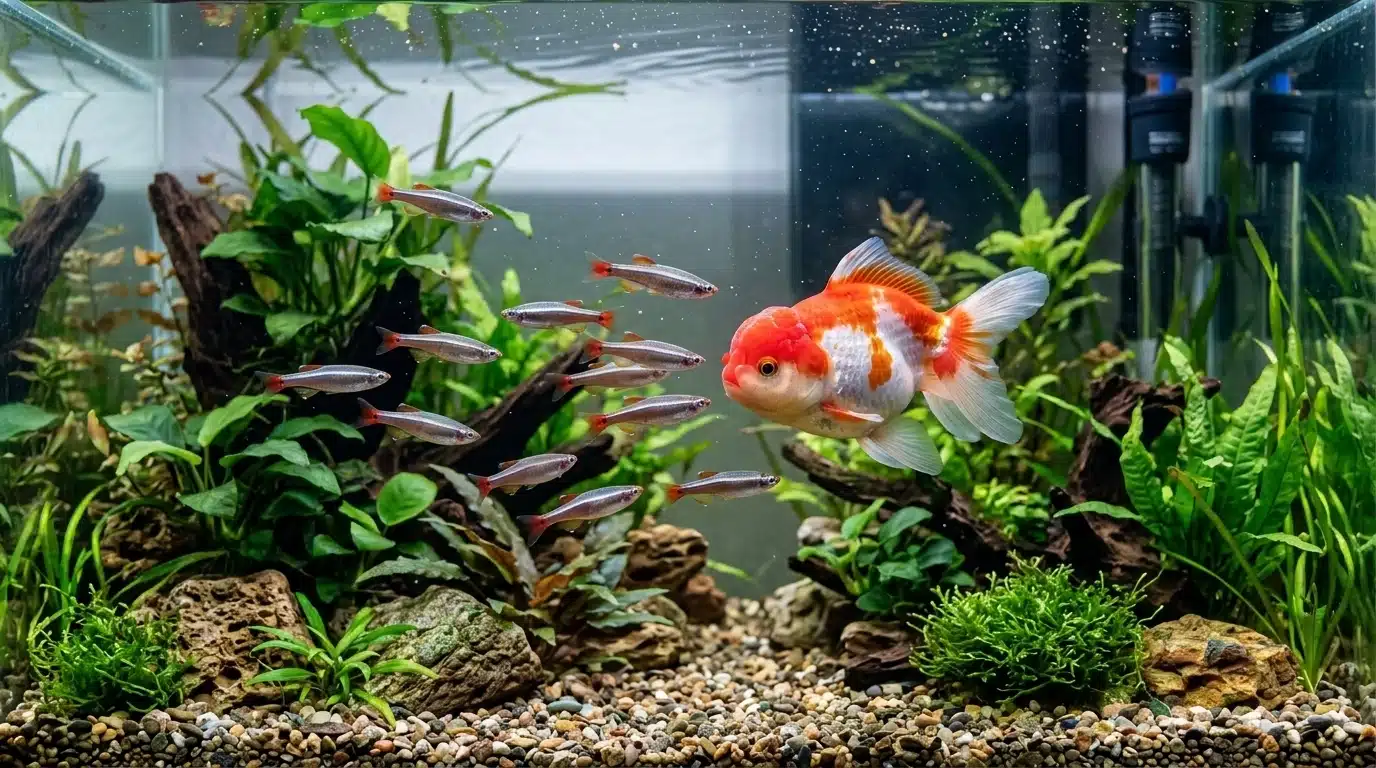
White Cloud Mountain Minnows tolerate cooler water and have peaceful schooling behavior, making them a possible companion for Goldfish. However, their small size makes them risky with larger Goldfish that may eat them.
They are better suited for experienced keepers with smaller, calm Goldfish and proper hiding spaces. A well-planted tank can improve their chances of staying safe.
Best for: smaller goldfish varieties with suitable tank conditions.
2. Zebra Danios
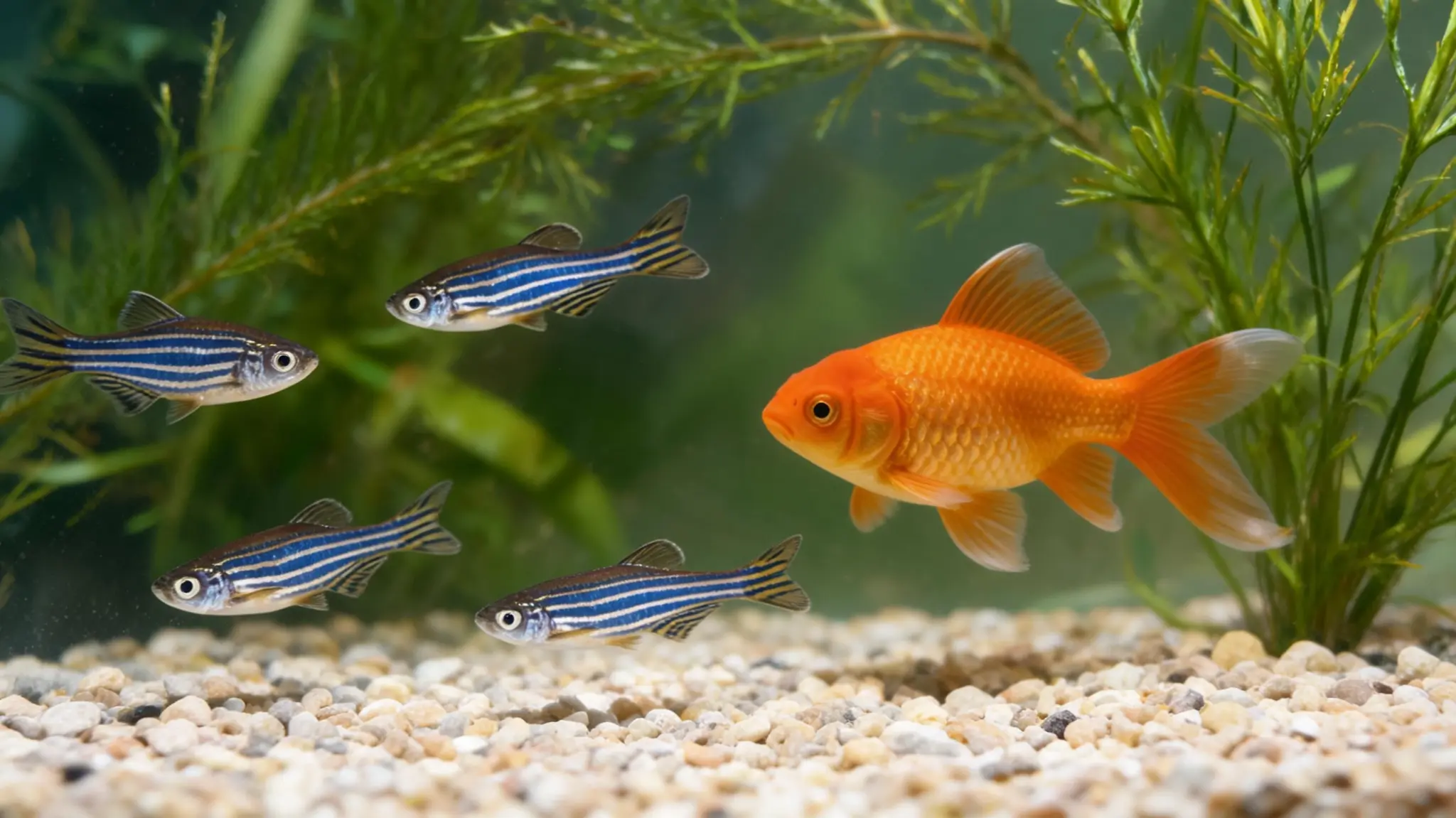
Zebra Danios are hardy, active fish that can handle a range of freshwater conditions. Their quick swimming ability helps them avoid slow-moving Goldfish, making them a possible option for larger tanks.
They should be kept in groups because they are schooling fish. Their activity level also means they need enough swimming space and may not be ideal for small goldfish aquariums.
Best for: larger tanks with active filtration and enough open swimming room.
3. Hillstream Loaches
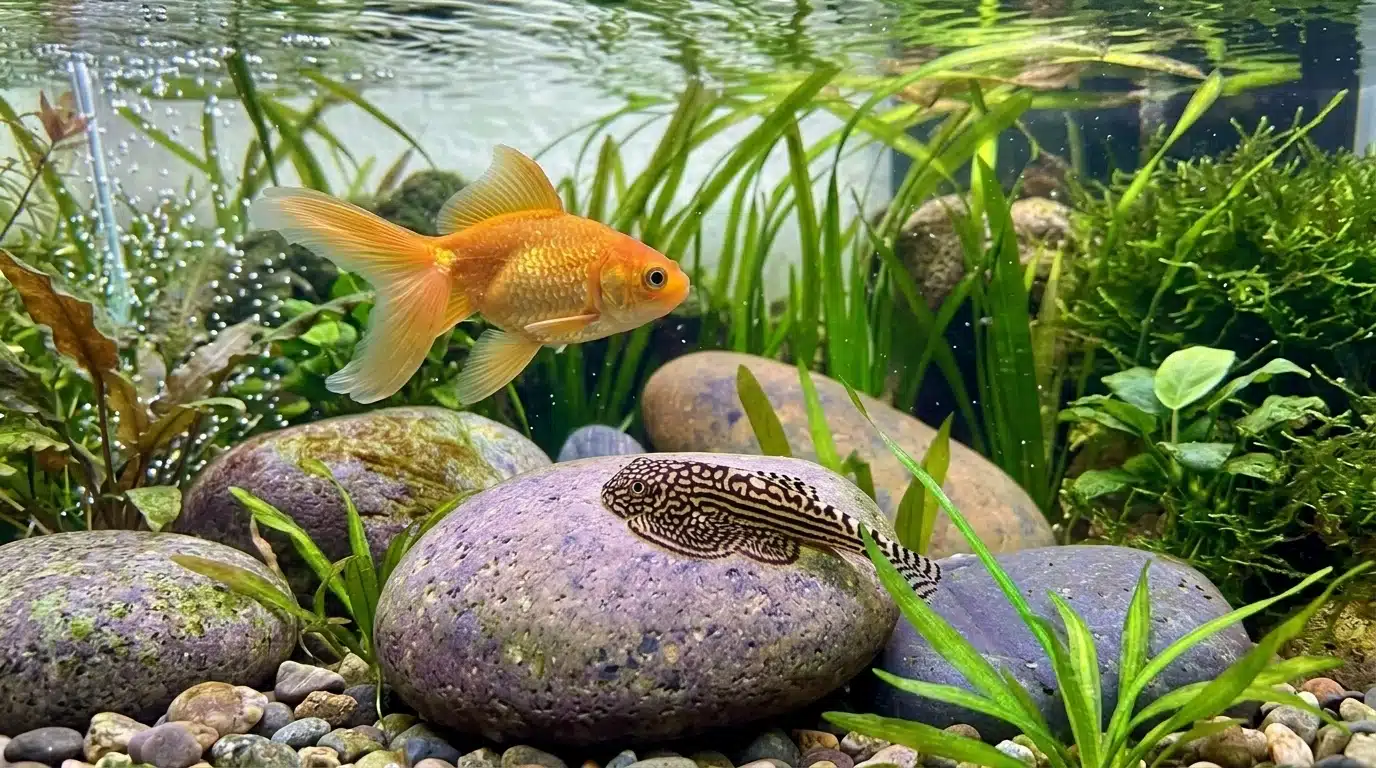
Hillstream Loaches have different habits from most aquarium fish because they spend much of their time attached to surfaces and searching for algae. They prefer cooler, well-oxygenated water, which can overlap with some goldfish setups.
They are better suited to mature tanks with stable conditions. Their peaceful nature makes them less likely to bother Goldfish, but they still require proper care.
Best for: established aquariums with strong water movement.
4. Dojo Weather Loaches
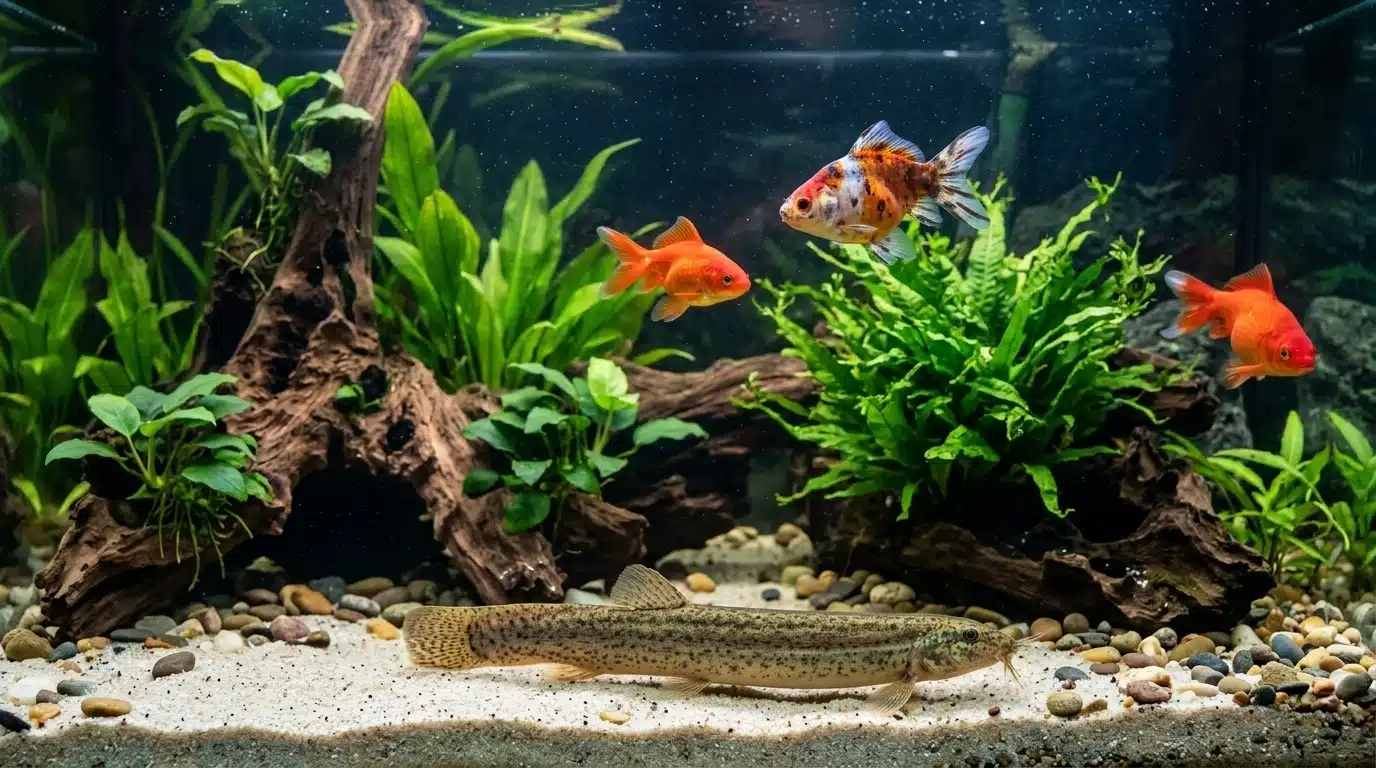
Dojo Weather Loaches are often considered a good match because they tolerate cooler temperatures and are peaceful. They are active bottom dwellers that usually avoid competing directly with Goldfish.
Their larger adult size means they need plenty of space. They are not suitable for small tanks, and owners should plan for their long-term growth.
Best for: large aquariums and pond-style setups.
5. Rosy Barbs
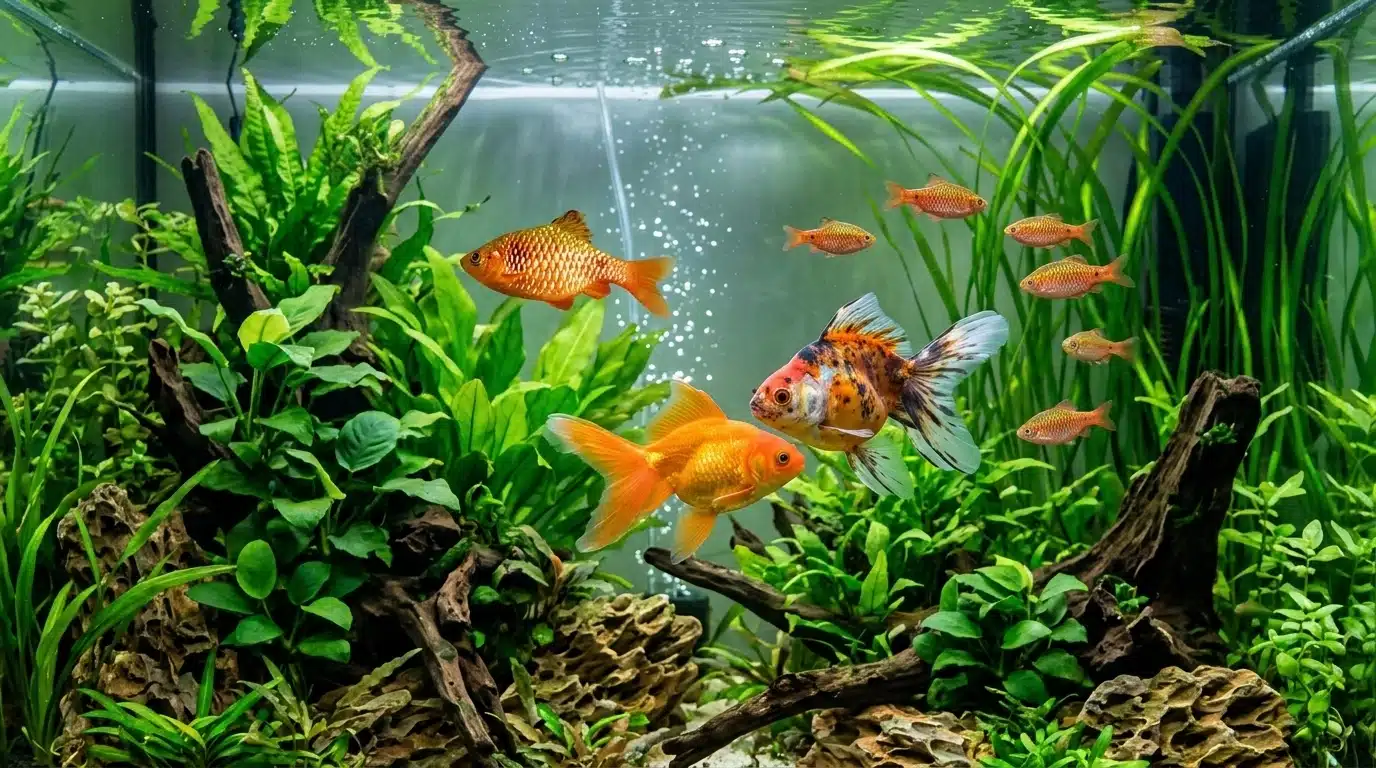
Rosy Barbs can work in some goldfish setups because they are hardy and tolerate cooler freshwater conditions better than many tropical fish. Their bright colors also appeal to owners who want a more active display.
However, they require caution because some barbs may become fin nippers. They are better suited for larger tanks where fish have enough room.
Best for: experienced owners monitoring behavior carefully.
6. Bristlenose Plecos
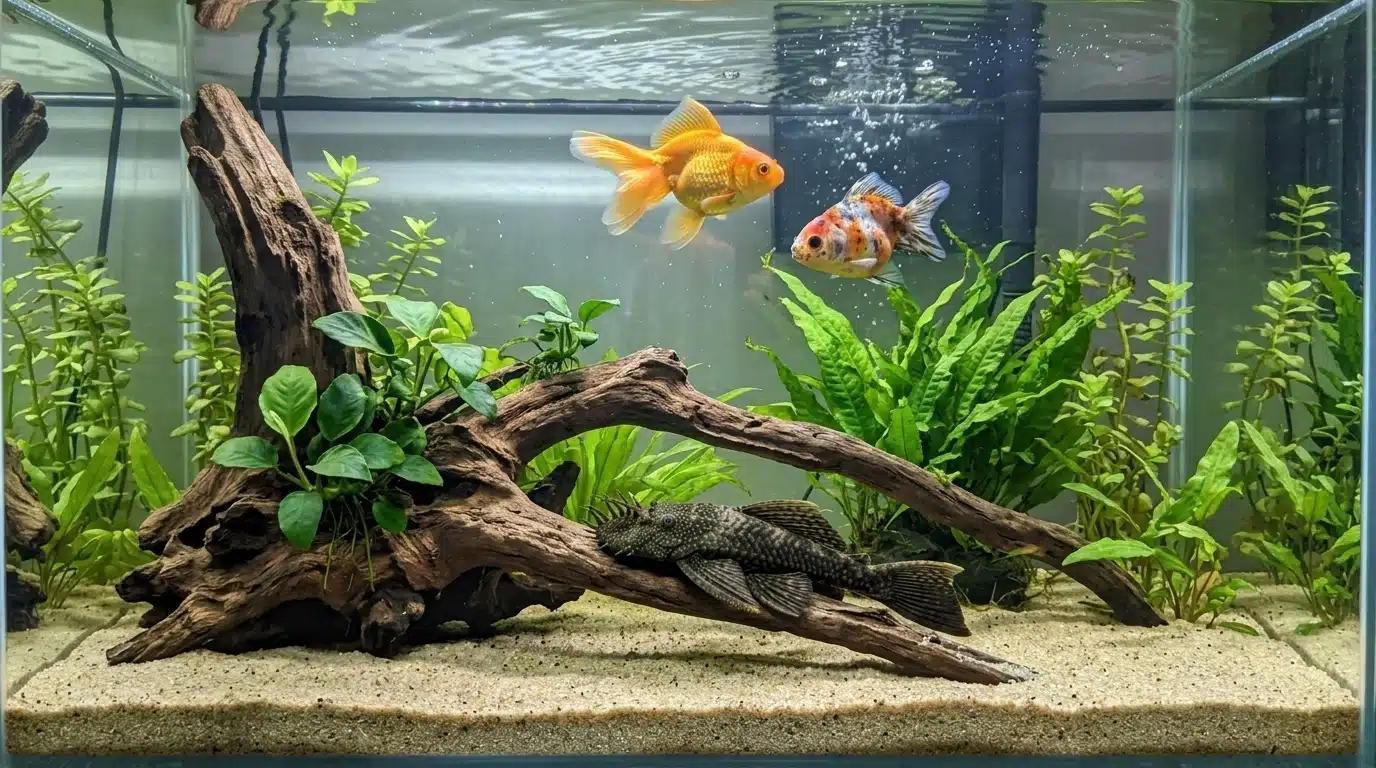
Bristlenose Plecos are often considered because they stay near the bottom and have a different swimming pattern from Goldfish. They can add variety while spending less time competing in open water.
However, they are not a replacement for tank maintenance. They still produce waste and need proper feeding, hiding spaces, and suitable water conditions.
Best for: larger tanks with owners who understand their care needs.
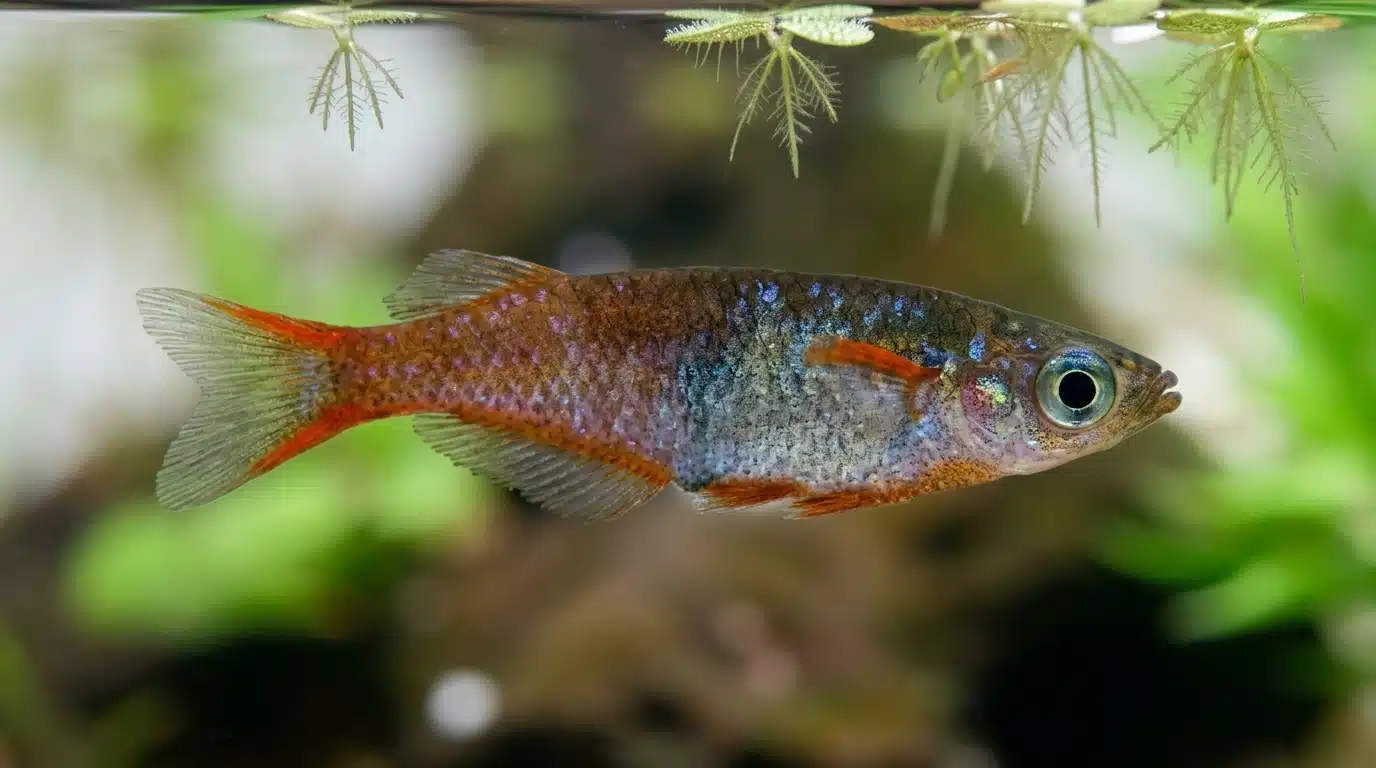
7. Celestial Pearl Danios
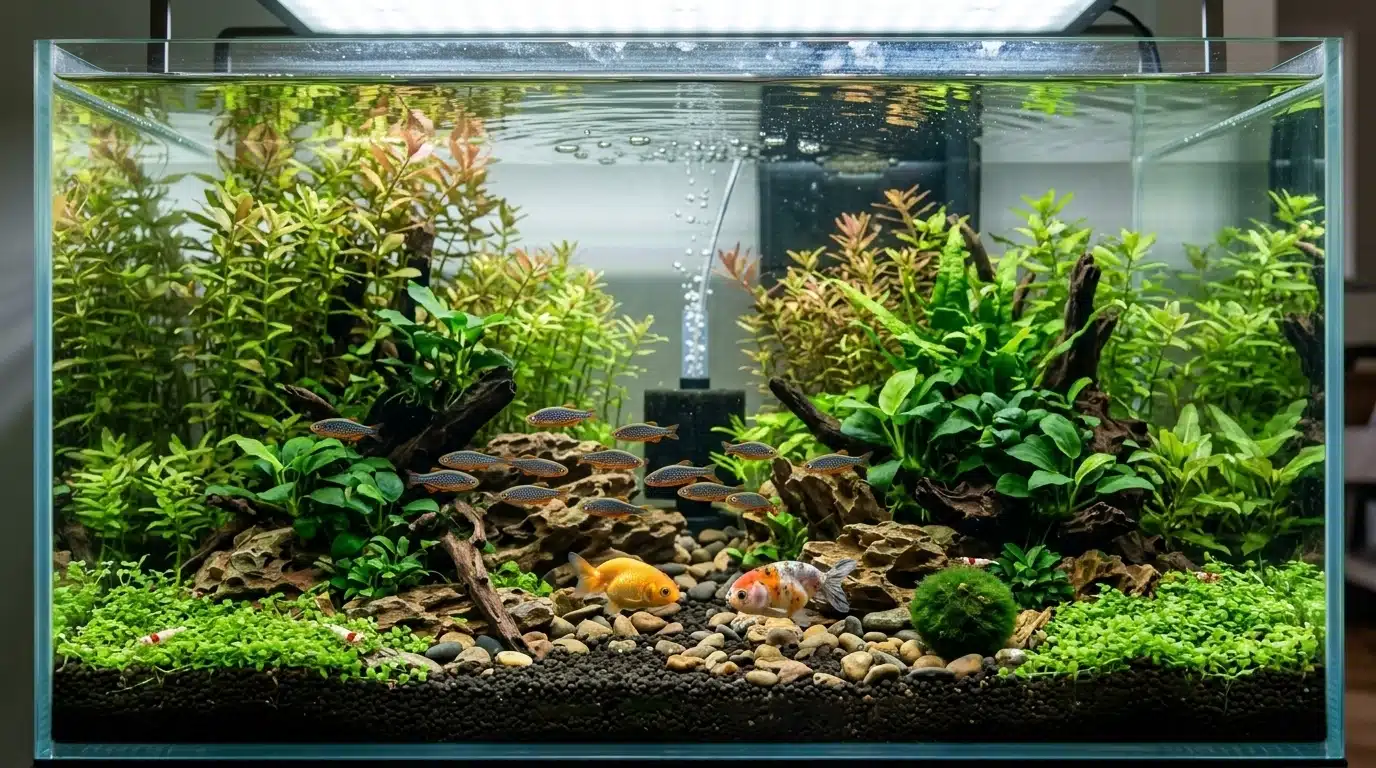
Celestial Pearl Danios are small, peaceful fish with spotted patterns that prefer cooler water than many tropical species. They may suit some goldfish setups, but their size is the main concern.
Larger Goldfish may mistake them for food, especially without plants or hiding areas. Compatibility depends on goldfish size, temperament, and tank design.
Best for: carefully planned tanks with smaller, calm goldfish varieties.
8. Ricefish
Ricefish are peaceful freshwater fish that tolerate cooler temperatures and have calm behavior. They can be considered for some goldfish aquariums, but their small size creates a risk.
Larger Goldfish may eat them if they are small enough to fit in their mouths. Proper tank planning and matching fish sizes are important for success.
Best for: larger aquariums with compatible goldfish sizes.
9. Giant Danios
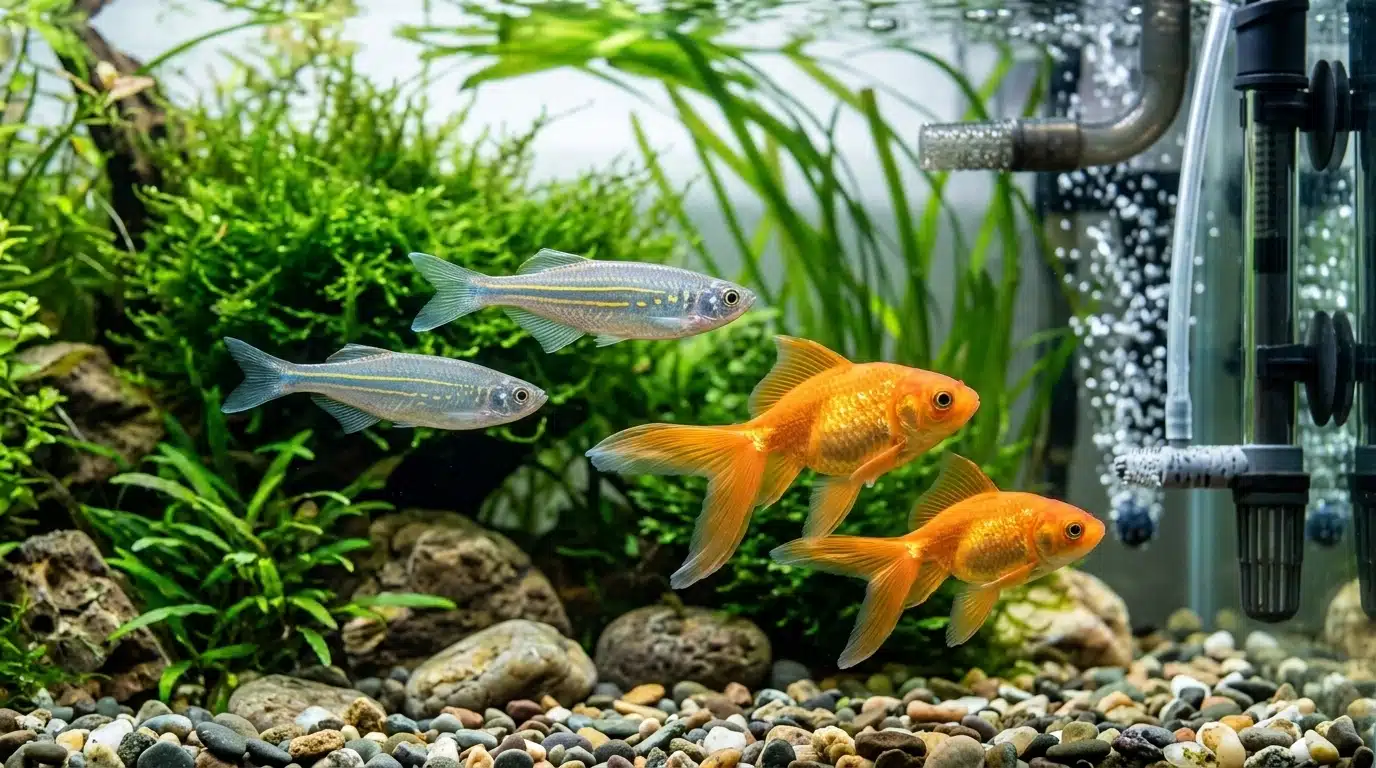
Giant Danios are larger, active swimmers that may work better than smaller danios in some goldfish setups. They are peaceful when kept in groups but need enough space and suitable water conditions.
Their activity level may not suit every aquarium, so they are better for owners managing larger, more active tanks.
Best for: spacious tanks with active goldfish varieties.
10. Rubber Lip Plecos
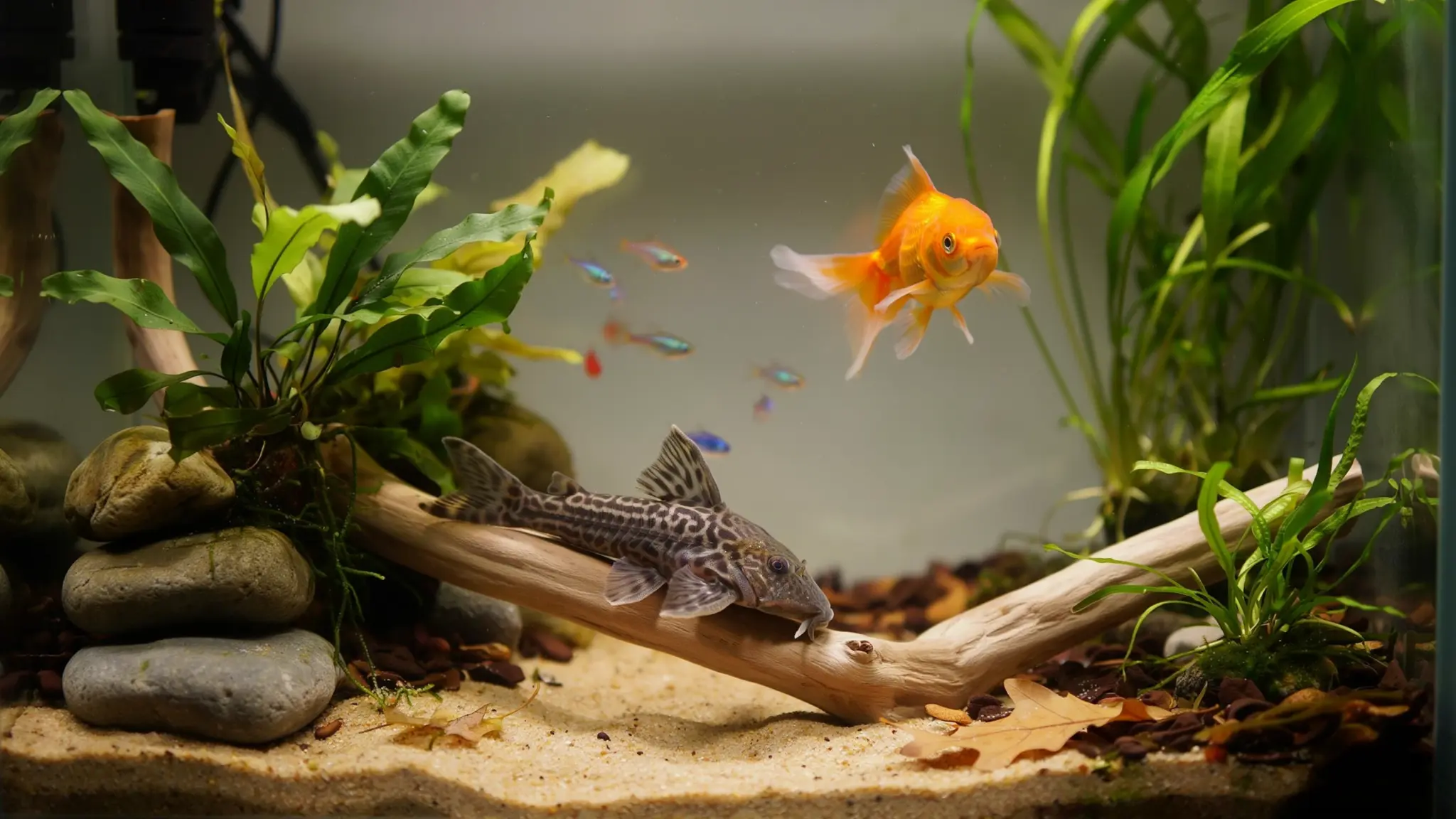
Rubber Lip Plecos are peaceful bottom-dwelling fish that may suit larger goldfish aquariums. They usually stay away from the Goldfish’s main swimming areas but still need proper feeding, hiding spaces, and stable water conditions.
Don’t add them only for algae control, because they have their own care requirements and increase the tank’s overall waste load.
Best for: larger aquariums with stable water conditions.
11. Hoplo Catfish
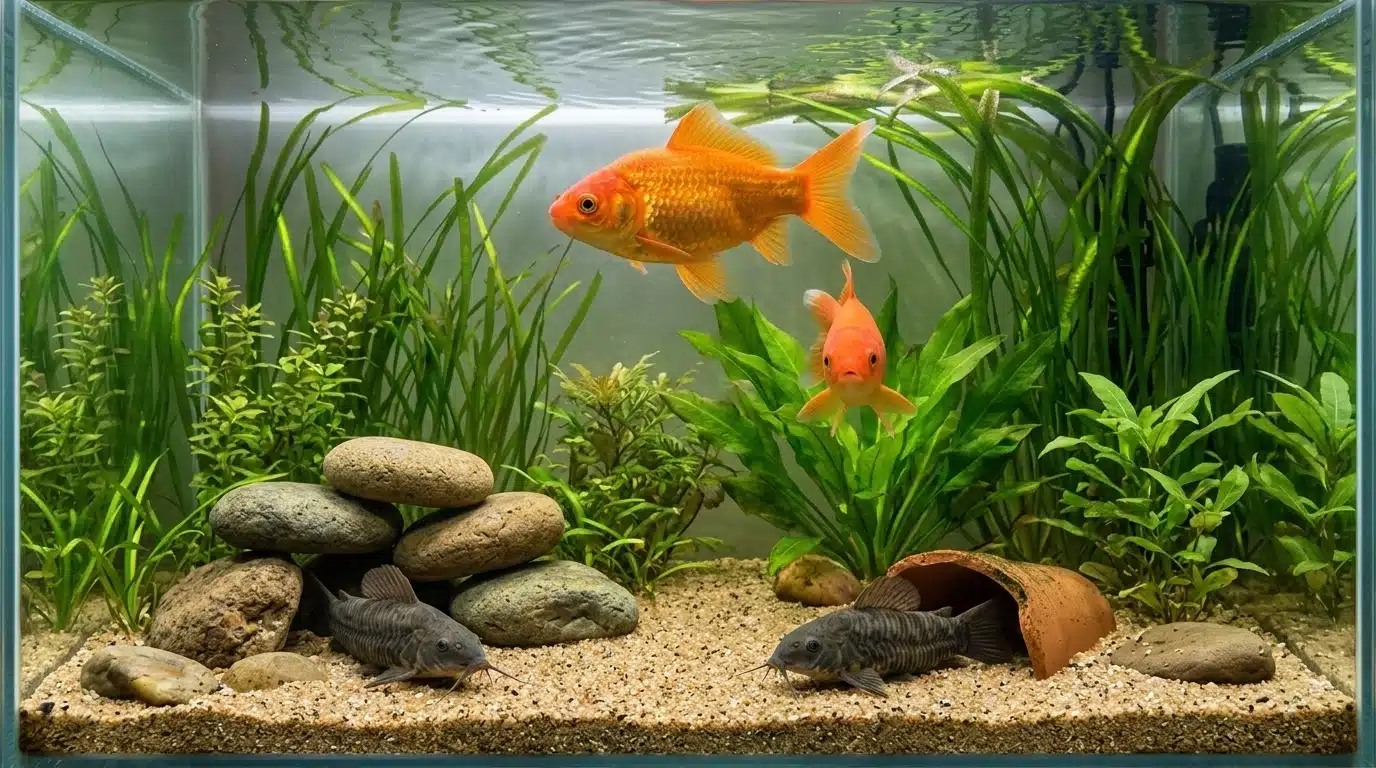
Hoplo Catfish are calm bottom-dwelling fish that can tolerate a wider range of conditions than some tropical species. Their bottom-dwelling habits may reduce direct competition with goldfish, but their temperature needs must still match the aquarium setup.
They require enough space, good filtration, and careful observation after introduction to maintain a healthy environment. Their peaceful nature makes them a possible choice for larger goldfish tanks with stable water conditions.
Best for: larger tanks with stable filtration.
Best Cleanup Crew for a Goldfish Tank
Many goldfish owners look for algae eaters or cleanup animals, but no tankmate can replace proper filtration and maintenance. These options may help add variety when conditions are suitable.
12. Mystery Snails
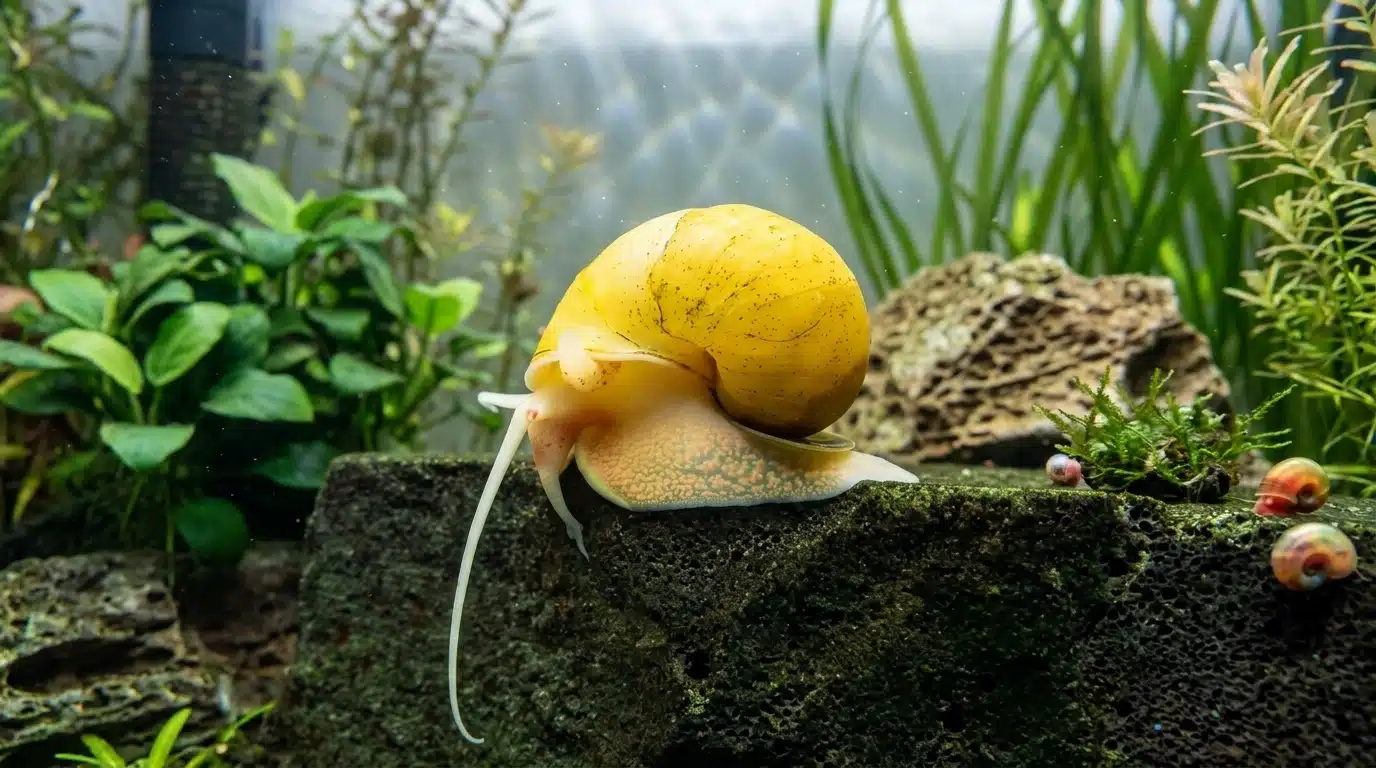
Mystery snails are one of the larger freshwater snails commonly considered for goldfish aquariums. Their size makes them less likely to be eaten compared with smaller snails, although some goldfish may still try.
They can help consume leftover food and algae but still require proper care. Owners should monitor interactions because goldfish behavior varies greatly between individuals.
Best for: owners wanting a non-fish companion option.
13. Nerite Snails
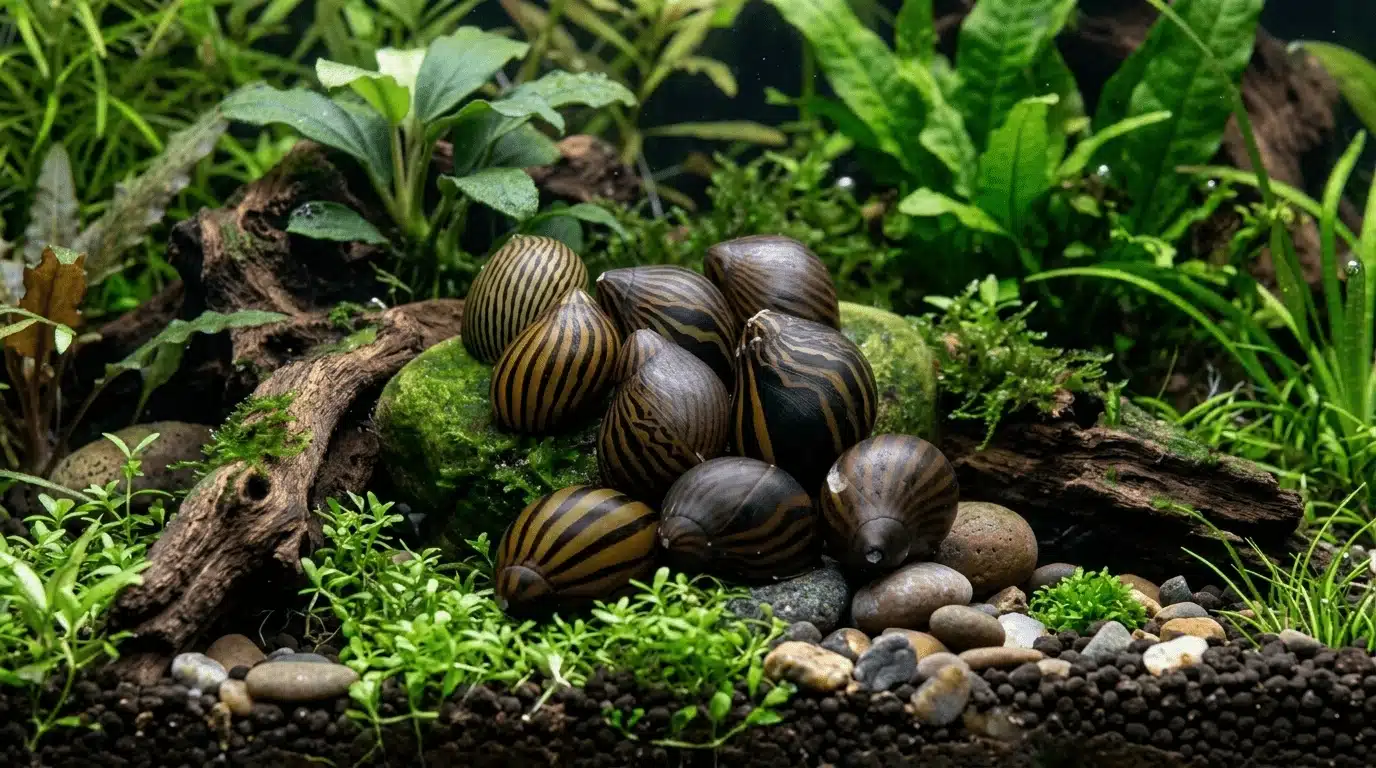
Nerite snails are popular because they are effective algae grazers and generally do not reproduce uncontrollably in freshwater tanks. Their hard shells also provide some protection from curious Goldfish.
However, they are not guaranteed to work in every setup. Some goldfish may still harass or attempt to eat them, especially if the snail is small.
Best for: established tanks where goldfish behavior is calm.
Fish and Animals to Avoid with Goldfish
Not every peaceful aquarium species is a suitable goldfish companion. Temperature mismatches, aggression, and different feeding habits can create problems even when two species seem harmless on the surface.
| Species/Group | Ideal Temp Range | Compatible With Goldfish (65–72°F)? | Why It’s a Poor Match |
|---|---|---|---|
| Bettas | 76–82°F | No | Tropical range; also territorial toward slower tankmates |
| Guppies | 72–82°F | Only at Goldfish’s warmest tolerance | Overlap is too narrow to sustain long-term |
| Tetras (most) | 75–80°F | No | Tropical community fish, stressed below ~72°F |
| Angelfish | 76–84°F | No | Tropical + territorial; can nip fancy Goldfish’s thin fins |
| Cichlids (most) | 75–82°F | No | Aggressive/territorial on top of temperature mismatch |
| Tiger Barbs / aggressive barbs | 74–79°F | No | Known fin-nippers even before factoring in temperature |
Before adding any fish, compare its temperature range and behavior to your Goldfish’s needs; a peaceful reputation alone doesn’t guarantee compatibility.
How Much Tank Space Do Goldfish Tankmates Need?
Tank size determines whether adding companions to a goldfish setup is practical. More space allows better water quality, easier maintenance, and healthier conditions for both Goldfish and tankmates.
- 20 Gallons: Goldfish alone, no companions: At this size, the Goldfish itself needs most of the swimming room and filtration capacity. Adding any tankmate pushes bioload past what’s sustainable.
- 30 Gallons: Very limited options: Only viable with a single small goldfish and one small coldwater companion (e.g., a few White Cloud Minnows). Filtration still has to work hard.
- 55+ Gallons: Room for a real pairing: This is where most of the species covered above become realistic enough for active tankmates and have enough water volume to buffer the extra waste.
- Pond Setup: Most flexibility: Space stops being the limiting factor; filtration and seasonal temperature swings become the main planning concerns instead.
A larger tank or pond provides more flexibility, but space alone is not enough. Proper filtration, stocking choices, and regular care are still essential for a stable goldfish environment.
Reddit Opinions on Keeping Tankmates with Goldfish
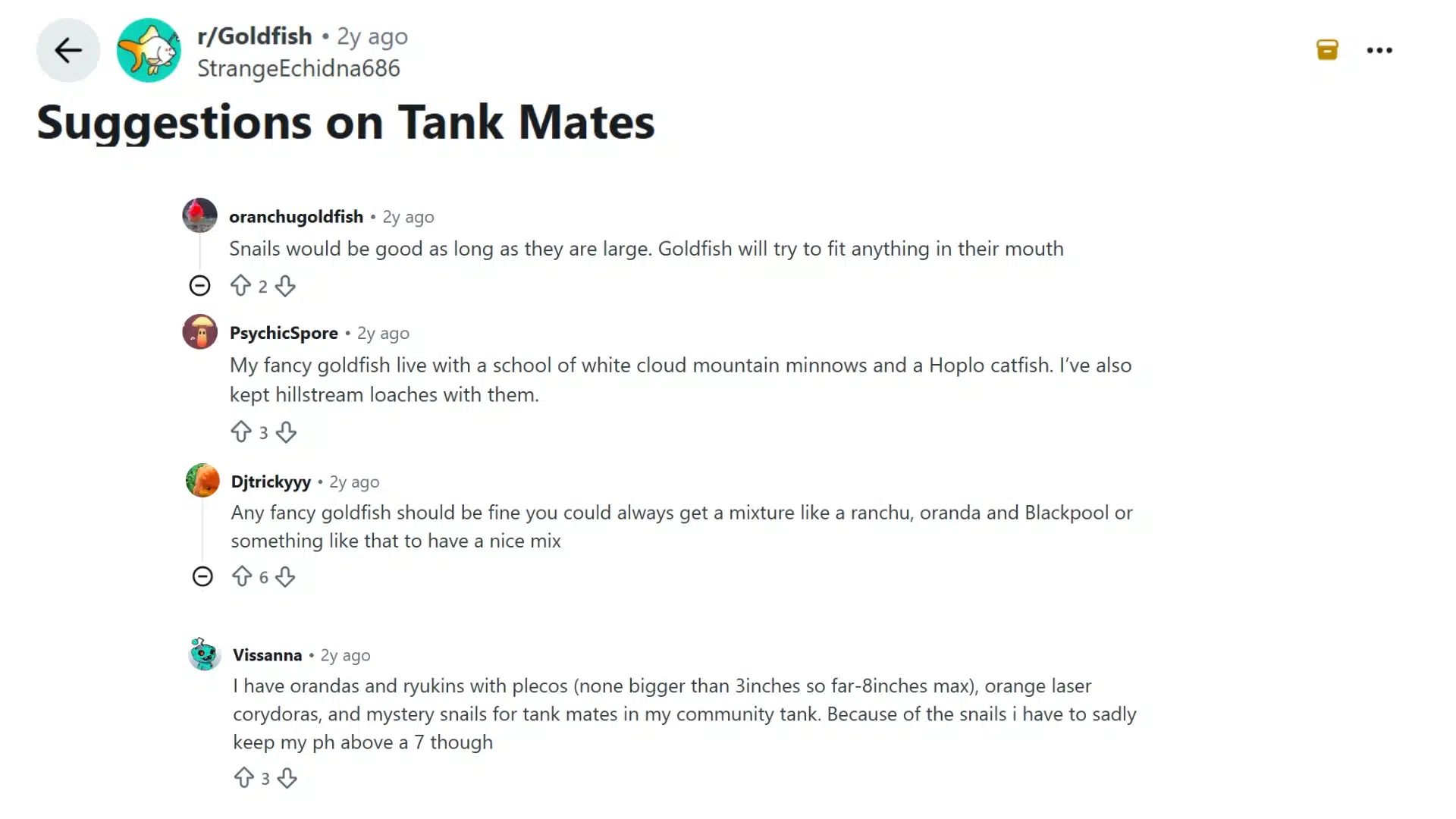
Adding tankmates is not always necessary. Many goldfish owners prefer single-species tanks because fewer fish usually means easier maintenance, better water quality control, and less competition for food.
Goldfish keepers often discuss tankmate choices on Reddit, with many recommending that owners first check tank size, filtration, and their Goldfish’s behavior before adding another species.
A setup that appears empty may already have the right balance for the fish living inside.
Before choosing a companion, consider whether the aquarium can handle the extra waste, whether the Goldfish has enough swimming space, and whether the new animal has similar care needs.
If the tank is already difficult to maintain, adding more fish may create more problems instead of improving the setup.
How to Introduce a New Fish to a Goldfish Tank
Add a new fish slowly to reduce stress and avoid sudden changes in the aquarium. Even compatible species need time to adjust to a new environment.
- Quarantine The New Fish First: Keep the new fish in a separate tank for a few weeks to check for illness and prevent introducing diseases to the main aquarium.
- Match Water Conditions Before Adding: Make sure temperature and water parameters are similar between the two tanks. Sudden changes can stress both the new fish and your Goldfish.
- Add The Fish During A Calm Period: Introduce new tankmates when the aquarium is stable. Rearranging decorations or adding hiding spaces can help reduce territorial behavior.
- Monitor Feeding and Behavior: Watch for signs of stress, chasing, fin damage, or food competition. Some problems may appear after several days rather than immediately.
Careful introductions, proper space, and stable water conditions help create a healthier tank. If problems continue, separating the fish may be the safest option.
Final Thoughts
Finding out what fish can live with Goldfish requires more than choosing species that appear peaceful.
Temperature needs, swimming speed, adult size, waste production, and tank space all affect whether a combination can work long term.
Cold-water species like white cloud minnows, zebra danios, and certain loaches may work in carefully planned setups, while many tropical fish are better kept separately. The type of Goldfish also matters because fancy varieties and common Goldfish have different needs.
Before adding any companion, consider your tank’s size and maintenance routine. A healthy goldfish setup with fewer fish is often better than an overcrowded aquarium. Have you successfully kept tankmates with Goldfish, or did you decide to keep a single-species tank? Share your experience below.
Frequently Asked Questions
Can Goldfish Live Alone Without Tankmates?
Yes, Goldfish can live alone and do not require another fish for companionship. A properly maintained single-goldfish aquarium can provide a healthy environment when space, filtration, and care needs are met.
Can Goldfish Live with Snails?
Some goldfish can live with larger snails like mystery snails or nerite snails, but success depends on the individual fish. Some goldfish may attempt to eat smaller tank inhabitants.
What is the Easiest Goldfish Tankmate for Beginners?
No single beginner-friendly choice is guaranteed because tank size and goldfish behavior matter. Larger snails or carefully selected cold-water species may work better than random community fish.
Do Goldfish Eat Smaller Tankmates?
Goldfish may eat smaller fish or animals that fit into their mouths. This is more likely with larger goldfish varieties or when tankmates are very small.
How Do I Know If a Fish is Safe with Goldfish?
Check temperature needs, adult size, behavior, and care requirements before adding a fish. A peaceful personality alone does not guarantee compatibility.