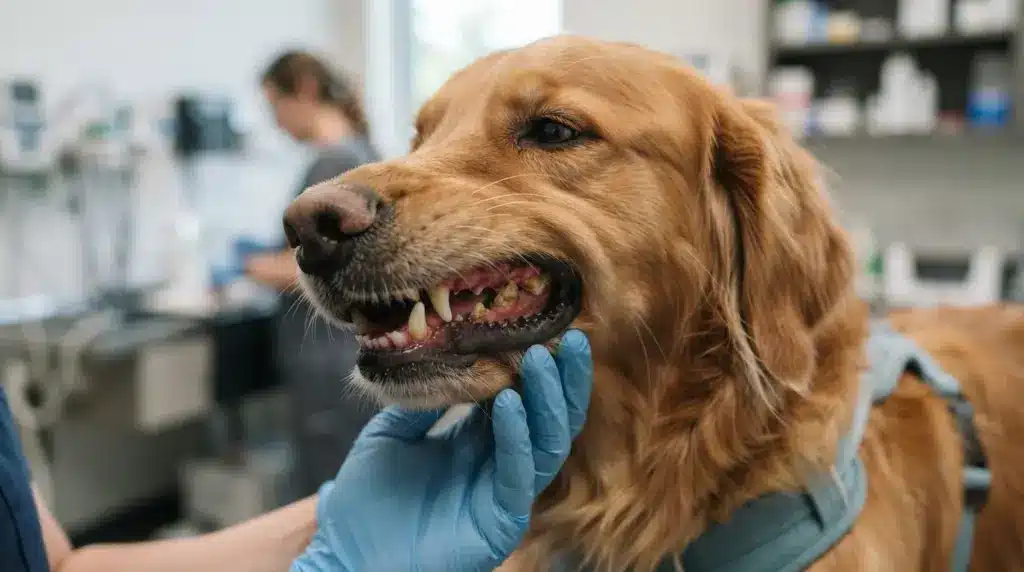
A quick look at your dog’s gums can reveal changes that deserve attention before other signs become obvious. The useful clues are color, moisture, texture, and how quickly color returns after gentle pressure.
Healthy dog gums are usually pink, smooth, and moist, although stable dark pigmentation may be normal for your dog.
If you are asking what do pale gums look like in dogs, compare the tissue with your dog’s usual pink areas rather than another pet’s mouth. When a dog’s gums are red, location and accompanying symptoms help separate gum irritation from a possible emergency.
The sections below explain normal gum appearance, how to perform a capillary refill test, and when veterinary care should not wait.
Why Checking Your Dog’s Gums Matters
Checking your dog’s gums regularly helps establish what is normal for them. It may also reveal changes that deserve veterinary attention.
Look at the gums when your dog is calm and comfortable. Pay attention to their usual color, moisture, texture, and natural pigmentation. Some dogs have stable black or brown patches, so compare future checks with your own dog’s baseline rather than another dog’s mouth.
Gum appearance can provide clues about oral health, circulation, hydration, and possible illness. However, color or texture alone cannot confirm a medical problem.
Treat these checks as a way to recognize and report unusual changes, not as a substitute for a veterinary examination.
What Do Healthy Dog Gums Look Like?
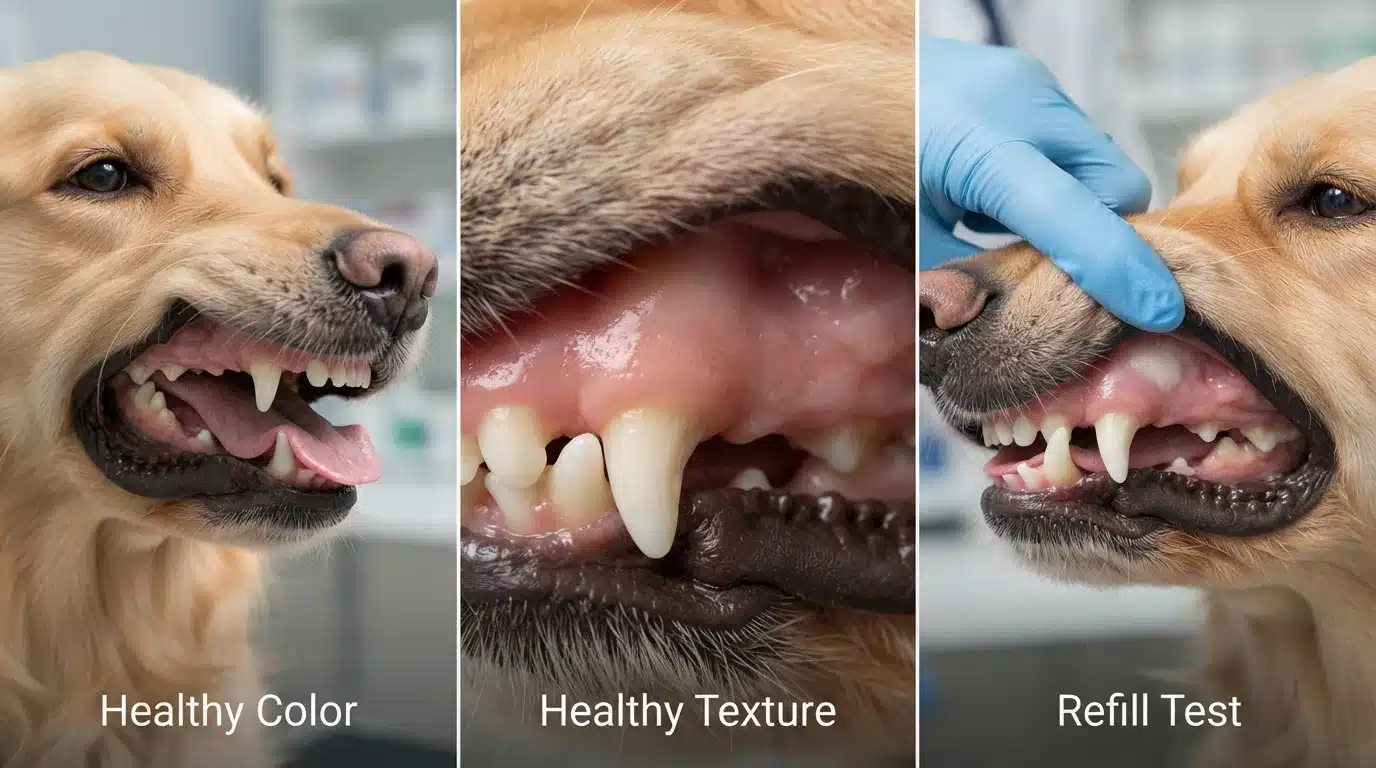
Your dog’s normal gum appearance provides a useful reference for future checks. Focus on three features: color, texture and moisture, and capillary refill time.
1. Healthy Dog Gum Color
Most healthy dog gums are pink or salmon-colored, although the exact shade varies. Some dogs also have stable black or brown areas caused by natural pigmentation.
A healthy baseline does not need to match another dog’s mouth. Note your dog’s usual pink shade and the location of pigmented patches so that new differences are easier to recognize.
2. Healthy Gum Texture and Moisture
Healthy gums usually feel smooth, moist, and slightly firm. They should fit closely around the teeth without swelling, sores, discharge, unusual lumps, or spontaneous bleeding.
Dryness, stickiness, rough tissue, or visible irritation differ from the expected texture. Record persistent changes and mention them during a veterinary appointment, especially when they affect chewing or comfort.
3. Capillary Refill Time
Capillary refill time measures how quickly color returns after gentle pressure and provides limited information about circulation.
Press a clean finger against a naturally pink area until it lightens, then release. The original color should generally return within one to two seconds.
Repeat the test once while your dog is calm if the result appears delayed. Contact your veterinarian if it lasts longer than 2 seconds, particularly if your dog also seems weak, cold, confused, or unsteady.
What Do Pale Gums Look Like in Dogs?
Pale gums appear noticeably lighter than your dog’s established pink baseline. Depending on severity and lighting, the tissue may look faint pink, white, gray, or washed out.
Check a naturally pink area rather than a black or brown patch. If no nonpigmented gum tissue is visible, avoid relying on color or refill time as a home assessment.
Pale tissue can occur with anemia, blood loss, shock, or reduced circulation, and understanding the common warning signs can help your vet respond quickly.
Contact a veterinarian promptly when the change is unexplained. Seek emergency care if it appears with collapse, marked weakness, rapid breathing, active bleeding, confusion, cold limbs, or abdominal swelling.
How to Check Your Dog’s Gums at Home
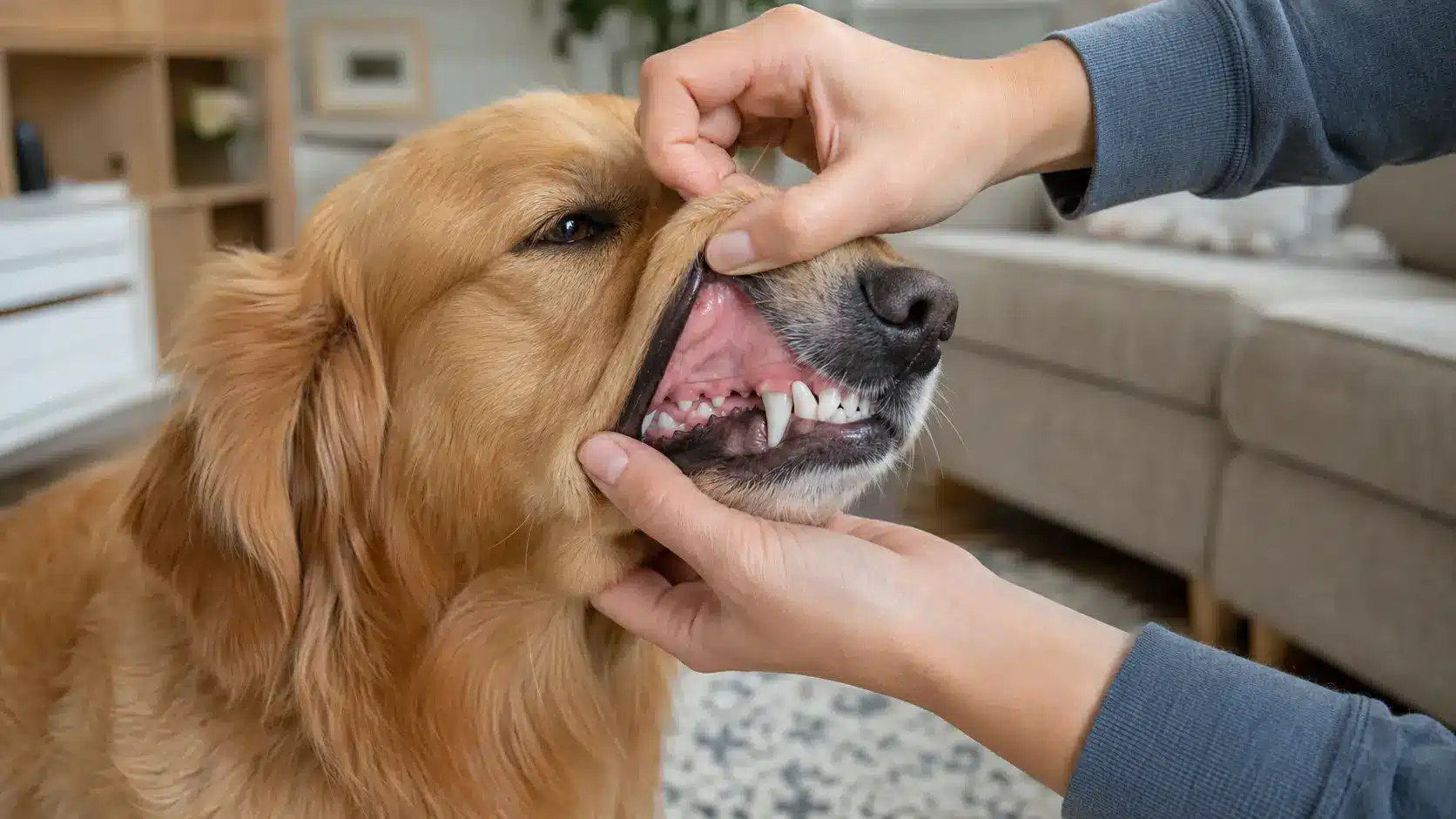
A home check should be brief and gentle. Choose a time when your dog is calm, and stop if they become frightened, stiff, or resistant.
- Inspect the Color: Lift the upper lip gently and examine a visible section of gum. Compare its color with your dog’s established baseline, accounting for stable areas of dark pigmentation.
- Check Moisture and Texture: Touch the tissue with a clean finger. It should feel moist, smooth, and slightly firm rather than dry, sticky, swollen, rough, or painful.
- Test Refill Time: Press a pink area gently until it lightens, then release. Contact your veterinarian if the color repeatedly takes longer than two seconds to return.
- Check the Surrounding Mouth: Look for redness along the gum line, tartar, bleeding gums, sores, swelling, discharge, broken teeth, or unusual growths.
Handle your dog gently and inspect only what they comfortably allow. Stop if they become frightened, stiff, or resistant.
Healthy and Unhealthy Dog Gums Compared
Normal gum appearance varies between dogs, so any comparison should begin with your dog’s usual color and pigmentation. The table below separates common healthy traits from changes that deserve veterinary attention.
| Check | Usually Healthy | Reason to Contact a Vet |
|---|---|---|
| Color | Usual pink shade or stable pigmentation | Sudden pale, white, yellow, blue, purple, or bright-red tissue |
| Texture | Smooth and slightly firm | Swollen, rough, receding, ulcerated, or unusually soft |
| Moisture | Moist without feeling sticky | Persistently dry or tacky |
| Refill time | Color returns within one to two seconds | Repeatedly takes longer than two seconds |
| Gumline | Fits closely around the teeth | Redness, bleeding, discharge, or visible pain |
Use the comparison as a screening reference rather than a diagnostic chart. A sudden change or several abnormal signs that appear together warrant veterinary assessment.
What Does It Mean If Your Dog’s Gums are Red?
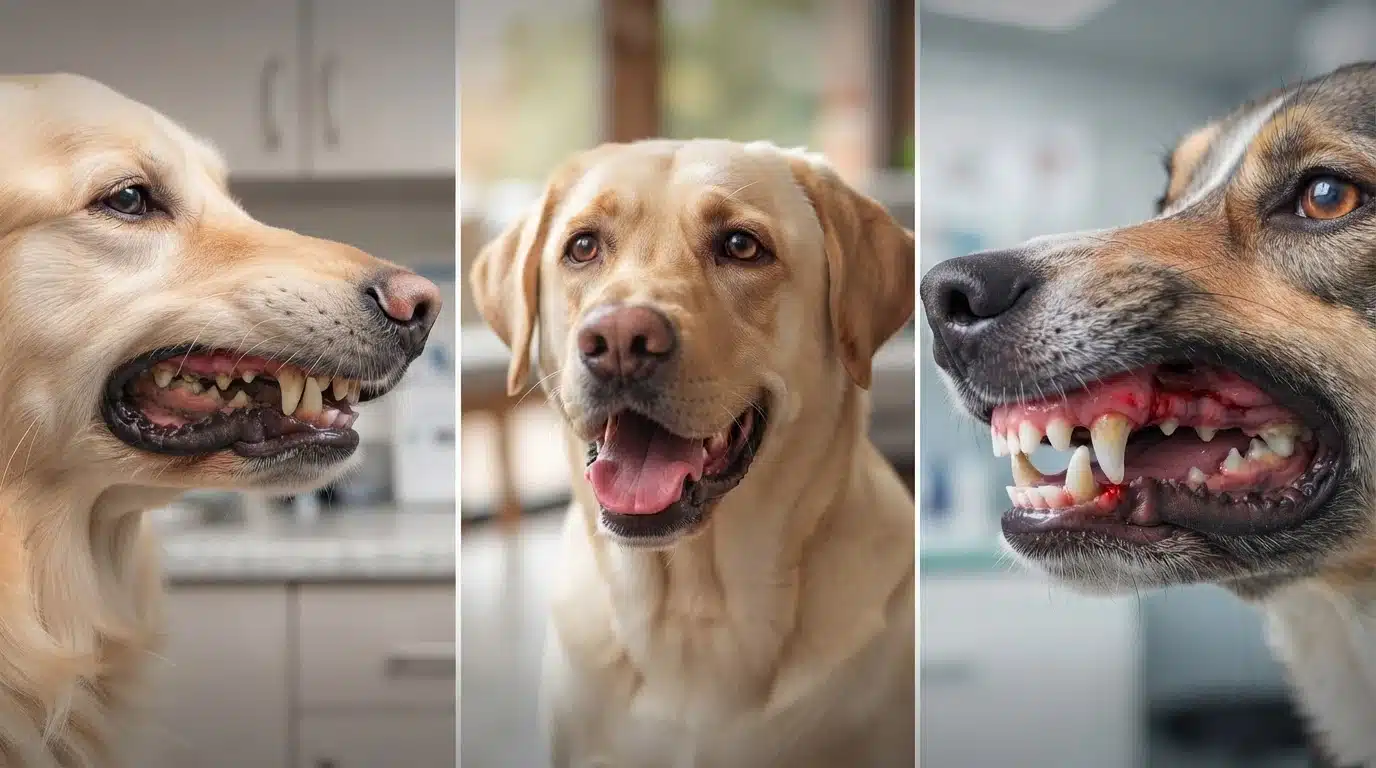
Red gums can result from local inflammation, heat, irritation, or a broader medical problem. Check whether the redness is limited to the gum line or extends to much of the visible tissue.
1. Redness Around the Teeth
Redness concentrated along the tooth line commonly occurs with plaque-related gingivitis. The gums may also appear swollen, bleed during brushing or chewing, and be accompanied by persistent bad breath.
The U.S. Department of Agriculture identifies redness and tartar as early signs of periodontal disease. Arrange a dental examination if these changes persist or are accompanied by loose teeth, discharge, difficulty eating, or mouth pain.
2. Bright Red Gums
Gums may appear temporarily deeper pink after exercise or excitement. The color should settle once your dog has rested and returned to their usual breathing pattern.
Generalized bright-red tissue that persists can accompany overheating or another medical problem. Seek prompt veterinary advice when it appears with heavy panting, drooling, vomiting, weakness, confusion, collapse, or unusual behavior.
3. When Red Gums Require Veterinary Attention
Contact your veterinarian when redness persists, spreads, bleeds repeatedly, or causes discomfort while eating. A sudden change affecting the entire mouth deserves quicker assessment than mild redness limited to one tooth.
Seek emergency care if red gums occur with breathing difficulty, collapse, extreme weakness, severe overheating, repeated vomiting, tremors, or suspected toxin exposure.
How to Maintain Healthy Gums in Dogs
Daily oral care reduces plaque accumulation and makes it easier to notice changes between veterinary visits. Choose products made specifically for dogs and introduce handling gradually.
- Brush Regularly: Use a suitable toothbrush along with one of the vet-approved toothpaste options made specifically for dogs.
- Choose Appropriate Dental Products: Select dog dental chews, diets, or oral-care products suited to your dog’s age, size, and chewing habits.
- Schedule Veterinary Assessments: Professional examinations can identify problems beneath the gumline that can not be visible during a home check. The American Animal Hospital Association supports professional assessment alongside preventive home care.
- Monitor Daily Changes: Note any persistent odor, bleeding, redness, swelling, difficulty chewing, drooling, or reduced interest in food.
Consistent care supports oral health, but persistent abnormalities still require professional assessment.
Dog Dental Care Online Insights from Owners
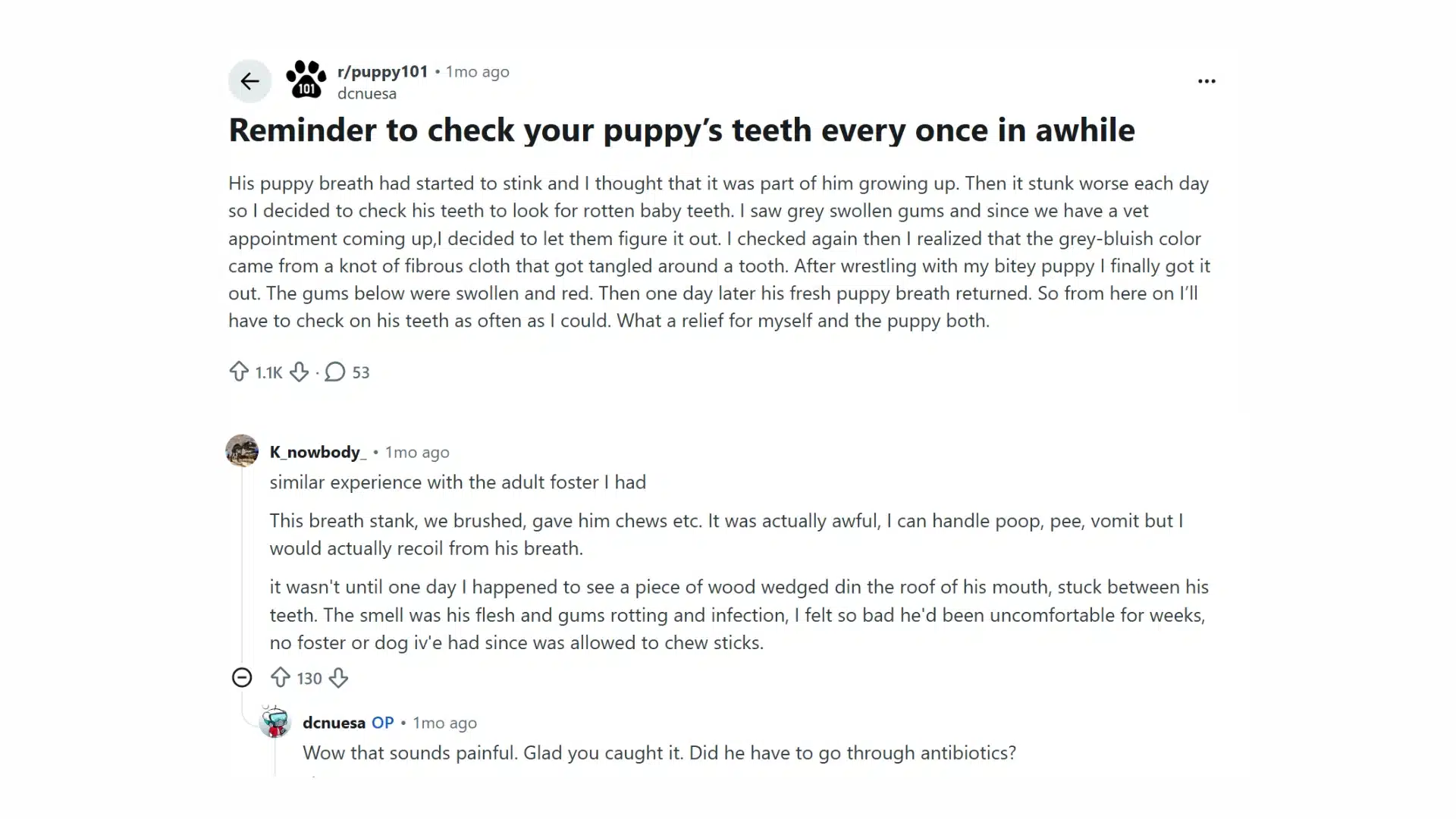
Reddit discussions about dog gum health often show that many owners first notice small changes during daily routines like brushing, feeding, or checking their dog’s mouth.
Common experiences include spotting bad breath, red areas near the teeth, bleeding while chewing, or changes in eating habits.
Many Reddit users also mention that knowing their dog’s normal gum color makes it easier to recognize when something looks different.
Owners often discuss natural dark spots and pigmentation, especially because every dog’s gums can look slightly different. These shared experiences can help owners understand what changes may need attention, but Reddit advice should not replace veterinary guidance.
If gum changes are accompanied by pain, swelling, weakness, difficulty eating, or unusual behavior, a veterinarian can provide the appropriate evaluation and care.
When to Contact a Veterinarian
Not every difference in gum color signals an emergency, but a sudden or unexplained change deserves attention. Consider the gum appearance together with your dog’s breathing, energy, appetite, movement, and behavior.
Contact your veterinarian for persistent redness, frequent bleeding, swelling, sores, discharge, severe bad breath, difficulty eating, or a refill time longer than 2 seconds.
Prompt advice is also needed fornewly pale, white, yellow, or generalized bright-red gums.Seek emergency care for blue or purple tissue, collapse, breathing difficulty, active or internal bleeding, extreme weakness, confusion, or suspected heatstroke or poisoning.
Taking a photograph in consistent lighting and noting when the change began may help the veterinary team assess its progression.
Seek Emergency Care: Go to an emergency veterinarian immediately if your dog has blue or purple gums, collapses, struggles to breathe, becomes extremely weak or confused, has active bleeding, or may have heatstroke or poisoning.
Final Verdict
Healthy dog gums provide a useful baseline, but the safest comparison is always your dog’s usual color, texture, moisture, and refill time.
A quick check can reveal a change, yet it cannot identify the cause or replace a veterinary examination. If you are unsure what do pale gums look like in dogs, look for tissue that appears lighter, white, or gray compared with a pink area.
When a dog’s gums are red, consider whether the redness is limited to the tooth line or appears throughout the mouth with illness.
Contact your veterinarian promptly for sudden changes, and seek emergency care for breathing trouble, collapse, blue gums, or marked weakness. Save these steps for your next routine gum check.
Frequently Asked Questions
What If My Dog Resists a Gum Check?
Stop if your dog pulls away, stiffens, growls, or appears distressed. Try again when your dog is calm, using brief handling and a reward. Ask your veterinarian to demonstrate a safe check if resistance continues.
Should I Photograph My Dog’s Normal Gums?
Yes. A clear photo taken in consistent lighting can record your dog’s usual pigmentation and show a veterinarian when a change began. However, photographs cannot reliably confirm circulation, moisture, pain, or an underlying medical condition.
Can Dental Disease Develop Without Visible Redness?
Yes. Some dental problems develop below the gumline or at the back of the mouth, where they are difficult to see at home. Persistent odor, changes in chewing, drooling, or facial swelling still warrant veterinary assessment.
Can a Home Gum Check Replace Diagnostic Tests?
No. A home gum check offers limited clues about circulation and oral condition. Blood tests, dental probing, imaging, and a physical examination assess problems that gum appearance cannot confirm, so follow the testing plan your veterinarian recommends.