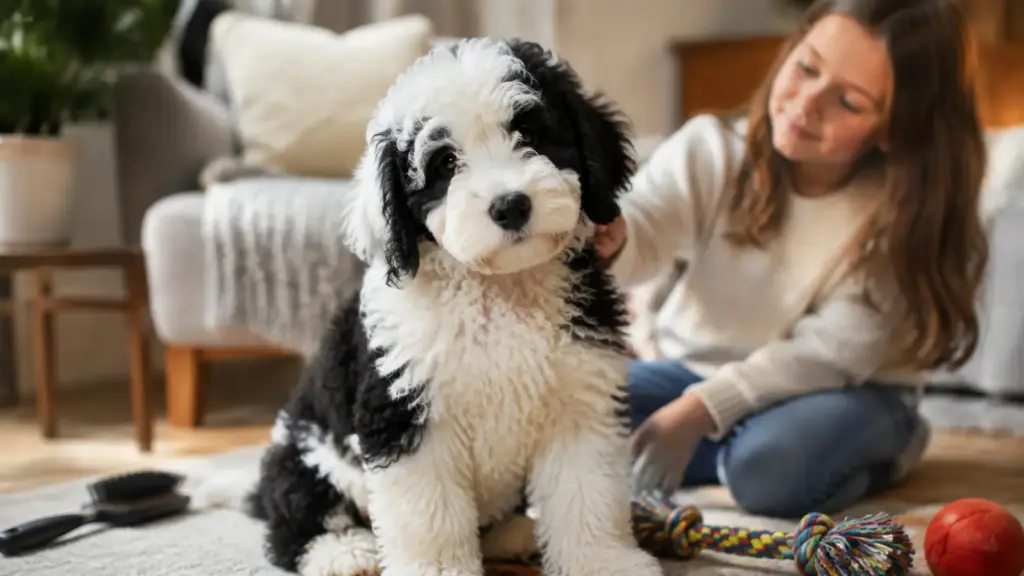
That teddy-bear face gets all the attention online, but we know the real story includes a lot more: biting hands, muddy floors, and a coat that tangles faster than you’d expect from something that cute.
I’ve spent more than a decade around rescues here in Vermont, and sheepadoodles are one of the breeds people ask me about most, usually after seeing one on a walk and falling instantly in love. I get it.
But I’ve also fielded enough calls from owners three months in, exhausted and covered in mats, to know the puppy stage deserves a much more honest conversation than “look how fluffy.”
So let’s go through what life with a sheepadoodle actually looks like, from the puppy stage through adulthood, plus the daily decisions worth thinking through before you commit, not just the picture-perfect version from a breeder’s Instagram.
What is a Sheepadoodle Puppy?
A Sheepadoodle comes from crossing an Old English Sheepdog with a Poodle, blending a working herding background with a Poodle’s sharp trainability.
That combination is why this breed became so popular: affectionate, above-average smart, undeniably cute, and often shedding less than many purebreds.
Here’s the part a lot of buyers don’t expect:because a sheepadoodle is a cross rather than a purebred, genetics shape each puppy’s personality more than you’d think.
A litter can lean toward the Old English Sheepdog side (laid-back, sometimes stubborn) or toward the Poodle side (quicker to train). Coat texture, shedding, and energy can vary even within the same litter, depending on which traits each parent passed along.
That kind of variation isn’t limited to designer crosses, either. Even familiar breeds can have noticeable differences in appearance, build, and background, as you can see when comparing the different types of Golden Retrievers.
I’ve met full litters where one puppy was calm and biddable from week eight, and their littermate was a velcro-adjacent whirlwind who needed twice the redirection.
Sheepadoodle Grooming Requirements
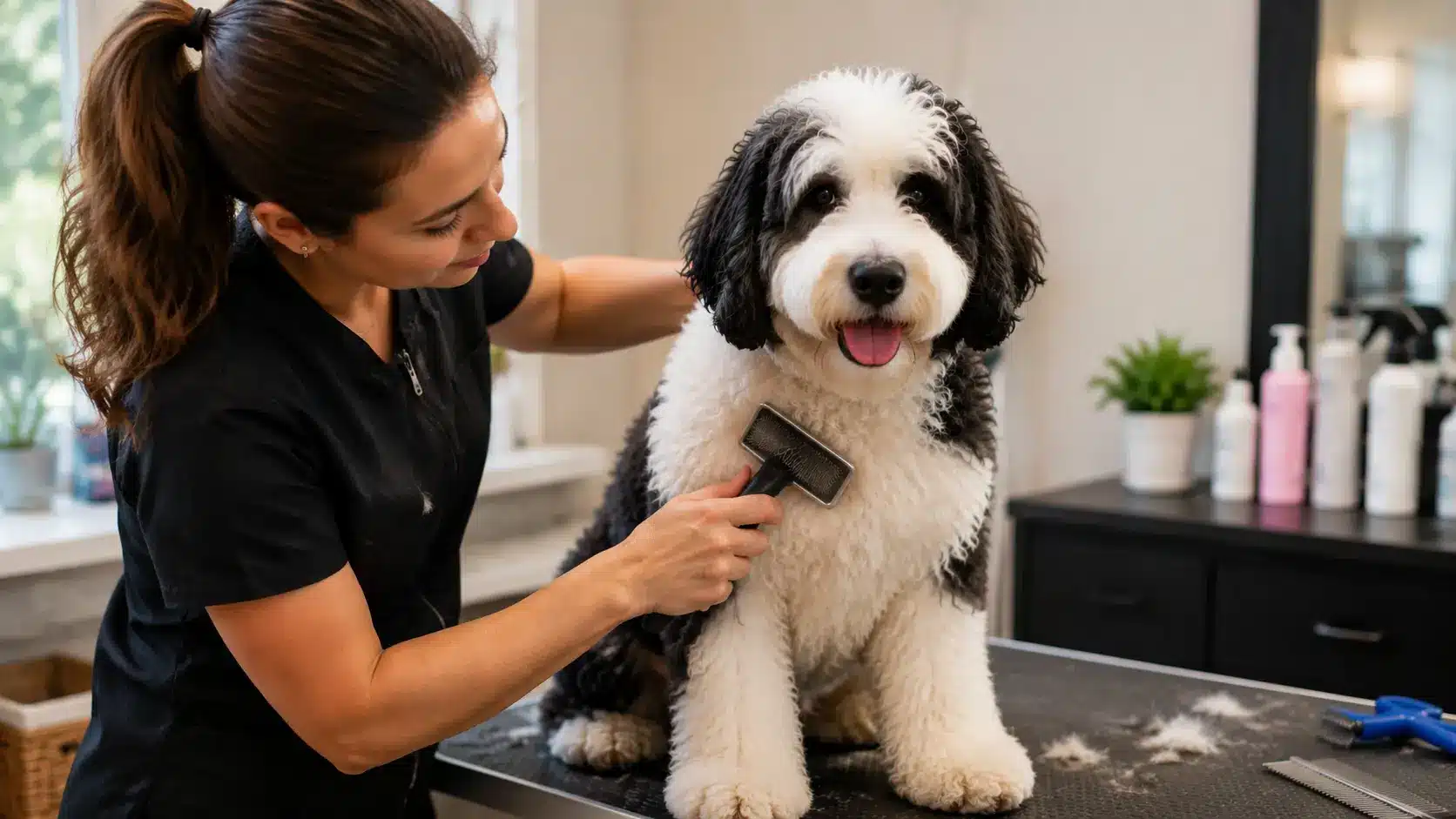
That fluffy coat is a big part of the appeal, but it does not take care of itself. Skip a few weeks of brushing, and you are suddenly dealing with painful mats and an unplanned trip to the groomer.
1. Coat Care and Brushing Needs
Most sheepadoodles need brushing three to five times a week, and daily brushing during the puppy coat transition helps prevent painful matting near the ears, armpits, and collar area.
The coat often changes texture around six to twelve months as the fluffy puppy coat gives way to a coarser, curlier adult coat that tends to tangle more easily over time.
2. Professional Grooming Expectations
Professional grooming every six to eight weeks helps manage length, trims sanitary areas, and catches mats before they require shaving out completely.
Grooming costs vary by location, groomer experience, and coat length, but budgeting for regular visits is part of owning this breed rather than an occasional or optional expense that quietly gets skipped once life gets busier than planned.
3. Sheepadoodle Shedding and Hypoallergenic Myths
Shedding really does vary by litter, since coat genetics from each parent do not split evenly. A looser, Old English Sheepdog-type coat can still shed lightly year-round.
The American Kennel Club’s overview of hypoallergenic dog breeds notes that no dog breed is truly allergen-free, since dander, saliva, and loose hair all play a part, so spend time with your specific puppy first.
Sheepadoodle Temperament: What to Expect?
Most sheepadoodles share a set of core traits, though how strongly each trait shows up depends on the individual dog, its early socialization, and which parent breed shows through more strongly in that litter.
- The personality basics. A sheepadoodle typically forms a strong bond with its family and would much rather be close by than off exploring solo. The playfulness sticks around well into adulthood too; this isn’t a dog that “settles down” quietly at two.
- Around families. A well-socialized sheepadoodle tends to be gentle and patient with kids, though early training helps prevent jumping or mouthing during the excitement of play.
- The challenges worth knowing. Some sheepadoodles inherit a stubborn streak from the Old English Sheepdog side, especially during adolescence around six to twelve months.
If you’ve raised a teenage dog before, you know exactly what we mean. I still remember one foster who’d sit beautifully for treats all week and then suddenly decide, around month seven, that “sit” was a suggestion rather than a command. That phase passed, but it tested my patience more than any puppy stage before it.
Every sheepadoodle brings its own mix of these traits, so watching your specific puppy matters more than any general checklist ever will.
What Makes Them Easier than Some Breeds?
Despite the challenges, a sheepadoodle often picks up commands faster than many other breeds, thanks to that Poodle sharpness.
Consistent, reward-based training tends to show real results within a few weeks of steady practice, and the close bond they form with their people makes recall much easier to reinforce than with more independent breeds.
Who Might Struggle With This Breed?
If you’re hoping for a low-maintenance dog, the grooming and exercise needs can wear thin over time. Owners who are away from home for long hours often struggle with this breed’s attachment and tendency toward separation stress.
If regular brushing, trimming, and grooming visits sound like a hassle rather than a routine you can commit to, it’s worth weighing that seriously before choosing this particular mix.
Comparing those needs with other large family dogs, such as Bernese Mountain Dog puppies, can also help prospective owners narrow down which breed better fits their lifestyle.
Are Sheepadoodle Puppies Difficult to Raise?
The early months bring a familiar set of challenges that most puppy owners recognize right away, regardless of breed, though a few of these show up more strongly in a Sheepadoodle than in calmer, lower-energy breeds.
- Puppy biting and mouthing during play, which needs consistent redirection
- House training that requires a strict, repeated schedule
- High energy levels that need daily outlets beyond a short walk
- Chewing on furniture, shoes, and cords during teething
- Difficulty settling when left alone, especially in the first weeks
- Frequent demands for attention throughout the day
Knowing what typically comes up ahead of time makes each stage easier to handle without feeling caught off guard by normal, expected puppy behavior.
Sheepadoodle Puppy Size and Growth
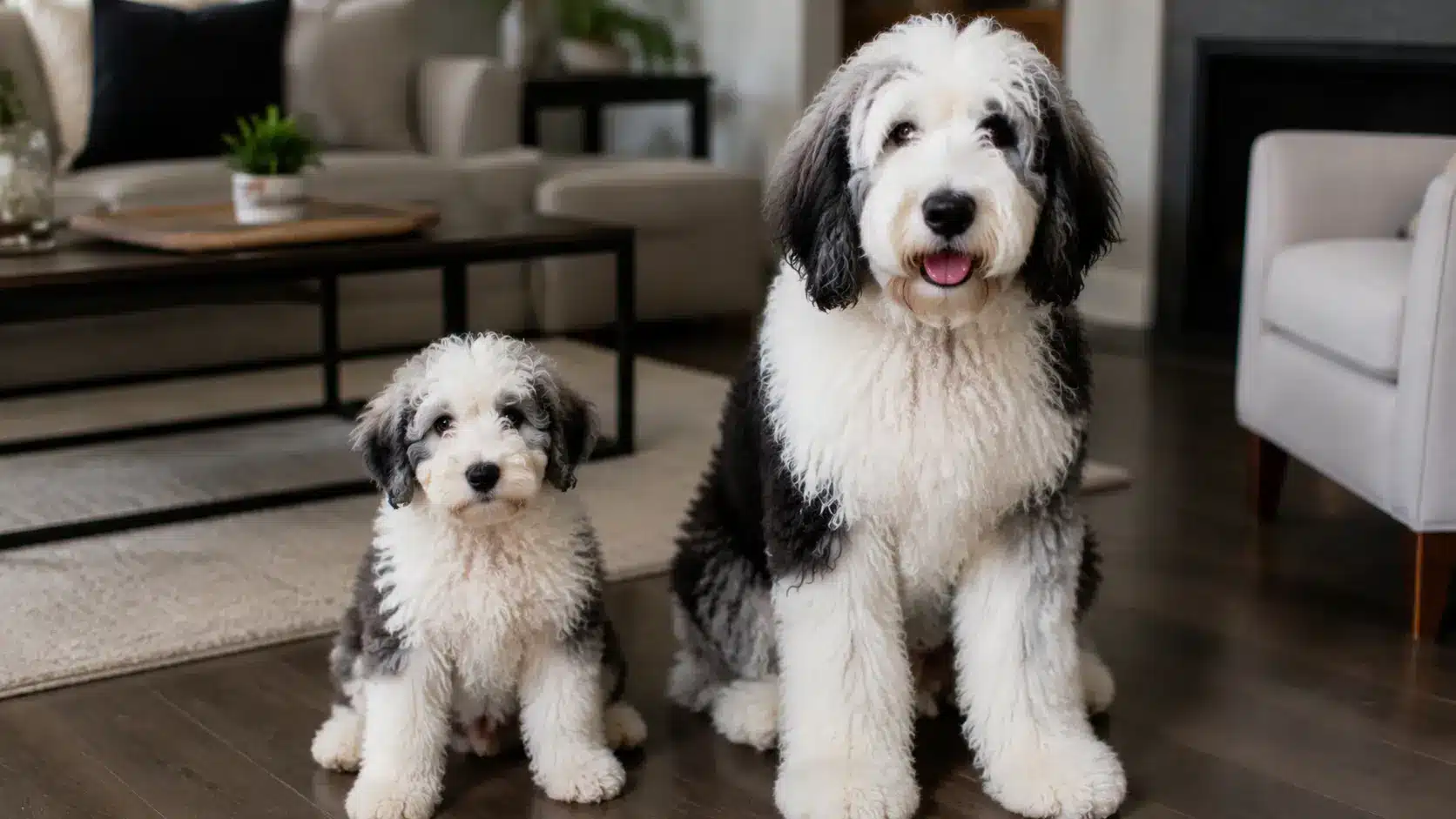
Size affects everything from living space to food costs, and sheepadoodles come in more than one recognized size category depending on the Poodle parent used in the original cross.
Mini and Standard Sheepadoodle Size Differences
A mini sheepadoodle usually comes from pairing an Old English Sheepdog with a Miniature or Toy Poodle, resulting in a noticeably smaller adult size overall.
A standard sheepadoodle uses a Standard Poodle parent instead, producing a larger, sturdier dog closer in size to the Old English Sheepdog side. Adult weight and height still vary within each category.
| Type | Adult Weight | Adult Height |
| Mini Sheepadoodle | 30 to 55 pounds | 15 to 18 inches |
| Standard Sheepadoodle | 55 to 85+ pounds | 18 to 27 inches |
When Does a Sheepadoodle Stop Growing?
Most sheepadoodles reach close to their adult height between 12 and 18 months, though standard-sized dogs can keep filling out until closer to two years old before fully settling into their frame.
Genetics, the size of each parent, and overall health during puppyhood all influence final adult size. Mini Sheepadoodles typically finish growing sooner than their larger, standard-sized counterparts do.
Sheepadoodle Training and Daily Routine
Daily structure plays a big role in how a sheepadoodle turns out as an adult, shaping confidence, manners, and overall temperament over time. Training, exercise, and routine work together rather than separately.
1. Training Tips for a Sheepadoodle Dog
Consistency across every family member prevents mixed signals that can confuse a puppy during the early training window.
Early socialization, including exposure to new people, sounds, and environments, is one of the most important steps in preventing fear-based behavior later. This approach is consistent with the ASPCA’s puppy socialization guidance.
2. Exercise and Mental Stimulation Needs
A sheepadoodle typically needs one to two structured walks a day, along with active play sessions built into morning and evening routines around the household.
Mental stimulation through puzzle toys, scent games, or short training sessions helps offset the breed’s above-average intelligence, which can otherwise turn into destructive boredom behaviors like chewing or excessive barking around the house and yard.
3. A Realistic Daily Routine
A typical day often includes a morning walk, a short training session, a midday enrichment activity, an afternoon play break, evening grooming touch-ups a few times a week, and a wind-down period before bed.
Feeding usually happens twice daily for adult dogs, with growing puppies needing more frequent, smaller meals spaced throughout the day, evening, and night.
Sheepadoodle Dog Cost Considerations
Cost extends well beyond the initial purchase price of a sheepadoodle, and overlooking the ongoing expenses is one of the most common planning mistakes new owners make when budgeting.
| Cost Factor | Typical Range |
| Puppy purchase price | $1,500 to $4,000 |
| Health testing and vet exams | $200 to $500 |
| Ongoing grooming, per visit | $75 to $150 |
| Initial supplies | $300 to $600 |
Planning for these combined costs before bringing a puppy home helps avoid financial strain during the first full year of ownership and every year that follows.
Real Sheepadoodle Owner Experiences on Reddit
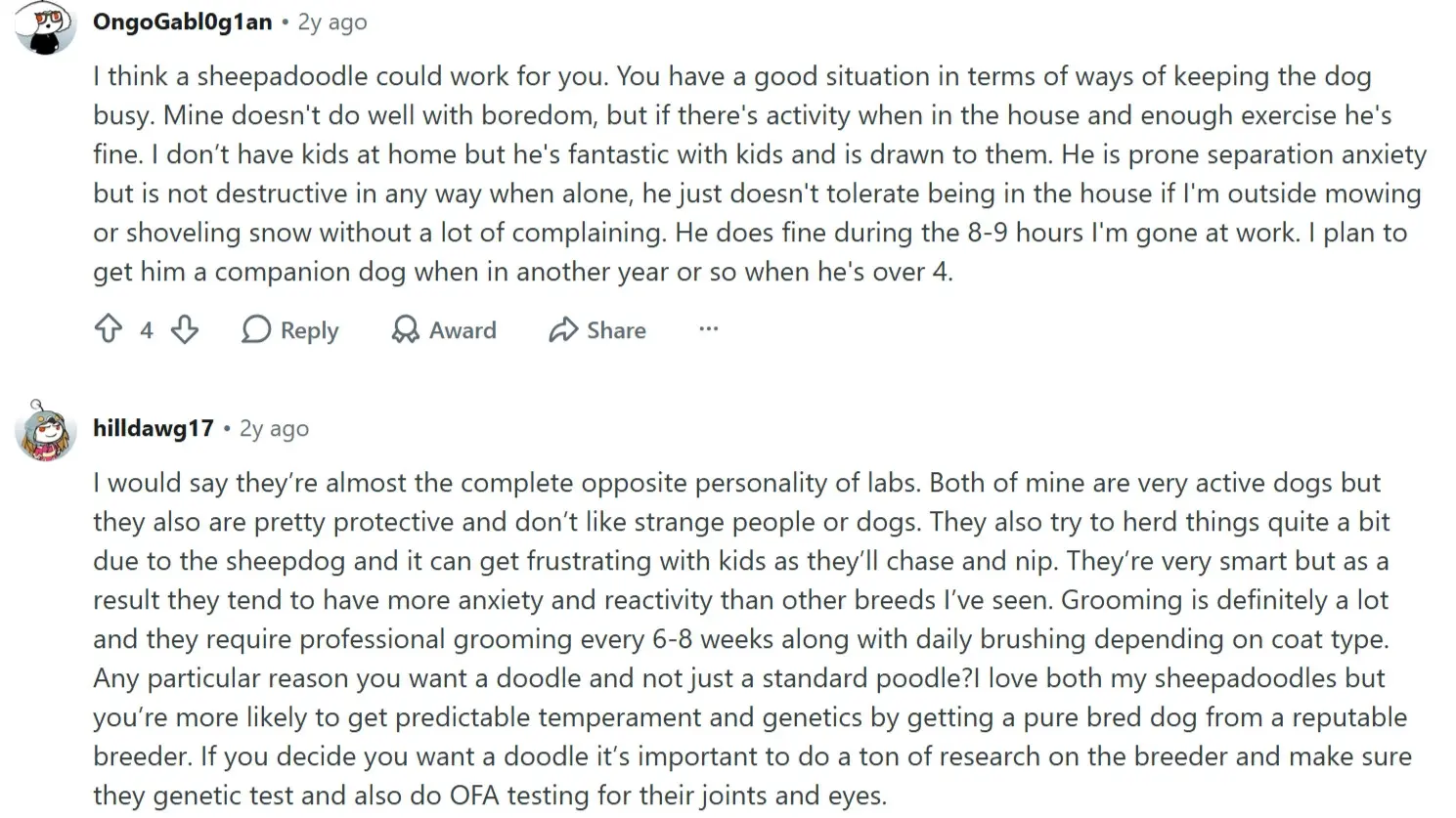
Many owners describe their Sheepadoodles as loving companions that enjoy being involved in family activities. Their intelligence often makes training easier, but it also means they need regular mental stimulation to stay happy.
Common positive experiences include:
- Strong bonds with family members
- Friendly behavior around children when properly socialized
- Quick learning ability during training
- Playful and entertaining personalities
Before bringing home a Sheepadoodle, consider whether you can provide the attention and routine this breed needs. The right environment can make the difference between a challenging puppy experience and a rewarding lifelong relationship.
Conclusion
A Sheepadoodle puppy asks for more than admiration of its coat and expression. Daily training, regular grooming, regular exercise, and patience for a dog that prefers staying close all matter when deciding if this breed fits your household.
The best preparation is matching your time and energy against these needs, not deciding based on looks alone.
Homes offering structure, attention, and regular coat care tend to do well. Those wanting a lower-maintenance companion may want to look elsewhere.
In my years researching and placing dogs, thriving owners understood the grooming and clinginess, not just the cute factor. If the commitment fits your life, talk with a responsible breeder or rescue group with clear expectations.
Frequently Asked Questions
Is This Breed a Good Fit for Seniors?
Yes, with the right expectations. The dog’s calm devotion suits a quieter household, but daily brushing and regular walks still take real time and effort, so a helping hand or groomer often makes things easier long term.
Do These Dogs Handle Hot Weather Well?
No, not especially. That thick double coat holds heat, so summer walks are better early or late in the day, with plenty of water and shade in between.
Can This Breed Be Trained Without Professional Classes?
Yes, most owners manage basic training fine at home. A few sessions with a trainer still help with socialization and tougher habits like jumping or pulling on the leash.