You’re sitting with a bowl of fruit, and your hamster is staring like it wants a bite. It feels harmless to share, right?
Not always. Some foods are safe, others can quietly cause real harm. That is why knowing what hamsters can eat is not just helpful, it is essential from day one.
The short answer: hamsters can safely eat a range of fresh vegetables, certain fruits in small amounts, cooked protein sources like egg, and a base of quality commercial pellets.
But the details matter; the wrong food, the wrong portion, or the wrong preparation can cause anything from loose stools to serious toxicity.
This blog post covers it all, organized by food category, so you can feed confidently.
Even if you are a new owner wondering if that slice of apple is safe, or an experienced keeper trying to add more variety, this blog post breaks it down clearly: what is safe, what is not, how much to give, and exactly what to watch for.
As a veterinarian with over years of clinical experience, I have seen diet-related issues in hamsters far more often than owners expect. Most are entirely preventable with a basic understanding of safe and unsafe foods.
The information in this blog reflects both clinical evidence and the practical patterns I have observed in practice.
Understanding a Hamster’s Natural Diet
In the wild, hamsters eat a mix of seeds, grains, small insects, and bits of plant matter they find while foraging.
Their diet is naturally varied, which helps them get the nutrients they need to stay active and healthy. This is why feeding only pellets is not enough, even if they are labeled as complete food.
One thing most owners do not realize: hamsters are omnivores, not herbivores. In the wild, they actively hunt and eat insects, which provide high-quality protein, essential fatty acids, and key micronutrients.
It is also worth noting that hamsters practice a behavior called cecotrophy, in which they re-eat soft fecal pellets produced in the cecum.
This sounds unusual, but it is biologically important: those pellets are rich in B vitamins, vitamin K, and beneficial gut bacteria that were not fully absorbed during initial digestion.
If you ever notice your hamster eating something directly from its rear, do not be alarmed; it is a completely normal and healthy behavior.
Syrian vs Dwarf Hamsters: Diet Differences
Syrian hamsters can handle a wider range of foods, including slightly more fruit. If you own a long-haired Syrian, sometimes called a teddy bear hamster, the same dietary rules apply, though their care routine differs in other ways.
Dwarf hamsters are prone to diabetes, so their diet needs stricter control. Limit fruits further, avoid sugary foods, and be cautious with high-carbohydrate treats like bananas or corn. When unsure, focus more on vegetables than fruits for dwarf breeds.
Safe Vegetables for Hamsters
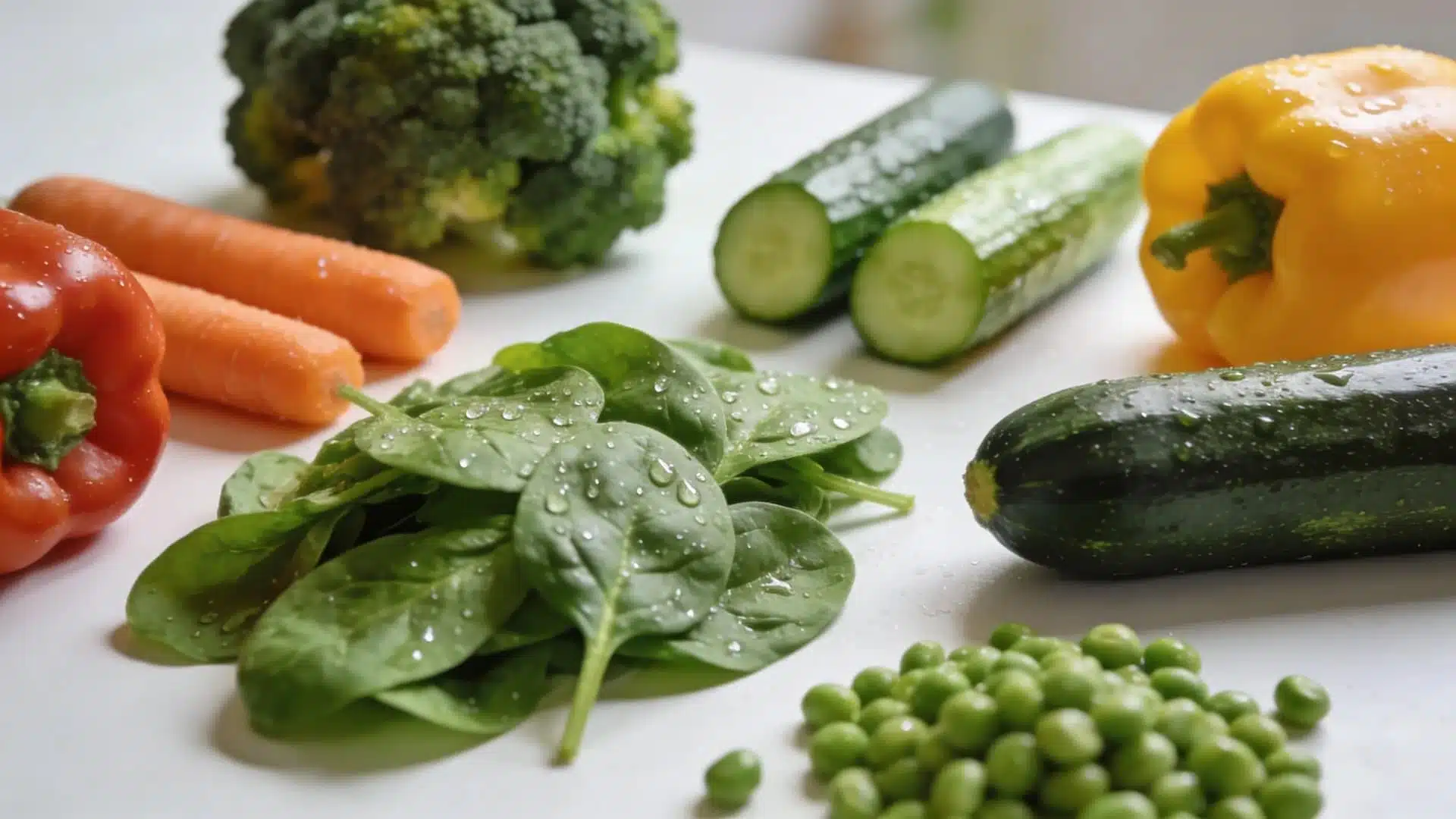
Fresh vegetables can be a great addition to your hamster’s diet when chosen carefully and served in small portions as part of a balanced feeding routine.
Raw vegetables are generally preferable to cooked, as they retain more nutrients and provide natural chewing enrichment.
1. Leafy Greens
Leafy greens like kale, spinach, dandelion greens, and romaine lettuce are excellent options for hamsters. They are packed with essential vitamins and minerals that support overall health.
These greens are also easy to chew and digest when given in small amounts. Always wash them properly and serve them fresh. Avoid iceberg lettuce, as it contains mostly water and offers very little nutritional value.
Note that spinach contains oxalates, which can interfere with calcium absorption over time; offer it sparingly and rotate with other greens.
Dandelion greens are a particularly good choice, but make sure they are pesticide-free, especially if picked from a garden.
2. Broccoli and Cauliflower
Broccoli and cauliflower are nutrient-rich vegetables that can benefit your hamster when fed in moderation. They provide vitamins like C and K, along with fiber that supports digestion.
Offer only small florets, as large pieces can be difficult to handle. Treat carrots more like a fruit in terms of sugar content, occasionally rather than daily.
Introduce these slowly into your hamster’s diet and monitor for any digestive issues, since some hamsters may be sensitive to them.
3. Carrots
Carrots are a popular choice because they are rich in beta carotene, which supports eye health.
Their natural sweetness makes them appealing, but that also means they should be given in limited quantities.
Treat carrots more like a fruit in terms of sugar content, and offer them occasionally rather than daily. Always chop carrots into very small, manageable pieces to prevent choking.
4. Cucumber
Cucumber is a refreshing and hydrating vegetable that works well, especially in warmer conditions. It is low in calories and easy for hamsters to eat.
However, due to its high water content, it should be given in moderation to avoid digestive upset.
A thin slice or small cube is more than enough. Make sure it is fresh and free from any added seasoning or chemicals.
5. Bell Peppers
Bell peppers are safe for hamsters in all colors and are packed with vitamins, especially vitamin C.
They add variety and a slight crunch to your hamster’s diet. Only feed the fleshy part.
The stalk and seeds contain solanine, a naturally occurring compound that can cause gastrointestinal distress or worse in small animals. Cut into tiny pieces and serve occasionally.
6. Courgette (Zucchini)
Courgette, also called zucchini, is another safe and easy-to-prepare vegetable. It has a soft texture that makes it simple for hamsters to chew.
This vegetable is low in calories and can be served raw, thinly sliced. As with other watery vegetables, moderation is key.
Overfeeding can lead to loose stools, so keep portions controlled and observe how your hamster responds.
7. Peas
Peas are a nutritious and well-loved snack among hamsters. They provide protein, fiber, and essential vitamins that support growth and energy levels.
You can offer fresh or thawed peas in small quantities. Due to their slightly higher carbohydrate content, they should not be overfed.
One or two peas at a time is enough to keep your hamster happy and healthy without overloading its diet.
8. Herbs
Fresh herbs are one of the most overlooked additions to a hamster’s diet. Safe options include parsley, coriander, dill, basil, and dandelion leaves.
They provide nutrients and enrichment without added sugar. Always use fresh herbs rather than dried, which can be too concentrated or mold-prone.
Offer a small sprig two to three times a week. Avoid large amounts of mint, as it may cause mild digestive irritation.
Safe Fruits for Hamsters
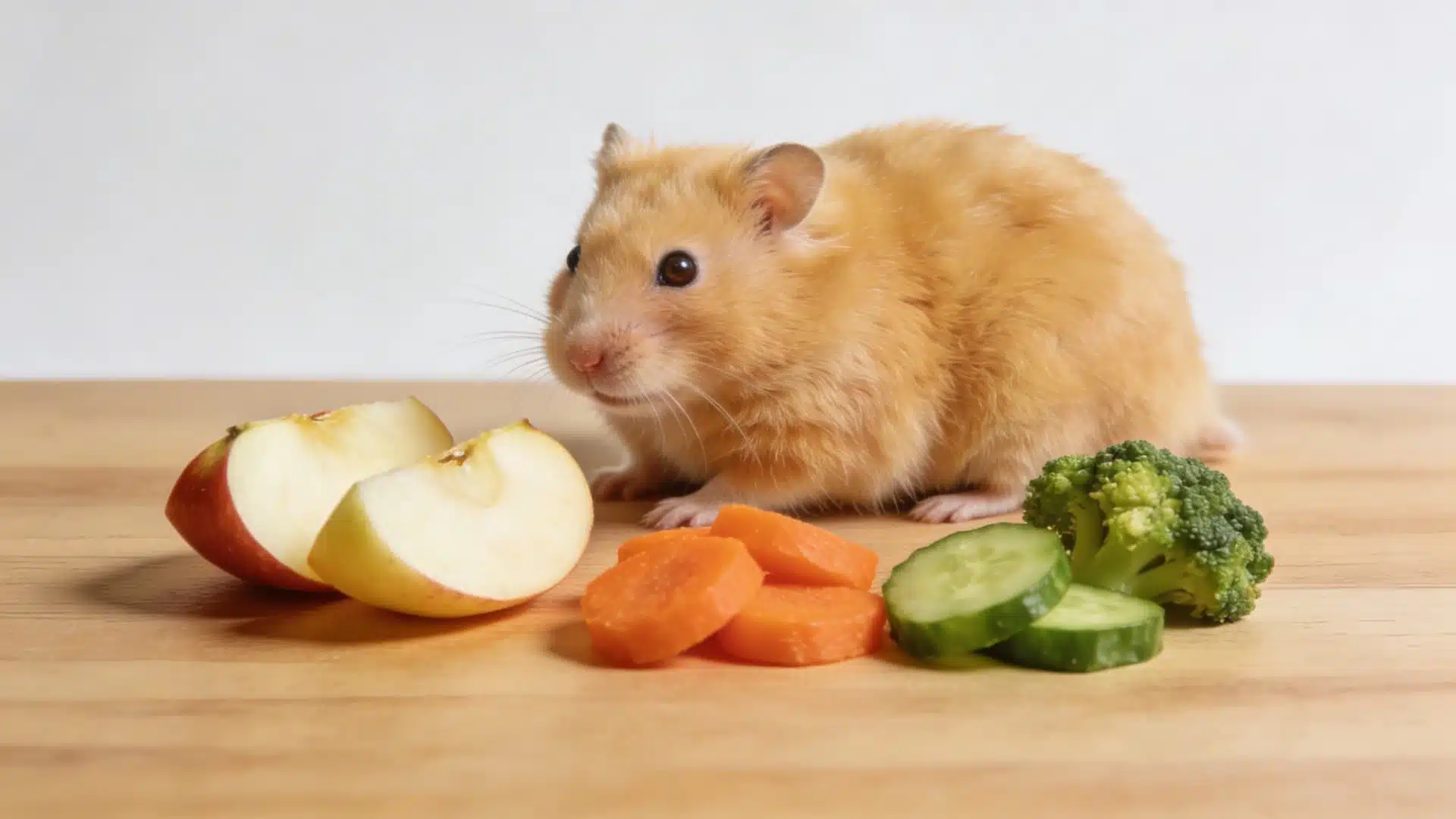
Fruit should be treated as a treat category, not a dietary staple. The natural sugar content in most fruits is too high for daily feeding, particularly for dwarf breeds. Offer fruit one to two times per week in pea-sized portions, and always remove seeds, pits, and stems before serving.
The same principle applies across small pets. If you are curious about how treats affect small pets, it is worth understanding the pattern before adding anything sugary to the rotation:
1. Apples
Apples are a classic and safe option when prepared properly. They provide fiber and a bit of vitamin C, which can support digestion and overall health.
Always remove the seeds and core; apple seeds contain amygdalin, a compound that breaks down into hydrogen cyanide in the digestive system. Even a few seeds can pose a real risk to a hamster’s small body.
Cut a small, pea-sized piece and offer it once or twice a week. Overfeeding apples can lead to excess sugar intake, so keep portions controlled.
2. Strawberries
Strawberries are loved by most hamsters thanks to their sweet taste and soft texture. They also contain vitamin C and antioxidants.
However, their sugar content means they should only be given sparingly. A tiny piece once a week is enough.
Always wash thoroughly and remove the leafy top before serving to ensure it is clean and safe. Note that strawberries may temporarily stain the fur of light-colored hamsters.
3. Blueberries
Blueberries are a nutrient-rich fruit packed with antioxidants. They are safe for hamsters but should be offered in very small amounts.
Due to their size, it is best to cut them in half before feeding. One small piece occasionally is enough.
Feeding too many blueberries can quickly increase sugar intake, which is not ideal for your hamster’s health.
4. Peaches and Mango
Peaches and mangoes are safe when served in small, controlled portions. They are soft and easy to chew, making them appealing to hamsters.
Always remove the pit completely. Peach pits contain cyanogenic compounds similar to apple seeds and should never be given, even as something to gnaw on.
These fruits are naturally sweet, so they should only be given as occasional treats. A tiny cube once a week is more than enough.
5. Blackberries and Raspberries
Blackberries and raspberries are excellent occasional treats that provide vitamins and antioxidants.
They are slightly tart, which balances their sugar content a bit, but moderation is still important. Offer a small portion once or twice a week.
Make sure they are fresh, washed, and free from any pesticides before feeding them to your hamster.
6. Watermelon
Watermelon is mostly water, which makes it a refreshing option, especially in warmer weather. It can help with hydration, but should still be given in moderation.
Remove all seeds and offer only a very small piece of the flesh. Too much can cause digestive issues due to its high water content, so keep it as an occasional treat.
7. Pear
Pear is another safe fruit when prepared correctly. It contains fiber and a mild sweetness that hamsters enjoy. Always remove the seeds before feeding, as they can be harmful.
Cut into small, manageable pieces and offer occasionally. Like other fruits, pears should not be a regular part of the diet due to its sugar content.
8. Banana
Banana is safe but very high in sugar, which means it should be given with extra caution. A tiny slice is enough to satisfy your hamster without overloading its system.
It is best used as a rare treat rather than something offered weekly. Overfeeding banana can lead to weight gain and digestive problems, so keep portions extremely small.
Protein Sources for Hamsters
In my clinical practice, I have occasionally seen hamsters with dull coats, low energy, and slower recovery from illness, and in some cases, a simple improvement to protein intake made a visible difference.
Safe protein sources for hamsters include:
- Dried mealworms or crickets: the most species-appropriate option. A few dried (not live) insects, two to three times a week, is sufficient. Live prey should be avoided; it can injure your hamster or infest the habitat.
- Hard-boiled or scrambled egg (unseasoned): a tiny piece of cooked egg is well-tolerated and easy to prepare. Do not add salt, butter, or any seasoning.
- Cooked lean chicken (plain, unseasoned): a very small shred, offered occasionally. Cooked beef is high in cholesterol and should be used far less frequently than chicken.
- Plain tofu: a plant-based protein option that works well for owners who prefer not to handle insects or meat.
Keep protein portions very small, a piece no bigger than a kernel of corn, and offer it two to three times per week, not daily. Too much protein can strain a hamster’s kidneys over time.
Foods to Avoid Completely
Some foods may seem harmless but can seriously harm your hamster’s health, so they should never be included in their diet.
- Citrus fruits: Too acidic for hamsters and can cause mouth sores and digestive irritation, even in small amounts.
- Onions and garlic: Toxic and can damage red blood cells, leading to serious health issues over time.
- Chocolate and sweets: High sugar and harmful compounds make them dangerous, potentially causing toxicity and obesity.
- Processed human food: Contains salt, sugar, and additives that hamsters cannot safely digest or process.
- Spicy or seasoned foods: Strong flavors and chemicals can upset digestion and harm your hamster’s internal system.
- Grapes and raisins: Can be poisonous to rodents and should be avoided entirely.
- Rhubarb: Toxic to hamsters and other rodents. Never offer this in any form.
- Raw potatoes and green potatoes: High in solanine, which is toxic in small animals. Cooked potato without green tinge is generally safe, but raw or green potato should never be offered.
- Tomato leaves and unripe tomatoes: Contain high levels of solanine and tomatine. Ripe tomato flesh is safe in small amounts, but the leaves and stalks are not.
- Kidney beans (uncooked): Toxic to hamsters. Never feed raw legumes.
- Whole oats or sticky foods: Can puncture or cling to a hamster’s delicate cheek pouches, causing injury or infection.
Safe and Unsafe Foods at a Glance
Here’s a quick, easy-reference table to help identify which foods are safe or harmful for hamsters, along with simple feeding notes for each.
| Food | Safe? | Notes |
|---|---|---|
| Apple | Yes | Remove seeds and core. Pea-sized piece, 1-2x per week. |
| Carrot | Yes | Occasionally only. High natural sugar. |
| Broccoli | Yes | Small florets. Introduce slowly. |
| Spinach | Yes (sparingly) | High oxalate content. Rotate with other greens. |
| Bell pepper | Yes (flesh only) | Stalks and seeds contain solanine. Remove before feeding. |
| Banana | Yes (rarely) | Very high sugar. Avoid for dwarf breeds. |
| Grapes | No | Toxic to rodents. |
| Rhubarb | No | Toxic to hamsters. |
| Citrus fruits | No | Too acidic. Avoid all citrus. |
| Chocolate | No | Contains theobromine, which is toxic. |
| Onion/garlic | No | It can cause hemolytic anemia. |
| Raw potato | No | High solanine. Cooked (non-green) is safe in small amounts. |
| Mealworms (dried) | Yes | 2-3x per week. Do not feed live prey. |
| Hard-boiled egg | Yes | Unseasoned. Small piece only. |
Signs Your Hamster Ate Something Harmful
Even with careful feeding, accidents happen. Knowing what to watch for can make a significant difference in how quickly you act.
- Diarrhea or wet tail: Loose stools or moisture around the tail area can follow ingestion of toxic foods, excess fruit, or overly watery vegetables. Wet tail is a serious condition and requires prompt veterinary attention.
- Lethargy or unusual stillness: A hamster that is unresponsive, hunched, or reluctant to move during its active period may be experiencing toxicity or digestive distress.
- Loss of appetite: Refusing food for more than 24 hours, especially alongside behavioral changes, warrants a vet visit.
- Labored breathing: Can indicate a severe toxic reaction, particularly following ingestion of onion, garlic, or other haemolytic compounds.
- Swollen or bulging cheek pouches: Sticky or sharp foods can become lodged in cheek pouches. If pouches appear swollen and your hamster is pawing at its face, seek veterinary care.
If you suspect your hamster has eaten something toxic, contact your vet immediately rather than waiting to see if symptoms resolve on their own.
How Much Food Does Your Hamster Really Need?
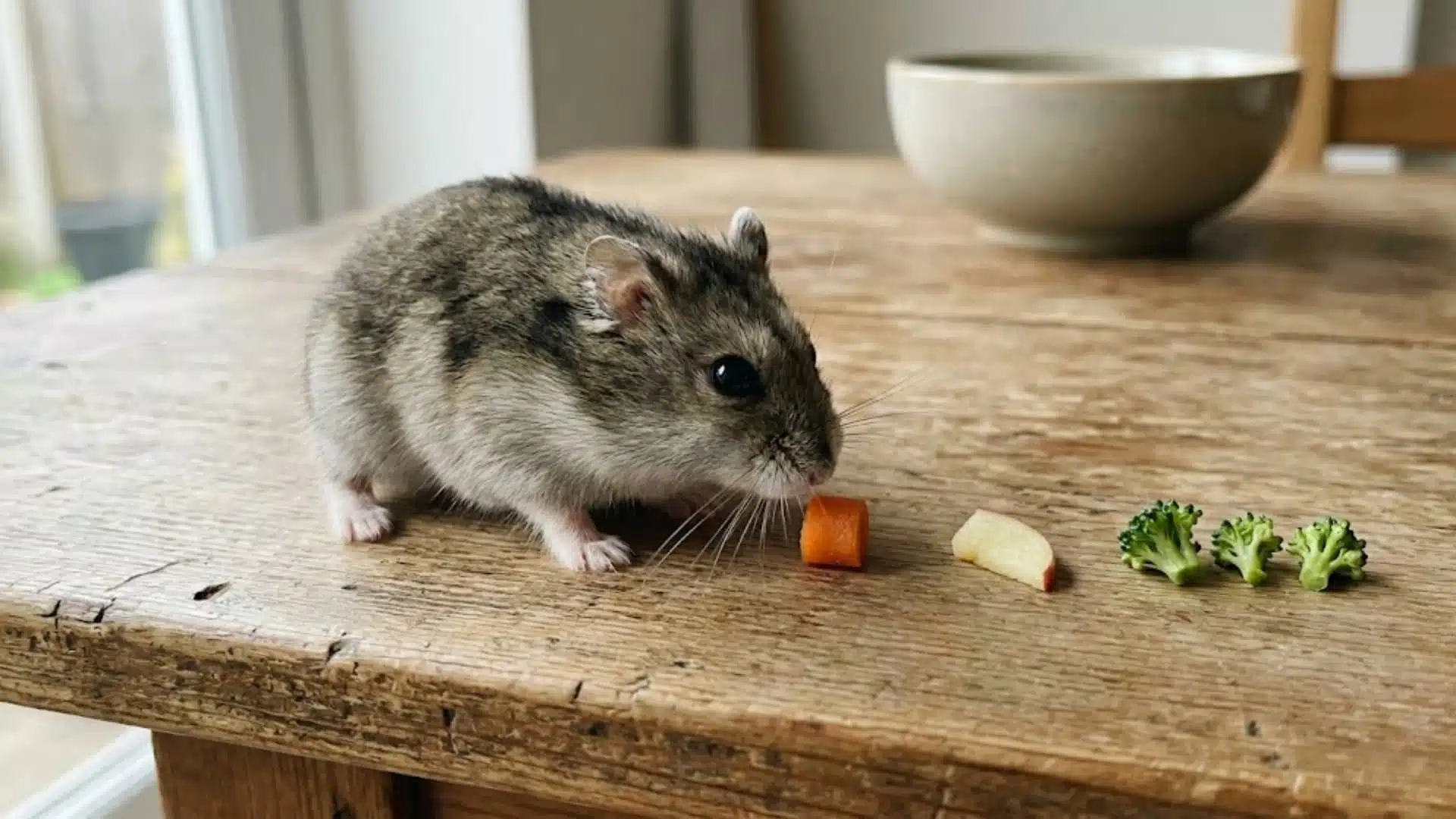
A practical feeding framework that works well in practice: Syrian hamsters need about one tablespoon (roughly 10g) of dry commercial food per day.
Dwarf hamsters need less, closer to one teaspoon (5–8g) daily. Fresh foods are supplemental, not a replacement.
For fruits and vegetables, keep portions very small, around pea-sized pieces. Fresh foods should be offered only 2 to 3 times a week, alongside daily access to quality pellets and seeds.
One mistake owners commonly make: they fill the bowl, watch it empty quickly, and assume the hamster is eating well. Hamsters are natural hoarders; they stuff food into their cheek pouches and stash it throughout their habitat.
An empty bowl does not mean an empty stomach. Check your hamster’s bedding and hiding areas regularly for cached fresh food, as fruit or vegetables left in a cache will rot quickly and cause illness if eaten later.
Watch for signs of overfeeding, like loose stools, uneaten fresh food, or sudden weight gain. If you notice these, cut back immediately.
Feeding timing matters too: Hamsters are nocturnal, so their most active feeding period is in the evening. Offering food as they wake up, rather than first thing in the morning, aligns with their natural rhythm and ensures they consume fresh food rather than hoard and forget it.
Tips for Introducing New Foods
Introducing new foods slowly helps prevent digestive issues and ensures your hamster adapts safely to changes in its diet.
- Start small: Offer a tiny piece first to see how your hamster responds before making it a regular part of their diet.
- Watch for reactions: Look for diarrhea, lethargy, or refusal to eat, which may signal the food is not suitable.
- Keep the diet consistent: Do not change multiple foods at once, as this makes it harder to identify which food caused a reaction.
- Introduce one food at a time: This helps you clearly track tolerance and avoid confusion if issues arise.
- Remove uneaten food: Take out leftovers within a few hours to prevent spoilage and keep the habitat clean.
Conclusion
Feeding your hamster does not have to feel confusing once you understand the basics. Knowing what hamsters can eat helps you make better choices and avoid common mistakes that can affect their health.
Stick to small portions, offer fruits as treats, and rely on safe vegetables for regular variety. Always pay attention to how your hamster reacts to new foods and adjust accordingly.
A balanced, simple approach goes a long way in keeping your pet active and healthy.
And if you are ever unsure whether something is safe, especially for a dwarf or diabetic-prone breed, the safest step is to check with your vet before offering it. A quick consultation is always easier than treating a preventable illness.
If you still have questions or want to share your experience, drop your comments below, and let’s talk about it.
Frequently Asked Questions
Can Hamsters Eat Cheese or Dairy Products?
Only occasionally and in very small amounts. Plain, low-salt cheese is tolerable, but dairy is not a natural part of a hamster’s diet. Dried mealworms or a small piece of hard-boiled egg are safer protein options.
Can Hamsters Eat Bread or Grains Like Oats and Rice?
Plain cooked oatmeal (made with water) and small amounts of dry rice are safe. Avoid white bread and crackers as they offer little nutritional value. Never offer whole oats, as the husks can lodge in and injure a hamster’s cheek pouches.
How Do I Know if My Hamster Is Eating Enough?
Do not rely on an empty bowl; hamsters hoard food in their bedding. Instead, check the body condition directly. You should be able to feel the ribs slightly but not see them. Weight loss, a dull coat, or low evening activity are the clearest signs that something is wrong.