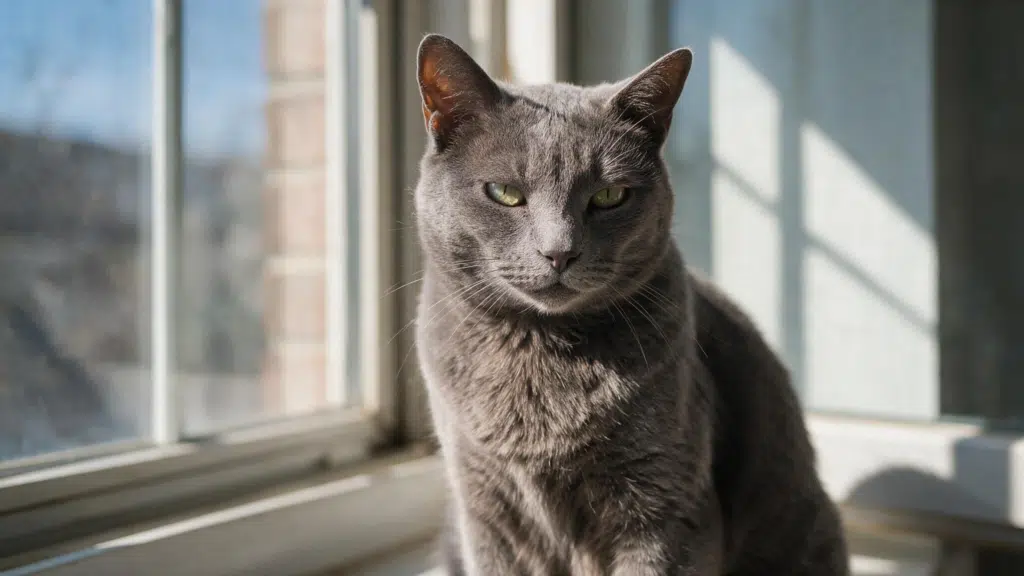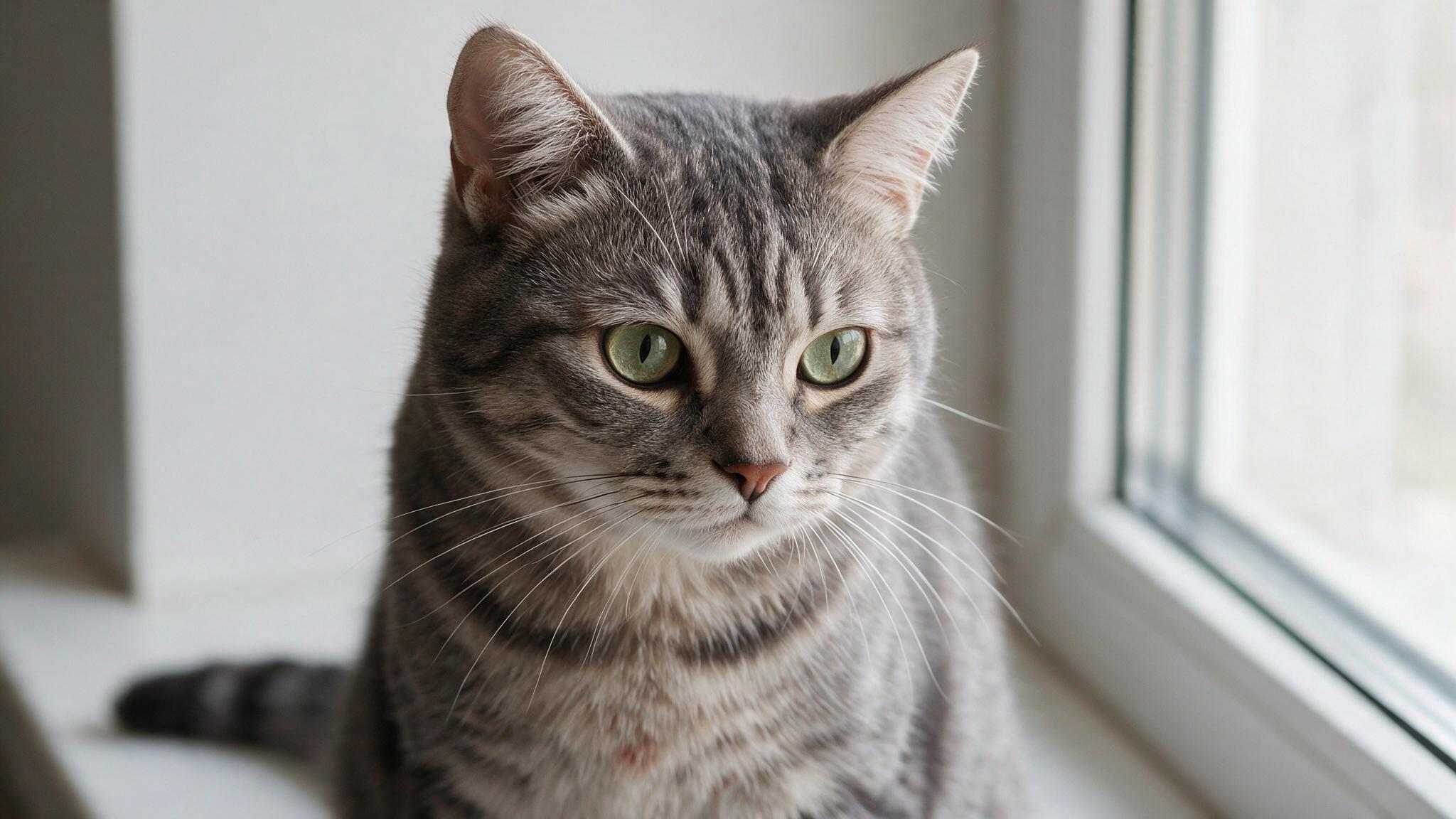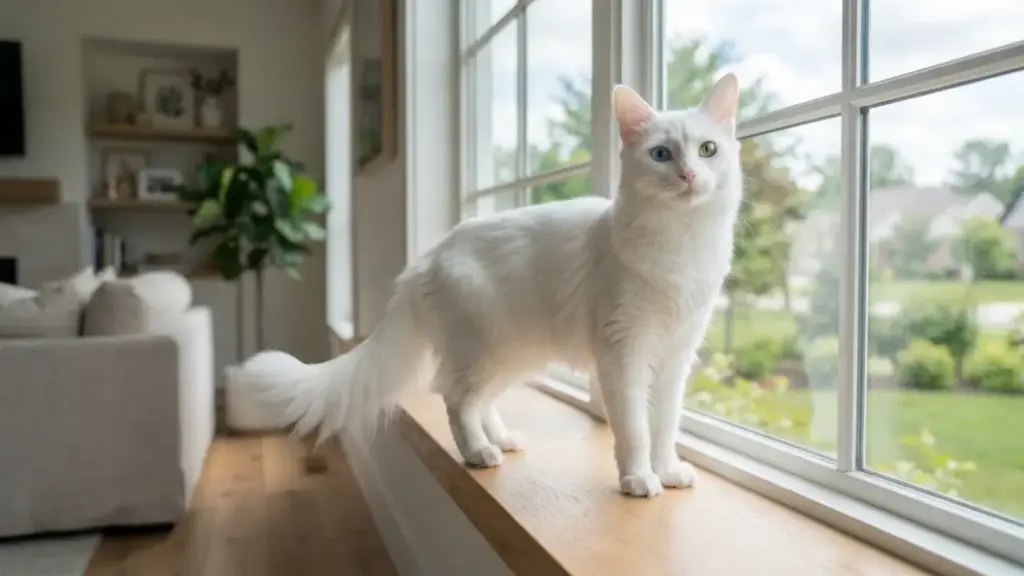
I’ve spent more years than I’d like to admit walking rescue aisles and sitting in on breeder interviews, and one thing still surprises people: the cat that looks the most delicate is often the one most determined to be part of everything you do.
That’s the Turkish Angora. Its silky coat catches your eye first, but beneath it is an intelligent, athletic, and people-focused cat that isn’t content to be a quiet ornament.
The good news is its fine single coat is easy to maintain. The bigger commitment is meeting its daily social and mental needs.
Before bringing one home, understand its temperament, care, health, lifespan, and what defines a true pedigree.
What Makes the Turkish Angora Cat Different?
The Turkish Angora is a natural breed from Turkey, closely associated with Ankara. It combines a fine-boned body with an active, confident, and people-focused personality.
| Breed Fact | Typical Information |
|---|---|
| Origin | Ankara, Turkey |
| Size | Medium, with males generally larger |
| Coat | Fine, silky, and medium-long |
| Colors | White, black, blue, red, cream, tabby, calico, and more |
| Eyes | Blue, green, gold, copper, or odd-colored |
| Personality | Affectionate, playful, social, and confident |
| Activity | High |
| Grooming | Weekly brushing |
| Lifespan | Usually 12 to 18 years |
| Price | Around $1,000 to $2,000 from a U.S. breeder |
In my experience researching this breed, Turkish Angoras often bond closely with one particular person while staying warm and friendly with everyone else in the house.
They tend to stay playful well into adulthood, and quite a few pick up fetch, simple cues, and daily routines almost like they’re studying you back.
With gradual, thoughtful introductions, a well-socialized Angora can share a home comfortably with respectful older kids, dogs, and other cats. Most prefer sitting close by rather than being scooped up and held for long stretches, so let their body language lead the handling, not your urge for cuddles.
Worth knowing: the Cat Fanciers’ Association recognizes several colors and patterns beyond the classic white, so white fur alone doesn’t confirm pedigree. Keep that in mind before we get into the breed’s history, what it actually costs to bring one home, and the daily care involved.
How the Turkish Angora Breed Developed
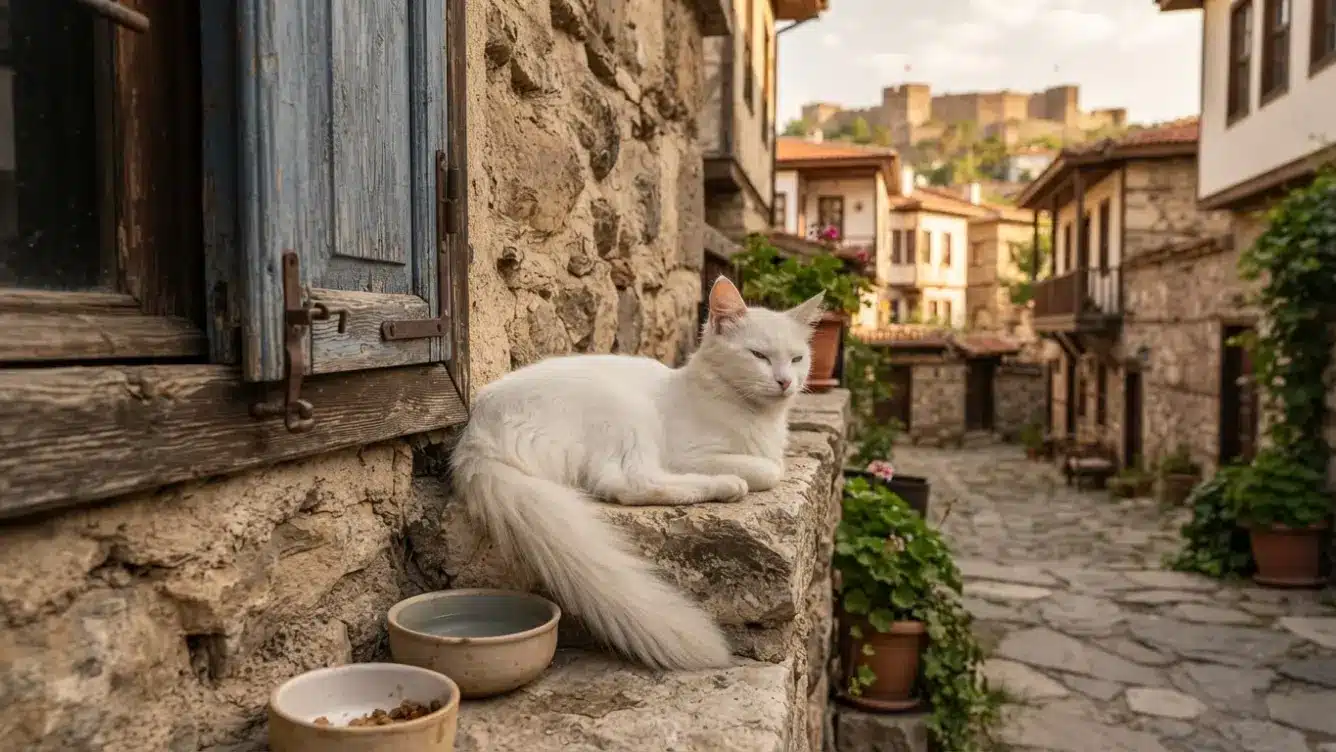
The Turkish Angora developed naturally in Anatolia and became closely associated with Ankara, Turkey. Longhaired cats from the region appeared in European records centuries ago and later contributed to early longhaired breeding lines.
As Persian cats became more prominent in Western cat shows, the Angora’s separate identity declined. The Ankara Zoo later maintained white cats regarded as Turkish Angoras, supporting preservation efforts.
In 1962, a pair from the zoo was imported into the United States. According to the CFA breed history, registration began in 1968, championship recognition followed in 1972, and colored varieties became eligible in 1978.
This background explains the breed’s close ties to Turkey, its relative rarity, and the lasting association between Turkish Angoras and white coats. It also shows why verified pedigree records matter when identifying one today.
Turkish Angora Price and Ownership Costs
Purchase price is only the first part of the budget. Knowing what is included helps you compare sellers fairly and avoid paying extra later for basic veterinary work.
| Source | Typical Price | What to Check |
|---|---|---|
| Reputable breeder | $1,000 to $2,000 | Pedigree, vaccines, health records, contract |
| Show or breeding placement | Varies by breeder | Titles, breeding rights, screening, contract |
| Retired breeding cat | $300 to $1,000 | Age, health history, socialization |
| Shelter or rescue | $100 to $300 | Breed may be listed from appearance rather than pedigree |
In the United States, the Turkish Angora price varies with pedigree, registration, age, breeder practices, health screening, location, transport, and show potential. A higher fee does not automatically prove better health or responsible breeding.
Plan for a carrier, litter box, scratching posts, climbing furniture, food, litter, toys, and an initial veterinary visit. Recurring expenses include food, preventive care, dental treatment, litter, insurance, and an emergency fund. Ask which vaccinations, microchipping, and sterilization services are included.
Before sending money, request the parents’ health information, registry details, recent videos, and a written sales contract. The TICA buyer checklist advises checking breeder credentials, avoiding wire transfers or gift cards, and refusing pressure to make a rushed payment.
A responsible seller will explain their return terms clearly and stay reachable long after you bring the cat home. The price should be backed by documented breeding and care, not just a pretty coat and a good photo.
How to Verify a Responsible Seller
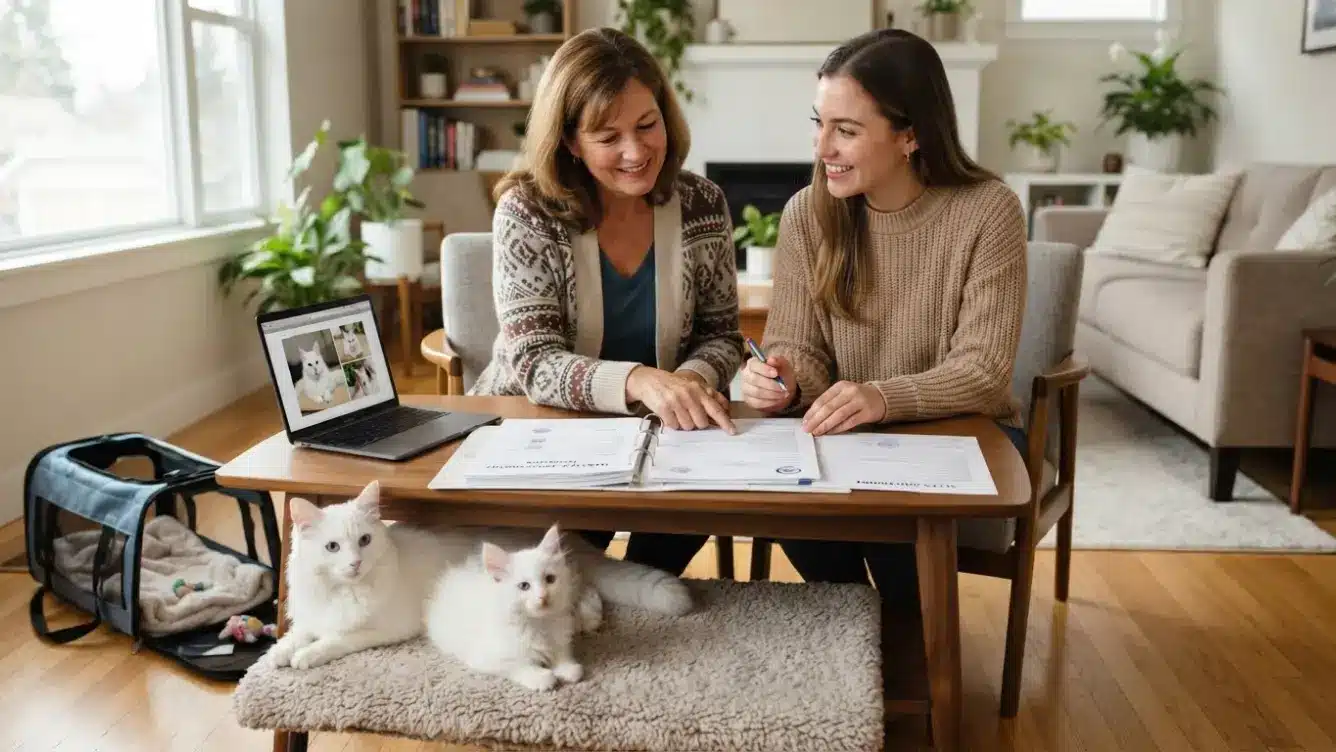
Price alone doesn’t confirm breeder quality or a legitimate pedigree. Before you commit to a kitten or an adult cat, make sure the seller can back up every claim with real, checkable records.
- Confirm registration: Ask for the cat’s registry details and verify they actually match the animal being offered
- Review health records: Request vaccination records, vet reports, and available health info for both parents
- Ask for recent videos: A live call or dated video can help confirm the cat’s identity, condition, behavior, and living environment
- Read the contract closely: Look at payment terms, health guarantees, breeding restrictions, return conditions, and included vet services
- Use safe payment methods: Avoid gift cards, wire transfers, or any pressure to pay immediately
- Check for ongoing support: A responsible seller answers your questions before payment and stays available afterward
Missing records, rushed payment demands, and vague return terms are all red flags worth taking seriously. Work through this checklist before deciding whether a kitten or an adult cat is the better fit for your household.
Choosing a Kitten or an Adult Cat
Age affects the amount of supervision, training, and adjustment a cat may need. Neither choice is automatically better, so the decision should match your schedule and household.
| Factor | Kitten | Adult Cat |
|---|---|---|
| Personality | Still developing | Usually easier to assess |
| Activity | Requires frequent play and supervision | Energy level is more established |
| Training | Routines begin from the start | May already understand household habits |
| Handling | Early practice can build tolerance | Existing preferences are easier to identify |
| Compatibility | Future behavior is less predictable | Foster homes may provide useful history |
Meet the individual cat before deciding and ask about socialization, handling, litter habits, and reactions to unfamiliar people.
For a kitten, ask about its first-year vaccination schedule; for an adult, request previous veterinary records and information about earlier living arrangements.
A suitable match depends more on temperament and health than age alone. Time spent observing the cat can reveal details that a listing or photograph cannot provide.
Turkish Angora Health, Lifespan, and Breed Standards
Health history and physical structure both shape what owners can expect from a Turkish Angora. Veterinary care and registry standards provide reliable information about well-being and breed identity.
1. Lifespan and General Health
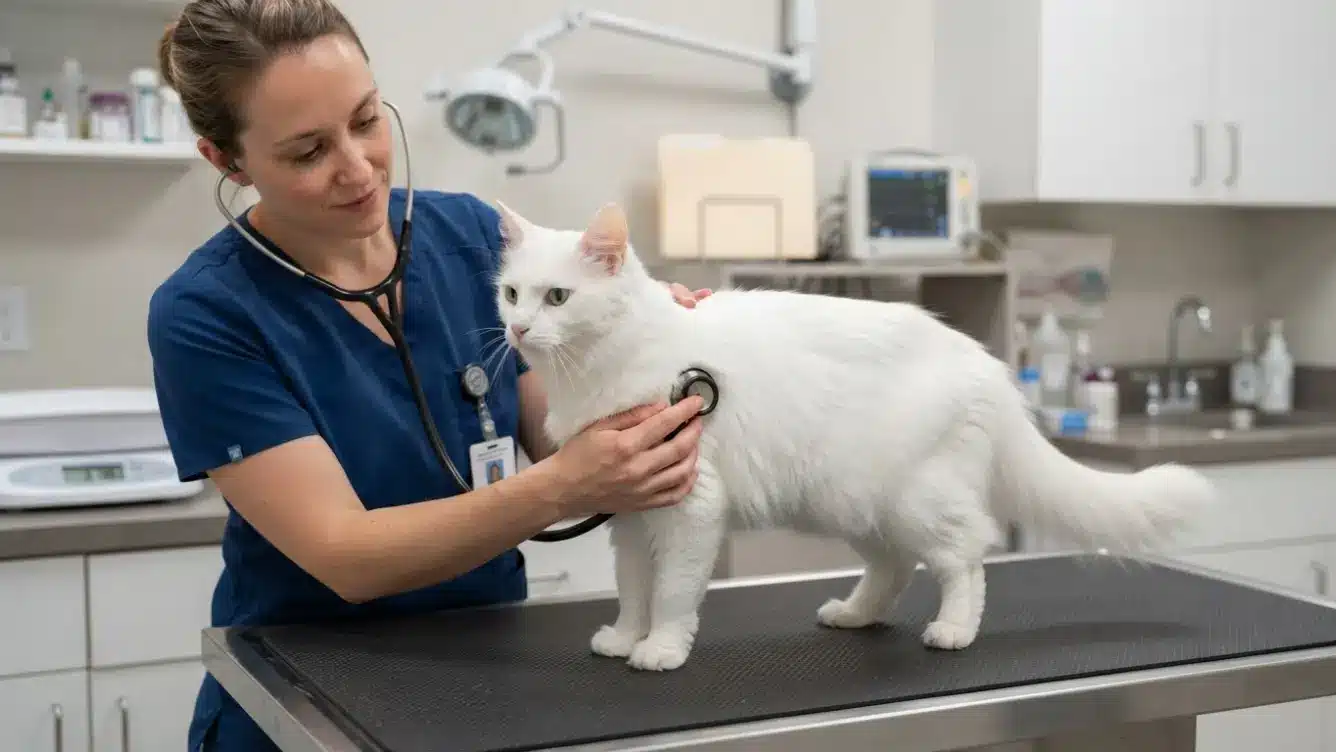
A Turkish Angora typically lives 12 to 18 years, although some cats live longer. Genetics, indoor safety, nutrition, dental care, weight management, and timely veterinary appointments all affect individual lifespan.
Hypertrophic cardiomyopathy can affect any cat. The Cornell Cardiology Guidance does not currently name Turkish Angoras among breeds with recognized higher prevalence and states that echocardiography is used for diagnosis.
Heart murmurs, family history, breathing changes, collapse, or sudden hind-leg weakness should be discussed with a veterinarian.
2. Deafness and Hearing Health
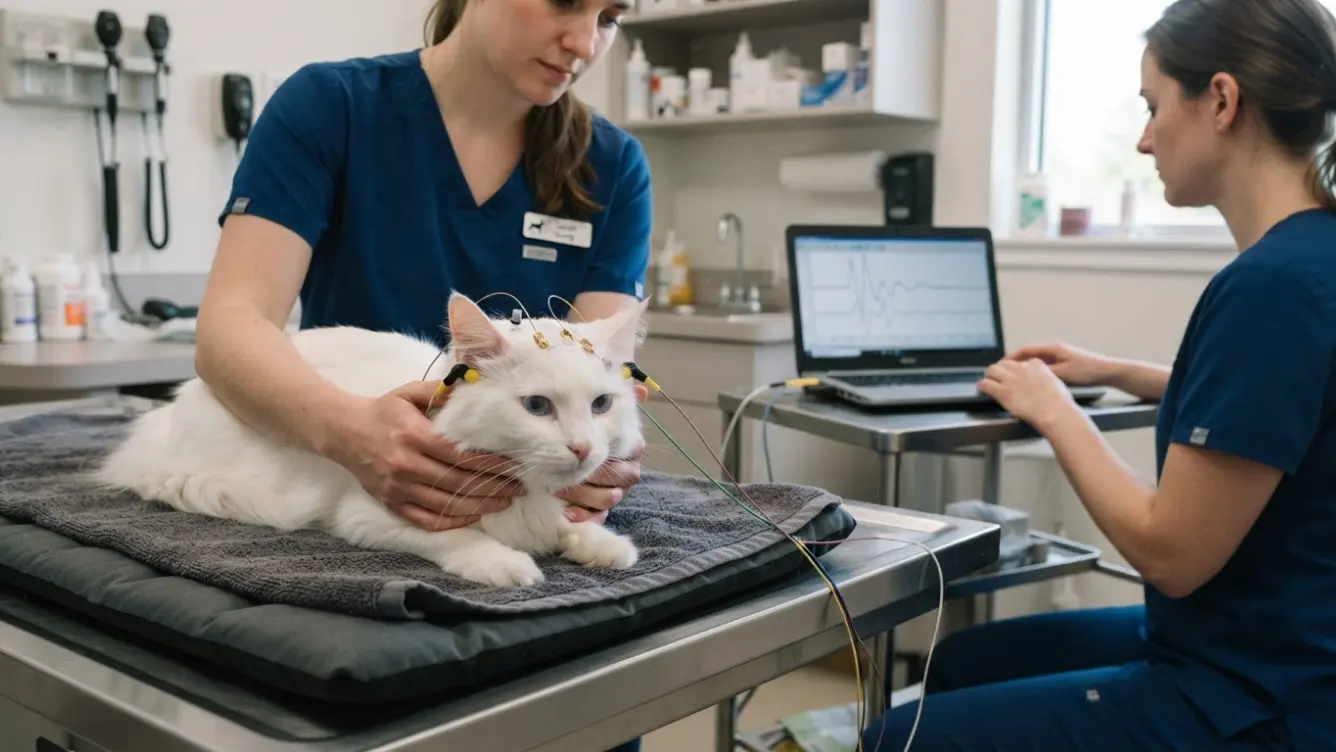
Congenital deafness is associated with the dominant white gene rather than the Turkish Angora breed itself.
The risk is higher in all-white cats with one or two blue eyes. Some affected cats hear in only one ear, making hearing loss difficult to notice without testing.
A deaf cat can live comfortably indoors with visual signals, predictable handling, and protection from outdoor hazards. The Cornell Feline Health Center recommends professional assessment when a cat does not respond consistently to sound.
3. Body and Coat Standards
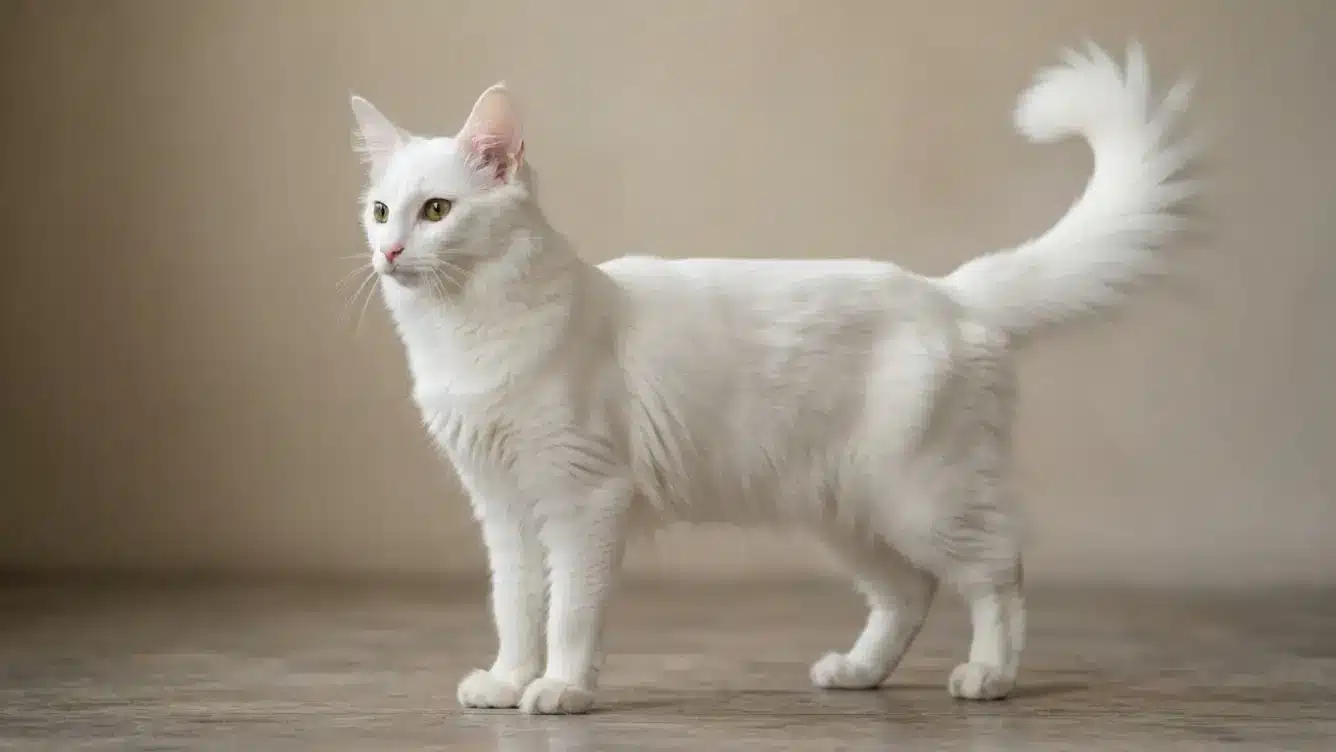
The Turkish Angora has a long, fine-boned body with slightly taller hind legs and a fully furnished tail.
Its head forms a smooth wedge, while large upright ears and almond-shaped eyes support its characteristic appearance. Males are generally larger than females.
The single coat has a fine texture without a woolly undercoat. Hair is shorter across parts of the body and becomes fuller around the neck, hind legs, and tail. Seasonal changes can affect coat length and fullness.
4. Coat and Eye Color Standards
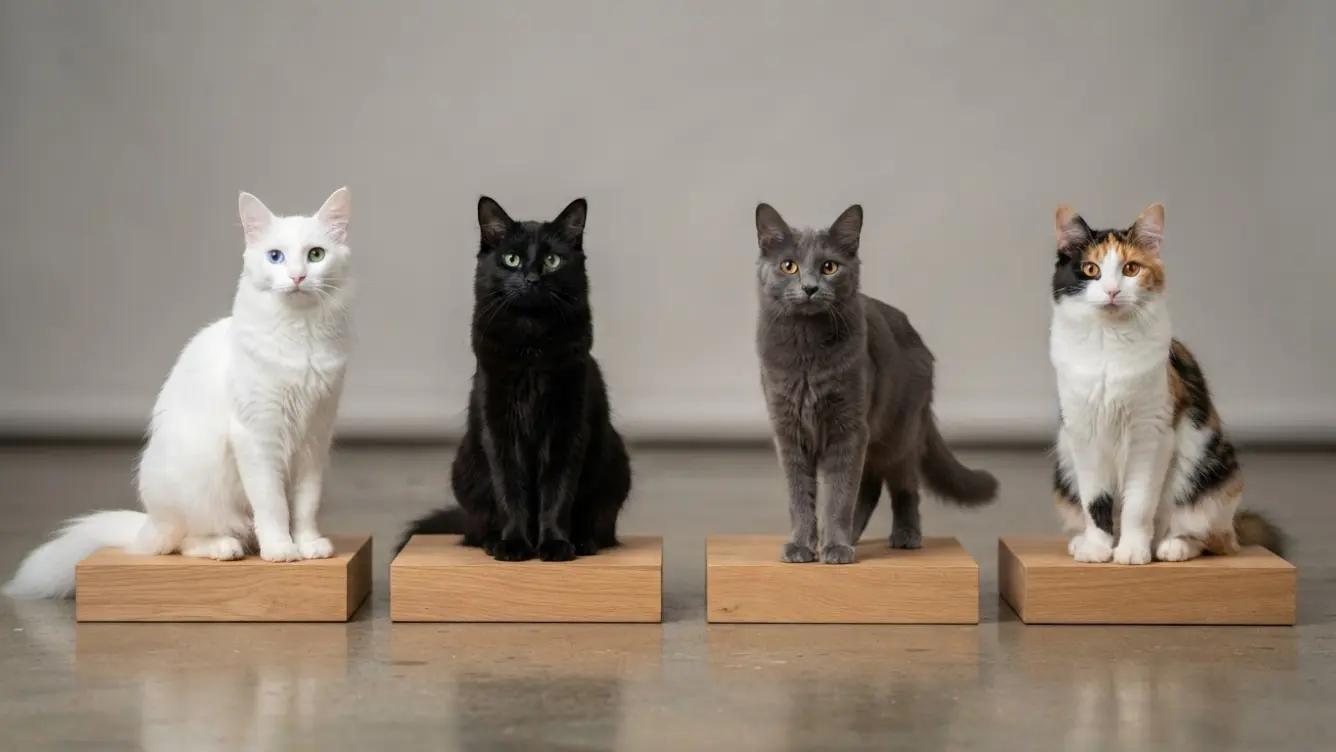
White is strongly associated with the breed, but it is not the only accepted color. Recognized coats include black, blue, red, cream, tabby, tortoiseshell, calico, smoke, and combinations with white.
According to the official CFA standard, eyes may be blue, green, gold, copper, or odd-colored. Chocolate, lavender, pointed patterns, and combinations indicating crossbreeding are excluded under CFA rules.
5. Breed Identification and Differences
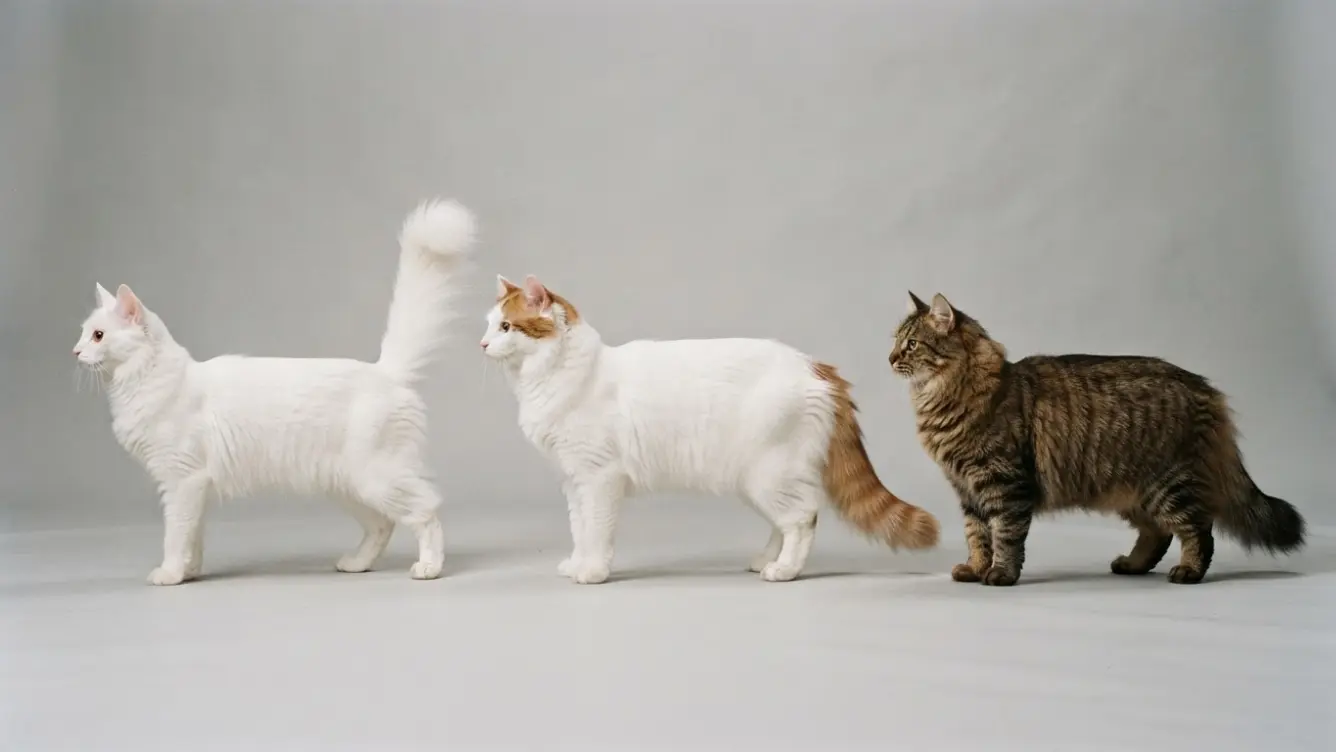
The Turkish Van generally has a broader, more muscular body and a fuller winter coat. Its familiar Van pattern places most color on the head and tail, while the rest of the body is primarily white.
A domestic longhair may resemble either breed but has mixed or undocumented ancestry. Physical appearance and consumer DNA reports cannot establish registered pedigree. Reliable identification among Turkish cat breeds requires ancestry records from a recognized registry.
Health screening cannot guarantee a problem-free life, and appearance alone cannot confirm ancestry. Veterinary records, documented testing, and verified registration offer stronger evidence about a cat’s health and background.
Everyday Care for a Turkish Angora
Daily care comes down to coat maintenance, hygiene, measured meals, physical activity, and home safety. None of it is complicated, but each piece genuinely shapes your cat’s comfort and daily behavior.
- Brush the coat weekly: Use a metal comb once or twice a week, paying attention behind the ears, under the legs, and around the tail. Brush more during heavier shedding, and bathe only when it’s truly needed.
- Keep up with basic hygiene: Trim nails, check ears for redness or buildup, and brush teeth with cat-safe toothpaste. Introduce each task gradually, and pause the moment your cat shows stress.
- Measure food portions: Feed a complete diet suited to your cat’s life stage, adjusting for activity, body condition, and your vet’s guidance. Keep clean water available all day.
- Build in daily activity: Cat trees, scratching surfaces, window perches, wand toys, balls, and food puzzles all help. Short, reward-based training sessions add extra mental stimulation, too.
- Cat-proof the home: Check windows, balconies, washers, dryers, cupboards, and any other space a determined climber might reach. Turkish Angoras are impressively agile and will find their way into places you didn’t think were accessible.
A predictable routine makes feeding, grooming, and play so much easier to manage. If you notice lasting changes in appetite, thirst, coat condition, grooming habits, or activity level, that’s worth a call to your vet.
Helping a New Angora Settle In
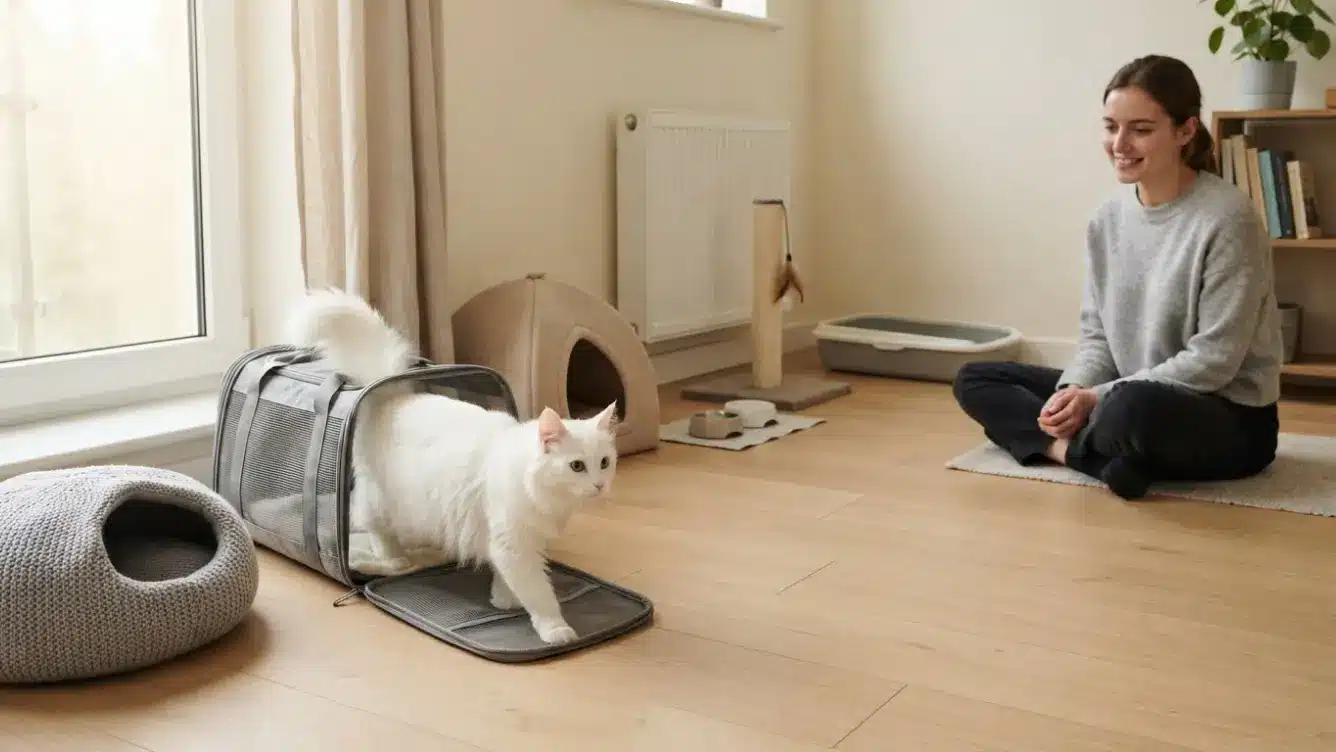
Moving into an unfamiliar home is stressful, even for a confident cat like this one. A slow, controlled introduction gives them time to learn new sounds, scents, people, and routines at their own pace.
- Set up a quiet room with food, water, litter, bedding, hiding spots, and a scratching surface
- Keep their previous food and litter at first to limit unnecessary changes all at once
- Let the cat approach people on their own terms instead of forcing handling or carrying
- Open up more of the house once eating, grooming, and litter habits look normal
- Introduce resident pets gradually, through scent exchanges before short, supervised meetings
- Book a vet visit early on to review records, identification, vaccinations, and preventive care
Some cats settle in within days; others genuinely need a few weeks. Consistent meals, calm interaction, and familiar routines make all the difference during that adjustment period.
Final Thoughts
A Turkish Angora might be exactly right for you if you want a genuinely involved companion and can offer regular activity and company in return.
Grooming tends to be the easy part; it’s the social needs that ask for real, consistent attention, and their strong personalities call for patient, respectful handling rather than forced affection.
Before you commit, think honestly about how much time you can offer, confirm every pedigree claim, review the health records, and budget well beyond the purchase price.
A responsible breeder or rescue will answer your questions clearly and give you the time you need to decide, no pressure, no rush.
If the activity level and personality feel like a fit, arrange a meeting and watch closely how the cat responds to people and handling. And if an Angora already runs your household, we’d genuinely love to hear about it in the comments.
Frequently Asked Questions
Are these Cats Hypoallergenic?
No cat is completely hypoallergenic because allergens mainly come from saliva and skin secretions. Coat length and shedding do not remove exposure, so sensitive people should spend time with the specific cat and consult an allergist before committing.
At What Age are they Fully Grown?
Most reach adult size between 12 and 18 months, with males sometimes taking longer. TICA states that the ruff and hind-leg furnishings may need two to three years to develop fully, so coat maturity comes later.
How Vocal are they?
Vocal behavior varies by individual. Some communicate with soft meows, chirps, or trills when seeking food, play, or attention, while others remain relatively quiet. Sudden increases in vocalization may warrant a veterinary check, especially in older cats.
Do they Enjoy Water?
Some enjoy dripping faucets, shallow water, or joining household members near a bath, but this is an individual preference. Never place a reluctant cat in water, and keep pools, tubs, and open toilets safely covered when unsupervised.