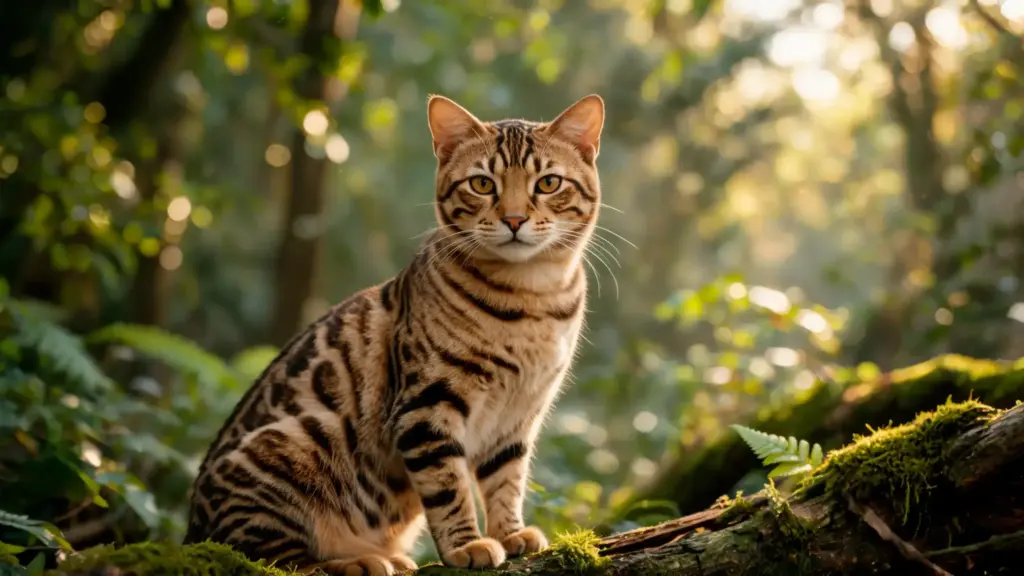
The first time I saw a Toyger at a cat show in Vermont, I did a full double take. This striped, muscular little tiger-in-miniature strolled past on a leash like it owned the building.
I remember thinking, “That is not a house cat,” and then finding out it absolutely was.
That’s the pull of the Toyger and why people searching “tiger cat breed” often land here. But after years of talking to breeders, vets, and cat parents, I always come back to this: the striking coat is only the beginning.
Before falling for those stripes, understand the Toyger’s personality, daily needs, and the responsibilities of ownership.
How is a Toyger Different from a Tabby?
Toyger is a breed name, while tabby describes a coat pattern found in many breeds and mixed-breed cats. A striped cat may look tiger-like without having any Toyger ancestry.
A registered Toyger has documented parentage and is assessed against standards covering its markings, color, body, head, movement, and temperament.
The name combines “toy” and “tiger,” but it does not mean the cat has tiger ancestry.
The International Cat Association grants the Toyger championship status. Recognition differs among registries, so anyone interested in showing or breeding should check the relevant organization’s rules.
Toyger History and Breed Development
The Toyger breeding program began in the United States during the late 1980s. California breeder Judy Sugden wanted to develop a domestic cat with markings and proportions that recalled a tiger while retaining a suitable companion temperament.
Early foundation cats included a striped domestic shorthair named Scrapmetal, a Bengal named Millwood Rumpled Spotskin, and Jammu Blu, a street cat imported from Kashmir. Jammu Blu had distinctive spots between his ears, which supported the goal of producing more circular facial markings.
Breeders selected cats for vertical-branching stripes, a long, muscular body, rounded facial contours, strong contrast, and calm behavior. These traits became more consistent across later generations.
According to the International Cat Association, the Toyger was accepted for registration in 1993, entered new-breed exhibition classes in 2000, and received championship recognition in February 2007.
What Does a Toyger Cat Look Like?
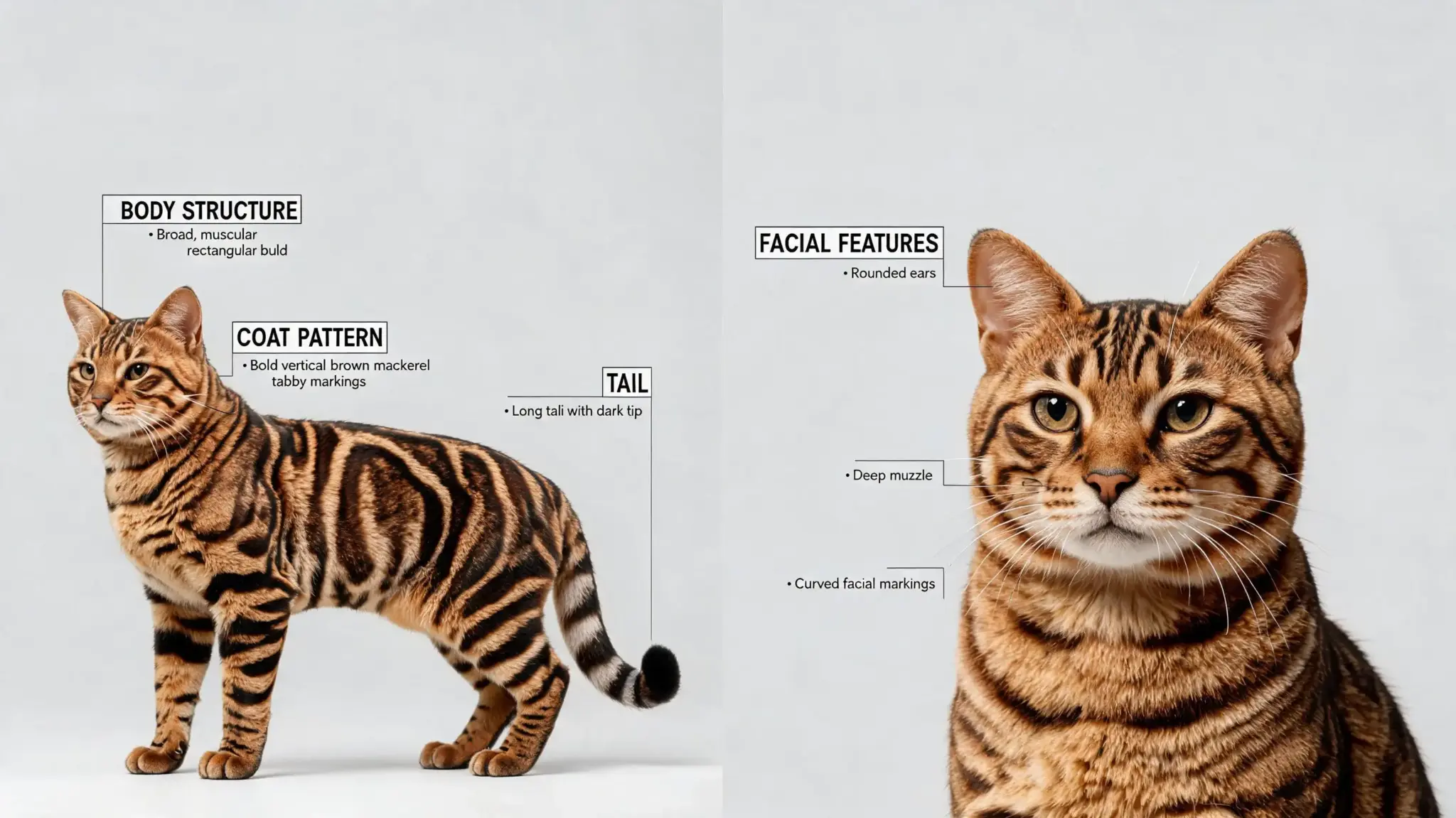
The Toyger standard covers more than a striped coat. Body proportions, movement, facial structure, color contrast, and temperament all contribute to the intended tiger-like appearance.
1. Coat Pattern and Color
Toygers have short, thick coats with bold vertical markings. The stripes may branch, break, or resemble vertically stretched rosettes instead of forming the evenly curved lines seen on many mackerel tabbies.
Coat coloring varies widely across the species, and looking at solid black coat breeds shows how much base color alone can change a cat’s overall look.
The official Toyger breed standard lists the recognized color as brown mackerel tabby. Dark markings appear over a richly colored rufous background, while the underside should be lighter.
Visible coat glitter is expected under the TICA standard. It creates a reflective sheen without reducing the contrast between the markings and background.
2. Body Size and Structure
Toygers are medium-sized, muscular cats with long, rectangular bodies, broad chests, strong shoulders, and substantial bone structure. Their movement should appear smooth and controlled rather than light or fragile.
TICA lists adult females at approximately 7 to 10 pounds and adult males at approximately 10 to 15 pounds. Individual size can vary while remaining proportionate to the cat’s frame.
The tail should be long, muscular, low-set, and finished with a rounded black tip. Legs are medium in length, while the paws should appear relatively large.
3. Head and Facial Features
The Toyger head has a long, inverted-heart outline when viewed from the front. The muzzle is deep and rounded, while the nose is long and broad.
Facial markings should curve around the face rather than extending outward in ordinary tabby lines. Small rounded ears, strong whisker pads, and dark markings around the eyes and mouth support the intended appearance.
Eye color can stand out just as much as markings, which is easy to see when comparing cats with blue eyes to warmer amber or copper tones.
These features should be considered together. A striped coat alone does not establish that a cat is a Toyger.
Toyger Personality and Daily Behavior
TICA describes Toygers as affectionate, calm, intelligent, and interested in people. These are breed tendencies rather than guarantees because genetics, early handling, health, and household experiences also shape behavior.
Many Toygers enjoy interactive play, food puzzles, climbing, and learning simple routines. Some can learn to fetch, walk on a leash, or perform basic cues through gradual, reward-based training.
Their activity level is usually manageable when they receive daily play and access to suitable climbing and scratching areas. A lack of physical and mental activity may contribute to restlessness, attention-seeking, or unwanted behavior.
Toygers may live successfully with respectful children and compatible pets. Introductions should be gradual, and interactions between cats and young children should be supervised.
The breed often suits households that want an involved companion. An individual Toyger may be less suitable for someone seeking a consistently independent cat that requires little daily interaction.
Caring for a Toyger
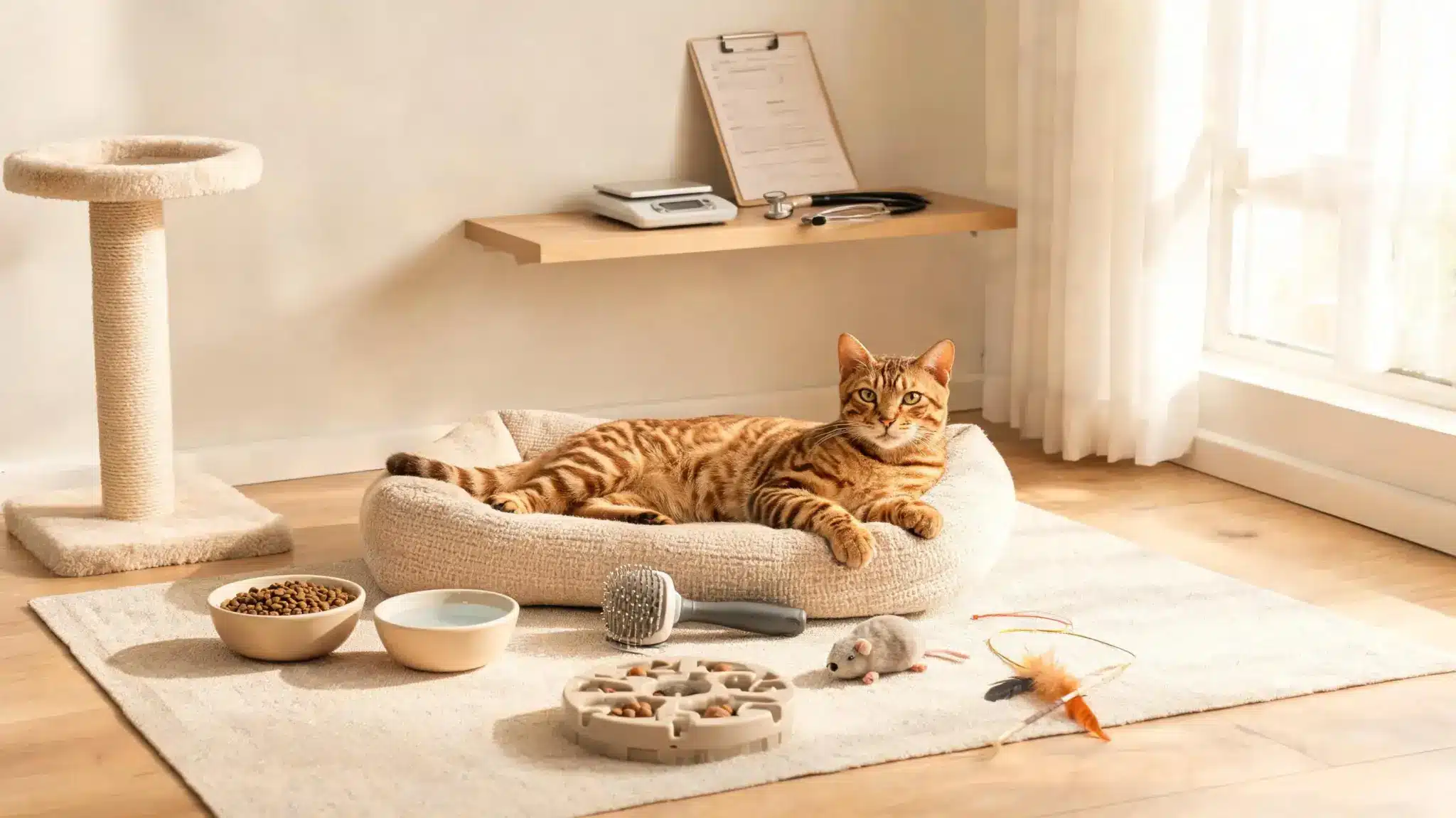
Toygers do not require specialized daily care, but they need suitable food, regular grooming, physical activity, preventive veterinary care, and consistent interaction.
- Feeding: Choose a complete and balanced cat food suited to the cat’s life stage, weight, activity, and health. Use measured portions and ask a veterinarian to assess unexplained weight gain or loss.
- Grooming: Brush the short coat occasionally and increase grooming during periods of heavier shedding. Check the skin for irritation, hair loss, lumps, or parasites while brushing.
- Nails and Teeth: Trim the nails as needed and provide sturdy scratching surfaces. Use veterinarian-approved dental care because brushing the coat does not address oral health.
- Exercise: Provide climbing areas, scratching posts, interactive toys, food puzzles, and daily play. Rotate activities when the cat loses interest, rather than relying on a single toy.
- Routine Care: Schedule veterinary examinations, vaccinations, parasite control, and other preventive care according to the veterinarian’s recommendations and the cat’s lifestyle.
Steady care matters more than a complicated routine. Monitor appetite, weight, movement, grooming, litter-box habits, and behavior so changes can be addressed promptly.
Toyger Health and Lifespan
The International Cat Association lists Toyger life expectancy as 13 or more years, although individual longevity varies with genetics, weight, environment, preventive care, and access to veterinary treatment.
TICA reports that heart murmurs, possibly associated with hypertrophic cardiomyopathy, and cow-hocked rear legs have occurred in the breed. These reports do not mean every Toyger will develop either condition.
The University of California Davis Toyger testing directory lists genetic tests relevant to breeding lines, including pyruvate kinase deficiency and Bengal progressive retinal atrophy. A veterinarian or qualified breeder should explain which tests apply to a specific pedigree.
Ask breeders for written health results for both parents rather than accepting a general statement that the line is healthy. Contact a veterinarian about breathing changes, reduced activity, weakness, fainting, vision concerns, persistent digestive changes, or altered movement.
Toyger Cost and Choosing a Breeder

There is no authoritative national price for Toygers. The amount may vary by location, breeder, pedigree, age, registration, markings, demand, and whether breeding or show rights are included.
Request a full written price before paying a deposit. Confirm what it includes, such as registration, vaccinations, veterinary examinations, microchipping, transportation, spaying or neutering, and any health guarantee.
A responsible seller should provide:
- Registration and pedigree information
- Veterinary and vaccination records
- Parental health-screening results
- A written sales contract
- Health-guarantee terms
- Return or rehoming terms
- Information about early handling and socialization
- A clear explanation of any breeding restrictions
Use the TICA Pet Buyer’s Guide to check seller practices and common scam warnings. Registration with an organization should not replace your own review of the breeder, records, living conditions, contract, and veterinary documentation.
Rescue organizations may have striped domestic cats with a similar appearance. Markings alone cannot confirm Toyger ancestry, so avoid assuming that every tiger-striped cat is a Toyger mix.
Toyger vs. Bengal vs. Tabby
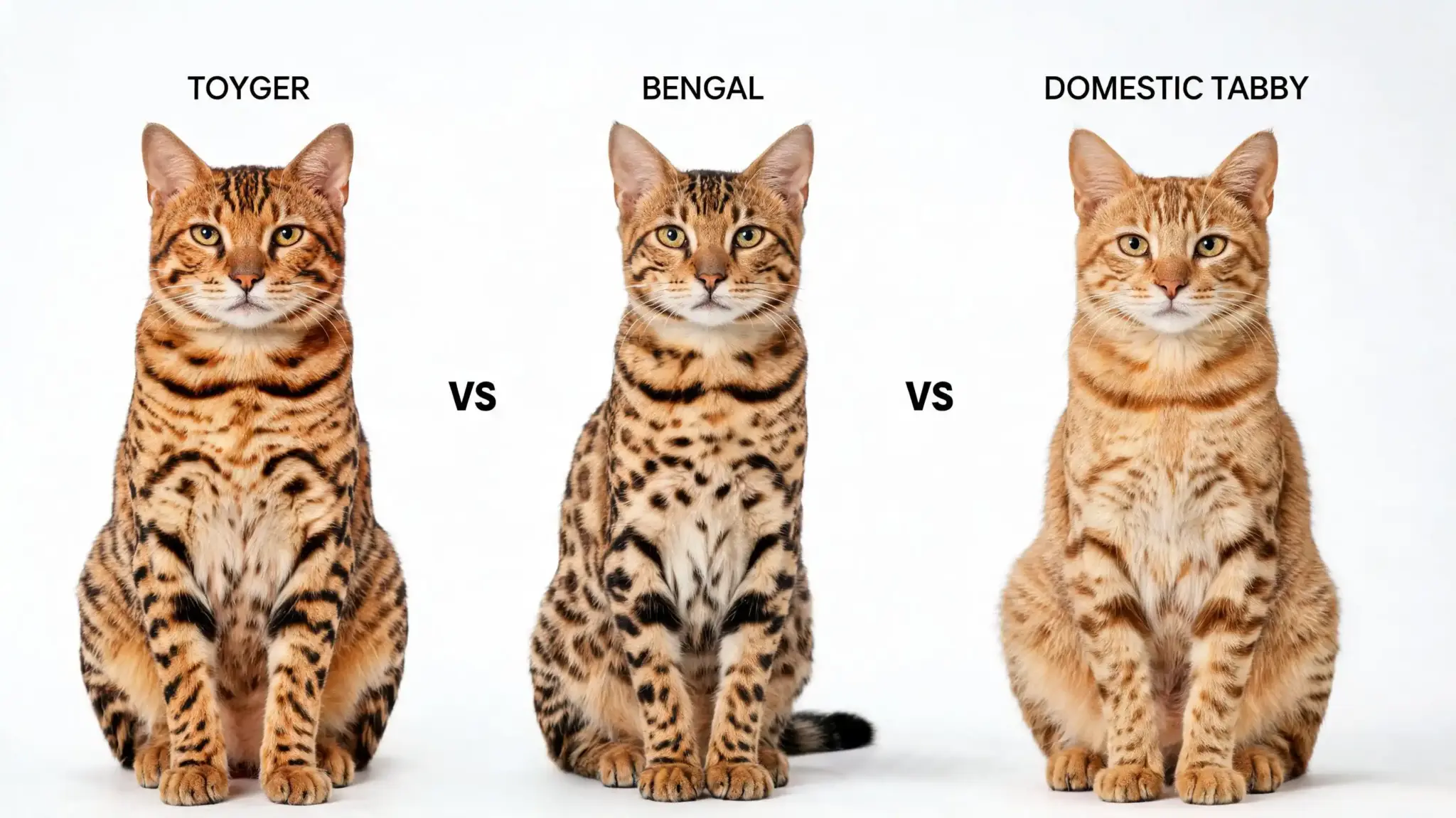
Toygers, Bengals, and tabby cats may all have striking markings, but they are not interchangeable terms. Toyger and Bengal are breed names, while tabby describes a coat pattern.
| Feature | Toyger | Bengal | Tabby Cat |
|---|---|---|---|
| Classification | Recognized by TICA | Recognized breed | Coat pattern rather than one breed |
| Main markings | Branching vertical stripes | Spots, rosettes, or marbling | Stripes, spots, swirls, or ticking |
| Development goal | Tiger-like appearance | Wild-looking spotted or marbled coat | Naturally occurring pattern |
| Typical build | Long and muscular | Athletic and muscular | Depends on the individual breed |
| Temperament | Often calm, social, and interactive | Often active and curious | Depends on ancestry and individual behavior |
| Care needs | Regular play and simple coat care | Often requires substantial physical and mental activity | Depends on coat, health, and personality |
The Toyger is the closest match for anyone seeking a registered domestic breed developed specifically for tiger-like stripes. A striped tabby may offer a similar visual appeal without belonging to a particular breed.
Is a Toyger Right for Your Home?
Appearance should not be the only reason to choose a Toyger. Consider the breed’s social tendencies, activity needs, cost, breeder availability, and expected care.
A Toyger may suit your household if:
- You want an interactive and people-focused cat
- You can provide daily play and mental activity
- You enjoy training and shared routines
- You can afford routine and unexpected veterinary care
- You are prepared to verify the breeder and health records
Another cat may be a better fit if:
- You prefer a highly independent companion
- The cat would regularly spend long periods without interaction
- You cannot provide climbing areas or daily play
- You are choosing only for the tiger-like appearance
- The purchase would leave too little money for ongoing care
Spend time with the individual cat whenever possible. Temperament, health, and household compatibility matter more than achieving one exact coat pattern.
Final Thoughts
The Toyger is the domestic breed most closely associated with a tiger-like appearance, but its stripes are only one part of the decision. Temperament, activity, health records, breeder practices, and ownership costs deserve equal attention.
Confirm the cat’s registration and pedigree, request written parental health results, and review the sales contract before paying a deposit.
Prepare for daily interaction, play, routine grooming, and veterinary care rather than expecting appearance to predict personality.
If the breed fits your household, begin with TICA’s breed information and buyer guidance, then speak with breeders, veterinarians, and current owners before making a commitment.
Frequently Asked Questions
Does Every Striped Cat Qualify as a Toyger?
No. A Toyger is a registered breed with documented ancestry and a defined standard. Tiger-like stripes alone do not establish breed identity.
What Records Should a Breeder Provide?
Ask for registration, pedigree, vaccination and veterinary records, parental health results, a sales contract, return terms, and written health-guarantee information.
Does TICA Recognition Apply to Every Registry?
No. TICA grants the Toyger championship status, but breed recognition differs among registries. Check the organization relevant to registration or showing.
Will a Toyger Kitten’s Coat Change?
Color contrast and markings may appear different as the kitten matures. A breeder can discuss likely development but should not promise one exact adult appearance.