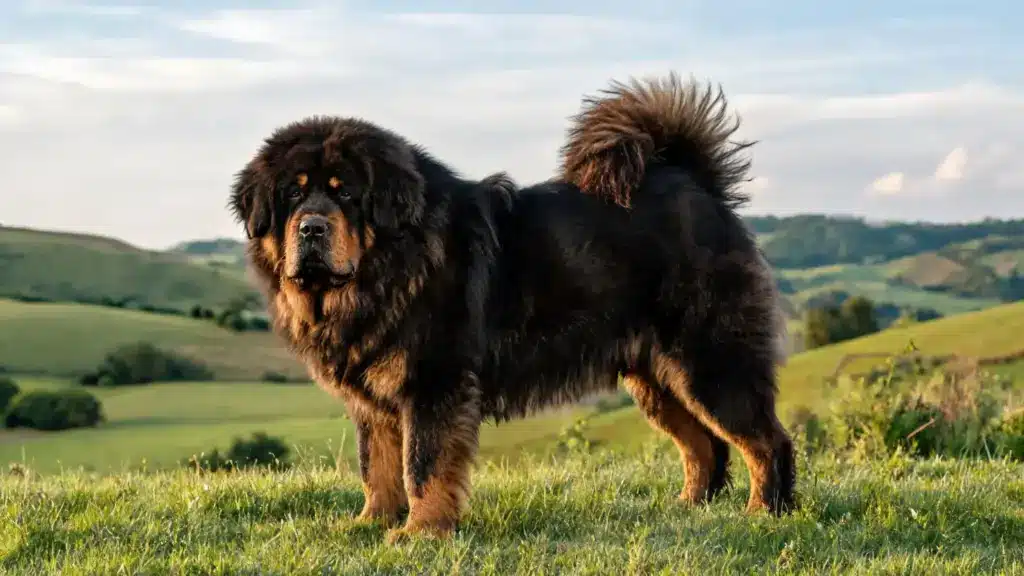
A Tibetan Mastiff’s heavy coat can make this already powerful dog look even larger, and I’ve found that photos rarely tell the full story.
After years of researching breeds and talking with breeders, veterinarians, and trainers, I’ve learned to look past all that fur and focus on the actual frame underneath.
That matters if you’re considering bringing one home. Tibetan Mastiff size affects everything from living space and transportation to grooming, equipment, and everyday handling. Sex, genetics, development, and body condition can also create noticeable differences between individual dogs.
Below, I’ll separate official breed standards from typical adult measurements, look at growth and size comparisons, and explain what living with a dog of this scale can mean for your household.
How Big Does a Tibetan Mastiff Get?
Tibetan Mastiffs are large, heavily coated guardian dogs, but their fur can make them appear wider and heavier than they are. Males are normally taller and heavier than females.
Adult males commonly stand 26 to 30 inches at the shoulders and weigh 90 to 150 pounds. Females commonly stand 24 to 28 inches and weigh 70 to 120 pounds.
The official American Kennel Club standard establishes minimum heights rather than maximums. Mature males should stand at least 26 inches, while mature females should stand at least 24 inches.
An individual dog may fall outside the usual weight range. Ask your veterinarian to assess body condition beneath the dense coat instead of treating the highest possible weight as the goal. For context, a broader ranking of giant breeds shows where this size falls among the largest dogs overall.
Tibetan Mastiff Size Chart
The breed standard and the typical measurements serve different purposes. The standard sets a minimum adult height, while commonly reported ranges indicate what many owners can expect.
| Measurement | Male | Female |
|---|---|---|
| Typical height | 26 to 30 inches | 24 to 28 inches |
| Official minimum height | 26 inches | 24 inches |
| Typical weight | 90 to 150 pounds | 70 to 120 pounds |
| Body build | Usually broader and heavier | Usually lighter and less broad |
| Coat effect | Heavy neck coat adds visual bulk | Dense coat can conceal body condition |
These figures describe typical adults, not targets every dog must reach. Genetics and sex influence expected dimensions, while diet, health, and activity affect growth quality, muscle condition, and body fat.
Growth and Healthy Body Condition
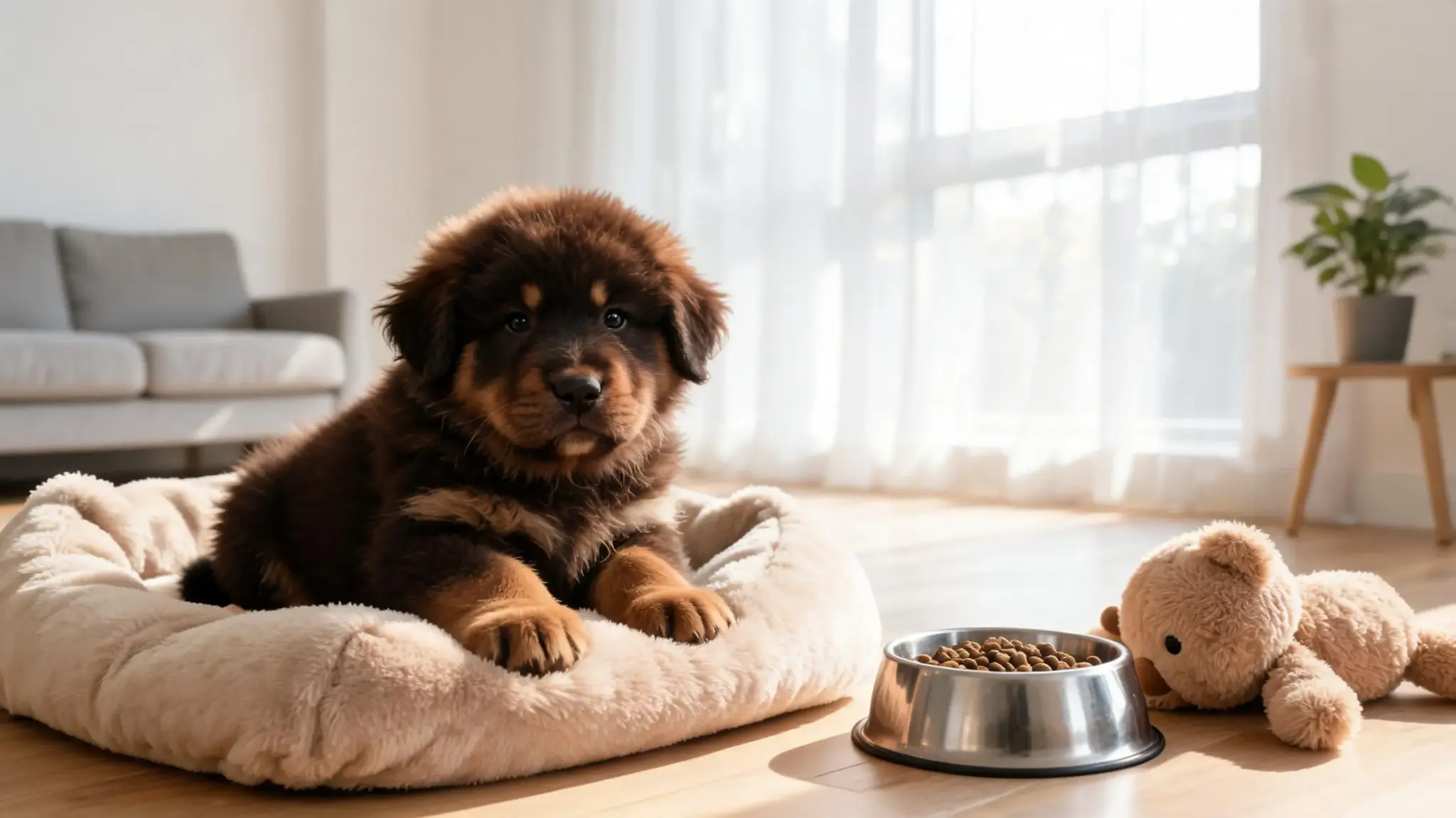
Tibetan Mastiffs develop over an extended period, but no single maturity age applies to every dog. Height, chest width, muscle, and body weight may finish developing at different times, a pattern also visible in how another breed fills out by age.
During puppy growth, feed a complete and balanced diet labeled for growth, including large-sized dogs when applicable. Check the nutritional adequacy statement, measure portions, and ask your veterinarian to monitor weight and growth rate.
Use controlled, age-appropriate exercise instead of forced distance running or repeated high-impact activity. Cornell University advises against overfeeding fast-growing large-breed puppies because maintaining a healthy weight supports joint health.
After reaching much of its adult height, a Tibetan Mastiff may continue to gain muscle and body mass. Use veterinary measurements and body-condition assessments rather than relying on an online age chart.
Tibetan Mastiff Size Compared with Other Large Dogs
Tibetan Mastiffs carry more coat and body substance than many dogs of similar height. They remain shorter and lighter than the largest adults from several recognized giant breeds.
| Breed | Typical Height | Typical Weight |
|---|---|---|
| Tibetan Mastiff | 24 to 30 inches | 70 to 150 pounds |
| Great Dane | 28 to 32 inches | 110 to 175 pounds |
| Mastiff | 27.5 inches or taller | 120 to 230 pounds |
| Saint Bernard | 26 to 30 inches | 120 to 180 pounds |
| Newfoundland | 26 to 28 inches | 100 to 150 pounds |
A Great Dane is normally taller, while a Mastiff can be considerably heavier, and the Saint Bernard’s size range above shows just how much overlap exists among giant breeds. The Tibetan Mastiff’s dense coat and broad neck can still make it look larger than another dog with similar measurements.
Is a Tibetan Mastiff a Giant Dog?
The answer depends on how the term is used. People often group Tibetan Mastiffs among giant dogs because some adults weigh up to 150 pounds, and their dense coats make them appear even larger.
The official breed standard, however, describes the Tibetan Mastiff as a large breed rather than a giant breed. Its usual weight is lower than that of a Mastiff, and its typical height is lower than that of a Great Dane.
“Giant” may be useful in casual size comparisons, but it is not the breed’s formal American Kennel Club classification. The Tibetan Mastiff is more accurately described as a large, powerful, heavily coated guardian breed.
Real Owner Experiences Living with Tibetan Mastiffs

A Reddit discussion about the size of a Tibetan Mastiff shows how surprising this breed can look outside of standard measurements. Users reacted to the dog’s massive appearance, thick coat, and large frame, with many comments noting how much bigger the breed appears in real life compared with typical pet dogs.
The discussion highlights why Tibetan Mastiffs often attract attention wherever they appear. Their heavy coat, broad build, and strong presence can make them seem even larger than their measured height and weight would suggest.
Owners of this breed often mention that their size requires preparation, including enough living space, regular grooming, proper training, and careful handling.
Personal experiences can help people understand what daily life with a Tibetan Mastiff may involve, but each dog develops differently. Researching the breed’s temperament, care requirements, and lifestyle needs is important before choosing one as a companion.
What Tibetan Mastiff Size Means for You
The breed’s dimensions affect ordinary tasks long before a health problem appears. You need equipment, transportation, household space, and handling routines that remain practical when your dog reaches full adult strength.
| Practical Area | What to Plan For |
|---|---|
| Crate and bed | Enough room to stand, turn, stretch, and rest comfortably |
| Vehicle | Safe entry, secure restraint, and space for emergency transport |
| Feeding | Measured portions and routine body-condition checks |
| Flooring | Stable surfaces that reduce slipping |
| Grooming | Tools and space for brushing the dense double coat |
| Training | Early leash control, handling practice, and calm doorway behavior |
| Veterinary care | A clinic able to examine and move a dog of this size safely |
Meet adult Tibetan Mastiffs before choosing the breed. Handling a mature guardian can feel very different from managing a puppy, even when the adult has a calm temperament.
Final Thoughts
Tibetan Mastiff size affects far more than the amount of room a dog occupies. An adult needs equipment, transportation, grooming space, training, and veterinary care suited to a large and powerful guardian.
Males commonly stand 26 to 30 inches and weigh 90 to 150 pounds, while females usually stand 24 to 28 inches and weigh 70 to 120 pounds. Individual measurements vary, and the dense coat can hide changes in body condition.
If you are considering this breed, meet several adults and assess whether you can manage their strength, coat, and daily needs. Ask a veterinarian to monitor your dog’s growth and weight, then prepare your household before bringing a puppy home.
Frequently Asked Questions
How Should You Measure a Dog’s Height?
Stand your dog squarely on a flat surface and measure from the floor to the highest point of the shoulders, called the withers. Do not measure to the head, ears, neck, or top of the coat.
How Can You Check Weight Beneath a Thick Coat?
Use your hands to feel the ribs and waist rather than relying solely on appearance. Ask your veterinarian to assign a body-condition score because the dense coat can conceal excess weight or unintended weight loss.
What Crate Size Does an Adult Need?
Choose a crate based on your dog’s measured length and standing height. Your dog should be able to stand naturally, turn around, lie on its side, and rest without pressing against the crate.
Can Males and Females Be Similar in Size?
Yes. Their typical ranges overlap, so a large female may outweigh or stand near a smaller male. Sex influences expected size, but genetics, body condition, health, and individual development also affect the final measurements.