
A dog built like a linebacker with the heart of a class clown, that’s the reputation trailing the Rottweiler Pitbull mix, and it’s not far off. If you’re weighing whether to bring one home, the size alone can feel like a lot to plan around, and the stories about both parent breeds don’t make the decision easier.
I’ve spent years around rescues meeting dogs exactly like this one, and the honest answer is that no two turn out quite the same. Some settle into calm, steady adults. Others stay high-energy well past puppyhood.
This breaks down what actually shapes a Pitweiler’s size, temperament, and daily needs, plus what it costs and what real ownership looks like, so you can decide from facts instead of guesswork.
What Is a Rottweiler Pitbull Mix?
This cross is exactly what it sounds like on paper: a Rottweiler bred with a Pit Bull-type dog. On the ground, it rarely reads as a tidy 50/50 split.
The Rottweiler side brings size, muscle, and a working-dog seriousness.
According to the American Kennel Club, the nonprofit registry that has tracked purebred lineage and set official breed standards in the U.S. since 1884, Rottweilers were originally developed to drive cattle and pull carts, work that shaped their steady, task-focused temperament. The Pit Bull side brings athleticism, warmth, and a bit of clownish energy.
Because this is a mixed breed rather than a standardized one, there’s no breed club stamping out identical copies. Two puppies from the same litter can grow into visibly different dogs, one built heavier like a Rottweiler, another leaner and more compact like a Pit Bull.
That’s not a flaw in the mix; it’s just how genetics from two distinct breeds tend to land. Expect variation, not a single fixed template.
Rottweiler and Pitbull Parent Traits
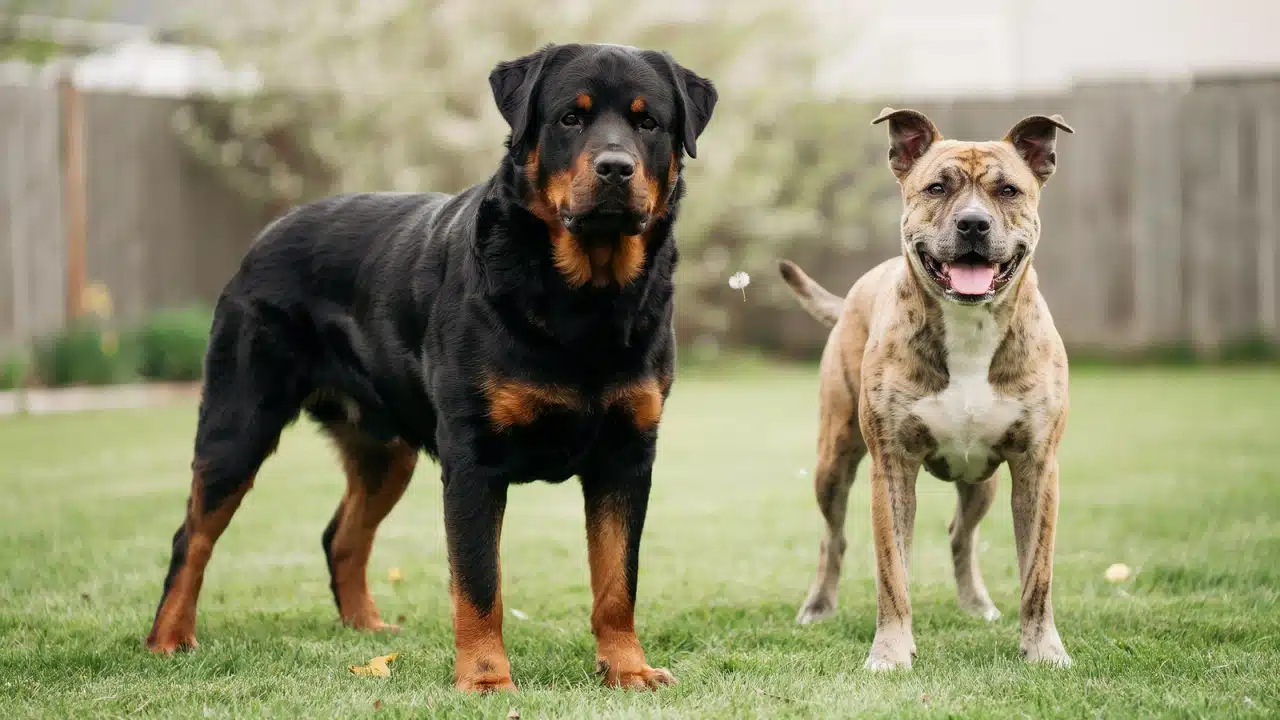
Knowing the two breeds behind this mix gives you a rough map, not a guarantee. Both parent breeds also turn up on lists of often-misunderstood dog breeds, which shapes how strangers react to a Pitweiler on sight, long before they get to know the actual dog in front of them. Genetics don’t split evenly, and no puppy comes with a printed inheritance chart.
| Trait Area | Rottweiler Side | Pit Bull Side |
|---|---|---|
| Build | Heavy, muscular, powerful | Athletic, lean, agile |
| Temperament | Confident, watchful, protective | Affectionate, outgoing, playful |
| Trainability | Focused, works well with structure | Eager, food- and people-motivated |
| Energy | Steady, moderate | High, needs an outlet |
| Bonding style | Loyal to family, reserved with strangers | People-oriented, often friendly on sight |
A Pitweiler puppy might lean noticeably toward one column or blend pieces of both. Socialization and daily upbringing shape the adult dog just as much as ancestry does; a well-raised dog from either background tends to turn out steadier than genetics alone would predict.
What Does a Pitweiler Look Like?
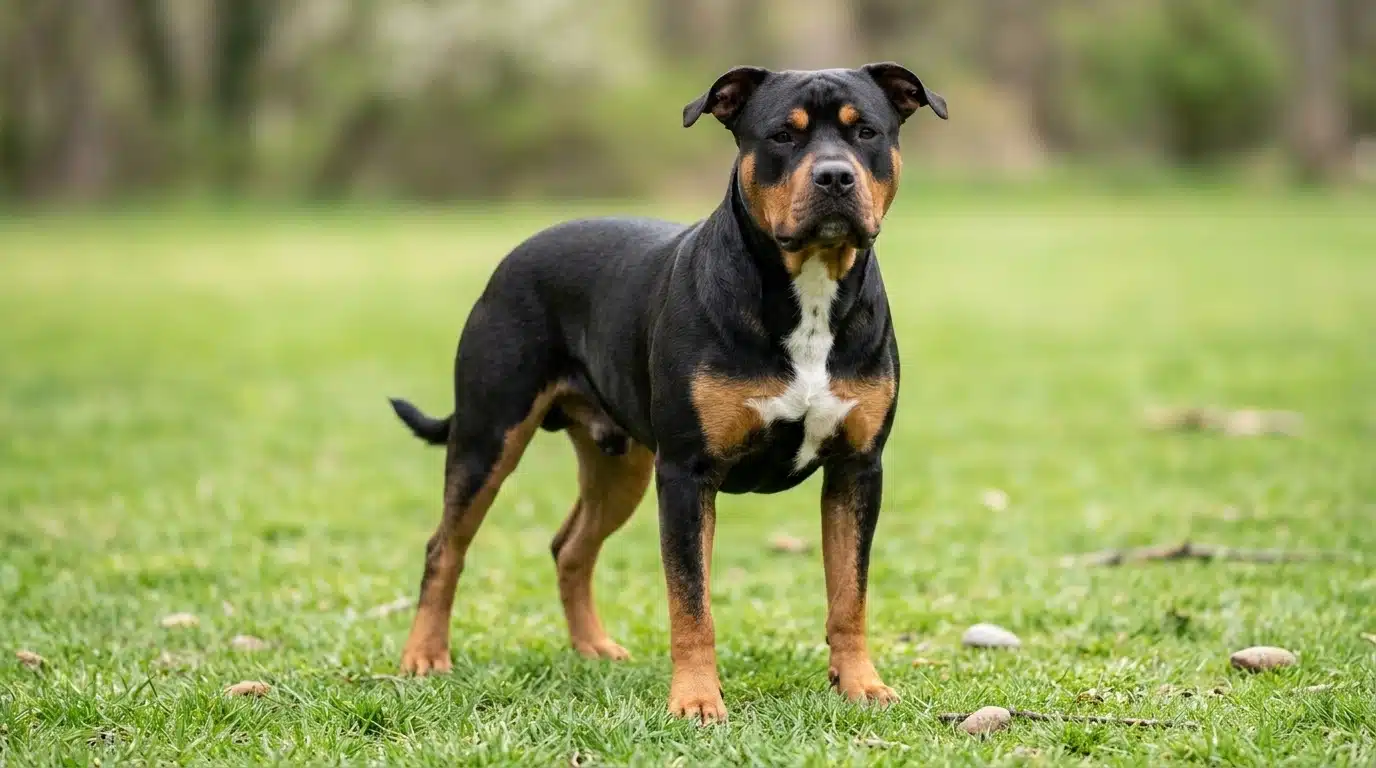
Ask five owners what their Pitweiler looks like, and you’ll likely get five different answers. That’s the honest truth about this mix.
Size and Body Structure
Size is where the mix shows its range most clearly, since parent size and build directly shape the adult dog.
- Adult height: roughly 18–27 inches at the shoulder
- Adult weight: commonly 50–90 pounds, though some individuals run heavier, occasionally close to 100 pounds
- Body type: medium-large to large, with a muscular chest and sturdy frame
- Build variation: some dogs read leaner and more Pit Bull-like, others heavier and more Rottweiler-like
- Males typically run larger and heavier-boned than females
- Parent size plays a real role; a bigger Rottweiler parent usually means a bigger adult dog
Expect a wide window rather than a fixed number, and let the parents’ size guide your prediction more than any breed average.
Because that range is so wide, it’s worth measuring your specific dog rather than guessing off breed charts, a properly sized harness matters more with this mix than with a standardized breed, since a loose or too-small fit can slip right off a dog built like this.
Coat, Colors, and Features
Coat and coloring are just as varied, often changing noticeably from one puppy to the next in the same litter.
- Coat type: short and low-maintenance, inherited from both sides of the family
- Common colors: black, tan, brown, brindle, white, and combinations of these
- Markings: distinct facial or chest patterns are common
- Head shape: broad or moderately blocky
- Ears: can flop, sit semi-prick, or stand fully upright depending on which parent wins out
- Shedding: generally moderate, manageable with a weekly brush
Littermate differences show up most obviously here; two puppies from one litter can end up looking like entirely different breeds by the time they’re a year old.
Rottweiler Pitbull Mix Temperament
Temperament described here reflects general tendencies, not a guarantee for every individual dog.
Owners of a Rottweiler Pitbull mix frequently describe a dog that’s deeply attached to its family and slow to warm up to outsiders. That combination — fierce loyalty paired with genuine affection, is part of what makes this mix so compelling to the people who already have one.
Common temperament patterns include:
- Strong bonding with the household, sometimes to the point of shadowing one person specifically
- Confidence and alertness, often noticing visitors or changes before people do
- Bursts of playfulness balanced against calmer downtime
- Watchfulness around unfamiliar people that can look protective rather than hostile
- Generally good interaction with children when raised alongside them and supervised
- Mixed results with other dogs and small pets; early socialization matters enormously here
- A real difference between alertness or protectiveness and actual aggression, which owners need to learn to read
The single most important point: temperament in this mix is decided at the individual level. Genetics load the dice, but training, environment, and the dog’s own personality roll them.
Pitweiler Daily Care Essentials
Here’s a realistic rundown of what a week actually looks like once this dog joins your household.
Exercise and mental work: Daily walks plus active play sessions aren’t optional extras; they’re the baseline. Add some engaging puzzle feeders and games or short training drills that make the dog think, not just run.
Grooming: The short coat needs a weekly brush, occasional baths (only when genuinely dirty), regular nail trims, ear checks, and basic dental care. None of this takes long once it’s routine.
Feeding: Portions should track age, size, and activity level; an under-exercised adult gains weight fast on the same feeding schedule that suits an active one. Fresh water should always be available.
Companionship: This is a people-focused dog. Long stretches of isolation, paired with too little activity, tend to show up as restlessness or destructive habits. If you’re already noticing signs of separation anxiety, more structured alone-time practice usually helps faster than a bigger yard does. A secure yard helps, but it doesn’t replace direct interaction and attention.
How Much Does a Rottweiler Pitbull Mix Cost?
Prices for this mix vary a lot depending on where you’re looking, and that’s worth knowing before you fall in love with a listing.
| Source | Typical Cost |
|---|---|
| Casual or backyard breeder | Roughly $150–$500 |
| Reputable, health-tested breeder | Roughly $500–$1,500 |
| Shelter or breed-specific rescue | Roughly $50–$300 |
| First-year setup and vet visits | Roughly $500–$1,200 |
These are estimates pulled from a range of listings and breeders, not a fixed national price, so treat them as a starting point and confirm current pricing with sources near you.
Because Pitweilers show up in shelters fairly often due to their Pit Bull heritage, adoption is genuinely worth checking first.
If you do go the breeder route, a legitimate one will let you meet the puppy’s parents, share health-testing records, and answer questions without pressuring you to decide on the spot. Walking away from anyone who can’t or won’t do that saves money and heartache down the line.
How to Train a Pitweiler
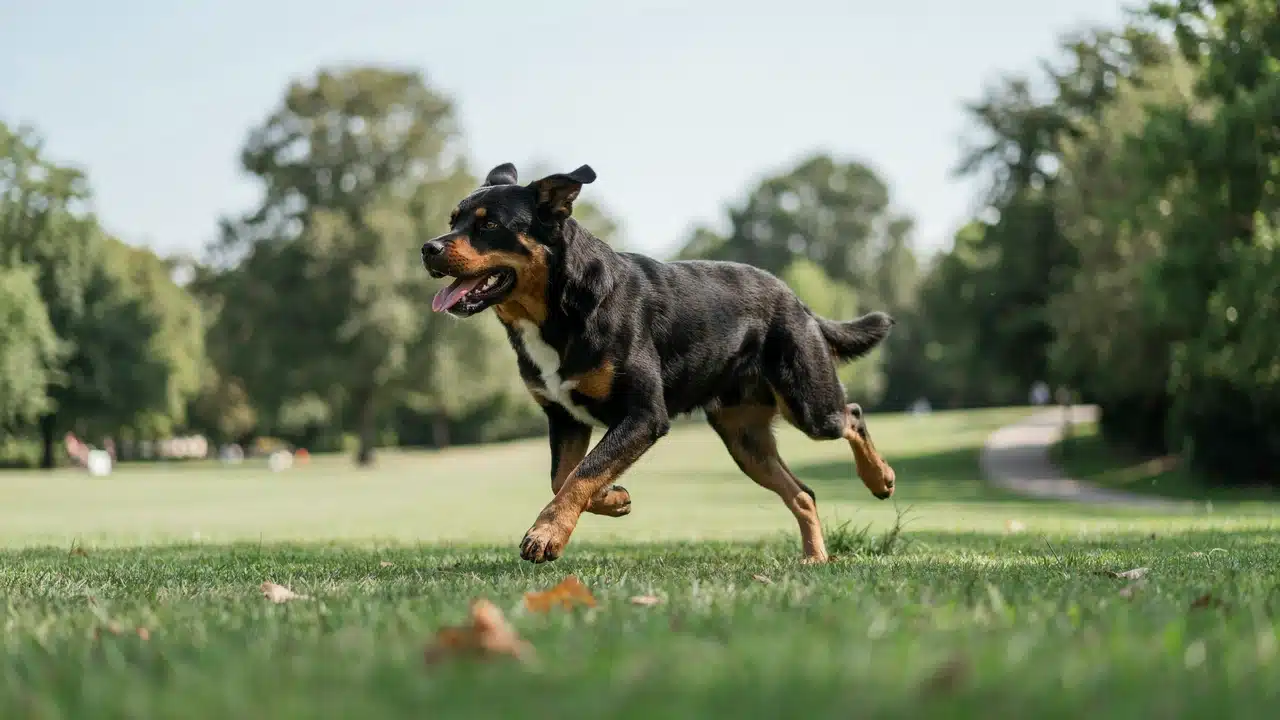
Training isn’t a puppy-phase checkbox with this mix; it’s an ongoing relationship, especially once the dog’s adult strength kicks in.
Training and Socialization Basics
Start early with positive reinforcement, using short, five-to-ten-minute sessions rather than long drilling. Prioritize core commands: sit, stay, come, and leave it, along with a genuinely reliable recall and loose-leash walking.
Practice calm greetings so visitors aren’t met with a 70-pound lap dog moment. Handling tolerance for ears, paws, and mouth pays off at vet visits later.
Gradually expose your puppy to different people, other animals under supervision, new environments, and everyday sounds like traffic or vacuums. The goal is building confidence through gentle exposure, never by forcing a scared dog into a situation it isn’t ready for.
Common Training Challenges
Most owners hit a familiar list of snags: jumping on guests, overexcitement that spirals fast, recall that works at home but falls apart outdoors, and a streak of independent, sometimes stubborn thinking.
Leash pulling shows up often too; if it does, correcting leash-pulling habits early prevents it from becoming a lifelong struggle with a dog this strong.
Boredom-driven habits such as chewing, digging, and pacing usually trace back to too little physical or mental outlet.
The trickiest stretch is often adolescence, somewhere between six months and two years, when a physically strong young dog tests boundaries it never questioned as a puppy. This is often when professional training support is worth the investment, particularly for first-time owners.
Pitweiler Health and Lifespan
Being a mixed breed doesn’t hand this dog a health pass; it can inherit conditions from either parent, sometimes both.
| Health Area | What to Watch |
|---|---|
| Lifespan | Generally 9–12 years, though well-cared-for dogs are sometimes reported living into their mid-teens |
| Joints | Hip and elbow dysplasia are the most commonly reported orthopedic concerns, especially in heavier-built dogs |
| Bloat | A real emergency risk in deep-chested large dogs; avoid vigorous exercise right after big meals |
| Skin | Some lines show allergy or skin sensitivity issues |
| Weight | Extra pounds put added strain on hips and elbows, so keep an eye on rib and waist definition |
| Preventive care | Routine vet exams, vaccinations, parasite prevention, dental checkups |
| Exercise | Should match age and physical condition, not a fixed routine |
Ask breeders directly about the health history of both parents, and don’t skip available health screenings when getting a puppy — the Orthopedic Foundation for Animals, the group most U.S. breeders use to certify hips and elbows before breeding, keeps public records you can ask to see.
Staying on top of a consistent vaccine schedule alongside parasite prevention also keeps both health risks and vet bills more predictable over your dog’s life. Early veterinary visits catch small issues before they become expensive, painful ones; that single habit does more for long-term health than almost anything else on this list.
What Owning a Pitweiler Is Like
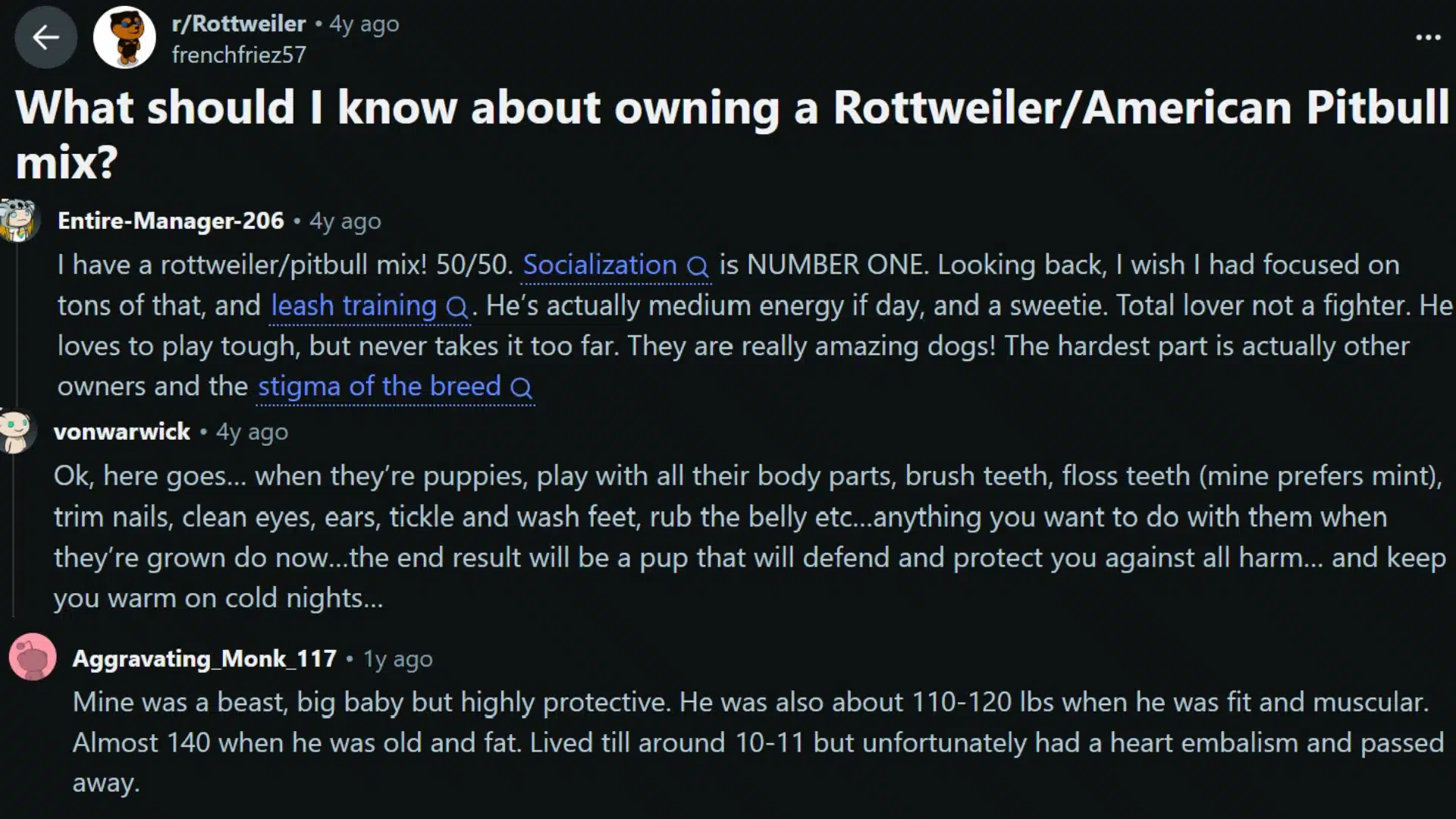
Talk to enough owners of this mix and a few threads repeat themselves. Early, deliberate socialization comes up constantly as the single biggest factor separating a relaxed adult dog from a reactive one.
Owners who handled ears, paws, and mouths gently from puppyhood tend to report calmer vet visits and grooming sessions years later.
Size at maturity gets mentioned a lot too, since it’s genuinely hard to predict. Some owners end up with a dog barely over 50 pounds; others end up with one pushing close to 100, still muscular and active well into middle age.
The other recurring theme, often more frustrating than the dog itself, is other people’s assumptions. Many owners describe spending more energy managing strangers’ reactions to the breed mix than managing the dog’s actual behavior.
Is a Pitweiler Right for You?
Rather than a flat yes-or-no verdict, here’s a quick self-check:
- Would your current routine survive a dog that needs real activity even on your busiest, most tired days?
- Are you the kind of person who’ll keep drilling recall and manners after the “cute puppy” phase wears off?
- Do you have a plan for the first few introductions to kids or pets, rather than just hoping it goes well?
- Does your specific unit or neighborhood allow a dog this size, including weight limits?
- Have you checked landlord, rental, insurance, or local breed-specific rules in your area? The ASPCA keeps a plain-language explainer on breed-specific legislation, the animal-welfare organization’s overview of how these local laws work and where they tend to apply, which is worth a read before you sign a lease or a puppy contract.
- If this would be your first dog, are you ready to lean on a trainer or experienced friend rather than figuring it all out solo?
If most of these check out, a Rottweiler Pitbull mix can be an enormously rewarding companion. If several don’t, it’s worth being honest about that before adoption day, not after.
Final Take
No two dogs from a Rottweiler Pitbull mix litter turn out quite the same, and that’s the real takeaway: this mix rewards owners who pay attention to the dog in front of them, not a label.
Some lean heavier and more serious, others stay lean and goofy, but most do best with someone willing to stay engaged past puppyhood.
In the breeders and rescue volunteers I’ve talked with over the years, the ones who succeed with this mix are rarely the most experienced dog owners on paper, they’re the ones who show up consistently.
If you came here wondering whether a Rottweiler Pitbull mix fits your home, the honest answer has less to do with the breed name and more with the routine you’re ready to keep up. Stay consistent, and you’ll likely get an equally consistent companion back.
Frequently Asked Questions
Are Rottweiler Pitbull Mixes Banned Anywhere?
Some cities and countries restrict Pit Bull-type dogs specifically, and a mix can fall under those rules depending on appearance, so check local ordinances before adopting.
Can You Register a Pitweiler as a Purebred?
No. Kennel clubs register standardized breeds, and a Pitweiler is a cross, so it can’t receive purebred papers regardless of its parents’ pedigrees.
Do Pitweilers Have a Strong Prey Drive?
Some do, inherited from either parent’s working or hunting background, which is why supervised introductions to cats and small animals matter more than breed assumptions.
Is Pet Insurance Harder to Get for This Mix?
Yes, some insurers flag Pit Bull-type mixes as restricted breeds, so it’s worth confirming coverage and any breed-specific exclusions before signing up.
Can a Pitweiler Live in an Apartment?
Yes, as long as daily exercise needs are consistently met; space matters less than whether the dog’s activity and mental stimulation requirements are being fulfilled.