

We know that feeling. You’ve just brought your puppy home; they’re sniffing every corner of your apartment like it’s the most fascinating place on earth, and you’re standing there thinking, “Wait, is that cord within reach? Should I move that plant?”
That mix of joy and low-grade panic is real, and you’re not overreacting. Small spaces come with their own hazards, and a curious puppy will find every single one of them.
Puppy-proofing an apartment isn’t about turning your home into an empty box. It’s about setting things up so your puppy can explore, learn, and be a puppy, without you spending every waking hour saying “drop it.”
Why is Puppy Proofing an Apartment Important?
Apartments pack a lot of everyday life into a small footprint, with exposed wires, low shelves, balconies, and shared hallways, and puppies don’t come with a built-in sense of what’s dangerous. To them, a phone charger and a chew toy look pretty much the same.
A little prep goes a long way toward preventing injuries, accidental poisoning, and the kind of property damage that makes security deposits disappear.
And here’s the thing worth remembering: what’s safe for your eight-week-old puppy today might not be safe once they’re bigger, bolder, and able to reach the counter. Puppy-proofing isn’t a one-time task; it’s something you’ll revisit as they grow.
Supplies to Buy Before Your Puppy Arrives
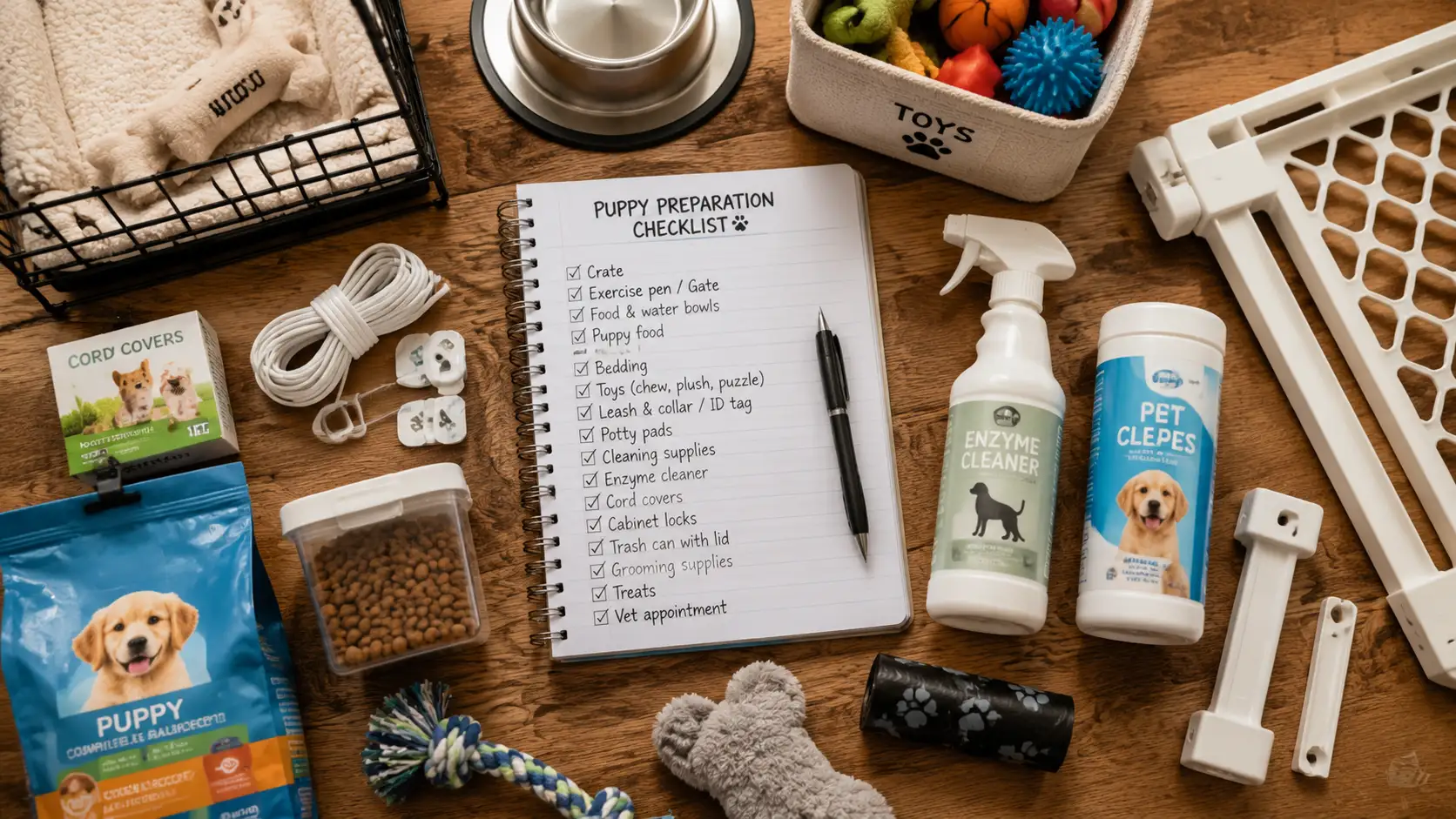
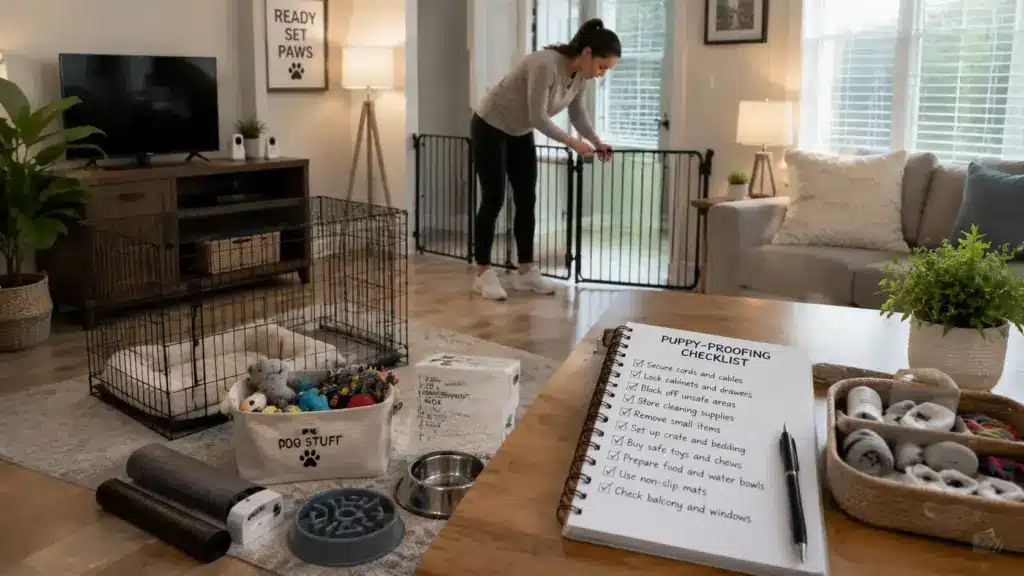
Preparing the right supplies before your puppy comes home can make the adjustment period easier. These essentials help create a safe space, prevent accidents, and support your puppy’s daily needs.
| Supply Category | Items to Consider | Purpose |
| Containment Supplies | Crate, exercise pen, pressure-mounted gates, door barriers, puppy-safe room dividers | Creates a controlled area where your puppy can rest, play, and learn safely. |
| Safety Supplies | Cord covers, cable management boxes, cabinet latches, secure trash cans, lidded laundry hampers, non-slip mats, door stops, balcony barriers | Helps reduce common household risks and keeps unsafe items out of reach. |
| Training and Comfort Supplies | Comfortable bedding, food and water bowls, washable mats, toilet-training supplies, safe chew toys, enzyme cleaners | Supports your puppy’s comfort, training, and everyday care needs. |
Choose supplies based on your apartment size, puppy’s breed, and expected adult size. Start with the basics and add items as you understand your puppy’s habits and needs. A well-prepared setup gives your puppy a safe place to settle while helping you manage daily routines more easily.
How to Create a Safe Zone for Your Puppy
A dedicated puppy area helps your new pet settle into apartment life. It also reduces the chance of accidents when you cannot provide constant supervision.
- Choose the Right Location: The location of your puppy’s safe zone plays an important role in keeping them comfortable and secure. Choose a spot where your puppy can observe normally.
- Set Up the Space: A well-arranged puppy area should include everything your puppy needs without making the space crowded. Keep the setup simple, comfortable, and easy to clean. Arrange: crate or sleeping area, water bowl, safe toys, comfortable bedding, etc.
- Avoid Overcrowding the Area: Adding too many items can create unnecessary risks inside your puppy’s safe zone. Puppies may chew, move, or damage objects while exploring their surroundings. Avoid: loose blankets that can be pulled apart, damaged toys, and small objects.
Review the area regularly and remove anything that could become unsafe. A clean and simple puppy zone is easier to manage and keeps your puppy protected.
Room-by-Room Apartment Safety Checks
Every area of your apartment has different risks that may not be obvious at first. Puppies use their nose, paws, and teeth to investigate everything around them, so a room-by-room inspection helps identify possible hazards before they become problems. Checking each space carefully allows you to create a safer environment while keeping your puppy comfortable at home.
1. Kitchen
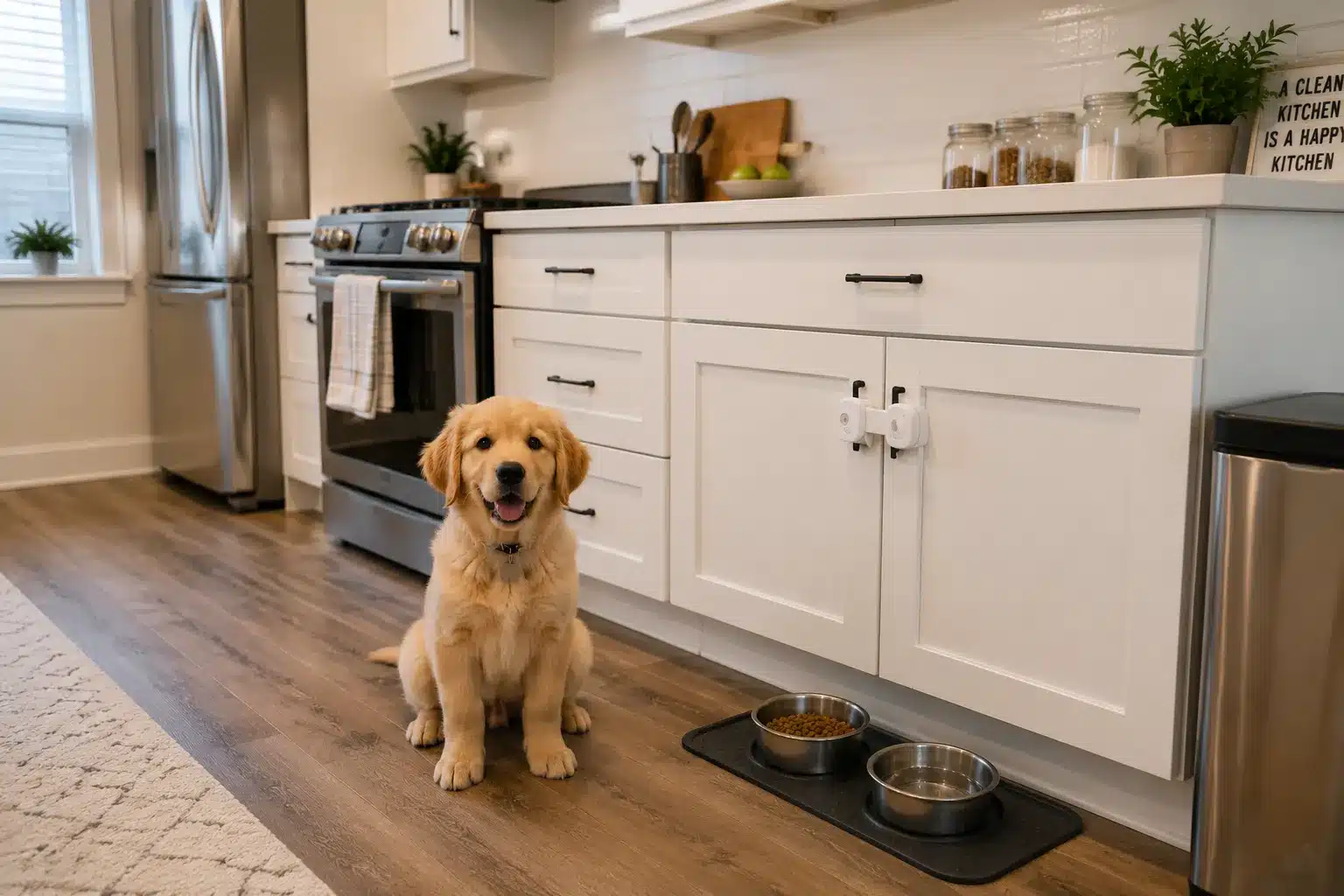
The kitchen contains many everyday items that can be dangerous for puppies, including certain foods, cleaning products, and sharp objects. Since puppies are naturally curious and often search for smells, counters, cabinets, and trash areas need extra attention. Creating safe storage habits can help prevent accidental ingestion and injuries.
Store away:
- Alcohol
- Caffeine products
- Xylitol products
- Cleaning supplies
- Sharp tools
2. Bathroom
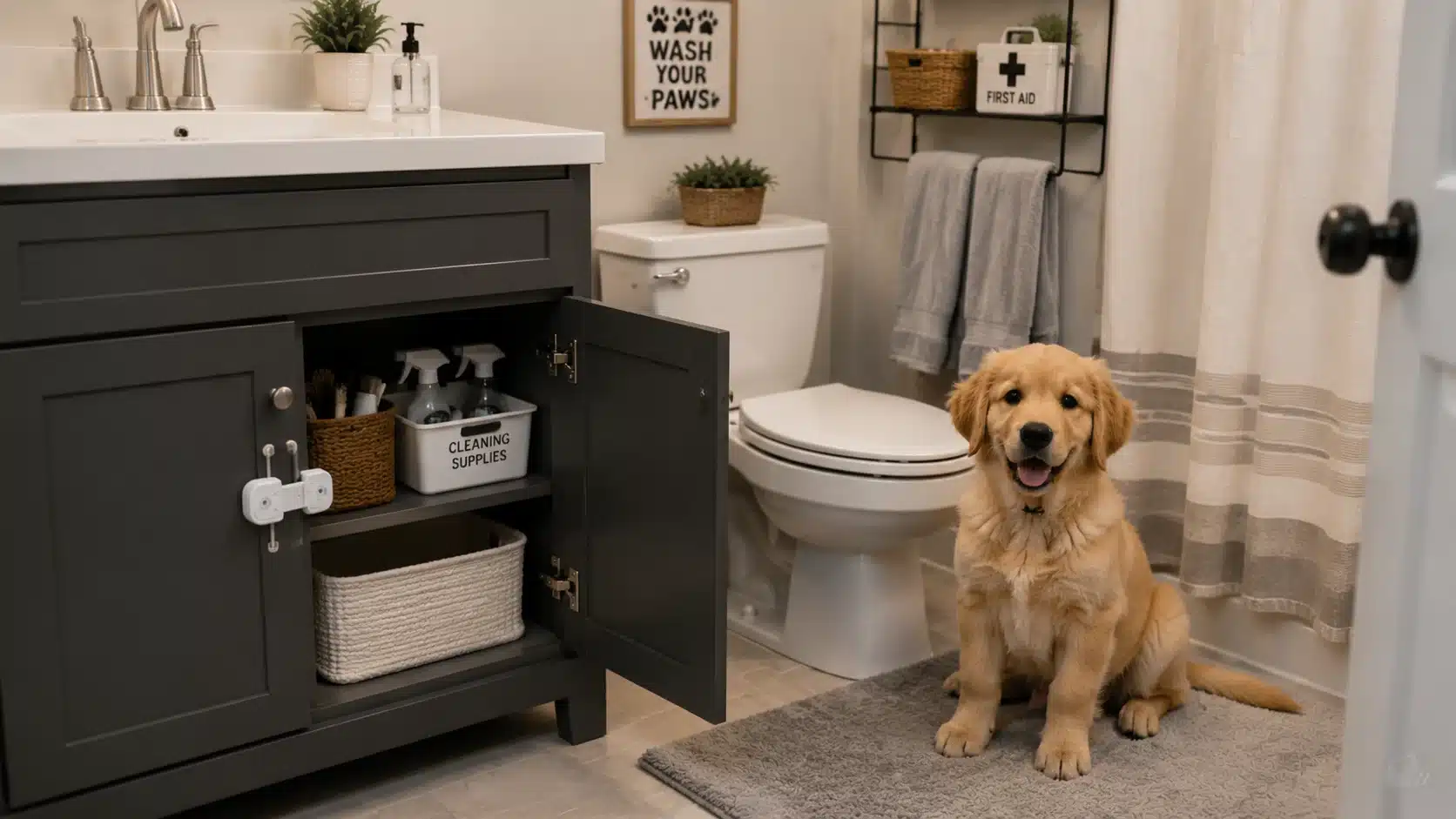
Bathrooms often contain small personal-care items and products that puppies may chew or swallow. Items left on floors, counters, or open shelves can quickly become tempting for a curious puppy. Keeping this space organized and limiting access helps prevent unexpected health risks.
Secure:
- Medicines
- Razors
- Cosmetics
- Toilet cleaners
- Dental products
3. Bedroom
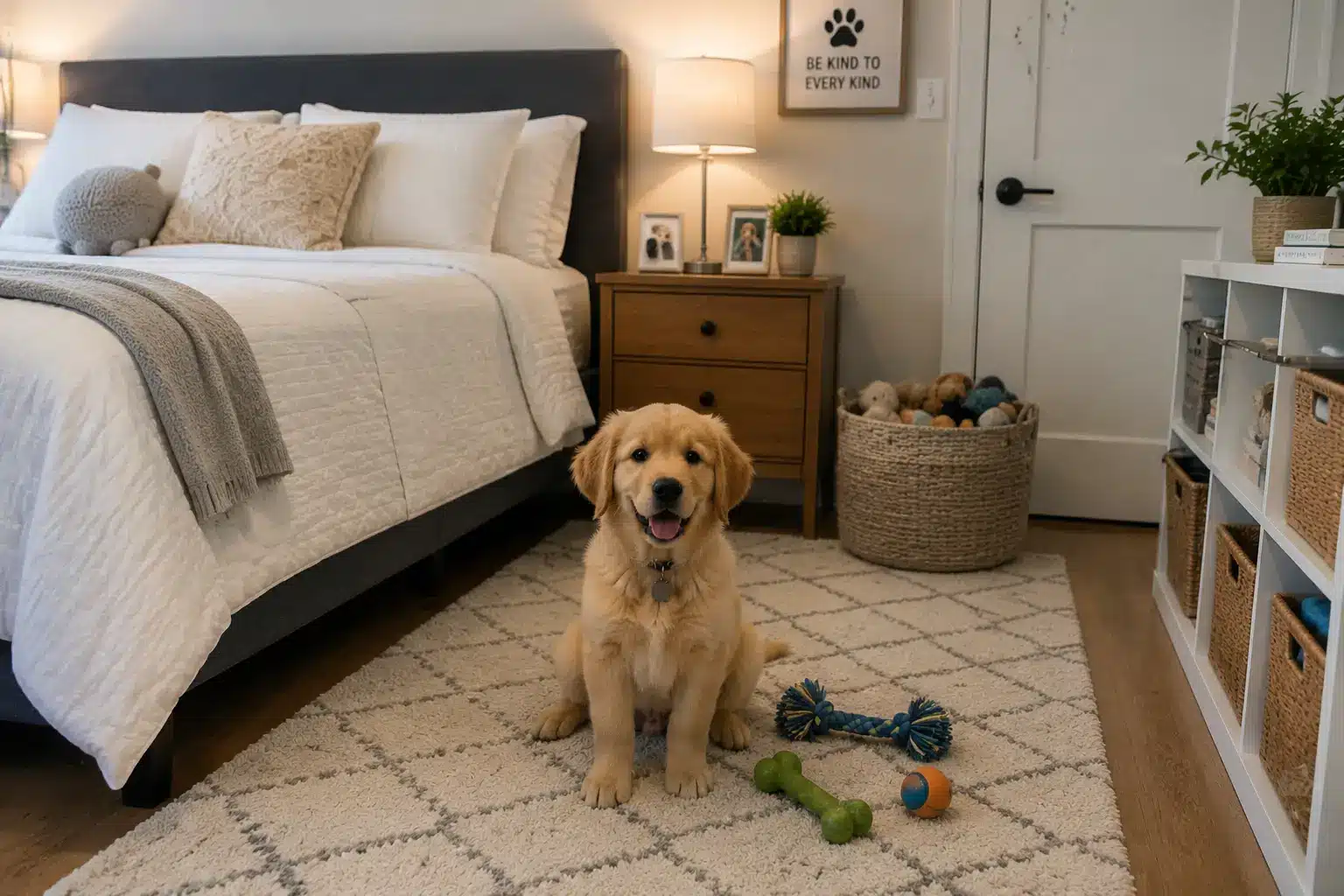
The bedroom may seem like a safe space, but it often contains clothing, accessories, and personal items that puppies like to chew. Socks, shoes, charging cables, and small belongings can create risks if left within reach. Keeping storage areas organized helps protect both your puppy and your belongings.
Keep away:
- Shoes
- Socks
- Jewellery
- Charging cables
- Small personal items
4. Balcony and Windows
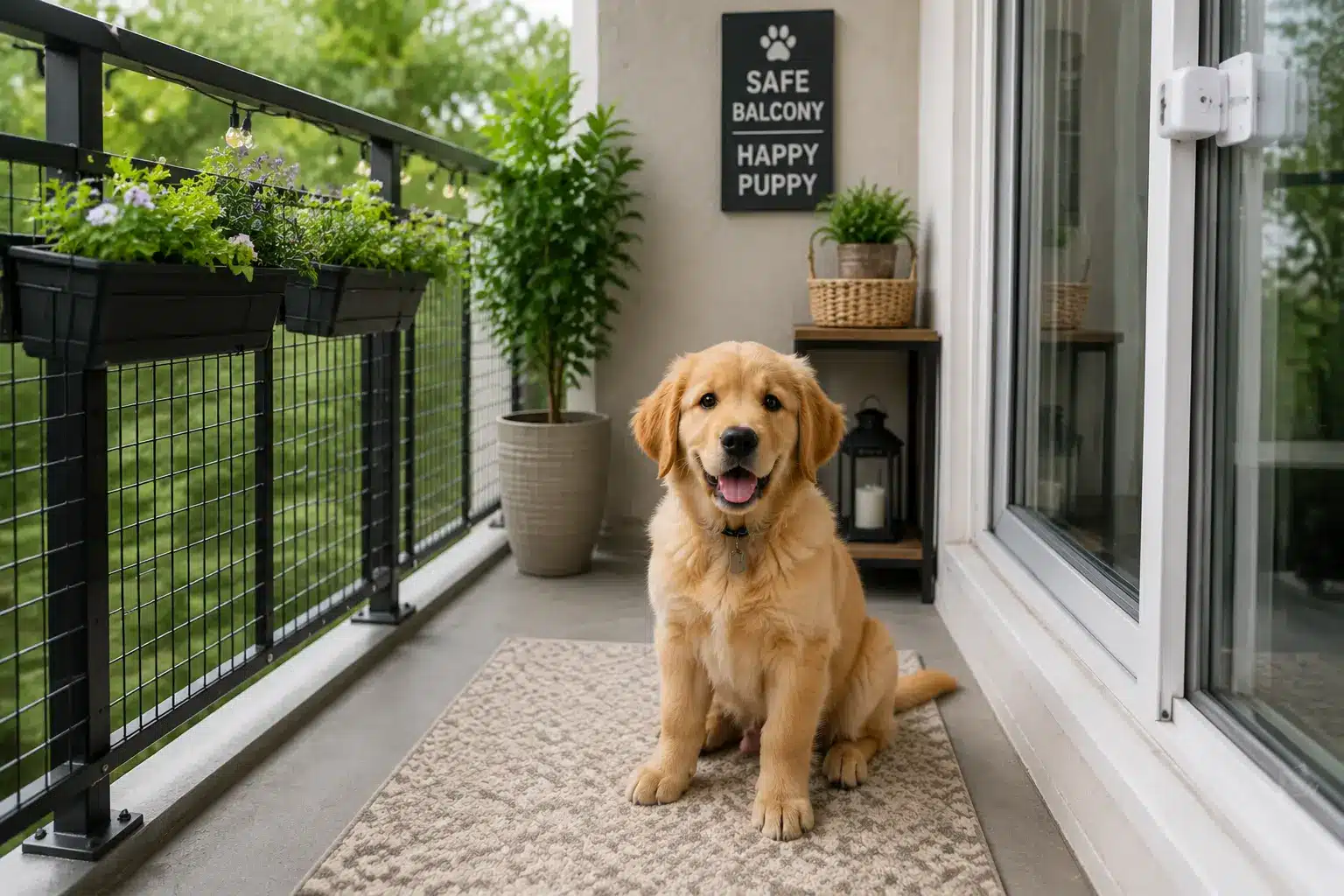
Balconies and windows require careful attention because they can create serious fall and escape risks. Puppies may climb, squeeze through gaps, or approach unsafe areas while exploring. Taking preventive steps before allowing access helps keep outdoor spaces safer.
Check for:
- Railing gaps
- Loose screens
- Climbable furniture
- Hot surfaces
- Standing water
After checking each room, your apartment becomes a much safer place for your puppy to grow and learn. Regular inspections are important because puppies develop new habits, become more active, and may reach areas they could not access before.
Prevent Chewing and Rental Damage
Chewing is normal puppy behavior, especially during teething. The goal isn’t to stop it, but to redirect it toward things that are actually meant to be chewed. Following toy safety guidelines can help reduce risks from broken or unsafe products.
| Focus Area | What to Watch For | How to Handle It |
| Suitable Chew Items | Toys that are too small, too worn, or not sized for yourpuppy’ss current stage | Choose toys sized appropriately for their mouth & age, and check them regularly for damage; a cracked or shredded toy can become its own choking hazard. |
| Furniture and Baseboards | Chewed corners, table legs, and baseboard edges | Use furniture placement, exercise pens, and pet-safe sprays; blocking access with furniture is often more effective than any spray. |
| Rugs and Flooring | Pulled-up rug corners, accident stains, scratched carpet | Secure rug corners so they can’t be pulled up, clean accidents quickly with an enzyme cleaner, & keep an eye on carpeted areas puppies tend to scratch or dig |
| Boredom-Driven Chewing | Chewing that spikes when your puppy hasn’t slept, played, or been let out recently | Address the root cause first: not enough sleep, play, mental stimulation, or an overdue toilet break before assuming it’s “bad” behavior. |
Framing chewing this way as a management and training issue rather than misbehavior tends to lead to better outcomes and a lot less frustration for both of you.
Puppy-Proofing the Crate and Exercise Pen
Your puppy’s main containment area deserves its own safety check, separate from the rest of the apartment.
Make sure the crate is correctly sized, big enough to stand, turn around, and lie down comfortably, but not so large that it stops feeling den-like. Place it away from direct sun, drafts, and heating vents.
Some owners remove collars during unsupervised crate time to prevent snagging, though this depends on the type of collar and your puppy’s specific setup. Additional pet care resources can help owners make informed decisions.
One easy mistake to avoid: don’t leave loose fabric, covers, or blankets within reach of the crate bars if your puppy is a puller.
Reddit Users Share Their Puppy-Proofing Apartment Tips
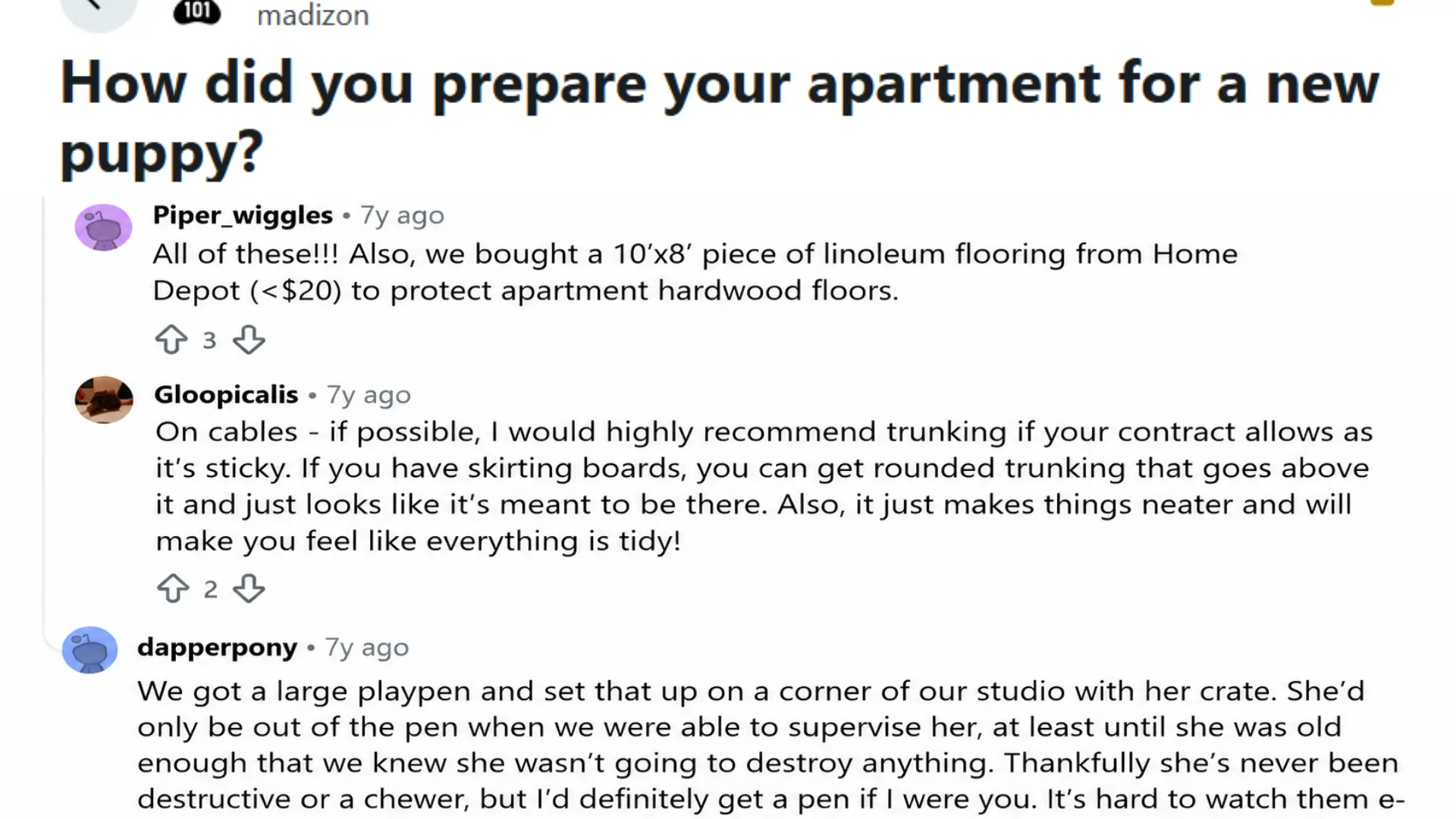
Many puppy owners turn to Reddit for practical advice because real-life experiences often reveal problems that are easy to miss during the initial setup.
Cable management was another common concern among apartment puppy owners. Covering exposed wires helps prevent chewing while keeping the space organized.
These experiences highlight a few practical lessons: protect vulnerable surfaces, secure cables early, and create a safe zone before giving your puppy full access to the apartment. Small changes can make daily life easier for both you and your puppy.
Final Thoughts
Getting your home ready before your puppy arrives makes the whole transition smoother for both of you.
Start with a safe zone, walk through every room, tuck away the hazards, and revisit your setup as your puppy grows. Securing cords, storing away anything dangerous, and building consistent routines will prevent more problems than you’d expect.
Your apartment doesn’t need to be perfect. It just needs to be set up with your puppy’s curiosity in mind, because that curiosity isn’t going anywhere, and honestly, it’s part of what makes this stage so much fun.
Ready to make your apartment safer for your new puppy? Create your checklist today, prepare the essentials, and give your puppy a secure place to grow and learn.
Frequently Asked Questions
How Do You Prepare an Apartment for a Rescue Puppy?
Start by creating a quiet and comfortable area where the rescue puppy can rest and adjust at their own pace. Keep essential supplies ready, secure household hazards, and maintain a consistent daily routine to help them feel more settled.
What Should You Check Before Signing a Pet-Friendly Apartment Lease?
Review the apartment’s pet policies before moving in, including size limits, pet deposits, breed restrictions, and any rules about balconies or shared areas. Understanding these details can prevent issues later.
Can Puppy-Proofing Help with Separation Training?
Yes, a safe puppy area can make alone time easier by giving your puppy a familiar and secure place to stay. However, separation training should be introduced gradually with patience and positive routines.