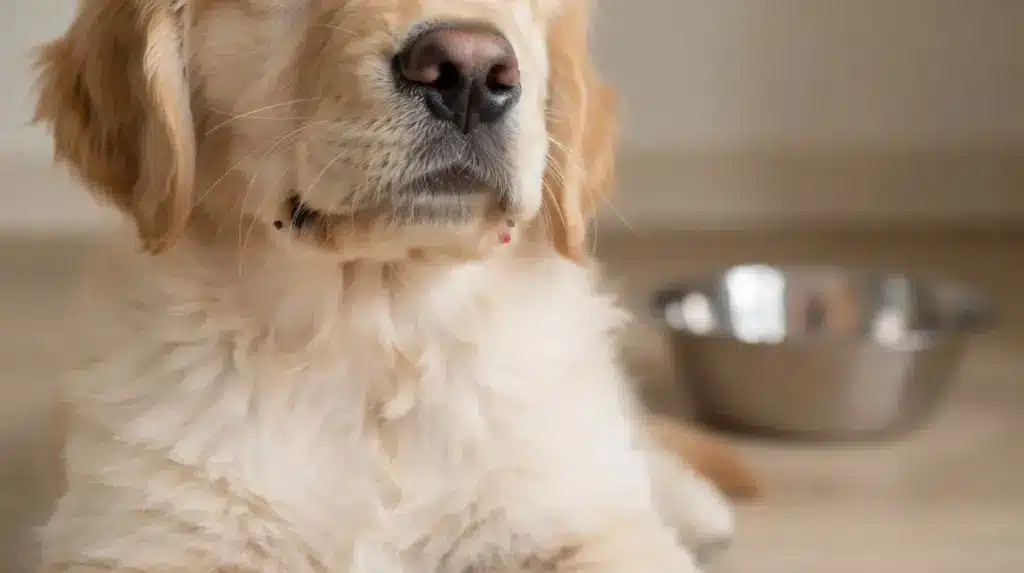
As a practicing veterinarian, I get asked that same question almost every week, like clockwork: “Why does my puppy suddenly have pimples on their chin?”
Most owners immediately assume it’s just dirt, some rash, or maybe something more serious. But after seeing thousands of patients, from routine grooming hiccups to more complex skin problems, I can say pretty confidently that in most cases it’s puppy acne, a fairly ordinary issue tied to clogged hair follicles.
With an emphasis on prevention and whole-body well-being, I suggest catching it early and handling it gently. Below, I’ll explain what leads to it and which dog acne treatment choices actually work, at home and at the clinic.
What is Puppy Acne?
Puppy acne is one of the most common skin conditions I see in young dogs, and most cases are far less serious than they look.
Puppy acne is an inflammatory skin condition that affects the hair follicles on a young dog’s chin and lips. It is not from poor hygiene, and it is not contagious to people or other pets.
Most puppies end up with it between five and eight months, right around when they’re going through adolescence.
Vets don’t entirely agree on the exact trigger, but it seems like a blend of things: extra oil production, tiny injuries from rubbing or chewing, and genetics that may all contribute.
It is a normal, common part of a puppy’s development, not a sign that something is wrong with your dog.
Signs Your Puppy Has Acne
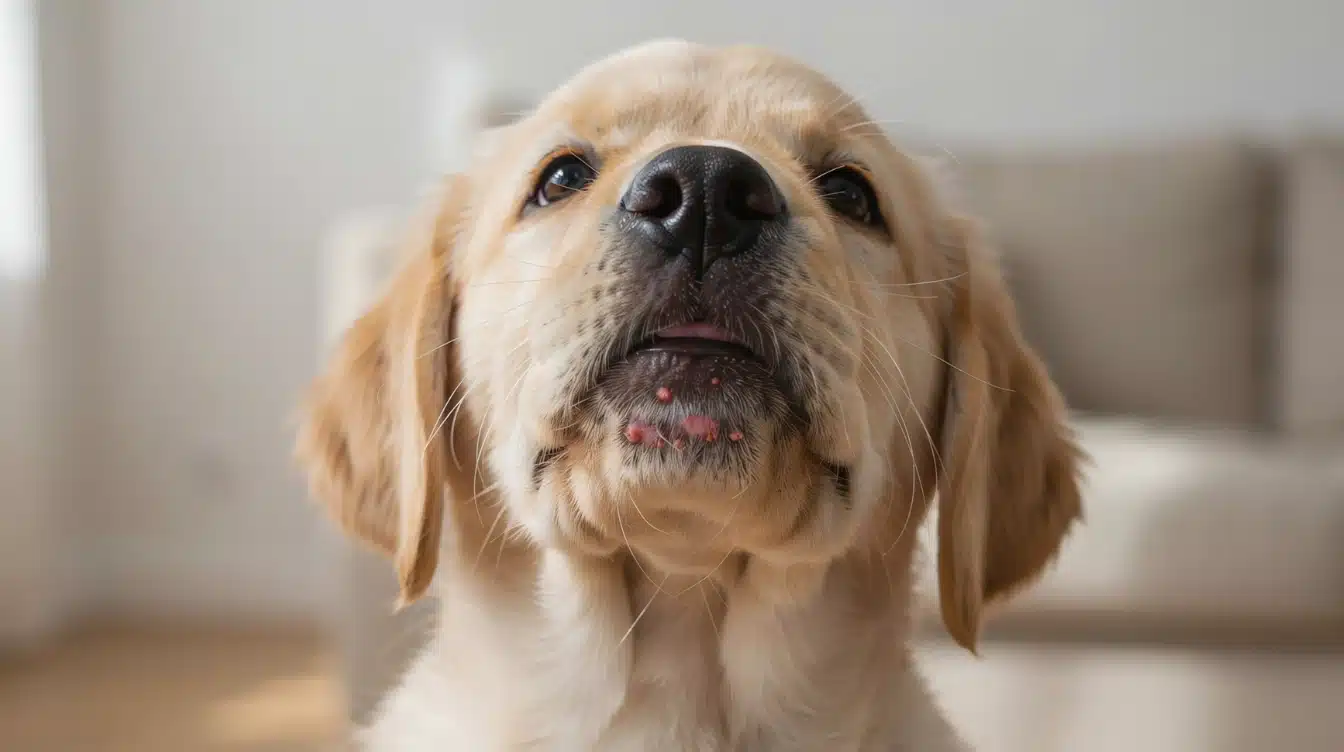
A few visible clues usually show up before an owner even thinks to search for what is going on.
- Small red bumps concentrated on the chin, lips, or muzzle
- Blackheads that look like tiny dark specks on the skin
- Pus-filled pimples that may burst and scab over
- Mild swelling around the affected area
- Occasional rubbing of the chin against furniture or bedding
- Hair thinning directly over the bumps in more persistent cases
These signs are usually mild and localized, so if bumps start spreading beyond the chin and muzzle, it is worth a closer look at other causes.
Puppy Acne vs Other Skin Issues
Chin bumps are not always acne, so it helps to know how similar-looking conditions differ before deciding on treatment.
| Condition | Appearance | Common Location | Key Difference |
|---|---|---|---|
| Puppy acne | Pimples, blackheads, mild swelling | Chin, lips, muzzle | Tied to adolescence and hormones |
| Allergic reaction | Red, itchy skin | Paws, belly, ears | Comes with intense scratching |
| Hot spot | Moist, raw patch | Anywhere on the body | Appears and spreads quickly |
| Folliculitis | Pus-filled bumps | Around hair follicles | Linked to bacterial infection |
| Mange or mites | Hair loss, crusty skin | Face, legs, ears | Needs parasite-specific treatment |
If the bumps match the acne column but do not improve after a few weeks, that mismatch is usually the first sign a vet visit is needed. Diagnosis is typically straightforward: a vet examines the chin and muzzle, asks about your puppy’s age and history, and can usually confirm acne from the physical exam alone.
If anything looks off, such as hair loss patterns or lesions that don’t fit the usual picture, a quick skin scraping can rule out mites, or a fungal culture can rule out ringworm before treatment starts.
Why Do Puppies Get Chin Acne?
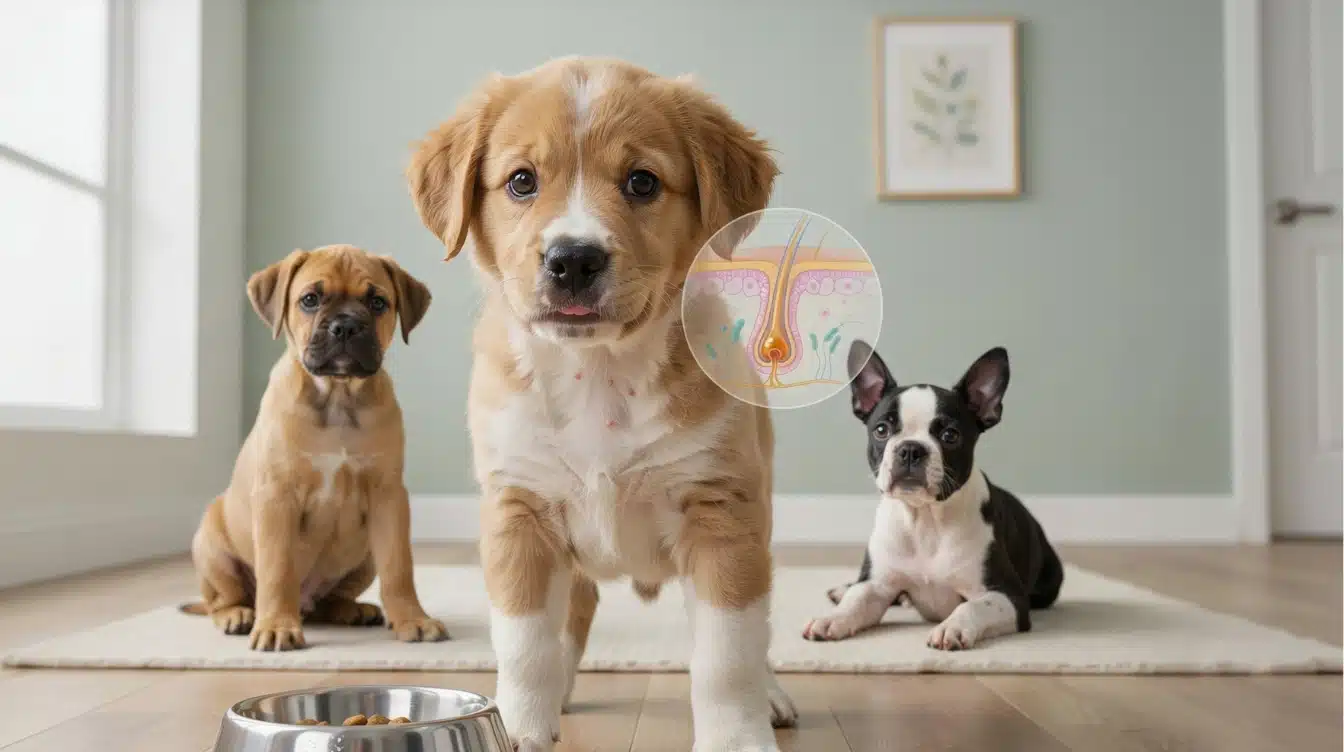
Understanding the cause behind puppy acne makes it easier to know which dog acne treatment will actually help. A few factors tend to work together to cause a breakout.
1. Hormonal Changes During Adolescence
One theory is that hormonal activity kicks in as a puppy matures, usually between five and eight months of age, and this shift makes the skin’s oil glands more active.
Vets don’t fully agree on how large a role hormones actually play, since recent research points to other factors as bigger contributors, but the timing lines up closely enough that most cases still track with a puppy’s adolescent stage.
Whatever the exact trigger, the extra oil that shows up during this window creates the conditions bacteria need to start a breakout.
2. Clogged Hair Follicles
Too much oil by itself isnt usually a problem, but when its paired with the regular bacteria already hanging around on the skin’s surface, it turns into something else.
The oil and bacteria start mixing, then the result can block each hair follicle, trapping debris underneath the skin.
It is that obstruction which shows up as the noticeable bumps, pimples, blackheads, and little pustules people tend to see on the chin and the muzzle area. If nothing is done, most of it clears on its own once the follicle drains, though a gentle skin-cleansing routine can help it along.
3. Bowl Material and Contact Irritation
Plastic food and water bowls are a common contributing factor that many owners overlook.
Plastic tends to develop tiny scratches over time, and bacteria settle into those grooves despite consistent cleaning habits.
Every time your puppy eats or drinks, their chin makes direct contact with that bacteria, which irritates the skin and can worsen an existing breakout. Switching bowl material is one of the easiest changes to try first.
4. Breed Predisposition
Breeds with short, coarse coats tend to develop puppy acne more often, since their skin and hair follicles are more prone to trapping oil.
Boxers, Bulldogs, Great Danes, Dobermans, and Mastiffs are among the breeds I see most frequently in my own practice.
That said, genetics only raise the odds. Any puppy, regardless of breed or coat type, can develop acne during adolescence.
Reddit Puppy Acne Stories
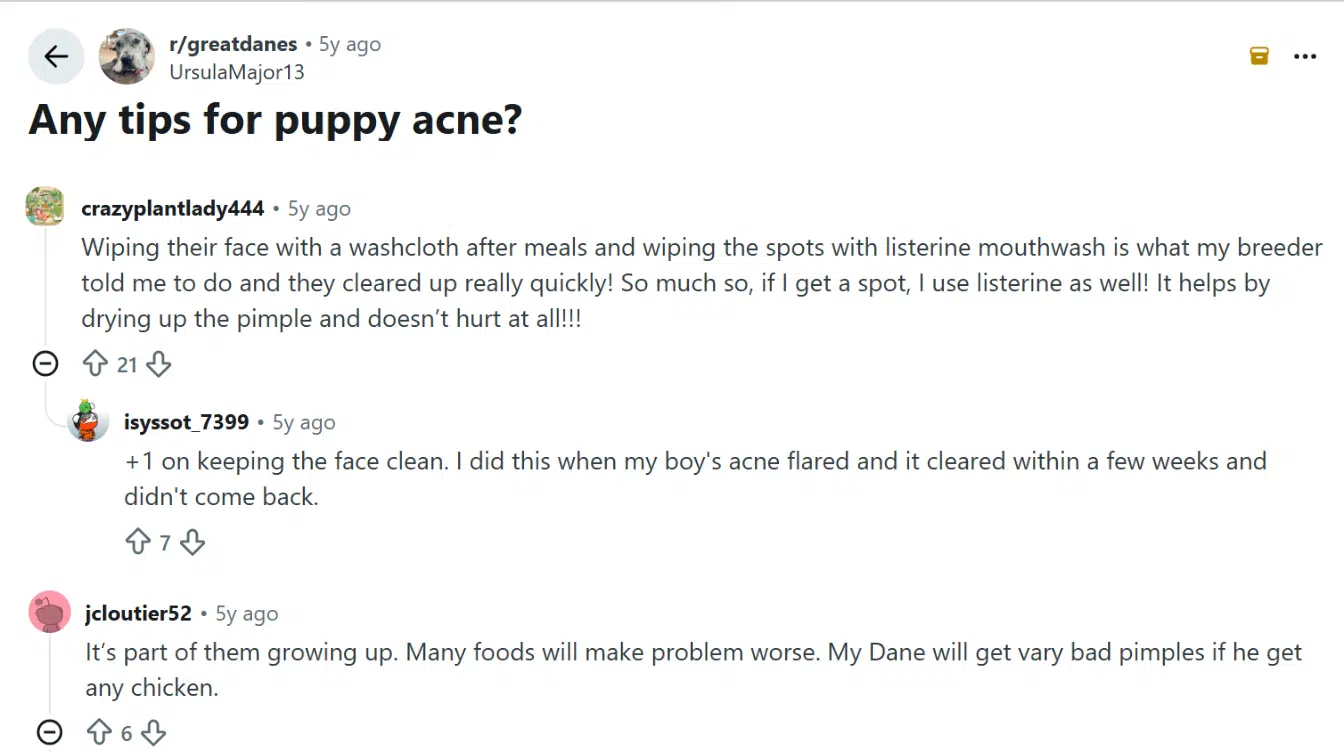
Reddit discussions around puppy acne often highlight the same concerns many new owners have when they first notice chin bumps.
Pet parents commonly mention simple habits like cleaning the face after meals, keeping the area dry, and maintaining good hygiene routines.
Some owners share that their puppies’ acne improved naturally as they matured, while others noticed certain foods or environmental factors seemed to trigger flare-ups.
These experiences show that puppy acne can vary from one dog to another. While community advice can offer helpful ideas, persistent or worsening bumps should always be checked by a veterinarian for proper guidance.
How Long Does Puppy Acne Last?
This is usually the first thing owners want to know once they have ruled out anything serious.
Most cases of puppy acne resolve within a few weeks to a few months, often clearing up completely once a puppy finishes adolescence, typically by twelve to eighteen months of age.
Mild cases may improve with basic hygiene alone, while more stubborn or recurring breakouts sometimes need a longer course of treatment.
If acne persists well past eighteen months or keeps coming back in an adult dog, it is worth having your vet check for an underlying cause such as allergies or a hormonal imbalance.
Dog Acne Treatment Options
Treatment depends on how severe the breakout is, and matching the right approach to the right stage prevents unnecessary trips to the vet.
| Severity | What It Looks Like | Recommended Dog Acne Treatment |
|---|---|---|
| Mild | A few bumps, no swelling or pus | Gentle cleansing with warm water twice daily |
| Moderate | Multiple pimples, mild swelling | Benzoyl peroxide wash formulated for dogs |
| Persistent | Bumps that keep returning | Prescription topical or oral medication from your vet |
| Severe | Swelling, pus, bleeding, or pain | Antibiotics or anti-inflammatory treatment under veterinary care |
Starting with the gentlest option and only stepping up when needed keeps treatment from irritating skin that may already be sensitive.
Before starting benzoyl peroxide or any prescription treatment, it’s worth having a vet rule out mites or ringworm first, since both can look nearly identical to acne but need a different diagnostic approach entirely.
Home Care: Do’s and Don’ts
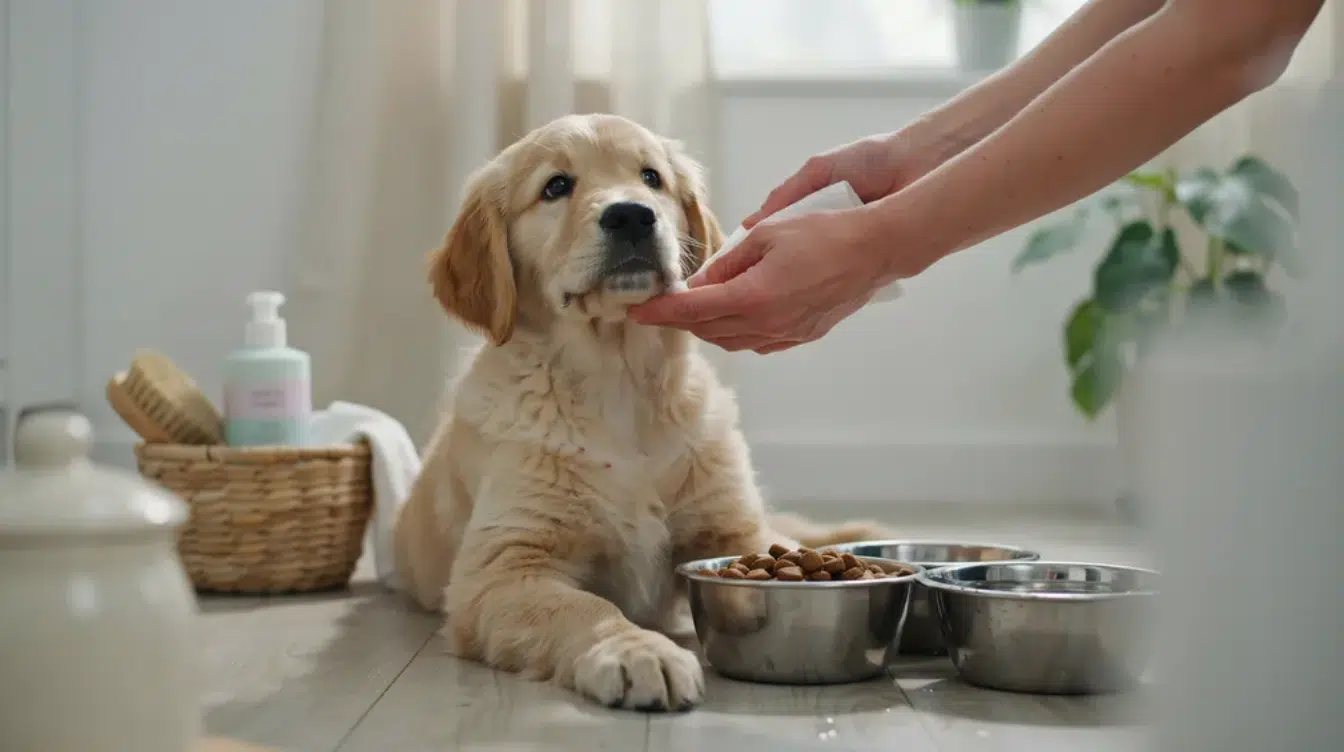
A few small habits at home make a bigger difference than most owners expect, and most of them take only a minute or two to build into your daily routine with your puppy.
Do:
- Switch to stainless steel or ceramic bowls
- Wash food and water bowls daily
- Wipe your puppy’s chin gently after meals
- Stick to products your vet has approved for dogs
Don’t:
- Squeeze or pop the bumps
- Use human acne creams or scrubs
- Apply rubbing alcohol or harsh chemicals
- Ignore bumps that grow larger or start bleeding
These habits also lower the odds of a flare-up coming back once the current one clears, and they cost nothing beyond a little consistency each day with your puppy’s routine.
When to See a Vet
Most cases do not need a clinic visit, but a few warning signs mean it is time to stop treating it at home and get a professional opinion, especially if things seem to be getting worse instead of better.
| Warning Sign | Why It Matters |
|---|---|
| Bleeding or open sores | Signals infection that needs medical treatment |
| Spreading beyond the chin and muzzle | May point to allergies or another skin condition |
| No improvement after three to four weeks | Suggests home care alone is not enough |
| Visible pain or excessive rubbing | Indicates discomfort that needs faster attention |
Catching these signs early usually means a simpler, shorter course of treatment, and it spares your puppy from unnecessary discomfort while the underlying cause gets addressed properly.
Wrapping It Up
Puppy acne looks alarming, but after fifteen years of treating dogs here in Minnesota, I can tell you it’s one of the most manageable skin conditions I see in young patients.
Most cases clear up with simple hygiene changes, patience, and the right dog acne treatment for your puppy’s severity.
Watch for the warning signs above, and call your vet if the bumps spread, bleed, or don’t improve after a few weeks of home care. Every puppy’s skin reacts differently, so what works for one dog may need adjusting for another.
Have questions about your puppy’s skin? Schedule a check-up with your vet this week for a proper diagnosis and a treatment plan built around your dog’s needs.
Frequently Asked Questions
Can puppy acne leave scars?
Most mild cases do not leave permanent marks. However, severe acne that becomes infected or is repeatedly irritated can sometimes cause scarring or changes in skin texture, especially if bumps are squeezed or damaged.
Is Puppy Acne a Sign of a Poor Diet?
Not usually. Puppy acne is more commonly related to skin changes, genetics, and blocked follicles. However, certain food sensitivities can contribute to skin problems that may look similar to acne.
Can Puppy Acne Affect My Dog’s Appetite?
Mild acne usually does not affect eating habits. However, severe inflammation around the mouth or painful lesions may make chewing uncomfortable and reduce interest in food.
Can Weather Changes Make Puppy Acne Worse?
Environmental changes may influence skin health. Humidity, allergens, and seasonal irritants can sometimes worsen existing skin problems, especially in puppies already prone to irritation or sensitive skin.